
Reviewed · KILIMANJARO TREKS
7 Days Machame route – Kilimanjaro
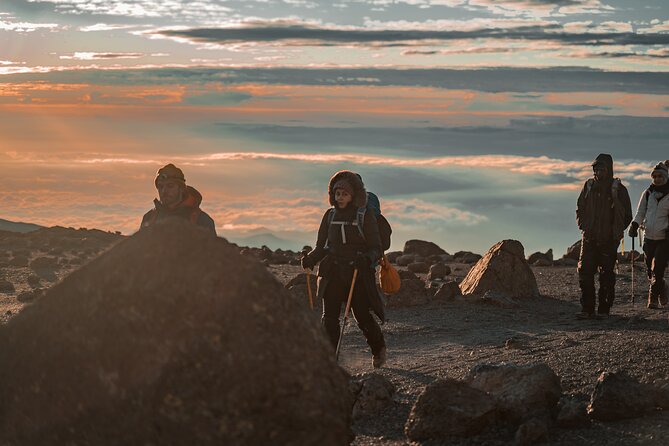
The most compelling part of this trek is its steady climb through several distinct mountain zones, from Chagga coffee and banana country to Kilimanjaro’s rocky high slopes. The seven-day schedule gives you more time to adjust to altitude than shorter versions of the Machame Route, and the midnight summit attempt adds real drama.
I like the strong local focus. Habari Adventure uses Tanzanian guides trained in first aid and safety, with staff able to explain local plants, wildlife, geography, astronomy, and culture. I also like the small group limit of 10 people, which should make it easier to walk at a sensible pace and get direct help when you need it.
The main drawback is the summit day. It can last about 12 hours, begins around midnight, and takes you to nearly 6,000 meters. The $2,850 price is substantial, too, so you should confirm exactly what is covered beyond the listed meals, park access, transport, and camp arrangements.
Key points to know before you book
- Seven days gives you a useful acclimatization pattern: Day 3 climbs to 4,600 meters at Lava Tower before dropping to Barranco Camp.
- The summit attempt starts around midnight: Expect a long, cold night followed by a descent to Millennium Camp.
- You walk through five major ecological zones: The route changes from rainforest to moorland, alpine desert, and high volcanic terrain.
- The group size is capped at 10: That is a practical advantage on a demanding climb, especially during the summit push.
- Guiding is the strongest part of the service: Habari’s local staff include guides such as Leon, Mudy, Oscar, Michael, Godi, Justo, Yusuph, and others praised for support and safety.
- The price reflects a serious guided expedition: Pickup, park admission, meals, guides, porters, and camp logistics are part of the value, but ask for a full written list of inclusions.
Why the seven-day Machame Route works
The Machame Route is often called the Whiskey Route, a name that hints at its steeper, more rugged character compared with gentler approaches to Kilimanjaro. You begin on the southern side of the mountain and circle toward the summit through forest, open moorland, high desert, and volcanic rock.
The seven-day version is a sensible choice for many first-time climbers because it avoids rushing the mountain. You still gain altitude quickly, but the itinerary includes a useful high-and-low pattern and a shorter day before the final push.
That does not make Kilimanjaro easy. You need a strong level of physical fitness, and the summit day will test your legs, lungs, patience, and ability to keep moving when sleep is scarce. The climb is not technical mountaineering, but the altitude creates the real challenge.
Habari Adventure limits the group to 10 people. That is small enough for the guides to keep track of the group without making the trek feel entirely private. Solo climbers can also book, and the company has experience handling both individual hikers and family groups.
Other routes up the mountain from Moshi:
- Kilimanjaro climb by Lemosho Route (7-day)
★ 5.0 · 651 reviews - Kilimanjaro climb, Machame Route (7-day)
★ 5.0 · 262 reviews - Kilimanjaro Climbing Lemosho Route 8 Days.
★ 5.0 · 186 reviews
Day 1: Chagga farms and Machame Camp
Your pickup is planned for around 8:00 a.m. after breakfast. The drive to Machame Gate takes you through coffee and banana plantations cultivated by the Chagga people, giving you an early look at the communities living around Kilimanjaro.
At the gate, you complete park registration before starting the hike. This part can take time, so do not expect to be walking the instant you arrive. It is also when the mountain operation becomes visible, with guides and porters organizing the loads and final preparations.
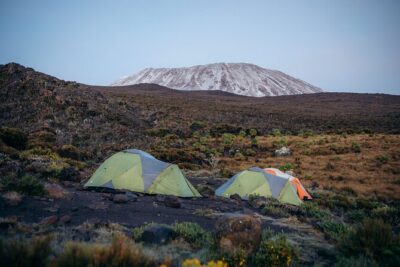
The first walk leads through tropical rainforest to Machame Camp at 2,835 meters. The route takes about six hours, including a picnic lunch. Expect damp forest, thick plant growth, and a gradual change in the feel of the air as you gain height.
This is a good opening day because the walking is long enough to make the trip feel real, but the camp is still at a moderate altitude compared with the days ahead. Keep your pace easy. Saving energy now matters more than arriving first.
Day 2: Shira Plateau and the first wide views
Day 2 begins around 8:00 a.m. You climb for about an hour to the top of the forest, then continue at a gentler gradient through moorland. The vegetation becomes lower and more open, and you start to see the mountain in a broader way.
After a short snack break, the route follows a rocky ridge toward the Shira Plateau. The day takes about five hours and ends at Shira Campsite, at 3,750 meters.
The view toward Kibo and the Western Breach gives you your first strong sense of Kilimanjaro’s upper reaches. You may also see the glacier area, depending on cloud and visibility. This is one of the prettier days because the forest has fallen behind and the route begins to feel spacious.
The short timing can be misleading. You are already high, and the body may begin to notice the altitude through headache, low appetite, or tiredness. Tell your guides how you feel rather than trying to hide symptoms. The company says its guides are trained in safety and first aid, and its staff conduct safety checks according to the information provided by past climbers.
Day 3: Lava Tower to Barranco Camp
Day 3 is the key acclimatization day. You climb into alpine desert and reach Lava Tower at about 4,600 meters, then descend to Barranco Camp at 3,900 meters.
The walking time is around six hours. The important point is not simply the distance. You spend time at a higher altitude, then sleep lower than your highest point for the day. That high-and-low rhythm helps your body adjust better than a steady upward push.
The descent to Barranco takes about three hours and brings views of the Western Breach and Barranco Wall. The wall looks serious from below, but tomorrow’s route shows that it is more of a steep scramble and climb than a technical rock face.
Barranco Camp sits in a valley below the wall. If the sky clears, sunset here can be one of the memorable moments of the trek. This is also a night when you should pay attention to hydration, food, and sleep. The next morning begins with one of the route’s most distinctive sections.
Same base, a different kind of day out:
- Safari Serengeti And Ngorongoro
★ 5.0 · 288 reviews - Climbing Kilimanjaro – Machame Route
★ 5.0 · 170 reviews - Climbing Kilimanjaro through 7 days Machame Route
★ 5.0 · 151 reviews - Kilimanjaro climb, Lemosho Route (8-day)
★ 5.0 · 148 reviews
Day 4: Barranco Wall and the Karanga Valley
After breakfast, you climb the Barranco Wall. It looks imposing from camp, but the route is designed for hikers rather than technical climbers. You will use your hands in places and move carefully while the guides help set a steady line.
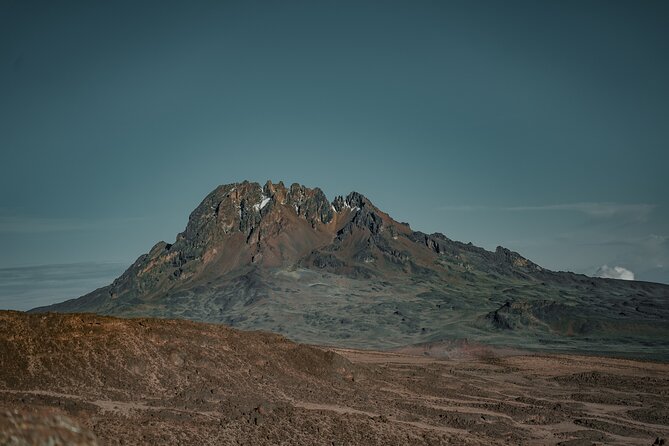
Reaching the top brings views of Kibo’s glaciers overhead and the rugged peaks of Mawenzi to the east. The route then drops into the Karanga Valley, where the camp sits at about 3,995 meters.
This is a short day of roughly four hours. That may sound easy, but the short schedule is deliberate. You have already spent several days gaining height, and the rest period helps prepare you for the summit attempt.
Lunch is served at camp, followed by an afternoon at leisure. Use it for rest, organizing clothing, checking batteries, and preparing a small summit pack. Do not treat the free time as an invitation to wander far. The next two days demand the energy you preserve here.
Day 5: Barafu Camp and the long night ahead
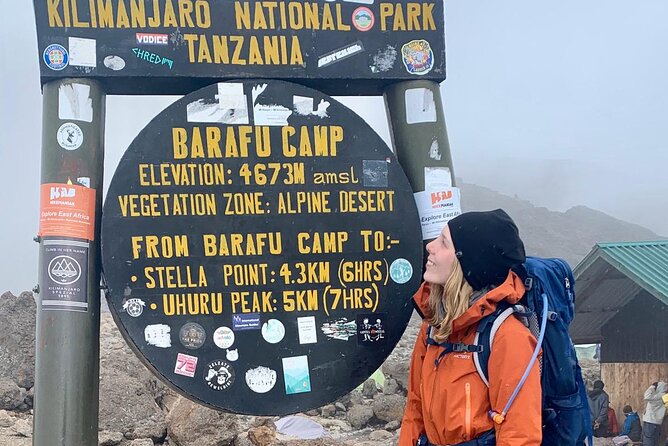
The walk from Karanga to Barafu Camp takes about three hours. Barafu sits at 4,640 meters, in a stark high-altitude setting with views toward Kibo and Mawenzi.
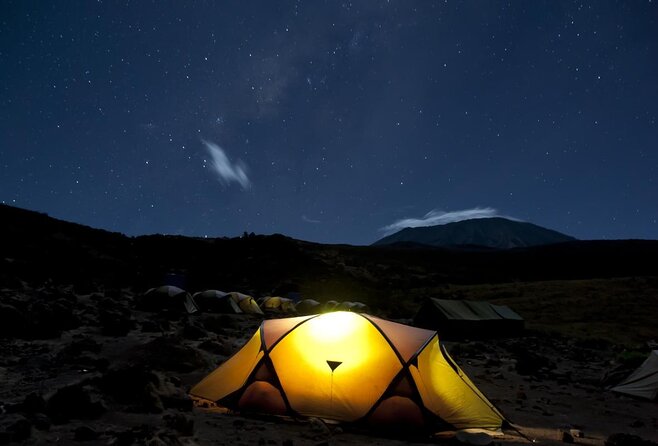
You have lunch after reaching camp, then a long rest before the summit attempt. Dinner comes early, and the plan is to sleep before waking around midnight.
This is one of the more unusual parts of the trek. You arrive in the early afternoon, but your day is not finished mentally. You need to eat, drink, arrange warm layers, and try to sleep while knowing you will soon be climbing in darkness.
Barafu is not a place for a leisurely evening. The altitude can make ordinary tasks feel slow. Keep your equipment close, listen to instructions from the guide team, and do not waste energy repacking your bag repeatedly.
Day 6: Stella Point, Uhuru Peak, and Millennium Camp
The summit day begins at around midnight with light tea and cookies. You then climb scree for four to five hours toward Stella Point at 5,756 meters.
This is the hardest stretch for most people. The slope, loose volcanic rock, cold, darkness, and lack of sleep all work against you. The guides’ role matters here. The sensible approach is slow, regular movement, with frequent checks on how you are coping.
The plan is to reach Stella Point around sunrise. From there, you continue for about one hour along the crater rim to Uhuru Peak, the summit of Kilimanjaro, at 5,895 meters. You have time for photos, but the summit stop is usually brief because the altitude and cold are severe.
After Uhuru Peak, you descend to Barafu Camp for lunch and rest. The day is not over. You continue down to Millennium Camp at about 3,950 meters, where you have dinner and sleep.
The total day is listed at about 12 hours. That number deserves serious attention. Reaching the summit is only part of the work, and the descent after Barafu can feel surprisingly tiring. For this reason, the seven-day plan suits people who want a paced climb but still need to prepare for a very demanding finish.
Day 7: Mweka Gate and the return to comfort
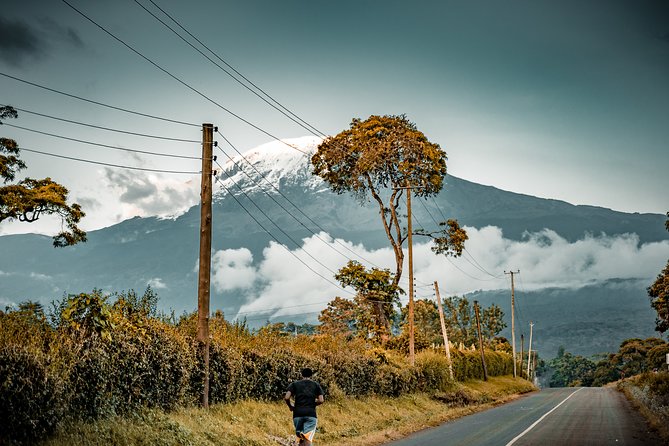
After breakfast, you make the final descent from Millennium Camp to Mweka Gate. The walk takes about five hours and brings you back into lower forest.
At the gate, you complete park formalities and receive your summit certificates. A private car then takes you back to your hotel, where a hot shower and proper rest will feel well earned.
This last day is less dramatic than the summit, but it is useful. You have time to finish the route rather than combining the final descent with an already punishing summit schedule.
The guide team and the feel of the service
Habari Adventure’s greatest strength is its guide operation. The company uses local Tanzanian guides from Kilimanjaro and other parts of Tanzania. They are trained in first aid and safety, and the stated guide subjects include flora, fauna, geography, history, archaeology, anthropology, astronomy, and wildlife management.
Names connected with the company include Stan, who handles planning communication, and mountain guides such as Leon, Ray, Michael, Omari, Oscar, Innocent, Godi, Justo, Yusuph, and Mudy. You cannot assume a particular guide will be assigned, so request names when booking if that matters to you.
The strongest praise connected with this trek centers on support, safety checks, food, sanitation, and the positive mood maintained by the crew. Families, solo climbers, and groups of friends have all used the company. Several accounts also describe the guides as patient and willing to give practical advice instead of simply pushing people uphill.
That human support has real value at altitude. A good guide notices a slowing pace, a change in mood, or signs that you are struggling before the problem grows. You should still take responsibility for your own health, but you will not be handling the mountain alone.
What the $2,850 price means
At $2,850 per person, this is not a budget walk. The value depends on what the price covers in the final booking terms.
The published details include hotel pickup, park admission for the itinerary, breakfast on six days, lunch on seven days, and dinner on six days. The itinerary also includes overnight camp stops and a private return transfer to your hotel. Confirm how tents, sleeping equipment, porter support, airport transfers, and any pre- or post-trek lodging are handled, since those details are not fully itemized.
A small group and a trained local crew can justify a higher price than a large, impersonal operation. You are paying for coordination as much as for walking: registration, route timing, meals, camp movement, altitude monitoring, summit logistics, and the return transfer.
The experience is generally booked about 80 days ahead, so do not leave planning until the last moment. The operator offers free cancellation up to 24 hours before the start time. Changes or cancellations inside that window are not accepted for a refund, and poor weather may lead to a new date or a full refund.
Who should choose this trek
I would point this trek toward a fit hiker who wants the classic Machame scenery and prefers seven days over a rushed schedule. It also suits people who value a local guiding company and want a group small enough for direct contact with the crew.
You should be comfortable walking for several hours on consecutive days, sleeping at high camps, and starting the summit day around midnight. You do not need technical climbing experience based on the route description, but you do need stamina and a serious attitude toward altitude.
This may not suit someone seeking a relaxed holiday with a mountain backdrop. The summit day is long, the price is high, and the conditions can be tiring even when the weather is good.
Should you book the Habari Adventure Machame climb?
Book it if you want a seven-day Kilimanjaro route with a strong local guide team, a maximum group size of 10, and an itinerary that includes a proper acclimatization day at Lava Tower. The Barranco Wall, high desert, glacier views, and sunrise summit attempt give the route plenty of variety.
Before paying, ask for a written breakdown of every inclusion, especially gear, porters, accommodation before and after the trek, and airport transport. If the answers match your expectations and you are ready for the 12-hour summit day, Habari Adventure offers a well-supported way to attempt Uhuru Peak.
FAQ
How long is the Kilimanjaro Machame Route experience?
The trek lasts seven days. The daily walking times range from about three to six hours, except for the summit day, which is listed at about 12 hours.
What altitude does the trek reach?
Uhuru Peak is at 5,895 meters. You reach Stella Point at 5,756 meters before continuing for about one hour to the summit.
When does the summit climb begin?
The summit attempt starts at around midnight from Barafu Camp. Light tea and cookies are provided before the climb.
Is hotel pickup included?
Pickup is offered, and the itinerary says you will be collected from your hotel around 8:00 a.m. on the first day. A private car returns you to your hotel after completing the trek.
What meals are included?
Breakfast is included on six days, lunch on seven days, and dinner on six days. The summit morning includes light tea and cookies.
How many people can join the group?
The maximum group size is 10 people. Confirmation is provided at the time of booking, and the operator recommends a strong level of physical fitness.
Just added in Moshi
- Kilimanjaro Airport Private Transfer from/to Moshi★ 5.0 · 14 reviews
- Kilimanjaro Climbing 5 days Marangu route★ 5.0 · 22 reviews
- 6 Days Machame route Kilimanjaro climbing★ 5.0 · 22 reviews
- 7 Days Highlight of Tanzania Mid-Range Standard★ 5.0 · 22 reviews
- 4 Day Mid-range Serengeti Safari★ 5.0 · 22 reviews
- 4 Days Tanzania Budget Safari★ 5.0 · 26 reviews
- 7 Days Machame Route Climbing Mt. Kilimanjaro★ 5.0 · 24 reviews
- Machame Route 6 days 5 Nights/Kilimanjaro Climb★ 5.0 · 23 reviews
Kilimanjaro Treks, compared.
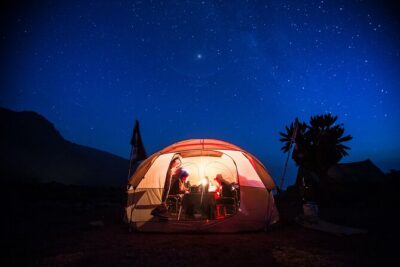
8-Day Small-group Lemosho Kilimanjaro Summit Trekking
Read our review →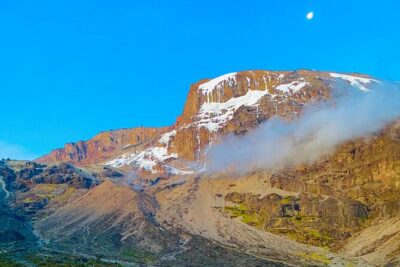
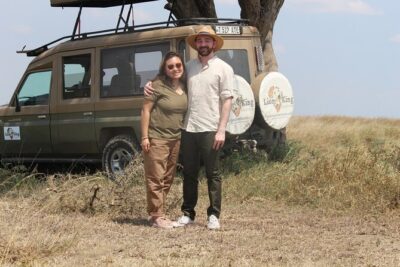
5 Days Best of Tanzania Luxury Safari Northern Circuit
Read our review →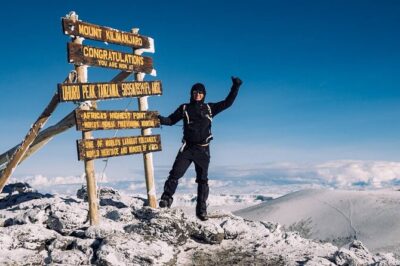
Climbing Kilimanjaro through 7 days Machame Route
Read our review →
7-Day Machame Kilimanjaro Summit Tour from Arusha
Read our review →Browse the lists this tour appears in