
Reviewed · KILIMANJARO TREKS
9 Days Mount Kilimanjaro Climb Machame Route
The defining feature of this climb is its careful altitude pattern. You go high to Lava Tower at 4,630 meters, then sleep lower at Barranco Camp, giving your body a useful chance to adjust before the summit push. The route also gives you Kilimanjaro’s greatest variety, from wet rainforest to bare volcanic slopes and the icy upper mountain.
I like the small maximum group of six, which should make pacing and communication easier. I also like the built-in acclimatization walks, including the climb toward Lava Tower from Shira Camp and the short hike toward Kosovo Camp from Barafu.
The main caution is the summit day. You start around midnight, climb from 4,673 meters to Uhuru Peak at 5,895 meters, then descend to Millennium Camp. That is a long, demanding day, and the advertised price of $3,250 per person does not include tips.
Key points to know before booking
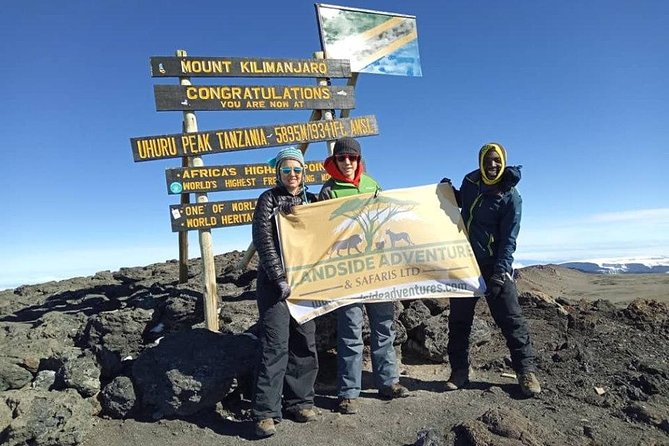
- The route reaches Uhuru Peak at 5,895 meters, with a midnight summit start from Barafu Camp.
- Altitude practice is built into the plan, including Lava Tower and Kosovo Camp acclimatization hikes.
- The Barranco Wall looks harder than it is, with the climb taking about an hour according to the itinerary.
- The group is limited to six people, supported by professional guides, a cook, and porters.
- Moshi lodging and airport transfers are included, along with meals, treated water, sleeping mattresses, tables, and chairs.
- The schedule needs clarification, because the experience is sold as nine days while the overview also refers to a seven-day climb.
Starting in Moshi with Kilimanjaro in view
Your airport pickup takes you from Kilimanjaro Airport to Stella Maris Lodge in Moshi, a drive of about 30 to 40 minutes. The lodge is outside Moshi town and is described as having a good view of Mount Kilimanjaro, which gives you an early look at the mountain you are about to climb.
This first night matters more than it may seem. You have a comfortable bed and hot shower before the trek, and the plan encourages an early night. You also have time to meet the mountain team and make sure your equipment is ready.
The final night is also in the Moshi area before your airport transfer on Day 9. Standard checkout is 11:00 AM. Late checkout may be available for a fee if your flight leaves later, so ask about that before you arrive.
Other routes up the mountain from Moshi:
- Kilimanjaro climb by Lemosho Route (7-day)
★ 5.0 · 651 reviews - Kilimanjaro climb, Machame Route (7-day)
★ 5.0 · 262 reviews - Kilimanjaro Climbing Lemosho Route 8 Days.
★ 5.0 · 186 reviews
Day 2: Machame Gate and the first rainforest climb
The mountain team meets you at the lodge in the morning for a briefing. You then drive to Machame Gate, at about 1,800 meters, where permits are arranged and you register with the search and rescue service.
From the gate, the route climbs through rainforest to Machame Camp at 3,010 meters. This is a fine opening day because you get shade, thick vegetation, and the first clear sense that Kilimanjaro is not a single type of mountain.
Rain is highly possible in this forest section. Pack rain protection where you can reach it quickly, not buried at the bottom of your bag. Spare clothes also matter because damp clothing can make the evening at camp much less comfortable.
The climb itself is listed at roughly two hours in the supplied schedule, but the broader trek details suggest you should treat the day as a proper mountain walking day rather than a quick outing. The key point is to start slowly. Your body is beginning its adjustment to altitude, and there is no prize for racing to the first camp.
Day 3: Shira Camp and the first altitude test
After breakfast, you climb from Machame Camp to Shira Camp at 3,845 meters. The rainforest gives way to open ground, and you get your first broad views across the Shira Plateau.
The walking is described as physically manageable, but the altitude becomes more noticeable here. Your best tool is a slow pace. Tell your guide early if you develop symptoms that concern you, rather than waiting until they become difficult to hide.
After lunch and rest at Shira, the group makes an acclimatization hike toward Lava Tower, gaining about 300 meters before returning to camp. This is one of the strongest parts of the schedule. You briefly go higher, then sleep lower, a pattern designed to give your body useful exposure without making you spend the night at the highest point reached.
A hot dinner follows the hike. That detail is welcome at altitude, but you should still expect simple mountain meals rather than restaurant dining. Vegetarian and non-vegetarian meals are provided.
Day 4: Lava Tower at 4,630 meters, then Barranco
This is one of the most important days on the route. You leave Shira at 3,845 meters and climb to Lava Tower at 4,630 meters. The route gains height, but the day is designed around a descent afterward.
You eat lunch at Lava Tower, giving your body more time at high altitude. Then you drop about 650 meters to Barranco Camp at 3,960 meters. This rise-and-fall pattern can feel strange, especially when you are tired and know that you will not sleep at the highest point reached that day. It is, however, a valuable part of the plan.
Barranco Camp brings one of Kilimanjaro’s memorable views: the Barranco Wall. From camp, the wall looks steep and serious. The next morning you climb it, but the route description places the actual ascent at about an hour and calls the trail straightforward.
This is a good place to keep expectations sensible. The wall is not a technical climbing challenge, but you still need steady footing, patience, and confidence on uneven ground.
Same base, a different kind of day out:
- Safari Serengeti And Ngorongoro
★ 5.0 · 288 reviews - Climbing Kilimanjaro – Machame Route
★ 5.0 · 170 reviews - Climbing Kilimanjaro through 7 days Machame Route
★ 5.0 · 151 reviews - Kilimanjaro climb, Lemosho Route (8-day)
★ 5.0 · 148 reviews
Day 5: Barranco Wall and the Karanga acclimatization hike
An early start is recommended to reduce crowding on the Barranco Wall. That is practical advice. A busy route can slow everyone down, and an early departure gives your small group more room to find its own pace.
At the top, you get a strong photo opportunity with Kibo Peak behind you. The route then becomes a series of ups and downs before reaching Karanga Camp at about 4,035 meters. This section can feel harder than the short distance suggests because your legs are already carrying several days of walking.
After lunch at Karanga, you climb toward Barafu, reaching about 4,270 meters, and then return to Karanga for the night. Again, you sleep lower than the highest point visited. That second acclimatization hike is a useful feature, especially before the next day takes you to Barafu.
The listed distance between Barranco and Karanga is about 5 kilometers. Do not judge the day by distance alone. At altitude, uneven ground and repeated climbs can turn a short route into a tiring one.
Day 6: Barafu Camp and the final preparation
You climb from Karanga at 4,035 meters to Barafu Camp at 4,673 meters. The listed distance is 6 kilometers, with an estimated walking time of four to five hours.
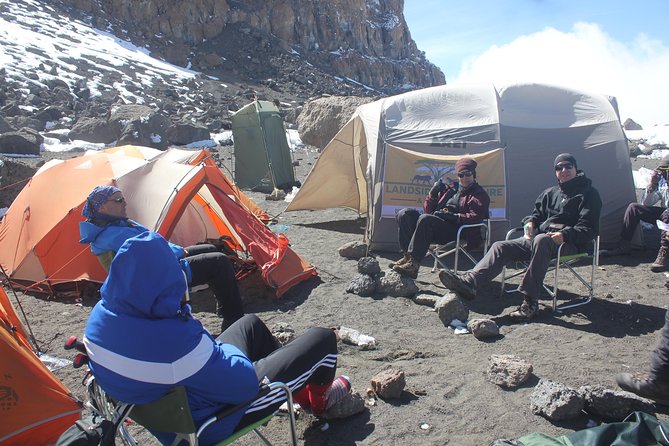
Barafu is the launch point for the summit attempt. The crew sets up tents and sleeping bags ahead of your arrival, so you can settle in without handling the full camp operation yourself. Tables, chairs, mattresses, treated drinking water, and mountain meals are included.
After rest, you make another acclimatization climb toward Kosovo Summit Camp, reaching about 4,800 meters before returning to Barafu. This short outing is not about sightseeing alone. It gives you more high-altitude exposure before the hardest section.
The rest of the day should be quiet. Eat, drink, organize your clothing, and sleep if you can. The midnight start means this is not a normal evening. You may not get much sleep, so keeping the afternoon calm is important.
Day 7: The midnight push to Uhuru Peak
The summit attempt begins around midnight. From Barafu at 4,673 meters, you climb to Uhuru Peak at 5,895 meters. The route is described as technically simple, but the thin air is the real test.
The plan says a guide accompanies every two climbers above the high camps, with close attention to your condition. That guide support matters here. You should also be ready for the possibility that the guide will change your pace or turn you around if your health becomes unsafe.
At the summit, you have the chance to walk near the glacier before beginning the descent. After about two hours of rest at Barafu, you continue down to Millennium Camp at 3,820 meters.
The day is listed at 15.5 kilometers and seven to twelve hours. That range is wide because altitude affects people differently. The descent can feel easy at first, but loose footing makes it risky. The itinerary gives a blunt warning about falls and damaged toenails, and you should take it seriously. Use careful steps, keep your feet secure, and do not let summit excitement make you careless.
Day 8: Forest descent, certificates, and Moshi
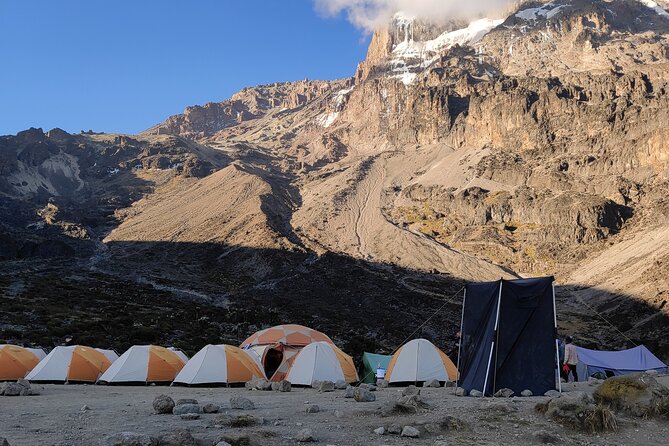
From Millennium Camp, you descend to Mweka Gate at 1,640 meters. The distance is about 13.5 kilometers, with five to six hours of walking.
This lower camp is valued for a simple reason: you can sleep better at 3,820 meters than you did near the summit. After breakfast, the route continues through the forest toward the park exit.
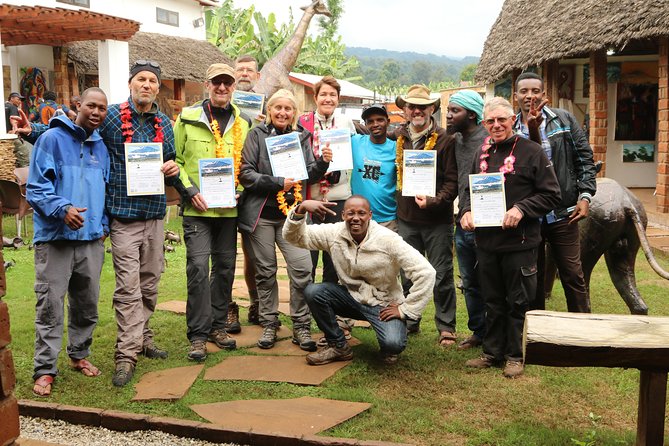
At Mweka Gate, there is a short celebration with the climbing crew. You then return to the company office, receive climb certificates, and drive back to your lodge. The certificates are a pleasant closing detail, but the more important part is the transition from mountain routine back to ordinary life.
You will probably be tired. Keep the evening easy and do not plan a tightly packed onward schedule unless you have a good reason.
What the $3,250 price covers
At $3,250 per person, this is a serious investment. The value depends on how much support you want and how well the included services match your needs.
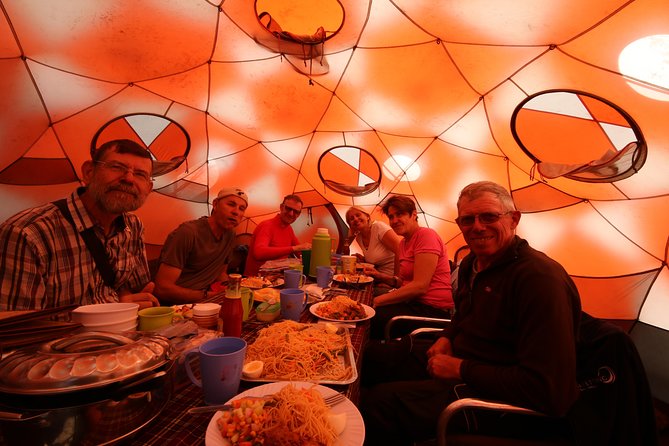
The price includes roundtrip airport transfers, Moshi lodging as described in the itinerary, professional mountain guides, a cook, porters, meals, treated drinking water, sleeping mattresses, tables, and chairs. Breakfast is listed for nine days, lunch for seven days, and dinner for six days.
The support team is a major part of the cost. You are not carrying the full camping setup, preparing meals, or arranging transport between the airport, lodge, and trailhead yourself. That can make a major difference on a high-altitude climb.
Tips are not included. Set aside money for them and ask the operator how the team’s tipping system works before departure. Also confirm exactly what personal gear you must bring, since the supplied information does not provide a complete equipment list.
There is one detail I would clarify before paying: the title and itinerary describe a nine-day experience, but the overview also calls it a seven-day Machame climb. The day-by-day schedule clearly runs from airport arrival on Day 1 to airport transfer on Day 9, so ask the provider to confirm the exact number of trail days, lodge nights, and included meals.
The guide and porter team
The organization uses a guide, cook, and porters, with a maximum of six people in the group. That is a sensible size for a route where pace, health checks, and camp routines matter.
Several team names are associated with strong experiences on Machame and other Kilimanjaro routes. Guides Kim and Oscar are specifically praised for their work, while Moses and Pius led a successful seven-day Machame climb. Maxon is described as highly responsive before the climb and ready to help during the trip. Nicholas prepared the food for one group, and Julius served hot tea in the morning.
These names do not guarantee that the same people will lead your climb. Ask who is assigned to your departure and who will be your lead guide. That simple question can help you understand the support structure before you arrive.
The team also has experience handling poor weather. Rain and changing mountain conditions are part of the route, especially in the forest. Good preparation matters more than sunny photographs.
Who should book this climb?
This route suits you if you have moderate physical fitness, can walk for several hours on uneven ground, and are prepared for long days at altitude. You do not need technical climbing experience based on the itinerary, but you do need patience and the ability to follow a slow pace.
It is a good fit if you want a route with varied scenery, built-in high-and-low acclimatization, and a small group. The Barranco Wall adds a memorable feature without turning the trip into a technical climbing expedition.
It may not suit you if you want a relaxed holiday with flexible sleep schedules. The midnight summit start, long descent, basic camp routine, and altitude can be demanding. The non-refundable policy also makes this a booking that deserves careful planning. If you cancel or request a change, the amount paid is not refunded.
Should you book the Machame Route?
I would consider this climb if you want a structured Kilimanjaro attempt with strong support, a small group, and a route that gives you several useful acclimatization stages. The itinerary has a sensible rhythm: rainforest, Shira, Lava Tower, Barranco, Karanga, Barafu, summit, and a lower forest camp.
Before booking, confirm the seven-day versus nine-day wording, the exact lodge nights, the assigned guides, the personal gear requirements, and the tipping expectations. If those points are clear and you are comfortable with the price and strict cancellation terms, this is a well-supported option for a serious Mount Kilimanjaro climb.
FAQ
Where does the climb start and finish?
The experience starts and ends in Moshi, Tanzania. Airport pickup and the final airport transfer are included.
How long is the experience?
The day-by-day plan runs for nine days, from airport pickup on Day 1 to the hotel-to-airport transfer on Day 9. The overview also refers to a seven-day climb, so confirm the exact trail schedule before booking.
How high is Uhuru Peak?
Uhuru Peak is at 5,895 meters.
What time does the summit attempt begin?
The summit climb starts around midnight from Barafu Camp.
How many people can join the group?
The maximum group size is six travelers.
What meals are included?
Breakfast is listed for nine days, lunch for seven days, and dinner for six days. Vegetarian and non-vegetarian meals are available.
Is drinking water provided?
Yes. Treated drinking water is included.
Are guides, cooks, and porters included?
Yes. The package includes professional mountain guides, a cook, and porters.
Is airport transportation included?
Yes. Roundtrip airport transfers are included.
Are tips included in the price?
No. Tips are not included.
Just added in Moshi
- Wildlife Extravaganza: Manyara, Tarangire & Ngorongoro in 3 Days★ 5.0 · 3 reviews
- West Kilimanjaro cycling Adventures★ 4.5 · 8 reviews
- machame route★ 5.0 · 16 reviews
- Kilimanjaro Climb • Machame Route ~ 10 Day★ 5.0 · 6 reviews
- Kilimanjaro Climbing Umbwe Route★ 5.0 · 3 reviews
- Mt Kilimanjaro 6 days Marangu route hike★ 5.0 · 3 reviews
- 3 Days Private E-Bike Tour in West Kilimanjaro★ 5.0 · 3 reviews
- Private Cycle to Kilimanjaro Bike Park Safari★ 5.0 · 6 reviews
Kilimanjaro Treks, compared.



8-Day Small-group Lemosho Kilimanjaro Summit Trekking
Read our review →

5 Days Best of Tanzania Luxury Safari Northern Circuit
Read our review →

Climbing Kilimanjaro through 7 days Machame Route
Read our review →
7-Day Machame Kilimanjaro Summit Tour from Arusha
Read our review →Browse the lists this tour appears in