
Reviewed · KILIMANJARO TREKS
8 Day Climbing Kilimanjaro Via Lemosho Route
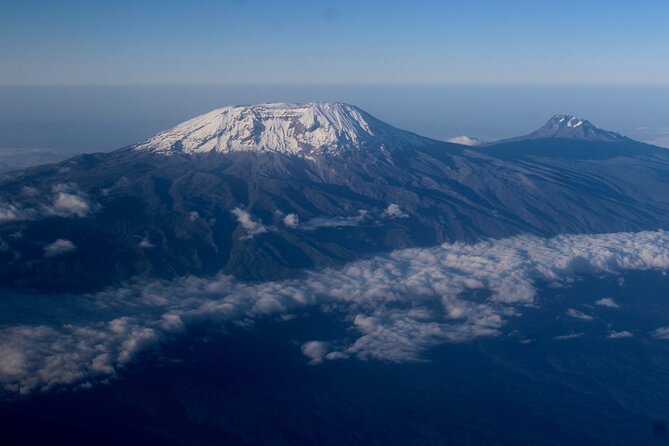
Mount Kilimanjaro saves its hardest work for the end, but this 8-day Lemosho climb gives you time to adjust before the midnight push to Uhuru Peak. You move from rainforest to moorland, volcanic rock, alpine desert, and finally the cold arctic zone, with the mountain changing under your boots each day.
I like the route’s slow acclimatization plan, especially the extra time at Moir Camp and Karanga Camp. I also like the human side of the trip: guides such as Yobu Eliamani Mbwambo, Rama, Paulo, and William have been associated with this operator, and the strongest praise centers on attentive pacing, friendly support, and flexible help when altitude causes trouble.
The main caution is simple: this is a serious high-altitude climb, not a long scenic walk. You need moderate physical fitness, patience, warm gear, and a willingness to accept that reaching the summit is never guaranteed. The price is $2,670 per person, and international flights and visas are extra.
Key points of the Lemosho climb
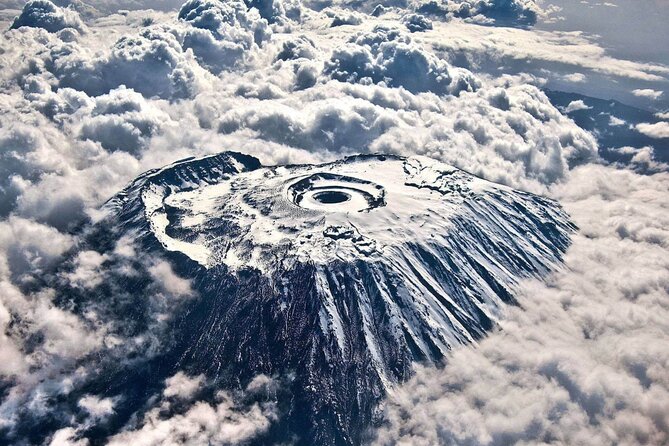
- Six ecological zones in eight days: Move from Afromontane rainforest through heather, moorland, alpine desert, and the arctic zone.
- A gradual route to altitude: Extra nights around Moir and Karanga help you spend more time acclimatizing before summit day.
- The Barranco Wall is hands-on: Expect to use all four limbs on this short but demanding section.
- A midnight summit attempt: Reach Stella Point near sunrise, then continue to Uhuru Peak at 19,341 feet.
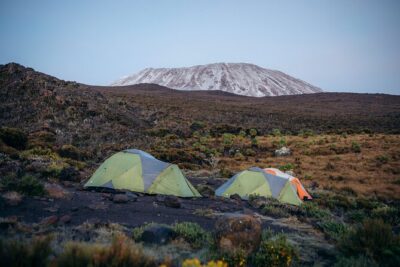
- Camping with more comfort: Spacious tents, meals, and a dedicated mountain crew make this more than a bare-bones trek.
- A strong guide element: Ask about guide assignments, including whether Yobu, Rama, Paulo, or William will lead your group.
Why the Lemosho Route earns its reputation
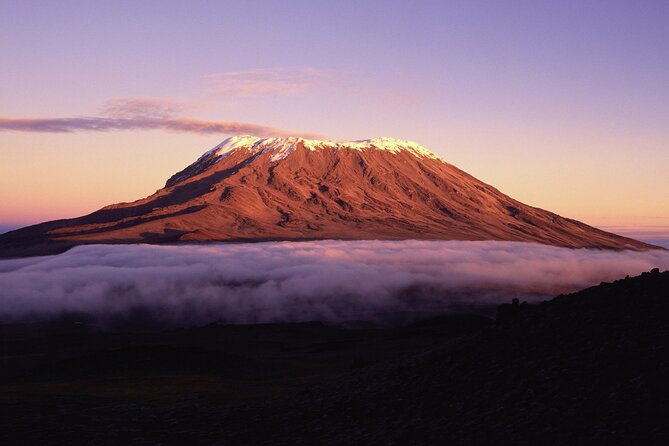
Lemosho approaches Kilimanjaro from the west, beginning at Londorossi Gate. That start gives you a quieter, more gradual introduction than a route that rushes straight toward the upper mountain.
The scenery changes in clear stages. On the first day, you walk under rainforest canopy. By the time you reach the Shira Plateau, trees have given way to open moorland and volcanic rock. Higher up, the plants become scarce, the air thinner, and the mountain more severe.
That variety is the route’s great reward. You are not simply walking uphill for eight days. You are watching Kilimanjaro change from a living forest into a cold volcanic summit.
The route also has a practical advantage. Eight days gives your body more time to handle altitude than a rushed itinerary. That matters because the summit reaches 19,341 feet, where cold, wind, fatigue, and thin air can overwhelm even fit people.
Other routes up the mountain from Moshi:
- Kilimanjaro climb by Lemosho Route (7-day)
★ 5.0 · 651 reviews - Kilimanjaro climb, Machame Route (7-day)
★ 5.0 · 262 reviews - Kilimanjaro Climbing Lemosho Route 8 Days.
★ 5.0 · 186 reviews
Day 1: Londorossi Gate to Forest Camp
The morning begins with pickup from Arusha and a long vehicle ride to Londorossi Gate. The drive is part of the day’s work, so do not expect to arrive at the trailhead fresh from a short transfer.
At the gate, you meet the rest of the crew and begin walking through Afromontane rainforest. The first hike covers about four miles, rising from 7,742 feet to 9,498 feet. The listed walking time is roughly three to four hours.
This is a sensible first day. The pace is leisurely, and lunch is taken on the trail. You reach Forest Camp in the middle of the afternoon, leaving time to settle into camp before nightfall.
Keep your eyes open for wildlife, though the route is not presented as a wildlife safari. The forest is the main attraction here, with thick vegetation and a cool, shaded feel that will soon disappear as you climb.
Day 2: Forest Camp to Shira 1 Camp
Day two moves from forest into a more open mountain world. The route rises from 9,498 feet to 11,500 feet over about five miles and takes roughly five to six hours.
You pass through podocarpus and juniper forest before reaching heather and volcanic rock draped with lichen. The Shira Plateau then opens ahead. This high plateau was once part of Kilimanjaro’s third peak before that peak collapsed, giving the area an unusual volcanic story and a broad, exposed feel.
Shira 1 Camp is one of the first places where you get a clear view of Kibo, Kilimanjaro’s main summit. That view helps you understand the scale of the climb still ahead.
The day is longer than day one, but the gain in altitude remains controlled. Lunch is again taken on the trail, and camp is reached by mid-afternoon. I would treat this as a good time to establish a steady routine: walk slowly, drink regularly, eat even if your appetite changes, and keep warm once the sun drops.
Day 3: Crossing the Shira Plateau to Moir Hut
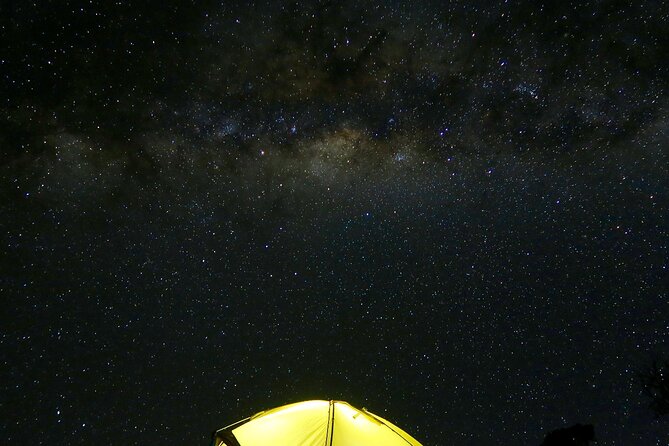
This is one of the prettiest days of the climb. You cross the Shira Plateau for about three to four hours, moving through moorland meadows before stopping for lunch.
The full day covers about seven miles and rises from 11,500 feet to 13,800 feet. The walking time is listed at five to seven hours, so the exact effort depends on pace and the conditions underfoot.
Moir Camp sits high at 13,800 feet. If you still have energy, an optional late-afternoon walk in the Lent Hills provides extra acclimatization. That option is useful, but it should not become a test of toughness. At this height, resting may be the smarter choice if your body feels strained.
This camp is one reason I prefer the eight-day schedule. You spend meaningful time high on the mountain before the summit attempt, rather than racing upward and hoping your body catches up.
Same base, a different kind of day out:
- Safari Serengeti And Ngorongoro
★ 5.0 · 288 reviews - Climbing Kilimanjaro – Machame Route
★ 5.0 · 170 reviews - Climbing Kilimanjaro through 7 days Machame Route
★ 5.0 · 151 reviews - Kilimanjaro climb, Lemosho Route (8-day)
★ 5.0 · 148 reviews
Day 4: Moir Camp, Lava Tower, and Barranco
Day four is designed around the classic high-altitude principle of climbing high and sleeping lower. You rise from Moir Camp to about 15,223 feet at Lava Tower, then descend to Barranco Camp at roughly 13,044 feet.
The route covers about seven kilometers and takes four to six hours. The upper section is harsh and sparse. Few plants or animals can handle the wide temperature swings and exposed conditions.
Lava Tower is a volcanic rock formation and a natural lunch point. If you feel strong, you may make an optional ascent of the 300-foot tower before heading down. I would not treat that climb as essential. The day already gives your body a serious altitude workout.
The descent to Barranco passes through the Garden of the Senecios, filled with giant groundsel and giant lobelias. These plants look almost out of place in such severe surroundings. Barranco Valley is one of the most attractive parts of the route, with steep walls, unusual vegetation, and a more enclosed feeling after the open upper slopes.
Day 5: Barranco Wall to Karanga Camp
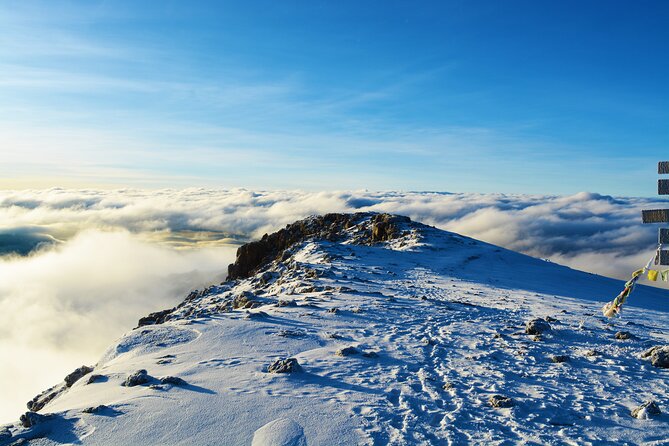
Day five is shorter in distance but not effortless. You cover about three miles and climb from 13,044 feet to 13,123 feet, with four to five hours of walking.
The challenge comes early at the Barranco Wall. It can look intimidating from below, and the route requires hands-on movement. You may use all four limbs as you work toward the top of the Karanga Valley. This is not technical rock climbing, but it is more physical and exposed than the easy sections lower on the mountain.
After the wall, the route rises and falls through several inclines and declines before reaching Karanga Camp. The camp is chosen for its useful altitude profile, not because the day is easy. Spending more time high up helps prepare you for Barafu Camp and the final summit attempt.
The sunsets here can be especially striking, with views toward the southern glacial valleys and ice fields high above. Still, do not let the scenery tempt you into staying exposed after dark. At this height, warmth and rest are valuable.
Day 6: Karanga to Barafu Camp
Day six is a half-day ascent to Barafu Camp, listed at about 15,288 feet. The upper route is alpine desert: dry, bare, windy, and short on shelter.
You reach camp in time for lunch, then have the afternoon to rest before the summit bid. This break is not wasted time. The final ascent begins just before midnight, so you need to conserve energy, organize your gear, and sleep if your body allows it.
Barafu offers fine views of Mawenzi Peak, but the camp itself is stark. Wind can sweep through, and the temperatures are likely to feel very different from the rainforest of the first day.
Dinner is taken early. This is the point where the itinerary becomes less about sightseeing and more about preparation. Keep your headlamp, warm layers, water, and personal essentials close at hand. The exact equipment list is not provided here, so ask the operator what you must bring before departure.
Day 7: The midnight summit attempt
Summit day begins just before midnight. The listed figures show an ascent from about 12,467 feet to 19,341 feet, followed by a long descent, with seven to eight hours for the ascent and four to six hours for the descent.
This is the coldest and windiest part of the climb. Progress is slow by design. Patience matters more than speed, and the guide’s role in setting a manageable pace becomes especially important.
Near dawn, you aim to reach Stella Point at 18,652 feet. The sunrise over Mawenzi Peak is one of the defining sights of the route. From Stella Point, you continue along the rim to Uhuru Peak, the highest point in Africa and the Roof of Africa.
The final section can feel short on paper and very long in practice. Celebrate briefly at the summit, take the necessary photographs, and begin descending. The trip description gives the full summit day as ending around 12,467 feet, with the next descent continuing through montane forest on day eight.
This is also the day when altitude problems can become decisive. One family experience connected with the operator included a parent who developed altitude sickness and did not summit. That is not a failure. A safe descent is the correct decision when the body is struggling.
Day 8: Descent to Moshi
The final day takes you down through montane forest and back toward Moshi. After breakfast and farewells to the crew, you are picked up and transferred to your hotel around midday.
The listed duration is about 10 hours, which likely reflects the full return day rather than ten hours of continuous hiking. Either way, you should expect to be tired, dusty, and ready for a shower.
A celebratory dinner is part of the promised finish, but the larger reward is the change in scenery behind you. In a single week, you have moved from thick forest to a high volcanic summit and back down again.
Guides, camp comfort, and the human side
The operator is Spirit of Kilimanjaro. Guide names associated with this experience include Yobu Eliamani Mbwambo, Rama, Paulo, and William. Since guide assignments can change, ask who will lead your group and how many support staff will accompany you.
The most encouraging pattern in the available feedback is the attention given to pacing and personal needs. One account describes a guide team adapting quickly to the group’s mood and ability. That matters on Kilimanjaro, where a rigid pace can make a hard day worse.
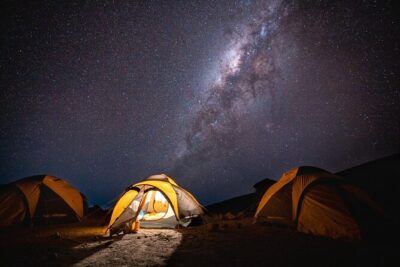
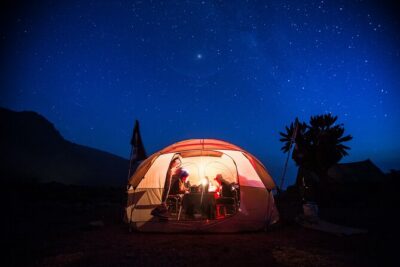
The camping setup is described as Signature Camping, with spacious tents, deluxe comfort, and substantial meals. Breakfast is included eight times, lunch nine times, and dinner eight times. The meal count suggests strong food support across the climb, although the precise menus and tent arrangements are not specified.
The maximum group size is listed as 100 people. That is a large possible number, so ask how groups are divided and who directly guides your party. A smaller working group can make pacing and communication easier, even if the overall departure includes many people.
Is $2,670 a fair price?
At $2,670 per person, this is not a cheap holiday. It is also not a simple park walk. The price covers an eight-day guided climb with camping, meals, pickup arrangements, and a route chosen for scenery and acclimatization.
The value rests in the length and support. You get a slower schedule, extra high-altitude nights, a prepared crew, and food throughout the route. Those elements are more important than a low headline price when the goal is to reach the summit safely.
You still need to budget for international flights and a visa. Those are specifically excluded. The available information does not list park fees, tips, equipment rental, airport transfers, hotels, or medical services, so ask for a complete cost sheet before paying.
Free cancellation is available up to 24 hours before the local start time. Changes or cancellations inside that window are not accepted for a refund.
Who should book this climb?
This trip fits you if you want Kilimanjaro’s most varied scenery and can handle long days at altitude. It suits people who prefer an eight-day schedule over a rushed ascent, and it works well for a group that values guides, meals, and a more comfortable camp setup.
It is not a good match if you want a relaxed holiday with a guaranteed summit. You need moderate physical fitness, tolerance for cold and wind, and the judgment to turn back if altitude sickness appears.
I would also recommend it for families or mixed-ability groups only if everyone understands that the mountain may separate the group by ability. One person can reach camp while another needs a slower pace or a descent. Good guides can help, but no operator can remove that risk.
Should you book the 8-day Lemosho Route?
Book it if your priority is a scenic, gradual Kilimanjaro climb with strong attention to acclimatization. The Shira Plateau, Lava Tower, Barranco Valley, giant senecios, and sunrise from Stella Point give this route real variety, while Karanga and Moir provide useful time at altitude.
Before booking, confirm the full price, guide assignment, group structure, equipment requirements, and what happens if you must descend early. If those details suit your budget and fitness, the eight-day Lemosho schedule offers a sensible balance of scenery, support, and summit preparation.
FAQ
How long is the Kilimanjaro climb?
The experience lasts approximately eight days, beginning with pickup from Arusha and ending with a transfer back to your hotel in Moshi.
Where does the Lemosho Route begin?
The route begins at Londorossi Gate in Kilimanjaro National Park, approaching the mountain from the west.
What time does the experience start?
The listed start time is 8:00 am.
How high is Uhuru Peak?
Uhuru Peak is listed at 19,341 feet. Stella Point, reached shortly before the summit section, is at about 18,652 feet.
What meals are included?
Breakfast is included eight times, lunch nine times, and dinner eight times.
Are international flights included?
No. International flights are not included in the price.
Is a visa included?
No. You must arrange and pay for your own visa.
What level of fitness is required?
You should have a moderate physical fitness level. The climb includes several multi-hour hiking days, a midnight summit attempt, cold conditions, and high altitude.
Can I cancel for a full refund?
Yes, if you cancel at least 24 hours before the experience start time. The cutoff is based on local time, and cancellations made later are not refunded.
Just added in Moshi
- Wildlife Extravaganza: Manyara, Tarangire & Ngorongoro in 3 Days★ 5.0 · 3 reviews
- West Kilimanjaro cycling Adventures★ 4.5 · 8 reviews
- machame route★ 5.0 · 16 reviews
- Kilimanjaro Climb • Machame Route ~ 10 Day★ 5.0 · 6 reviews
- Kilimanjaro Climbing Umbwe Route★ 5.0 · 3 reviews
- Mt Kilimanjaro 6 days Marangu route hike★ 5.0 · 3 reviews
- 3 Days Private E-Bike Tour in West Kilimanjaro★ 5.0 · 3 reviews
- Private Cycle to Kilimanjaro Bike Park Safari★ 5.0 · 6 reviews
Kilimanjaro Treks, compared.
8-Day Small-group Lemosho Kilimanjaro Summit Trekking
Read our review →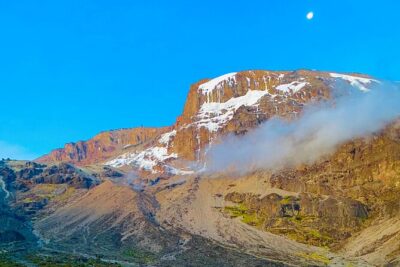
5 Days Best of Tanzania Luxury Safari Northern Circuit
Read our review →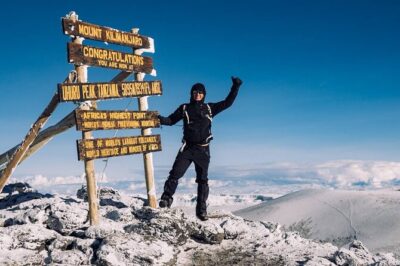
Climbing Kilimanjaro through 7 days Machame Route
Read our review →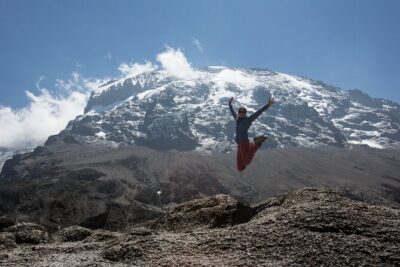
7-Day Machame Kilimanjaro Summit Tour from Arusha
Read our review →Browse the lists this tour appears in