
Reviewed · KILIMANJARO TREKS
8 Days 7 Nights Kilimanjaro Lemosho Route
Kilimanjaro’s Lemosho Route gives you the mountain in chapters: thick rainforest, open heath, the broad Shira Plateau, volcanic desert, and a sunrise summit above the clouds. The long western approach helps keep the early days quieter, while the route’s extra acclimatization time gives you a sensible shot at reaching Uhuru Peak at 19,341 feet.
I like the balance here. You get some of Kilimanjaro’s finest views without rushing the altitude gain, and the private format means your group climbs with its own team. I also like the human side: Emanuel helps with planning, and Elly has stepped in to help with practical problems such as delayed luggage. The main caution is simple: this is a serious high-altitude trek, not an easy walking holiday. Summit day lasts 11 to 14 hours, and the price does not spell out every inclusion, so confirm the details before paying.
Key points to know before booking
- The Lemosho approach starts quietly: You spend the first days on the western side of Kilimanjaro before joining the busier southern route near Lava Tower.
- Acclimatization is built into the plan: The Lava Tower to Barranco descent and the short Karanga day help your body adjust before the summit attempt.
- Barranco Wall is a hands-on morning: You climb and scramble up a 1,200-foot volcanic wall, then continue to Karanga Camp.
- Summit night is the hard test: You leave around midnight, climb scree toward Stella Point, and continue to Uhuru Peak.
- The private setup has real value: Only your group takes part, which can make pacing and support more personal.
- The listed price is $3,480 per person: That is a major commitment, so ask exactly what transport, meals, equipment, park costs, and staff arrangements are covered.
Why Lemosho is a strong eight-day choice
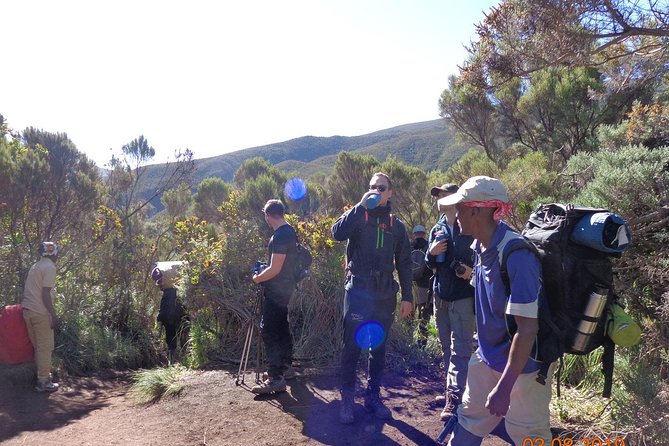
Topi Adventure’s eight-day plan uses the western side of Kilimanjaro, beginning with a drive from Moshi to Londorossi Gate. That approach takes longer to reach than some other starting points, but it pays you back with a gradual change in scenery and a quieter first stretch.
The route is especially attractive if you want more than a direct march to the summit. You cross the Shira Plateau from west to east, then join the southern circuit near Lava Tower. This gives you changing views of Kibo, Mawenzi, Mount Meru, and the mountain’s volcanic ridges.
The eight-day length matters. You are not simply buying extra walking time. You are buying more chances to sleep at higher camps before summit night, plus two shorter acclimatization-focused days at Karanga and Barranco. Altitude affects each person differently, but a slower plan is generally more useful than trying to force the mountain into fewer days.
The tradeoff is cost and commitment. At $3,480 per person, this is not a budget climb. The price can make sense if you value a private group, a longer route, local support, and the chance to experience several sides of Kilimanjaro. Still, ask for a written list of inclusions. The supplied details confirm pickup is offered and admission tickets are included in the itinerary, but they do not spell out every service covered by the price.
Other routes up the mountain from Moshi:
- Kilimanjaro climb by Lemosho Route (7-day)
★ 5.0 · 651 reviews - Kilimanjaro climb, Machame Route (7-day)
★ 5.0 · 262 reviews - Kilimanjaro Climbing Lemosho Route 8 Days.
★ 5.0 · 186 reviews
Day 1: Moshi to the rainforest
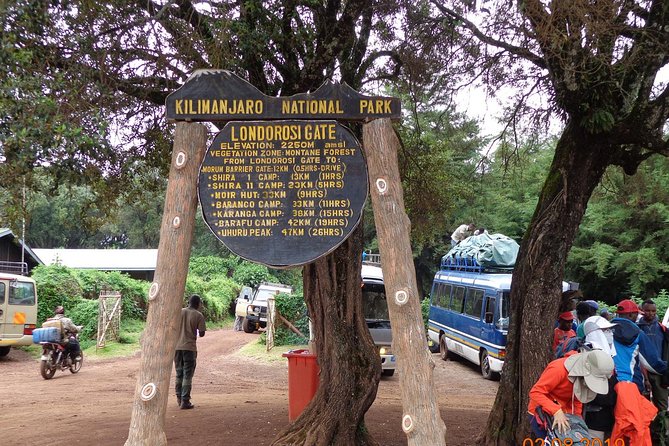
Your meeting point is on Old Moshi Road, with a stated start time of 7:30 am. From Moshi, the drive to Londorossi Gate takes about four hours. You complete entry formalities there, then continue by vehicle to the Lemosho trailhead.
The first walk covers about 6 kilometers, taking three to four hours. You climb from roughly 7,742 feet to 9,498 feet and sleep in the rainforest zone. This is a gentle introduction in terms of distance, but the day is long because of the drive, registration, lunch, and trailhead transfer.
The forest is one of the reasons to choose Lemosho. Expect dense vegetation and a damp, shaded start rather than immediate open mountain views. The route begins with atmosphere and texture, not a dramatic summit panorama.
Your main job today is to conserve energy. The climb has only begun, and a fast first day helps nobody. Keep your pace easy and use the time to learn how your guide organizes the group.
Day 2: Shira Ridge and the first big views
The trail leaves the rainforest and enters heath, with tall grasses, heather, volcanic rock, and lichen. You climb through rolling ground and cross several streams before reaching Shira Ridge, then drop gently to Shira 1 Camp.
The day covers 8 kilometers and takes five to six hours, rising from 9,498 feet to about 11,500 feet. The best reward is the view across the plateau toward Kibo, Kilimanjaro’s main summit cone.
This is where the route begins to feel properly high and open. The vegetation becomes less dense, the air gets thinner, and the mountain’s scale becomes easier to read. You are still walking a manageable distance, but the altitude deserves attention.
The published day-by-day information repeats the Day 2 description for Day 3. That means you should ask Topi Adventure to confirm the exact camp and walking plan before departure. The broader route description indicates that the second and third days continue across the Shira area, but the supplied schedule does not give a separate Day 3 route with certainty.
Day 3: Crossing the Shira Plateau
The Shira Plateau is one of Lemosho’s great strengths. Instead of climbing straight toward the summit, you cross a high volcanic plain and gain views from changing angles. The walking is described as pleasant and relatively flat, though the altitude can make even easy ground feel demanding.
Because the listed Day 3 details repeat Day 2, treat this as a point to clarify, not a reason to dismiss the trip. Ask where you sleep on the third night, how much distance you cover, and whether the day includes a longer crossing of the plateau.
That small check matters. On a mountain route, camp names and elevation profiles help you judge how the plan handles altitude. Topi Adventure’s strong focus on Lemosho suggests this is familiar ground for the company, but you should still have the final schedule in writing.
Same base, a different kind of day out:
- Safari Serengeti And Ngorongoro
★ 5.0 · 288 reviews - Climbing Kilimanjaro – Machame Route
★ 5.0 · 170 reviews - Climbing Kilimanjaro through 7 days Machame Route
★ 5.0 · 151 reviews - Kilimanjaro climb, Lemosho Route (8-day)
★ 5.0 · 148 reviews
Day 4: Lava Tower, Arrow Glacier country, and Barranco
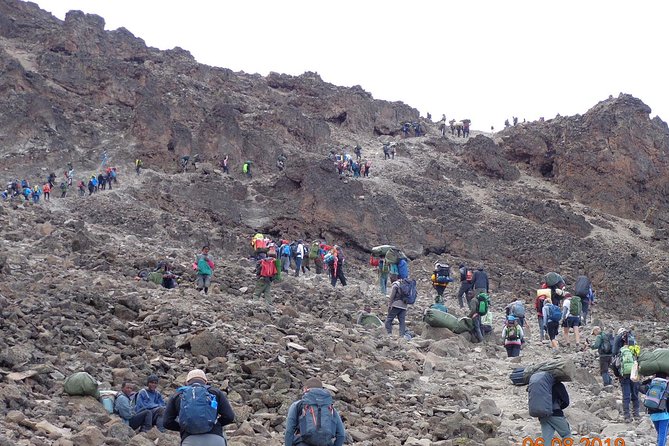
Day 4 is the key acclimatization day. From the Shira Plateau, you walk east along a ridge toward Lava Tower, also called the Shark’s Tooth. The route reaches about 15,190 feet before descending to Barranco Camp at 13,044 feet.
You cover around 10 kilometers in six to eight hours through alpine desert. The day’s elevation profile is more important than the distance. You climb high, then sleep lower. That climb high, sleep lower pattern gives your body useful exposure to altitude before the summit attempt.
The route description also mentions a junction near Arrow Glacier at about 16,000 feet. You do not need to treat this as a side trip. It is part of the high volcanic terrain you pass through as the trail changes direction toward Barranco.
You finish at roughly the same elevation where you began, but this is not wasted effort. It is one of the most valuable days in the whole plan. You may feel tired, headachy, or short of breath. Tell the guide early if you feel unwell. Do not try to hide symptoms to keep the schedule.
Day 5: The Barranco Wall and Karanga Valley
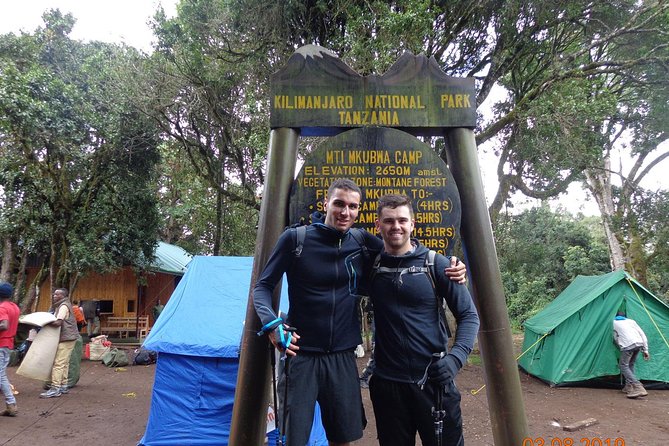
The morning begins with the most physical piece of trail before summit day: the Barranco Wall. It rises about 1,200 feet and involves climbing and scrambling over volcanic rock.
The word scramble may sound technical, but the important point is that this is not a flat walking path. You use your hands in places, move carefully, and follow the guide’s line. The reward is a high viewpoint with impressive views toward Barafu and Mount Meru.
From the top, you continue over ridges and valleys to Karanga Camp. The total distance is only about 5 kilometers, with four to five hours of walking. This short day is useful because it gives you time to recover while still gaining altitude.
I like this part of the schedule. The Barranco Wall adds character to the route, and the short distance afterward keeps the day from becoming a needless endurance test. You should still expect fatigue. The air is thin, and volcanic ground can be awkward underfoot.
Day 6: Barafu Camp and the quiet before summit night
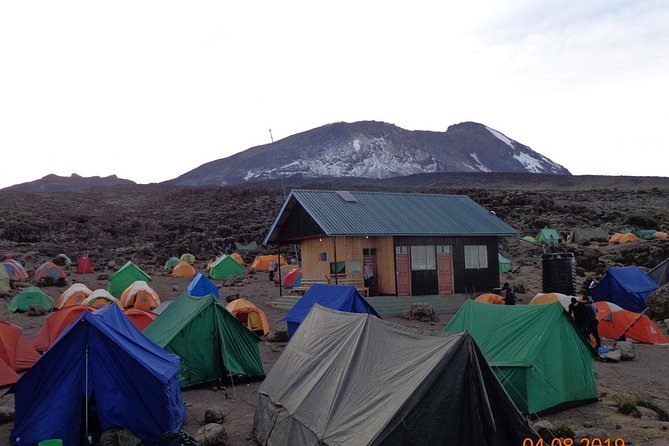
You leave Karanga and reach the junction with the Mweka Trail before continuing uphill to Barafu Hut. The distance is only about 4 kilometers, but you climb from 13,106 to 15,331 feet.
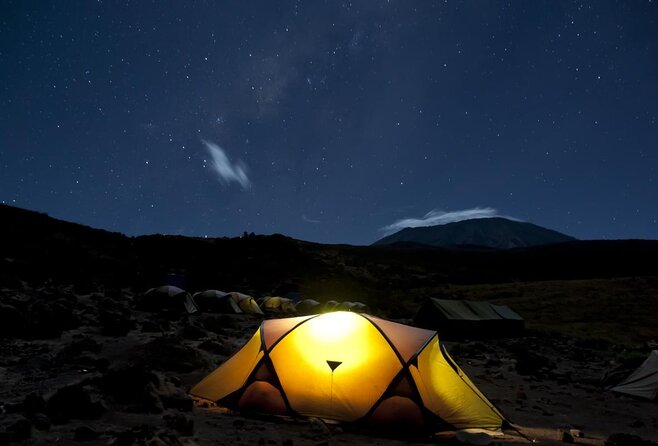
This is the end of the southern circuit, where you have seen Kibo from several sides. From Barafu, the two major peaks, Mawenzi and Kibo, are visible. The camp is the staging point for the summit attempt, so the mood changes. You have an early dinner, rest, and prepare clothing and gear for a midnight start.
Do not judge this day by its short distance. At more than 15,000 feet, a few kilometers can feel like a full outing. The smart approach is to walk slowly, drink as directed by your support team, and rest instead of trying to make the afternoon productive.
Day 7: Stella Point, Uhuru Peak, and the long descent
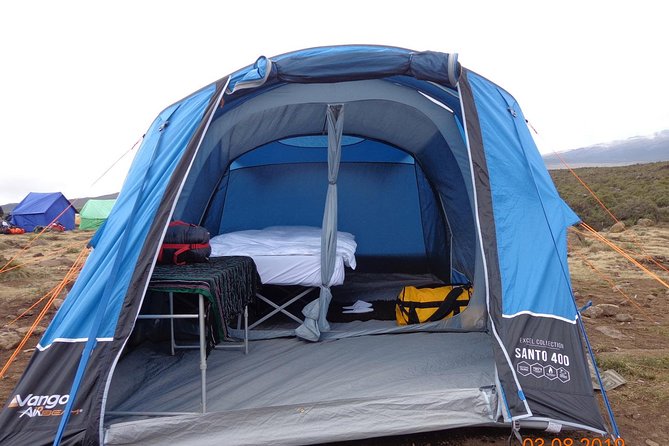
Summit day begins around midnight. You dress in layers and climb northwest over heavy scree toward Stella Point on the crater rim, at about 18,600 feet.
This is the toughest section mentally and physically. The trail is steep, the ground shifts underfoot, and progress can feel painfully slow. You may reach a point where the next few steps seem like a major task. That is normal for a day this high, but it is also why honest communication with your guide matters.
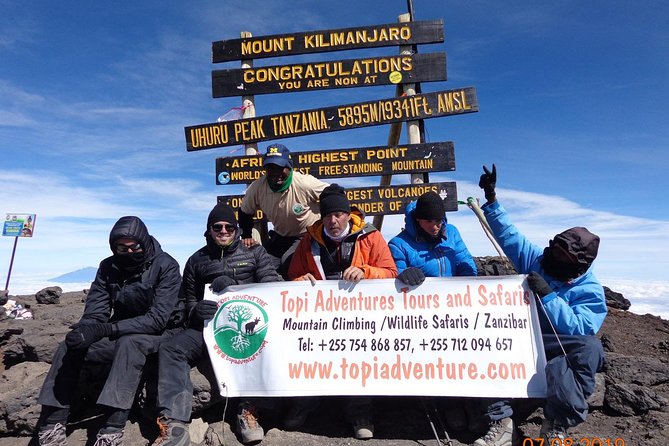
At Stella Point, the sunrise can be extraordinary. From there, the route continues for about another hour to Uhuru Peak, the highest point on Kilimanjaro at 19,341 feet.
The full day covers roughly 17 kilometers and includes a huge descent to 10,065 feet. After the summit, you return to Barafu, rest briefly, and continue down toward the lower camp area. The schedule records 11 to 14 hours of hiking, so this is not a morning summit followed by an easy afternoon.
This is the day that separates a scenic trek from a true high-altitude challenge. You should be proud if you reach the summit, but the safety decision is more important than the photograph. A good guide will judge your condition, not just your determination.
Day 8: Mweka descent and return to Moshi
After breakfast, you continue down through rainforest to Mweka Park Gate, dropping from about 10,065 feet to 5,380 feet. The walk is about 10 kilometers and takes three to four hours.
Lower sections can be wet and muddy. Your footwear matters here, and clothing that handled the cold upper mountain may feel excessive once you lose altitude. At the gate, you receive your summit certificates, then walk another hour to Mweka Village, where a vehicle takes you back to your Moshi hotel.
The final transfer is useful because your legs may be tired after the summit day. The experience ends back at the meeting point, according to the stated arrangement, but confirm the exact hotel drop-off if you are staying elsewhere in Moshi.
The support team and private format
The company’s owner, Emanuel, is involved in planning, and the mountain team is described as experienced and friendly. Elly has also helped with practical arrangements when luggage failed to arrive at the airport, including lending equipment while the bags were recovered.
Those details matter because Kilimanjaro is not only about trail conditions. Planning, equipment problems, pacing, and morale can shape the whole trip. A private group gives you more direct contact with the guide and avoids being folded into a large mixed party.
The group size is not stated, so ask before booking. Also ask who will be your lead guide, how many people will support your group, and what equipment is available if luggage is delayed. Do not assume these points are covered simply because the route is well established.
Is $3,480 good value?
The $3,480 price is high, but the route lasts eight days and includes a private experience, pickup, mountain access tickets in the itinerary, and a detailed support operation. Lemosho also gives you more scenery and acclimatization time than a rushed climb.
Still, the value depends on what the price includes. Confirm transport from Moshi, meals, camping equipment, porter arrangements, park charges, certificates, hotel nights, and any emergency support. The supplied information does not list each item, so a careful buyer should not fill in the gaps.
Free cancellation is available if you cancel at least 24 hours before the start time. Inside that window, the amount paid is not refunded, and changes are not accepted. That is worth noting before you lock in flights and other plans.
Who should book this climb?
You should consider this trip if you want Kilimanjaro’s most varied scenery, prefer a slower eight-day schedule, and are comfortable with a demanding summit night. It suits people who value a private group and direct support from a local operator.
It is less suitable if you want a light adventure, dislike long drives, or need a flexible itinerary with little physical strain. The moderate fitness requirement is a minimum, not a promise that the climb will feel moderate.
Topi Adventure’s main strengths are the Lemosho focus, the longer acclimatization plan, and the personal support associated with Emanuel and the local team. The main weaknesses are the high price and the unclear Day 3 description. Get those details clarified, then decide.
Should you book Topi Adventure’s Lemosho Route?
I would put this on your shortlist if the eight-day pace and private format suit you. The route has excellent variety, a strong acclimatization structure, and a memorable sequence of rainforest, plateau, volcanic desert, Barranco Wall, and summit sunrise.
Before booking, ask for the final Day 3 schedule and a complete price breakdown. If those answers are clear and you are prepared for the 11 to 14-hour summit day, this is a well-shaped Kilimanjaro plan with real value in its pacing and route choice.
FAQ
Where does the Kilimanjaro climb start?
The meeting point is on Old Moshi Road in Tanzania. The stated start time is 7:30 am, and pickup is offered.
How long is the experience?
The climb lasts approximately eight days and seven nights.
Which Kilimanjaro route does this trip use?
It uses the Lemosho Route, approaching Mount Kilimanjaro from the west before crossing the Shira Plateau and joining the southern route near Lava Tower.
How high is Uhuru Peak?
Uhuru Peak is listed at 19,341 feet.
What fitness level do I need?
You should have a moderate level of physical fitness. The route includes long walking days, steep volcanic terrain, a climb over the Barranco Wall, and an 11 to 14-hour summit day.
Is this a private tour?
Yes. Only your group participates in the activity.
What is the cancellation policy?
You can receive a full refund if you cancel at least 24 hours before the experience starts. Cancellations or changes made within 24 hours are not accepted for a refund.
Just added in Moshi
- Wildlife Extravaganza: Manyara, Tarangire & Ngorongoro in 3 Days★ 5.0 · 3 reviews
- West Kilimanjaro cycling Adventures★ 4.5 · 8 reviews
- machame route★ 5.0 · 16 reviews
- Kilimanjaro Climb • Machame Route ~ 10 Day★ 5.0 · 6 reviews
- Kilimanjaro Climbing Umbwe Route★ 5.0 · 3 reviews
- Mt Kilimanjaro 6 days Marangu route hike★ 5.0 · 3 reviews
- 3 Days Private E-Bike Tour in West Kilimanjaro★ 5.0 · 3 reviews
- Private Cycle to Kilimanjaro Bike Park Safari★ 5.0 · 6 reviews
Kilimanjaro Treks, compared.



8-Day Small-group Lemosho Kilimanjaro Summit Trekking
Read our review →

5 Days Best of Tanzania Luxury Safari Northern Circuit
Read our review →

Climbing Kilimanjaro through 7 days Machame Route
Read our review →
7-Day Machame Kilimanjaro Summit Tour from Arusha
Read our review →Browse the lists this tour appears in