
Reviewed · KILIMANJARO TREKS
8 Days Lemosho Route
Kilimanjaro’s 8-day Lemosho Route gives you the mountain’s finest scenery without rushing the climb. You begin in quiet western forest, cross the Shira Plateau, pass Lava Tower and Barranco Wall, then make the hard nighttime push to Uhuru Peak. The route joins the busier Machame trail after the first two days, so you get a calmer start before the mountain’s classic sections.
I like the steady ascent and extra acclimatization time, both valuable on a high-altitude climb. I also like the strong practical support: Golden Summit Adventures is praised for quick communication, careful organization, friendly guides, clean equipment, and attentive porters. The main drawback is simple: this is still a serious physical challenge, and summit day combines a midnight start, an 8-hour schedule, steep scree, cold, and a long descent.
Key points to know before booking
- The route begins quietly: The first two days use forest and moorland trails with less traffic before joining the Machame route.
- You get a gradual altitude profile: Shira Plateau, Barranco, and Barafu provide time to adjust before the summit attempt.
- The scenery keeps changing: Expect forest, giant heather, open moorland, rocky high country, glaciers, and crater-rim views.
- Summit day is the test: You rise around 11:30 PM, climb to Stella Point, continue to Uhuru Peak, then descend to Mweka Camp.
- The trip is private: Only your group participates, which allows the pace and support to focus on your party.
- The price is $2,100 per person: That can be good value for an eight-day private climb, but confirm exactly what is included before paying.
Why the eight-day Lemosho Route works well
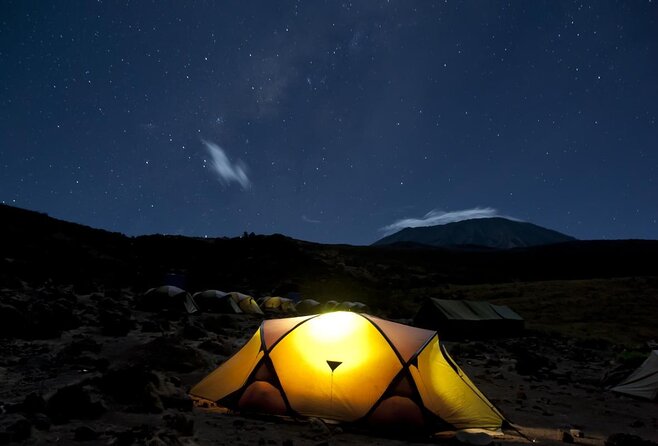
Lemosho approaches Kilimanjaro from the west. It is one of the mountain’s more scenic routes, and the eight-day version gives you more time than a rushed itinerary. That extra day matters because altitude, not just leg strength, is the main issue for many people.
The route does not shoot straight upward. It moves through several zones, with hiking days that are usually manageable before the summit push. You still need moderate physical fitness, but the pace is designed around a long mountain climb rather than a quick sightseeing walk.
The first two days are quieter. After that, Lemosho joins the popular Machame route, bringing you to familiar Kilimanjaro highlights such as Lava Tower, Barranco Wall, and the southern approach to the summit.
This is a private activity, so your group is not combined with strangers. That can be useful when people have different walking speeds, fitness levels, or reasons for climbing. It also means you should discuss your preferred pace and any concerns with the company before departure.
Other routes up the mountain from Moshi:
- Kilimanjaro climb by Lemosho Route (7-day)
★ 5.0 · 651 reviews - Kilimanjaro climb, Machame Route (7-day)
★ 5.0 · 262 reviews - Kilimanjaro Climbing Lemosho Route 8 Days.
★ 5.0 · 186 reviews
Day 1: Forest trails to Mti Mkubwa
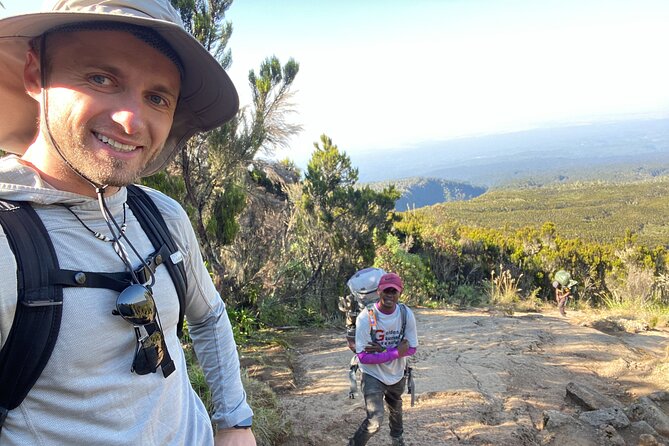
Your first hiking day begins at the Glades. From there, you walk for about three hours through beautiful forest trails to Mti Mkubwa, also called Big Tree Camp. The full day is listed at about five hours, including the approach and camp routine.
This is a gentle way to meet Kilimanjaro. The forest offers shade and a softer start than the exposed upper slopes. You are not yet dealing with the cold, thin air, or stark rock that defines the summit zone.
Still, do not treat this as a casual stroll. You are beginning a multi-day climb, and a calm pace is useful. Keep your daypack light, drink regularly, and avoid trying to prove anything on day one.
The camp name gives you a good sense of this opening section. The trees are the story here. You have time to settle into the rhythm of walking, resting, eating, and sleeping outdoors before the route becomes more demanding.
Day 2: Giant heather and the Shira Ridge
The trail gradually steepens on day two. You leave the forest behind and enter the giant heather zone, then cross Shira Ridge. Hiking time is about five hours.
This transition is one of Lemosho’s great strengths. In a single day, the scenery changes from woodland to open high ground. You begin to see the scale of Kilimanjaro more clearly, with fewer trees blocking the views.
The route is more exposed here, so sun, wind, and changing weather matter more. Your clothing needs to work in layers. Morning can feel cool, while walking uphill can warm you quickly.
The ridge crossing also signals that you are gaining altitude. Walk slowly and pay attention to how you feel. The schedule is not a race, and the point of an eight-day climb is to give your body time to adjust.
Day 3: The Shira Plateau and Camp 2
Day three is a gentle walk across the Shira Plateau to Shira Camp 2. The camp sits on moorland meadows beside a stream, and the hiking time is about five hours.
This is a quieter day in terms of effort, but it is important for acclimatization. You spend more time at altitude without immediately facing a brutal climb. That combination is one reason I consider the eight-day plan more appealing than a compressed schedule.
The plateau also gives you a broad sense of Kilimanjaro’s upper slopes. The vegetation is low, the air feels thinner, and the mountain begins to look less like a normal hike and more like a high-altitude expedition.
Use the afternoon to rest. You might be tempted to explore because the walking day is moderate, but saving energy is wise. A relaxed evening at Shira Camp 2 helps prepare you for the longer day ahead.
Same base, a different kind of day out:
- Safari Serengeti And Ngorongoro
★ 5.0 · 288 reviews - Climbing Kilimanjaro – Machame Route
★ 5.0 · 170 reviews - Climbing Kilimanjaro through 7 days Machame Route
★ 5.0 · 151 reviews - Kilimanjaro climb, Lemosho Route (8-day)
★ 5.0 · 148 reviews
Day 4: Lava Tower, rocky ground, and Barranco Camp
Day four is listed at about seven hours and is one of the most scenic sections of the trip. After breakfast, you hike east on a path that steepens above the highest vegetation. Kilimanjaro’s main mass begins to dominate the view.
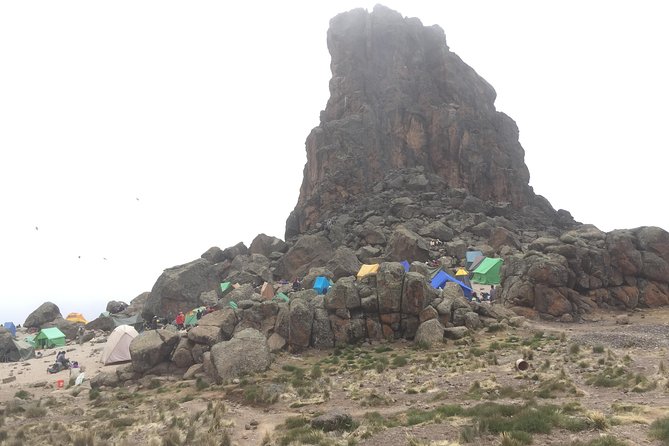
After several hours, you reach Lava Tower, a major landmark at roughly the point where the route feels much more severe. The rocky surroundings offer plenty of photo opportunities, and seasonal ice may appear on the walls.
The day then continues down toward Barranco Camp. This rise and fall is useful for acclimatization, but it can feel tiring. You climb high, then descend to camp rather than simply continuing upward.
Barranco sits below the Breach and Great Barranco Walls. If the weather is clear, sunset here can be memorable, with the walls catching the last light. It is also a good place to appreciate how dramatically the mountain has changed since day one.
The main consideration is the length. Seven hours on uneven ground is not a small outing, especially after three days of hiking. Keep snacks within reach and do not underestimate the value of a quiet evening at camp.
Day 5: Climbing the Barranco Wall
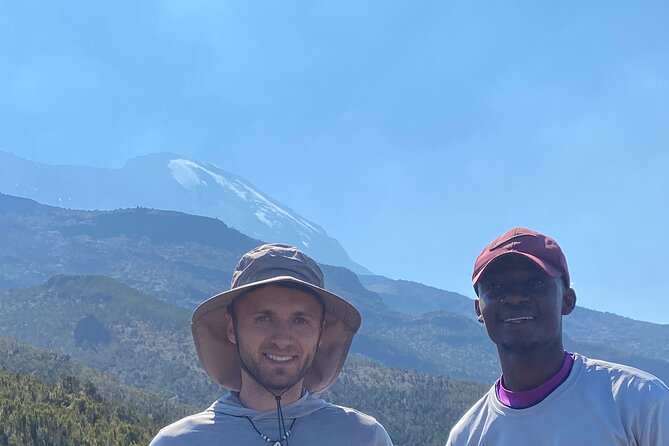
Day five begins with the route’s most visually intimidating obstacle, the Great Barranco Wall. The hiking time is about four hours, and the wall looks more difficult than it turns out to be.
You climb a steep ridge and work your way upward. This is not described as a technical rock climb, but you should expect uneven footing and sections that require care. Move at the guide’s pace and keep your hands free where possible.
Near the top, just below the Heim Glacier, the views open up. You can look back across the route and see how much ground you have covered. Mawenzi’s jagged peaks appear to the east, adding another dramatic feature to the day.
After a hot lunch at camp, the afternoon is free for resting or exploring. That is a smart part of the schedule. You have a shorter walking day, but the physical work of the earlier sections catches up with you. Use this pause to dry clothes, organize your pack, and sleep if you can.
Day 6: Joining the Mweka Route and reaching Barafu
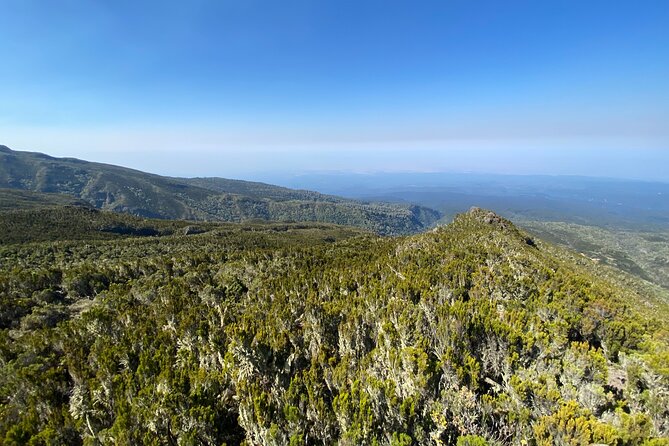
Day six takes about four hours. You hike east across ridges and valleys to join the Mweka Route, which will later serve as your descent path.
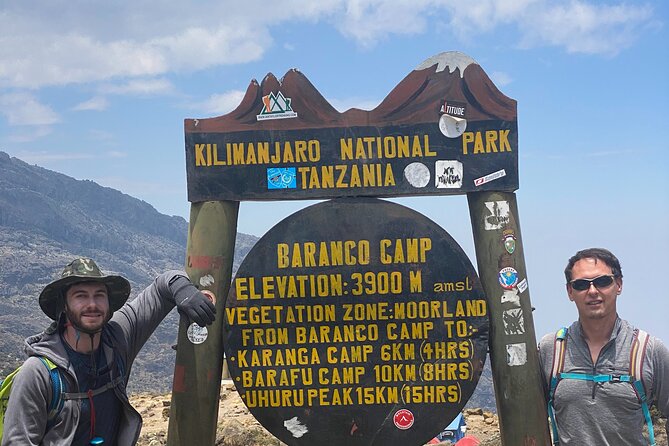
From there, you turn toward the mountain and climb for another hour through sparse high-altitude terrain to Barafu Hut. A hot lunch is scheduled at camp, which is welcome because Barafu marks the final staging point before the summit attempt.
Barafu is a serious place. The vegetation is almost gone, the surroundings are rocky, and the next climb will begin in darkness. The day itself is not the longest, but the emotional pressure increases because Uhuru Peak is now close.
Use the afternoon for rest rather than sightseeing. Pack your summit items before dinner, keep warm layers close, and follow the guide’s instructions about the night schedule. You will need to sleep early, although many people find that difficult when the summit attempt is only hours away.
Day 7: The midnight climb to Uhuru Peak
Summit day begins around 11:30 PM with hot tea and biscuits. You then start the most demanding section of the climb, a roughly six-hour ascent through heavy scree between the Rebmann and Ratzel glaciers to Stella Point on the crater rim.
This is where patience matters most. The climb happens at night, often in cold conditions, and the loose rock makes progress slow. You may feel strong at the start and tired later. Your guide’s pace is important, and there is no prize for rushing.
At Stella Point, you reach the crater rim. Depending on the season and recent storms, snow may remain along the route to Uhuru Peak. The final walk along the rim can still be demanding, but the summit is now within reach.
At Uhuru Peak, you have completed the main goal of the climb. The views and sense of achievement can be powerful, but keep the summit stop sensible. Cold, wind, and fatigue are real concerns at this altitude.
The descent back to Barafu takes about three hours. You collect your gear, rest briefly, and continue down a rocky and scree-covered path through moorland toward Mweka Camp. The full day is listed at about eight hours, though the overall effort can feel far greater because it begins before midnight.
This is the key point to understand before booking: summit day is not just a morning climb. It is a night ascent, a summit visit, a descent to Barafu, and another hike to Mweka. Your fitness needs to cover the whole day.
Day 8: Forest descent and return to Moshi
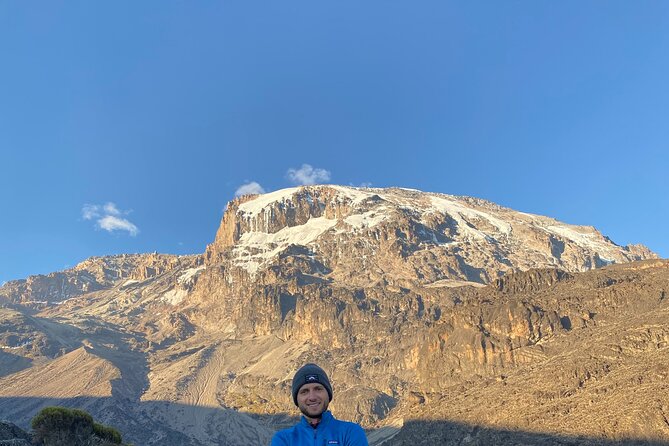
The final hiking day is short by comparison. After breakfast, you walk for about three hours through scenic forest to the park gate.
In Mweka Village, you are served a hot lunch before being driven back to Moshi. After several nights on the mountain, a hot shower and a comfortable hotel night will feel well earned.
The finish is practical and pleasant. You are not pushed into another long walking day after the summit. The forest descent also gives you one last change of scenery before the trip shifts back to roads and town life.
What the $2,100 price means
At $2,100 per person, this is not a budget outing. It is also not a short park walk. You are paying for an eight-day Kilimanjaro program with a private group, mountain support, camp logistics, porters, guiding, and transport back to Moshi.
The strongest value comes from the route length and the private format. Eight days gives you a better chance to adjust to altitude than a rushed climb, while a private party can make communication easier. The company is also praised for staying organized, answering questions quickly by email and WhatsApp, checking equipment before departure, and supplying clean, well-kept gear.
Do not assume every possible cost is covered just because the price is listed. Before booking, ask for a written breakdown of park fees, meals, accommodation, transfers, porter arrangements, equipment, tips, and any hotel nights. The supplied details confirm pickup is offered, but they do not spell out every inclusion.
The cancellation terms are straightforward: cancel at least 24 hours before the local start time for a full refund. A cancellation within 24 hours is not refunded, and late changes are not accepted.
Who should choose this climb
I would point this trip toward someone who wants a scenic Kilimanjaro route and prefers a slower, more measured schedule. It suits people who can handle several days of hiking and understand that the summit attempt will be much harder than the earlier stages.
It may also suit first-time high-altitude climbers who want close support. The strongest praise for Golden Summit Adventures focuses on care, organization, communication, friendly guides, and equipment checks. Those details matter when you are tired, cold, or worried about whether you brought the right gear.
You should think twice if you dislike camping, long walking days, early starts, or uncertain weather. Moderate fitness is required, and no itinerary can guarantee a summit. The schedule gives you a sensible chance, but it cannot remove the physical demands of altitude.
Final verdict: a strong route with one hard day
I like this Lemosho program because the route earns its scenery. You begin in forest, move through giant heather and moorland, cross the Shira Plateau, pass Lava Tower, climb Barranco Wall, and finish with a demanding approach to Uhuru Peak.
The eight-day schedule is the main selling point. It gives you time to adjust and includes a rest-oriented afternoon after Barranco Wall. The private format and repeated praise for organization and personal care add practical value.
Book it if you want a serious but well-paced Kilimanjaro attempt and you are comfortable with the $2,100 cost after confirming the inclusions. Choose another option if you want a short, easy mountain trip. Kilimanjaro rewards patience, and this route gives you more of it than many shorter plans.
FAQ
Where does the 8-day Lemosho Route start?
The experience is based in Moshi, Tanzania, and pickup is offered. The first hiking day begins at the Glades on Mount Kilimanjaro.
What time does the tour start?
The stated start time is 8:30 AM. The summit day has a separate night schedule, with wake-up around 11:30 PM.
How long is the Lemosho climb?
The experience lasts approximately eight days. Hiking times range from about three to eight hours per day, depending on the section of the route.
Is this a private tour?
Yes. Only your group participates in the activity.
What level of fitness do I need?
You should have a moderate physical fitness level. The climb includes several hours of walking on uneven ground, steep sections, a midnight summit attempt, and a long descent.
Does the route reach Uhuru Peak?
Yes. Day seven includes a summit attempt at Uhuru Peak, after climbing to Stella Point on the crater rim.
What happens after the summit?
You descend from Uhuru Peak to Barafu Camp, collect your gear, and continue down to Mweka Camp. The next day, you hike to the park gate, eat lunch in Mweka Village, and return to Moshi.
Can I cancel for a full refund?
Yes, if you cancel at least 24 hours before the experience start time. Cancellations made less than 24 hours in advance are not refunded.
Just added in Moshi
- Wildlife Extravaganza: Manyara, Tarangire & Ngorongoro in 3 Days★ 5.0 · 3 reviews
- West Kilimanjaro cycling Adventures★ 4.5 · 8 reviews
- machame route★ 5.0 · 16 reviews
- Kilimanjaro Climbing Umbwe Route★ 5.0 · 3 reviews
- Mt Kilimanjaro 6 days Marangu route hike★ 5.0 · 3 reviews
- Kilimanjaro Climb • Machame Route ~ 10 Day★ 5.0 · 6 reviews
- 3 Days Private E-Bike Tour in West Kilimanjaro★ 5.0 · 3 reviews
- Private Cycle to Kilimanjaro Bike Park Safari★ 5.0 · 6 reviews
Kilimanjaro Treks, compared.



8-Day Small-group Lemosho Kilimanjaro Summit Trekking
Read our review →

5 Days Best of Tanzania Luxury Safari Northern Circuit
Read our review →

Climbing Kilimanjaro through 7 days Machame Route
Read our review →
7-Day Machame Kilimanjaro Summit Tour from Arusha
Read our review →Browse the lists this tour appears in