
Reviewed · KILIMANJARO TREKS
Kilimanjaro Trek 7 Days – Machame Route
Mount Kilimanjaro’s Machame Route gives you the mountain’s best variety in seven demanding days. You begin under dripping rainforest, cross open moorland and volcanic rock, then make the midnight push to Uhuru Peak at 5,895 meters. It is called the Whiskey Route for good reason: this is the tougher, more scenic alternative to the gentler Marangu approach.
I like the route’s careful altitude profile, especially the Lava Tower climb followed by a descent to Barranco Camp. I also like that the price covers park fees, camping, meals, transfers, crew wages, and hotel nights before and after the trek. The main caution is simple: seven days is still a serious physical test, and the summit day combines a midnight start, cold, thin air, and a long descent.
Key points to know before booking
- A five-zone climb: You pass through rainforest, heath, alpine desert, Arctic conditions, and back to rainforest.
- Lava Tower helps with acclimatization: You climb to 4,603 meters, then sleep lower at Barranco Camp.
- The summit day is long: The climb to Uhuru Peak takes about 7 to 8 hours, followed by 4 to 6 hours down to Mweka Camp.
- Private group format: Only your own group participates, which allows the pace and support to be managed more closely.
- A well-covered package: Park fees, tents, meals, guides, porters, airport transfers, and two hotel nights are included.
- You still need a personal budget: Tips, sleeping bags, boots, walking poles, visas, insurance, flights, and hotel meals are extra.
What the $2,890 price really covers
At $2,890 per person, this is not a bare-bones mountain permit with a guide. The cost includes Kilimanjaro National Park entry, camping and forest fees, rescue fees, and 18% VAT on tour services. It also includes a professional guide team, cooks, porters, three meals a day on the mountain, camping equipment, transfers, and a hotel night in Moshi before and after the climb.
The package includes a sleeping tent, dining tent, tables, chairs, lanterns, a foam mattress, and a portable flush toilet with a toilet tent. That last item may sound minor, but after a long day at altitude, a private camp toilet is a real comfort.
You also receive airport transfers to and from Kilimanjaro International Airport and transport between Moshi and the mountain gates. One hotel night is provided before the trek and another after it, both with breakfast. That removes several small but annoying costs from your planning.
The exclusions matter. You pay for personal equipment, and the listed rental prices include $40 for a sleeping bag, $35 for a duffle bag, $40 for hiking boots, and $10 for walking sticks. Tips for guides, porters, cooks, and waiters are also not included. Hotel lunches, dinners, and drinks are extra, as are flights, visas, insurance, camera costs, and laundry.
I see the price as reasonable for someone who wants a supported climb rather than a stripped-down expedition. Still, ask for a clear equipment list and tipping guidance before paying. The listing says fair wages are paid according to park and association standards, which is important, but you should still know how gratuities are handled and distributed.
Other routes up the mountain from Moshi:
- Kilimanjaro climb by Lemosho Route (7-day)
★ 5.0 · 651 reviews - Kilimanjaro climb, Machame Route (7-day)
★ 5.0 · 262 reviews - Kilimanjaro Climbing Lemosho Route 8 Days.
★ 5.0 · 186 reviews
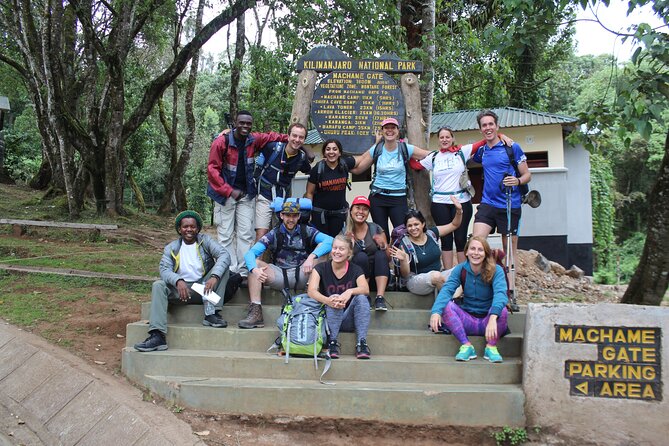
Day 1: Machame Gate to Machame Camp
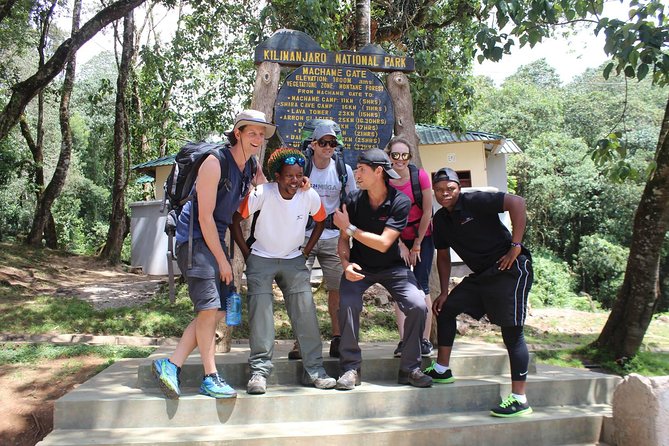
After breakfast, pickup from your Moshi hotel is scheduled for the morning, with the meeting time listed as 8:30 am. The drive to Machame Gate takes about an hour and passes through Machame village on the mountain’s lower slopes.
At the gate, your team handles registration before you enter the park. The first hiking day covers about 11 kilometers and takes 5 to 7 hours. You walk through dense rainforest on a winding trail that climbs steadily toward Machame Camp at 2,833 meters.
This is a full first day, but the rainforest makes it interesting. Expect shade, damp conditions, roots, and a trail that can feel busy because Machame is the most popular route. Your reward is the fast change in vegetation as the thick forest gives way to higher ground.
The camp altitude is high enough for you to begin adjusting, but the day does not reach the extreme elevations that come later. Keep your first day slow. The useful mountain habit is pole pole, meaning slowly, even if you feel strong at the start.
Day 2: Heath and open moorland on the Shira Plateau
Day two is shorter, covering about 5 kilometers in 4 to 6 hours. You leave the rainforest behind and climb a steeper, rockier ridge into heath and open moorland.
The trail crosses the Shira Plateau and continues toward Shira Cave Camp. You also cross a large river gorge. This is one of the route’s most attractive transitions, since the trees thin out and the views open across a broad high-altitude setting.
The shorter distance does not make this an easy walk. You are climbing higher, and the air is becoming thinner. A slow pace and regular water breaks are more useful than trying to reach camp early.
Shira Camp gives you your first strong sense that this is a high mountain expedition rather than a forest hike. Nights are colder, and the exposed setting can make weather changes feel sharper. Keep warm layers and rain protection near the top of your bag.
Day 3: Lava Tower, Senecio Forest, and Barranco Camp
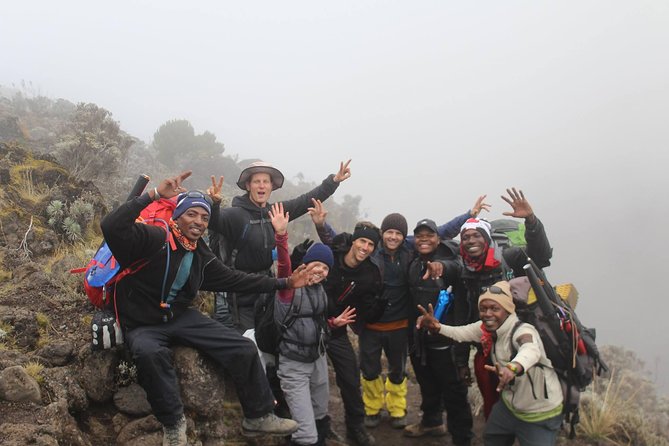
Day three is the route’s key acclimatization day. You climb toward Lava Tower, a tall volcanic rock formation at 4,603 meters, then descend to Barranco Camp at 3,953 meters.
The itinerary divides the walking into about 7 kilometers to Lava Tower, taking 4 to 5 hours, followed by 3 kilometers down to Barranco in another 2 to 3 hours. You spend time high, but you sleep lower. That is the practical value of this day.
The descent passes through the unusual Senecio Forest, filled with giant plants that make this section feel unlike an ordinary mountain trail. You finish the day at nearly the same general elevation as you began, but the time spent above 4,500 meters helps your body prepare for the summit attempt.
Some people find this day surprisingly tiring because of the altitude, even though the distance is modest. Do not judge your summit chances by how you feel at breakfast. Instead, tell your guide about headaches, nausea, dizziness, or unusual fatigue as soon as they appear.
Same base, a different kind of day out:
- Safari Serengeti And Ngorongoro
★ 5.0 · 288 reviews - Climbing Kilimanjaro – Machame Route
★ 5.0 · 170 reviews - Climbing Kilimanjaro through 7 days Machame Route
★ 5.0 · 151 reviews - Kilimanjaro climb, Lemosho Route (8-day)
★ 5.0 · 148 reviews
Day 4: The Barranco Wall and Karanga Valley
The fourth day begins with a descent to the base of the Great Barranco Wall. From there, you climb the steep, non-technical face, which rises nearly 900 feet.
Non-technical means you do not need ropes or climbing skills for this section, but it is still steep and can feel exposed. You use your hands at times for balance, and the pace is controlled. This is one reason a good guide matters.
From the top, the trail crosses hills and valleys before dropping sharply into Karanga Valley. You pass the Karanga River, the last water point noted on the route, then climb again to Karanga Camp.
The day covers about 5 kilometers and takes 4 to 5 hours. You arrive around lunchtime, with a shorter acclimatization walk later in the afternoon. I like that extra walk in principle, but you should treat it as optional if your body needs rest. The next two days are more demanding.
Day 5: Karanga Camp to Barafu Camp
The route leaves Karanga Camp and reaches the junction with the Mweka Trail before continuing through a rocky section to Barafu Hut. This day covers about 4 kilometers and takes 4 to 5 hours.
Barafu Camp is the launch point for the summit. You have completed the Southern Circuit, which gives you views toward the two major peaks, Mawenzi and Kibo, when the weather is clear.
The short distance can be misleading. You are climbing to a high camp, and the real challenge begins after you arrive. The plan calls for rest, an early dinner, and preparation for the midnight start.
Organize your summit clothing, water, snacks, headlamp, gloves, and camera before lying down. You may not sleep much. That is normal for a night when your body is adjusting to altitude and your mind is focused on the climb ahead.
Day 6: Uhuru Peak and the long descent to Mweka
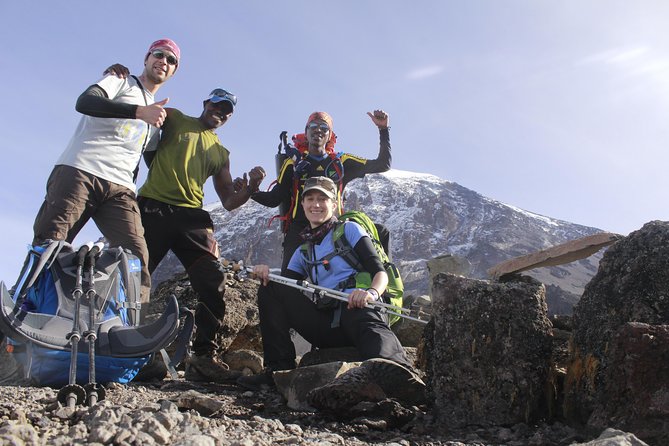
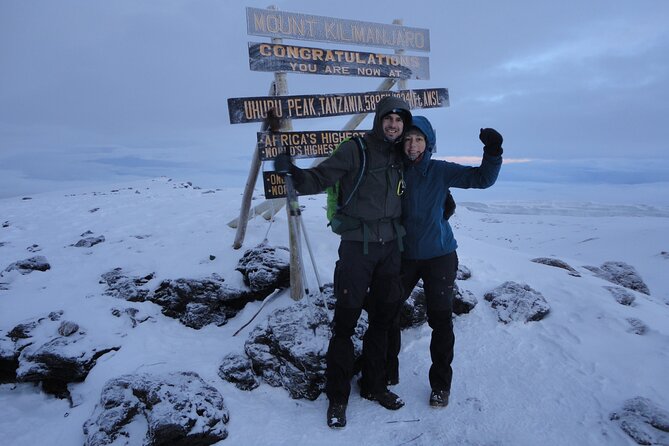
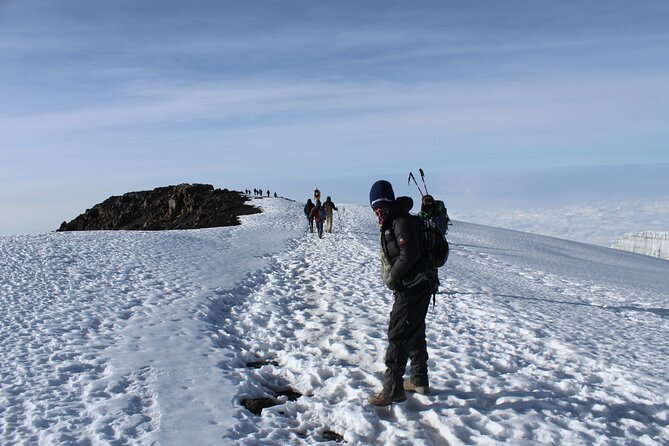
Summit day starts around midnight. You climb in darkness and cold for several hours, taking short breaks as needed. The route reaches Stella Point at about 5,760 meters, or 18,900 feet, around sunrise.
From Stella Point, you continue around the crater rim toward Uhuru Peak, Africa’s highest point, at 5,895 meters. The final section can feel slow and mental as much as physical. Your goal is to keep moving at a manageable pace rather than rush.
The scheduled climb from Barafu to the summit takes about 7 to 8 hours. You usually spend only a short time at the top for photographs before descending toward Barafu Camp.
The day is not finished there. You continue down to Mweka Camp at 3,100 meters, with the descent taking another 4 to 6 hours. The total distance is listed as 17 kilometers, including the summit section and descent.
This is the part of the trip where support from the guide and porter team matters most. The company supplies an oxygen tank for emergencies, but oxygen is not a substitute for proper altitude monitoring or a careful decision to turn around. You should expect the team to prioritize safety over reaching the top.
Day 7: Mweka Gate and return to Moshi
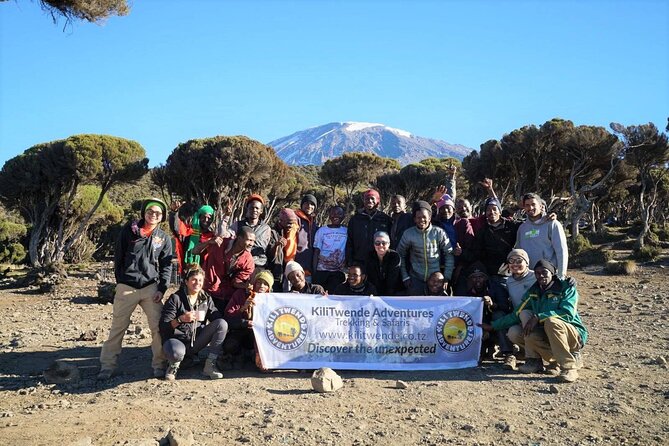
The final day is a 10-kilometer descent through rainforest, taking about 3 to 4 hours. You reach Mweka Gate, sign out with the national park authority, and collect summit certificates.
A vehicle waits at the gate for the transfer back to your Moshi hotel. After the cold, high camps, the return to forest feels warm and green. Your legs may be tired, so walking poles are useful even on the way down.
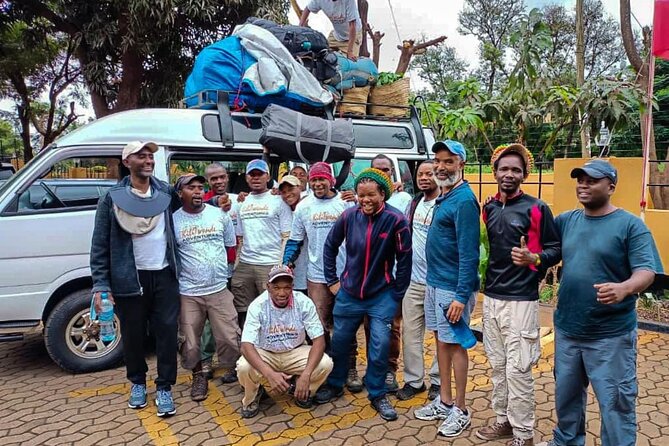
This is also the day to thank the mountain crew. Tips are not included in the tour price, and the porters, cooks, guides, and waiters are a central part of the experience. Ask the operator before departure for the recommended amount and method so you are not trying to work it out at the gate.
Food, camping, and crew support
Three meals a day are included during the climb. A cook prepares the food, and the package provides a dining tent, tables, chairs, and lanterns. This gives you a proper place to eat and organize yourself instead of relying on snacks inside a cramped sleeping tent.
One company review describes generous portions and the ability to accommodate dietary restrictions. You should still state your needs before arrival, not at the first camp. The included meal plan covers six dinners, seven lunches, and six breakfasts, according to the supplied details.
The private group format is useful here. You are not simply joining a large public departure with a fixed pace. The operator says only your group will participate, so you can discuss concerns directly with the guide team.
The company feedback repeatedly highlights care, organization, friendly staff, and help both on and off the mountain. Bobby is named in connection with a seven-day Machame climb, while other company feedback names team members including Jerry, Joseph, Sadhi, Robert, John, Bob, and Nate. Since the names do not all appear tied to this exact departure, confirm your lead guide before booking.
Who should choose the Machame Route
This trek suits you if you want varied scenery and are ready for a demanding camping climb. A moderate fitness level is required, but the route is not a casual walk. You need to handle several hours of uphill movement, cold nights, a steep wall section, and the long summit day.
It is a good choice for someone who values scenery over the easiest possible route. The Machame Route is more varied than the Marangu approach, but it also involves camping and a more rugged trail.
You should think carefully if your schedule is tight. Seven days is a popular length, yet additional time on the mountain can make altitude adjustment easier. This package does not offer an extra acclimatization day, so you need to be honest about your health, fitness, and comfort at altitude.
Booking details and cancellation
Confirmation is provided when you book, and pickup is offered. The activity begins at 8:30 am, though the exact pickup plan should be confirmed with the operator.
The tour is private, and a moderate fitness level is required. Free cancellation is available if you cancel at least 24 hours before the start time. Changes made inside that 24-hour window are not accepted, and late cancellations are not refunded. If poor weather causes the operator to cancel, you are offered another date or a full refund.
Should you book this Kilimanjaro trek?
Book it if you want a scenic, well-supported seven-day climb with hotel nights, airport transfers, meals, camping equipment, and a private group. The route gives you the mountain’s strongest visual variety, and the Lava Tower to Barranco plan provides a useful altitude rhythm.
Do not book it simply because the listing calls for moderate fitness. The summit day is long, cold, and physically demanding. Price your personal gear, insurance, flights, visas, and tips before deciding.
For a prepared hiker who accepts the rough nights and the early summit start, this is a strong Kilimanjaro package. For someone who wants a gentle holiday with a mountain view, it is the wrong trip.
FAQ
How long does the Kilimanjaro Machame trek take?
The trek lasts approximately seven days, beginning at Machame Gate and ending at Mweka Gate, followed by transport back to Moshi.
What is the highest point reached?
You reach Uhuru Peak at 5,895 meters, or 19,341 feet, the highest point on Mount Kilimanjaro and Africa.
Is this a private tour?
Yes. The activity is private, and only your own group participates.
What meals are included?
Three meals a day are provided during the climb. The package lists six dinners, seven lunches, and six breakfasts.
Are hotel nights included?
Yes. One hotel night before the trek and one after the trek are included in Moshi, with breakfast.
Is personal hiking equipment included?
No. Personal gear is not included. Listed rental examples include a sleeping bag for $40, a duffle bag for $35, hiking boots for $40, and walking sticks for $10.
What happens if bad weather cancels the trek?
If poor weather causes cancellation, you are offered a different date or a full refund. You can also cancel for a full refund if you do so at least 24 hours before the experience starts.
More Hiking & Trekking in Moshi
- Private Kilimanjaro Hike 7 Day Lemosho Route
★ 5.0 · 60 reviews - Best Kilimanjaro hiking day trip tour with Kilinge Adventures
★ 4.5 · 54 reviews - #1. Best Kilimanjaro Day hike Tour-Machame Route-ISMANI
★ 4.2 · 47 reviews - Best Kilimanjaro Adventure 7 days Machame route Trekking
★ 5.0 · 42 reviews
Just added in Moshi
- Wildlife Extravaganza: Manyara, Tarangire & Ngorongoro in 3 Days★ 5.0 · 3 reviews
- West Kilimanjaro cycling Adventures★ 4.5 · 8 reviews
- machame route★ 5.0 · 16 reviews
- Mt Kilimanjaro 6 days Marangu route hike★ 5.0 · 3 reviews
- Kilimanjaro Climb • Machame Route ~ 10 Day★ 5.0 · 6 reviews
- Kilimanjaro Climbing Umbwe Route★ 5.0 · 3 reviews
- 3 Days Private E-Bike Tour in West Kilimanjaro★ 5.0 · 3 reviews
- Private Cycle to Kilimanjaro Bike Park Safari★ 5.0 · 6 reviews
Kilimanjaro Treks, compared.



8-Day Small-group Lemosho Kilimanjaro Summit Trekking
Read our review →

5 Days Best of Tanzania Luxury Safari Northern Circuit
Read our review →

Climbing Kilimanjaro through 7 days Machame Route
Read our review →
7-Day Machame Kilimanjaro Summit Tour from Arusha
Read our review →Browse the lists this tour appears in