
Reviewed · KILIMANJARO TREKS
7 Days Machame Route
The Machame Route earns its nickname, the Whiskey Route, with a varied seven-day climb through cloud forest, moorland, volcanic scree, glaciers, and the summit ridge of Kilimanjaro. You sleep in tents carried by porters, and the route gives you time to climb high and sleep lower before the final push to Uhuru Peak.
I like the seven-day pace, which gives your body more time to adjust than the shorter six-day version. I also like the crew’s practical approach: porters look after belongings during the summit attempt, meals are designed to stay filling and varied, and guides focus on safety as well as the mountain’s environment and culture.
The main drawback is the summit day. A midnight start, five hours of steep scree, the climb to 5,895 meters, and the long descent to Mweka Camp make this a serious physical challenge. You need moderate fitness, patience, and a willingness to accept basic tent camping.
Key points to know before booking
- Seven days on the mountain: The longer schedule allows more time for altitude adjustment than the six-day version.
- Climb high, sleep low: The route reaches about 4,600 meters before camp on one day, then drops lower to help with acclimatization.
- A demanding summit night: Day six lasts about 15 hours, beginning around midnight and ending at Mweka Camp.
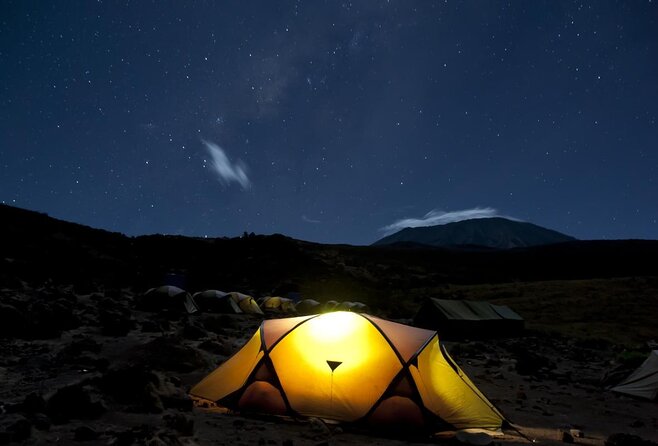
- Porter-supported camping: Your tent and supplies are carried up the mountain, and porters can look after belongings while you climb to the summit.
- Small group size: The maximum group size is 15 people, with pickup offered and a mobile ticket provided.
- A strong service record: The crew receives praise for organization, food, communication, experienced guides, and careful attention to the small details.
Why the seven-day Machame Route makes sense
Kilimanjaro is not a technical climb in the usual sense, but altitude makes it far more demanding than the trail distances might suggest. The Machame Route works well because it does not simply march uphill at one steady angle. It takes you high during the day, then brings you down to camp, giving your body a better chance to adjust.
That extra day matters. The six-day version can work for some fit hikers, but this seven-day plan is the wiser choice for most people comparing routes. You get more time to settle into the rhythm of slow walking, tent life, early meals, and changing air.
The route is also scenic from start to finish. You begin beneath moss-covered trees in the cloud forest, cross heather and tall grass, reach the open Shira Plateau, pass volcanic rock and glaciers, and finally climb through scree toward the summit. The scenery changes often enough to keep the trek interesting, even on the harder days.
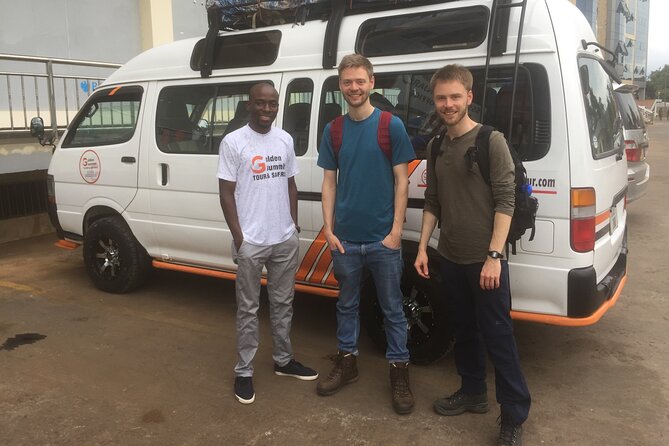
Golden Summit Adventures limits the group to 15 people. That is not a private trek, but it is small enough to keep the group manageable on narrow sections of trail. The company also offers pickup, and the listed start time is 8:00 am for the opening day.
Other routes up the mountain from Moshi:
- Kilimanjaro climb by Lemosho Route (7-day)
★ 5.0 · 651 reviews - Kilimanjaro climb, Machame Route (7-day)
★ 5.0 · 262 reviews - Kilimanjaro Climbing Lemosho Route 8 Days.
★ 5.0 · 186 reviews
Day one: cloud forest to the first camp
The opening hike takes about six hours and begins in the mossy forest on Kilimanjaro. This is a gentle introduction in terms of altitude, but you will still notice the weight of your pack and the steady upward grade.
The forest is the first special feature of the route. Moss-covered trees create a shaded, cool setting, then the vegetation begins to thin as you climb. Heathers, tall grasses, and wildflowers replace the denser woodland near the end of the day.
I like this opening because it makes the mountain feel larger and more varied than a simple uphill walk. You get a clear sense that Kilimanjaro has several climate zones packed into one climb.
Your accommodation is tent camping, with tents carried by porters. That arrangement lets you walk with a lighter personal load, although you should still expect basic camp conditions rather than hotel comfort. The trip is not designed for travelers who need private rooms or a polished lodge at the end of each day.
Day two: the climb to Shira Plateau
The second day takes about five hours and continues through the upper forest before the route steepens toward the Shira Plateau. This is where the views begin to widen.
The plateau gives you a strong first look at the scale of Kilimanjaro. Looking back, you can see Mount Meru rising above the Arusha area in the distance. The open setting also changes the feel of the hike. You leave much of the enclosed forest behind and begin walking through high country with broader views and less shade.
The shorter walking time may look easy on paper, but altitude starts to matter here. You should walk slowly and follow the guide’s pace rather than trying to prove your fitness. A steady pace helps conserve energy for the much harder summit day.
This is also a good point to settle into the group routine. The crew’s organization matters on a camping trek, and the company receives strong praise for handling small details, including food and the care of personal belongings.
Day three: Lava Tower and the climb-high, sleep-low plan
The third day is one of the most important for acclimatization. The hike lasts about eight hours and crosses high moorland on the southwest side of Kilimanjaro.
You pass beneath Lava Tower and the final section of the Western Breach before reaching camp. The route rises to about 4,600 meters during the day. That is a serious altitude gain, but the plan then brings you down to sleep at a lower elevation.
This is the clearest example of why the seven-day version is useful. You spend time high enough to give your body an altitude lesson, but you do not spend the night at the highest point reached that day. The technique cannot remove altitude risk, but it gives the itinerary a sensible rhythm.
The scenery here is spare and volcanic. The forest is gone, and the mountain feels more exposed. The views toward Lava Tower and the upper sections of Kilimanjaro add drama, but this can also be a tiring day. Eight hours at altitude is not a casual walk, even if the trail itself does not require technical climbing.
The published schedule repeats much of the Lava Tower and Western Breach description on day four, so you should ask Golden Summit Adventures for the exact camp names and elevation plan before departure. The overall route clearly continues toward the southern circuit and Barafu, but the written day-by-day description could use clarification.
Same base, a different kind of day out:
- Safari Serengeti And Ngorongoro
★ 5.0 · 288 reviews - Climbing Kilimanjaro – Machame Route
★ 5.0 · 170 reviews - Climbing Kilimanjaro through 7 days Machame Route
★ 5.0 · 151 reviews - Kilimanjaro climb, Lemosho Route (8-day)
★ 5.0 · 148 reviews
Day four: a shorter high-mountain day
Day four is listed as about four hours. It continues through the high moorland and follows the acclimatization pattern that makes this route attractive.
Because the description for this day overlaps with day three, do not rely on the online wording alone for a precise map of the day. Ask what camp you will leave from, where you will sleep, and how much elevation you will gain and lose. These are reasonable questions for any high-altitude trek.
The shorter walking time should give you room to recover after the long day near Lava Tower. That matters because the next stages move you toward Barafu Camp, the launch point for the summit attempt.
At this point, the trip becomes less about sightseeing and more about energy management. Eat even if your appetite is reduced, drink as directed by your guide, and keep your pace slow. The crew’s role becomes especially important here. Experienced guides can watch for changes in how you are moving and help the group avoid wasting energy.
Day five: toward Barafu Camp and the glaciers
After breakfast, you hike toward Barafu Camp, with about four hours of walking listed for the day. The route offers views of several of Kibo’s glaciers and passes the junction where the Mweka descent route connects with the Machame trail.
The route also passes near the Heim, Kersten, and Decken Glaciers. These icy features are a reminder that the summit is not just a high point on a walk. You are moving into a severe alpine zone, with a far colder and more exposed feel than the forest below.
Barafu means ice in Swahili, and the camp serves as the staging point for the summit attempt. The short day is useful because you need to rest, eat, and prepare for a midnight start. Do not mistake the four-hour schedule for an easy holiday outing. You are saving strength for the longest and hardest day of the trip.
Your belongings and sleeping arrangements deserve attention here. The crew is described as looking after personal items while people summit, which can be useful when you need to carry only the essentials for the night climb. Ask in advance exactly what the porters carry and what you should keep with you.
Day six: Stella Point, Uhuru Peak, and the long descent
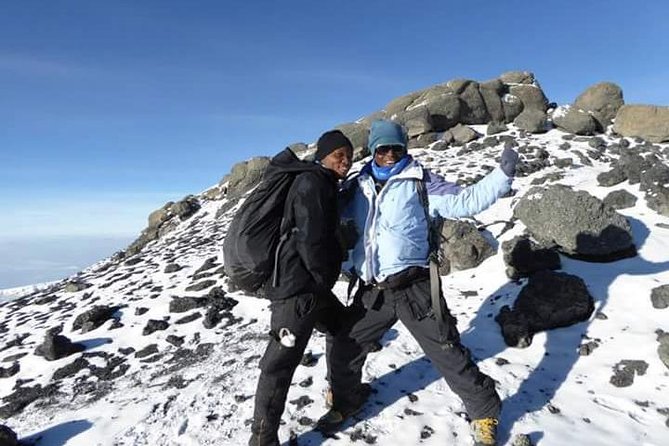
Day six is the test. You begin around midnight and climb steeply toward the summit glaciers. The ascent through scree takes about four to five hours before you reach Stella Point on the crater rim at 5,739 meters.
Scree is loose volcanic gravel. Each step can slide backward, making the climb feel slow and repetitive. The best approach is to accept the guide’s deliberate pace. You are not racing the mountain, and a calm, measured rhythm saves energy.
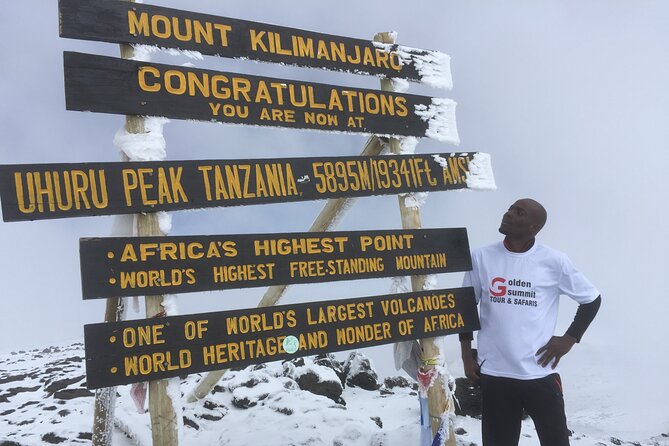
Reaching Stella Point as the first sunlight appears is one of the major rewards of the route. The crater contains dramatic ice cliffs, while Mawenzi Peak rises in a jagged profile nearby. From there, the final hour to Uhuru Peak brings you to 5,895 meters, the highest point in Africa.
The summit section is beautiful, but it is also where altitude can become a serious problem. You may be cold, tired, short of breath, or dealing with a headache. The guide’s safety judgment matters more than your personal desire to continue. A successful Kilimanjaro trip is one that gets you down safely, not one that ignores warning signs for a photograph.
After Uhuru Peak, you return to Stella Point and descend over the scree to Barafu Camp. The plan includes breakfast there before continuing down to Mweka Camp. The full day is listed at about 15 hours, so prepare for a long stretch with little comfort.
This is the strongest reason to choose seven days rather than six. The extra acclimatization time cannot make summit day easy, but it gives you a better base for handling this demanding schedule.
Day seven: rainforest, certificates, and a Moshi shower
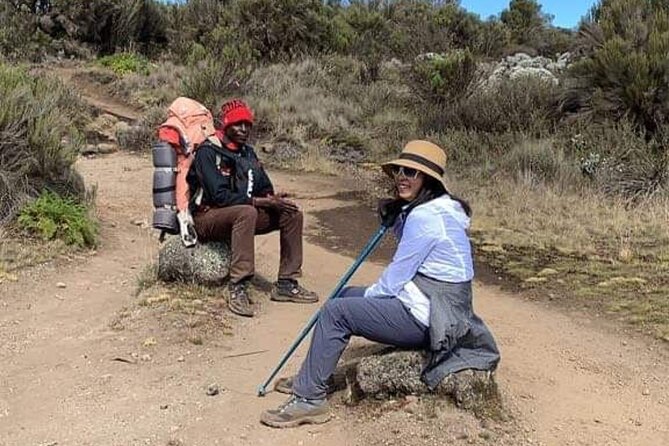
The final hike takes about three hours and descends through rainforest to Mweka Gate. The change from barren upper slopes to dense green forest makes the last morning feel pleasantly different.
At the gate, you complete park formalities and receive certificates. Vehicles then take you back to your hotel in Moshi, where a shower and cold drink will feel well earned. The stated plan includes an overnight stay at your arranged hotel.
The final day is short compared with the summit push, but your legs may be tired and sore. Take the descent slowly. Downhill walking can be hard on knees and feet, especially after the previous day’s long effort.
Returning to Moshi also gives you a clean ending to the trek. You are not left to arrange a transfer after reaching the gate, since the plan includes vehicles back to town.
Food, porters, guides, and group support
The strongest practical praise for this trip concerns service. The crew is known for good organization, filling meals, and food that does not become dull during a week on the mountain. That matters more than it may sound. At altitude, you need regular fuel, and repetitive or small meals can make a hard trek harder.
Porter support is another key part of the experience. Tents and supplies are carried up the mountain, allowing you to keep your daypack lighter. The crew also handles belongings while you make the summit attempt, according to the tour details.
You should still pack carefully. The supplied information does not specify a complete equipment list, meal plan, tipping policy, park fees, or the exact hotel arrangements. Confirm those details before paying, especially since a $2,000 price can represent very different value depending on what is included.
The company’s guides are described as experienced and focused on getting people to the top safely while explaining the environment and local culture. No individual guide names are provided, so ask who will lead your group if having a named guide is important to you.
Is $2,000 a fair price?
The listed price is $2,000 per person. For a seven-day, porter-supported Kilimanjaro trek with transport back to Moshi, that can be reasonable, but you should not judge the value from the headline number alone.
The price is most useful if it includes the major operating costs of the climb. Before booking, confirm:
- Park and camping fees
- Airport or hotel transfers
- Meals and drinking water
- Porter and guide services
- Tents and sleeping arrangements
- The Moshi hotel night
- Transfers between trail gates and Moshi
- Any required equipment or rental charges
The good value here is the extra acclimatization day and the organized support. You are paying for a structured mountain operation, not simply a walking guide. The group cap of 15 also helps keep the cost below a private climb while avoiding a very large party.
The cancellation policy is flexible if your plans change. You can receive a full refund when you cancel at least 24 hours before the local start time. Cancellations or changes made within 24 hours are not refunded or accepted.
Who should book this Kilimanjaro trek?
This trip suits you if you want the classic scenic route, prefer seven days over a rushed six, and are comfortable sleeping in tents. It is a good fit for people who want organized support rather than arranging porters, food, camps, and transport on their own.
You should have a moderate fitness level and be ready for long walking days. The summit day is the deciding factor. A 15-hour schedule, a midnight start, high altitude, scree, and a long descent demand more than ordinary sightseeing fitness.
It is less suitable if you want a relaxed walking holiday, private accommodation each night, or a detailed published schedule with every camp clearly named. The repeated day three and day four wording is worth clarifying before you commit.
Should you book the 7-day Machame Route?
I would choose this trip over the six-day Machame option for most people. The seven-day schedule gives your body more time to adjust, includes the valuable climb-high, sleep-low pattern, and delivers the route’s best scenery, from forest to glacier and summit.
Book it if Golden Summit Adventures confirms what the $2,000 includes, explains the day three and day four schedule, and gives you a clear packing list. The organized crew, porter support, filling meals, small group size, and strong attention to safety make this a sensible choice for a first Kilimanjaro climb.
Skip it if you are looking for easy exertion or hotel comfort. Kilimanjaro remains a serious high-altitude trek, and no good organization can remove that fact.
FAQ
How long is the Machame Route experience?
The trek lasts approximately seven days, followed by transport back to your hotel in Moshi on the final day.
Where does the experience begin?
The tour is based in Moshi, Tanzania. Pickup is offered, and the listed start time is 8:00 am.
What is the highest point reached?
The route reaches Uhuru Peak at 5,895 meters. Stella Point on the crater rim is listed at 5,739 meters.
How difficult is the trek?
Participants should have a moderate physical fitness level. The hardest section is summit day, which begins around midnight and lasts about 15 hours.
Do I sleep in hotels or tents?
You sleep in tents on the mountain. The tents are carried up by porters. The final day includes a return to your arranged hotel in Moshi.
How large can the group be?
The maximum group size is 15 people.
What is included in the cancellation policy?
You can cancel at least 24 hours before the local start time for a full refund. Cancellations and changes made less than 24 hours before the start are not accepted or refunded.
Is the tour available with a mobile ticket?
Yes. A mobile ticket is available, and booking confirmation is received at the time of booking.
Just added in Moshi
- Wildlife Extravaganza: Manyara, Tarangire & Ngorongoro in 3 Days★ 5.0 · 3 reviews
- West Kilimanjaro cycling Adventures★ 4.5 · 8 reviews
- machame route★ 5.0 · 16 reviews
- Mt Kilimanjaro 6 days Marangu route hike★ 5.0 · 3 reviews
- Kilimanjaro Climb • Machame Route ~ 10 Day★ 5.0 · 6 reviews
- Kilimanjaro Climbing Umbwe Route★ 5.0 · 3 reviews
- 3 Days Private E-Bike Tour in West Kilimanjaro★ 5.0 · 3 reviews
- Private Cycle to Kilimanjaro Bike Park Safari★ 5.0 · 6 reviews
Kilimanjaro Treks, compared.



8-Day Small-group Lemosho Kilimanjaro Summit Trekking
Read our review →

5 Days Best of Tanzania Luxury Safari Northern Circuit
Read our review →

Climbing Kilimanjaro through 7 days Machame Route
Read our review →
7-Day Machame Kilimanjaro Summit Tour from Arusha
Read our review →Browse the lists this tour appears in