
Reviewed · KILIMANJARO TREKS
Kilimanjaro Lemosho Route 7 Days
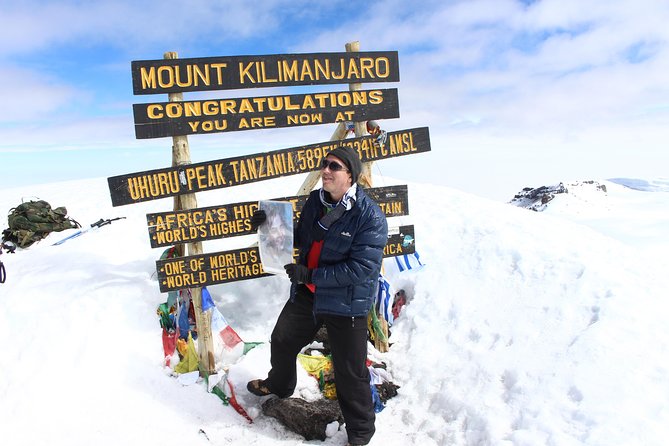
Kilimanjaro’s Lemosho Route gives you a quieter start, strong scenery, and a gradual climb toward Uhuru Peak at 5,895 meters. This seven-day private trek includes guides, porters, meals, tents, safety equipment, and hotel nights before and after the mountain.
I especially like the serious safety setup, which includes VHF radios, emergency oxygen, a Gamow Bag, pulse oximeter, rescue fees, and a porter to carry your day-pack during the summit push. I also like the practical comforts: purified water, warm washing water, a flash toilet, dining chairs with backs, and fresh meals prepared each day.
The main caution is simple: seven days is a demanding schedule at high altitude. The route includes a long summit day followed by a descent to Mweka Camp, and the itinerary gives you little room for a slow weather or altitude adjustment.
Key points to know before booking
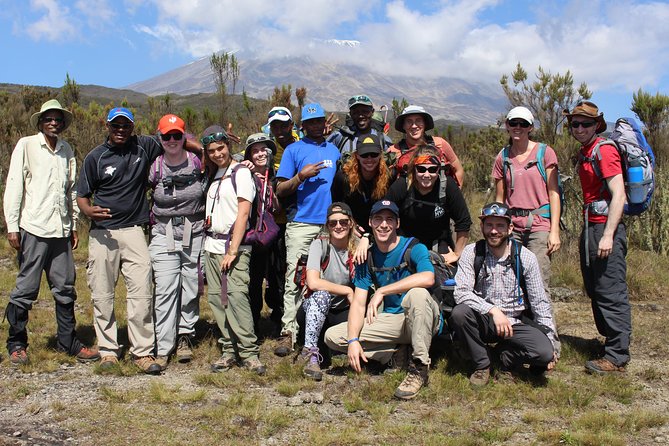
- A quieter first two days: The Lemosho approach begins at Londorossi Gate and reaches Mti Mkubwa and Shira before joining the busier high mountain camps.
- A private climb: Only your own group takes part, so the guide can focus on your pace and condition.
- A strong safety package: Radios, oxygen, a Gamow Bag, pulse oximeter, rescue fees, and trained guides are included.
- Comfortable mountain camping: Waterproof tents, sleeping mats, solar LED lights, dining tables, backed chairs, and a portable toilet are provided.
- A hard summit day: You climb to Uhuru Peak, return to Barafu for a short rest, then continue down to Mweka Camp.
- Good food matters here: Breakfast, lunch, and dinner are included, with fresh food and options for vegetarian, vegan, allergy-sensitive, halal, and kosher diets available according to the operator.
Why the Lemosho Route works well in seven days
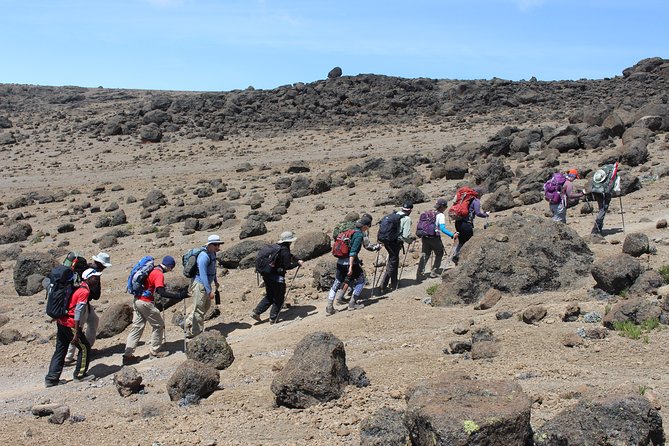
Lemosho is a smart choice if you want a scenic approach without beginning on the most crowded trails. The first two days take you through the western side of Kilimanjaro before you reach Shira Camp. That gives the trip a more remote feel at the start and lets you settle into the rhythm of walking and camping.
The trade-off is that the route still moves quickly. You gain height each day, and by the time you reach Barafu Camp, you are sleeping at 4,550 meters before attempting the summit. The extra equipment and careful guiding help, but they cannot remove the physical challenge.
This is a private activity, so your group does not need to match the speed of strangers. That matters on a mountain where the best pace is usually slow and steady. You can ask your guide to monitor how you are feeling, take sensible breaks, and adjust the walking rhythm within the fixed itinerary.
The company has used guides named Joseph, Ibi, Eli, Paul, Side, and Martin on different climbs. Guide assignments can change, so confirm your guide’s name before departure. The important point is that the package includes professional English-speaking mountain guides and porters, not just a route transfer and a tent.
Other routes up the mountain from Moshi:
- Kilimanjaro climb by Lemosho Route (7-day)
★ 5.0 · 651 reviews - Kilimanjaro climb, Machame Route (7-day)
★ 5.0 · 262 reviews - Kilimanjaro Climbing Lemosho Route 8 Days.
★ 5.0 · 186 reviews
Day 1: Londorossi Gate to Mti Mkubwa Camp
The trip begins with a drive from Moshi to Londorossi Park Gate at 2,385 meters. After park registration and the practical work of getting onto the mountain, you walk to Mti Mkubwa Camp at about 2,700 meters.
The listed hike is about 8 kilometers and takes roughly three to four hours. This is a useful opening day because it is not brutally long, but it gives you your first real test of boots, clothing, pack weight, and walking pace.
Mti Mkubwa means Big Tree Camp, and the route at this level is forested. You are not yet looking at the icy summit or wide alpine views. Instead, this stage is about getting comfortable with the basic routine: walking, arriving at camp, washing with warm water, eating, and sleeping in a tent.
Your day-pack should still be light. A porter carries your day-pack during the summit attempt, but you should ask the operator exactly what luggage arrangement applies on the earlier days. Keep water, rainwear, a warm layer, snacks, sun protection, and personal medicine within your reach.
Day 2: Mti Mkubwa, Shira Camp 1, and Shira Camp 2
Day two is longer and brings a clear change in scenery. You climb from Mti Mkubwa to Shira Camp 1 at 3,500 meters, covering about 6 kilometers in five to six hours. The plan then continues to Shira Camp 2 at 3,840 meters, with another three to four hours and about 8 kilometers listed.
This is one of the most demanding parts of the schedule because the day combines distance, elevation gain, and a second walking section after you have already spent several hours on the trail. The benefit is that you spend more time acclimatizing before the final ascent.
Shira is a high plateau, and the views open up compared with the forest near Mti Mkubwa. You may find the air noticeably thinner here, especially at night. Warm washing water is a small but welcome feature after a long day, and purified drinking water means you do not need to rely on untreated mountain sources.
Take the food seriously. The operator describes large portions of fresh, nutritious meals, and the kitchen can provide vegetarian, vegan, allergy-sensitive, halal, and kosher choices. Ask for dietary arrangements before the climb rather than assuming they can be sorted out at the gate.
Day 3: Shira Camp 2 to Barranco Camp
From Shira Camp 2, you walk to Barranco Camp at about 3,950 meters. The distance is listed as 8 kilometers, with six to seven hours of hiking.
This day is valuable for acclimatization because you gain height during the day and finish at a similar elevation to Shira Camp 2. That familiar mountain principle, climb high and sleep lower or at a similar level, is one reason the route can work well for people who manage their pace carefully.
Barranco Camp is one of the memorable stops on this route. It sits below the Barranco Wall, a steep volcanic feature that you tackle the following morning. The camp gives you a dramatic setting and a chance to see the mountain’s upper slopes in a new way.
The drawback is fatigue. Three straight days of hiking can catch up with you, even when the daily distances look modest on paper. Do not judge your condition only by how you feel at the start of the morning. Tell your guide about headaches, nausea, unusual tiredness, poor sleep, or breathlessness.
Same base, a different kind of day out:
- Safari Serengeti And Ngorongoro
★ 5.0 · 288 reviews - Climbing Kilimanjaro – Machame Route
★ 5.0 · 170 reviews - Climbing Kilimanjaro through 7 days Machame Route
★ 5.0 · 151 reviews - Kilimanjaro climb, Lemosho Route (8-day)
★ 5.0 · 148 reviews
Day 4: Barranco Wall and Karanga Valley Camp
The walk from Barranco Camp to Karanga Valley Camp is about 5 kilometers and takes four to five hours. The elevation rises only slightly, from 3,950 meters to roughly 3,995 meters, but the trail is not simply flat walking.
The day begins with the climb over or around the Barranco Wall. You should expect hands-on sections and uneven ground, though the supplied information does not describe the route as technical climbing. A guide’s help is useful here, especially if you dislike exposed steps or need a steady pace.
Karanga Valley is a shorter day by distance, which gives your body some time to adjust before the final camps. That does not make it an easy day. You are already high, nights are colder, and the cumulative effect of walking can be stronger than the numbers suggest.
This is a good place to be disciplined. Eat even if your appetite is weak, drink regularly, and keep your sleeping gear dry. The waterproof tents and sleeping mats are included, but personal clothing and small items still need protection from damp conditions.
Day 5: Karanga Valley to Barafu Camp
The route from Karanga Valley to Barafu Camp covers about 4 kilometers and takes four to five hours. Barafu sits at approximately 4,550 meters, making this a short but important day.
Barafu is the launch point for the summit attempt. You arrive, eat, organize your clothing and headlamp, and rest before beginning the night climb. The package includes high-powered solar LED lights, but you should confirm what personal lighting you are expected to carry.
The camp is high enough that sleeping may be difficult. That is normal on a summit night, but do not treat serious symptoms as something to ignore. Your guide has a pulse oximeter and emergency equipment, yet good decisions depend on you reporting how you feel accurately.
The itinerary does not state a specific summit departure time. Ask about it before the climb, along with the planned meal schedule and how much time you will have at Barafu. Small details matter when you are preparing for the hardest day.
Day 6: Uhuru Peak and the descent to Mweka Camp
This is the big day. The plan allows seven to eight hours to reach Uhuru Peak at 5,895 meters, with about 5 kilometers of ascent. After a short rest at Barafu, you continue down to Mweka Camp at 3,060 meters, taking another four to five hours over about 12 kilometers.
The summit section is hard because you climb at altitude after limited sleep, then descend a long way on tired legs. The distance to Uhuru Peak may look short, but the combination of cold, thin air, steep ground, and slow walking makes this a serious effort.
The safety package is most relevant here. You have guides, radios, emergency oxygen, a Gamow Bag, rescue fees, and a porter to carry your day-pack during the summit attempt. These are useful safeguards, not guarantees of success. If your guide says you must turn around, that decision should be treated as a medical and safety judgment, not a failure.
Reaching Uhuru Peak is the obvious goal, but getting down safely matters just as much. The descent to Mweka Camp is a welcome change in altitude, yet it is tiring. Once at Mweka, you can expect a simpler evening focused on food, washing, and sleep rather than celebration.
Day 7: Mweka Camp to the gate and hotel
The final walk is listed as four to five hours and about 4 kilometers to Mweka Gate. The itinerary gives the gate elevation as 4,600 meters, which does not fit the usual downhill direction of this section, so ask the operator to confirm the exact elevation and walking details before departure.
At the gate, transportation takes you back to your previous hotel for certificates and a summit party ceremony. The return transfer is included, as are arrival and departure transfers and destination transportation.
The hotel nights are one of the package’s practical advantages. The information lists two nights of classic standard hotel accommodation and two nights of comfort hotel accommodation, described as one night before and one after the trek. Because the wording gives two hotel categories, confirm which nights and room standard apply to your booking.
Bed and breakfast accommodation is included, while the mountain package includes full board. That means you should not need to budget for the main meals during the climb, although drinks, laundry, phone use, and other personal costs remain extra.
What the $2,669.88 price covers
At $2,669.88 per person, this is not a bare-bones mountain package. Park fees, government taxes, rescue fees, transfers, hotel stays, guides, porters, meals, tents, sleeping mats, dining furniture, toilet facilities, purified water, and safety equipment are included.
The Gamow Bag and oxygen are particularly worth noting. They are emergency tools for altitude problems, while the VHF radios allow communication between the mountain team. A pulse oximeter helps the guides track oxygen levels, though the number alone does not decide if someone is fit to continue.
The value depends on how many people are in your private group and which hotel category you receive. Group discounts are offered, so ask for the total cost for your party rather than assuming the per-person rate is fixed.
Budget separately for tips, a Tanzanian visa on arrival, laundry, telephone use, beverages, and optional trips such as a safari after the climb. Tips are not included, and the package does not include extra tours.
One encouraging feature is the stated fair treatment of porters. The operation also grew from local experience, with company leadership described as having worked as porters and guides before running the business. Ask how tipping is handled and how many staff members will accompany your group.
Food, camping, and daily comfort
Mountain food is not decoration. It is fuel, and this operator places real emphasis on fresh, filling meals. Breakfast can include tea, coffee, porridge, sausages, bread, toast, eggs, and fruit, with carbohydrates and fresh produce suited to long walking days.
You get breakfast, lunch, and dinner during the seven-day package. If you have dietary restrictions, send the details in advance. Vegetarian, vegan, allergy-sensitive, halal, and kosher meals are offered according to the operator’s information.
Camping is more organized than a simple tent-and-sleeping-bag trip. Waterproof tents, sleeping mats, LED lights, a portable flash toilet, toilet tents, aluminum dining tables, and large chairs with backs and armrests are supplied.
Those chairs may sound like a small detail, but after several hours on a trail, a proper place to sit is valuable. Warm water for washing each day also makes the high camps easier to manage. You still need to pack personal clothing, toiletries, and suitable cold-weather equipment.
Who should book this Kilimanjaro climb?
This trip suits you if you want a private climb, prefer the Lemosho approach, and value a strong support team over a stripped-down budget. It is also a good match if you want hotel nights, cooked meals, and safety tools already arranged.
You should have a moderate level of physical fitness. The itinerary includes several consecutive hiking days, high camps, and a summit day followed by a long descent. You do not need to be a technical climber based on the information provided, but you do need patience, stamina, and a willingness to walk slowly.
This may not suit you if you want a relaxed holiday with a little mountain walking added. It may also feel too compressed if you prefer extra acclimatization days. Ask if a longer version is available if you have concerns about altitude or have never spent time at high elevation.
The private format is especially useful for couples, families, and small groups who want to share the challenge without being tied to strangers. It also gives you one clear point of contact for pace, food, rest stops, and personal concerns.
Should you book it?
I would consider this a strong-value Kilimanjaro package for someone who wants the Lemosho Route with a private group and extensive practical support. The best features are the quieter opening, included rescue and safety equipment, serious meal provision, warm washing water, and hotel stays before and after the trek.
Book it if you are comfortable with the seven-day schedule and are ready to train for the summit day. Before paying, confirm your hotel category, guide assignment, summit departure time, porter arrangements, tipping expectations, and the unusual elevation detail given for Mweka Gate.
If you want the best chance of handling altitude comfortably, ask about adding time to the itinerary. If seven days is your firm limit, this package gives you a well-supported route, but you should arrive prepared for a demanding climb rather than expecting the equipment to do the hard work for you.
FAQ
Is this a private Kilimanjaro climb?
Yes. Only your group participates in the activity, rather than joining a shared public group.
How long is the Lemosho Route climb?
The experience lasts approximately seven days, including the approach to the mountain, the summit attempt, the descent to Mweka Gate, and the return to the hotel.
What safety equipment is included?
The package includes emergency oxygen tanks, VHF handheld radios, a Gamow Bag, a pulse oximeter, mountain rescue fees, and a porter to carry your day-pack during the summit attempt.
Are meals included?
Yes. Breakfast, lunch, and dinner are included during the seven-day experience. Fresh meals are provided, and vegetarian, vegan, allergy-sensitive, halal, and kosher choices are available according to the operator.
Are hotel nights included?
Yes. Hotel accommodation is included before and after the trek, with bed and breakfast. The information lists classic standard and comfort hotel categories, so confirm the exact arrangement when booking.
What is not included in the price?
Tips, a Tanzanian visa on arrival, personal expenses such as laundry, telephone use, and beverages, and optional tours such as a safari after the climb are not included.
Just added in Moshi
- Wildlife Extravaganza: Manyara, Tarangire & Ngorongoro in 3 Days★ 5.0 · 3 reviews
- West Kilimanjaro cycling Adventures★ 4.5 · 8 reviews
- machame route★ 5.0 · 16 reviews
- Kilimanjaro Climb • Machame Route ~ 10 Day★ 5.0 · 6 reviews
- Kilimanjaro Climbing Umbwe Route★ 5.0 · 3 reviews
- Mt Kilimanjaro 6 days Marangu route hike★ 5.0 · 3 reviews
- Kilimanjaro Climb • Marangu Route ~ 9 Day★ 5.0 · 4 reviews
- 3 Days Private E-Bike Tour in West Kilimanjaro★ 5.0 · 3 reviews
Kilimanjaro Treks, compared.



8-Day Small-group Lemosho Kilimanjaro Summit Trekking
Read our review →

5 Days Best of Tanzania Luxury Safari Northern Circuit
Read our review →

Climbing Kilimanjaro through 7 days Machame Route
Read our review →
7-Day Machame Kilimanjaro Summit Tour from Arusha
Read our review →Browse the lists this tour appears in