
Reviewed · KILIMANJARO TREKS
Kilimanjaro Lemosho Route 7 Days
Kilimanjaro’s Lemosho Route gives you a smart way to approach Africa’s highest mountain: climb high during the day, then sleep lower. That rhythm helps your body adjust, while the route carries you from pine forest and giant heather to volcanic rock, glaciers, and the summit ridge.
I like the slow, carefully graded ascent and the strong mountain support. You get a private trip, a professional guide team, porters, cooks, medical gear, purified water, and a private flush toilet in camp. The major catch is simple: seven days is still a short schedule for a high-altitude climb, and the 12-hour summit day will test even fit hikers.
I also like the range of scenery. Lava Tower, the Great Barranco Wall, Mawenzi Peak, the Shira Plateau, and the final walk to Uhuru Peak each give the climb a different feel. Still, you need moderate fitness, sensible gear, and an honest view of altitude sickness. Being fit does not guarantee an easy summit.
Key points to know before booking
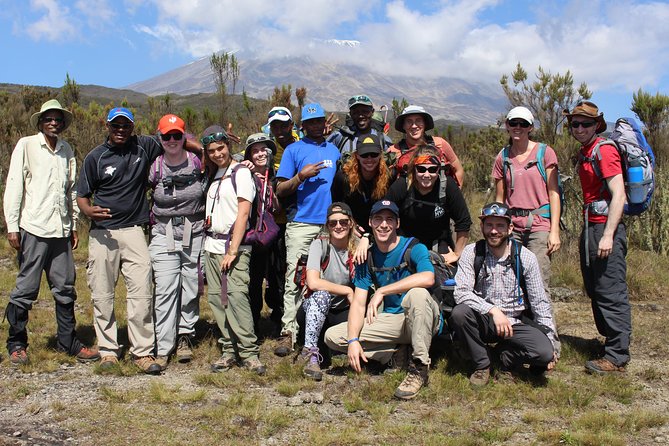
- Lemosho gives you a gradual altitude profile: The route begins at 1,981 meters and reaches Uhuru Peak at 5,895 meters.
- Lava Tower is the key acclimatization day: You climb to about 4,530 meters, then descend more than 600 meters to Barranco Valley.
- Barranco Wall adds real excitement: It is a steep, non-technical rock scramble that requires steady movement and comfort with exposed mountain terrain.
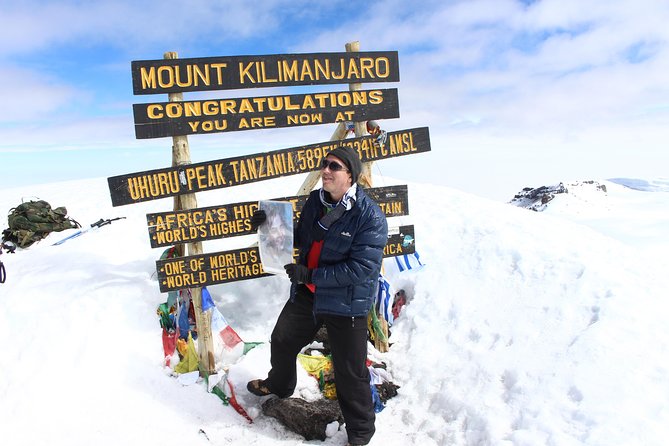
- Summit night starts around midnight: Expect about six hours to Stella Point, followed by another two hours toward Uhuru Peak.
- The support package is unusually substantial: It includes porters, cooks, tents, a private flush toilet, emergency oxygen, a Gamow bag, and vital sign checks.
- The price includes much more than hiking: At $2,500 per person, the cost covers park fees, meals, mountain staff, transfers, accommodation, and medical support, though gratuities and personal equipment remain extra.
Why the Lemosho Route works well for acclimatization
The route begins with a 4WD transfer to Londrossi Gate. There, your climbing team is registered, bags are weighed, and the crew prepares for the mountain. Porter loads are limited to 20 kilograms, which is important both for porter welfare and for keeping the expedition organized.
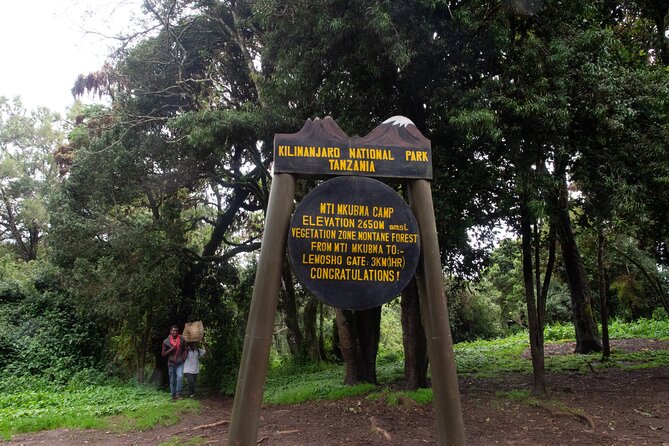
The drive continues along narrow dirt roads through pine plantations toward the Lemosho Glades. You begin walking at about 1,981 meters and finish the first day at 2,780 meters. Four to five hours of walking makes this a useful opening day rather than an exhausting one.
The first forest section is a good reminder that Kilimanjaro is not only a bare volcanic cone. You begin among trees and shaded paths, then slowly leave the forest behind. The route described for this trip also refers to the southern approach near Machame, so you should confirm the exact starting trail and camp names with Jaribu Africa Adventures before departure.
The real strength of the route is its gradual gain. You are not rushed straight toward the summit. The daily pattern lets you spend time at higher elevations before dropping to sleep at a lower camp, a practice widely used to reduce altitude problems.
Other routes up the mountain from Moshi:
- Kilimanjaro climb by Lemosho Route (7-day)
★ 5.0 · 651 reviews - Kilimanjaro climb, Machame Route (7-day)
★ 5.0 · 262 reviews - Kilimanjaro Climbing Lemosho Route 8 Days.
★ 5.0 · 186 reviews
Day 1: Londrossi Gate to the first forest camp
The first day combines logistics and a moderate hike. At the gate, the staff handles national park formalities, including registration and luggage weighing. Depending on weather and the day’s timing, lunch may be served at the gate.
After the road transfer, you walk through the forest toward camp. The distance is about 7 kilometers, with four to five hours on foot. The gain is roughly 800 meters, enough to begin the adjustment process without using up your energy too soon.
You sleep in a three-person expedition tent shared by two clients. That gives you more room than a full three-person setup, and a camping mattress is supplied. A mess tent, tables, chairs with backrests, and hot washing water help make camp more comfortable than a basic self-supported trek.
Day 2: Forest to the Shira Plateau
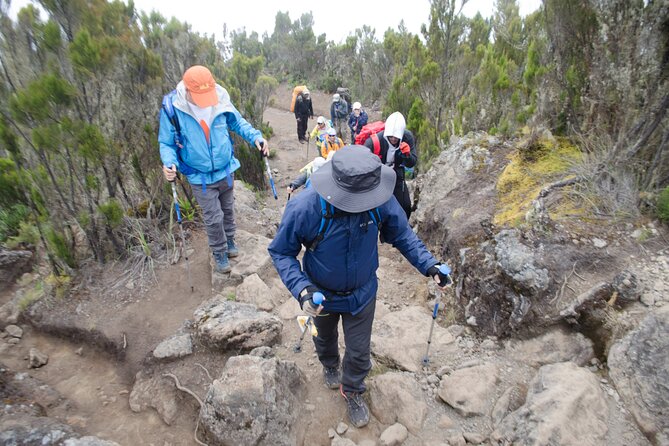
Day two is longer, with about 12 kilometers and seven hours of walking. You move from montane forest into moorland, following narrow tracks that wind across ridges.
The plants change as you rise. Giant heather and Erica give way to distinctive giant lobelias and giant groundsel. These plants make the upper slopes feel unlike an ordinary highland walk, and they are one reason the route is more interesting than a direct push toward the summit.
The guides use the Swahili phrase pole pole, meaning slowly slowly. That is not just a friendly slogan. A slow pace helps you manage your breathing, notice early signs of altitude trouble, and save strength for the upper mountain.
You finish around 3,511 meters on the Shira Plateau. The open setting gives you broad views and a sense that the climb has properly begun. The drawback is that this day may feel long because the trail can be narrow and uneven, even though the altitude gain is controlled.
Day 3: Shira Plateau and the alpine desert
On day three, you walk about 9 kilometers in five to six hours, heading north through heather and into alpine desert. The final camp sits at approximately 4,175 meters.
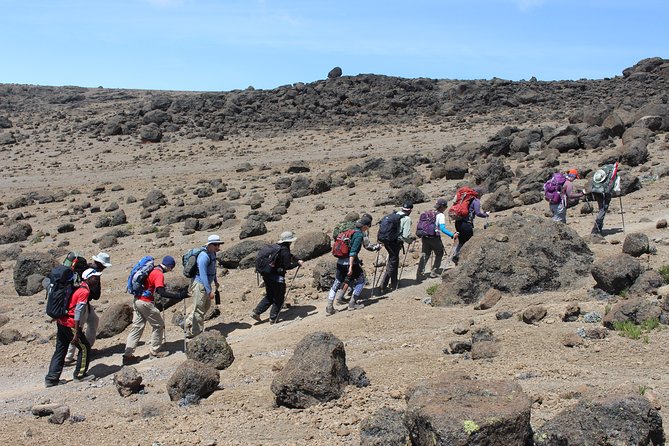
The route passes the natural feature called Shark’s Tooth and continues toward a valley below the Lent Group, a collection of large volcanic dykes. Vegetation becomes sparse. Only hardy everlasting flowers and small senecios manage to grow here.
This is an important acclimatization day because you gain height steadily instead of racing upward. You reach camp in time for lunch, giving you a chance to eat, rest, and drink before the colder nights at higher camps.
The tradeoff is that the alpine desert offers less shelter and less visual variety than the forest. Wind and cold can make the day feel harder than the mileage suggests. Keep your warm layers accessible rather than buried in your duffle bag.
Same base, a different kind of day out:
- Safari Serengeti And Ngorongoro
★ 5.0 · 288 reviews - Climbing Kilimanjaro – Machame Route
★ 5.0 · 170 reviews - Climbing Kilimanjaro through 7 days Machame Route
★ 5.0 · 151 reviews - Kilimanjaro climb, Lemosho Route (8-day)
★ 5.0 · 148 reviews
Day 4: Lava Tower and the descent to Barranco
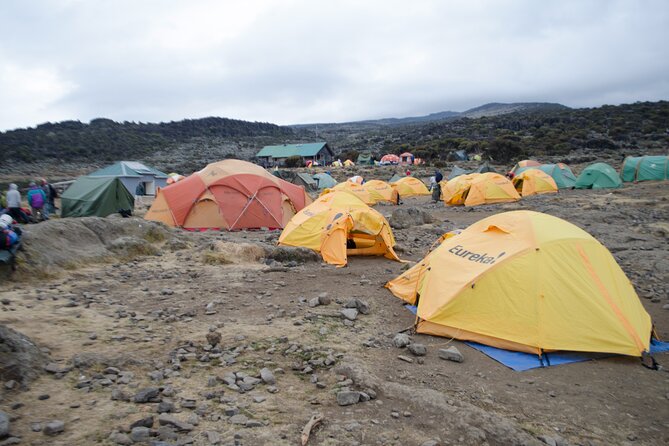
Day four is one of the route’s most useful and memorable sections. You begin at about 4,175 meters and walk toward Lava Tower at roughly 4,530 meters. The total distance is about 6 kilometers, but altitude and rocky ground make it a serious day.
At Lava Tower, you can take lunch and, if you feel strong enough, attempt a non-technical rock scramble to the top. From there, the views include the Karanga Valley, Shira Plateau, and the Western Breach.
The key lesson comes next. You descend more than 600 meters into the Great Barranco Valley, finishing near 4,039 meters. This is the high-and-sleep-low pattern in action. Your body spends time at altitude, then you rest at a lower camp.
The descent is steep and rocky, so careful footing matters. It is also one of the best photo sections, especially when the Western Breach and nearby glaciers are visible. Weather can change the view quickly, so do not count on clear conditions.
Day 5: The Great Barranco Wall and Karanga Valley
Day five covers about 9 kilometers in six to seven hours. It begins with the Great Barranco Wall, the most physical scrambling section of the route.
You climb steadily up the eastern face, passing below the Heim Glacier. This is not described as a technical climb, but you should expect hands-on rock scrambling, uneven steps, and a need to follow the guide’s line. The wall can feel intimidating at first, yet the movement is part of what makes this route memorable.
After the wall, the trail drops into the alpine desert of Karanga Valley before climbing again toward camp at about 4,600 meters. Repeated ascents and descents can be tiring. This is where a steady pace matters more than speed.
The camp’s high position prepares you for summit night, but it also means cold temperatures and thinner air. Eat well, drink the supplied purified water, and tell the guide promptly if you have a headache, nausea, unusual fatigue, or trouble breathing.
Day 6: The midnight start and Uhuru Peak
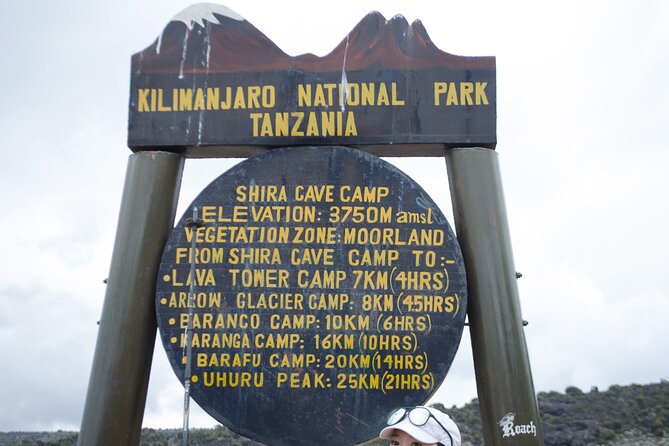
Summit day begins around midnight with a warm drink and a light snack. The timing is practical: it gives you a chance to reach the crater rim near sunrise and continue toward Uhuru Peak before the day’s weather becomes less predictable.
The hike to Stella Point takes about six hours. You climb slowly over steep, strenuous ground to reach the rim at approximately 5,685 meters. This is the hardest part for many people because sleep has been short and the air is extremely thin.
At Stella Point, you can rest, eat, and look across the clouds. The final route is normally snow-covered and takes about two more hours. You pass near the blue Rebmann and Tarzel glaciers before reaching the summit area at about 5,895 meters.
The view from Uhuru Peak is the reward, but the summit is not the whole day. You still have to descend from the upper mountain and return to camp. The complete summit day lasts about 12 hours, so you need to prepare for fatigue rather than treating the summit as the finish line.
The provided support is reassuring here. The expedition carries emergency oxygen, a pulse oximeter, a Gamow bag, a medical kit, and access to wilderness first responder assistance. These tools do not remove the risks of altitude, but they show that the operator has planned for problems. Medical evacuation by AMREF Flying Doctors is included for covered emergencies, while extra evacuation and medical costs may apply in some situations.
Wine and champagne are also provided for the summit celebration. That is a cheerful touch, though the real luxury is reaching the top safely and having a capable team manage the descent.
Day 7: Mweka Forest and the return to Arusha
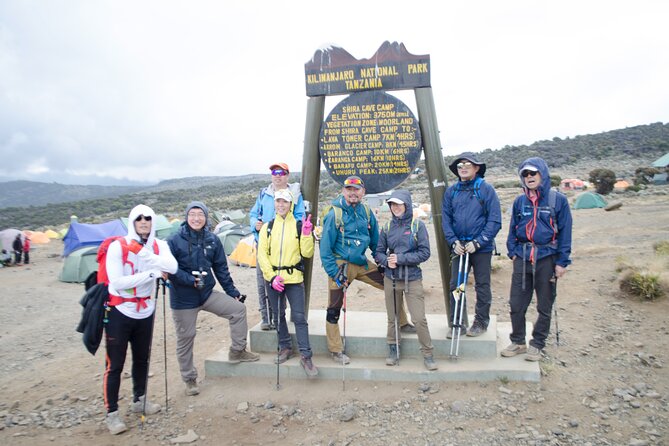
The final day is not merely a short walk away from the mountain. You descend about 13.5 kilometers through montane rain forest, with five to six hours of hiking.
The trail can be steep and slippery when wet. After days in dry alpine terrain, the return to dense forest feels dramatic. You follow a broad ridge between two river valleys until reaching a road, then walk the final 40 minutes to Mweka Park Gate.
At the gate, you stop for a picnic lunch. Successful climbers receive summit certificates from the Kilimanjaro National Park Authority: gold for Uhuru Peak and green for Stella Point. A private bus or Jeep then takes you to your hotel in Arusha.
Your legs may be more sore on this day than you expect. Trekking downhill uses muscles in a different way, so hiking poles and careful steps are useful if you have them.
What the $2,500 price really covers
At $2,500 per person, this is not a bare-bones mountain package. The fee includes Kilimanjaro National Park entrance, camping and rescue charges, government taxes, 18 percent VAT on park entrance fees, airport transfers, the return Arusha hotel to park gate transfer, and two hotel nights with breakfast at either Ameg Lodge or Salinero Hotels.
On the mountain, the price includes tents, mattresses, a mess tent, tables, chairs, a shower and wash tent, a private portable flush toilet, hot washing water, towels, and meals. Breakfast, lunch, and dinner are listed for all seven days, along with purified water.
The staff costs are also built in. Guide, cook, and porter salaries are included, as is a commitment to fair and ethical porter treatment. You still need to budget for staff gratuities, personal trekking equipment, visas, laundry, souvenirs, communication charges, and any extra medical or evacuation costs.
The strongest value comes from the safety and support equipment. A radio, mobile phone, oxygen, vital sign monitoring, a pulse oximeter, a Gamow bag, and trained wilderness first responder support are not minor extras on a high mountain.
Still, ask for a final written list of what the two hotel nights cover and where they fall in the schedule. The supplied plan identifies the hotels and breakfast but does not specify the exact nights.
Service, guide support, and group format
This is a private activity, so only your group takes part. That gives you more control over pace and stops than a large shared departure. Group discounts are available, but the amount is not specified.
Past service feedback gives special credit to team members named Jacob and Joseph. Jacob is described as bringing strong planning, enthusiasm, and commitment to a wider Tanzania trip, while Joseph is associated with a well-organized team. Ask Jaribu Africa Adventures who your lead mountain guide will be for this specific departure, since the available information does not identify the exact Kilimanjaro guide.
The company has also been praised for handling airport pickup, hotels, and the trek in one organized plan. That matters because a Kilimanjaro climb has many moving parts. A missed transfer or unclear hotel handoff can create stress before you even reach the trail.
You should still ask practical questions before paying: the maximum group size, the guide-to-climber ratio, the gratuity recommendation, the exact hotel dates, and the plan if you cannot continue because of illness.
Who should book this climb?
This trek suits you if you want a private Kilimanjaro climb with strong support and a route that gives acclimatization serious attention. It is a good match for someone who prefers a gradual approach, wants several distinct ecological zones, and values equipment and medical preparation.
It is less suitable if you want a relaxed holiday with only a few hours of walking each day. Summit night is long, cold, and physically demanding. You also need to accept that the summit is never guaranteed, even with good preparation.
The cancellation policy is flexible if your plans change early: cancel at least 24 hours before the local start time for a full refund. Later cancellations and changes are not refunded or accepted. If poor weather forces cancellation, you are offered another date or a full refund.
Should you book the 7-day Lemosho climb?
I would choose this trip if the private format, included support, and high-and-low acclimatization plan match your priorities. The route offers a strong mix of forest, moorland, volcanic desert, glacier views, rock scrambling, and summit walking.
Before booking, confirm the exact trailhead, camp schedule, lead guide, hotel nights, group size, and recommended gratuities. If you are moderately fit, prepare carefully, and respect the altitude, the $2,500 cost can be good value for the amount of park access, staffing, food, transport, safety gear, and camp comfort included.
FAQ
Where does the Kilimanjaro Lemosho trek begin?
The trip starts with a 4WD transfer to Londrossi Gate, followed by a drive toward the Lemosho Glades where you begin hiking.
How long is the experience?
The trek lasts approximately seven days, including the mountain hike and the final transfer back toward Arusha.
How high is Uhuru Peak?
Uhuru Peak is approximately 5,895 meters above sea level.
How difficult is the trek?
You should have a moderate physical fitness level. The summit day is the hardest, lasting about 12 hours, and includes a midnight start.
What is the highest point before the summit?
You reach Stella Point at approximately 5,685 meters before continuing along the crater rim toward Uhuru Peak.
Does the route include Lava Tower?
Yes. Day four takes you to Lava Tower at roughly 4,530 meters. A non-technical rock scramble to the top is optional.
Is the Great Barranco Wall technical?
The wall is described as a challenging rock scramble rather than a technical climb. You should still be comfortable with steep, uneven ground.
Are meals included?
Yes. Breakfast, lunch, and dinner are included for seven days, along with purified water while you are on the mountain.
Are airport transfers included?
Yes. Airport transfers and the return transfer between the Arusha hotel and the park gate are included.
Is this a private tour?
Yes. Only your group participates in the activity. Group discounts are also offered, but the discount amount is not specified.
Just added in Moshi
- Wildlife Extravaganza: Manyara, Tarangire & Ngorongoro in 3 Days★ 5.0 · 3 reviews
- West Kilimanjaro cycling Adventures★ 4.5 · 8 reviews
- machame route★ 5.0 · 16 reviews
- Kilimanjaro Climbing Umbwe Route★ 5.0 · 3 reviews
- Mt Kilimanjaro 6 days Marangu route hike★ 5.0 · 3 reviews
- Kilimanjaro Climb • Machame Route ~ 10 Day★ 5.0 · 6 reviews
- 3 Days Private E-Bike Tour in West Kilimanjaro★ 5.0 · 3 reviews
- Private Cycle to Kilimanjaro Bike Park Safari★ 5.0 · 6 reviews
Kilimanjaro Treks, compared.



8-Day Small-group Lemosho Kilimanjaro Summit Trekking
Read our review →

5 Days Best of Tanzania Luxury Safari Northern Circuit
Read our review →

Climbing Kilimanjaro through 7 days Machame Route
Read our review →
7-Day Machame Kilimanjaro Summit Tour from Arusha
Read our review →Browse the lists this tour appears in