
Reviewed · KILIMANJARO TREKS
Kilimanjaro Marangu Route 6 Days
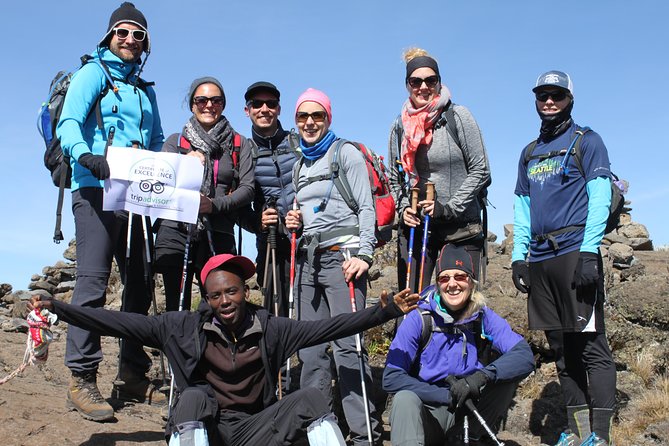
The appeal of this six-day Marangu climb is its hut-based route and extra acclimatization day. You sleep in simple mountain huts rather than tents, walk through rainforest and moorland, and make the hard summit attempt from Kibo before sunrise.
I like the sensible pace and the strong safety setup, including radios, oxygen, a pulse oximeter, a Gamow Bag, rescue fees, and a porter for your day-pack on summit day. I also like the practical start and finish: airport or hotel transfers, two nights of standard hotel accommodation, and meals are built into the package. The main caution is the altitude and the very long fifth day. A moderate fitness level is required, and reaching Uhuru Peak is never guaranteed.
Key points to know before booking
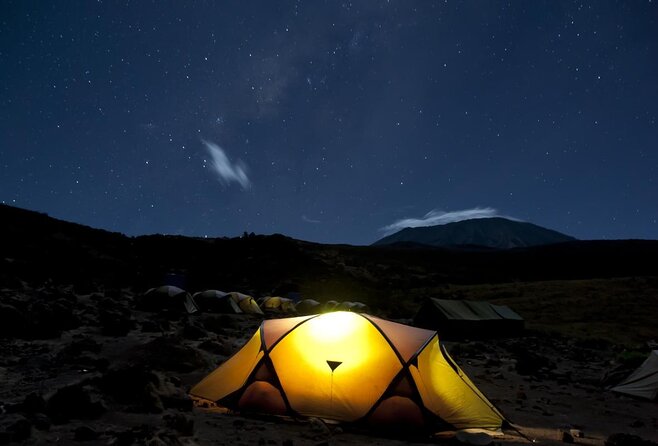
- Six days with five mountain nights: The longer Marangu schedule adds a valuable acclimatization night at Horombo.
- Huts instead of tents: Mandara, Horombo, and Kibo provide simple rooms and dining areas, with no running water at Kibo.
- A demanding summit day: You may walk for about 13 hours, starting before midnight and descending to Horombo afterward.
- Safety support is extensive: Radios, emergency oxygen, a Gamow Bag, pulse oximeter, and rescue fees are included.
- Meals and transfers are covered: Airport and local transport, hotel nights, and mountain meals are part of the package.
- Private group format: Only your group participates, and group discounts are available.
Why the six-day Marangu Route makes sense
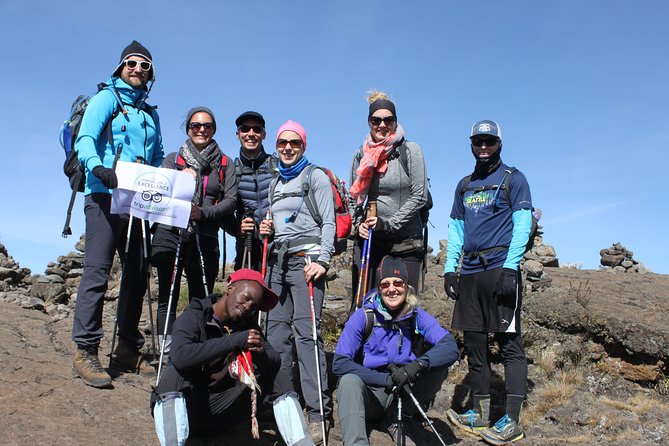
At $2,179.49 per person, this is not a budget walk. But the price covers more than the climb itself. You receive transfers, two hotel nights, park and government fees, hut accommodation, all mountain meals, drinking water, safety equipment, guides, porter support, and rescue fees.
That makes the package easier to compare with cheaper climbs that add costs later. Tips, a Tanzania visa, laundry, telephone use, beverages, and optional trips such as a safari are not included. You should also budget for those extras before deciding if the price works for you.
Marangu is often called the easier Kilimanjaro route because the trail has a moderate gradient and a clear path. That does not make it easy in the ordinary sense. You still reach 5,895 meters at Uhuru Peak, where low oxygen affects every climber differently.
The six-day version is the sensible choice over the shorter five-day schedule. Day three gives you more time at Horombo for acclimatization, with a walk toward Mawenzi and the Zebra Rocks before returning to the same hut. That extra night costs time and money, but it gives your body a better chance to adjust.
Other routes up the mountain from Moshi:
- Kilimanjaro climb by Lemosho Route (7-day)
★ 5.0 · 651 reviews - Kilimanjaro climb, Machame Route (7-day)
★ 5.0 · 262 reviews - Kilimanjaro Climbing Lemosho Route 8 Days.
★ 5.0 · 186 reviews
Day 1: Marangu Gate to Mandara Hut
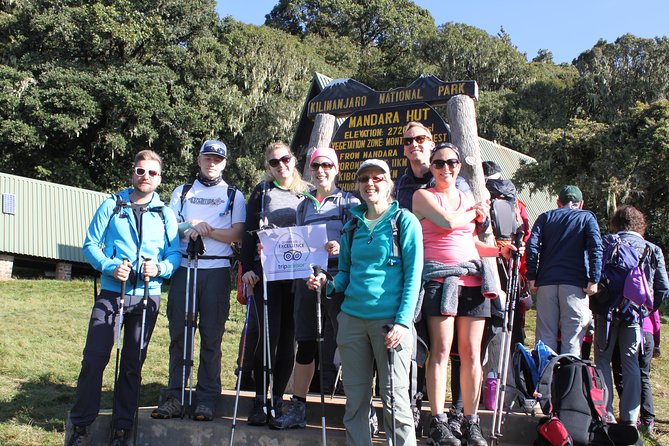
After breakfast, you travel from your hotel to Marangu National Park gate. The gate formalities come first, then the route enters Kilimanjaro’s tropical rainforest.
This opening section takes about five to six hours and reaches Mandara Hut at 2,700 meters. The forest is the main attraction here. It is a cool, shaded start, and the steady climb gives you time to settle into the walking rhythm.
Mandara is a simple hut stop with dinner and an overnight stay. You can rest around camp after arriving, but do not treat the first day as a free pass. The climb has already begun, and a slow pace from the start will help conserve energy.
The supplied plan repeats the five-hour estimate in places, so you should think of the timing as approximate rather than fixed. Mountain pace, weather, and group speed will affect your arrival.
Day 2: Forest to Horombo’s open moorland
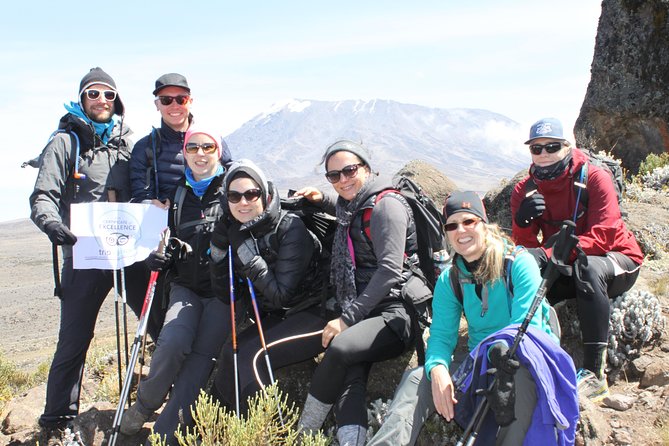
The second day begins with a steeper section through the remaining forest. Soon the trees thin out and the route opens into the low alpine zone, with moorland replacing rainforest.
In clear weather, you can see Kibo and Mawenzi peaks. These views make the day feel more rewarding than the first, when the forest limits what you can see. The walk to Horombo Hut takes about four to six hours and ends at 3,720 meters.
Horombo is an important rest point. You arrive by mid-afternoon, which leaves time to eat, relax, and take in the surroundings. The hut provides a bed and basic shelter, but this is still a high-altitude camp, not a hotel. Expect simple conditions and focus on warmth, food, hydration, and sleep.
The route is described as moderate, but the altitude is now becoming the central challenge. You should walk slowly, drink often, and tell your guide if you develop symptoms that concern you.
Day 3: Zebra Rocks and the extra acclimatization day
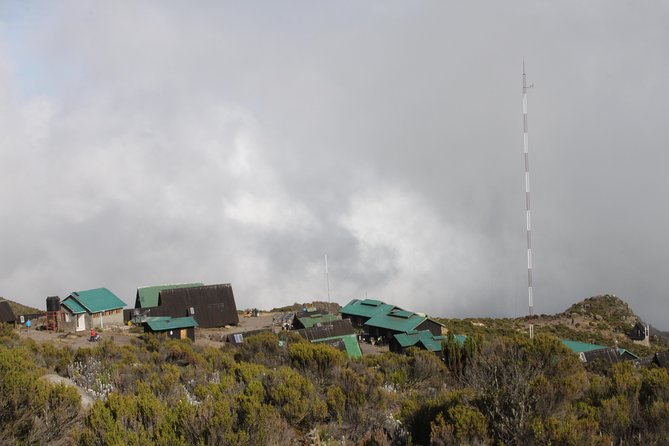
Day three is the reason I prefer this six-day plan. You remain based at Horombo, walking toward Mawenzi Hut and passing the Zebra Rocks before returning to Horombo for another night.
The walk moves from the low alpine zone toward the high alpine zone and takes about six hours. You gain altitude during the day, then sleep at the lower Horombo camp. That pattern helps you spend more time high without immediately committing to a higher overnight stay.
All meals are provided. The practical advice here is simple: drink enough water and keep your pace slow. Do not use this day to prove how strong you are. The purpose is to prepare for the summit attempt, not to arrive exhausted at Kibo.
Horombo is also where you may appreciate the hut system most. You have a base for the night rather than packing and unpacking a tent. Still, simple huts can mean less privacy and fewer comforts than you may expect at the price.
Same base, a different kind of day out:
- Safari Serengeti And Ngorongoro
★ 5.0 · 288 reviews - Climbing Kilimanjaro – Machame Route
★ 5.0 · 170 reviews - Climbing Kilimanjaro through 7 days Machame Route
★ 5.0 · 151 reviews - Kilimanjaro climb, Lemosho Route (8-day)
★ 5.0 · 148 reviews
Day 4: Across the Saddle to Kibo Hut
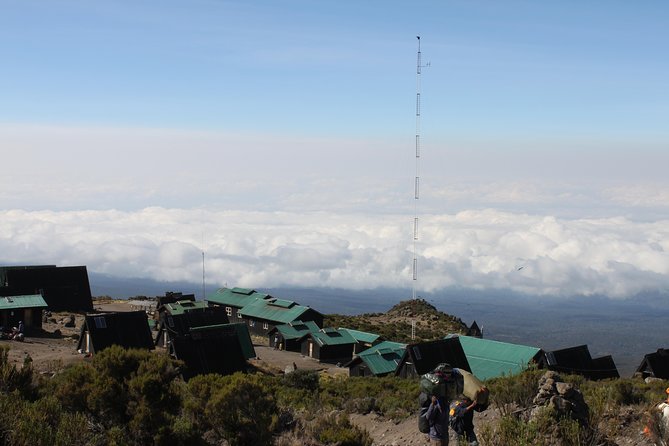
From Horombo, the route climbs toward the Saddle, the stark high-altitude area between Mawenzi and Kibo. The setting changes again, becoming a broad lunar desert with little shelter.
The walk is taken slowly and is listed at roughly four to six hours, although the description also indicates six to seven hours. Plan for a long, gradual day rather than relying on the shortest estimate.
Kibo Hut sits at 4,700 meters. There is no running water here, an important detail for anyone used to hotel conveniences. Your water is supplied as purified drinking water, and warm water for washing is provided daily, but Kibo itself remains basic.
The rest of the day is for eating, resting, and preparing for the summit start before midnight. A very early night is part of the plan, though sleeping at 4,700 meters can be difficult. Keep your expectations realistic. Resting quietly is still useful even if you do not sleep well.
Day 5: The pre-midnight summit attempt
This is the hardest and longest day. You wake before midnight and begin the steep climb over loose volcanic scree. The route uses zigzags, and the pace needs to remain slow and steady.
The first major goal is Gillman’s Point on the crater rim at 5,685 meters. The schedule allows a short rest there, with sunrise views toward Mawenzi. Reaching Gillman’s Point is already a serious achievement.
If you still feel well, you can continue along the crater rim toward Uhuru Peak at 5,895 meters, the highest point in Africa. The route description gives the trip from Gillman’s to Uhuru as about three hours round trip. This wording matters: your physical condition determines how far you continue, and the guides must prioritize safety over a fixed summit promise.
After time at the high point you reach, you descend to Kibo Hut for refreshments, then continue down to Horombo. The total day is listed at about 13 hours. That is a major physical demand, especially after starting in darkness and spending time above 5,000 meters.
A porter carries your day-pack during the summit attempt. You should still bring only essential personal items, since every extra object feels heavier at altitude. The included pulse oximeter, oxygen, radio communication, and Gamow Bag give the team useful safety tools, but they do not remove the risks of altitude or replace careful decisions.
Day 6: Rainforest descent and the return to comfort
The final mountain day descends from Horombo past Mandara Hut to Marangu National Park gate. The walk takes about six to seven hours and returns to the rainforest zone.
Descending is usually easier on breathing, but it can be tiring on knees and feet after the summit day. Good footwear and controlled steps matter. At the gate, successful climbers receive summit certificates.
Afterward, you transfer to Mountain Inn for dinner, a summit celebration, and an overnight stay. This is a welcome change after the huts. The package includes two nights of standard hotel accommodation, one before and one after the trek, with bed and breakfast at the hotel.
Hut life, meals, and the practical comforts
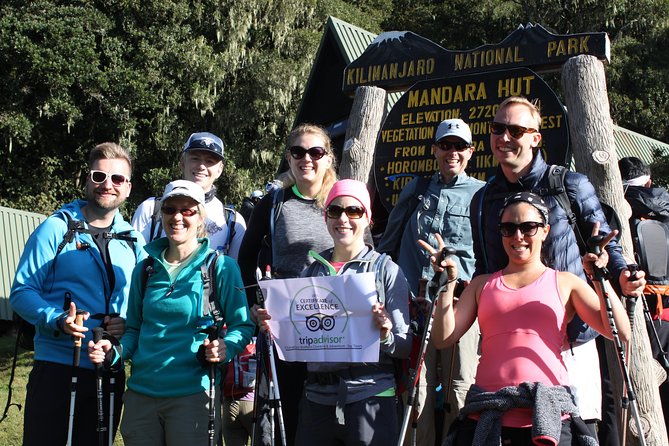
The Marangu Route is the only route in this experience described as using huts throughout the mountain section. You have simple rooms and dining areas rather than tent camps, with aluminum dining tables and large aluminum chairs that have backs and armrests.
That setup is basic but useful. A proper chair is welcome after several hours of walking, and a dining area gives the group a place to eat without sitting on wet ground. Do not expect luxury, private rooms, or hotel-style facilities. Kibo has no running water, and the mountain environment remains demanding.
All meals on the mountain are included, with breakfast, lunch, and dinner provided. The food is described as fresh, healthy, nutritious, and served in large portions. That matters more than fancy presentation. You need enough energy for repeated climbs and the long summit day.
Purified drinking water and warm washing water are included. Personal beverages, laundry, telephone use, and other personal spending are not. Keep some Tanzanian shillings or other accepted payment available for costs outside the package, although no specific amount is provided.
Guides, porters, and safety equipment
The climb includes experienced English-speaking mountain guides and fair, ethical treatment of porters. A porter carries your day-pack during the summit attempt, while the listed support also includes VHF handheld radios for communication.
George Mtaki is identified as the company’s director of sales and marketing, and he introduces the trip before the climb. The guiding team handles the mountain program, meals, pacing, and safety checks. The exact guide-to-climber ratio is not provided, so you should ask about it if that detail matters to you.
The safety equipment is one of the stronger parts of the package:
- Emergency oxygen tanks
- VHF handheld radios
- A Gamow Bag, which is a portable hyperbaric chamber
- Pulse oximeter
- Mountain rescue fees
- Warm water for washing
- Purified drinking water
These items show that the operator plans for altitude problems and communication needs. They are not a promise that every medical situation can be solved on the mountain. Your own fitness, honesty about symptoms, and willingness to turn back remain essential.
Who should book this climb
I would consider this trip a good fit if you want a structured Kilimanjaro climb with huts, included meals, local transport, and a private group format. It suits people who prefer a clear route and do not want to manage tents or organize separate park fees and mountain logistics.
It also suits climbers who can commit to a slow pace and accept basic conditions. You need a moderate physical fitness level, but the summit day requires more than casual walking. Thirteen hours on day five is the figure to take seriously.
The experience may not suit you if you want a short, relaxed mountain holiday, private hotel comforts every night, or a guaranteed Uhuru summit. The five-day Marangu option is shorter, but the six-day plan is the better choice for acclimatization.
The private format gives your group more control than a large shared departure. The supplied details do not state the maximum group size, so ask before booking if you need a particular level of privacy or support.
Price, cancellation, and planning details
At $2,179.49 per person, the package has solid value for someone who would otherwise need to arrange transport, hotel nights, meals, park fees, rescue charges, equipment support, and guiding separately. Its value depends heavily on using the included services. If you need only a guide and already have local arrangements, the price may feel high.
Pickup is offered, and arrival and departure transfers are included. Confirmation is provided at booking, and the activity is near public transportation. A Tanzania visa on arrival is not included, so handle that cost separately.
You can cancel up to 24 hours before the local start time for a full refund. Cancellations or changes made within 24 hours are not accepted for a refund. The climb requires good weather, and a weather cancellation results in a different date or a full refund.
Should you book the six-day Marangu climb?
Book it if you want Kilimanjaro with huts, a clearly planned route, an extra acclimatization day, and a package that covers the major mountain costs. The safety equipment, food, transfers, and hotel nights make the higher price easier to understand.
Do not book it expecting an easy walk simply because Marangu is considered moderate. The summit attempt is long, the altitude is severe, Kibo is basic, and Uhuru Peak depends on how you feel on the day.
For most people comparing the five-day and six-day versions, I would choose six days. The Horombo acclimatization day is the feature that matters most, and it gives you a more measured approach to Africa’s highest summit.
FAQ
How long does the Kilimanjaro Marangu Route tour last?
The tour lasts approximately six days, including the mountain climb, hotel stays, transfers, and the final overnight after descent.
How much does the experience cost?
The listed price is $2,179.49 per person. Group discounts are available.
Is pickup available?
Yes. Pickup is offered, and arrival and departure transfers are included.
Is this a private tour?
Yes. Only your group participates in the activity.
Where does the climb begin?
The climb begins at Marangu National Park gate after transport from your hotel.
Where do you sleep on the mountain?
You sleep in simple huts at Mandara, Horombo, and Kibo. The route includes five nights in the mountain area.
Is there running water at Kibo Hut?
No. There is no running water at Kibo Hut.
Are meals included?
Yes. Breakfast, lunch, and dinner are included during the experience, along with all meals while you are on the mountain.
Is a Tanzania visa included?
No. A Tanzania visa on arrival is not included. Personal expenses, laundry, telephone use, and beverages are also excluded.
What happens if bad weather cancels the climb?
If poor weather causes cancellation, you are offered a different date or a full refund. You can also cancel up to 24 hours before the start time for a full refund.
Just added in Moshi
- Wildlife Extravaganza: Manyara, Tarangire & Ngorongoro in 3 Days★ 5.0 · 3 reviews
- West Kilimanjaro cycling Adventures★ 4.5 · 8 reviews
- machame route★ 5.0 · 16 reviews
- Kilimanjaro Climb • Machame Route ~ 10 Day★ 5.0 · 6 reviews
- Kilimanjaro Climbing Umbwe Route★ 5.0 · 3 reviews
- Mt Kilimanjaro 6 days Marangu route hike★ 5.0 · 3 reviews
- 3 Days Private E-Bike Tour in West Kilimanjaro★ 5.0 · 3 reviews
- Private Cycle to Kilimanjaro Bike Park Safari★ 5.0 · 6 reviews
Kilimanjaro Treks, compared.



8-Day Small-group Lemosho Kilimanjaro Summit Trekking
Read our review →

5 Days Best of Tanzania Luxury Safari Northern Circuit
Read our review →

Climbing Kilimanjaro through 7 days Machame Route
Read our review →
7-Day Machame Kilimanjaro Summit Tour from Arusha
Read our review →Browse the lists this tour appears in