
Reviewed · KILIMANJARO TREKS
Kilimanjaro Machame Route 6 Days
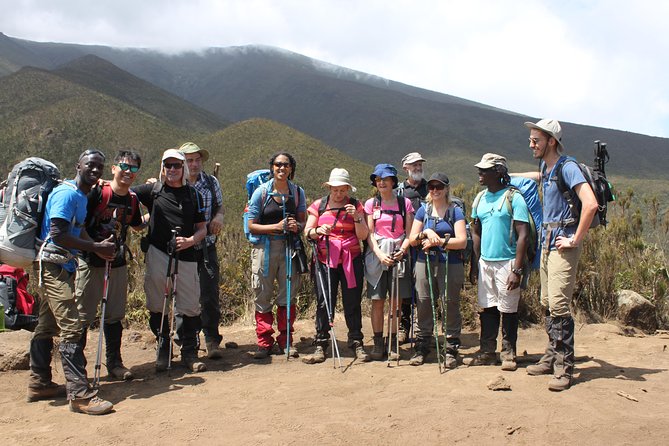
Kilimanjaro’s Machame Route packs rainforest, high moorland, rocky valleys, and the glacial summit zone into six demanding days. You climb with a private group, sleep in tents, and finish at Uhuru Peak, Africa’s highest point, at 5,895 meters.
I like the strong safety setup, including emergency oxygen, a Gamow Bag, pulse oximeter, radios, rescue fees, and a porter for your day-pack on the summit push. I also like the practical comforts: warm washing water, proper dining chairs, full meals, two hotel nights, and transfers. The drawback is the schedule. Six days is the minimum recommended length for this route, so the altitude gain is serious and the summit day will test your legs and patience.
Key things to know before booking
- 62 kilometers on foot: You cover about 37 miles from Machame Gate to Mweka Gate.
- Five nights on the mountain: Camping begins in the rainforest and ends near the glacial zone.
- A private group experience: Only your own party takes part, with group discounts available.
- A full safety package: Oxygen, a Gamow Bag, radios, pulse oximeter, rescue fees, and mountain support are included.
- A well-equipped camp: Waterproof sleeping tents, a mess tent, cold-weather mats, dining tables, and chairs are provided.
- Two hotel nights included: You stay at a standard hotel before and after the climb, with breakfast included.
What the six-day Machame Route is really like
The Machame Route is often chosen for its changing scenery and direct, strenuous character. In six days, you move from 1,640 meters at the gate to 5,895 meters at Uhuru Peak, then walk back down through the forest.
That fast rise is the central challenge. You do not need to be an elite athlete, but you should have a moderate level of fitness and some hiking experience. First-time trekkers can complete the route, yet you should arrive ready for long walking days, basic camping, and a summit night that demands steady effort.
The route is operated as a private activity, so your party is not mixed into a larger public group. That can make the pace and daily support feel more personal. It also means the quality of your experience will depend heavily on communication with your mountain guides and on how well your group handles the schedule together.
Guides such as Mawra and Samson have led groups on this climb, with the wider support team including porters and a cook. The guiding team handles route movement, camp timing, safety checks, and the summit attempt, while the kitchen crew keeps meals going in a setting far removed from ordinary accommodation.
Other routes up the mountain from Moshi:
- Kilimanjaro climb by Lemosho Route (7-day)
★ 5.0 · 651 reviews - Kilimanjaro climb, Machame Route (7-day)
★ 5.0 · 262 reviews - Kilimanjaro Climbing Lemosho Route 8 Days.
★ 5.0 · 186 reviews
Day 1: Machame Gate to Machame Camp
Your first mountain day begins with a drive to Machame Gate at 1,640 meters, or 5,380 feet. After park entry and climbing formalities, you walk roughly 11 kilometers through the rainforest to Machame Camp at 2,850 meters.
The scheduled walking time is five to six hours. This is a steady opening rather than a short warm-up, so use it to settle into your boots, day-pack, and walking rhythm.
The rainforest is the first clear change from everyday Tanzania. The route is greener, damper, and shaded compared with the higher camps. You may find the path muddy, especially when weather conditions are poor, so waterproof clothing and careful footwork matter.
This first night introduces the camping routine. Your sleeping tent, mess tent, cold-weather mat, and camp dining equipment are supplied. Warm water is available for washing, which is a small luxury that becomes surprisingly important after a full day on the trail.
Day 2: Machame Camp to Shira Camp 2
Day two covers about 5 kilometers and takes five to six hours. You climb from Machame Camp to Shira Camp 2 at 3,810 meters, or 12,500 feet.
The distance is short, but the altitude gain is not. The rainforest gives way to the low alpine zone, with a more open feel and less shelter from the elements. This is a day to keep your pace slow and controlled rather than trying to prove anything early in the climb.
The short mileage can be misleading. At altitude, a five-kilometer walk may feel harder than a much longer hike at home. Drink the purified water provided, eat the meals served at camp, and tell the guides if you feel unwell. The pulse oximeter gives the team another way to monitor your condition, though it does not replace honest communication.
Shira Camp 2 is an important point in the route because you are now sleeping well above 3,500 meters. The schedule offers little spare time, so your ability to rest at camp becomes part of the climb.
Day 3: Shira Camp 2 to Barranco Camp
Day three is one of the longer days, with about 10 kilometers and eight to nine hours of walking. You move from the low alpine zone toward the high alpine zone and finish at Barranco Camp.
This section gives you the first real sense of the mountain’s scale. The route climbs and descends through high terrain, with the day designed to prepare you for greater altitude before the summit effort. The hours are long, so this is not the day to rush.
Barranco Camp is one of the more memorable stopping points on the route. Its location makes the surrounding mountain country feel more severe and exposed than the forest below. You should expect colder conditions, stronger fatigue, and a more basic evening routine.
The value of the mess tent becomes clear here. You have a place to sit for meals rather than eating in your sleeping tent, and the aluminum chairs have backs and armrests. That sounds overly specific until you have spent several hours walking uphill.
Same base, a different kind of day out:
- Safari Serengeti And Ngorongoro
★ 5.0 · 288 reviews - Climbing Kilimanjaro – Machame Route
★ 5.0 · 170 reviews - Climbing Kilimanjaro through 7 days Machame Route
★ 5.0 · 151 reviews - Kilimanjaro climb, Lemosho Route (8-day)
★ 5.0 · 148 reviews
Day 4: Barranco Camp to Karanga, then Barafu
Day four covers about 4 kilometers and takes four to five hours, but the short distance does not make it an easy day. You leave Barranco Camp for Karanga Valley Camp at 3,995 meters, or 13,106 feet, then continue after lunch to Barafu at 4,673 meters, or 15,331 feet.
This is a high, demanding transition day. You gain the altitude needed for the summit attempt, and Barafu becomes your launch point for Uhuru Peak. The schedule includes lunch at Karanga before the final climb to the high camp.
At Barafu, you should focus on resting, eating, and preparing your clothing and day-pack for the summit. The climb gives you little time to waste, so keep your gear simple and accessible. Your porter carries your day-pack during the summit attempt, which lets you conserve some energy for the hardest section.
The route’s main weakness becomes clear here: the six-day version is compact. You have less time to adjust to altitude than on longer versions of the mountain. If your priority is the best possible acclimatization schedule, compare this option with a seven or eight-day plan before paying.
Day 5: Barafu to Uhuru Peak and Mweka Camp
Day five is the key test. You climb to Uhuru Peak at 5,895 meters, or 19,341 feet, then descend to Mweka Camp at about 10,000 feet.
The listed walking time is four to six hours, with about 12 kilometers of distance. In practical terms, this is the day when the route’s altitude, cold, tired legs, and steep terrain all meet. The timing can feel long even if the mileage does not look extreme.
You move through the glacial zone and then back through the higher zones during the descent. The contrast is striking: the mountain changes from cold, sparse summit terrain to lower, more forgiving country as you lose height.
The summit is not simply a sightseeing stop. You need enough energy to continue down to camp afterward. The support of the mountain guides matters most on this day, and the included emergency equipment gives the operation a serious safety structure. Oxygen, radios, rescue coverage, and a Gamow Bag are included, along with a pulse oximeter for oxygen-level checks.
You should also remember that the summit is not guaranteed by the price. The mountain can be affected by weather and personal condition. A good guide team will put safety ahead of the goal of reaching the sign at the top.
Day 6: Mweka Camp to Mweka Gate
The final day is a three to four-hour descent of about 10 kilometers to Mweka Gate at 1,640 meters, or 5,340 feet. The rainforest returns as you lose altitude.
After reaching the gate, transport takes you back to the hotel. The package includes a summit certificate and a celebration party, followed by an overnight stay at the hotel used before the climb.
This final hotel night is more useful than it may sound. You have time to wash properly, organize your gear, eat a full meal, and sleep in a bed before departure or a further Tanzania trip. The package also includes arrival and departure transfers, which reduces the need to arrange transport after a physically intense descent.
What the $2,326.61 price includes
At first glance, $2,326.61 is a substantial price for six days. The better way to judge it is to look at what you would otherwise need to arrange separately.
The package includes:
- Two nights of standard hotel accommodation
- Arrival and departure transfers
- Transport within the destination
- Park entrance fees and government taxes
- All mountain meals
- Purified drinking water
- Waterproof sleeping tents and a mess tent
- Cold-weather sleeping mats
- Dining tables and chairs
- Porters and professional English-speaking guides
- A porter for your day-pack during the summit attempt
- Rescue fees on the mountain
- Emergency oxygen and a Gamow Bag
- VHF handheld radios and a pulse oximeter
- Warm water for washing each day
- A portable personal flush toilet
You also receive breakfast, lunch, and dinner during the package, with six servings listed for each meal. The food is described as fresh, healthy, nutritious, and served in generous portions. For a climb lasting nearly a week, dependable food and water are not minor extras. They affect how much energy you can put into the route.
The price does not include tips, a Tanzania visa on arrival, personal expenses, laundry, telephone use, beverages, or optional trips such as a short safari. Set aside extra money for those items. Tips are not included, and the company states that porters should receive fair and ethical treatment, so ask how tipping is handled before departure.
The safety and comfort details that matter
The safety equipment is one of the strongest reasons to consider this package. Emergency oxygen, a Gamow Bag, rescue fees, radios, and a pulse oximeter show that the operation is built around mountain support rather than transport and camping alone.
You should still treat these items as backup, not as permission to ignore symptoms. The best use of the equipment is prevention and early response. Speak clearly with your guides if you feel unwell, especially as you move above 3,500 meters.
The camp setup is also better than a bare-bones trek. A separate mess tent gives you a place to eat and sit, and the chairs have backs and armrests. Warm washing water is supplied daily, while the portable flush toilet offers more privacy than a basic mountain facility.
The package states that porters receive fair and ethical treatment. That matters on Kilimanjaro, where porters carry much of the camp equipment. You can also help by packing sensibly, bringing only what you need, and asking the company about its porter practices before the climb.
Who should book this climb?
I would recommend this route to someone who wants a serious Kilimanjaro climb with a clear support system and does not need luxury accommodation. It suits fit first-time trekkers as well as people with previous hiking experience.
You should be comfortable with:
- Walking five to nine hours on several days
- Camping for five nights
- Sleeping at high altitude
- Climbing to 5,895 meters
- Managing cold, fatigue, and changing weather
- Following a fixed six-day schedule
This is not the best choice if you want a relaxed mountain holiday or a flexible pace. It may also be a poor match if you are uncertain about camping or have no experience with long uphill walks.
The route does suit people who value a private group. Only your party participates, and group discounts may help if you are booking with friends or family. English-speaking guides, porters, a cook, and camp equipment are all part of the arrangement.
Practical booking advice
Pickup is offered, and mobile tickets are available. Confirmation is received at booking, and the activity is near public transportation, though the package also includes transfers.
The experience depends on good weather. If poor weather causes cancellation, you are offered another date or a full refund. For your own cancellation, you must cancel at least 24 hours before the start time for a full refund. Changes or cancellations made inside that window are not accepted.
Before booking, confirm the hotel name, pickup time, expected group size, tipping guidance, and exactly what personal gear you need to bring. The tour provides tents, mats, meals, water, and safety equipment, but the supplied information does not list a personal clothing or equipment checklist.
Should you book the six-day Machame Route?
Book it if you want a private, fully supported Kilimanjaro climb and you value the included safety gear, meals, transfers, hotel nights, and camp equipment. The price is easier to justify because it covers far more than a simple guided walk.
Think twice if you want the gentlest possible acclimatization schedule. Six days is the minimum for this route, and the jump from forest to summit is demanding. If you have hiking experience, moderate fitness, and the discipline to walk slowly, eat well, and listen to your guides, this is a strong option. If you prefer more time at altitude, compare it with a longer Kilimanjaro itinerary before making your choice.
FAQ
How long is the Kilimanjaro Machame Route experience?
The experience lasts approximately six days, including five nights on the mountain and hotel accommodation before and after the climb.
How far do you walk in total?
The total distance is approximately 62 kilometers, or 37 miles, from Machame Gate to Mweka Gate.
What is the highest point reached?
The route reaches Uhuru Peak at 5,895 meters, or 19,341 feet.
Is this a private tour?
Yes. Only your own group participates in the activity.
What accommodation is included?
The package includes waterproof mountain tents and two nights at a standard hotel, one night before and one night after the trek. Hotel accommodation is on a bed-and-breakfast basis.
Are meals included?
Yes. Breakfast, lunch, and dinner are included during the package, with all meals provided while you are on the mountain.
Is safety equipment included?
Yes. The package includes emergency oxygen, a Gamow Bag, VHF radios, a pulse oximeter, and mountain rescue fees.
What is not included in the price?
Tips, a Tanzania visa on arrival, personal expenses such as laundry, telephone use, and beverages, and optional tours such as a safari are not included.
Just added in Moshi
- Wildlife Extravaganza: Manyara, Tarangire & Ngorongoro in 3 Days★ 5.0 · 3 reviews
- West Kilimanjaro cycling Adventures★ 4.5 · 8 reviews
- machame route★ 5.0 · 16 reviews
- Kilimanjaro Climb • Machame Route ~ 10 Day★ 5.0 · 6 reviews
- Kilimanjaro Climbing Umbwe Route★ 5.0 · 3 reviews
- Mt Kilimanjaro 6 days Marangu route hike★ 5.0 · 3 reviews
- 3 Days Private E-Bike Tour in West Kilimanjaro★ 5.0 · 3 reviews
- Private Cycle to Kilimanjaro Bike Park Safari★ 5.0 · 6 reviews
Kilimanjaro Treks, compared.



8-Day Small-group Lemosho Kilimanjaro Summit Trekking
Read our review →

5 Days Best of Tanzania Luxury Safari Northern Circuit
Read our review →

Climbing Kilimanjaro through 7 days Machame Route
Read our review →
7-Day Machame Kilimanjaro Summit Tour from Arusha
Read our review →Browse the lists this tour appears in