
Reviewed · KILIMANJARO TREKS
Kilimanjaro Trekking 7Days 6Night Lemosho Route
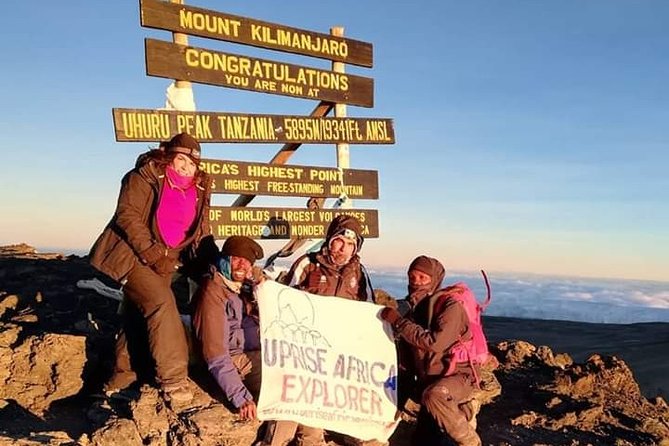
Kilimanjaro’s Lemosho route gives you a scenic, quieter approach to Africa’s highest mountain, beginning in forest and rising through giant heather, moorland, volcanic rock, and high camps. The seven-day plan is demanding, but its gradual rise gives you a fair chance to adjust to altitude before the summit attempt.
I like the small group limit of 10, since it should give your guide more time to watch your pace and respond when the going gets rough. I also like the strong camp-to-camp structure, with park fees, meals, and camping arrangements included in the advertised price. One important caution: the supplied schedule has missing and repeated sections, especially around Days 3 and 6, so ask for the exact summit-day plan before paying.
Key points to know before you book
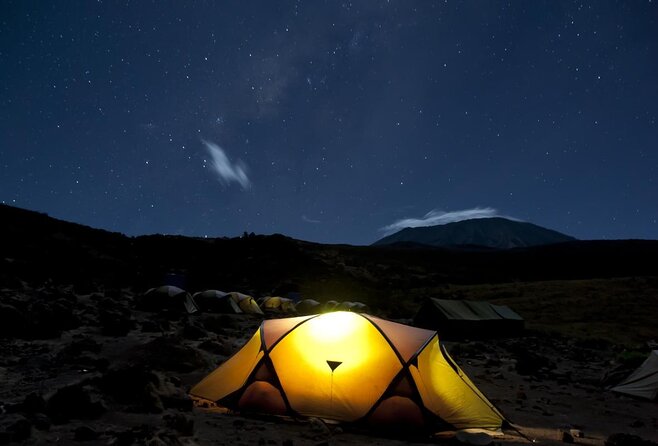
- Lemosho starts in Kilimanjaro’s forest zone, with a three-hour drive from Moshi to Londorossi Park Gate and a short first hike to Mti Mkubwa Camp.
- The route is scenic but not easy, with long days, the Barranco Wall, high camps, and a summit push at altitude.
- Groups are capped at 10 people, a useful size for personal attention without making the climb feel completely private.
- Camping equipment, fees, and meals are advertised as included, with breakfast and dinner for six days and seven lunches.
- The guide team matters here, and names praised in the supplied feedback include Sanga, Francis, Peter, Kissima, Nguma, and Innocent.
- The itinerary needs clarification, because the published Day 3 text is incomplete and Day 6 does not clearly spell out the summit schedule.
Why Lemosho is worth the extra effort
Kilimanjaro has several established climbing routes, and Lemosho is presented here as the more scenic choice compared with the Marangu route. You begin on the western side of the mountain, far from the summit crowds, then cross the Shira Plateau before joining the southern circuit.
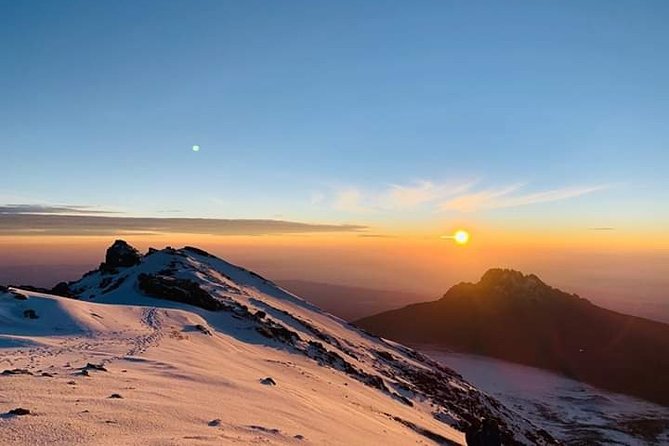
That route shape matters. You are not simply walking uphill on the same kind of trail for a week. The surroundings change as you gain height, and the gradual approach gives the climb a sense of progression. On the first day, you are in forest. By Shira, you are among heather, streams, volcanic rock, and wide mountain views. Near the summit, the setting becomes much barer and colder.
The trade-off is effort. Lemosho is not a gentle stroll, and the itinerary includes a long second day, the Barranco Wall, a high camp at Barafu, and a summit schedule that is not fully shown in the supplied plan. You need to be comfortable with several hours of walking each day and with camping at altitude.
Other routes up the mountain from Moshi:
- Kilimanjaro climb by Lemosho Route (7-day)
★ 5.0 · 651 reviews - Kilimanjaro climb, Machame Route (7-day)
★ 5.0 · 262 reviews - Kilimanjaro Climbing Lemosho Route 8 Days.
★ 5.0 · 186 reviews
From Moshi to Mti Mkubwa Camp on Day 1
The day begins with a briefing in Moshi and a gear check. This is useful rather than ceremonial. A mountain guide can spot gaps in your clothing or equipment before you are deep into the route, and you have a final chance to settle questions about the week.
The drive to Londorossi Park Gate takes about three hours. At the gate, registration comes before the walk, and an armed park ranger accompanies the forest section. The route passes through an area where buffalo, elephants, and other wildlife may be present. The information provided does not promise sightings, so treat wildlife as a possibility, not part of the package.
Your first walk is short by Kilimanjaro standards: about two to three hours over six kilometres. You finish at Mti Mkubwa Camp, at approximately 2,650 metres. That makes Day 1 a sensible opening, with enough walking to start the climb without immediately exhausting you.
The first camp also gives you a taste of the basic rhythm: walk, reach camp, eat, rest, and prepare for the next morning. Camping is part of the advertised arrangement, but the supplied details do not specify tent size, sleeping mats, or the exact equipment brand. Ask what is provided and what you must bring.
Shira Ridge and the long Day 2
Day 2 is a major step up in effort. You walk for roughly seven to eight hours and cover about 16 kilometres. The trail leaves the forest and enters the giant heather moorland zone, where volcano rock formations break up the open ground.
You cross several streams and continue toward Shira Ridge. On a clear day, Uhuru Peak may be visible, along with views toward the Northern Icefields on the western side of the mountain. Clouds can hide those views, so keep your expectations flexible. Mountain weather has a vote.
The destination is Shira 2 Camp, at about 3,850 metres. This is a useful altitude gain, but it also means you may notice the thinner air. The schedule describes the steady climb as helpful for acclimatization. That is one of the strongest reasons to choose a longer route rather than rushing up the mountain.
The drawback is simple: this is a long day early in the week. You need to manage your pace instead of trying to prove your fitness. A slow, steady approach is more useful than racing ahead and arriving at camp drained.
The supplied itinerary repeats part of the Day 1 and Day 2 text under Day 3, so it does not clearly state the Day 3 route, distance, or camp. That is not a minor editorial issue. You should request the corrected schedule before departure, including the altitude, walking time, and overnight location.
The missing detail around Day 3
A seven-day Kilimanjaro climb normally depends on how the middle days are arranged, since the route must balance distance with rest and altitude adjustment. Here, the Day 3 section is incomplete and appears to repeat earlier material.
I would ask Uprise Africa Explorer for four precise details:
- The Day 3 starting and finishing camps
- The walking distance and estimated hours
- The highest point reached that day
- The meal and sleeping arrangements
This does not automatically make the tour a poor choice. It does mean you should not rely on the shortened online schedule alone. A proper day-by-day route sheet will help you pack, understand the rhythm, and compare this climb with other seven-day Lemosho programs.
Same base, a different kind of day out:
- Safari Serengeti And Ngorongoro
★ 5.0 · 288 reviews - Climbing Kilimanjaro – Machame Route
★ 5.0 · 170 reviews - Climbing Kilimanjaro through 7 days Machame Route
★ 5.0 · 151 reviews - Kilimanjaro climb, Lemosho Route (8-day)
★ 5.0 · 148 reviews
Barranco Wall and Karanga Camp on Day 4
Day 4 is short in distance but serious in character. You walk about three to four hours and cover five kilometres, leaving Barranco Camp and climbing the Barranco Wall toward approximately 4,250 metres.
The wall takes about an hour and a half to climb. This is a steep ridge, not a flat path, so your hands may be involved as you use the rock and move carefully. The information provided does not describe technical climbing, but you should expect a demanding uphill section and follow your guide’s instructions closely.
At the top, the ground becomes more level before the route descends into the Karanga Valley at around 4,050 metres. You then reach the junction linked with the Mweka Trail and spend the night at Karanga Camp.
This day shows why distance alone does not tell you how hard a mountain day will feel. Five kilometres can be plenty when the trail rises sharply and the air is thin. The short mileage gives you time to handle the wall without turning the day into a race.
Barafu Camp and the final preparation
Day 5 covers roughly three to four hours and four kilometres as you climb to Barafu Camp. You have completed the South Circuit, which gives views of the summit and glaciers from different angles.
Barafu is the staging point for the highest part of the climb. The provided description says you set up camp with views of the summit, but it does not give the exact summit departure time or the full sequence for the next day. That missing information is worth resolving before you book.
At this point, your best strategy is rest and careful preparation. Keep the next day’s clothing, water, snacks, and essential items easy to reach. You do not want to sort through every bag at a high camp when you should be conserving energy.
The route’s gradual rise is valuable here. You have already spent several nights moving upward, rather than arriving at a high camp after a sudden jump. That cannot remove the risk of altitude sickness, but it gives your body more time to adjust.
Day 6 needs a clear summit plan
The Day 6 entry gives a five-hour duration, but the supplied description is incomplete and repeats earlier route text. It does not clearly state the summit time, summit distance, highest altitude, or overnight camp.
That is the biggest weakness in the published information. The summit day is the part you most need to understand. Ask specifically:
- Does Day 6 include the ascent to Uhuru Peak?
- What time do you leave Barafu Camp?
- Where do you sleep after the summit?
- Do you descend to a lower camp before or after eating?
- What is the total distance for the day?
Do not assume that a five-hour estimate covers the full summit schedule. The itinerary says Day 7 begins with breakfast at 3,090 metres and continues to Mweka Park Gate, which suggests a lower camp precedes the final descent, but the Day 6 details should confirm this.
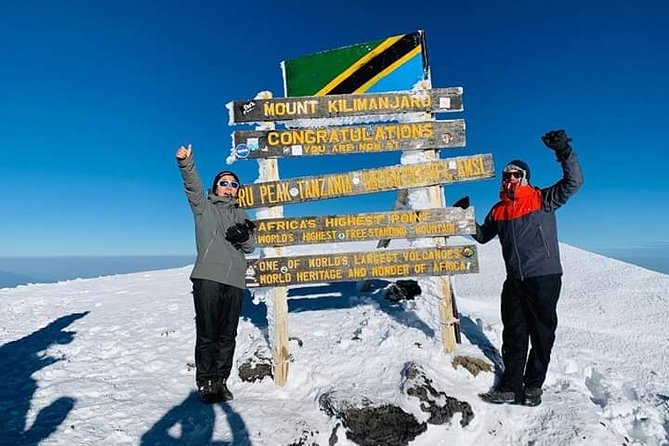
The climb to Uhuru Peak is the central purpose of the trip, and a clear schedule helps you judge the real difficulty. You should also ask how the guide team handles a climber who needs to turn back. The supplied feedback repeatedly praises supportive guides, including Sanga, Francis, Peter, Kissima, Nguma, and Innocent, but the written package does not spell out its safety procedures.
Mweka Gate and the return to Moshi
Day 7 is a four-hour, 10-kilometre descent from approximately 3,090 metres to Mweka Park Gate. After breakfast, you continue downhill, receive summit certificates at the gate, and meet the vehicle for the drive back to your hotel.
Downhill walking has its own cost. Your legs may be tired after the summit attempt, and the ten-kilometre distance is not trivial. Still, a clear endpoint and a vehicle waiting at Mweka make this final day easier to picture.
The certificates are a nice finishing touch, but the real value is the route itself: forest at the beginning, high moorland in the middle, and the summit zone at the top. The descent lets you see how much ground you covered.
What the $3,000 price covers
The listed cost is $3,000 per person. That is a substantial amount, but a Kilimanjaro price is not just the guiding fee. The advertised package includes all fees and taxes, the trekking program, camping arrangements, and meals.
Meal coverage is listed as:
- Six breakfasts
- Seven lunches
- Six dinners
The highlights also say camping equipment is included. Confirm exactly what that means, since the supplied information does not list each item. Ask about tents, sleeping bags, sleeping mats, and any summit clothing available for hire.
The small group limit adds practical value. A group of no more than 10 should be easier to organize than a large party, and you may get more direct attention from the guide. The supplied feedback places strong emphasis on the guides, cook, and porters, with specific praise for the food and the helpfulness of the mountain team.
Airport pickup and drop-off are described in the supplied feedback, while the tour details say pickup is offered. Confirm the exact transfer arrangement and whether it is included in your quoted $3,000.
A Tanzania visa is not included. The stated cost is $50 per person, or $100 for American residents, paid on arrival at the airport. Check that figure against current official entry rules before your trip, since visa charges can change.
Food, porters, and the human side of the climb
A Kilimanjaro climb depends heavily on the support team. You are not simply buying a marked trail. Guides manage the pace and route, porters carry camp supplies, and the cook prepares meals in difficult conditions.
The strongest praise attached to this experience focuses on the friendliness and care of that team. Names that appear repeatedly include Sanga and Francis as guides, Peter as an assistant guide, and Kissima, Nguma, and Innocent in the wider guiding group. One cook, Schabari, is singled out for the food.
That does not guarantee that you will receive the same people on your dates. It does tell you what to ask for: the names and roles of your assigned guide team, the guide-to-client ratio, and how porters are treated and tipped. A locally operated company can provide a more direct connection to the people doing the work, but you should still ask clear questions about porter welfare and payment.
Who should book this climb?
This experience suits you if you want a scenic Kilimanjaro route, prefer a small group, and can handle several long walking days with camping. It is also a good fit if you value a local operator and want meals, park fees, and core trekking arrangements handled in one package.
It may not suit you if you want a short, easy mountain holiday or need a fully polished itinerary with every day spelled out online. The missing Day 3 and Day 6 details are a real reason to ask questions before committing.
The activity says most people can participate, but that should not be read as a medical clearance. Kilimanjaro reaches high altitude, and you should consider your own fitness and health before booking.
The advertised start time is 11:00 a.m. Confirmation is provided at booking, and the maximum group size is 10. The cancellation terms allow a full refund when you cancel at least six full days before the start time, with reduced refunds inside that window. Poor weather may lead to a new date or a full refund.
Should you book the 7-day Lemosho route?
I would consider booking it if the operator sends you a corrected itinerary and confirms the equipment, transfers, summit schedule, and guide team in writing. The route itself is appealing: scenic, less crowded than some alternatives, and paced across several mountain zones.
The strongest reasons to choose it are the small group, the included meals and fees, the support team, and the gradual western approach. The main reason to pause is not the price alone. It is the missing detail at the exact point where you need the most information.
If Uprise Africa Explorer answers those questions clearly, the $3,000 package can make sense for a weeklong Kilimanjaro climb with a local team. If the Day 6 plan remains vague, compare it with another operator before handing over your deposit.
FAQ
How long is the Kilimanjaro Lemosho tour?
The tour lasts seven days and six nights, approximately.
Where does the tour begin?
The experience is based in Moshi, Tanzania, with a listed start time of 11:00 a.m.
How large is the group?
The activity has a maximum of 10 travelers.
Is pickup available?
Pickup is offered. Airport pickup and drop-off are also described in the supplied experience information, but you should confirm exactly what is included in your price.
What meals are included?
The package lists seven lunches, six breakfasts, and six dinners.
Are park fees and taxes included?
Yes. All fees and taxes are listed as included.
Is camping equipment included?
The highlights state that camping equipment is included. Ask the operator for a precise list of the equipment supplied.
Is a Tanzania visa included?
No. The stated visa cost is $50 per person, or $100 for American residents, paid on arrival at the airport.
What is the cancellation policy?
You can receive a full refund if you cancel at least six full days before the start time. Cancelling two to six full days beforehand gives a 50% refund, while cancelling less than two full days before the start time gives no refund. Poor weather may result in a different date or a full refund.
More Hiking & Trekking in Moshi
- Private Kilimanjaro Hike 7 Day Lemosho Route
★ 5.0 · 60 reviews - Best Kilimanjaro hiking day trip tour with Kilinge Adventures
★ 4.5 · 54 reviews - #1. Best Kilimanjaro Day hike Tour-Machame Route-ISMANI
★ 4.2 · 47 reviews - Best Kilimanjaro Adventure 7 days Machame route Trekking
★ 5.0 · 42 reviews
Just added in Moshi
- Kilimanjaro Airport Private Transfer from/to Moshi★ 5.0 · 14 reviews
- 4 Day Mid-range Serengeti Safari★ 5.0 · 22 reviews
- Kilimanjaro Climbing 5 days Marangu route★ 5.0 · 22 reviews
- 6 Days Machame route Kilimanjaro climbing★ 5.0 · 22 reviews
- 7 Days Highlight of Tanzania Mid-Range Standard★ 5.0 · 22 reviews
- 6 Days Climb Private Tour in Mount Kilimanjaro★ 5.0 · 27 reviews
- 4 Days Tanzania Budget Safari★ 5.0 · 26 reviews
- 7 Days Machame Route Climbing Mt. Kilimanjaro★ 5.0 · 24 reviews
Kilimanjaro Treks, compared.
8-Day Small-group Lemosho Kilimanjaro Summit Trekking
Read our review →
5 Days Best of Tanzania Luxury Safari Northern Circuit
Read our review →
Climbing Kilimanjaro through 7 days Machame Route
Read our review →
7-Day Machame Kilimanjaro Summit Tour from Arusha
Read our review →Browse the lists this tour appears in