
Reviewed · KILIMANJARO TREKS
Hiking Mt Kilimanjaro 7 days scenic route & moderate challenge
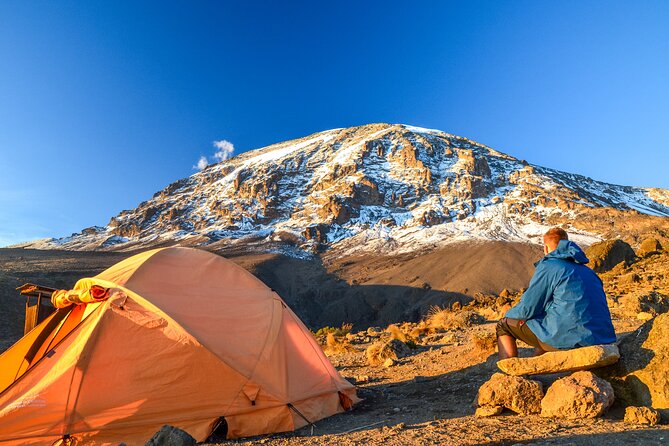
Kilimanjaro’s Machame Route gives you the mountain in changing chapters: wet rainforest, open moorland, cold rocky camps, glacier views, and a sunrise summit push. It is often called the Whiskey route, not because there is a celebratory drink waiting at the top, but because the trail is steeper and tougher than the easier-named alternatives.
I like two things right away. First, the scenery keeps changing, so the seven days feel like a real journey rather than a long uphill walk. Second, the route uses the climb high, sleep lower pattern, with a 4,630-meter walk to Lava Tower followed by a descent to Barranco Camp. That is useful altitude practice.
The catch is the short itinerary and hard summit night. You need a reasonable fitness level, patience with slow uphill walking, and a willingness to sleep in cold, exposed camps. The word moderate in the title should not mislead you: this is a demanding high-altitude trek.
Key points before you book
- Machame’s biggest strength is scenery: rainforest, moorland, the Shira Plateau, alpine desert, glaciers, and the crater rim all appear within one week.
- The group is limited to eight people, which should make it easier to hear your guide and keep a steady pace.
- The toughest sections are the Lava Tower day and summit night, with the final ascent beginning around 11:30 p.m.
- Altitude management is built into the route: you climb to Lava Tower at 4,630 meters, then sleep at Barranco Camp at a lower elevation.
- Guides are central to the experience: Gastro and Sam are named in previous trip accounts, with careful attention to altitude symptoms and pacing.
- The price is $2,650.16 per person, a serious outlay, but it covers a full seven-day mountain program with camp support, meals, porters, and summit logistics as described.
Why the Machame Route is worth the effort
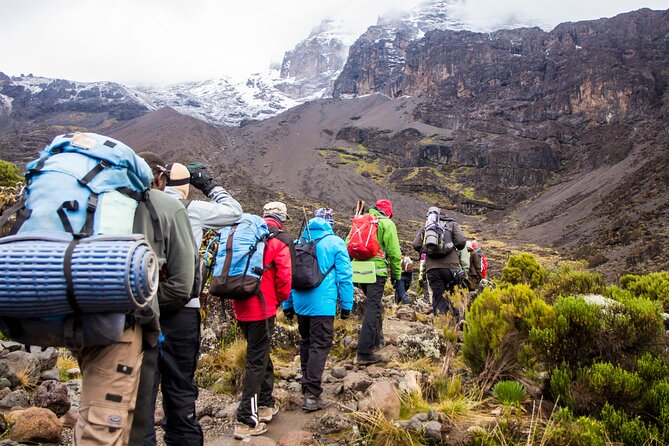
Machame is the popular choice for people who want Kilimanjaro’s most varied scenery and do not mind a rougher trail. You begin in a forest where rain can turn the path into mud, then climb through high moorland and rocky semi-desert before reaching the upper mountain.
That variety matters. The first day feels tropical and enclosed. By the second day, the trees have given way to open ground and broad views toward Kibo. Later, the mountain becomes colder, barer, and more exposed. The route gives you a strong sense of moving through several climate zones.
The trade-off is that Machame is not gentle. Some sections are steep, rocky, or slippery. The seven-day version is shorter than longer Kilimanjaro programs, so your body has less time to adjust. If you have high-altitude hiking or backpacking experience, you will likely understand the rhythm better. If you are new to altitude, your preparation and your guide’s judgment become especially important.
Pickup is offered from Arusha, at about 1,400 meters, with the mountain portion beginning after a drive to Machame Village. The advertised starting point is Moshi, so confirm your pickup location when booking if you are staying elsewhere.
Other routes up the mountain from Moshi:
- Kilimanjaro climb by Lemosho Route (7-day)
★ 5.0 · 651 reviews - Kilimanjaro climb, Machame Route (7-day)
★ 5.0 · 262 reviews - Kilimanjaro Climbing Lemosho Route 8 Days.
★ 5.0 · 186 reviews
Day 1: Mud, rainforest, and Machame Camp
Your morning begins with an early breakfast and pickup from Arusha. At Machame Village, you can buy mineral water and collect a packed lunch. Depending on road conditions, the vehicle may continue toward the Machame Gate. If the road is too muddy, you walk roughly three kilometers to the gate, which takes about an hour.
That extra walk is not a glamorous start, but it tells you what kind of trip this is. Rain and mud are part of the rainforest section, and the trail can become slippery. Wear footwear with good grip, keep rain protection handy, and pack anything you need for the day where you can reach it quickly.
After registration at the gate, you enter the forest almost at once. The path climbs steadily under thick vegetation, with a strong chance of rain. A welcome lunch stop comes about halfway, then you continue toward Machame Camp.
This is a long first day, listed at about 16 hours including the overall schedule, and you should not expect a casual stroll. The reward is the sudden change in atmosphere as the forest begins to thin. Your camp is the first real sign that the mountain will be your home for the week.
Day 2: Shira Plateau and the first cold night
Day two covers about nine kilometers and takes roughly six hours. After breakfast, you climb for about an hour to the top of the forest. The gradient then eases for around two hours as you enter the moorland zone.
After lunch and a rest, the route follows a rocky ridge onto the Shira Plateau. This is one of the first broad-view sections of the hike. You can look east toward the Western Breach and its glaciers, while Kibo sits ahead in the distance.
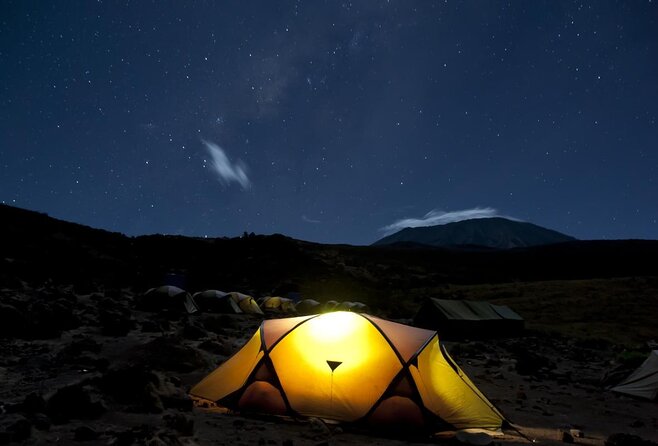
Shira Camp is at about 3,840 meters. The camp is exposed, and temperatures can drop well below freezing. Porters boil water for drinking and washing, but you should still expect basic mountain camping rather than hotel comfort. The cold can feel sharper because the day’s walking may have been manageable, encouraging you to underestimate the night.
I like this day because it gives you a wide, open setting after the close forest. It also begins the serious altitude adjustment. Keep your pace slow, drink regularly, and tell your guide about headaches, unusual tiredness, or breathing problems rather than trying to hide them.
Day 3: Lava Tower and the value of climbing high
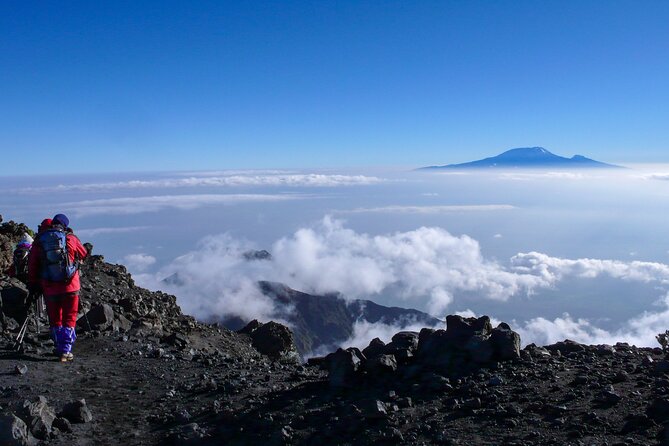
Day three is the route’s major acclimatization test. You leave Shira and head east into a dry, rocky area around Lava Tower. After about five hours, you reach approximately 4,630 meters.
This is often the first point where altitude becomes impossible to ignore. Breathlessness, headaches, and irritability can appear. The trail itself is not the only challenge. Your body is working harder for every step, and the open terrain offers little shelter from cold or wind.
After lunch near Lava Tower, you descend roughly 680 meters to Barranco Camp. That descent is the reason this day is so valuable. You have spent time at a higher elevation, then sleep lower, giving your body a better chance to adjust than if you simply climbed and stayed high.
Do not judge the day by how far you travel. The point is the elevation change. It may feel strange to climb for hours only to lose height, but this is one of the smarter features of the route. If symptoms worsen, your guide needs to know immediately. The mountain does not reward bravado.
Barranco Camp is reached after the descent, and the change in altitude may bring some relief. You will still be tired, though, and the next morning brings one of the route’s most memorable physical sections.
Same base, a different kind of day out:
- Safari Serengeti And Ngorongoro
★ 5.0 · 288 reviews - Climbing Kilimanjaro – Machame Route
★ 5.0 · 170 reviews - Climbing Kilimanjaro through 7 days Machame Route
★ 5.0 · 151 reviews - Kilimanjaro climb, Lemosho Route (8-day)
★ 5.0 · 148 reviews
Day 4: The Barranco Wall and the Karanga Valley
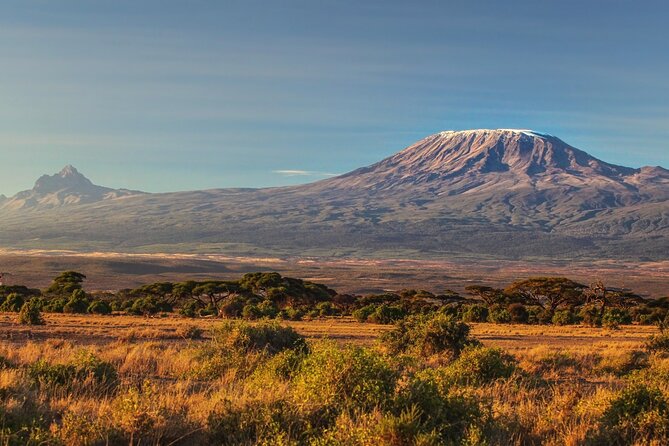
Day four is shorter, at about four to five hours and five kilometers, but it is not a rest day. Your first task is the Barranco Wall, a steep rock section that can look intimidating from camp.
It is described as a Class 2 climb and is generally easier than its appearance suggests. You will use your hands in places and move carefully, but this is not presented as a technical climbing route. A steady pace matters more than speed.
At the top, you can look toward Heim Glacier and above the clouds. This is a fine example of the route’s character: the day is physically demanding in a concentrated way, then pays you back with a high, open view.
The trail continues through the Karanga Valley with repeated rises and descents. The short distance can be deceptive because altitude makes every climb feel longer. Still, this is a useful acclimatization day and gives your legs a chance to recover from the Lava Tower push without dropping you into an easy schedule.
Day 5: Karanga to exposed Barafu Camp
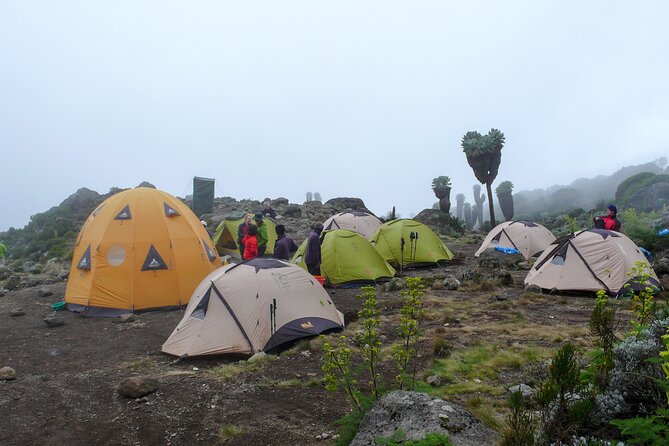
After breakfast, you leave Karanga Camp at about 3,959 meters. The route soon joins the Mweka Route, which you will use for the descent at the end of the trek.
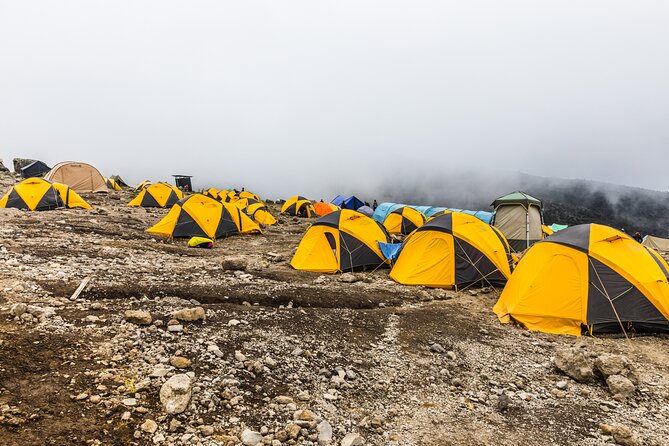
After about an hour, you reach Barafu Hut. Barafu means ice in Swahili, and the camp sits on a rocky, exposed ridge at about 4,550 meters. There is no accessible water at camp, so the porters’ final water stop is an important practical detail.
This is a short walking day, only two to three hours and about four kilometers, but it may be one of the hardest mentally. You have reached the high camp, the summit is close, and the camp can feel cold and bare. Tents are exposed to wind and rocks, so get familiar with your sleeping area before dark and organize your clothing, headlamp, water, and snacks early.
Dinner is served early, followed by rest. That rest may be broken and uneasy because you will rise around 11:30 p.m. for the summit attempt. Keep your expectations realistic. You may not sleep much, and that is normal for this schedule.
Day 6: Stella Point, Uhuru Peak, and the long descent
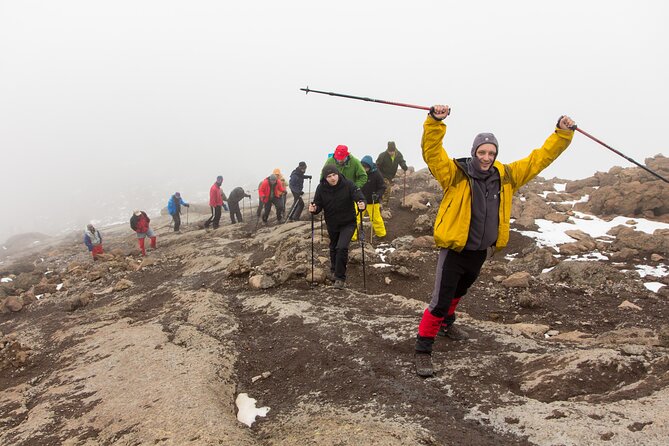
Summit day begins in the middle of the night with tea and biscuits. You head northwest through heavy scree toward Stella Point on the crater rim. The ascent takes about six hours and is described as the most physically and mentally difficult part of the route for many climbers.
Scree is loose volcanic gravel, so progress can be slow. You will probably take short steps and focus on the person in front of you, your breathing, and the next safe footing. The timing is designed to bring you to Stella Point around sunrise, weather permitting.
Stella Point sits at about 5,685 meters. After a brief rest, the route continues through possible snow for roughly two hours toward Uhuru Peak at 5,895 meters. The summit time depends on weather conditions, and you should not plan on lingering. At this altitude, the descent is part of the safety plan, not an afterthought.
The full day is listed at about 12 hours. After returning toward Barafu, you continue down to the lower camp area. This combination of a midnight start, summit ascent, and long descent is why the trip deserves to be called challenging. Your ability to keep eating, drinking, and following a slow pace will matter as much as raw fitness.
Reaching Stella Point earns a green certificate, while reaching Uhuru Peak earns a gold certificate. That distinction is useful because not everyone who starts the summit push will safely continue to the top. The guide’s decision and your physical condition matter more than the certificate color.
Day 7: Forest descent, certificates, and the finish
After breakfast, the mountain team celebrates with dancing and singing. You also present tips to the guides, assistant guides, chef or chefs, and porters. Bring cash for this custom and plan for tipping as part of the total cost of the trip, even though an exact amount is not provided here.
The descent to Mweka Gate takes about three hours through forest and covers roughly 15 kilometers. After signing your name at the National Park office, you receive the certificate linked to your highest point.
The route then continues down to Mweka Village, about three kilometers or one hour. The end may feel anticlimactic after the summit, but the forest descent gives your legs a chance to return gradually to lower altitude. It is also when the practical work of the mountain crew becomes most visible, as the group closes out camp life and leaves the park.
Guides, group size, and mountain support
The maximum group size is eight. That is small enough for a guide to monitor the group more closely than on a large commercial trek, though the actual staff structure can vary.
Gastro and Sam are named as guides associated with successful seven-day climbs, and guide teams are described as providing help with pacing and altitude symptoms. One account also describes a team of two guides, seven porters, and a cook. Treat that exact staffing as an example rather than a guarantee for every departure.
Food and shelter were praised in the supplied accounts, and meals are served at camp throughout the route. You should still expect mountain conditions: tents, cold nights, basic washing arrangements, and limited water at the high camp. The porters boil drinking and washing water, but careful packing and sensible water use remain important.
Is $2,650.16 good value?
At $2,650.16 per person, this is not a budget walk. The value depends on what you need from a Kilimanjaro operator. A seven-day route involves transport, park access, camp organization, food, porters, guides, and summit-night planning. Those are substantial moving parts, and the price reflects a full mountain operation rather than a simple day hike.
The small maximum group is a plus. So is the route’s acclimatization design, especially the Lava Tower ascent followed by the descent to Barranco. Group discounts may also be available, which could matter for families or friends booking together.
I would ask for a written breakdown of what the price includes before paying, especially park fees, transfers, equipment, staff arrangements, and tipping expectations. The provided information confirms pickup, group discounts, and a mobile ticket, but it does not list every inclusion in detail.
Who should choose this seven-day climb?
This route suits you if you want the most scenic standard route and can handle steep, uneven walking. It is a strong fit for active hikers, people with backpacking experience, and anyone comfortable with cold camping and a very long summit day.
A family has completed this type of trip with children aged 15 and 17, so older teenagers with suitable fitness may manage it. That does not make the route easy for younger participants. The altitude, cold, mud, and summit schedule require maturity and preparation.
I would think twice if you have no hiking background, dislike sleeping outdoors, or want a relaxed holiday with a mountain view attached. A longer Kilimanjaro itinerary may offer more adjustment time, though this specific experience is the seven-day Machame version.
Booking is flexible up to 24 hours before the start for a full refund. Changes or cancellations inside that window are not accepted, and poor weather may lead to a different date or a full refund.
Should you book this Machame Route?
Book it if your priority is scenery, a small group, and a serious Kilimanjaro challenge. The rainforest, Shira Plateau, Lava Tower, Barranco Wall, and sunrise summit create a memorable week, while the route’s high-climb and lower-sleep pattern gives you useful altitude practice.
Do not book it simply because the listing calls the challenge moderate. The summit night is long, the high camps are cold, and the seven-day schedule leaves little room for a slow adjustment. Prepare carefully, confirm the inclusions, ask about your assigned guide team, and arrive ready to walk slowly. If that sounds like the kind of adventure you want, this is a scenic and well-supported way to approach Africa’s highest peak.
FAQ
How long is the Kilimanjaro Machame Route experience?
The experience lasts approximately seven days, including the ascent through the Machame Route and the descent through Mweka.
Where does pickup take place?
Pickup is offered from Arusha, at about 1,400 meters. The experience is associated with Moshi, so confirm the exact pickup details when booking.
How many people can join the group?
The maximum group size is eight people.
What fitness level is required?
You should have a moderate level of physical fitness. The route is steep and challenging, with a long summit night and several high-altitude camps.
What happens if the weather is poor?
If poor weather causes the experience to be canceled, you will be offered a different date or a full refund.
What certificate do you receive after the climb?
You receive a green certificate if you reach Stella Point at 5,685 meters and a gold certificate if you reach Uhuru Peak at 5,895 meters.
More Hiking & Trekking in Moshi
- Private Kilimanjaro Hike 7 Day Lemosho Route
★ 5.0 · 60 reviews - Best Kilimanjaro hiking day trip tour with Kilinge Adventures
★ 4.5 · 54 reviews - #1. Best Kilimanjaro Day hike Tour-Machame Route-ISMANI
★ 4.2 · 47 reviews - Best Kilimanjaro Adventure 7 days Machame route Trekking
★ 5.0 · 42 reviews
Just added in Moshi
- Wildlife Extravaganza: Manyara, Tarangire & Ngorongoro in 3 Days★ 5.0 · 3 reviews
- West Kilimanjaro cycling Adventures★ 4.5 · 8 reviews
- machame route★ 5.0 · 16 reviews
- Kilimanjaro Climbing Umbwe Route★ 5.0 · 3 reviews
- Mt Kilimanjaro 6 days Marangu route hike★ 5.0 · 3 reviews
- Kilimanjaro Climb • Machame Route ~ 10 Day★ 5.0 · 6 reviews
- 3 Days Private E-Bike Tour in West Kilimanjaro★ 5.0 · 3 reviews
- Private Cycle to Kilimanjaro Bike Park Safari★ 5.0 · 6 reviews
Kilimanjaro Treks, compared.



8-Day Small-group Lemosho Kilimanjaro Summit Trekking
Read our review →

5 Days Best of Tanzania Luxury Safari Northern Circuit
Read our review →

Climbing Kilimanjaro through 7 days Machame Route
Read our review →
7-Day Machame Kilimanjaro Summit Tour from Arusha
Read our review →Browse the lists this tour appears in