
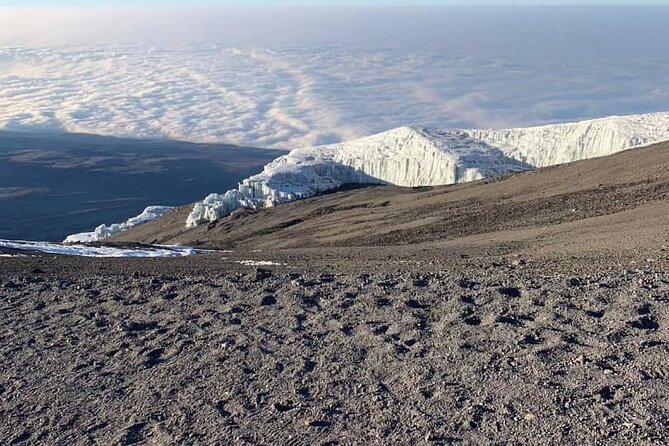
Reviewed · KILIMANJARO TREKS
Mount Kilimanjaro – Lemosho Route
Kilimanjaro’s Lemosho Route gives you a gradual seven-day climb through rainforest, moorland, alpine desert, and icy summit terrain before reaching Uhuru Peak at 5,895 meters. That variety is the real prize: each day feels different, and the route allows more time to adjust to altitude than a shorter climb.
I like the small maximum group of 15, plus the strong support system of guides, porters, and a cook. I also like that the team can provide vegetarian meals, hot water for washing, portable oxygen, an oximeter, and first-aid equipment. The main drawback is the summit day, which can mean up to 14 hours of hiking, and the $2,900 price does not include Moshi lodging, insurance, flights, gear, or tips.
Key points to know before you book
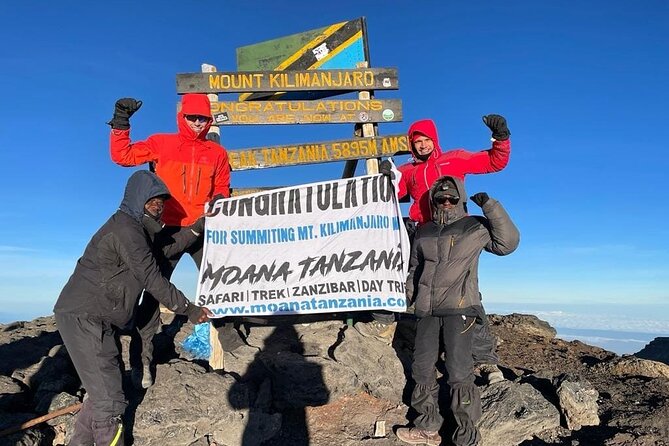
- Seven days on the mountain: The route moves from 2,400 meters to 5,895 meters, then descends to the Mweka Gate.
- A varied route: You walk through rainforest, heath, moorland, alpine desert, and icy summit terrain.
- A serious summit day: Day six includes five to seven hours up and another five to seven hours down.
- Full mountain support: Guides, porters, a cook, meals, drinking water, hot washing water, oxygen, and first-aid supplies are included.
- Good acclimatization plan: The climb reaches Lava Tower before descending to Barranco Camp, giving your body a useful adjustment day.
- Costs to add: Moshi hotels, travel insurance, flights, personal equipment, laundry, toiletries, and gratuities are extra.
Why the Lemosho Route makes sense for a first Kilimanjaro climb
Kilimanjaro is Africa’s highest mountain and the world’s highest free-standing mountain. It is not a technical climbing expedition, but it is still a demanding high-altitude trek. You need stamina, patience, and the ability to keep moving when the air gets thin.
The Lemosho Route is a strong choice because it does not rush you straight toward the summit. The first days build elevation in stages. You begin in the rainforest, cross the Shira Plateau, climb toward Lava Tower, then settle into the southern circuit before summit night.
That gradual shape matters. You cannot train your lungs to behave as if you are at 5,895 meters, but you can give your body time to adjust. The itinerary also uses a useful climb-high, sleep-lower pattern on day three, with Lava Tower at about 4,600 meters before Barranco Camp at 3,950 meters.
The route is not easy. Several days involve six to eight hours of walking, and the summit day begins at 4,700 meters. The distance itself is only part of the challenge. Cold, altitude, uneven ground, and lack of sleep all make the final push harder.
Other routes up the mountain from Moshi:
- Kilimanjaro climb by Lemosho Route (7-day)
★ 5.0 · 651 reviews - Kilimanjaro climb, Machame Route (7-day)
★ 5.0 · 262 reviews - Kilimanjaro Climbing Lemosho Route 8 Days.
★ 5.0 · 186 reviews
Day one: Londorossi Gate to Mti Mkubwa
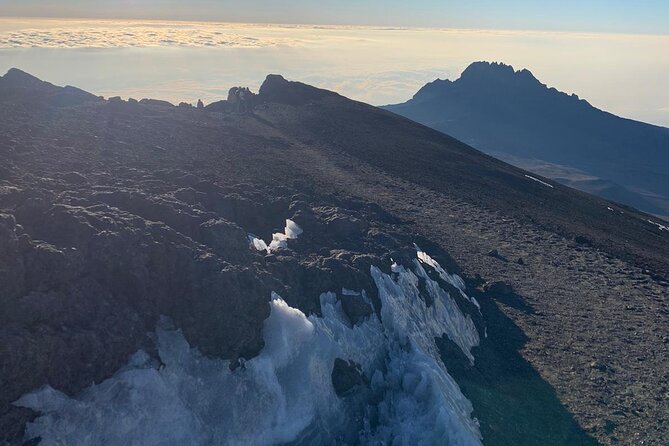
The trek begins near Londorossi Gate at about 2,400 meters. You walk roughly six kilometers for three to four hours through rainforest, finishing at Mti Mkubwa around 2,800 meters.
This is a gentle opening by Kilimanjaro standards. The forest gives you shade and a clear sense that you are leaving ordinary roads behind. Keep your eyes open for wildlife, as the route passes through a habitat where animals may appear.
Do not expect the first day to feel like a warm-up you can ignore. Use it to settle into a slow walking rhythm and check that your pack, boots, and clothing are working well. Small problems are easier to fix at 2,800 meters than near the summit.
You sleep at Mti Mkubwa. Camping details such as tent arrangements are not specified, so ask Moana Tanzania what sleeping equipment is supplied and what you need to bring yourself.
Day two: Shira Ridge and the open moorland
Day two covers about 14 kilometers and takes seven to eight hours. You climb from 2,800 meters to 3,750 meters, leaving the rainforest for heath and moorland before reaching Shira Ridge and Shira 2 Camp.
This is a longer day than the first, but the change in scenery makes it rewarding. The thick forest gives way to wider views and a more exposed setting. You will notice the altitude more here, which is one reason the slow pace matters.
I would treat this as an important acclimatization day rather than a test of speed. Drink regularly, eat even if your appetite is fading, and tell your guide early if you feel unwell. The itinerary includes drinking water, but you should confirm how much personal carrying capacity you need each day.
The walk to Shira 2 is also where the route begins to feel like a high mountain trek rather than a forest hike. The air is cooler, the vegetation is lower, and the camp sits high enough for altitude to become a daily concern.
Day three: Lava Tower, Arrow Glacier, and Barranco
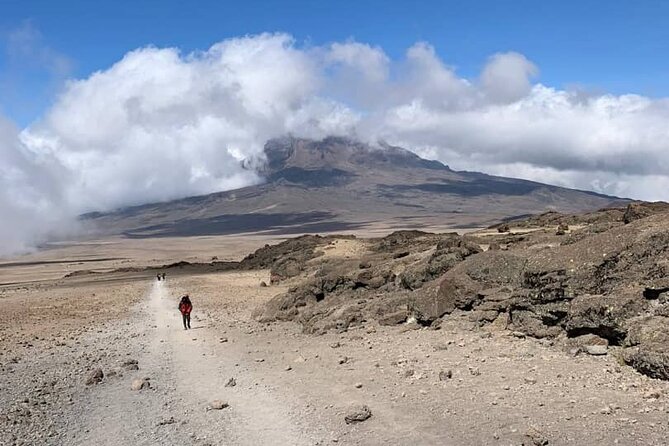
Day three is one of the most useful parts of the route. You walk about ten kilometers in six to eight hours, rising from 3,750 meters to roughly 3,950 meters for the night. Along the way, you approach Kibo, pass Lava Tower, also called Sharkstooth, and continue past the Arrow Glacier area before reaching Barranco Camp.
The key feature is the elevation pattern. You climb to Lava Tower, around 4,600 meters, then descend to sleep at Barranco. That gives your body time at a higher point without making you spend the night there.
The scenery shifts again to alpine desert. Plant life becomes sparse, and the mountain feels more severe. Lava Tower is a notable landmark, but the day is less about checking off a sight than preparing for the days ahead.
Barranco Camp is reached after the descent, but do not assume the easier sleeping altitude makes the day easy. Six to eight hours on rocky ground can leave you tired, and altitude symptoms may show up during or after the walk. Your guide team is expected to monitor your condition, and the included oximeter and portable oxygen provide extra safety equipment. These items are not a substitute for careful decisions, but they are useful parts of a properly supported trek.
Same base, a different kind of day out:
- Safari Serengeti And Ngorongoro
★ 5.0 · 288 reviews - Climbing Kilimanjaro – Machame Route
★ 5.0 · 170 reviews - Climbing Kilimanjaro through 7 days Machame Route
★ 5.0 · 151 reviews - Kilimanjaro climb, Lemosho Route (8-day)
★ 5.0 · 148 reviews
Day four: The Barranco Wall and Karanga Valley
Day four is short by comparison, covering about five kilometers in four to five hours. You climb from 3,950 meters to 4,040 meters, passing the Barranco Wall before continuing into Karanga Valley and sleeping at Karanga Camp.
The Barranco Wall is one of the route’s memorable sections. It can look intimidating from camp, but this itinerary treats it as a hiking challenge rather than a technical climbing pitch. You should still expect uneven ground and sections where careful foot placement matters.
This is a good day to conserve energy. The elevation gain is modest, but the wall can make the morning feel more demanding than the numbers suggest. Once over it, the route continues toward Karanga Valley, with alpine desert surroundings and a more rugged feel.
I like the way this day breaks up the climb. You are still gaining height, but the short distance gives you time to recover after Lava Tower and before the push to Barafu Camp. Use the afternoon to organize summit clothing and remove anything unnecessary from your day pack.
Day five: Karanga to Barafu Camp
Day five covers only four kilometers but climbs from 4,040 meters to 4,700 meters. The walk takes four to five hours, passing the junction with the Mweka Trail before reaching Barafu Hut and Barafu Camp.
This is the last major preparation day. You have now completed the southern circuit, and the mountain feels close to its highest point. The short distance can be misleading because the altitude makes every uphill section slower.
Barafu means ice, and the camp is a high, exposed place to rest before the summit. The exact sleeping arrangements are not described, so you should ask how tents, mattresses, and other camp supplies are handled. You also need to know what personal mountain gear is expected, since climbing equipment and toiletries are excluded.
The main job at Barafu is to eat, drink, rest, and prepare. You will need warm layers, a headlamp if required by the operator, gloves, suitable footwear, and a day pack packed for the summit push. The supplied information does not list a full gear package, so get a written equipment list before paying your final balance.
Day six: Uhuru Peak and the long descent
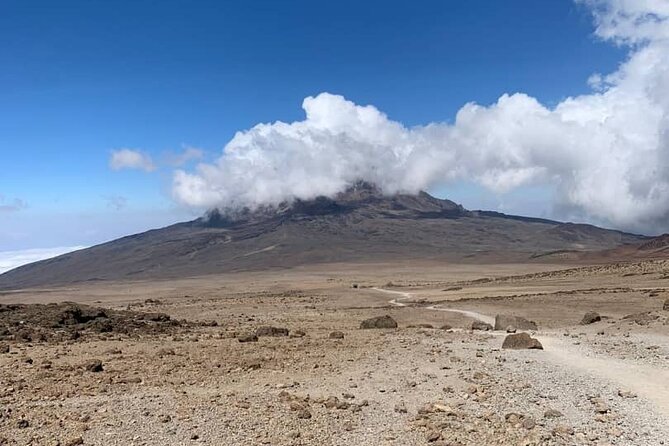
Day six is the hardest and most important day. You climb from 4,700 meters to Uhuru Peak at 5,895 meters, then descend all the way to Mweka Hut at about 3,100 meters. The stated hiking time is five to seven hours up and another five to seven hours down.
The summit route begins between the Rebmann and Ratzel Glaciers, then continues toward Stella Point. From there, you make the final push to Uhuru Peak. At the top, you have time for photographs and a celebration before starting down.
The summit experience is likely to be cold, tiring, and slow. The itinerary is clear about the time involved, so do not book this expecting a quick morning walk followed by a relaxed afternoon. You should be ready for a full day at high altitude, followed by a major descent when your legs are already tired.
The descent to Mweka Hut is not an afterthought. It is long, and loose or uneven ground can be hard on knees and feet. Good walking poles may help, though personal mountain gear is your responsibility. Ask Moana Tanzania which items are required and which can be rented locally.
Portable oxygen and an oximeter are included, along with a first-aid kit. That is reassuring, but summit success should never come before your health. The guide team’s most important job is deciding when you should continue and when you should turn back.
Day seven: Mweka Hut to the gate
The final day is a three to four-hour descent from 3,100 meters to Mweka Gate at about 1,650 meters. You return to forest habitat and finish the activity back at the meeting point in Moshi.
After summit day, this walk should feel shorter, though tired legs can make the descent slower than expected. The change back into forest is welcome, and reaching the gate marks the end of the mountain portion rather than another major climb.
Private transportation is included. Confirm the exact transfer plan and timing with the operator, especially if you have onward travel or a Moshi hotel booked for the same day.
What the $2,900 price covers
At $2,900 per person, this is not a budget hike. Still, the price includes several costly and important parts of a supported Kilimanjaro trip: private transportation, park fees and taxes, guides, porters, a cook, drinking water, hot water for washing, meals, portable oxygen, an oximeter, and a first-aid kit.
You receive breakfast on six days, lunch on seven days, and dinner on six days. Food is a real strength of the operation. The cook, David, is named by the company, and the available feedback specifically points to fresh meals and vegetarian options. If you have dietary needs, discuss them before departure rather than assuming they can be handled at the last minute.
The price does not include accommodation in Moshi before or after the trek. You also pay separately for flights, travel insurance, laundry, toiletries, personal items, mountain gear, and tips for the guides, cook, and porters.
Those excluded costs can add up. I would budget for a Moshi hotel on each side of the climb, proper insurance that covers high-altitude trekking, and gratuities. Ask for clear guidance on customary tips and the gear you need before comparing this price with another company.
The support team and group size
The group limit is 15 people, which is small enough for a personal feel but large enough that the pace may vary. If you are traveling with friends, ask whether the group will be private or combined with other climbers.
The support structure is one of the strongest reasons to consider this trip. You are not carrying every meal and camp supply yourself. Guides lead the route, porters handle much of the load, and a cook prepares the food.
Named members of the wider Moana team include Gea, David, Gasper, Robson, Salim, Herbert, and Gewa. Gea is associated with company management, while David is identified with the cooking team. The exact guide assignment for your departure is not provided, so request the names and roles before the trek.
The available feedback places repeated emphasis on encouragement, flexibility, food, safety, and help before booking. That points to an operator focused on close support rather than a bare-bones permit-and-guide arrangement. You should still ask direct questions about daily briefings, altitude checks, emergency procedures, and porter welfare.
Who should choose this trek
This route suits you if you have strong fitness, can walk for several hours on consecutive days, and are prepared for a long summit day. You do not need to be an expert mountaineer based on the route description, but you do need to take the physical demands seriously.
It is a good fit if you value a changing route, more gradual acclimatization, and a full mountain support team. The seven-day schedule gives you more time than a very short climb, though no itinerary can guarantee reaching the summit.
It is less suitable if you want a relaxed holiday, dislike basic mountain camping, or have limited time for preparation. It is also a poor match if the extra costs for gear, Moshi lodging, insurance, and tips would stretch your budget.
The cancellation terms are worth noting. You can receive a full refund if you cancel at least six full days before the start time. A cancellation two to six days before departure receives 50 percent, while a cancellation less than two days before departure is nonrefundable. Poor weather may lead to a new date or a full refund.
Should you book the Moana Lemosho Route?
I would consider this a strong option for a well-supported Kilimanjaro climb, especially if you want the Lemosho Route’s varied scenery and measured approach to altitude. The included food, porters, safety equipment, private transportation, and hot washing water give you practical value beyond a basic mountain package.
Book it if you are fit, willing to prepare properly, and comfortable adding Moshi lodging, insurance, equipment, and gratuities to the advertised cost. Before committing, get the gear list, guide assignment, camp details, dietary arrangements, and transfer schedule in writing.
The main question is not simply if you can afford $2,900. Ask if you are ready for the summit day, the altitude, and the nonincluded expenses. If the answer is yes, this seven-day route offers a sensible balance of scenery, support, and acclimatization.
FAQ
How long is the Mount Kilimanjaro Lemosho Route experience?
The trek lasts approximately seven days, beginning and ending in the Moshi, Tanzania area.
How high is Uhuru Peak?
Uhuru Peak is at 5,895 meters, making Kilimanjaro Africa’s highest mountain.
What is the maximum group size?
The maximum is 15 people.
Is pickup included?
Pickup is offered, and private transportation is included. The activity starts in Moshi and ends back at the meeting point.
Are guides, porters, and a cook included?
Yes. The price includes guides, a cook, and porters.
Are meals included?
Yes. The package includes six breakfasts, seven lunches, and six dinners.
Is drinking water provided?
Yes. Drinking water and hot water for washing are included.
Is mountain gear included?
No. Personal mountain-climbing gear, personal items, and toiletries are not included.
What is the cancellation policy?
You receive a full refund if you cancel at least six full days before the start time. Cancellation two to six full days before departure receives a 50 percent refund. Cancellations less than two full days before departure are nonrefundable. Poor weather may result in a different date or a full refund.
Just added in Moshi
- Wildlife Extravaganza: Manyara, Tarangire & Ngorongoro in 3 Days★ 5.0 · 3 reviews
- machame route★ 5.0 · 16 reviews
- West Kilimanjaro cycling Adventures★ 4.5 · 8 reviews
- Kilimanjaro Climb • Machame Route ~ 10 Day★ 5.0 · 6 reviews
- Kilimanjaro Climbing Umbwe Route★ 5.0 · 3 reviews
- Mt Kilimanjaro 6 days Marangu route hike★ 5.0 · 3 reviews
- 3 Days Private E-Bike Tour in West Kilimanjaro★ 5.0 · 3 reviews
- Private Cycle to Kilimanjaro Bike Park Safari★ 5.0 · 6 reviews
Kilimanjaro Treks, compared.



8-Day Small-group Lemosho Kilimanjaro Summit Trekking
Read our review →

5 Days Best of Tanzania Luxury Safari Northern Circuit
Read our review →

Climbing Kilimanjaro through 7 days Machame Route
Read our review →
7-Day Machame Kilimanjaro Summit Tour from Arusha
Read our review →Browse the lists this tour appears in