
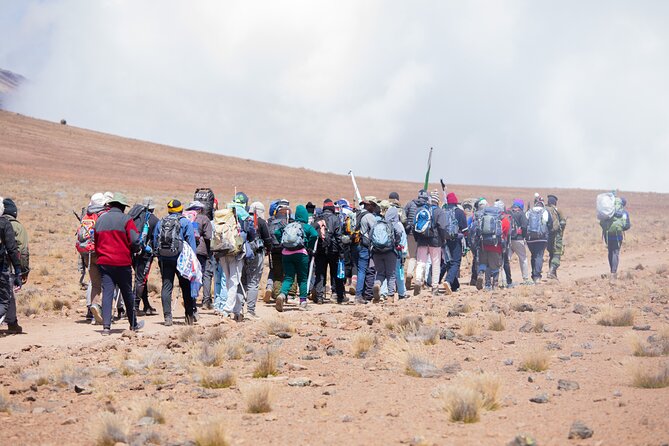
Reviewed · KILIMANJARO TREKS
Climbing Kilimanjaro – Marangu Route
Kilimanjaro’s Marangu Route gives you the mountain’s most direct path to Uhuru Peak, with hut accommodation instead of camping every night. You start among wet rainforest and colobus monkeys, cross open moorland, then make the hard midnight push to Africa’s highest point.
I like the simple hut setup and the fact that meals, park fees, rescue fees, transport, and a mountain crew are bundled into the price. I also like the option to add a day at Horombo, where you can rest or take a short acclimatization walk before the summit attempt.
The catch is the schedule. Five days is a tight plan for a mountain this high, and summit night is a serious physical test. You need moderate fitness, proper cold-weather gear, and a willingness to turn back if altitude sickness appears.
Key points to know before you book
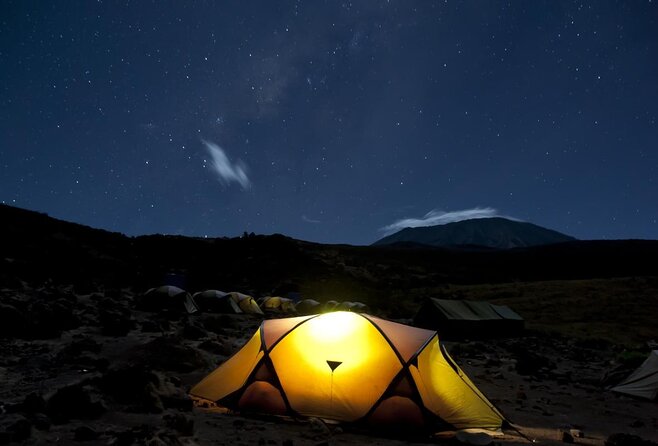
- The route reaches Uhuru Peak at 5,895 meters: The summit attempt begins around 1 AM and may take you to Gilman’s Point first, followed by a crater-rim walk to the true summit.
- You can choose five or six days: The extra day is spent around Horombo Huts and gives you more time to rest and adjust to altitude.
- You sleep in mountain huts: The route includes hut or tent fees, sleeping pads, cooking equipment, and meals, but you must arrange your own sleeping bag and personal gear.
- The crew is a major part of the experience: Guides, porters, cooks, and waiters accompany the group, with a maximum of 15 people.
- The price is about $2,004.11 per person: That includes two Moshi hotel nights, airport transfers, park charges, mountain meals, crew wages, rescue fees, and basic mountain support.
- Summit success is never guaranteed: The route is called the easiest and shortest, but altitude, cold, steep scree, and a long descent still make this a demanding climb.
Why the Marangu Route works for first-time climbers
The Marangu Route is often chosen by people who want to climb Kilimanjaro without taking the more rugged camping routes. It is described as the easiest and shortest route to the summit, and that matters when you are comparing several ways up the mountain.
The path begins on Kilimanjaro’s eastern side at Marangu Gate. You walk through several plant zones as the height increases: rainforest, heathland, moorland, the broad saddle between Mawenzi and Kibo, and finally the barren upper slopes near the summit.
The route’s big practical advantage is the huts. You do not need to sleep in a tent every night, though tents and related equipment are part of the outfitter’s general mountain setup. The huts are basic, and you should not expect hotel comforts. At Horombo, running water is available, but at Kibo Huts there is no running water.
The five-day version moves quickly. You leave the forest on the first day, sleep at Horombo on the second, reach Kibo on the third, summit and descend on the fourth, then leave the mountain on the fifth. If you can afford the extra time and cost, the six-day schedule is the wiser choice for many people because it adds a rest or acclimatization day at Horombo.
Other routes up the mountain from Moshi:
- Kilimanjaro climb by Lemosho Route (7-day)
★ 5.0 · 651 reviews - Kilimanjaro climb, Machame Route (7-day)
★ 5.0 · 262 reviews - Kilimanjaro Climbing Lemosho Route 8 Days.
★ 5.0 · 186 reviews
Day one: Marangu Gate to Mandara Huts
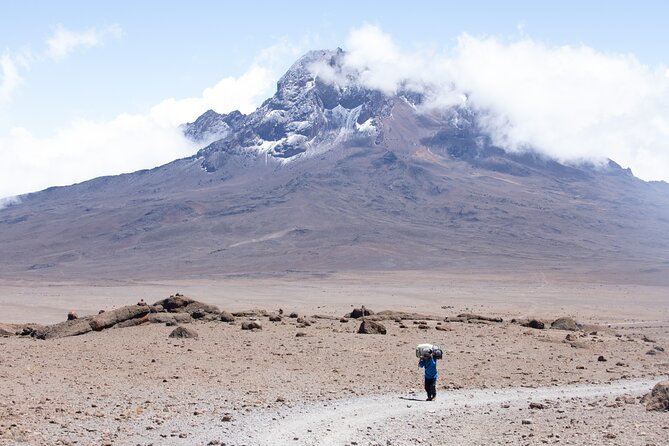
The day begins with breakfast and a briefing, followed by a drive of about 45 minutes from Moshi to Marangu Gate. The stated departure from Moshi is around 9 AM, with hiking expected to begin at about 10:30 AM after national park registration.
That registration stop is more than paperwork. It marks the point where your climb officially begins, and it can take some time while the crew organizes supplies and luggage. Keep a light rain layer handy rather than burying it in your main bag.
The first section passes through rainforest. Expect tall eucalyptus trees, bird life, and the possibility of seeing black-and-white colobus monkeys. This is the greenest part of the route, but it can also be wet and muddy. Gaiters and trekking poles are useful here.
You can hike this section in shorts and a T-shirt if the weather is warm, but keep warmer clothing and rain gear near the top of your daypack. Mountain weather changes quickly, and the temperature will drop as you gain height.
A lunch stop comes about halfway through the day. The total walking day is listed at roughly eight hours, though the pace and breaks will affect your arrival time. Most climbers reach Mandara Huts around 2 or 3 PM.
Mandara is a good place to slow down, unpack, and have tea or coffee. If energy and weather allow, take the 15-minute side trip to Maundi Crater. It gives you a better view of the area and a pleasant first look beyond the thick forest.
This first day is not the hardest physically, but it sets the tone. You are walking for hours, carrying a daypack, and learning how the crew handles meals, luggage, and camp routines. Bring a headlamp, water, and a warm layer where you can reach them.
Day two: Mandara Huts to Horombo Huts
Breakfast is scheduled for 7:30 AM, with the group breaking camp around 8:30 AM. The trail first continues through open rainforest glades, then rises into heathland.
The vegetation changes quickly. Giant lobelias and groundsels replace much of the lower forest growth, and the route eventually opens into moorland with low shrubs. This gradual change in plant life is one of the pleasures of the Marangu Route. You can see the mountain’s climate zones unfold in a single walk.
A lunch stop comes midway, with views toward Mawenzi. Mawenzi is Kilimanjaro’s jagged second peak, and its sharp profile gives this part of the route much of its character. By the time you reach Horombo Huts at around 3 PM, Kibo’s summit should also be visible.
Horombo is the key decision point of the climb. You may begin to feel headache, nausea, fatigue, or shortness of breath as the altitude increases. These symptoms should not be brushed aside. Tell your guide how you feel, and pay attention to any advice about resting or descending.
The five-day schedule continues upward the next morning. The six-day version stays at Horombo for an additional night. You can use that day to rest or walk toward a base camp below Mawenzi, then return to the huts. This extra day does not make the summit easy, but it gives your body more time to adjust.
The huts at Horombo have running water, which makes washing and refilling easier than at higher camps. Still, keep expectations modest. This is mountain accommodation, not a private room with hotel services.
Day three: Horombo to Kibo across the high saddle
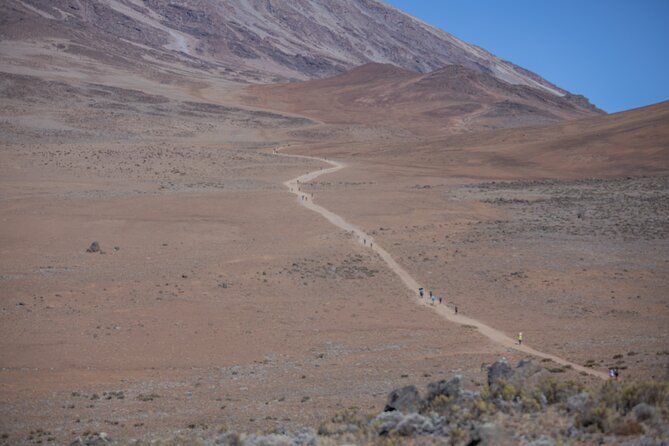
After breakfast, the trail climbs through the last heathland before opening into a broad, stark area between Mawenzi and Kibo. This saddle can feel surprisingly large. It is not a quick crossing, and the lack of trees makes the sun, wind, and cold more noticeable.
During lunch and the walk across the saddle, you can look closely at the route toward Kibo. This is useful because the summit path begins only a few hours after you reach the hut. Seeing the switchbacks ahead can help you understand what remains, though it may also make the climb feel more real.
This is another eight-hour walking day. The terrain becomes increasingly bare, and the sense of height grows. You may notice that simple tasks take more effort. Walk slowly, drink regularly, and tell your guide if your condition changes.
Kibo Huts are basic and have no running water. Prepare for a short, uncomfortable stop before the summit attempt. Have your summit clothes, gloves, hat, headlamp, snacks, and water ready before sleeping. You will wake around midnight for a light breakfast and leave at about 1 AM.
The night at Kibo is where the five-day schedule feels most demanding. You have already walked for several days, you are sleeping at high altitude, and your body has little time to recover before the steepest section.
Same base, a different kind of day out:
- Safari Serengeti And Ngorongoro
★ 5.0 · 288 reviews - Climbing Kilimanjaro – Machame Route
★ 5.0 · 170 reviews - Climbing Kilimanjaro through 7 days Machame Route
★ 5.0 · 151 reviews - Kilimanjaro climb, Lemosho Route (8-day)
★ 5.0 · 148 reviews
Day four: the midnight climb to Uhuru Peak
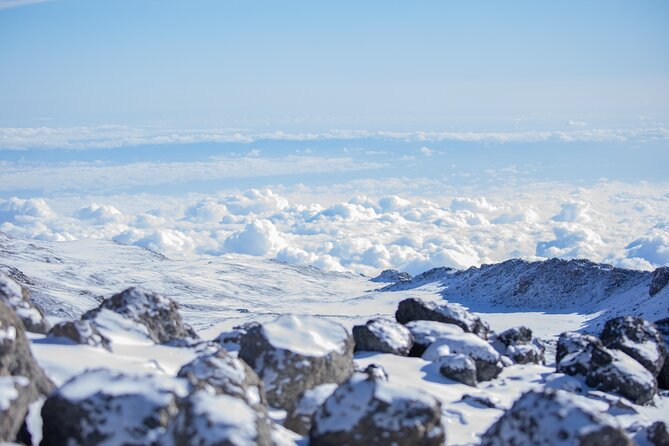
Summit day begins in darkness. The goal is to climb before dawn and reach the crater rim between about 5 and 7 AM. The first section uses steep switchbacks over scree, with snow possible depending on conditions.
The pace should be slow. This is not a race, and your guide’s job is to keep the group moving safely while watching for signs of altitude trouble. The supplied safety equipment includes pulse oximeters and a first aid kit, and rescue fees are included in the national park charges.
Gilman’s Point sits on the crater rim at 5,861 meters. Reaching it is a major achievement, but it is not the true summit. From there, the route follows the crater rim for about two more hours toward Uhuru Peak at 5,895 meters.
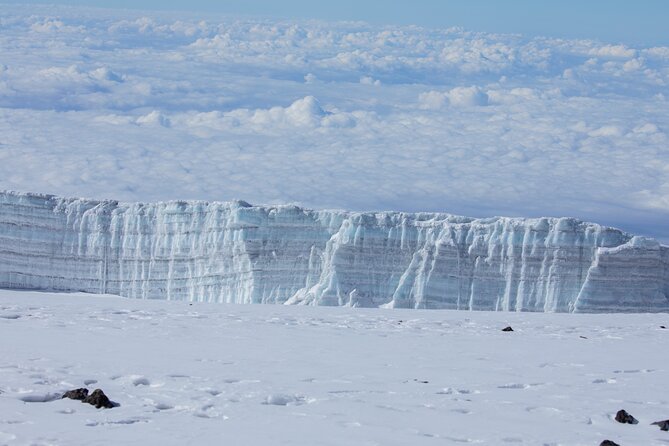
At the rim, you may see the crater and its ice fields. The cold can be severe, and the wind may make conditions feel worse. Keep your hands, head, and feet protected. A sleeping bag is not included, so arrange one before arrival. Some equipment may be available to rent, but the details and prices should be confirmed with Zara Tours.
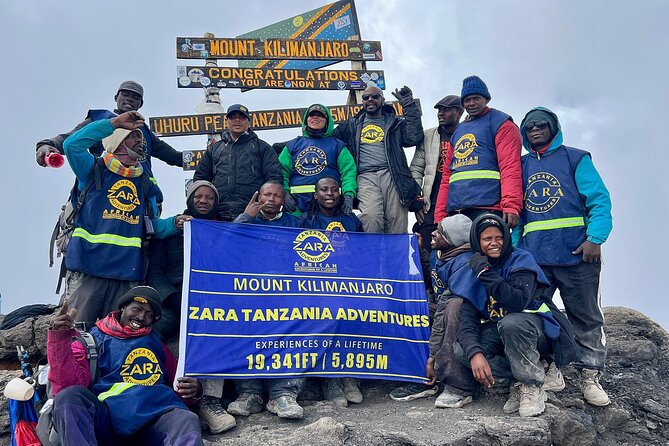
The final walk to Uhuru Peak is less about steep climbing than endurance, altitude, cold, and patience. You may reach the summit around 9 AM. Take your photograph, but do not linger too long. The descent is long, and the crew will want to get you lower as soon as practical.
After the summit, you return to Kibo Huts for a rest and a meal before continuing toward Horombo Huts. This is a very long day, even though each itinerary segment is shown as roughly eight hours. Expect the summit schedule to dominate the day, and do not plan anything else.
Day five: the long walk back to Moshi
The final morning begins with breakfast and packing. You descend through moorland to Mandara Huts, where lunch is served, then continue through the rainforest to Marangu Gate.
The lower forest can feel lush and warm after the cold upper mountain. It can also be hard on tired knees. Trekking poles are useful on the way down, and you should keep rain protection available until you leave the forest.
The gate is usually reached around 2 or 3 PM. This is where you say goodbye to the mountain crew and give tips to your guides, porters, cooks, and waiters. Tipping is not included, so budget for it separately and ask Zara Tours for current guidance before departure.
A vehicle then takes you back to the Springlands Hotel in Moshi. Two nights at the hotel are included, one before and one after the climb. That post-climb night matters. After a summit attempt and a long descent, you will appreciate a shower, a real bed, and a proper place to sort your equipment.
The itinerary suggests continuing to the airport or traveling onward in Tanzania or Kenya. Zanzibar is also suggested as a place to rest after the climb, but that trip is not included.
What the $2,004.11 price really covers
At about $2,004.11 per person, this is not a cheap walk. It is also not simply a guide fee. The price includes national park charges, hut and camping fees, rescue fees required by the park, airport transfers, two nights at the Springlands Hotel, mountain meals, boiled water, crew wages, and accommodation and entry charges for the support team.
That package can offer solid value because Kilimanjaro costs build up quickly. Park access, rescue coverage, food, porter support, hotel nights, and transport would be expensive to arrange separately. The inclusion of guides, porters, cooks, and waiters also means you are not carrying every supply yourself.
You still need to budget for important extras:
- Sleeping bag and personal climbing gear
- Gear rental, if needed
- Tips for guides, porters, cooks, and waiters
- Visa fees and travel insurance
- Flights
- Drinks and meals not listed
- Emergency oxygen
- Extra hotel nights
- Optional waterfall or cultural village activities
- A single-room supplement at Springlands Hotel, except on the one-person rate
The package includes five breakfasts, five lunches, and five dinners as listed, though the exact meal timing on summit day should be confirmed. Food is a practical strength of this type of trip. You need regular meals on the mountain, and several comments about Zara’s wider climbs praise the food and the care provided by the cooking team.
Guides, porters, and the human side of the climb
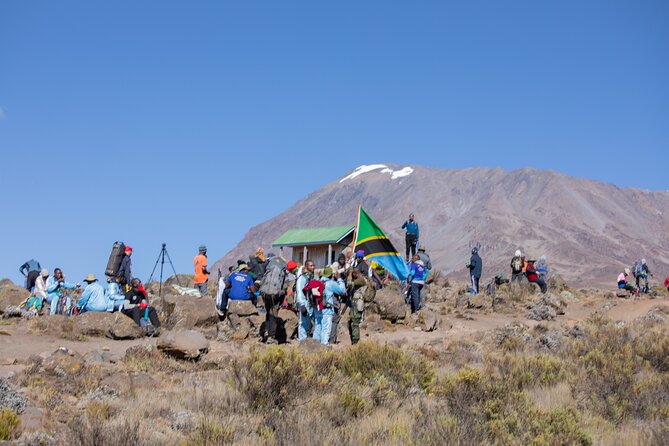
The crew may matter as much as the route. You will be accompanied by qualified guides, porters, cooks, and waiters, with a maximum group size of 15. Their work includes carrying equipment, preparing food, checking the route, and helping you manage the daily routine.
Several Zara team members have been praised by name on different Kilimanjaro trips, including Gilbert Kasaba, Charles, Living, Eddie, Felix, Ambrose, Johnny, John, James, and Tumaini. Those names come from varied routes and dates, so they are not a promise that one of them will lead your Marangu climb. Ask who your lead guide will be before you leave.
The strongest pattern is clear: personal encouragement, good organization, sufficient food, and reliable porter support can make a hard climb manageable. The porters move luggage ahead of you, but you should still pack a sensible daypack with water, rain gear, warm layers, sun protection, medication, and snacks.
Remember that porter support does not remove the physical challenge. The trail still climbs to nearly 5,900 meters, and no guide can guarantee that your body will cope with the altitude.
Who should choose this trip?
This climb suits an active person with moderate fitness who wants a guided route and prefers huts to a fully tent-based trip. You do not need to be an elite mountaineer, but you should be comfortable walking for around eight hours on several consecutive days.
It is a good match if you value a clear schedule, included meals, airport pickup, hotel nights, and a full mountain support crew. It is also useful if you want to compare a five-day plan with a six-day version before committing.
I would be cautious about choosing the five-day schedule if you have never spent time at high altitude or if you know that you need extra recovery time. The six-day option gives you a better acclimatization rhythm, and the additional Horombo day is the most useful upgrade described in the itinerary.
This is not the right choice if you want luxury, privacy, flexible daily timing, or a gentle nature walk. Accommodation is basic, the summit night starts around 1 AM, and weather and altitude can force changes.
Booking, timing, and cancellation details
The experience is usually booked about 99 days ahead, so plan early, especially if you need flights or extra nights in Moshi. Pickup is offered, and airport transfers from Kilimanjaro International Airport are included.
The listed start point is Kilimanjaro Airport, with an 8 AM start time, while the climb itinerary says you leave Moshi at 9 AM. Confirm the exact pickup plan, hotel meeting time, and the number of nights you need before booking.
Confirmation is provided at booking. Free cancellation is available up to 24 hours before the local start time. Within 24 hours, the payment is not refunded and changes are not accepted.
Should you book the Marangu Route with Zara Tours?
Book it if you want a guided Kilimanjaro climb with huts, meals, airport transfers, hotel nights, park fees, rescue charges, and a large support team bundled together. The route is direct, the daily plan is easy to understand, and the six-day option gives you a more sensible way to handle the altitude.
Before paying, confirm three things: the exact route length, the name and experience of your lead guide, and the current equipment rental list. I would also choose the extra Horombo day if your schedule allows it.
The Marangu Route is the shortest way up, not an easy holiday. If you arrive prepared, listen to your guide, protect yourself from rain and cold, and accept that the mountain sets the pace, this can be a powerful and well-supported way to reach Uhuru Peak.
FAQ
How long is the Marangu Route experience?
The standard itinerary takes five days. You may choose a six-day version by adding an extra day at Horombo Huts for rest or acclimatization.
What time does the summit attempt begin?
You wake around midnight for a light breakfast and normally leave Kibo Huts at about 1 AM.
How high is Uhuru Peak?
Uhuru Peak is listed at 5,895 meters, or about 19,340 feet. Gilman’s Point on the crater rim is listed at 5,861 meters.
Are meals included?
Yes. Breakfast, lunch, and dinner on the mountain are included, with five of each listed in the package.
Is accommodation included before and after the climb?
Yes. Two nights at the Springlands Hotel in Moshi are included, one before and one after the climb. A single-room supplement may apply.
Is a sleeping bag included?
No. Sleeping bags and personal mountain equipment are not included. Some equipment may be available to rent.
Are airport transfers included?
Yes. Airport transfers from Kilimanjaro International Airport are included, but you should confirm the exact pickup time and meeting point.
How many people can join the group?
The maximum group size is 15 people. Qualified guides, porters, cooks, and waiters support the climb.
Just added in Moshi
- Kilimanjaro Airport Private Transfer from/to Moshi★ 5.0 · 14 reviews
- 6 Days Machame route Kilimanjaro climbing★ 5.0 · 22 reviews
- 7 Days Highlight of Tanzania Mid-Range Standard★ 5.0 · 22 reviews
- 4 Day Mid-range Serengeti Safari★ 5.0 · 22 reviews
- Kilimanjaro Climbing 5 days Marangu route★ 5.0 · 22 reviews
- The 6 Days Kilimanjaro Climbing Tour via Machame Route in 2025/26★ 5.0 · 23 reviews
- 6-Day Kilimanjaro Climbing Via Machame Route★ 5.0 · 23 reviews
- 9-Day Enchanting Tanzania Safari -High End All Inclusive★ 5.0 · 27 reviews
Kilimanjaro Treks, compared.
8-Day Small-group Lemosho Kilimanjaro Summit Trekking
Read our review →
5 Days Best of Tanzania Luxury Safari Northern Circuit
Read our review →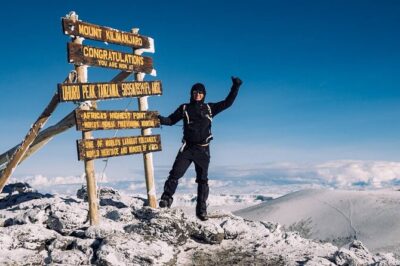
Climbing Kilimanjaro through 7 days Machame Route
Read our review →
7-Day Machame Kilimanjaro Summit Tour from Arusha
Read our review →Browse the lists this tour appears in