
Reviewed · WILDEBEEST MIGRATION SAFARIS
Tanzania Safari – The Great Migration in the North of the Serengeti and Lake Natron
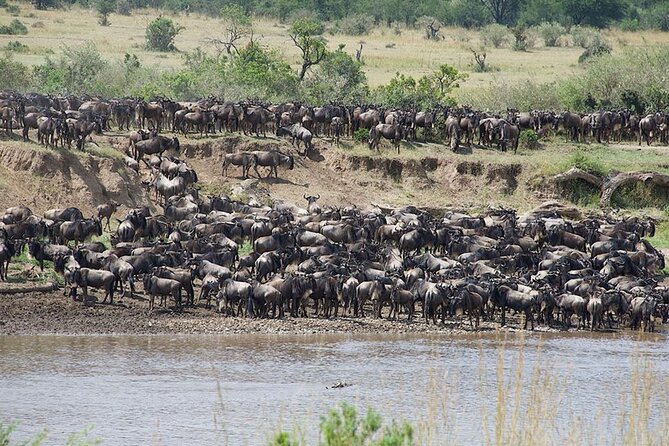
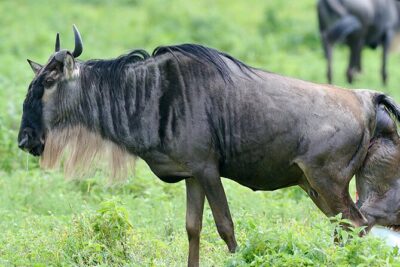
The main reason to choose this safari is its timing and route. From July through October, roughly 1.5 million wildebeest and hundreds of thousands of zebras move through the northern Serengeti in search of water and grass. If conditions line up, you may see the famous river crossings, with herds gathering at the Mara River and choosing when, or if, to cross.
I like the range of scenery here, from Lake Manyara’s forest and marsh to the open Serengeti, the Ngorongoro Crater, and the stark shores of Lake Natron. I also like the private format, full board, park fees, airport transfers, and water included in the $4,974 price.
The main consideration is the amount of time spent on rough roads. This is an ambitious eight-day circuit, not a relaxed lodge holiday. Some days involve up to eight hours of safari or driving, and the northern Serengeti route can be demanding.
Key things to know before booking
- The migration window is July through October: This is the best season in the itinerary for possible northern Serengeti crossings, but wildlife never follows a timetable.
- Lake Natron changes the trip: You get flamingos, volcanic scenery, Oldoinyo Lengai, and a walk to a waterfall, not just repeated game drives.
- The safari is private: Only your group participates, which gives you more control over the pace and makes the trip suitable for families or small groups.
- The price covers major trip costs: Private 4×4 transport, meals, transfers, park fees, taxes, AMREF insurance, and water are included.
- Guides are a major part of the experience: Past trips have included guides named John, Naftal, Beni, and Mussa, with strong praise for their field skills and care.
- The route ends with Tarangire: Elephants, baobabs, birds, and the Tarangire River provide a different final chapter after the Serengeti.
Why this route works for a first Tanzania safari
Many northern Tanzania safaris focus on the familiar trio of Lake Manyara, Ngorongoro, and Serengeti. This trip adds Lake Natron and two days in Tarangire, giving you more variety than a standard park circuit.
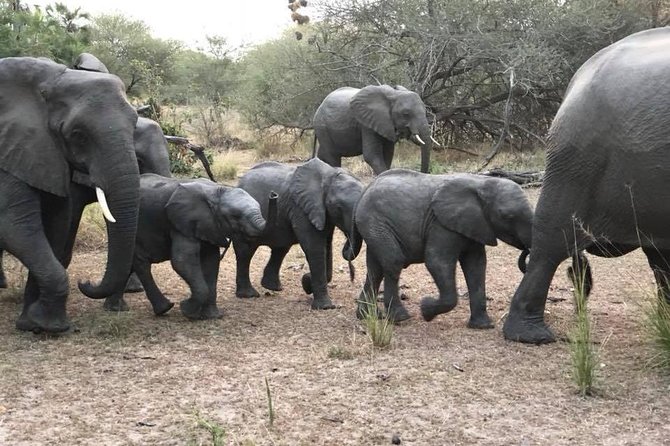
That variety matters. Lake Manyara offers forest, marsh, lake shore, and birdlife. Ngorongoro gives you a compact setting where many large animals can be seen in one day. The Serengeti supplies the wide-open grasslands and migration drama. Lake Natron feels almost otherworldly, while Tarangire brings giant baobabs and large elephant groups.
The route also gives you a clear sense of how Tanzania’s protected areas differ. The Serengeti National Park covers about 15,000 square kilometers, but it is only part of a much larger ecosystem. The herds move across this wider area, so you are not simply visiting one fixed park and expecting the animals to appear on schedule.
The private arrangement is useful here. Your group can focus on the animals and scenery that matter most to you, within the limits of park rules and the day’s driving distance. It also avoids being tied to strangers in the vehicle.
Other park itineraries that start in Moshi:
- Safari Serengeti And Ngorongoro
★ 5.0 · 288 reviews - Big Five Safari In Tanzania
★ 5.0 · 99 reviews - Unforgettable Tanzania Safari And Zanzibar Beach
★ 5.0 · 97 reviews
Day 1: Lake Manyara’s forest, lake, and birdlife
You leave Arusha in the morning for Lake Manyara National Park. The park covers about 330 square kilometers, with the lake taking up roughly 200 square kilometers, yet it packs several habitats into a small area.
At the foot of the Rift Valley escarpment, springs feed dense forest. Beyond it, you find open grassland, marsh, and the lake shore. This mixture supports baboons, vervet monkeys, elephants, giraffes, and about 380 bird species.
Lake Manyara is a good opening day because it introduces you to several types of wildlife without requiring the long drives that come later. You might see large troops of baboons near the road, monkeys in the forest, or elephants moving through the more open areas.
The birdlife is a special reason to pay attention here. From December through March, large numbers of pink flamingos gather at the lake before moving toward Lake Natron. If you visit outside that period, the flamingo display may be smaller, but the park still offers a useful mix of habitats.
The listed stop takes about seven hours, including the drive and game viewing. That is a full first day, so do not expect a slow start.
Day 2: Down into Ngorongoro Crater
The second day focuses on the Ngorongoro Crater, the remains of a huge volcanic cone that collapsed about 2.5 million years ago. The caldera is roughly 16 to 20 kilometers across, with crater walls rising about 600 meters above the floor.
The setting is compact compared with the Serengeti. More than 25,000 large animals live inside the crater, including most of the region’s familiar species. Giraffes are the notable exception because the steep descent and available food do not suit them.
A crater game drive can be rewarding because the raised walls keep the wildlife area relatively contained. You may see lions, elephants, buffalo, zebras, wildebeest, and other animals in a single day. The crater also gives you a strong sense of scale. From above, the floor looks almost orderly. Once you are down inside, it becomes a working ecosystem with animals spread across grassland, wetlands, and water sources.
The crater rim reaches about 2,300 meters above sea level. That elevation can make the morning feel cooler than expected, so pack a warm layer even if the rest of your trip is hot.
This is another long day, listed at about eight hours. The roads, early start, and time spent watching animals can make the schedule tiring, but the concentration of wildlife is a good reason to accept the pace.
Days 3 and 4: The Serengeti and the northern migration
Days 3 and 4 move into the Serengeti, the heart of the trip. The park is famous for open grasslands, easy visibility, and a huge range of wildlife.
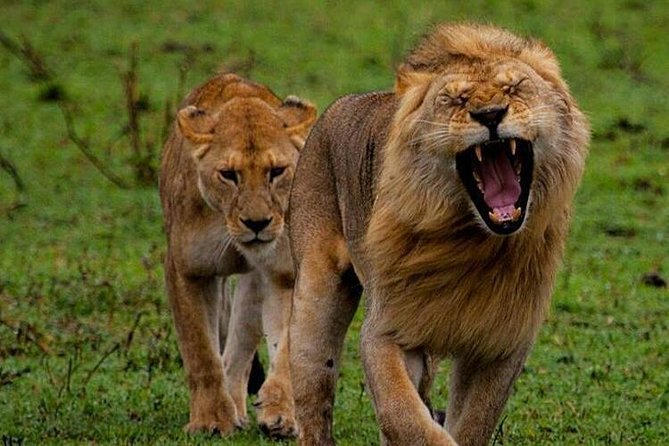
The ecosystem supports about 1.5 million wildebeest, 300,000 zebras, and 500,000 Thomson’s gazelles. It also contains lions, leopards, cheetahs, elephants, giraffes, ostriches, impalas, eland, hippos, crocodiles, and more than 400 bird species.
The open setting is important. Volcanic rock beneath much of the southern Serengeti limits the growth of tall trees, leaving broad grasslands where animals are easier to spot. You still need patience and good luck, but you are not looking through thick forest all day.
In July through October, the migrating herds gather in the northern Serengeti and Mara region. This is the period associated with the dramatic crossings shown in wildlife films. You may see wildebeest and zebras massing near a river, hesitating at the bank, then surging across while crocodiles wait below.
There is no guaranteed crossing. The animals may remain on one bank for hours, or turn away entirely. That uncertainty is part of the experience, but it is also why you should not book this trip expecting one exact scene.
Day 4 focuses on the Mara area, where the terrain and short grass make animal sightings especially open. You may see predators following the herds, though the migration itself is the main attraction. The two Serengeti days are also your best chance to appreciate the sheer scale of the ecosystem rather than simply ticking off individual species.
Expect about eight hours of game driving on each day. Your guide’s ability to read tracks, follow reports, and judge where to wait will matter greatly. Guides named John, Naftal, Beni, and Mussa have led past Safari Crew trips, but your assigned guide may be different.
Other safaris people book out of Moshi:
- 8-Day Essence of Tanzania Safari – Luxury
★ 5.0 · 72 reviews - Great Migration Safari In Tanzania
★ 5.0 · 71 reviews - 6 Days 5 Night Safari
★ 5.0 · 57 reviews - 7-Day Magical Tanzania Safari -Premium High End Package
★ 5.0 · 53 reviews
Day 5: Leaving the Serengeti for Lake Natron
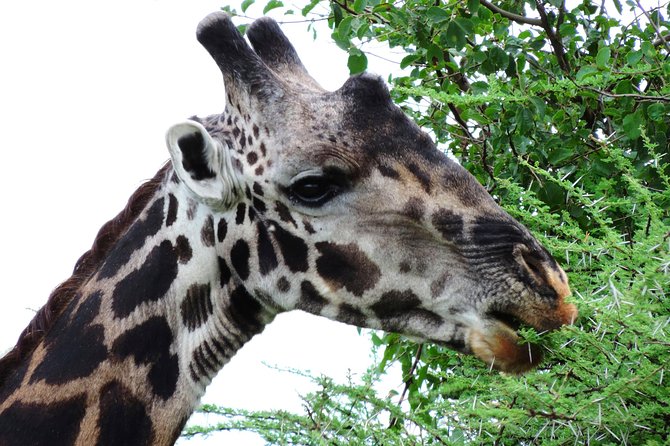
The fifth day begins with a final game drive in the northeastern Serengeti. You then leave the park by a rougher route toward Lake Natron.
This is one of the trip’s more unusual transitions. Instead of moving directly to another major game park, you travel through dry volcanic country toward a strongly alkaline lake in a Rift Valley depression. Lake Natron is about 50 kilometers long and 25 kilometers wide, surrounded by rugged volcanic scenery.
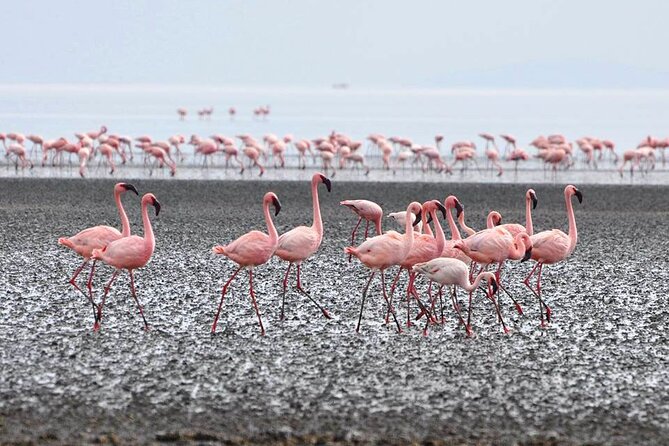
During the dry season, especially from June through October, the lake attracts large numbers of pink flamingos. They feed on cyanobacteria in the water, and the shore can become an important nesting area.
The afternoon walk along the Engare Sero stream adds a welcome change from sitting in a vehicle. The route follows a narrow rocky gorge to a waterfall where you can swim. It is not described as a difficult trek, but you will sometimes walk through water up to about knee height.
Bring a swimsuit and non-slip shoes. This is practical advice, not optional packing flair. The walk is a good fit for people who want activity and variety, but it may not suit anyone uncomfortable with uneven ground or wet footing.
Oldoinyo Lengai, the sacred volcano of the Maasai people, provides the backdrop. At nearly 3,000 meters, it is the world’s only volcano known for natrocarbonatitic lava. You do not climb it on this itinerary, but seeing it near Lake Natron gives this section a strong sense of place.
Day 6: Flamingos, volcanic country, and Tarangire
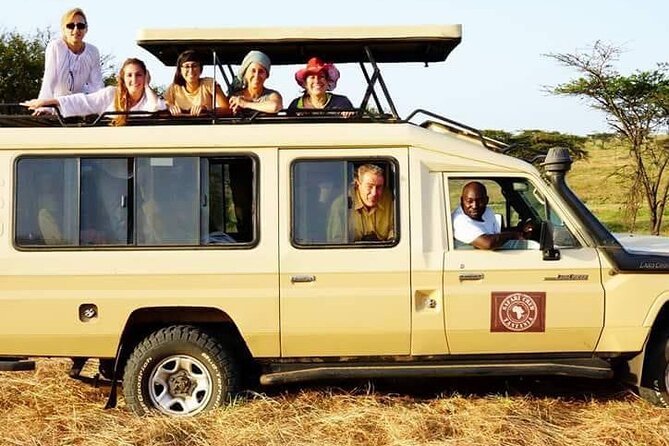
The next morning brings another walk along the shores of Lake Natron. The setting is dry and almost lunar, with volcanic peaks shaped by Rift Valley earthquakes.
Afterward, you travel toward Mto wa Mbu and continue to Tarangire National Park for an afternoon game drive. This is a busy day, listed at about four hours for the Lake Natron portion and another four hours for Tarangire.
Tarangire feels different from the Serengeti. Its 2,600 square kilometers contain more trees, huge baobabs, and the Tarangire River. During the dry season, the river and the Silale Marsh can become critical water sources, drawing animals from a wide area.
You may see elephants, lions, leopards, buffaloes, wildebeest, zebras, antelopes, and gazelles. Tarangire also has about 500 bird species, including resident and migratory birds.
The main drawback is the pace. After a Serengeti game drive and a Lake Natron walk, you may be ready for a quiet afternoon. Instead, the schedule adds another park. If you prefer maximum wildlife variety and do not mind full days, this works well. If you prefer more time at each camp, ask about a slower version before booking.
Day 7: A full Tarangire safari
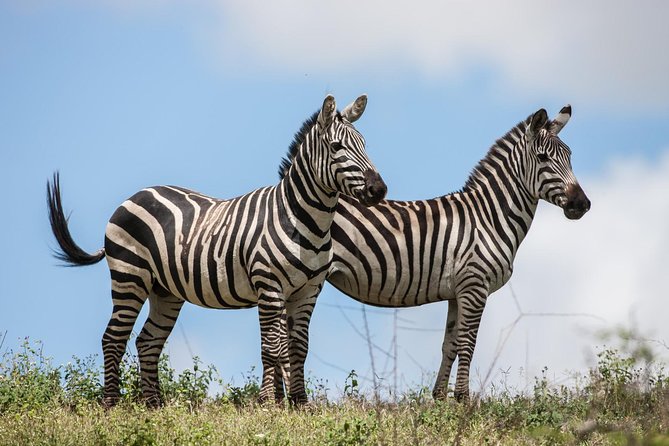
Day 7 gives Tarangire the attention it deserves. The park is often called the park of giants because of its baobabs and elephants.
The river is the center of the day. In the dry season, animals gather near the remaining water, which can make sightings productive. The park’s trees also create a different viewing experience from the open Serengeti. You may need to watch more carefully, but the mix of shade, trunks, grass, and distant hills gives the game drive a fresh feel.
Tarangire is a strong final safari day because it is not simply a repeat of the previous parks. After the migration focus, you get a calmer look at a park shaped by a seasonal river and large resident animal groups.
The full day is listed at about eight hours. That gives your guide time to adjust the route instead of rushing from one sighting to the next.
Day 8: Returning to Arusha and the airport
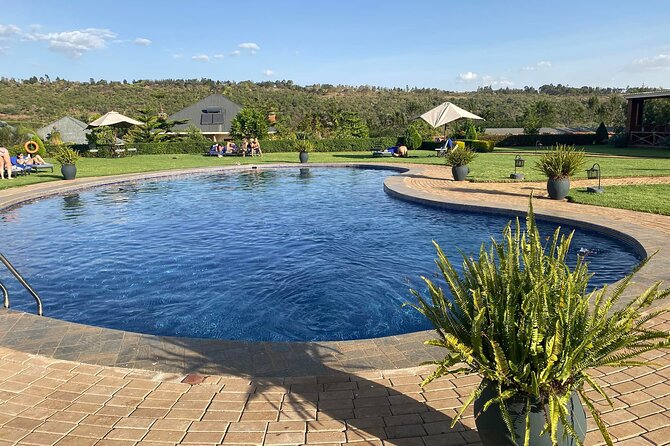
The final day returns to Arusha for lunch, followed by transfer to either Kilimanjaro International Airport or Arusha Airport.
The listed duration is about seven hours, so check your flight time carefully before booking. You will need to provide arrival and departure flight details, along with passport information and a mobile phone number, when arranging the trip.
The package includes airport transfers, but international and local flights are not included. Your visa, drinks at lodges, and personal extras are also outside the package.
What the $4,974 price really covers
At $4,974 per person, this is a serious investment. The value depends on how much you would otherwise spend assembling the same route yourself.
The price includes private transportation, a 4×4 safari circuit, full board, transfers, park fees, all taxes, AMREF insurance, and water in the vehicle. It also includes seven breakfasts, seven dinners, and eight lunches.
That list matters. Park fees and transport across northern Tanzania can make up a large part of a safari budget. Full board also reduces the need to pay separately for meals during long days away from towns.
The price does not include flights, visa costs, lodge drinks, or personal purchases. Ask for the exact accommodation list before paying, since the itinerary refers to lodges and tented camps but does not name each property.
Past trips have included comfortable lodges and tented camps, and the strongest praise has focused on organization, guide quality, and attention to detail. The operator, Safari Crew Tanzania, has about 25 years of experience in African safaris according to the supplied information.
Who should book this safari
I would choose this trip if you want the Great Migration but also care about seeing several very different parts of northern Tanzania.
It suits you if:
- You want a private safari rather than a shared vehicle.
- You can handle long drives and full game-drive days.
- You want both major parks and less usual stops.
- You are interested in flamingos, volcanoes, waterfalls, and Maasai cultural geography as well as big animals.
- You are comfortable paying for a high-end, all-inclusive safari structure.
- You are visiting between July and October and want a reasonable chance of seeing northern migration activity.
It may not suit you if you want a slow holiday, dislike rough roads, or care more about luxury downtime than covering ground. The Lake Natron section is especially active and remote in feel, while the Serengeti days can involve long waits for a possible crossing.
Confirmation is sent within 48 hours, subject to availability. Most people can participate, and the meeting area is near public transportation, but you should ask specific mobility questions before booking because the itinerary includes uneven walks and sections through shallow water.
The cancellation terms are strict close to departure. Cancel at least six full days before the start for a full refund, two to six days before for a 50 percent refund, and less than two days before for no refund.
Should you book it?
Book this safari if the northern Serengeti migration is your priority and you want a fuller northern Tanzania circuit around it. The combination of Serengeti, Ngorongoro, Lake Natron, and Tarangire gives you far more than a single-park wildlife trip.
I especially like the balance between classic safari stops and the Lake Natron detour. The waterfall walk, flamingos, and Oldoinyo Lengai give you a break from the vehicle and add a stronger sense of Tanzania beyond the usual wildlife checklist.
Before you commit, confirm the accommodation names, assigned guide, exact flight transfer plan, and expected driving times. If you accept the cost and the busy schedule, this is a powerful way to see the Great Migration and the varied country around it.
FAQ
Where does the safari begin?
The tour is based in Moshi, with departure from Arusha on the first day. Transfers are provided, and the final day returns to Arusha.
How long does the safari last?
The safari lasts approximately eight days.
When is the best time for the migration part of the tour?
The northern Serengeti and Mara region are included during the July through October migration period.
Is this a private tour?
Yes. Only your group participates in the activity.
What type of vehicle is used?
The safari circuit uses a 4×4 vehicle.
Are park fees included?
Yes. Park fees, all taxes, private transportation, transfers, AMREF insurance, and water on board are included.
Are meals included?
Yes. The package includes seven breakfasts, seven dinners, and eight lunches.
Are flights included?
No. International and local flights are not included.
What should I bring for the Engare Sero waterfall walk?
You should bring a bathing suit and non-slip shoes because parts of the walk pass through water that can reach about knee height.
Can most people participate?
The supplied information says most people can participate. The tour also includes walking on rugged ground and through shallow water, so ask about your own mobility needs before booking.
More migration safaris from Moshi
- 6 Days Tanzania Budget Camping Safari with Migration
★ 5.0 · 31 reviews - 8 Days Great Wildebeest Migration – Mara River Crossing
★ 5.0 · 28 reviews - 8 Days Great Wildebeest Calving Migration Safari from Arusha
★ 5.0 · 254 reviews - 10-Day Serengeti Wildebeest Migration Safari from Arusha
★ 5.0 · 218 reviews
More Serengeti safaris from Moshi
- 5 Days Camping Tarangire, Serengeti & Ngorongoro crater & Visiting Maasai
★ 5.0 · 58 reviews - 4 Days Group Joining Camping Safari to Tarangire Serengeti Ngorongoro Crater
★ 5.0 · 50 reviews - 4 Day Private Tour Throughout Tarangire, Serengeti and Ngorongoro
★ 5.0 · 42 reviews - 7 Days Safari. Serengeti, Tarangire, Lake Manyara & Ngorongoro Crater.
★ 5.0 · 34 reviews
Just added in Moshi
- Kilimanjaro Airport Private Transfer from/to Moshi★ 5.0 · 14 reviews
- 4 Day Mid-range Serengeti Safari★ 5.0 · 22 reviews
- Kilimanjaro Climbing 5 days Marangu route★ 5.0 · 22 reviews
- 6 Days Machame route Kilimanjaro climbing★ 5.0 · 22 reviews
- 7 Days Highlight of Tanzania Mid-Range Standard★ 5.0 · 22 reviews
- 10-Day Predators Tanzania Safari Luxury Package★ 5.0 · 24 reviews
- 6 Days Climb Private Tour in Mount Kilimanjaro★ 5.0 · 27 reviews
- 4 Days Tanzania Budget Safari★ 5.0 · 26 reviews
Wildebeest Migration Safaris, compared.

8 Days Great Wildebeest Calving Migration Safari from Arusha
Read our review →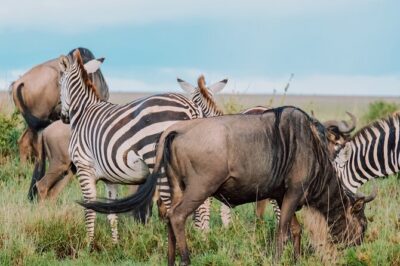
10-Day Serengeti Wildebeest Migration Safari from Arusha
Read our review →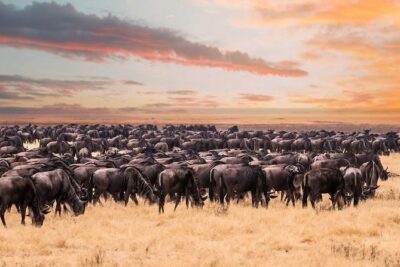
8 Day Spectacular Migration Serengeti mid -Range Tanzania Safari
Read our review →
9-Day Serengeti Migration Footsteps Tanzania Safari
Read our review →

Private 6-Day Great Migration Ndutu Serengeti Safari Tour
Read our review →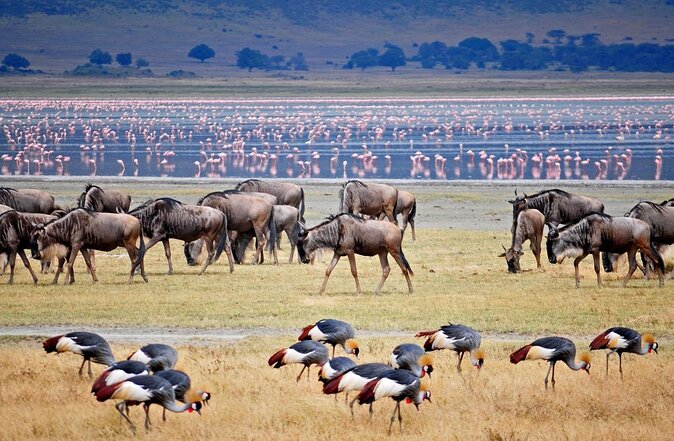
4 Day Great Migration Safari Serengeti & Ngorongoro Crater
Read our review →Browse the lists this tour appears in