
Reviewed · KILIMANJARO TREKS
machame route
The Machame Route gives you Kilimanjaro at its most dramatic: steep trails, changing vegetation, broad mountain views, and a summit approach from the east. It is the popular Whisky Route, but the nickname should not fool you into thinking this is a casual walk. The route is demanding and rewards steady pacing.
I like two things right away: the small group limit of 10 and the use of local Tanzanian guides who can explain the mountain’s plants, geography, history, and people. I also like that the route lets you climb one side of Kilimanjaro and descend another, rather than retracing every step.
The main caution is simple: six days is a short schedule for a high-altitude climb. The route is known for good acclimatization, but the seven-day version is generally the wiser choice if you can add a day. You need strong fitness, patience, and a willingness to accept that reaching the summit is never guaranteed.
Key points before you book
- The Machame Route is steep and rugged, with longer walking days than the gentler Marangu Route.
- Small groups are capped at 10 people, allowing guides to watch the pace and support individual needs.
- Camping, breakfast, lunch, and dinner are included throughout the six-day trip.
- The route uses the southern circuit, climbing toward Stella Point and descending by the Mweka route.
- English, German, French, and Spanish support is offered, useful for mixed-language groups.
- Guides and porters are central to the experience, with Stan, Leon, Pio, Stanley, and others praised for support, safety, and good humor.
Why Machame is worth the extra effort
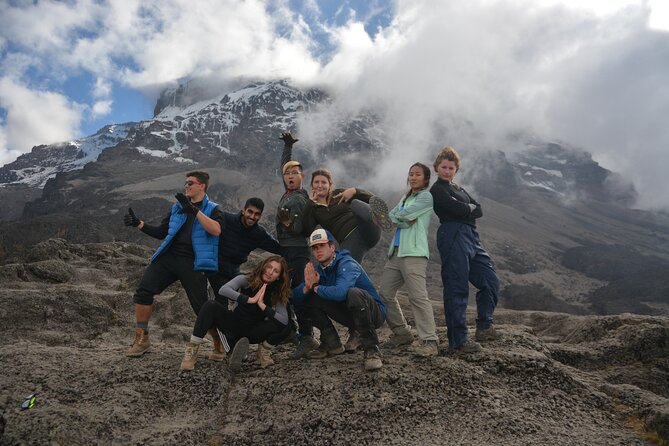
Kilimanjaro is not a technical climb in the sense of ropes and rock climbing, but it is a serious high-altitude hike. Machame makes the challenge feel worthwhile because the route changes often. You move through different plant zones and views instead of spending the entire climb on one broad track.
The route is also designed to help with acclimatization. Its profile allows you to climb higher during the day and sleep at a lower elevation when the itinerary permits. That trek high, sleep low pattern is one reason Machame has a strong summit record compared with some shorter routes.
You should still expect a hard climb. Machame is steeper than the Marangu Route, and the walking days can be longer. The trail is described as rugged, so you should be comfortable with uneven ground, uphill effort, and slow progress.
I like the sense of movement built into this route. You see the southwest and southeast sides of the mountain, then descend through the Mweka route. That gives the trip a proper journey feel rather than making it an out-and-back walk.
Other routes up the mountain from Moshi:
- Kilimanjaro climb by Lemosho Route (7-day)
★ 5.0 · 651 reviews - Kilimanjaro climb, Machame Route (7-day)
★ 5.0 · 262 reviews - Kilimanjaro Climbing Lemosho Route 8 Days.
★ 5.0 · 186 reviews
What the six-day schedule really means
The experience lasts about six days and includes camping. The supplied details do not provide fixed daily start times or named camps, so you should ask Habari Adventure for the exact camp-to-camp schedule before paying. The broad route pattern is clear, though.
Day one: entering the mountain
The climb begins at Kilimanjaro National Park, with pickup offered from Kilimanjaro Airport. The first section is your introduction to the mountain’s lower slopes and the rhythm of walking with a guide team.
This opening day matters because it sets the pace for everything that follows. You will not benefit from rushing. A good guide will help you settle into a slow, steady walking style, conserve energy, and learn how the group moves.
Habari Adventure’s local guides are expected to add more than route-finding. The experience includes discussion of local geography, anthropology, history, plants, and wildlife. That helps turn the first day from a simple hike into an introduction to the mountain and its surroundings.
Middle days: steep trails and changing scenery
The middle portion of Machame is where the route earns its reputation. You gain height, walk over more rugged ground, and begin to feel the difference between ordinary hiking and altitude hiking.
The six-day version compresses this process. You may appreciate the shorter trip because it requires less time away from home, but the tradeoff is less time for your body to adjust. The seven-day option is described as the better choice, especially for anyone who wants a more gradual climb.
This is also where the value of a small group becomes clear. With a maximum of 10 people, the guides have a better chance of noticing when someone is falling behind, struggling with the pace, or showing signs that the group should slow down. Previous trips have included guides named Stan, Leon, Pio, and Stanley, with particular praise for their calm support, local understanding, humor, and attention to safety.
Do not expect a private climb simply because the group is small. You will still be sharing the route and camp experience with other hikers. But 10 people is a manageable size, especially compared with a large charity or club group.
Same base, a different kind of day out:
- Safari Serengeti And Ngorongoro
★ 5.0 · 288 reviews - Climbing Kilimanjaro – Machame Route
★ 5.0 · 170 reviews - Climbing Kilimanjaro through 7 days Machame Route
★ 5.0 · 151 reviews - Kilimanjaro climb, Lemosho Route (8-day)
★ 5.0 · 148 reviews
The southern circuit: acclimatization with scenery
Machame usually follows the southern circuit, which is one of its strengths. The trail gains height in stages, giving you a better chance to adjust before summit night.
The exact daily elevations are not supplied, so I would not book this trip based on a rigid expectation of certain altitude gains. Instead, ask for the current itinerary, camp elevations, guide-to-climber ratio, and plan for a slow climber.
You should also ask how the six-day version differs from the seven-day schedule. The key question is not just how many miles you walk. It is how much time you spend adjusting before the final ascent.
Summit day at Stella Point
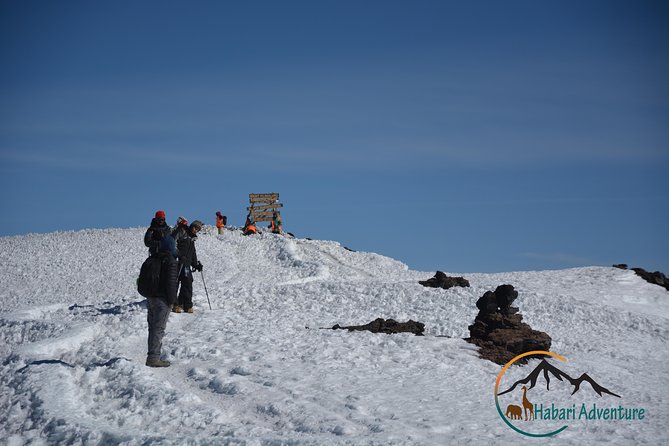
The summit push is the hardest part of the trip. The route ascends toward Stella Point on the crater rim, using the east-facing side before reaching the higher summit area.
This section is physically demanding and usually takes place during the coldest, most tiring part of the climb. The available information confirms the route to Stella Point but does not provide a fixed start time, so ask Habari Adventure how the summit day is organized.
One useful detail comes from the experience of a previous climb led by Stan: the guide timed the arrival near sunrise, reaching the summit area shortly before it. That shows the kind of planning a strong guide can bring to summit night, though you should not assume your exact timing will be the same.
At this point, the right mindset is more important than speed. You will need to walk slowly, follow the guide’s instructions, drink regularly, and accept that the mountain sets the final terms. The guides’ role is not only to point out the trail. It is to judge pace, watch your condition, and help you decide if continuing is safe.
Reaching Stella Point is a major achievement, but it is not the same as completing every summit objective. Ask the operator to explain the exact summit route and turnaround policy before departure. A responsible decision to stop is not failure. It is part of climbing safely.
Descending by the Mweka Route
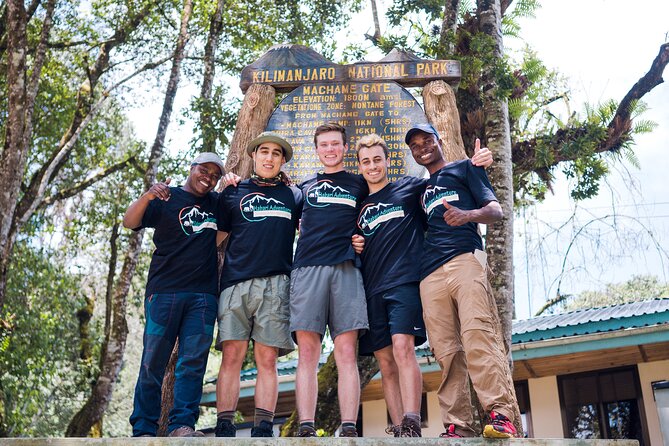
One of Machame’s most appealing features is that you descend by the Mweka route rather than simply walking back the way you came. This lets you experience another side of the mountain and gives the trip a more satisfying finish.
Descending can feel easier because you are no longer gaining height, but tired legs and steep ground create their own problems. Many people focus so heavily on summit day that they forget the need to protect their knees, drink water, and maintain care on the way down.
The route’s one-way flow also explains why Machame feels more varied than the Marangu Route. You see different slopes, different views, and different trail conditions. That variety is a good reason to choose Machame if you value scenery and a sense of progress.
Camping, meals, and the support team
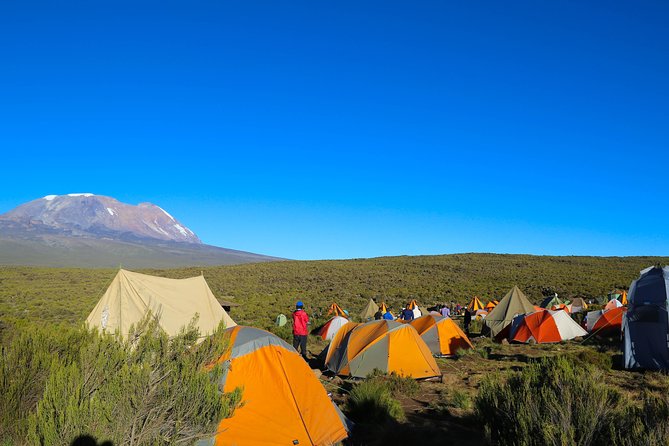
Camping is included for the six-day trip, along with breakfast, lunch, and dinner each day. This is important because food and camp support are not minor details on a mountain climb. After several hours of walking, a reliable meal and an organized camp can make the next day possible.
The food received repeated praise for being plentiful, varied, and well prepared. That does not mean you should expect restaurant dining on the mountain. It means meals are treated as a serious part of the operation rather than an afterthought.
Porters also play a major role. They carry additional equipment and support the camp, including cooking and cleaning duties. That help allows you to focus on walking with your personal day pack instead of carrying the full weight of a mountain expedition.
You should ask Habari Adventure for its porter policy and guidance on tipping before you leave home. The supplied information makes clear that the support crew is essential, but it does not state porter numbers, luggage limits, or tipping amounts.
Guides who make the difference
This trip’s strongest feature is its guiding team. Names connected with past climbs include Stan, Leon, Pio, Stanley, Justo, Evan, and Ilyas. You may not be assigned one of these specific people, but the pattern is useful: Habari Adventure has a local guiding operation with several experienced leaders.
Stan is repeatedly associated with a friendly manner, mountain knowledge, safety, and careful attention during difficult sections. Stanley is described as responsive to changing needs and good at helping climbers feel comfortable. Leon and Pio are praised for warmth, while Justo and Evan helped keep a group engaged with music and conversation.
That personal contact matters on Kilimanjaro. A guide who notices your pace and responds early can make the difference between a manageable day and a miserable one. You should still ask how many assistant guides will be present and who will lead your particular departure.
Language support is available in English, German, French, and Spanish. Confirm your preferred language when booking, especially if clear communication about health and safety is important to you.
Price and overall value
The listed price is $2,255.39 per person. For a six-day Kilimanjaro climb, the value depends on what is covered in the final booking terms, not just the headline price.
Here, the package includes camping, daily breakfast, lunch, dinner, airport pickup, and a small-group format. Those inclusions reduce the number of arrangements you need to make yourself. Local guides and porters also provide the practical support that makes a high-altitude climb possible.
The price is easier to justify if you value local leadership and a personal approach. It is less attractive if you are comparing only the number of hiking days. The six-day schedule is short, and the seven-day Machame version may offer better acclimatization for an additional cost.
Before booking, ask for a written list of inclusions. Confirm park fees, transfers, accommodation before or after the climb, equipment, rescue arrangements, porter support, and tips. None of those details are fully specified here, so they should not be assumed.
Who should choose this climb
Machame suits you if you want a scenic, demanding route and prefer camping to a simpler hut-based format. You should have a strong fitness level and be ready for steep walking over several consecutive days.
This is a good choice for hikers who enjoy a challenge and want to see different sides of Kilimanjaro. It also suits people who value a small group and direct support from local guides.
It may not suit you if you want the gentlest route, dislike camping, or have only limited time for acclimatization. In that case, you should compare the seven-day Machame option before committing to six days.
The trip is not a fit for anyone expecting a casual sightseeing excursion. The words Whisky Route have a playful ring, but the climb itself calls for preparation, patience, and humility.
Practical booking advice
Pickup is offered, and the meeting point is listed as Kilimanjaro Airport and Kilimanjaro National Park in Tanzania. Confirmation is provided at booking, and the maximum group size is 10.
The activity requires good weather. If poor conditions cause cancellation, you will be offered another date or a full refund. You can also cancel for a full refund up to 24 hours before the experience starts. Cancellations or changes inside that 24-hour window are not accepted, with times based on local time.
I would contact Habari Adventure before booking with four questions:
- Is the six-day schedule fixed, or can I switch to seven days?
- What exactly is included in the price?
- Which guide and language team will lead my departure?
- What are the camp elevations and summit-day plan?
Those answers will tell you far more about the trip’s value than the price alone.
Should you book the six-day Machame Route?
I would choose this climb if you want Kilimanjaro’s scenic southern circuit, a small group, local guides, and a route that climbs one side and descends another. The food, porters, and guide support add real value, and the team has experience helping people through a difficult summit attempt.
My main reservation is the six-day length. If your schedule allows it, I would favor seven days for a calmer acclimatization plan. If six days is your only option, prepare seriously, ask detailed questions, and understand that summit success depends on weather, health, pacing, and altitude response.
For a fit, determined hiker who wants a rugged route and personal support, this is a strong Kilimanjaro option. Just do not confuse a well-run climb with an easy one.
FAQ
Where does the Machame Route climb take place?
The climb takes place on Mount Kilimanjaro in Tanzania. The listed meeting locations are Kilimanjaro Airport and Kilimanjaro National Park.
How long is the tour?
The advertised experience lasts approximately six days. A seven-day Machame itinerary is also commonly used and is described as the better option for acclimatization.
Is camping included?
Yes. Camping is included during the six-day climb.
Are meals included?
Yes. Daily breakfast, lunch, and dinner are provided.
How large is the group?
The tour has a maximum of 10 travelers.
Which languages are available?
Tours are offered for English, German, French, and Spanish speakers.
Is airport pickup available?
Yes. Pickup is offered, and Kilimanjaro Airport is listed as a meeting point.
How difficult is the Machame Route?
It requires a strong level of physical fitness. Machame is steeper and generally more demanding than the Marangu Route, with longer walking distances.
Does the route return the same way?
No. The route climbs through the southern circuit and descends by the Mweka route, allowing you to experience different sides of the mountain.
What happens if bad weather cancels the climb?
You will be offered a different date or a full refund if the experience is canceled because of poor weather. Free cancellation is also available up to 24 hours before the start time.
Just added in Moshi
- Wildlife Extravaganza: Manyara, Tarangire & Ngorongoro in 3 Days★ 5.0 · 3 reviews
- West Kilimanjaro cycling Adventures★ 4.5 · 8 reviews
- Kilimanjaro Climb • Machame Route ~ 10 Day★ 5.0 · 6 reviews
- Kilimanjaro Climbing Umbwe Route★ 5.0 · 3 reviews
- Mt Kilimanjaro 6 days Marangu route hike★ 5.0 · 3 reviews
- 3 Days Private E-Bike Tour in West Kilimanjaro★ 5.0 · 3 reviews
- Private Cycle to Kilimanjaro Bike Park Safari★ 5.0 · 6 reviews
- Kilimanjaro Climb • Marangu Route ~ 9 Day★ 5.0 · 4 reviews
Kilimanjaro Treks, compared.



8-Day Small-group Lemosho Kilimanjaro Summit Trekking
Read our review →

5 Days Best of Tanzania Luxury Safari Northern Circuit
Read our review →

Climbing Kilimanjaro through 7 days Machame Route
Read our review →
7-Day Machame Kilimanjaro Summit Tour from Arusha
Read our review →Browse the lists this tour appears in