
Reviewed · TOURS IN MOSHI
Moshi: Serval Wildlife Tour with food and drinks
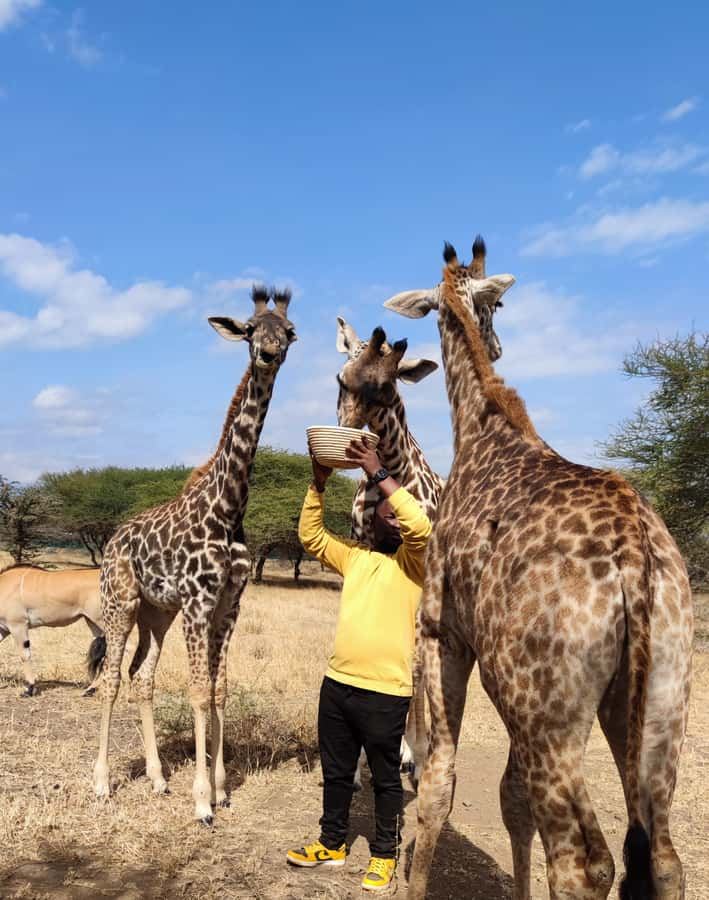
Serval Wildlife Sanctuary offers something a standard safari often cannot: close contact with animals in open, carefully managed grounds. You may feed or touch selected animals safely, walk among giraffes and zebras, and learn about servals, lions, ostriches, monkeys, and Oryx from the sanctuary’s own guides.
I like the scenic ride through the Siha Highlands, with views toward Mount Meru and Mount Kilimanjaro. I also like the simple lunch stop and the chance to spend time with a local naturalist rather than only watching animals from a vehicle. The main concern is value: the $120 price needs careful checking, since transport, sanctuary entry, and food may not be understood the same way by every booking.
Key points to know before you go
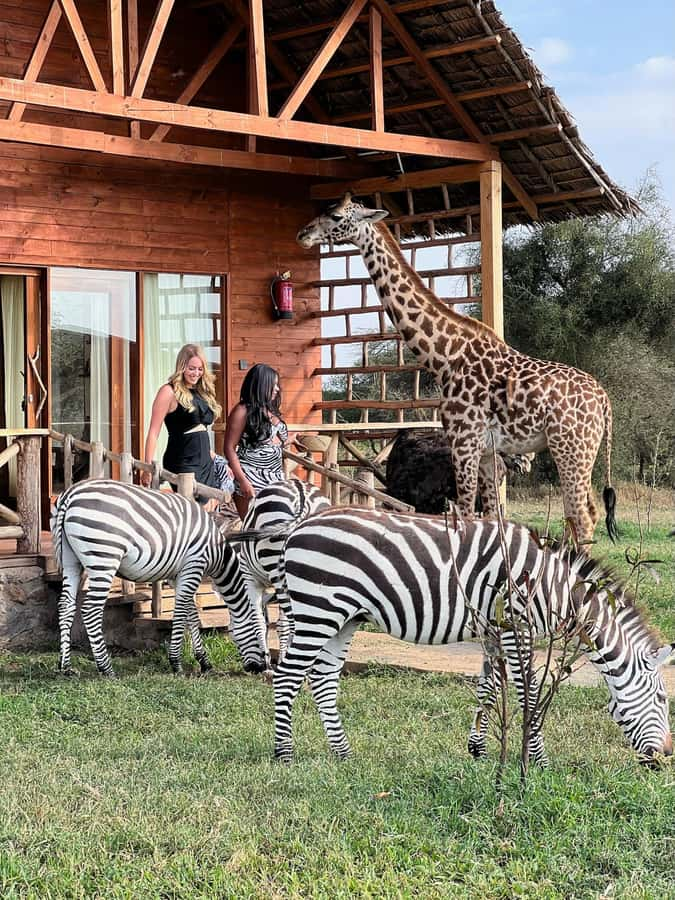
- Open grounds, not a conventional zoo: The animals can move around spacious enclosures, giving you closer views than a normal game drive.
- Ester has received special praise: One booking specifically highlights Ester for her animal knowledge and photography help.
- The sanctuary visit is short: About 1.5 hours is allocated for the guided walk, photographs, safety briefing, and free time.
- Lunch is at a separate local restaurant: It is not necessarily served inside Serval Wildlife Sanctuary.
- Transport is a major part of the price: Pickup and drop-off are offered from Moshi, Arusha Urban, or Boma Ng’ombe.
- Check the final cost: One booking reported paying extra for some drinks and for a different drop-off arrangement.
What Serval Wildlife Sanctuary is really like
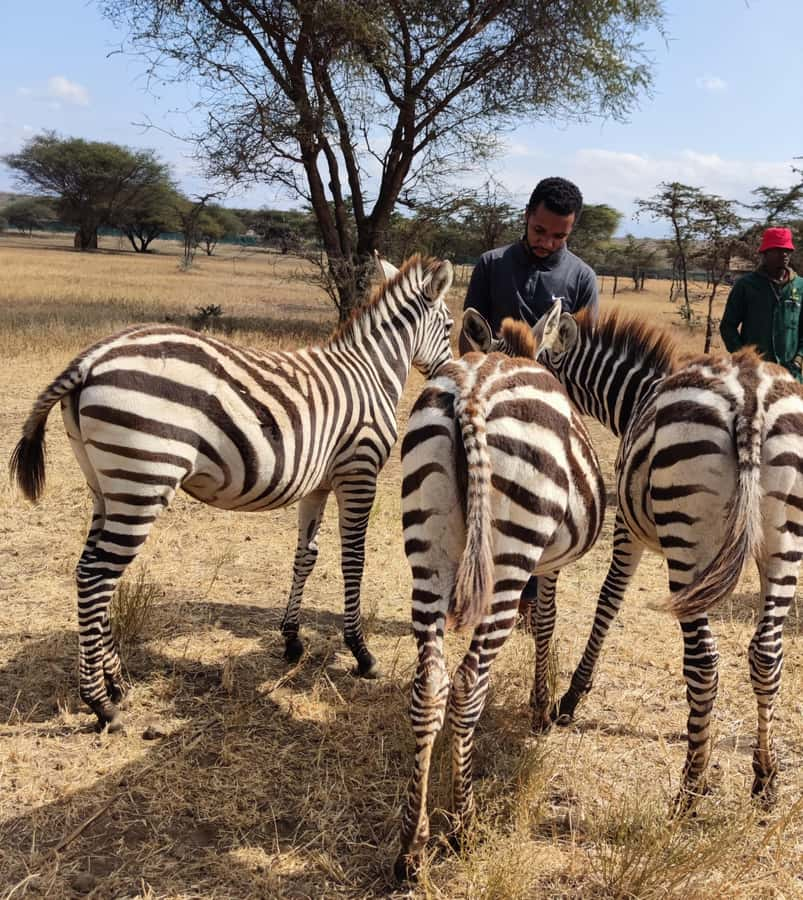
Serval Wildlife Sanctuary is designed for people who want more than a distant glimpse of wildlife. The setting allows you to see animals at close range and, under guidance, interact with some of them. That makes this a very different outing from a full-day safari in Tarangire, Arusha National Park, or the Serengeti.
The sanctuary is in Tanzania’s Siha District, in the highland area between the Moshi and Arusha regions. The drive is part of the appeal. As you leave town, you pass through rural scenery and higher ground, with possible views of Mount Kilimanjaro and Mount Meru along the way.
The animal collection includes servals, giraffes, lions, zebras, ostriches, monkeys, and Oryx. You should keep your expectations realistic, though. This is a compact wildlife visit, not a large national park. You might see several animals in one outing, but the exact experience depends on where they are and how active they feel.
That matters most with the lions. A lion may be resting or sleeping during your visit, and access around it is controlled for safety. Children, in particular, may not be allowed close to a sleeping lion. The sanctuary’s appeal is the chance to get near animals responsibly, not a guarantee of constant action.
A few more things to do in Moshi worth a look
- Wildlife Safari Tanzania
★ 5.0 · 19 reviews - From Moshi or Arusha: Serval Wildlife Sanctuary Trip
★ 4.9 · 14 reviews - 6 Days Essence of Tanzania Wildlife Safari
★ 5.0 · 8 reviews
The drive from Moshi or Arusha
Pickup is available from accommodations in Moshi, Arusha Urban, or Boma Ng’ombe. You are asked to wait in the hotel lobby about 10 minutes before the agreed pickup time, a sensible habit since road conditions and town traffic can affect the schedule.
The advertised experience lasts three hours, but that includes the drive and lunch. The actual sanctuary visit is listed at about 1.5 hours, followed by roughly an hour at a local restaurant. Depending on your pickup point, road traffic, and the exact order of the stops, the day can feel quite brief.
This is one reason the tour works best as a half-day addition to a Kilimanjaro-area itinerary. It fits neatly around other plans, but it is not enough to replace a full safari day.
Transport quality appears to be an important part of the experience. One person described a helpful driver, onboard Wi-Fi, and a pleasant ride. Another reported a small four-seat vehicle, rushed driving, and an uncomfortable journey. These are very different accounts, so I would confirm the vehicle type and pickup details before booking, especially if you have luggage or are traveling with a group.
The basic drop-off options are Moshi, Arusha Urban, and Boma Ng’ombe. If you want to be picked up in one town and dropped in another, ask for the extra charge in writing. A request to travel from Arusha to Moshi was quoted an additional 70,000 Tanzanian shillings in one case. A cheaper alternative was to be left near the road and arrange a Bolt ride, but that is only practical if you are comfortable managing the last part yourself.
Your 90 minutes inside the sanctuary
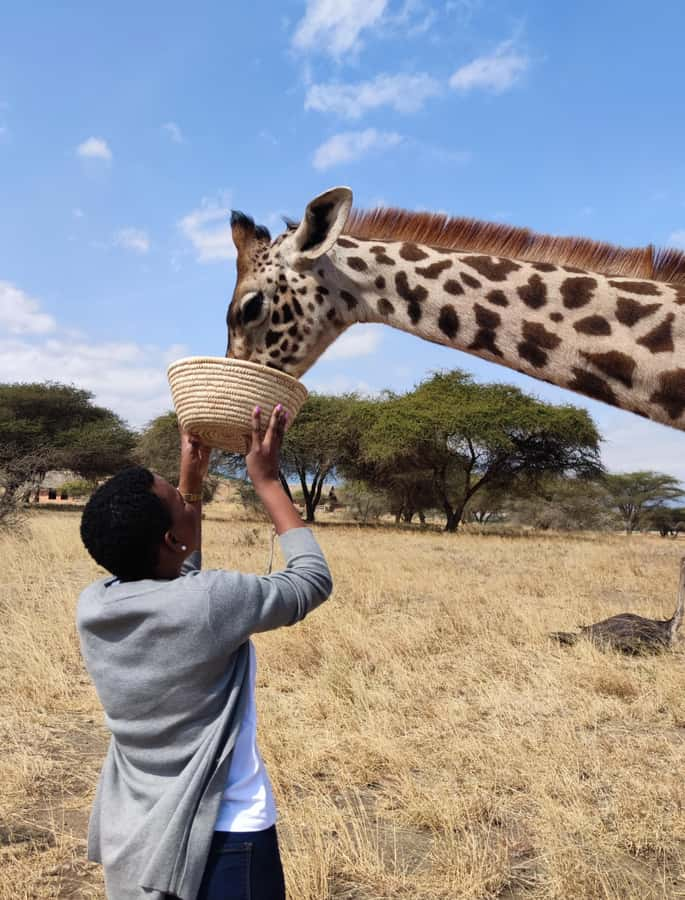
The sanctuary portion begins with a safety briefing. Pay attention here. The close encounters are part of the fun, but the rules protect both you and the animals. Follow the guide’s directions around feeding, touching, walking routes, and enclosure boundaries.
The guided walk may include giraffes, zebras, ostriches, monkeys, Oryx, and lions. You may get photographs at unusually close range, and some animals can be fed or touched safely under supervision. One booking described the grounds as open rather than made up of tightly confined cages, which helps explain why the setting feels more personal than a quick zoo visit.
Giraffes are often the visual stars of this kind of experience. Their height and calm manner make close observation memorable, especially when a guide explains how they feed, move, and adapt. Zebras offer a different kind of encounter, with their striking markings and alert behavior.
Ostriches and Oryx add variety. The Oryx, with its long straight horns, is especially interesting for anyone who wants to learn about less familiar African wildlife. Monkeys bring movement and curiosity, although their behavior can change from one visit to the next.
The sanctuary also provides a chance to learn about conservation status and animal adaptability. That educational element is important. You are not simply collecting photographs. You are hearing how these species live and why protected spaces can matter, particularly for animals that are difficult to see in the wild.
Still, the visit has limits. A short guided walk can feel rushed if you want long periods with each species. One person expected a fuller wildlife outing and found only a small number of zebras, several giraffes, and one sleeping lion. That reaction is understandable if you compare the cost with a safari.
My advice is to think of Serval as a close-encounter sanctuary visit, not a substitute for a national park. If your priority is animal interaction and photographs, the format makes sense. If your priority is tracking wild animals across a large natural area, choose a game drive instead.
Lunch at a local restaurant
Lunch and drinks are included in the advertised package, but the wording deserves attention. The restaurant is a separate stop, not necessarily part of the sanctuary grounds. One person arrived expecting food at the wildlife site and found that lunch came later at a local restaurant.
The meal itself has received positive comments. A typical included meal was described as a choice of one main course priced around 45,000 to 55,000 Tanzanian shillings. That detail suggests you may be choosing from a set menu rather than receiving an unlimited meal.
Drinks are another area to clarify. The package says lunch and drinks are included, while one booking reported receiving one two-liter bottle of water and paying separately for other drinks. Before departure, ask exactly which drinks are covered and whether soft drinks, juice, or additional bottled water cost extra.
The restaurant stop lasts about an hour. That gives you time to eat without turning lunch into a long social break. It also makes the outing feel more connected to ordinary life in the area, rather than keeping you inside a tourist facility all day.
Same base, a different kind of day out:
- Kilimanjaro climb by Lemosho Route (7-day)
★ 5.0 · 651 reviews - Safari Serengeti And Ngorongoro
★ 5.0 · 288 reviews - Kilimanjaro climb, Machame Route (7-day)
★ 5.0 · 262 reviews - Kilimanjaro Climbing Lemosho Route 8 Days.
★ 5.0 · 186 reviews
Is $120 good value?
The listed price is $120 per group up to one person, which is an awkward way to describe the rate. You should confirm whether this means $120 for a solo booking, a private vehicle, or a minimum charge for one participant.
The value depends heavily on what is included. On paper, the package covers round-trip transport, sanctuary entry, a naturalist guide, wildlife encounters, lunch, and drinks. That can be reasonable if you want door-to-door service from Moshi or Arusha and prefer not to arrange separate transport.
The problem is that one booking reported being told that sanctuary admission cost $120 plus a 4 percent service fee, suggesting a possible mismatch between the package price and the actual entry arrangement. Another person found that tickets were purchased at the sanctuary rather than reserved in advance and felt that the transport service was overpriced.
Because of this, I would ask four direct questions before paying:
- Is the sanctuary entry fee included in the quoted price?
- Is lunch included, and what can I choose from the menu?
- Which drinks are included?
- Is a cross-town drop-off included or charged separately?
If the answers are clear and you value convenience, the cost may work. If you are already staying near the sanctuary or can arrange a car through your hotel, separate transport may be cheaper. One person reported using a Bolt ride for about 10,000 Tanzanian shillings after changing the drop-off plan, though that option does not include the full organized service.
Do not compare this price only with a zoo ticket. Compare it with the entire package, then compare that total with a short safari. One person felt a safari offered better value for similar money because the sanctuary had limited wildlife activity. Another found the close encounters so enjoyable that the visit felt like a must-do. Both reactions make sense, depending on what you want.
The guides make the difference
Inside the sanctuary, you are handed over to its trained wildlife guides. That is a good arrangement because the people leading the animal encounters should know the animals, the safety rules, and the proper distance.
Ester is the one guide named in the available feedback. She was praised for explaining the animals and helping with photographs. If you are booking directly or can request a guide, asking whether Ester is available may be worthwhile, although availability is not guaranteed.
The outside transport guide is a separate matter. One account describes a friendly driver with Wi-Fi, while another reports poor communication between the guide and driver, fast driving, and an unpleasant ride. I would treat the vehicle and transfer service as the less predictable part of the package and confirm those details early.
English is the listed tour language. Small groups are available, which can help with photographs and make it easier to hear the guide during the walk. The activity is also marked as wheelchair accessible, but you should still ask how much walking, uneven ground, and vehicle transfer are involved for your particular needs.
Who will enjoy this experience?
I would recommend Serval Wildlife Sanctuary to you if you want a short, accessible wildlife outing from Moshi or Arusha. It is particularly suited to families, photographers, first-time visitors to Tanzania, and anyone who values close encounters more than long hours in a safari vehicle.
It also works well if you have a free morning or afternoon before a Kilimanjaro climb, after a climb, or between longer excursions. The scenery on the way adds interest, and the lunch stop keeps the outing simple.
I would be more cautious if you are choosing it as your only wildlife experience in Tanzania. The 1.5-hour sanctuary visit cannot offer the range, scale, or unpredictability of a national park. You may see a lion resting, and the number of active animals may be modest.
Avoid the activity if you have animal allergies or insect allergies, both of which are specifically listed as unsuitable. You should also be comfortable following strict instructions around animals and respecting enclosure boundaries.
Practical details that matter
The activity includes a live English-speaking guide, round-trip pickup, sanctuary admission, lunch, and drinks according to the stated package. Small groups are available, and wheelchair access is listed.
Cancellation is free up to 24 hours before the start time, and you can reserve now and pay later. Starting times depend on availability, so check the schedule before building other activities around it.
Wear clothing suitable for walking and bring a camera, but keep your attention on the guide rather than trying to get the closest possible photograph. Respect the animals, avoid sudden movements, and never reach beyond a boundary or feed an animal without permission.
Should you book the Serval Wildlife Tour?
Book it if your ideal outing means close, guided animal encounters, a scenic transfer, a simple lunch, and a half-day schedule. The sanctuary can provide special photographs and a more personal connection than a vehicle-based game drive, and Ester’s guidance has been singled out as a strong point.
Do not book it without confirming the price breakdown. Entry fees, drinks, vehicle arrangements, and cross-town drop-offs need to be clear before payment. If the final total approaches the cost of a proper safari, I would choose the safari unless touching and feeding animals is the main reason you are going.
For the right person, Serval is a memorable add-on near Moshi or Arusha. Just buy it for the sanctuary experience, not for the promise of a full safari.
FAQ
Where is Serval Wildlife Sanctuary located?
It is in Tanzania’s Siha District, near the Kilimanjaro area. The tour provides pickup from Moshi, Arusha Urban, or Boma Ng’ombe.
How long does the activity last?
The stated duration is three hours. About 1.5 hours is allocated to the sanctuary, and about one hour is allocated to lunch and welcome refreshments.
What animals can I see?
The included wildlife encounters cover ostriches, giraffes, lions, zebras, monkeys, and Oryx. Servals are also part of the sanctuary’s collection.
Is lunch included?
Lunch is included in the stated package and is served at a local restaurant. One reported menu choice was a main course priced around 45,000 to 55,000 Tanzanian shillings.
Are drinks included?
Drinks are listed as included, but the exact allowance should be confirmed before booking. One booking reported receiving one two-liter bottle of water and paying separately for other drinks.
Can I touch or feed the animals?
Some animals may be touched or fed safely under the direction of the sanctuary guides. You must follow the safety briefing and the guide’s instructions.
Is the tour available in English?
Yes. English is the listed language, and the experience includes a live English-speaking guide.
Is the activity wheelchair accessible?
The activity is listed as wheelchair accessible. You should still confirm the walking route and vehicle arrangements for your specific needs.
Can I cancel the booking?
You can cancel up to 24 hours before the activity for a full refund. Reserve now and pay later is also available.
Just added in Moshi
- Wildlife Extravaganza: Manyara, Tarangire & Ngorongoro in 3 Days★ 5.0 · 3 reviews
- West Kilimanjaro cycling Adventures★ 4.5 · 8 reviews
- machame route★ 5.0 · 16 reviews
- Kilimanjaro Climb • Machame Route ~ 10 Day★ 5.0 · 6 reviews
- Kilimanjaro Climbing Umbwe Route★ 5.0 · 3 reviews
- Mt Kilimanjaro 6 days Marangu route hike★ 5.0 · 3 reviews
- 3 Days Private E-Bike Tour in West Kilimanjaro★ 5.0 · 3 reviews
- Private Cycle to Kilimanjaro Bike Park Safari★ 5.0 · 6 reviews
Tours in Moshi, compared.





Climbing Kilimanjaro through 7 days Machame Route
Read our review →
Materuni Waterfall, Coffee Tour and Picnic Hot Lunch
Read our review →
7 Days Kilimanjaro via Machame route affordable price
Read our review →Browse the lists this tour appears in