
Reviewed · SAFARI TOURS
4 Days safari Tour Tanzania
Tarangire’s elephants and giant baobabs are only the opening act. This four-day private safari links three of northern Tanzania’s best-known wildlife areas, with a sunrise drive in the Serengeti and a final descent into Ngorongoro Crater. You get a pop-roof 4×4, a guide, camping gear, and meals, so the trip keeps the planning simple.
I like the small private-group format, since your own party can discuss what you want to see instead of following a bus full of strangers. I also like the practical setup: all lunches, breakfasts, dinners, camping equipment, wine, beer, and binoculars are included. The tradeoff is real driving time, especially on the rough four-to-five-hour route into the Serengeti.
Key things to know before booking
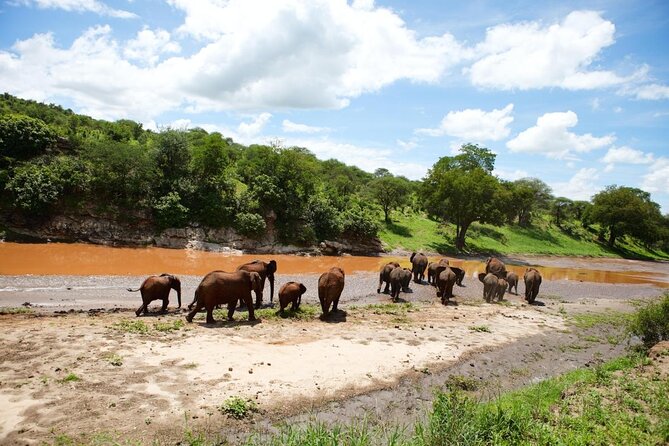
- Tarangire begins the safari with elephants, baobabs, river views, and strong birdlife.
- The Serengeti includes an afternoon drive, a sunset outing, and an early sunrise start.
- Ngorongoro Crater gives you about five hours among dense wildlife, including the chance to spot black rhino.
- Your private group travels in a modern pop-roof 4×4 with a professional driver-guide and binoculars.
- Meals and camping equipment are included, while tips are extra.
- Guides connected with the operator include Filex, Max, Zepha, Mr. Andersson, Tom, and Maushir, but your assigned guide can vary.
Three parks in four days
At $1,650 per person, this is not a casual day trip from Arusha. You are paying for four days of park access, a private vehicle, a professional driver-guide, meals, camping equipment, and a tightly packed route through Tarangire, Serengeti, and Ngorongoro.
I see the price as reasonable for someone who wants a private safari without arranging each moving part alone. You still need to remember that tips are not included, and the package does not promise a polished luxury lodge experience. The accommodation includes Fig Tree Lodge on the first night, Seronera campsite in the Serengeti, and Simba campsite near Ngorongoro. The overall feel is practical and close to the parks, not high-end hotel travel.
The itinerary is built for wildlife rather than slow mornings. You leave your Arusha hotel after breakfast at about 7:30 a.m., spend long stretches in the vehicle, and often return to camp tired but full of sightings. I would choose this trip if you want to cover the classic northern circuit in limited time and you are comfortable with early starts, dusty roads, and basic camping.
Other park itineraries that start in Arusha:
- Serengeti Balloon Safari and authentic bush breakfast
★ 5.0 · 2,480 reviews - Balloon Safari & Bush Breakfast in Serengeti – Miracle Experience
★ 5.0 · 1,646 reviews - 4 Days Group Camping Safari
★ 5.0 · 1,101 reviews
Tarangire: elephants beneath old baobabs
Your first park is about two hours from Arusha, making Tarangire a sensible opening day. The park is especially known for its large elephant herds and old baobab trees, which give the scenery a distinctive shape before you have even started looking for animals.
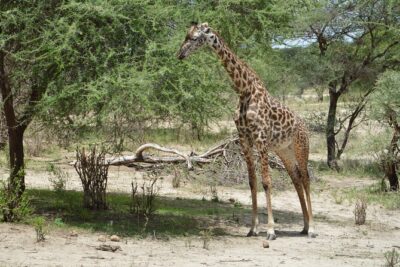
The pop roof matters here. You can stand or sit with a broad view of the park, watching the seasonal swamps, open savanna, and Tarangire River. The river draws wildlife, so you might see elephants, giraffes, impalas, zebras, lions, leopards, elands, warthogs, and plenty of birds.
I like the rhythm of this first day. You are not simply driven to a camp and told to wait for tomorrow. You get a full game drive, a picnic lunch at a site with a notable view, then more wildlife watching before reaching Fig Tree Lodge for dinner and the night.
Six hours of activity is listed for the day, though road conditions and sightings can affect the exact pace. You should keep your camera ready, but do not expect every animal on the list. A safari is guided by animal movement, weather, and luck. Tarangire gives you a strong start, especially if elephants and unusual trees are high on your list.
The long road to Serengeti
Day two is the trip’s most demanding transfer. After breakfast, you drive toward the Serengeti through the crater highlands, with about four to five hours on a long, bumpy road before the afternoon game drive.
That road is part of the experience, but it is also the clearest drawback. You will spend much of the day seated in the 4×4, and rough sections can make the ride tiring. I would not choose this route if you want a relaxed touring holiday with little time in transit. I would choose it if reaching the Serengeti is the main goal.
A picnic lunch breaks up the journey. After entering the park, you have an afternoon drive, followed by a sunset outing before dinner and an overnight stay at Seronera campsite. This timing gives you two useful wildlife periods on one day: late afternoon and the approach to dusk.
Seronera is a practical base in the central Serengeti. The point is not resort-style comfort. The point is sleeping inside the park area, ready for an early start rather than spending another morning driving in from far away. Some accommodation details can vary, so I would confirm exactly what camping setup is planned for your dates.
Sunrise in the Serengeti
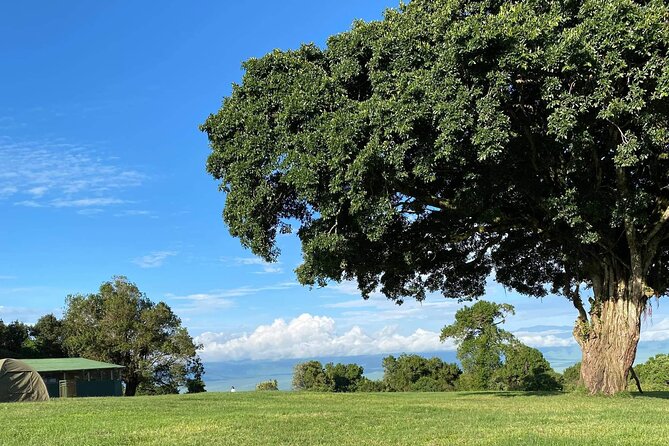
Day three begins around 6 a.m. with a sunrise game drive. That early start is not just a box to tick. Animals are often more active in the cooler morning hours, and the low light can make the open plains feel especially dramatic.
You stop at a picnic site for breakfast in the bush, then continue the drive before returning to camp around midday for a hot lunch. After loading the vehicle, you leave the Serengeti and continue to Ngorongoro, where dinner and the night are planned at Simba campsite.
The schedule lists about seven hours for the day. That tells you plenty about the pace. You have an early wildlife drive, breakfast outside camp, more park time, a hot meal, packing, and a long transfer toward the crater. It is a rewarding day, but not an easy one.
The guides are important here. Names associated with this operator include Filex, Max, Zepha, Mr. Andersson, Tom, Edward, Elikana, Maushir, Benji, and Dulla. Filex is especially singled out for spotting animals at long distances, while Max is praised for clear English, calm communication, and responding to requests. Zepha is known for route knowledge and careful timing. You cannot assume you will receive a particular guide, so ask about guide assignment if that matters to you.
A good guide does more than point at lions. You want someone who can explain animal behavior, choose sensible routes, drive safely, and adjust the day when your interests become clear. The strongest guide experiences connected with this tour appear to combine safe driving, sharp animal spotting, and good communication.
Other safaris people book out of Arusha:
- 5 Days Group Camping Safari
★ 5.0 · 730 reviews - 3 Days Serengeti & Ngorongoro Group Camping Safari
★ 5.0 · 574 reviews - 7-Day Premium Luxury Tanzania Safari All-Inclusive
★ 5.0 · 426 reviews - 3-Day Classic Serengeti Safari
★ 5.0 · 263 reviews
Ngorongoro Crater: the grand finale
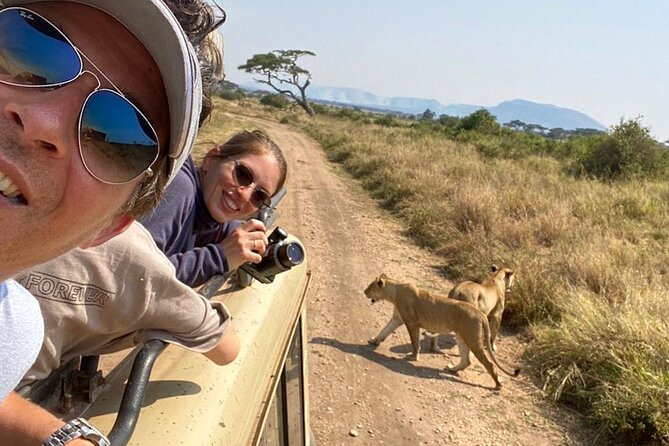
The last morning takes you down into Ngorongoro Crater after breakfast. The crater is a huge volcanic caldera with open plains, forest, swamps, a river, and a soda lake. From above, the lake can look pale and hazy, while flamingos gather around its edge.
This is the day with the greatest concentration of wildlife in one compact area. You might see lions, elephants, zebras, wildebeest, hippos, flamingos, and other East African species. The crater is also one of the better places on this route to look for black rhino, though no safari can promise a particular sighting.
The large bull elephants here are noted for their very large tusks. The volcanic soil and grasses provide minerals that contribute to their size, adding a useful piece of natural history to what might otherwise be a quick photo stop.
You get about five hours of game driving before returning to Arusha. That final drive makes the day more than a short crater visit, but it also means you should expect to reach Arusha tired. If you have a flight or another fixed appointment, leave plenty of time after the stated end of the safari.
For me, Ngorongoro is likely to be the emotional high point because so much is visible within the crater walls. Tarangire has the elephants and baobabs. The Serengeti has distance, sky, and the sense of open country. Ngorongoro brings animals and varied scenery together in a smaller area.
What the private 4×4 changes
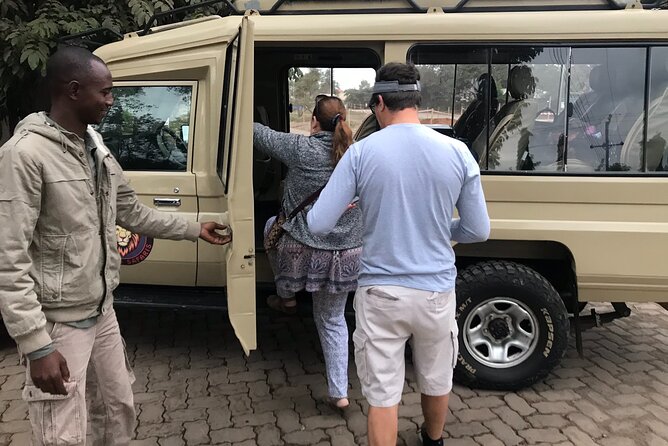
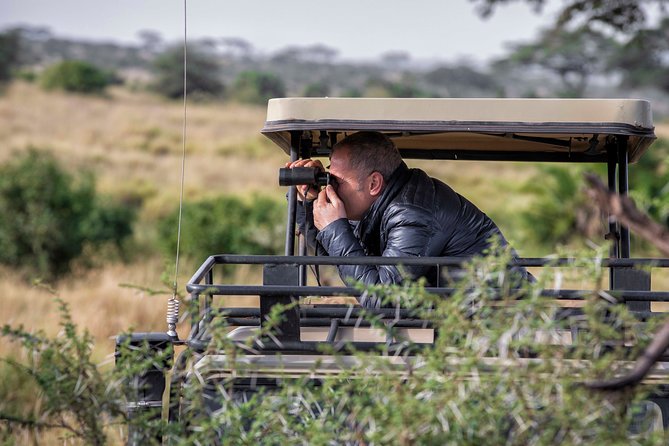
The vehicle has a pop-up roof, allowing you to look out above the sides and take photographs without a window frame in the way. Binoculars are included, which is useful for distant animals and birds.
The tour is private, meaning only your group participates. That gives you more control over pauses and interests. If you want extra time with elephants, birds, or big cats, you can discuss that with your guide rather than negotiate with a large mixed group.
Private does not mean the road becomes smooth or the schedule becomes leisurely. You still follow park rules and animal movements. You also share the vehicle with your own group for long periods, so this works best when everyone has similar expectations about early mornings and game-drive time.
The supplied information calls the vehicle modern, but I would still ask about the exact vehicle setup before departure if comfort is a major concern. A safari vehicle is a working tool. Dust, bumps, and long hours are part of the deal.
Camping, meals, and daily comfort
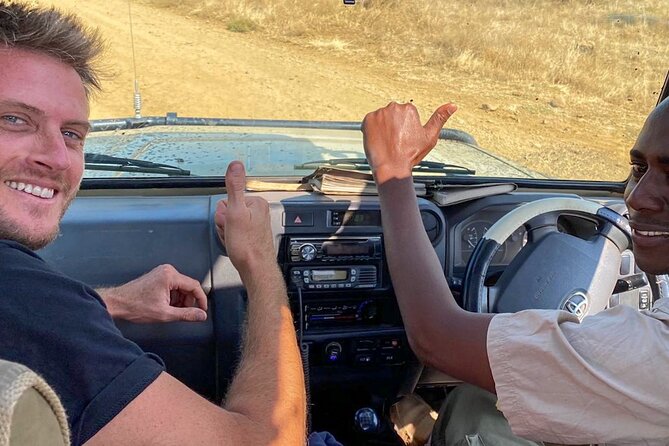
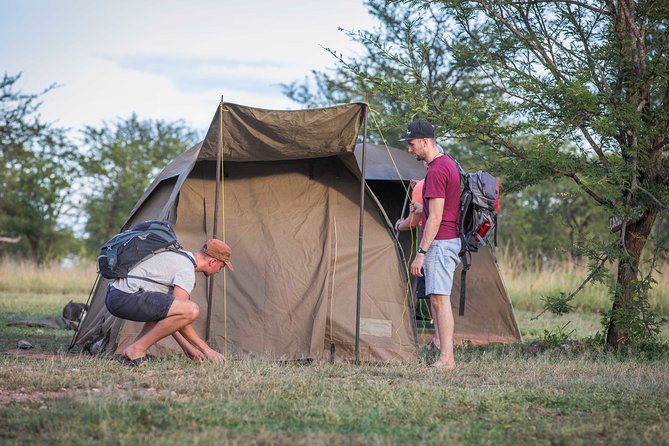
The package includes camping equipment, which removes one of the most awkward planning tasks. You do not need to organize a tent and basic camp gear yourself, though you should confirm what personal items you need to bring.
Food is included throughout the trip: four breakfasts, four lunches, and three dinners. Dietary requirements can be accommodated if you communicate them in advance. Do that before arrival, not at the first picnic site.
Wine and beer are also included. That is a pleasant extra after a long drive, but I would not let it distract from the practical basics: carry any personal snacks or drinks you specifically need, and ask what the camp setup includes before you leave home.
The accommodation mix is worth understanding. Fig Tree Lodge offers a lodge-style stop on the first night, while Seronera and Simba are camping locations. The contrast can be part of the appeal, since you stay close to the parks, but it also means comfort levels may change from night to night.
Some descriptions of the camps note clean facilities and Wi-Fi, but the supplied details do not guarantee the same amenities on every departure. Treat the camping as functional and location-focused rather than a luxury stay.
Wildlife hopes and realistic expectations
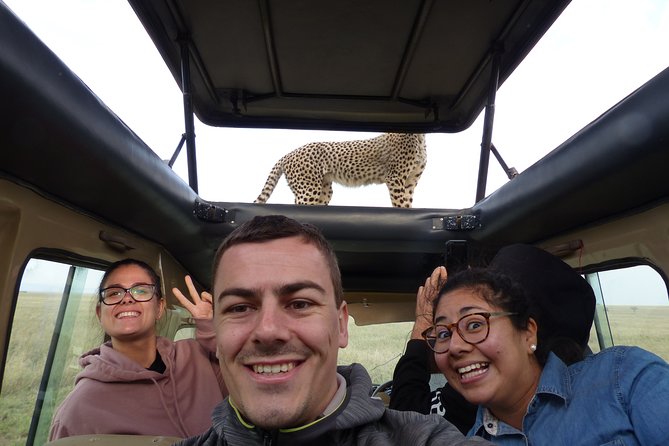
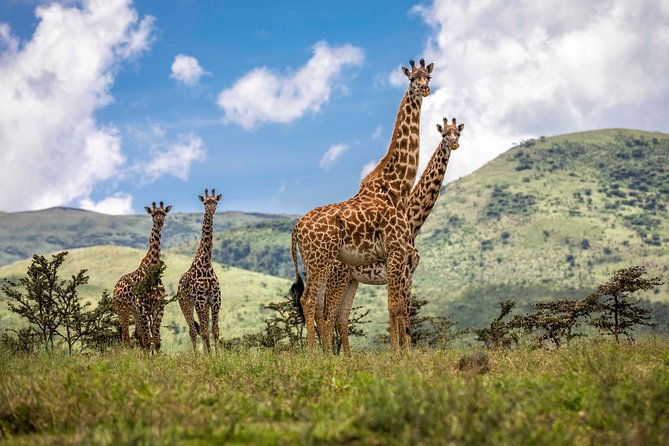
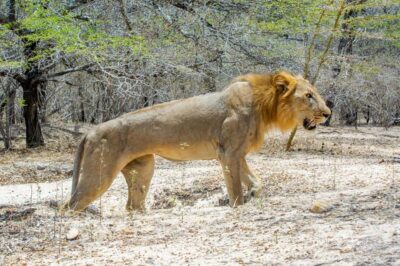
The package highlights the big five: lion, leopard, elephant, buffalo, and rhino. It also calls attention to Tanzanian lions that climb trees. You may see several of these species, and the crater gives you a good setting for rhino searches, but wildlife is never a mechanical checklist.
The strongest practical advantage is the route. Tarangire, Serengeti, and Ngorongoro offer different habitats in a short trip, so you are not depending on one park or one type of scenery. The guides connected with the operator have also been praised for spotting animals at distance and knowing park routes.
I would keep your priorities flexible. If you are determined to see all five animals, tell your guide early, but allow time for less famous sightings too. A group of elephants near baobabs, a flock of flamingos, or a well-explained bird can be as memorable as a distant leopard.
A camera with a useful zoom will help, but do not spend the whole day looking through it. The open roof gives you a chance to watch behavior directly, which is often better than collecting a hurried photograph.
Who should book this safari?
I would recommend this trip to a first-time safari visitor who wants the main northern Tanzania parks in four days. It also suits couples, families, and friends who prefer a private vehicle and want meals, gear, and park travel handled in one booking.
Families have used the low-budget version with children aged eight and fourteen, but the long drives and early starts still require patience. You know your family best. Children who enjoy animals and outdoor travel may love it, while children who need frequent comfort breaks and predictable routines may find the schedule hard.
This is less suitable for you if you want luxury accommodation, a slow pace, or short transfers. It is also not ideal if you have a tight flight connection immediately after the final drive to Arusha.
The cancellation terms are simple: you can receive a full refund if you cancel at least 24 hours before the 7:30 a.m. start. Changes or cancellations inside that window are not accepted for a refund.
Should you book the four-day route?
I would book this safari if you want a focused introduction to northern Tanzania and value access to three major parks over extra hotel comfort. The combination of Tarangire’s elephants, Serengeti sunrise drives, and Ngorongoro’s dense wildlife makes good use of four days.
Before paying, ask for the exact camping arrangements, the name of your assigned guide, and how dietary requests will be handled. If you can accept rough roads, early mornings, and a packed schedule, the $1,650 price offers a practical way to see a great deal of Tanzania with your own group.
FAQ
Where does the safari start?
The safari starts in Arusha, Tanzania, with pickup offered from your hotel.
What time does pickup begin?
The stated start time is 7:30 a.m.
How long is the safari?
The experience lasts approximately four days.
Which national parks are included?
The route includes Tarangire National Park, Serengeti National Park, and Ngorongoro Crater.
Is this a private tour?
Yes. Only your group participates in the activity.
What type of vehicle is used?
Game drives use a modern 4×4 safari vehicle with a pop-up roof. Binoculars are included.
Are meals included?
Yes. The package includes four breakfasts, four lunches, and three dinners. Dietary requirements can be accommodated if communicated in advance.
Is camping equipment supplied?
Yes. Camping equipment is included, which reduces the need for you to organize your own gear.
Are tips included in the price?
No. Tips and gratuities are not included.
Can I cancel for a full refund?
Yes, if you cancel at least 24 hours before the experience starts. Cancellations or changes made less than 24 hours before the start time are not refunded.
Just added in Arusha
- 2-Day Private Luxury Safari from Zanzibar with Flights★ 3.2 · 5 reviews
- 7-Day Private Tanzania Safari with Sunset Walking on the Crater Rim and Maasai★ 5.0 · 40 reviews
- Saadani Day Trip★ 5.0 · 13 reviews
- Nyssa Luxury Balloon in Safaris and Serengeti★ 5.0 · 69 reviews
- Arusha National Park Day Trip★ 4.5 · 18 reviews
- Arusha National Park Private Safari★ 5.0 · 59 reviews
- Arusha: Maasai Village Tour★ 4.8 · 22 reviews
- 3 Days Serengeti & Ngorongoro Tour★ 5.0 · 22 reviews
Safari Tours, compared.
Serengeti Balloon Safari and authentic bush breakfast
Read our review →
Mikumi Safari Day Trip with Flights and Meal
Read our review →
3 Days Serengeti & Ngorongoro Group Camping Safari
Read our review →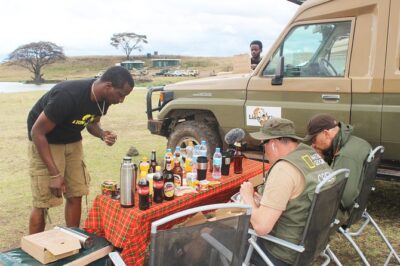
7-Day Premium Luxury Tanzania Safari All-Inclusive
Read our review →
Safari Blue Lagoon Trip with Snorkeling and Lunch
Read our review →
Browse the lists this tour appears in