
Reviewed · TARANGIRE NATIONAL PARK SAFARIS
Arusha: Tarangire National Park Full-Day Wildlife Safari
Tarangire’s great show is not one rare animal, but the way elephants, baobabs, dry savannah, and the Tarangire River fit together. Herds can reach 300 elephants, and the river draws animals from nearby areas during the July to October dry season.
I like the privacy of a custom 4×4, which lets you stop when you want, and I like the guide-led search for animals rather than a fixed parade of viewpoints. Guide Peeta is specifically praised for good storytelling, patient searching, and making room for spontaneous stops.
The main drawback is the long road day. The park drive is listed as roughly two to three hours each way in the description, while the itinerary shows four hours each way, so you should confirm the exact transport schedule before booking. Either way, this is a full day with plenty of time in the vehicle.
What makes this Tarangire safari worth considering
- Large elephant herds: Tarangire is known for some of northern Tanzania’s highest elephant concentrations, with herds that may number in the hundreds.
- Baobab-filled scenery: The park’s unusual trees give the drive a look you will not get in many other northern Tanzania parks.
- Dry-season wildlife action: From July through October, animals gather around the Tarangire River and seasonal water sources.
- Private 4×4 travel: You share the day with your own private group, not a large mixed coach party.
- Strong guide-led searching: Peeta is praised for finding animals in their usual areas and explaining what you see.
- Excellent bird potential: More than 550 bird species are recorded here, including the large Masai ostrich.
A long day from Arusha to Tarangire
This safari begins with hotel pickup in Arusha. The supplied schedule allows about four hours for the outward drive and four hours for the return, while the trip description gives a two to three hour estimate each way. That difference matters. Ask for the expected pickup time and driving time before you pay, especially if you are working around flights, another safari, or a hotel checkout.
The drive is part of the cost of choosing a day trip from Arusha. You are not simply buying five hours inside the national park. You are also paying for private transport, park entry, meals, drinking water, a driver-guide, and the convenience of returning to Arusha or Moshi the same evening.
A private 4×4 is a good fit for a safari day. You get a better chance to ask questions, pause for photographs, and spend more time at an animal sighting that interests you. The activity is designed for a private group, so you do not have to match the pace of strangers.
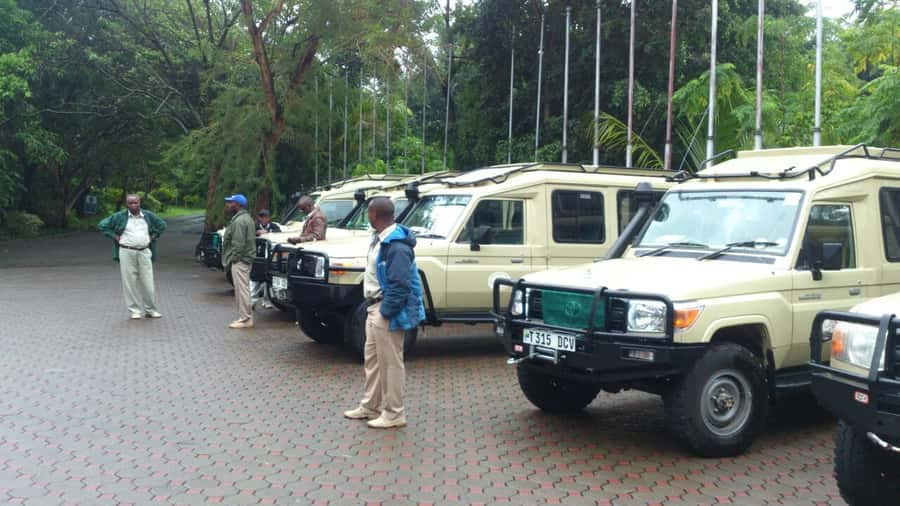
The vehicle is described as a custom-built 4×4. That is useful on rough park roads, where a higher seating position helps you see over grass and other vehicles. Still, do not confuse a private vehicle with a short outing. The long distance from Arusha remains the central tradeoff.
Other park itineraries that start in Arusha:
- Serengeti Balloon Safari and authentic bush breakfast
★ 5.0 · 2,480 reviews - Balloon Safari & Bush Breakfast in Serengeti – Miracle Experience
★ 5.0 · 1,646 reviews - 4 Days Group Camping Safari
★ 5.0 · 1,101 reviews
Arriving at Tarangire National Park
The park is in Tanzania’s Manyara Region and is known for two things that shape the entire visit: the Tarangire River and its striking baobab trees. The river carries water throughout the year, giving wildlife a dependable reason to remain in or pass through the area.
The park was established as part of Tanzania’s national park system in 1970. Before that, the region was associated with big-game hunting, including the era when Ernest Hemingway visited East Africa on hunting safaris. Today, the same animals are watched with cameras rather than hunted, and the park’s value comes from protecting them and the habitat around them.
Your arrival begins the main five-hour guided portion of the day. The focus is not only on ticking animals off a list. You are also looking at how the park works: water draws animals, open grassland gives them room to move, and tall baobabs provide the scenery that makes Tarangire immediately recognizable.
The word safari can suggest constant action, but wildlife does not follow a timetable. A good guide searches areas where animals are often found, watches for signs, and adjusts the route. The feedback about Peeta is useful here. He is praised for telling good stories and trying to locate animals in places where they are commonly seen.
Elephants, baobabs, and the Tarangire River
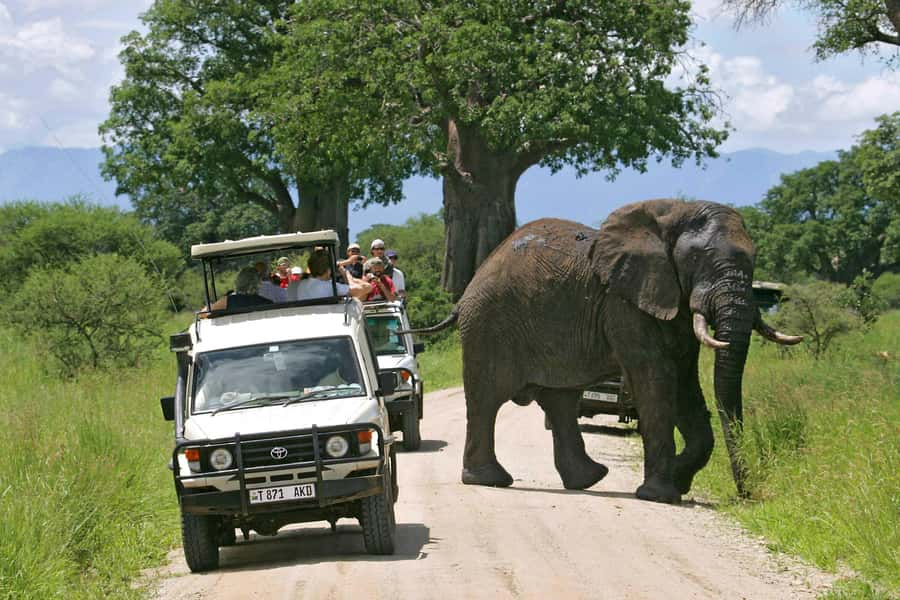
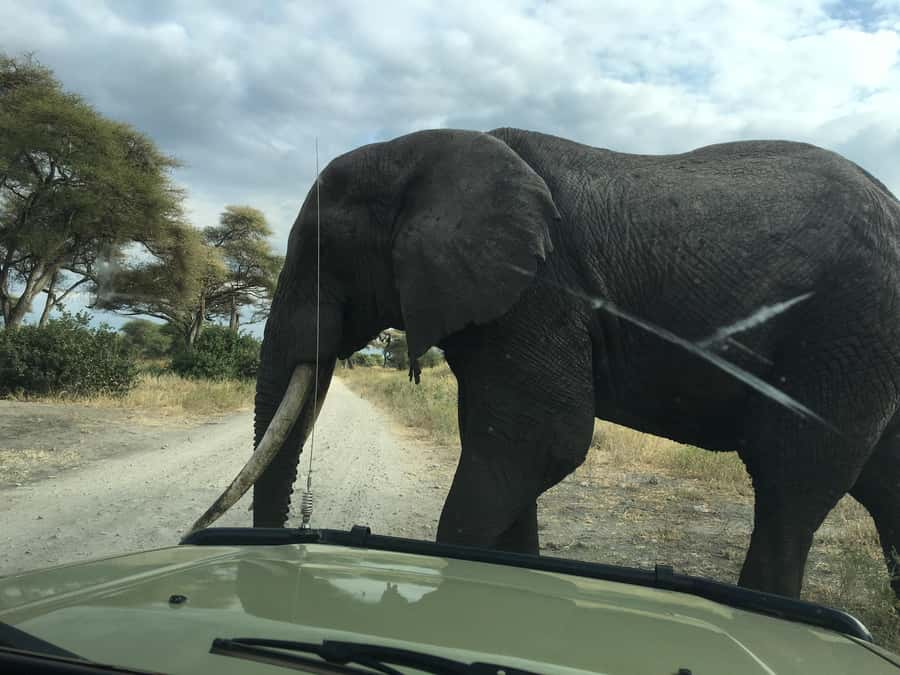
Elephants are the park’s headline attraction. Tarangire has one of the highest elephant densities in northern Tanzania, and herds can sometimes reach about 300 animals. That does not mean you are guaranteed to see a herd of that size, but it explains why elephants are such a central part of the experience.
You may see elephants moving through open areas, feeding near the river, or passing among the baobabs. Their scale changes your sense of distance. A group that looks far away can still be a major sighting, and a herd near the vehicle can make the quiet parts of the safari suddenly feel very intense.
The dry season from July through October is the clearest period for river-based animal watching. Wildlife from surrounding areas comes toward the Tarangire River for water, so the odds of seeing several species in one outing can improve. That same season also brings drier vegetation, which may make animals easier to spot.
The baobabs are another reason to choose Tarangire rather than treating it as a generic game drive. Their thick trunks and unusual shapes break up the open savannah. Even when animals are hidden, the scenery gives you something worthwhile to watch and photograph.
The animals you might find
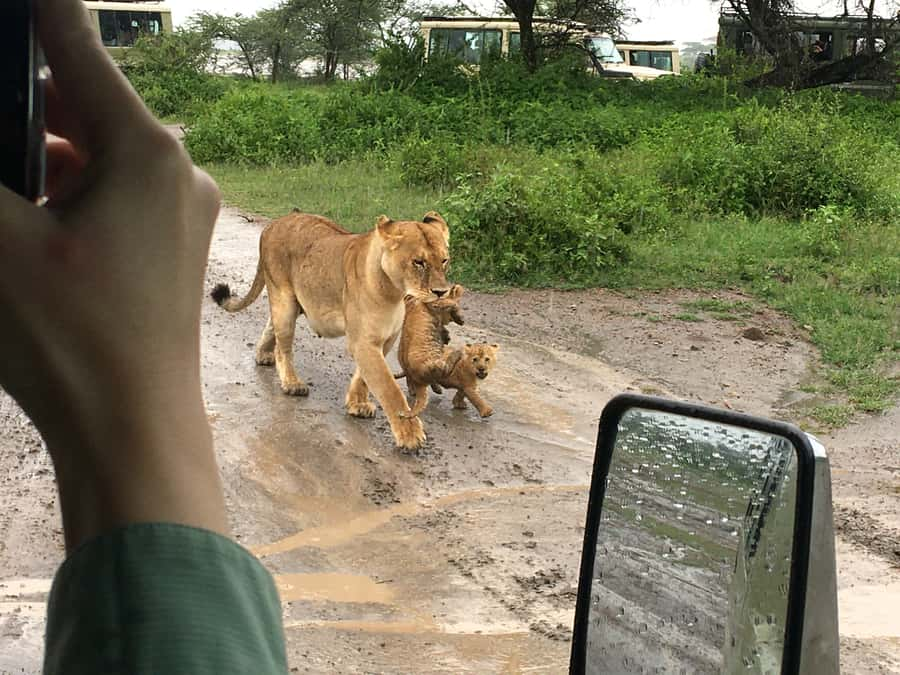
The park is home to lions, giraffes, buffaloes, wildebeests, zebras, antelopes, and gazelles. Sightings depend on the season, the route, and simple luck. The activity description also highlights tree-climbing lions and rock pythons as local specialties.
Those two animals are worth treating as possibilities, not promises. A guide can search likely areas, but no safari can guarantee a lion in a tree or a python in view. The same rule applies to the larger animals. Tarangire is a strong place to look, but the animals are wild and free to ignore the schedule.
A private outing helps most when you have a specific interest. You can tell the guide that you want to spend more time with elephants, birds, big cats, or photography. The positive comments about stopping when desired suggest that this flexibility is one of the day’s practical strengths.
The park’s variety is also valuable. A day that does not produce a rare predator can still include elephants, giraffes, zebras, buffaloes, and antelope in changing combinations. I would choose this outing for the overall mix, not for a single promised sighting.
Other safaris people book out of Arusha:
- 5 Days Group Camping Safari
★ 5.0 · 730 reviews - 3 Days Serengeti & Ngorongoro Group Camping Safari
★ 5.0 · 574 reviews - 7-Day Premium Luxury Tanzania Safari All-Inclusive
★ 5.0 · 426 reviews - 3-Day Classic Serengeti Safari
★ 5.0 · 263 reviews
Birdwatching beyond the big mammals
More than 550 bird species have been recorded in Tarangire, making this a serious option for birdwatchers as well as first-time safari visitors. The Masai ostrich is a signature sight. It is the largest bird in the world and can be seen moving across the open country.
The inclusion of birdwatching in the tour details matters because many short safaris focus only on the Big Five. Here, you can ask the guide to slow down for birds and learn to pay attention to calls, flight patterns, and movement in the trees.
You should bring your passport or ID card as requested. The provided information does not list binoculars as included equipment, so bring your own if birds are a major reason for booking. That is especially helpful when a bird is distant or perched high in a baobab.
The bird count is a park-wide figure, not a guarantee that you will see hundreds of species in one day. Still, it tells you that Tarangire offers more than large mammals and gives the drive a second layer of interest.
Lunch and the rhythm of the day
Around midday, you stop at a suitable picnic place for lunch. Breakfast, lunch, and dinner are listed as included, along with drinking water. One specific comment praises the food, which is reassuring for a day when meals are part of the package rather than a side detail.
The meal break also gives you a chance to rest after the early start and the first game-drive hours. A full safari day can be tiring, so the pause is useful even if you are eager to return to the animals.
The exact meal arrangements and timing are not specified. Ask the operator what breakfast and dinner involve, particularly if you have dietary needs. The information confirms that all three meals are included, but it does not provide menus or a list of dietary options.
After lunch, the afternoon returns to wildlife watching. This second park period is important because animal activity and light can change as the day progresses. You may revisit a promising area, search for a new species, or simply enjoy the baobabs and open country from the vehicle.
Before sunset, you return toward Arusha or Moshi. The schedule is designed to bring you back to your hotel rather than leave you camping in the park, making the trip useful for a short Tanzania visit.
What the $350 price really covers
At $350 per person, this is not a cheap day excursion. The price makes more sense when you count the inclusions: hotel pickup and drop-off, a private custom 4×4, park entrance fees, breakfast, lunch, dinner, drinking water, an English-speaking driver-guide, and birdwatching.
Private transport is the biggest value point. If you want a quiet group, flexible stops, and direct access to your guide, the price can be reasonable for a full day. It is less appealing if your main goal is simply to spend the maximum possible time inside Tarangire, since the road journey takes up a substantial part of the day.
The price also protects you from several separate costs. National park fees can be significant, and meals and transport add up quickly when arranged independently. You should still compare the exact vehicle arrangements and driving hours with other private safaris before booking.
The 4.8 rating from six verified bookings gives the tour a positive record, but the sample is small. The clearest strengths are the guide service, food, animal searching, and flexibility. I would place less weight on any assumption that every departure will produce the same sightings.
Free cancellation up to 24 hours before departure and reserve-now, pay-later terms reduce the financial risk of changing plans. These are practical benefits, but they do not solve the basic question of whether you want to spend such a long day on the road.
Who will enjoy this day most
I would recommend this safari to you if you are staying in Arusha, have only one day available, and want a private introduction to Tanzania’s wildlife. It also suits photographers, families, couples, and birdwatchers who prefer to ask for their own stops.
It is a particularly good choice if elephants and scenery matter as much to you as predator sightings. Tarangire’s baobabs and elephant herds give the park its own character, so the day does not feel like a general-purpose game drive.
You may want a different plan if you dislike long drives or want several days of wildlife viewing. A one-day outing cannot offer the same flexibility as a longer safari based near the park. The conflicting drive estimates make it even more important to confirm the schedule.
The tour is listed as wheelchair accessible, but the details of vehicle access are not provided. If you use a wheelchair, ask how boarding, seating, and park stops will be handled before booking.
Should you book the Tarangire day trip?
Book it if you want a private, all-inclusive safari day with strong elephant potential, unusual baobab scenery, and an English-speaking guide. The flexibility to stop when you want is a real advantage, and Peeta’s praised guiding style suggests the animal search can be both informative and personal.
Think twice if you need a short outing or if the $350 price stretches your budget. Confirm the drive duration, pickup time, meal arrangements, and accessibility details before paying. If those points work for you, Tarangire offers one of the most distinctive wildlife days available from Arusha.
FAQ
Where does the safari start and finish?
Pickup and drop-off are provided at your hotel in Arusha. The return may also be arranged to Moshi according to the tour details.
How long is the safari?
The activity lasts one day. About five hours are scheduled for the guided visit inside Tarangire National Park, with driving time before and after the park.
How long does the drive from Arusha take?
The description gives a two to three hour drive to Tarangire, while the itinerary allows four hours each way for the vehicle portions. Confirm the expected driving time with the operator.
Is the tour private?
Yes. The experience uses a private 4×4 custom-built vehicle and is offered for a private group.
What animals might I see?
Possible sightings include elephants, lions, giraffes, buffaloes, wildebeests, zebras, antelopes, gazelles, tree-climbing lions, and rock pythons. Sightings are not guaranteed.
Are meals and water included?
Yes. Breakfast, lunch, dinner, and drinking water are included.
What should I bring?
Bring your passport or ID card. An English-speaking live guide is provided, and birdwatching is included.
More Tarangire safaris from Arusha
- 5-Day Highlights mid-Range Crater, Serengeti, Tarangire
★ 5.0 · 296 reviews - Private 6-Day Tarangire Manyara Crater and Serengeti with Mid-Range Lodges
★ 5.0 · 238 reviews - 5 Days Camping Tarangire, Serengeti & Ngorongoro crater & Visiting Maasai
★ 5.0 · 229 reviews - 4 Days Join Group tour Tarangire Serengeti and Ngorongoro crater
★ 5.0 · 219 reviews
Just added in Arusha
- 4 Days Private Midrange Lodge Safari to Serengeti & Ngorongoro★ 5.0 · 4 reviews
- Extraordinary Hot air Bolloon ride in Serengeti | BURIGI CHATO SAFARIS CO L.T.D★ 5.0 · 6 reviews
- 3 days leopard safaris★ 5.0 · 4 reviews
- 8 Days Serengeti Migration safari★ 5.0 · 11 reviews
- tarangire, ngorongoro & lake manyara park 3 days private tour★ 5.0 · 11 reviews
- Mt. Kilimanjaro: Shira plateau to Cathedral point 3872m Day hike★ 5.0 · 7 reviews
- serengeti, ngorongoro & tarangire 4 days private tour★ 5.0 · 18 reviews
- tarangire & ngorongoro 2 days tour★ 5.0 · 14 reviews
Tarangire National Park Safaris, compared.
5-Day Highlights mid-Range Crater, Serengeti, Tarangire
Read our review →
Private 6-Day Tarangire Manyara Crater and Serengeti with Mid-Range Lodges
Read our review →
4-Day Safari from Arusha: Tarangire, Serengeti and Ngorongoro
Read our review →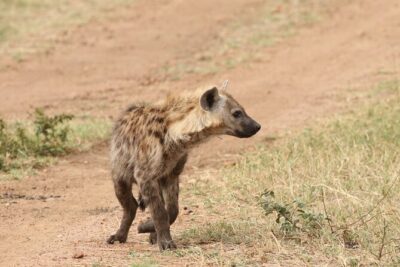
2 Days Tarangire and Ngorongoro Group Camping Safari
Read our review →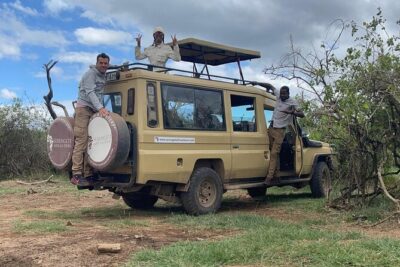
3 Days Private Safari – manyara, Ngorongoro & Tarangire
Read our review →
5 Days Tanzania Group Joining Safari, Tarangire/Serengeti/Ngorongoro Crater
Read our review →Browse the lists this tour appears in