
Reviewed · KILIMANJARO TREKS
Best 5 Days Marangu Route Climbing on Kilimanjaro
Marangu gives you Kilimanjaro’s most established route with the unusual comfort of dormitory huts instead of tents. You follow a gradual, direct trail from the southeast, sleep on supplied mattresses and pillows, and share communal dining and washroom facilities. I like the steady route and the simple hut setup, especially if carrying camping gear is not your idea of fun.
I also like that the price includes the guide, cook, porters, park charges, gate transfer, drinking water, and three meals each day. The main catch is time: five climbing days make altitude adjustment difficult, and the route uses the same path for the ascent and descent. It is practical, but not the most scenic or quiet way to reach the summit.
Key points to know before booking
- Hut sleeping is the defining feature: Mattresses and pillows are supplied, but you must bring or rent a sleeping bag.
- The climb takes five days: The full arrangement is described as approximately six days, allowing for transfers and the wider schedule.
- The route is gradual but not easy: Marangu is called the Coca-Cola route, yet high altitude remains a serious challenge.
- The same trail is used twice: You climb and descend along the same path, which keeps navigation simple but limits variety.
- Meals and mountain staff are included: A guide, cook, and porters support the group, with breakfast, lunch, and dinner provided.
- The price is $1,560 per person: Flights, visas, and crew tips are separate, so budget for those before booking.
What the Marangu Route actually feels like
The Marangu Route is often presented as the easiest way up Kilimanjaro because its path is more gradual and direct than some alternatives. That description needs a little care. The walking may be less rough than on other routes, but the summit is still high, cold, and physically demanding.
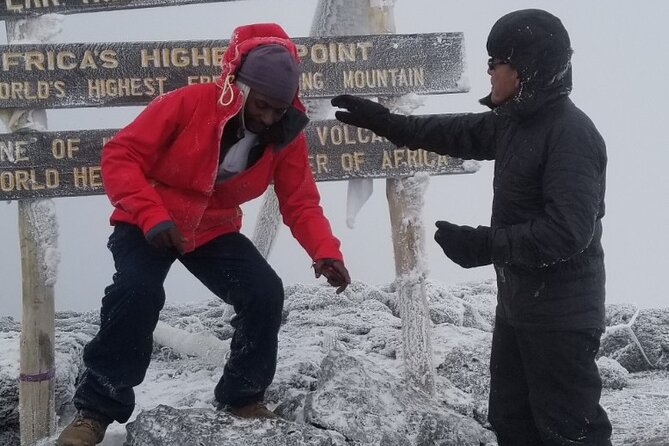
I see Marangu as a practical choice for someone who values straightforward logistics. You walk toward the mountain from the southeast, spend nights at selected points, and use huts rather than tents. At the end, the route aims for Uhuru Peak, where the reward is snow, broad views, and the satisfaction of standing on the roof of Africa.
The route is also the oldest and most established on Kilimanjaro. That brings familiarity and a clear operating pattern, but it also means more people use it. If you want a quieter trail and changing views each day, a longer route may suit you better.
Other routes up the mountain from Moshi:
- Kilimanjaro climb by Lemosho Route (7-day)
★ 5.0 · 651 reviews - Kilimanjaro climb, Machame Route (7-day)
★ 5.0 · 262 reviews - Kilimanjaro Climbing Lemosho Route 8 Days.
★ 5.0 · 186 reviews
Day one: entering Kilimanjaro National Park
The published start time is 8:00 a.m., with the meeting point listed at Kilimanjaro Airport and the national park in Tanzania. Pickup is offered, and the activity ends back at the meeting point. Since the overall schedule is described as approximately six days but the climb itself takes five, confirm the exact airport, hotel, transfer, and overnight arrangements before you pay.
The first stage introduces you to the mountain’s natural setting. You can expect changing vegetation, natural drainage, birds, and the possibility of seeing wildlife along the route. Waterfalls and mountain streams are also part of the attraction described for the climb.
I like this opening because it gives you more than a summit target. The walk is also about watching the environment change as you gain height. Take your time at the beginning. A slow, steady pace matters more than trying to impress the group on the first morning.
Nights in huts instead of tents
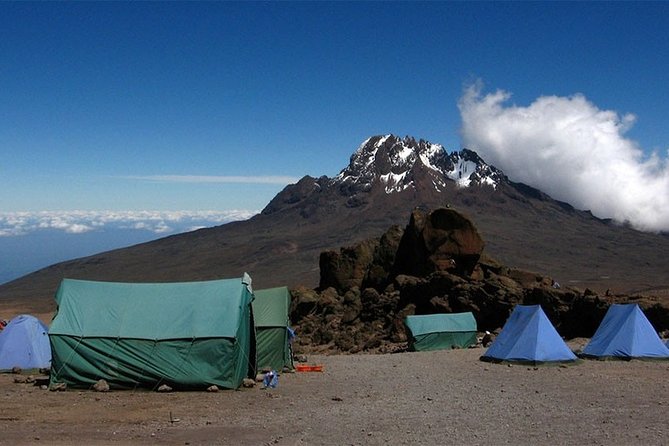
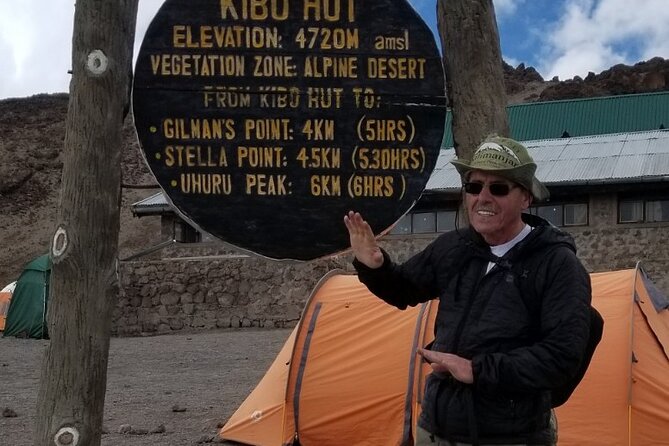
Marangu is the only Kilimanjaro route described here as offering sleeping huts. The huts use dormitory-style rooms, so you should expect shared sleeping space rather than a private room. Mattresses and pillows are supplied, but a sleeping bag is still required.
The huts also have communal dining halls, basic washrooms, and toilets. This is not a lodge holiday in the mountains. Facilities are functional, shared, and simple. Still, a solid roof and a mattress can feel like a meaningful comfort after a long day of walking.
The hut system is one of the strongest reasons to choose this route. You carry less sleeping equipment than you would on a camping route, and the daily routine is easy to understand. The tradeoff is less privacy and potentially more noise, especially on a route known to be busy.
Bring realistic expectations. The accommodation is basic, and the supplied pillow and mattress do not remove the need for proper cold-weather sleeping gear. Your sleeping bag is not listed as included, so arrange one before departure.
Guides, cooks, porters, and group arrangements
The package includes a guide, cook, and porters. Porters carry some important items, while the guide leads the walking and the cook prepares the included meals. The service is available as a joining, sharing, private, or group climb, so ask which arrangement applies to your booking.
The published maximum is 100 people. That is a large possible capacity, although your actual group may be smaller. The number matters because a small group usually feels more personal, while a larger departure can offer more company but may move at a less flexible pace.
Nalisis is named in several booking details as the person connected with airport pickup, advice, and group arrangements. If you are unsure whether the five-day schedule suits your fitness or time, ask for a clear route comparison before confirming. One account describes Nalisis advising a less experienced climber to consider the seven-day Lemosho Route, although limited time led the climber to choose Marangu instead.
That is useful advice to keep in mind. A responsible operator should discuss route length and altitude adjustment rather than simply sell the shortest package. For this climb, ask who your lead guide will be, how large your group is, and how the team handles a participant who needs to slow down or stop.
Same base, a different kind of day out:
- Safari Serengeti And Ngorongoro
★ 5.0 · 288 reviews - Climbing Kilimanjaro – Machame Route
★ 5.0 · 170 reviews - Climbing Kilimanjaro through 7 days Machame Route
★ 5.0 · 151 reviews - Kilimanjaro climb, Lemosho Route (8-day)
★ 5.0 · 148 reviews
Food, water, and the value of the $1,560 price
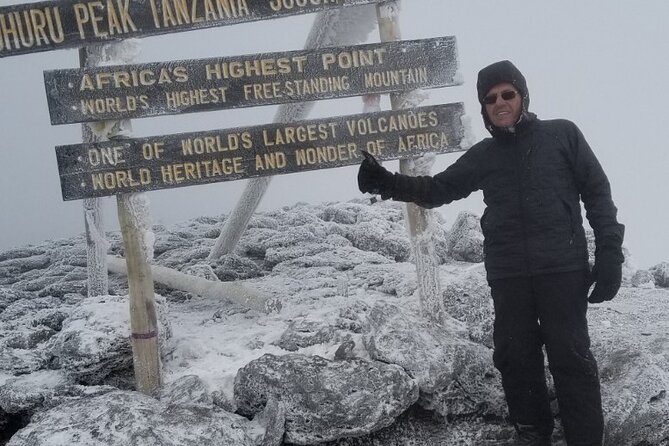
At $1,560 per person, this is not a budget walk, but the price covers many of the costs that make a Kilimanjaro climb possible. Park fees, taxes, gate transfer, environmental fees, crew wages, drinking water, a guide, a cook, porters, and three daily meals are included.
That makes the package easier to compare with cheaper-looking offers. A low headline price can become less attractive if it leaves out park charges, staff costs, meals, or transport. Here, those main operating items are listed as part of the package.
The important exclusions are flights, visas, and tips for the crew. You should also check the sleeping bag arrangement, since it is required but not listed among the inclusions. Tipping is not a minor detail on a guided mountain trip, so set aside money for it before you arrive.
Meals are listed as breakfast, lunch, and dinner. No menu is provided, so do not assume particular dishes or special dietary arrangements. If you have food restrictions, ask the operator before booking and get the answer in writing.
The route’s strongest point and its biggest weakness
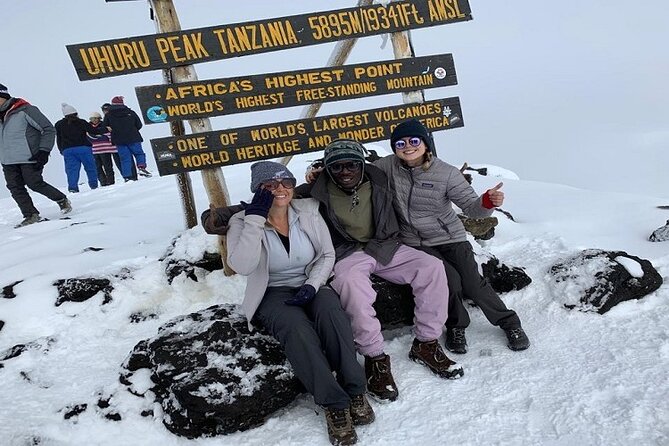
The great strength of Marangu is simplicity. The route is direct, the slope is described as gradual, and the huts reduce the need for a full camping setup. If your time is tight and you want a clearly organized mountain program, those features carry real value.
The weakness is altitude adjustment. Five climbing days leave less time for your body to adapt than a longer itinerary would. The route may feel physically manageable at lower elevations, then become much harder near the summit. You should not confuse an easier trail profile with an easy climb.
Marangu is also less scenic than routes that ascend and descend by different paths. You use the same route both ways, so the return does not bring a new side of the mountain. The route is also described as the most crowded, another result of its direct path and hut accommodation.
I would choose it for convenience, hut sleeping, and a shorter schedule. I would not choose it simply because someone called it easy.
Reaching Uhuru Peak
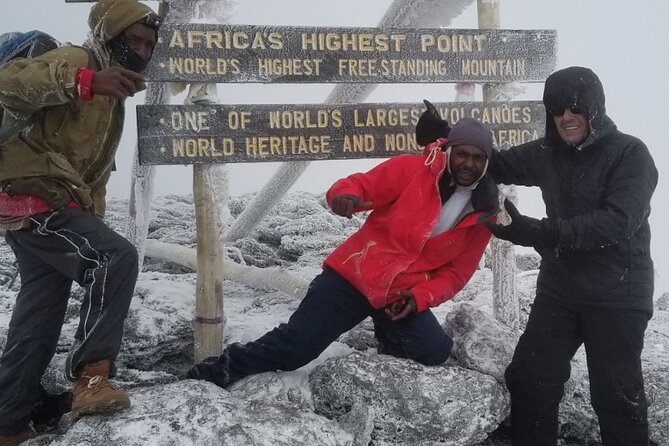
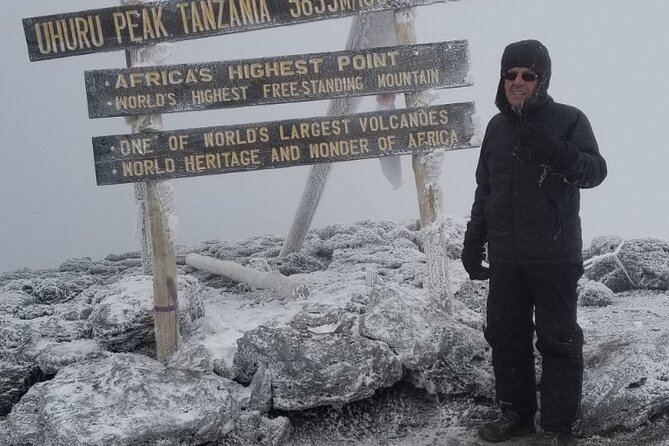
The summit attempt is the emotional center of the program. You aim for Uhuru Peak, where you can see snow and take in the mountain views before beginning the descent. The itinerary also highlights sunrise as one of the memorable moments of the climb.
Summit day is likely to be the hardest part of the schedule, even though exact walking times are not supplied. The most useful approach is patience. Keep your pace controlled, listen to your guide, and tell the guide quickly if you feel unwell.
The support team is central here. Guides provide direction and encouragement, cooks handle meals, and porters carry selected loads. Several accounts highlight professional guides, helpful cooks, and strong encouragement during the final push. Those points matter because summit day is not only about leg strength. It is also about pacing, morale, and making sensible decisions at altitude.
Reaching Uhuru Peak is not guaranteed by booking the trip. Weather, health, and altitude can affect the outcome. The operator states that poor weather may lead to a different date or a full refund, but you should still ask how summit-day decisions are made if conditions change during the climb.
What the positive feedback tells you to look for
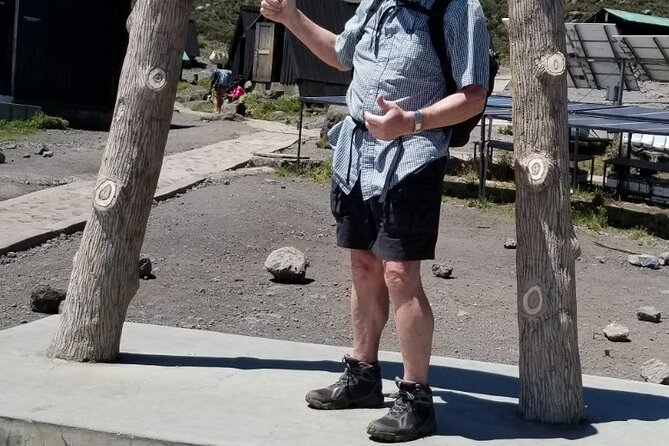
The strongest praise centers on professional service, airport pickup, guide support, and the quality of the cooks. Nalisis is repeatedly associated with arranging pickups, advising on routes, and helping group departures run smoothly.
That suggests you should pay close attention to communication before arrival. Ask for the pickup plan, the first meeting location, the group type, and the name of the lead guide. Clear answers before the climb are a good sign because they reduce confusion once you reach Tanzania.
There is also praise for group discounts, including a reported discount for a group of six. The listed price is per person, so larger private or shared groups may have different rates. Ask for the final total rather than assuming the published figure applies to every arrangement.
Some of the supplied comments refer to other routes and safari programs, not only this Marangu climb. I would treat those as evidence of wider operating experience, not proof that every detail will be identical on your trip. Confirm the exact itinerary you are buying.
Who should choose this climb?
I would recommend this route to you if you want:
- A five-day climbing schedule with a wider plan of about six days
- Hut accommodation rather than tent camping
- A direct, established route
- Meals, water, porters, and mountain staff included
- A joining, private, sharing, or group option
- Pickup support connected with Kilimanjaro Airport
I would encourage you to consider a longer route if altitude adjustment is your main concern, if you want more varied views, or if you dislike crowded paths. A five-day climb saves time, but that time saving comes with a harder acclimatization challenge.
Most travelers can participate according to the supplied activity information, but that should not replace honest self-assessment. You need to be ready for sustained mountain walking, shared hut facilities, basic toilets, changing weather, and a demanding summit attempt.
Practical booking advice before you leave home
The activity offers mobile tickets and confirmation is sent at booking. Free cancellation is available if you cancel at least 24 hours before the local start time. Within 24 hours, the payment is not refunded, and changes are not accepted.
Because the meeting information lists both Kilimanjaro Airport and Kilimanjaro National Park, confirm where you should physically report at 8:00 a.m. Also check whether your airport pickup is included for your arrival time and whether the approximate six-day schedule includes a hotel night or transfer day.
Before departure, confirm these points:
- The exact five-day walking itinerary
- The additional day included in the approximate six-day arrangement
- Your group size and whether the climb is private or shared
- The name of your lead guide
- Sleeping bag arrangements
- Food options for dietary needs
- Crew tipping expectations
- Visa and flight responsibilities
- What happens if weather changes the schedule
These questions are practical, not fussy. They help you understand what the $1,560 covers and what you still need to arrange.
Should you book the Marangu Route climb?
Book this experience if you want Kilimanjaro’s most established hut route, need a shorter schedule, and value a package that includes park fees, meals, drinking water, guides, cooks, porters, and transfers. The support from Nalisis and the wider crew is a strong part of the appeal.
Think twice if your priority is the best scenery, a quiet trail, or more time for altitude adjustment. Marangu is straightforward, not effortless. For the right climber, the huts and direct route make the mountain more approachable. For someone with limited mountain experience and flexible time, a longer itinerary may be the wiser choice.
FAQ
How long does the Marangu Route climb take?
The actual climb to the summit takes five days. The full arrangement is described as approximately six days.
What time does the activity start?
The published start time is 8:00 a.m.
Where does the activity start and end?
The meeting information lists Kilimanjaro Airport and Kilimanjaro National Park in Tanzania. The activity ends back at the meeting point.
Are sleeping huts provided?
Yes. Marangu uses dormitory-style huts with mattresses and pillows. Sleeping bags are still required.
Are meals and drinking water included?
Yes. Breakfast, lunch, dinner, and drinking water are included.
What is included in the $1,560 price?
The listed inclusions are a guide, cook, porters, park fees, taxes, gate transfer, crew wages, environmental fees, drinking water, and all meals.
Can I cancel for a full refund?
Yes, if you cancel at least 24 hours before the local start time. Cancellations within 24 hours are not refunded. If poor weather cancels the activity, you are offered another date or a full refund.
Just added in Moshi
- Wildlife Extravaganza: Manyara, Tarangire & Ngorongoro in 3 Days★ 5.0 · 3 reviews
- West Kilimanjaro cycling Adventures★ 4.5 · 8 reviews
- machame route★ 5.0 · 16 reviews
- Kilimanjaro Climbing Umbwe Route★ 5.0 · 3 reviews
- Mt Kilimanjaro 6 days Marangu route hike★ 5.0 · 3 reviews
- Kilimanjaro Climb • Machame Route ~ 10 Day★ 5.0 · 6 reviews
- 3 Days Private E-Bike Tour in West Kilimanjaro★ 5.0 · 3 reviews
- Private Cycle to Kilimanjaro Bike Park Safari★ 5.0 · 6 reviews
Kilimanjaro Treks, compared.



8-Day Small-group Lemosho Kilimanjaro Summit Trekking
Read our review →

5 Days Best of Tanzania Luxury Safari Northern Circuit
Read our review →

Climbing Kilimanjaro through 7 days Machame Route
Read our review →
7-Day Machame Kilimanjaro Summit Tour from Arusha
Read our review →Browse the lists this tour appears in