
Reviewed · KILIMANJARO TREKS
Climb Kilimanjaro 8-Day Lemosho Route with Stunning Scenic Views
The best feature of this climb is its patient pace. You spend eight days gaining height on the Lemosho Route, crossing rainforest, open high country, volcanic slopes, and the dramatic Barranco section before making the final push to Uhuru Peak. That extra day matters. It gives you a shorter day before summit night, with time to reach Barafu Camp around lunchtime, eat, and rest before leaving at midnight.
I like the route’s changing scenery and its sensible acclimatization plan. I also like that your private group has a full mountain team, including guides, porters, a cook, camping equipment, meals, emergency oxygen, and a first aid kit. The main drawback is simple: this is still a hard climb. The Barranco Wall requires scrambling, and summit day lasts about 12 to 14 hours.
Key points before you book
- Eight days gives your body more time to adjust: The schedule includes gradual gains and a high-altitude walk to Lava Tower followed by a lower camp.
- The scenery changes every day: You move from thick rainforest to the Shira Plateau, semi-desert slopes, volcanic rock, and the summit glacier zone.
- Summit night is the real test: You begin around midnight, climb to Uhuru Peak at 5,895 meters, then descend to Mweka Camp.
- The climb is nontechnical but demanding: No ropes or technical climbing skills are required, but you need moderate fitness and stamina.
- The support package is substantial: Guides, assistant guides, porters, a cook, tents, mattresses, tables, chairs, food, water, and hot wash water are included.
- The service receives strong praise: Specific team members named in past accounts include guides Justin JT and Sam, planner Brian, office contact Lidya, and trip contact Frazier.
Why the eight-day Lemosho schedule works
Kilimanjaro is not a technical climbing mountain on this route. The challenge comes from altitude, long walking days, cold, limited sleep, and the steep final ascent. You may be fit at home and still find the mountain difficult.
The eight-day version gives you a better rhythm than a compressed seven-day climb. On Day 4, you walk up to Lava Tower at 4,600 meters, then descend to Barranco Camp at about 3,900 meters. This classic climb-high, sleep-lower pattern gives your body useful exposure to altitude without making you spend the night at the highest point reached that day.
The final advantage is Day 6. You reach Barafu Camp at 4,673 meters after a relatively short hike, then have the afternoon to eat and rest. That is far better preparation for a midnight start than arriving late, sorting equipment in the dark, and trying to sleep for only a few hours.
You should still treat the success-rate claims with care. No itinerary can guarantee a summit. Altitude affects people differently, and the length of the summit day remains serious even on the best-planned route.
Other routes up the mountain from Moshi:
- Kilimanjaro climb by Lemosho Route (7-day)
★ 5.0 · 651 reviews - Kilimanjaro climb, Machame Route (7-day)
★ 5.0 · 262 reviews - Kilimanjaro Climbing Lemosho Route 8 Days.
★ 5.0 · 186 reviews
Day 1: Londorossi Gate to Mti Mkubwa Camp
Your first day begins with breakfast and a transfer from Moshi to Londorossi Gate. Registration takes place there before you enter the park and begin walking through the rainforest.
The elevation rises from about 2,100 meters to 2,780 meters. The hike lasts roughly three to four hours, so this is a manageable introduction rather than an exhausting opening march.
The rainforest is an excellent first setting for Kilimanjaro. The air is cooler and damp, the trail is shaded, and the thick vegetation gives you a clear sense that you are leaving ordinary roads behind. Mti Mkubwa means Big Tree Camp, and the name suits this first forest section.
Take this day slowly. You do not gain anything by racing ahead, and a calm pace helps you pay attention to how your body feels. Your support team carries the shared camping equipment and prepares camp, while you focus on walking, drinking, and getting organized.
Day 2: Mti Mkubwa to Shira Camp One
The second day takes you from the rainforest toward the Shira Plateau. You climb from 2,780 meters to about 3,500 meters, with five to six hours on the trail.
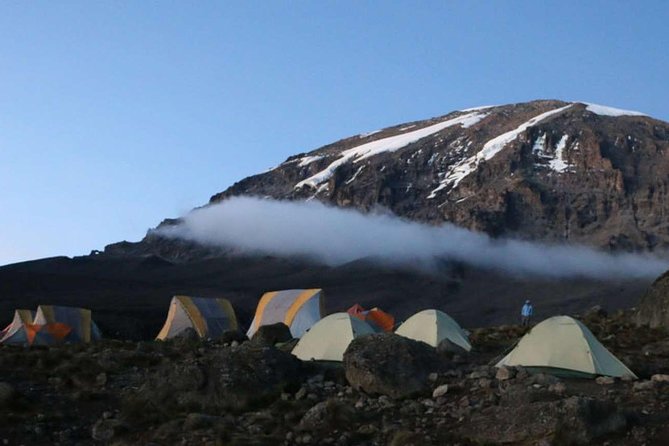
This is one of the route’s important visual changes. Trees thin out, the air feels more open, and you get your first sight of Kibo Peak, the summit cone that dominates Kilimanjaro. Reaching Shira 1 makes the mountain feel much larger than it did in the forest.
The longer walking time is still moderate by Kilimanjaro standards, but altitude begins to matter more here. You may notice a slower pace, a mild headache, or less appetite. Tell your guide early if anything feels wrong. The guide’s job is not only to lead the route but also to watch how you are adapting.
Day 3: Crossing the Shira Plateau to Shira Camp Two
Day 3 is a gentler walk across the Shira Plateau. You rise from 3,500 meters to approximately 3,850 meters, with four to five hours of hiking.
This open section gives you broad views toward Mount Meru and the surrounding wilderness. The route feels less enclosed than the forest, and the changing light across the plateau can make this one of the most memorable walking days.
Do not mistake a shorter day for a free pass. You are already high, and the cold can become more noticeable after sunset. Keep warm layers handy instead of burying them at the bottom of your bag.
Shira 2 also prepares you for the more exposed terrain ahead. The itinerary is doing quiet work here: you gain height without rushing straight toward the summit.
Same base, a different kind of day out:
- Safari Serengeti And Ngorongoro
★ 5.0 · 288 reviews - Climbing Kilimanjaro – Machame Route
★ 5.0 · 170 reviews - Climbing Kilimanjaro through 7 days Machame Route
★ 5.0 · 151 reviews - Kilimanjaro climb, Lemosho Route (8-day)
★ 5.0 · 148 reviews
Day 4: Lava Tower acclimatization and Barranco Camp
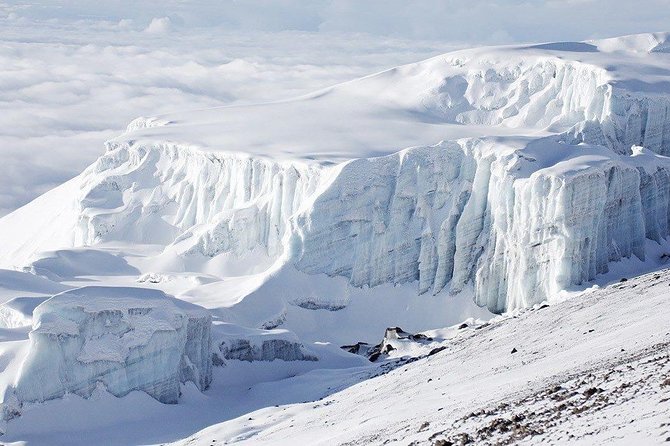
Day 4 is one of the smartest parts of the route. You cross semi-desert terrain, climb to Lava Tower at about 4,600 meters, and then descend to Barranco Camp at roughly 3,900 meters.
The full day lasts about six to seven hours. You finish at nearly the same sleeping elevation as the night before, but your body has experienced a much higher point. That is useful altitude practice without forcing you to sleep at Lava Tower.
The descent to Barranco is also visually rewarding. The camp sits below the Barranco Wall, a dark, steep formation that gives you an early look at the next day’s challenge. This is a good evening to ask your guide about the route and sort your daypack before breakfast.
You may feel tired, headachy, or short of breath at this stage. That does not automatically mean you must stop, but it does mean you should speak up. Emergency oxygen is included for emergencies only. It is not intended to help you push through a serious altitude problem or serve as summit assistance.
Day 5: Barranco Wall to Karanga Camp
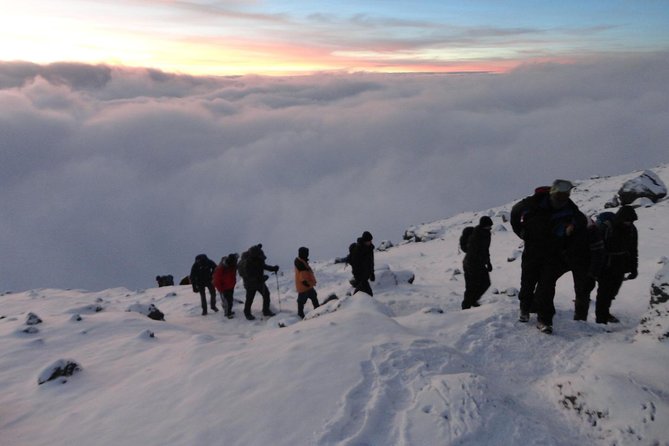
The Barranco Wall is the famous physical feature of this day. You climb from about 3,900 meters to 4,035 meters, with four to five hours of walking.
The word wall sounds intimidating, but this route does not require technical climbing. You use your hands at points and move over steep ground under the guidance of the mountain team. The section can feel exposed and awkward, especially if you are carrying a daypack, yet it is also rewarding because the route becomes more active and varied.
After the wall, you continue toward Karanga Camp. The total height gain is small, but the trail rises and falls across rocky ground. That repeated movement can be tiring, so keep your pace steady and avoid treating the camp as a race.
Karanga provides another useful acclimatization stop before Barafu. This is one reason I prefer the eight-day plan for most first-time high-altitude hikers. It breaks up the approach rather than turning the whole pre-summit section into one long march.
Day 6: Karanga to Barafu Camp
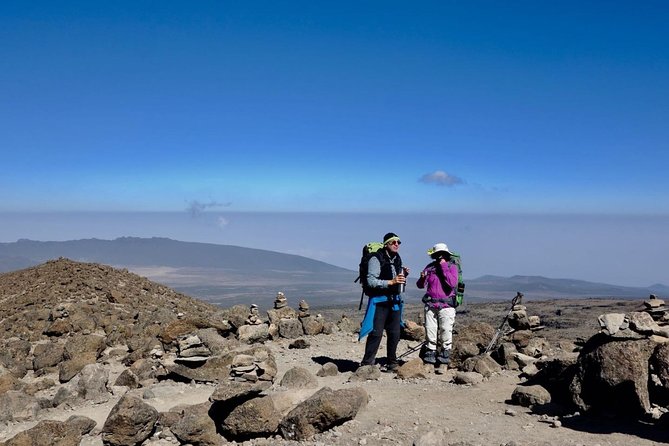
You climb from approximately 4,035 meters to 4,673 meters over four to five hours. Barafu means ice, and the camp is a high, exposed base for the summit attempt.
This is a short day by comparison, but it is not an easy one. You are now walking at an altitude where every task takes more effort. The sensible plan is to reach camp, eat lunch, organize summit clothing and headlamp batteries, and rest.
The schedule calls for a midnight ascent. That means your afternoon and evening are valuable. Eat even if your appetite is poor, drink regularly, and keep your summit clothing close. You do not want to search through every bag when the alarm goes off.
Camping facilities are included, along with tents, sleeping mattresses, camp chairs, tables, and a cook. Fresh drinking water and hot water for a daily wash are also provided. Do not expect hotel comfort, but these small services make a real difference after a cold day at altitude.
Day 7: Uhuru Peak and the long descent
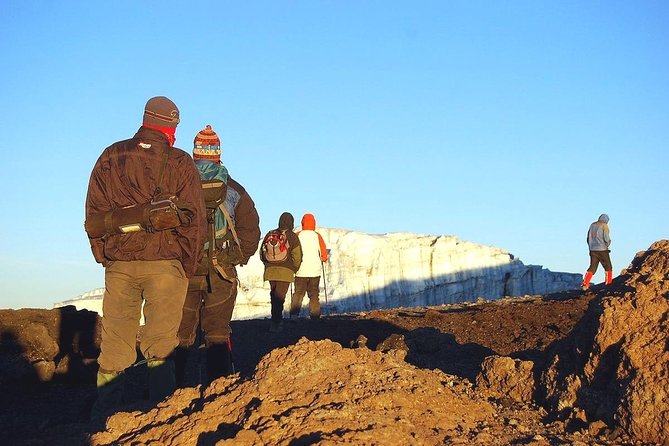
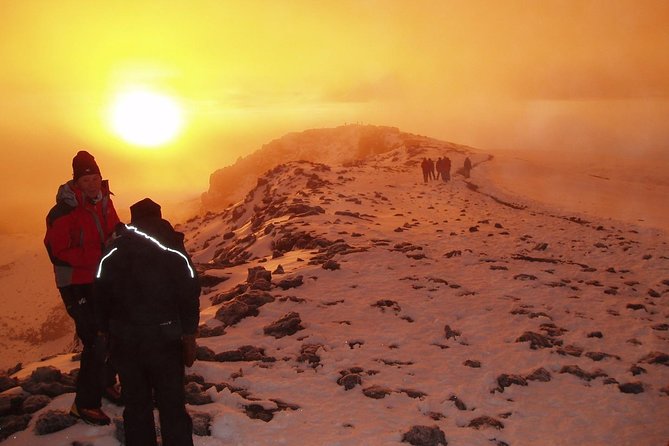
Summit day begins around midnight. You climb from Barafu at 4,673 meters to Uhuru Peak at 5,895 meters, then descend all the way to Mweka Camp at about 3,068 meters.
The total walking time is listed at 12 to 14 hours. This is the hardest day of the trip by a wide margin. The climb is steep, slow, cold, and often taken in darkness. You then descend for several hours after reaching the summit.
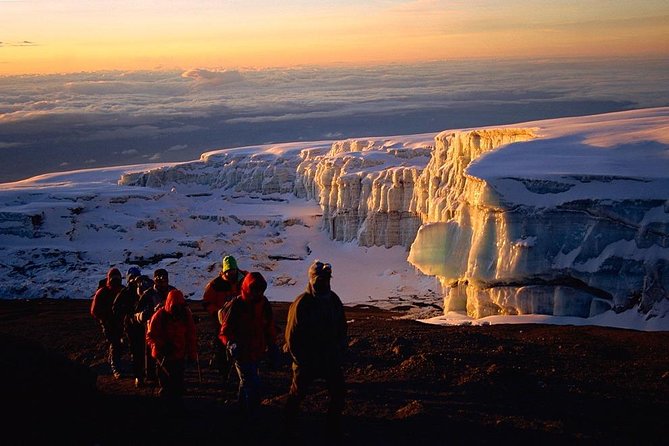
The goal is to reach Uhuru Peak around sunrise. At the top, you stand at the highest point in Africa, with the Roof of Africa below your boots and the morning light spreading across the mountain. The summit moment may be brief, since cold and fatigue make it wise to begin descending promptly.
Some climbers reach Stella Point at 5,685 meters but do not continue to Uhuru Peak. The national park issues green certificates for Stella Point and gold certificates for Uhuru Peak. That distinction gives you a clear understanding of what the final section represents, but reaching Stella Point is still a major achievement.
After the summit, the descent is not an afterthought. Your legs may feel shaky, and the loose volcanic ground can be hard on tired knees. Reaching Mweka Camp gives you a proper night of recovery before the final walk out.
Day 8: Mweka Camp to the gate and back to Moshi
The last walking section takes about three hours through rainforest to Mweka Gate. At the park, you sign your name to receive your completion certificate.
A hot lunch is provided before the transfer back to Moshi. This is when the trip shifts from endurance to celebration, with the prospect of a long shower and a comfortable bed.
This is also the point when tips are presented to the guide, assistant guides, cook, and porters. Gratuities are not included in the price, so plan for them separately. The information provided does not set a fixed amount, and you may want to discuss a fair group approach with your guide before the final day.
What the $3,373.24 price covers
At $3,373.24 per person, this is not a budget walk. It is important to compare the price with what is actually bundled into the climb.
The package includes park fees and taxes, a mountain guide, assistant guides, porters, a cook, their wages, tents, sleeping mattresses, camp furniture, meals, drinking water, hot wash water, emergency oxygen, and a basic first aid kit. You receive seven dinners, seven breakfasts, and eight lunches.
That full support team is a major part of the cost. You are not carrying all the camping equipment or planning food for eight days. You also have help with camp organization and a guide team familiar with the route.
Several costs remain outside the price. Flights, visas, travel insurance, health insurance, personal gear, medicine, water-purifying tablets, snacks, unspecified meals and drinks, and tips are your responsibility. Yellow fever vaccination is listed as compulsory, so take care of health requirements before you arrive.
You can rent personal hiking gear from equipment shops in Moshi. An optional portable toilet is also available and is described as highly recommended. It adds another cost, but many people consider privacy and convenience worth paying for during a long camping trip.
Food, camp support, and personal comfort
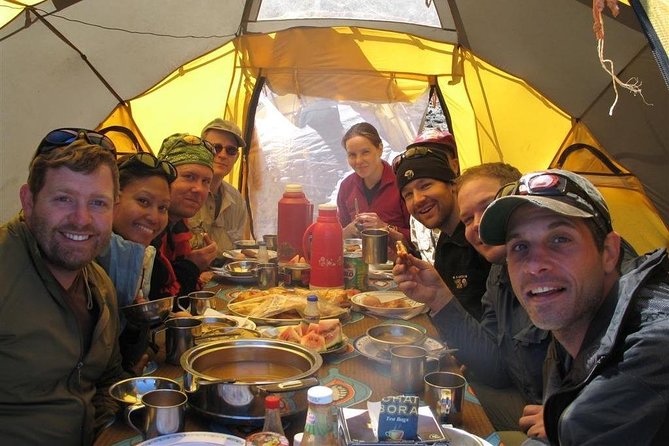
A cook is included, and past accounts specifically praise the food, including one description of meals being better than expected. That does not mean you should rely on food alone to solve every problem. Bring familiar snacks that you know you can eat when altitude reduces your appetite.
Fresh drinking water and hot wash water are provided each day. This is useful, but it is not the same as a shower. Pack small personal items that help you stay comfortable, and keep your own medicine with you because personal medication is not included.
The portable toilet deserves practical attention. The route uses high-altitude camps, and the standard arrangement may not offer the privacy or comfort you want. If this matters to you, decide before departure rather than waiting until the first camp.
The mountain team and what to ask
The operator is Pinnacle Adventures & Safaris Ltd. Past accounts name Justin JT and Sam as lead guides on different climbs, with Mariam also praised for coordinating the porters and support staff. Brian, Frazier, and Lidya are mentioned in connection with trip planning and office support.
Names can change from one departure to the next, so ask who will lead your group before you travel. I would also ask how many assistant guides are assigned, how altitude symptoms are handled, and how the team manages a split if one person cannot continue.
The strongest service pattern is personal support from the guide and porter team. One account describes assistance given to a son with minor altitude sickness, while several others praise clear preparation, helpful communication, and dedicated porters. Those details matter because a Kilimanjaro climb is built around small decisions made every hour.
Who should book this climb?
This route suits you if you have moderate fitness, can walk for several hours on consecutive days, and prefer a slower altitude plan. It is also a good choice for a private family group, friends, or a small party that wants the mountain team focused only on them.
You do not need technical climbing experience. You do need patience, mental toughness, and the ability to accept a very slow pace near the summit.
Experienced mountaineers who are already acclimatized might prefer a seven-day Lemosho schedule. For most people, I would not make the shorter option the default. The eighth day gives you more time to adjust and makes the pre-summit day shorter.
This climb is not ideal if you want a casual nature walk, comfortable lodging, or a flexible daily schedule. The route is scenic, but the summit night remains cold, steep, and physically draining.
Practical booking advice
Pickup is offered, and the activity starts and ends in Moshi Urban. It is a private experience, so only your group participates. Group discounts are available, though the amount is not specified.
Confirmation is provided at booking. The cancellation terms allow a full refund if you cancel at least three full days before the local start time. Cancellations or changes made inside that period are not refunded or accepted.
Before paying, I would confirm the departure date, pickup details, guide assignment, group size, rental gear options, portable toilet fee, and expected gratuity plan. Those questions do not change the route, but they can prevent unpleasant surprises.
Should you book the 8-day Lemosho climb?
I would choose this trip if your main goal is to give yourself a sensible chance at the summit while enjoying several distinct environments along the way. The route offers rainforest, the Shira Plateau, Lava Tower, Barranco Wall, and a sunrise attempt on Uhuru Peak, with an extra acclimatization day built into the schedule.
The price is substantial, but the included mountain staff, camping setup, meals, water, park costs, and support make it easier to understand. Book it if you are prepared for a serious physical challenge and want a private, fully supported climb. Skip it if you are looking for a relaxed sightseeing tour or do not have time to prepare your fitness and personal equipment.
FAQ
Where does the Kilimanjaro climb start?
The activity starts in Moshi Urban, Tanzania, with pickup offered.
Where does the climb finish?
The walking ends at Mweka Gate, followed by lunch and a transfer back to Moshi. The activity ends at the original meeting point.
How long is the Lemosho climb?
The climb lasts approximately eight days.
Is this a private activity?
Yes. Only your group participates in the activity.
Do I need technical climbing experience?
No technical climbing is required. You should have a moderate level of physical fitness.
How high is Uhuru Peak?
Uhuru Peak is 5,895 meters above sea level.
When does the summit attempt begin?
The summit attempt starts around midnight on Day 7, with an expected arrival at Uhuru Peak around sunrise.
What meals are included?
The package includes seven dinners, seven breakfasts, and eight lunches.
Is personal hiking gear included?
No. Personal hiking and trekking gear is not included, but you can rent gear from equipment stores in Moshi.
Is a portable toilet included?
No. A portable toilet is optional, but it is highly recommended.
Are tips included in the price?
No. Tips for the guide, assistant guides, cook, and porters are not included.
What happens if I reach Stella Point but not Uhuru Peak?
You receive a green certificate for reaching Stella Point at 5,685 meters. Reaching Uhuru Peak at 5,895 meters qualifies for a gold certificate.
Just added in Moshi
- Wildlife Extravaganza: Manyara, Tarangire & Ngorongoro in 3 Days★ 5.0 · 3 reviews
- West Kilimanjaro cycling Adventures★ 4.5 · 8 reviews
- machame route★ 5.0 · 16 reviews
- Kilimanjaro Climb • Machame Route ~ 10 Day★ 5.0 · 6 reviews
- Kilimanjaro Climbing Umbwe Route★ 5.0 · 3 reviews
- Mt Kilimanjaro 6 days Marangu route hike★ 5.0 · 3 reviews
- 3 Days Private E-Bike Tour in West Kilimanjaro★ 5.0 · 3 reviews
- Private Cycle to Kilimanjaro Bike Park Safari★ 5.0 · 6 reviews
Kilimanjaro Treks, compared.



8-Day Small-group Lemosho Kilimanjaro Summit Trekking
Read our review →

5 Days Best of Tanzania Luxury Safari Northern Circuit
Read our review →

Climbing Kilimanjaro through 7 days Machame Route
Read our review →
7-Day Machame Kilimanjaro Summit Tour from Arusha
Read our review →Browse the lists this tour appears in