
Reviewed · KILIMANJARO TREKS
Climb Kilimanjaro Machame Route 7 Days
The best feature of this Kilimanjaro climb is its pacing. The seven-day Machame Route breaks the hard section before the summit into shorter stages, giving you a better chance to rest before the midnight ascent. I like the Lava Tower to Barranco day for acclimatization, and I like that the package includes camping gear, meals, porters, airport transfers, and hotel nights instead of leaving you to arrange each piece.
I also like the personal support built into the setup. Guides including Mussa and Frankie have been associated with successful climbs, and the team includes a cook and porters as well as a lead guide. The main consideration is physical demand: this is a serious high-altitude climb, not a casual hike, and the summit day can last up to 14 hours when the ascent and descent are combined.
Key points to know before booking
- Seven days gives you a sensible rest day before the summit push: The short Karanga stage helps you conserve energy.
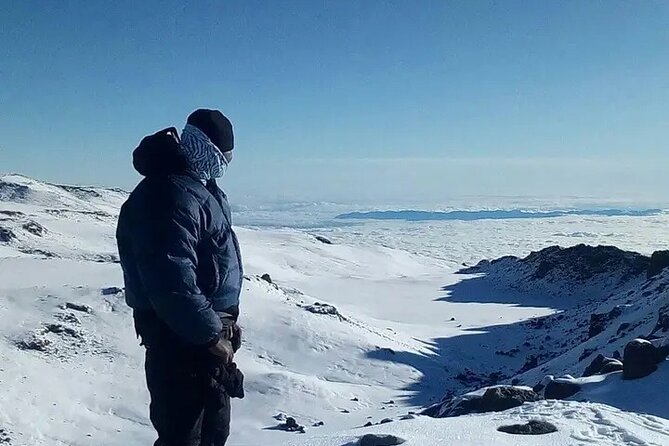
- The route crosses five ecological zones: You move from wet rainforest to moorland, semi-desert, alpine desert, and arctic conditions.
- Lava Tower is important even though you do not sleep there: You climb higher, then descend to Barranco to help your body adjust.
- Summit night begins around midnight: Expect a steep, cold ascent to Stella Point and Uhuru Peak, followed by a long descent.
- The package covers the main mountain services: Camping equipment, park fees, food, guide, cook, porters, oxygen tank, and transport are included.
- The price is $2,200 per person: That is useful value for an organized private climb, but you still need to budget for tips, drinks, visa costs, personal gear, and flights.
Why the seven-day Machame Route makes sense
Machame is often called the scenic route because it gives you changing views and varied terrain rather than one long climb through the same type of forest. I like that the seven-day version does not rush the approach to the summit.
The key design choice comes between Barranco and Barafu. Instead of forcing you to cover that distance in one exhausting day, the itinerary uses Karanga Camp as a separate overnight stop. That makes Day 4 short and gives you a chance to recover before the final climb to Barafu.
This matters because summit day starts between midnight and 2 a.m. You will already be short on sleep, and you will spend much of the day walking uphill in cold, thin air before descending thousands of feet. A shorter day before that effort is a practical advantage, not just a pleasant extra.
The trip begins with airport pickup. A company representative meets you at the arrival point with a sign, gives you a short briefing, and drives you to your hotel in Moshi. The listed starting point is Honey Badger Lodge in Moshi, at M92P+CP, Kiboriloni 1258. The package includes two hotel nights in Moshi or Arusha, though you should confirm the exact hotel arrangement before paying.
Other routes up the mountain from Moshi:
- Kilimanjaro climb by Lemosho Route (7-day)
★ 5.0 · 651 reviews - Kilimanjaro climb, Machame Route (7-day)
★ 5.0 · 262 reviews - Kilimanjaro Climbing Lemosho Route 8 Days.
★ 5.0 · 186 reviews
Day 1: Machame Gate to Machame Camp
The drive from Moshi to Mount Kilimanjaro National Park takes about 50 minutes and passes through Machame village on the lower slopes. After the park formalities, you begin walking through rainforest on a winding trail.
The first day covers about 11 kilometers and takes five to seven hours. You climb from roughly 5,400 feet to 9,400 feet, with the night spent at Machame Camp.
This is a steady introduction rather than a sightseeing stroll. The lower trail can be muddy and slippery, so gaiters and trekking poles are useful from the start. Rainforest conditions can also make clothing management important. Keep rain gear handy, and use layers that can handle warmth, dampness, and a gradual increase in altitude.
I like this opening because the forest gives you shade and a clear sense of moving into a wilder place. The drawback is that the trail may feel crowded or wet at points, and the first day is long enough to expose poor footwear or an overpacked bag. Keep your personal load light and let the porters carry the larger camping equipment.
Day 2: Machame Camp to Shira Camp
The second day leaves the rainforest behind and enters moorland. The route climbs about five kilometers over four to six hours, reaching approximately 12,500 feet at Shira Camp.
The path crosses a small valley and follows a steep, rocky ridge covered with heather. It then turns west toward a river gorge. The distance is shorter than Day 1, but the altitude rises quickly, so you should walk slowly even if your legs feel fresh.
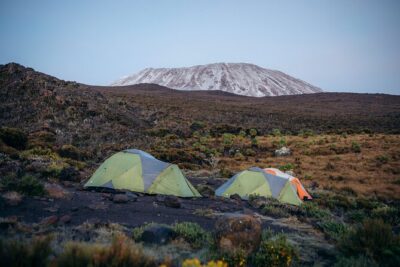
Shira is valuable as an acclimatization stop because you gain height without facing the full summit effort. You may find the surroundings more open here, with fewer trees and more exposed ground. Nights will feel colder than at Machame Camp, so keep warm layers and sleeping gear accessible rather than buried in a duffel.
This is also where the support team becomes especially useful. A cook prepares food on the mountain, while porters handle much of the camp equipment. The package includes food, camping equipment, park entry fees, and team salaries, but drinks are not included, so plan for that extra cost.
Day 3: Shira Camp to Lava Tower to Barranco Camp
Day 3 is one of the most important days on the route. You walk about 10 kilometers over six to eight hours, climbing from 12,500 feet to around 13,000 feet by the time you reach Barranco Camp.
The route heads east across the Shira Plateau, then turns southeast toward Lava Tower, also called the Shark’s Tooth. The itinerary describes a junction toward Arrow Glacier at about 16,000 feet, followed by a descent to Barranco.
You do not sleep at the highest point reached that day. That is the point. You climb high, then descend to Barranco, allowing your body to begin adjusting to altitude while your sleeping elevation remains lower than Lava Tower.
I consider this the route’s most useful acclimatization feature. It can be a tiring day, and some people may feel the altitude at Lava Tower, but the gradual exposure is more sensible than simply racing upward. Follow the guide’s pace, drink as directed, and tell the team promptly if you feel unwell.
Barranco Camp sits in semi-desert terrain at about 13,000 feet. Dinner and overnight rest here prepare you for the next morning’s climb over the Barranco Wall.
Same base, a different kind of day out:
- Safari Serengeti And Ngorongoro
★ 5.0 · 288 reviews - Climbing Kilimanjaro – Machame Route
★ 5.0 · 170 reviews - Climbing Kilimanjaro through 7 days Machame Route
★ 5.0 · 151 reviews - Kilimanjaro climb, Lemosho Route (8-day)
★ 5.0 · 148 reviews
Day 4: Barranco Camp to Karanga Camp
Day 4 is short by design. You cover about five kilometers in four to five hours, moving only slightly higher, from 13,000 to 13,100 feet.
The trail leaves Barranco and climbs a steep ridge beside the Barranco Wall before reaching Karanga Valley. This is not a throwaway day. It gives you time to acclimatize and preserve energy for the summit attempt.
The Barranco Wall may feel intimidating because the route becomes steeper and more hands-on in places, but the itinerary presents it as part of the regular trail rather than a technical climbing pitch. You should still follow the guide closely and avoid rushing.
I like the discipline of this day. Many mountain itineraries treat every day as a race toward the next camp. Here, the short distance gives you time to eat, rest, organize your summit clothing, and prepare mentally for the hardest stage.
Day 5: Karanga Camp to Barafu Camp
From Karanga, you walk about four kilometers over four to five hours, climbing to roughly 15,300 feet at Barafu Camp. The route connects with the Mweka Trail and completes the southern circuit.
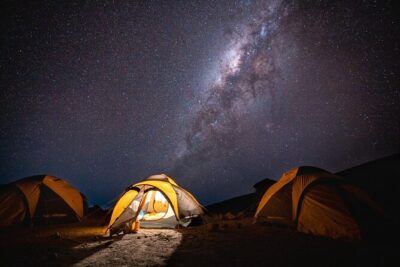
Barafu offers views of both Mawenzi and Kibo, two of Kilimanjaro’s major peaks. It is also the final sleeping camp before Uhuru Peak. You will have dinner here, but the main task is preparation: organize gloves, headlamp, warm clothing, water, snacks, trekking poles, and any personal climbing equipment before trying to sleep.
The short distance does not mean the day is easy. At 15,300 feet, simple tasks take more effort, and the thin air can make you feel tired before the summit attempt even starts. I would treat this as a quiet, practical afternoon rather than a time for extra activity.
Personal climbing items are not included in the price. That is important. The company supplies camping equipment and an oxygen tank, but you are responsible for personal gear, and the package does not include flights, visas, beverages, or tips.
Day 6: Barafu Camp to Uhuru Peak and Mweka Camp
This is the demanding day. You begin between midnight and 2 a.m., climbing about five kilometers to the summit and then descending 12 kilometers to Mweka Camp.
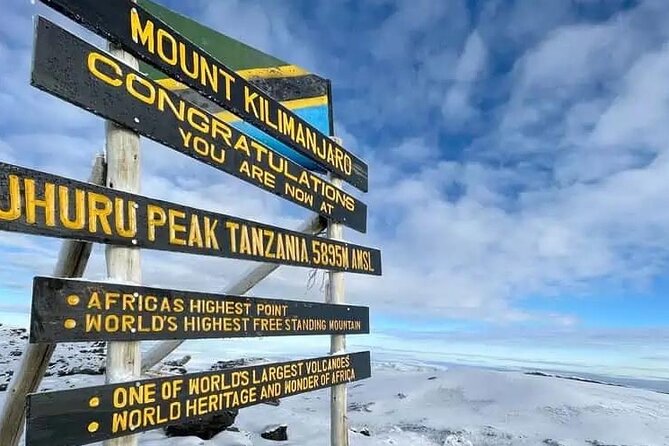
The ascent leads through heavy scree toward Stella Point on the crater rim at about 18,600 feet. The loose gravel makes trekking poles and gaiters particularly useful on both the climb and descent. From Stella Point, the route continues for about another hour toward Uhuru Peak, at 19,345 feet.
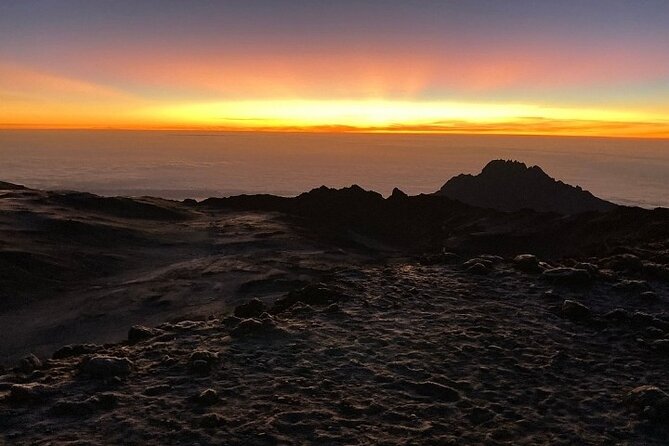
If the weather cooperates, sunrise near Stella Point or Uhuru Peak becomes the emotional high point of the climb. Faster climbers may see sunrise from the summit, while others will see it during the final approach. The itinerary is right to describe this as the most mentally and physically challenging part of the trek. You are dealing with cold, darkness, fatigue, steep ground, and high altitude at the same time.
After reaching Uhuru Peak, you descend directly toward Mweka Hut, stopping at Barafu for lunch. The descent is not an easy victory lap. Loose gravel can punish tired knees, and the total day may involve seven to eight hours of ascent followed by four to six hours of descent.
Mweka Camp sits in the upper forest at about 10,000 feet. Mist or rain may arrive in the afternoon, so keep rain protection available. The lower elevation should feel welcome, but you will still be tired. Dinner and sleep here are well earned.
The company lists an oxygen tank among the inclusions. That does not remove the need for careful altitude management or make the summit safe for everyone. The guide team’s safety role matters, and you should discuss medical concerns with a qualified professional before booking.
Day 7: Mweka Camp to Moshi
The final walk covers about 10 kilometers and takes three to four hours, descending from roughly 10,000 feet to 5,400 feet through rainforest.
Lower sections can be wet and muddy. Gaiters and trekking poles remain useful, although you may be comfortable in shorts and a T-shirt once the temperature rises. Keep rain gear and warmer clothing within reach because mountain weather can change before you reach the gate.
At Mweka Park Gate, you receive your summit certificate. From there, the itinerary includes another hour on foot to Mweka Village, where a vehicle collects you and returns you to your hotel in Moshi.
This final transfer is a small but important convenience. After a week on the mountain, you do not want to negotiate transport from a remote village on your own. The package also includes airport transfers, so confirm the timing if you are connecting directly to a flight.
What the $2,200 price really covers
At $2,200 per person, this is not a bare-bones hike. The price includes park entry fees, camping equipment, mountain food, guide, cook, porters, team salaries, an oxygen tank, two hotel nights in Moshi or Arusha, airport transfers, and an air-conditioned vehicle.
That list has real value. Kilimanjaro costs are not limited to your own bed and meals. Park access, mountain staff, camp support, food, transport, and pre- and post-climb accommodation can quickly become expensive when arranged separately.
Still, you need to calculate the final cost honestly. Tips and beverages are excluded, as are visas, flights, and personal climbing equipment. The price also needs clarification on exactly what camping equipment is supplied and what you must bring yourself.
The private-tour format is another benefit. Only your group participates, which can make pacing and communication easier than joining a large mixed party. It does not mean the climb is easy. It means the group’s needs can be handled more directly.
The guide team and level of support
The company identifies professional guides, a cook, and porters as part of the mountain team. Mussa and Frankie are names connected with successful Kilimanjaro and Mount Meru trips, and the personal support described by past clients includes help with transport from Nairobi to Moshi, safari planning, and activities after the climb.
That broader assistance may be useful if Kilimanjaro is only one part of your Tanzania trip. You can ask the company about airport transfers, onward transport, safari options, and hotel arrangements before arrival.
The team’s strongest practical role is on the mountain. You need clear pacing, good camp organization, meals, and help making sensible decisions when fatigue or altitude becomes a problem. Ask in advance how many people will be in your private group, what personal weight limits apply for porters, and which gear is available for rent. Those details are not provided here, so they should be confirmed directly.
Who should choose this climb?
I would recommend this itinerary to a fit adult who wants a structured Kilimanjaro climb with a better acclimatization schedule than a rushed five-day option. It suits you if you value a private group, organized transfers, mountain meals, and a support team that can also help with wider Tanzania plans.
It is less suitable if you want a relaxed holiday, dislike camping, or cannot commit to long walking days at altitude. The summit stage is especially demanding, and the schedule cannot be treated as a simple seven-day sightseeing trip.
You should also be comfortable with basic uncertainty. Weather, trail conditions, fatigue, and altitude can affect the experience. The itinerary offers a strong framework, but no company can guarantee that every climber will reach Uhuru Peak.
Booking details worth confirming
Confirmation is provided at booking, and free cancellation is available if you cancel at least 24 hours before the experience start time. Cancellations inside that window are not refundable, and changes made within 24 hours are not accepted.
The meeting point is Honey Badger Lodge in Moshi. Pickup is offered, and the activity includes a mobile ticket. Service animals are allowed, and the meeting point is near public transportation, although the remote mountain sections naturally have no ordinary transit access.
Before you commit, ask for a written packing list, the exact hotel names, the number of nights included in Moshi versus Arusha, the group size, the personal gear available, and the tipping expectations. These questions will help you compare the $2,200 price fairly.
Should you book the seven-day Machame climb?
I would choose this trip if you want Machame’s changing scenery and can give yourself seven days for a more measured ascent. The split between Barranco, Karanga, and Barafu is the strongest reason to prefer this schedule, since you get a shorter day before the midnight summit push.
Book it if you are prepared for demanding altitude, basic mountain camping, cold conditions, and a long summit day. Do not book it simply because the price includes an oxygen tank or because the route is described as scenic. Your fitness, preparation, personal equipment, and willingness to follow the guide’s pace will matter just as much.
For a private, fully supported climb with hotel nights and transport included, the package offers solid value. Just confirm the missing practical details and budget separately for flights, visa, drinks, tips, and personal climbing gear.
FAQ
Where does the Kilimanjaro climb start?
The stated meeting point is Honey Badger Lodge in Moshi, Tanzania. Airport pickup is offered, with a company representative meeting you at the arrival point before driving you to your hotel.
How long is the Machame Route experience?
The itinerary lasts seven days. The overall tour summary describes an approximate duration of one to seven days, but the Kilimanjaro program itself is the seven-day Machame climb.
How much does the climb cost?
The listed price is $2,200 per person.
Is this a private tour?
Yes. Only your group participates in the activity.
What is included in the price?
The package includes camping equipment, national park entry fees, mountain food, guide, cook, porters, team salaries, an oxygen tank, two hotel nights in Moshi or Arusha, airport transfers, and an air-conditioned vehicle.
What is not included?
Flights, visas, beverages, tips, and personal climbing items are not included.
How physically fit do I need to be?
The activity requires a strong level of physical fitness. The itinerary includes long hiking days, high altitude, a midnight summit start, and a combined summit ascent and descent lasting up to 14 hours.
Can I cancel for a full refund?
You can receive a full refund if you cancel at least 24 hours before the experience start time. Cancellations and changes made less than 24 hours before the start are not accepted for a refund.
Just added in Moshi
- Wildlife Extravaganza: Manyara, Tarangire & Ngorongoro in 3 Days★ 5.0 · 3 reviews
- West Kilimanjaro cycling Adventures★ 4.5 · 8 reviews
- machame route★ 5.0 · 16 reviews
- Mt Kilimanjaro 6 days Marangu route hike★ 5.0 · 3 reviews
- Kilimanjaro Climb • Machame Route ~ 10 Day★ 5.0 · 6 reviews
- Kilimanjaro Climbing Umbwe Route★ 5.0 · 3 reviews
- 3 Days Private E-Bike Tour in West Kilimanjaro★ 5.0 · 3 reviews
- Private Cycle to Kilimanjaro Bike Park Safari★ 5.0 · 6 reviews
Kilimanjaro Treks, compared.
8-Day Small-group Lemosho Kilimanjaro Summit Trekking
Read our review →
5 Days Best of Tanzania Luxury Safari Northern Circuit
Read our review →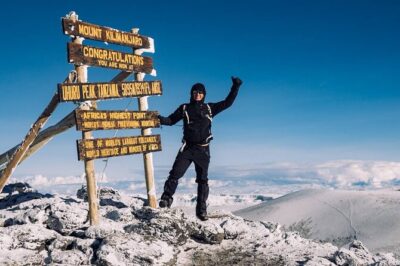
Climbing Kilimanjaro through 7 days Machame Route
Read our review →
7-Day Machame Kilimanjaro Summit Tour from Arusha
Read our review →Browse the lists this tour appears in