Reviewed · SAFARI TOURS
From Arusha: 5 Days Classic Safari Cats, Calves & Crater
The real draw here is the pairing of Ndutu’s calving season with Ngorongoro Crater’s famous Big Five country. From November to April, animals gather around Ndutu, with December through February offering the best chance of seeing newborns and the predators that follow them.
I like the smart route: Tarangire gives you elephants and baobabs on day one, while the crater provides a strong finale. I also like that this is a private trip, so your group can focus on wildlife at its own pace. The main consideration is the long amount of time in a safari vehicle, plus extra tourism and village charges paid locally.
Key points to know before booking
- Tarangire starts the trip with elephants and baobab trees, a fine first taste of northern Tanzania.
- Ndutu is the wildlife center of the five days, especially from December to February during calving season.
- Ngorongoro Crater gives you the strongest Big Five opportunity in a compact area.
- Four nights include full-board meals, with breakfast, lunch, and dinner covered.
- The safari is private, so only your own group takes part.
- Guide quality matters, and Joel Thobias, David, and Justin are among the guides praised for spotting animals and keeping the trip upbeat.
Why the cats, calves, and crater theme works
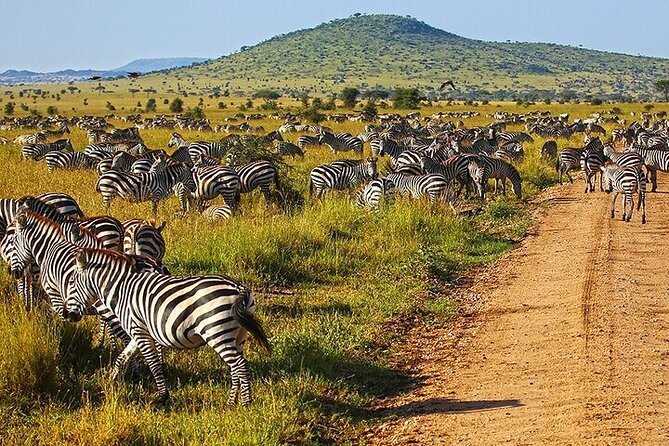
This five-day safari is built around three distinct wildlife experiences. Tarangire offers a classic park setting with large elephants and giant baobab trees. Ndutu brings the seasonal drama of the Great Migration and calving period. Ngorongoro Crater then gathers a remarkable range of animals into one enclosed volcanic basin.
That mix gives you more variety than a trip focused on one park alone. You are not simply repeating the same game drive for five days. Each stop has a different reason to be there, and the timing matters.
From November through April, Ndutu is linked to the movement of the Great Migration. From December through February, the calving season adds a sharper edge to the experience. Newborn animals attract predators, so lions and other hunting cats become part of the story. The chance of seeing a dramatic chase is never guaranteed, but this is the period when predator-prey activity is especially relevant.
The tour costs $1,254. That price includes park fees, transport, a driver-guide, four nights of accommodation, and a full-board meal plan. Breakfast, lunch, and dinner are included for four days. For a private safari with several major wildlife areas, that package can offer solid value, particularly if you prefer having transport and park arrangements handled together.
You should still budget for the tourism development levy of $1.50 per person per night and village tax of $1 per person per night, paid at check-in. Drinks, personal spending, and tips are also extra. Ask for a clear accommodation breakdown before you pay, since the description identifies the stays as unique accommodations near the parks but does not name each property.
Other park itineraries that start in Arusha:
- Serengeti Balloon Safari and authentic bush breakfast
★ 5.0 · 2,480 reviews - Balloon Safari & Bush Breakfast in Serengeti – Miracle Experience
★ 5.0 · 1,646 reviews - 4 Days Group Camping Safari
★ 5.0 · 1,101 reviews
Day one: Tarangire’s elephants and baobabs
The trip begins in Arusha at about 8:00 a.m. Pickup is available from your accommodation or the airport, then you head toward Tarangire National Park. The drive and park entry mark the shift from city travel to safari time.
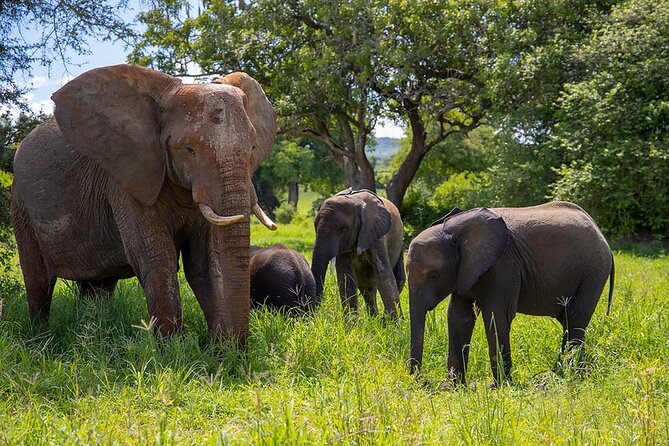
Tarangire is known for two things that give it a strong opening act: baobab trees and elephants. The baobabs give the park a distinctive look, while the elephant population provides one of the clearest wildlife themes of the day. If elephants are high on your list, this first park makes sense.
You spend about six hours on a game drive. That is enough time to search for animals without making the day feel like a rushed park visit. The drive is also useful for settling into the rhythm of safari, where patience and careful scanning matter as much as luck.
I would treat Tarangire as more than a warm-up. Its scenery is different from Ndutu and the crater, and the baobabs create some of the most memorable views on the route. Still, you should understand that this is a full travel day from Arusha. The combination of pickup, driving, park entry, and game viewing means you will be ready for a meal and rest afterward.
Day two: crossing Ngorongoro toward Ndutu
After breakfast, you travel through the Ngorongoro Conservation Area toward Ndutu in the southern Serengeti area. The transfer takes about four hours. That is a substantial stretch in the vehicle, but it is also part of the setting, with Maasai communities and wildlife sightings along the way.
The Ngorongoro Conservation Area is home to the Maasai, and the route gives you a chance to see how wildlife areas and human communities exist side by side. The scenery changes as you move toward Ndutu, making the transfer feel like a transition between two parts of the safari rather than just a road connection.
By afternoon, you reach Lake Ndutu for about three hours of game viewing. This timing is well chosen for the migration season, when the area can become a major gathering point for animals. From December to February, the calving season is the central attraction.
You may see young animals, herds, and predators working the same area. That does not mean every drive produces a hunt. Wildlife remains unpredictable. The value is in being in the right place during a period when there is more animal movement and more reason for predators to stay close.
The day has a clear tradeoff. You get an afternoon game drive in an important seasonal area, but you also spend four hours transferring from the conservation area toward Ndutu. If you dislike long drives, this is one of the days to consider carefully.
Day three: a full day around Lake Ndutu
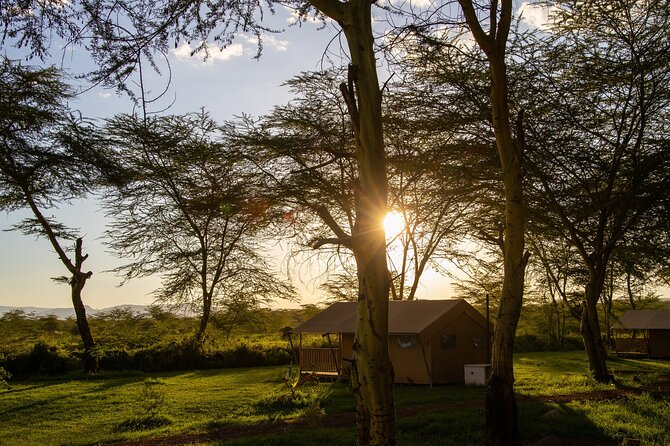
Day three is the heart of the tour. After breakfast, you spend about six hours on a full-day game drive around Lake Ndutu. Unlike the previous day, there is no major transfer listed, so the focus stays on wildlife.
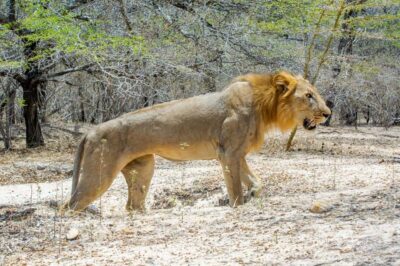
Ndutu is particularly appealing if you want to see the connection between migration and predation. During calving season, young animals bring movement and vulnerability to the herds. Lions are common in the area, and the tour description also points to a high concentration of leopards along the riverbank.
Leopards are difficult to spot, so keep your camera ready and listen closely to your guide’s observations. One guide, David, was praised for spotting a leopard in a tree, which is exactly the sort of sighting that depends on sharp eyes and experience. Joel Thobias was also praised for driving and guiding, while another safari experience with Thobias included five lion sightings.
Those names do not guarantee who will lead your trip, so confirm your assigned guide if that matters to you. They do show the kind of guide service you should hope for: someone who can find animals, explain what you are seeing, and keep the long hours enjoyable.
A six-hour game drive requires some patience. You may spend time watching one area without immediate action. That is normal on safari, and Ndutu’s value comes from staying in the zone where the seasonal activity is concentrated rather than rushing from one attraction to another.
Other safaris people book out of Arusha:
- 5 Days Group Camping Safari
★ 5.0 · 730 reviews - 3 Days Serengeti & Ngorongoro Group Camping Safari
★ 5.0 · 574 reviews - 7-Day Premium Luxury Tanzania Safari All-Inclusive
★ 5.0 · 426 reviews - 3-Day Classic Serengeti Safari
★ 5.0 · 263 reviews
Day four: down into Ngorongoro Crater
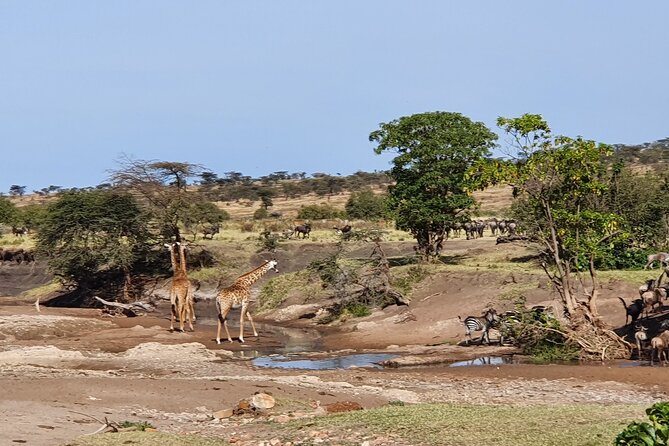
The fourth day brings a full-day game drive in Ngorongoro Crater. The crater is the world’s largest intact volcanic caldera, and its enclosed form helps create a compact wildlife area.
This is the best part of the route for a broad Big Five search. The crater’s reputation does not mean a sighting is guaranteed, but the tour is designed to give you a strong opportunity. You will spend about six hours looking for animals across the crater floor.
The crater also provides a useful change from Ndutu. Ndutu is tied closely to seasonal movement and calving. Ngorongoro is about concentrating your wildlife search in a dramatic natural setting. After three days of safari travel, the crater can feel like a satisfying final game-drive day.
There is one practical point to keep in mind: six hours in the crater means another long day in the vehicle. You should have a moderate level of physical fitness, mainly because the trip involves repeated early starts, long drives, and extended periods seated in a safari vehicle. The itinerary does not describe strenuous walking, but it is not a relaxed resort holiday.
Day five: returning from Karatu to Arusha
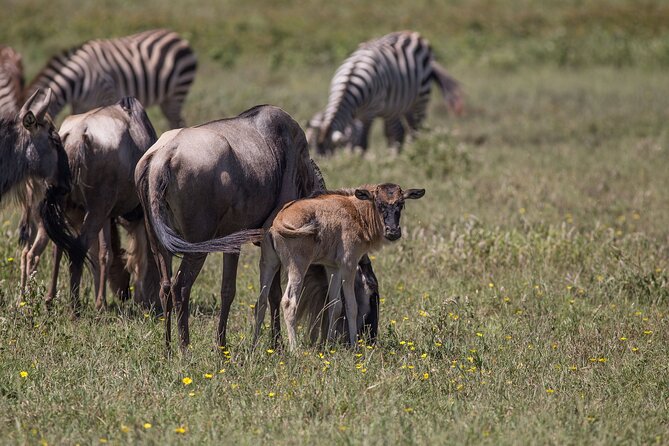
After breakfast, your driver-guide takes you back toward Arusha, a drive of roughly three hours. The final drop-off can be in central Arusha, at your accommodation, or at the airport.
This is useful if you are connecting to another part of Tanzania or ending your trip in Arusha. The day is mostly about transport, not another major game drive, so plan your departure schedule with care. The stated drive time is about three hours, but your pickup point, traffic, and airport timing can affect the day.
The flexibility of several drop-off options is helpful. If you are staying in Arusha, you can continue your visit without arranging another transfer. If you are flying out, confirm the timing in advance so you are not relying on a tight connection.
What the $1,254 price really covers
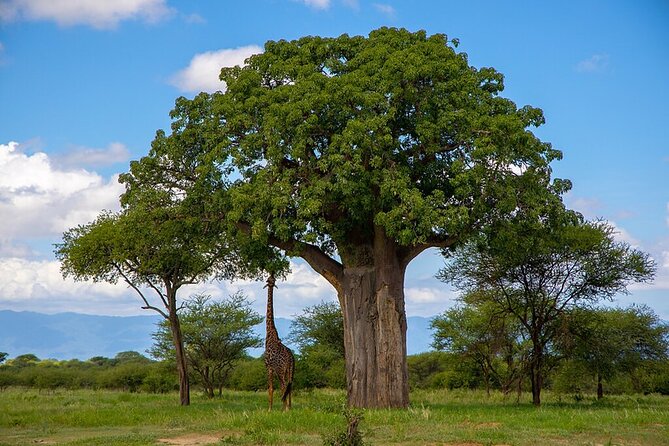
The price includes the expensive parts of a safari package: park fees, transport, a driver-guide, accommodation, and meals. Four breakfasts, four lunches, and four dinners are included, which makes it easier to plan your spending.
The full-board setup also suits a route with long game drives and transfers. You do not need to arrange every meal along the way. The accommodations are described as unique properties near the national parks and surrounded by attractive natural settings, but the individual names are not provided.
That missing detail is worth checking before booking. Accommodation standards can shape your view of a safari as much as the wildlife. Ask about room type, location, electricity, hot water, and whether the property is inside or outside a park area. Do not assume those details from the general package description.
Extra charges are modest but should be included in your budget. The tourism development levy is $1.50 per person per night, and village tax is $1 per person per night. Drinks, personal expenses, and tips are not included. A separate tourism development levy in Arusha is also listed among the exclusions, so ask exactly when and how that charge applies.
Group discounts may be available, and the trip is private rather than a shared departure. That can make the price more attractive if you are splitting the cost among several people. For a solo visitor, the same private arrangement may feel more expensive.
Guides, comfort, and the pace of the trip
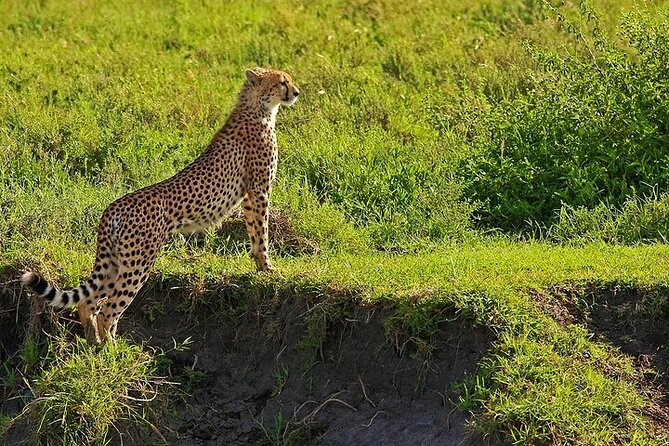
Your driver-guide will shape the safari. The guide is responsible not only for driving but also for helping you find wildlife and explaining the environment around you. The names associated with positive feedback include Joel Thobias, Thobias, David, and Justin.
David was praised for positive energy and for finding a leopard in a tree. He also helped one couple see the Big Five. Joel Thobias was praised for his guiding and driving, while Justin received thanks for his support and for helping provide good meals during a safari.
Again, you may not receive one of these specific guides. I would ask for the assigned guide’s name before departure if that is possible. A private trip gives you a better chance to ask questions and request more time at a sighting, although the guide still has to follow park rules and road conditions.
The pace is active. You have a six-hour drive in Tarangire, a four-hour transfer toward Ndutu, a three-hour afternoon drive, a six-hour Ndutu day, a six-hour crater day, and a roughly three-hour return to Arusha. You should be comfortable with long vehicle days and repeated early mornings.
The stated fitness requirement is moderate. There is no claim of extensive walking, but you will need enough stamina for the schedule. Bring a camera, keep it ready around Ndutu, and save room in your luggage for practical safari clothing and personal items. The exact packing list is not provided, so ask the operator what is suitable for the season and accommodations.
Who should choose this safari?
I would recommend it to you if your main goal is wildlife rather than a slow cultural holiday. It suits first-time safari visitors who want three well-known areas in five days, especially those interested in elephants, lions, leopards, calving season, and the Big Five.
It also works well for couples. One couple described the trip as a successful honeymoon and credited their guide with finding favorite animals and keeping the mood positive. The private format gives couples and small groups more control than a shared vehicle.
Families and older visitors should look closely at the driving time and physical demands before booking. The moderate fitness requirement is important. The itinerary is not built around long walks, but the hours seated in the vehicle can still be tiring.
You should also time the trip carefully. November through April is the key period for the Great Migration in Ndutu, with December through February offering the strongest calving-season focus. If your priority is newborn animals and predator action, those months make the most sense.
Booking details and cancellation terms
Pickup is offered from your accommodation or the airport in Arusha, with an advertised start time of 8:00 a.m. Confirmation is provided when you book, and mobile tickets are available. The trip is operated as a private activity for your group alone.
Free cancellation is available if you cancel at least 24 hours before the local start time. Cancellations within 24 hours are not refunded, and changes within that same period are not accepted.
Should you book the five-day Cats, Calves and Crater safari?
Book this safari if you want a focused northern Tanzania route with seasonal Ndutu wildlife, a full Ngorongoro Crater day, and the privacy of your own group. The strongest reasons are the timing around calving season, the chance to look for predators, and the way Tarangire adds elephants and baobabs before the main event.
Think twice if you want a gentle schedule, named luxury lodges, or plenty of time outside a vehicle. The itinerary is busy, and accommodation details are not specific enough to judge comfort without asking questions.
For the right kind of safari, $1,254 is a reasonable package price because it combines park fees, transport, guiding, four nights, and meals. Confirm the accommodation, assigned guide, extra local charges, and pickup timing before you commit. If those details suit you, this is a practical five-day route with a strong chance of memorable wildlife moments.
FAQ
Where does the safari start?
The safari starts in Arusha at about 8:00 a.m. Pickup is available from your accommodation or the airport.
How long does the safari last?
The experience lasts approximately five days and includes four overnight stays.
Is the tour private?
Yes. Only your own group participates in the activity.
What parks and wildlife areas are included?
The route includes Tarangire National Park, the Ngorongoro Conservation Area, Lake Ndutu, and Ngorongoro Crater.
When is the best time to see the Great Migration and calving season?
The Great Migration period in Ndutu is from November through April. The calving season is from December through February.
Are meals included?
Yes. Four breakfasts, four lunches, and four dinners are included as part of the full-board plan.
Are park fees included?
Yes. Park fees are included in the tour price.
What extra costs should I expect?
You should expect a tourism development levy of $1.50 per person per night and village tax of $1 per person per night, paid at check-in. Drinks, personal expenses, and tips are not included.
Can I cancel for a full refund?
Yes, if you cancel at least 24 hours before the experience start time. Cancellations made less than 24 hours before the start time are not refunded.
Just added in Arusha
- 4 Days Private Midrange Lodge Safari to Serengeti & Ngorongoro★ 5.0 · 4 reviews
- Extraordinary Hot air Bolloon ride in Serengeti | BURIGI CHATO SAFARIS CO L.T.D★ 5.0 · 6 reviews
- 3 days leopard safaris★ 5.0 · 4 reviews
- 8 Days Serengeti Migration safari★ 5.0 · 11 reviews
- tarangire, ngorongoro & lake manyara park 3 days private tour★ 5.0 · 11 reviews
- Mt. Kilimanjaro: Shira plateau to Cathedral point 3872m Day hike★ 5.0 · 7 reviews
- serengeti, ngorongoro & tarangire 4 days private tour★ 5.0 · 18 reviews
- tarangire & ngorongoro 2 days tour★ 5.0 · 14 reviews
Safari Tours, compared.
Serengeti Balloon Safari and authentic bush breakfast
Read our review →
Mikumi Safari Day Trip with Flights and Meal
Read our review →
3 Days Serengeti & Ngorongoro Group Camping Safari
Read our review →
7-Day Premium Luxury Tanzania Safari All-Inclusive
Read our review →
Safari Blue Lagoon Trip with Snorkeling and Lunch
Read our review →