
Reviewed · KILIMANJARO TREKS
Kilimanjaro Climb by Rongai Route 6 days
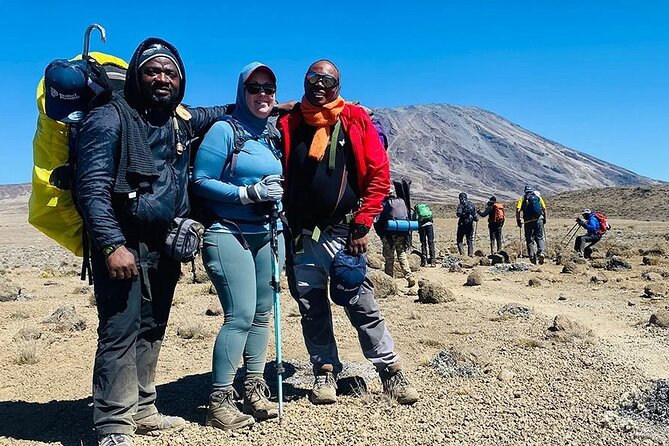
Rongai is Kilimanjaro’s northern route, and that matters. It is quieter than the popular Marangu approach and usually gets less rain, making it a sensible choice during wet months. The first day leads through farms and pine forest, then the trail grows wilder as you angle toward Mawenzi Peak.
I like the route’s remote feel and its generous support package. Your guides lead, the porters carry camp gear, and the cooks prepare three meals a day, with vegetarian, vegan, halal, gluten-free, and other meal plans available. The main caution is the schedule: summit day takes about 15 hours, after an 11:00 p.m. wake-up, so you need solid fitness and a steady head for long uphill walking.
Key points before you book
- Northern approach: Rongai is the only Kilimanjaro route that begins from the north, near the Kenyan border.
- Eight-day trip: The mountain climb takes six days, with one hotel night before and one after the trek.
- Quiet opening stages: The route starts beside maize, bean, and potato fields before entering pine forest and more remote country.
- Strong support team: Hilbas Tours provides licensed English-speaking guides, porters, cooks, assistant guides, camp staff, medical kits, oxygen cylinders, and oximeters.
- Long summit push: Day six covers 21 kilometers and combines the ascent to 5,895 meters with the descent to 3,720 meters.
- Small maximum group: The advertised maximum is 15 people, a useful size for keeping the walking pace and camp routine manageable.
Why Rongai can be the right side of Kilimanjaro
Kilimanjaro is not one single trail. Each route gives you a different introduction to Africa’s highest mountain, and Rongai feels distinct from the busier southern approaches.
You begin on the northern side, close to Tanzania’s border with Kenya. The route has a reputation for receiving less rain than the southern slopes, so it can be a practical choice during the rainy season. That does not make the mountain dry or easy, but it can mean a more comfortable start and fewer wet hours in the forest.
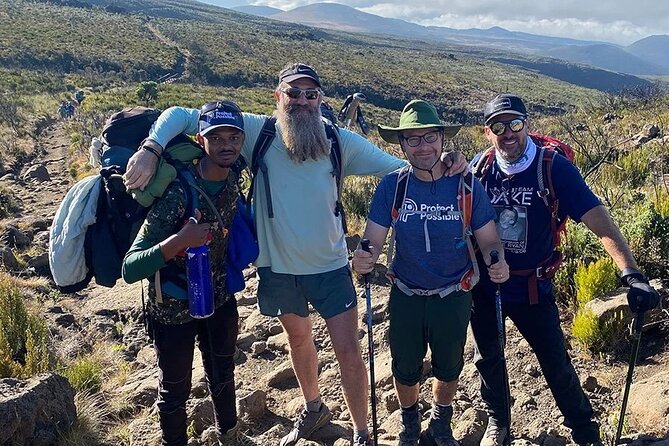
The early section also has a real wilderness quality. You walk from Nalemuru village through cultivated fields, then into pine forest where black-and-white colobus monkeys may be present. The trail climbs gently at first, which helps you settle into the slow rhythm needed at altitude.
The route later crosses toward Mawenzi Peak and joins the broader high-mountain system near Kibo. This gives you changing views and a sense of crossing the mountain rather than simply walking up and down the same corridor.
The tradeoff is the pace of the trip. The itinerary gives you several acclimatization hours near Mawenzi Tarn, but it still reaches the summit in six climbing days. Some longer Kilimanjaro programs add another day to make the altitude adjustment gentler. Here, you need to walk slowly, drink as directed, eat even when your appetite fades, and tell your guide early if you feel unwell.
Other routes up the mountain from Moshi:
- Kilimanjaro climb by Lemosho Route (7-day)
★ 5.0 · 651 reviews - Kilimanjaro climb, Machame Route (7-day)
★ 5.0 · 262 reviews - Kilimanjaro Climbing Lemosho Route 8 Days.
★ 5.0 · 186 reviews
Arrival in Moshi and the pre-climb night
Your trip begins with pickup at Kilimanjaro International Airport. A Hilbas representative transfers you to the hotel, where you can shower, sleep in a proper bed, attend a briefing, and check your mountain equipment.
That first night is more useful than it may sound. A long flight, airport transfers, and unfamiliar gear can make the first hiking morning harder than expected. The company also arranges equipment rental if you need items such as personal clothing, footwear, or a sleeping bag.
The package includes one hotel night before the climb and one after it, with two people sharing a room unless you pay extra for single accommodation. The stated start time is 9:00 a.m., but your airport arrival and hotel transfer are part of the first day, so allow a full day for the arrival process.
Day two: from Marangu Gate to Rongai Gate
The first mountain day begins with a drive to Marangu Gate for registration. Your guides and porters prepare the equipment there, then you continue by vehicle for about three hours to Rongai Gate, also called Nalemuru.
This two-gate arrangement is worth understanding. You register on the Marangu side, but your walk begins on the northern side. Lunch is served on the way or at the gate before you start hiking.
The walking distance is about 8 kilometers, with roughly six hours on the trail. You begin around 1,900 meters and finish at about 2,626 meters, passing through rainforest and pine woodland.
The trail first crosses small farms growing maize, beans, and potatoes. Then the path narrows and enters forest. The slow climb is a good introduction to the mountain, though the drive and registration make this a longer day than the walking distance alone suggests.
Your guide sets the pace, and that pace should feel deliberately slow. Do not treat the first day as a chance to prove your fitness. The goal is to reach camp with energy left for the higher ground ahead.
Day three: moorland and the second cave
After breakfast, you continue toward the second cave, climbing from about 2,626 meters to 3,600 meters before dropping slightly to a campsite near 3,450 meters. The distance is about 12 kilometers, and the walking time is listed at seven hours.
This is your first clear transition into moorland. The forest thins, views open, and the mountain begins to feel less like a woodland hike and more like a high-altitude climb.
Lunch is taken at the second cave. After eating, you cross the moorland southeast toward Mawenzi Peak, moving over small rises and dips before reaching a sheltered valley.
The route profile is helpful for acclimatization because you climb higher during the day and sleep a little lower than the highest point reached. Still, the change in altitude can affect your sleep, breathing, appetite, and energy. Your guide carries an oximeter and medical kit, and the crew includes guides with Wilderness First Aid certification.
Same base, a different kind of day out:
- Safari Serengeti And Ngorongoro
★ 5.0 · 288 reviews - Climbing Kilimanjaro – Machame Route
★ 5.0 · 170 reviews - Climbing Kilimanjaro through 7 days Machame Route
★ 5.0 · 151 reviews - Kilimanjaro climb, Lemosho Route (8-day)
★ 5.0 · 148 reviews
Day four: Mawenzi Tarn and an afternoon to adjust
Day four covers only about 5 kilometers, but it is steep. You climb grassy slopes from 3,600 meters to about 4,300 meters, with around six hours of walking.
The reward is a different view of Kilimanjaro National Park and Mawenzi Peak. Mawenzi is the jagged secondary summit of Kilimanjaro, and the campsite at Mawenzi Tarn places you in a dramatic high-altitude setting.
You arrive in time for lunch, then have the afternoon to explore nearby ground and adjust to the elevation. This is one of the most valuable parts of the route. A short walking day gives your body time to respond before the push toward Kibo.
Do not turn the afternoon into a hard workout. A gentle walk, warm food, water, and rest are more useful than chasing extra distance. The mountain can look close here, but the thinner air changes every effort.
Day five: crossing the Saddle to Kibo Hut
The next day leads west across the Saddle, the broad, dry area between Mawenzi and Kibo. You walk about 10 kilometers in roughly six hours, rising from 4,300 meters to approximately 4,720 meters at Kibo Hut.
This section is alpine desert. There is little shelter and the terrain feels stark, dry, and exposed. The views of both major Kilimanjaro peaks make the crossing memorable, but the open ground also gives you nowhere to hide from wind or sun.
Lunch may be packed on the trail or served hot at Kibo Hut, depending on your pace. That detail matters because groups do not always move at the same speed. Keep snacks accessible and follow your guide’s advice about eating and drinking.
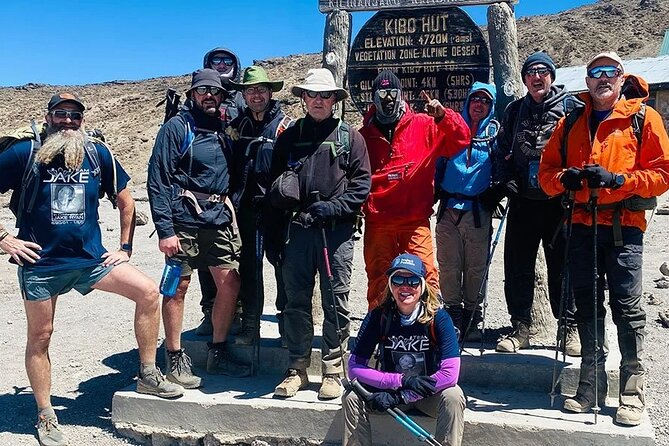
At Kibo Hut, you receive an early dinner and go to bed. The sleep period is short because you wake around 11:00 p.m. for tea and biscuits. Pack your summit clothing before lying down, since searching through bags in the dark at high altitude is an avoidable nuisance.
Day six: the 5,895-meter summit push
Summit day is the hardest part of the trip. The listed distance is 21 kilometers, and the walking time is about 15 hours. You start near midnight from Kibo Hut, climbing a switchback trail over volcanic scree.
The route passes William Point at about 5,000 meters and Hans Meyer Cave near 5,200 meters. The cave provides a useful rest point before the steep section toward Gillman’s Point, which sits at about 5,681 meters on the crater rim.
From Gillman’s Point, you continue around the crater rim toward Uhuru Peak, the summit at 5,895 meters. The final section is demanding because of the altitude, cold, loose stone, darkness, and accumulated fatigue. Your guide’s pace and judgment are important here, and you should speak up about symptoms rather than trying to hide them.
After the summit, you descend to about 3,720 meters. Reaching the top is only half of this day’s work. The descent can feel easier on the lungs but punishing on tired knees and feet, so trekking poles, suitable footwear, and careful steps matter.
Hilbas provides oxygen cylinders, oximeters, and medical kits. These are safety tools, not substitutes for acclimatization or a decision to turn back. A good mountain crew will treat a safe descent as more important than a summit photograph.
Day seven: through moorland and rainforest to Marangu Gate
After breakfast, you continue downhill from roughly 3,720 meters to 2,720 meters. The day covers about 19 kilometers and takes around eight hours.
The vegetation changes again as you pass through moorland and return to rainforest. You may see birds, tall trees, flowers, and other signs of lower-altitude life returning as you descend.
The route ends at Marangu Gate, where every climber signs out and receives a completion certificate. A Hilbas vehicle then takes you back to the hotel, passing coffee and banana farms around the Marangu villages.
This final drive offers a useful glimpse of everyday agriculture after several days above the tree line. It also makes clear how quickly Kilimanjaro’s climate zones change.
What the $2,282 price covers
At $2,282 per person, this is not a bare-bones hiking fee. The price includes airport pickup and drop-off, hotel transfers, two hotel nights, shared tent accommodation, park fees, camping fees, vehicle fees, rescue fees, mountain entry fees, crew salaries, and the services of guides, porters, cooks, waiters, and camp staff.
You also receive three meals a day on the mountain, drinks such as tea, coffee, Milo, and water, plus group equipment including a dining tent, tables, chairs, and crockery. Vegetarian, vegan, lactose-free, gluten-free, halal, and other meal plans can be arranged.
That package has real value because Kilimanjaro costs are not limited to the walking itself. Park charges, transport, food, tents, staff, and rescue access add up quickly. The main extra costs are flights, your Tanzanian visa, travel insurance, personal gear, laundry, telephone use, souvenirs, and crew tips.
Single hotel rooms and single tents cost extra. If you are traveling alone, the standard shared arrangements do not mean the price includes private accommodation.
The crew and the human side of the climb
The support team is a major part of this experience. You are not carrying the group tent, cooking equipment, or most camp supplies. Porters handle the mountain equipment, cooks prepare meals, and guides manage the route and daily pace.
The guiding team connected with this operator includes names such as Hilary, Emmanuel, Felix, Elinariki, and Bariki. Hilary, in particular, is associated with calm encouragement and extensive experience on the mountain. The exact guide assigned to your climb may differ, but you should expect an English-speaking, park-licensed guide and a wider support crew.
Crew care and tipping deserve your attention. Tips are not included, so budget for them separately and ask the company for current guidance before departure. You are paying for a labor-intensive climb, and fair treatment of porters matters as much as the summit goal.
Who should choose this route?
I would choose Rongai if you want a quieter opening, prefer a northern approach, or plan to climb during the rainy season. It also suits you if the Marangu route sounds too busy and you like the idea of crossing from remote forest into the high country around Mawenzi and Kibo.
This trip fits people with moderate physical fitness who can handle long walking days and a very demanding summit night. It is not a casual sightseeing tour. The steep ground, altitude, cold, and 15-hour summit day require preparation.
You should think twice if you want the slowest possible altitude schedule or dislike shared tents and group routines. The maximum group size is 15, which is reasonable, but you will still share the mountain experience with other climbers and follow the pace of the group and guides.
Should you book the Rongai Route?
Book this climb if you value the quieter northern trail, a full support crew, and a package that includes the major mountain costs. The route gives you varied scenery, time near Mawenzi Tarn, and a genuine sense of moving through Kilimanjaro’s different climate zones.
Before paying, confirm the exact hotel, room-sharing plan, equipment rental rates, tipping guidance, and your personal insurance coverage. Also make sure you are comfortable with the six-day mountain schedule and the 15-hour summit push.
The cancellation terms are strict near departure: cancel at least six full days ahead for a full refund, two to six days ahead for a 50 percent refund, and within two days for no refund. If your fitness, gear, and schedule are in order, Hilbas Tours offers a practical, well-supported way to approach Kilimanjaro from its less crowded side.
FAQ
How long does the full Kilimanjaro experience take?
The full program lasts about eight days. Six days are spent climbing the mountain, with one hotel night before the climb and one night afterward.
Where does the Rongai Route begin?
The route begins near Nalemuru village at Rongai Gate on the northern side of Kilimanjaro, close to the Kenyan border.
What is the highest point reached?
The summit is Uhuru Peak at 5,895 meters, or 19,341 feet. The itinerary also identifies Gillman’s Point at about 5,681 meters.
Are airport transfers included?
Yes. Pickup and drop-off at Kilimanjaro International Airport are included, along with transportation between the hotel and Kilimanjaro National Park.
Are meals included?
Yes. Three standard meals a day are provided on the mountain. Vegetarian, vegan, lactose-free, gluten-free, halal, and other meal plans are available.
Is camping equipment included?
Shared tent accommodation and group equipment such as a dining tent, tables, chairs, and crockery are included. Personal gear, including sleeping bags, hiking clothes, and footwear, is not included but may be available to rent.
What happens if I need to cancel?
A cancellation at least six full days before the start time qualifies for a full refund. Cancellation two to six full days before the start time qualifies for a 50 percent refund, while cancellation within two days is nonrefundable.
Just added in Moshi
- Wildlife Extravaganza: Manyara, Tarangire & Ngorongoro in 3 Days★ 5.0 · 3 reviews
- West Kilimanjaro cycling Adventures★ 4.5 · 8 reviews
- machame route★ 5.0 · 16 reviews
- Kilimanjaro Climb • Machame Route ~ 10 Day★ 5.0 · 6 reviews
- Kilimanjaro Climbing Umbwe Route★ 5.0 · 3 reviews
- Mt Kilimanjaro 6 days Marangu route hike★ 5.0 · 3 reviews
- Kilimanjaro Climb • Marangu Route ~ 9 Day★ 5.0 · 4 reviews
- 3 Days Private E-Bike Tour in West Kilimanjaro★ 5.0 · 3 reviews
Kilimanjaro Treks, compared.



8-Day Small-group Lemosho Kilimanjaro Summit Trekking
Read our review →

5 Days Best of Tanzania Luxury Safari Northern Circuit
Read our review →

Climbing Kilimanjaro through 7 days Machame Route
Read our review →
7-Day Machame Kilimanjaro Summit Tour from Arusha
Read our review →Browse the lists this tour appears in