
Reviewed · KILIMANJARO TREKS
Kilimanjaro climb, Northern Circuit route (8-day)
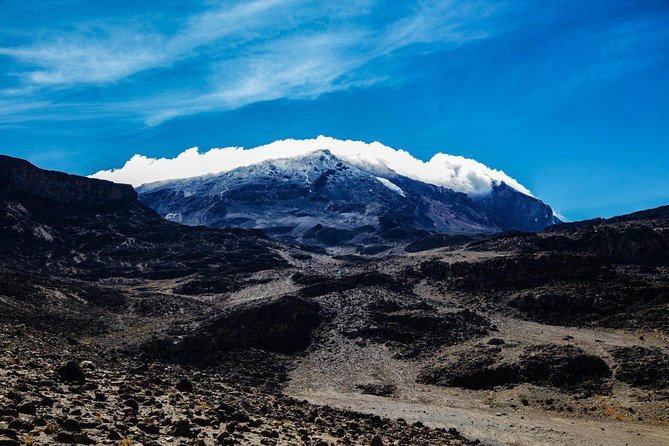
The Northern Circuit earns its reputation the hard way: you spend more time on the mountain, but that extra time gives your body a better chance to adjust. This eight-day climb reaches Uhuru Peak at 5,895 meters after a gradual route through the Shira Plateau, Lava Tower, Moir Valley, and Kilimanjaro’s quiet northern slopes.
I like the low-crowd route and the careful altitude plan. I also like the practical support: two-person North Face tents, three meals a day, medical checks, oxygen, and guides trained as Certified Wilderness First Responders. The main drawback is simple: this is a serious commitment, not a quick holiday hike. The summit night is cold, tiring, and physically demanding, even after several days of acclimatization.
- A rare northern approach: You cross remote ground with wide views toward Kenya and the Tsavo and Amboseli valleys.
- A gradual altitude schedule: The route takes at least eight climbing days, with several acclimatization walks.
- Strong mountain support: Guides, porters, cooks, camp staff, medical kits, oxygen, and altimeters are included.
- Private group format: Only your own group participates, which allows the guide team to adjust the pace and route.
- A full-service price: At $4,010 per person, the cost covers park fees, transport, lodging, food, equipment, and airport transfers.
- A demanding summit finish: You climb from School Hut at about midnight, reach Uhuru Peak, then descend a long way the same day.
Why the Northern Circuit takes eight days
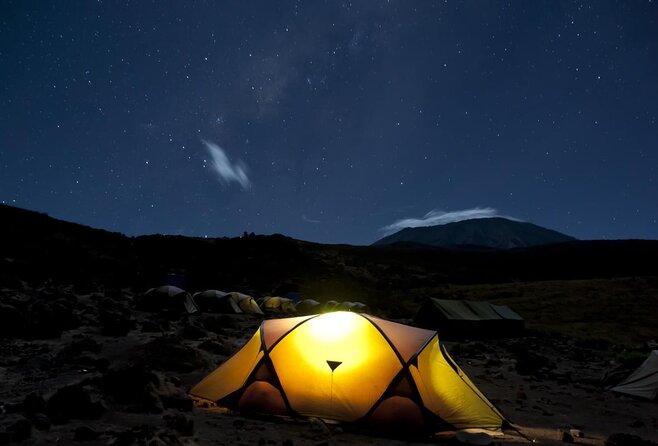
Most people first notice the route length. The Northern Circuit is the newest and longest route on Kilimanjaro, and it avoids the rush of shorter itineraries. You do not simply walk uphill each day. You climb, rest, make an acclimatization walk, and then sleep lower or only slightly higher when possible.
That rhythm matters at altitude. The itinerary reaches 3,500 meters on the second day, then increases slowly through Shira 1, Shira 2, Moir Hut, 3rd Cave, School Hut, and finally Uhuru Peak. You still need reasonable fitness, but you are given more time than on a rushed five or six-day climb.
The route is also appealing if you want quiet. The northern slope sees fewer climbers than the better-known southern approaches. You should not expect total isolation, since the trail connects with the Rongai route near 3rd Cave Camp, but the early and middle sections feel remote and open.
Arrival in Moshi and the first briefing
Your airport transfer begins at Kilimanjaro International Airport. An Altezza representative takes you to Aishi Machame Hotel, where you have a comfortable base before and after the climb. The hotel provides hot water, internet access, a swimming pool, and a place to sort clothing and gear.
The first evening includes a briefing with the management team. A second meeting takes place the next morning with your guide and mountain crew. This may sound like routine paperwork, but it is useful. You can confirm the daily plan, check equipment, discuss food needs, and ask about any medical concerns before the vehicle leaves town.
The package includes two hotel nights, with two people per room except on solo climbs. Hotel meals before and after the trek are not included, so budget separately for lunch and dinner on those days. Check-in begins at 2:00 PM, and checkout is at 11:00 AM on the final day.
Other routes up the mountain from Moshi:
- Kilimanjaro climb by Lemosho Route (7-day)
★ 5.0 · 651 reviews - Kilimanjaro climb, Machame Route (7-day)
★ 5.0 · 262 reviews - Kilimanjaro Climbing Lemosho Route 8 Days.
★ 5.0 · 186 reviews
Day 2: Londorossi Gate and Shira 1
The drive to Kilimanjaro National Park’s western entrance takes about three to four hours. At Londorossi Gate, the team handles permits and registration with the search and rescue service. From there, off-road vehicles continue toward the drop-off point at about 3,500 meters.
That vehicle access is one of the route’s unusual features. You start high, which saves walking time, but it also means you must take the first hours seriously. Even a modest walk can feel different at 3,500 meters. Move slowly, drink regularly, and do not treat this first day as an easy warm-up.
The walk to Shira 1 has only a small altitude gain. It is a manageable introduction to the mountain, with your first broad views across the Shira Plateau. The listed walking time is about five hours, though the day also includes driving and gate formalities.
Day 3: Shira 2 and the Lava Tower acclimatization walk
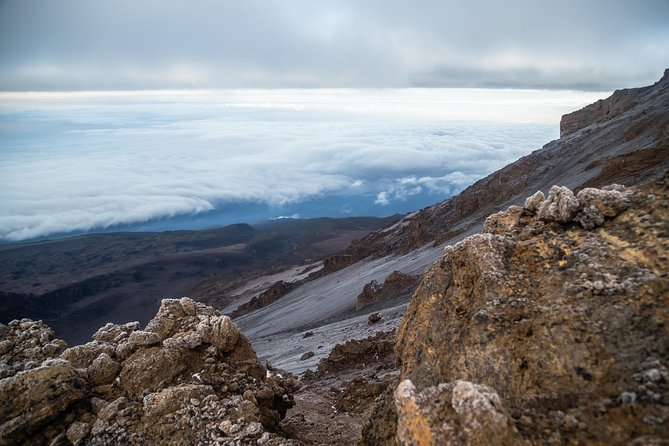
The trek from Shira 1 to Shira 2 gains roughly 300 meters. The physical effort is modest, which gives you time to notice the plants and the changing surroundings. On a clear day, Mount Meru may appear in the distance. At 4,566 meters, Meru is Tanzania’s second-highest mountain and Africa’s fifth-highest peak.
After lunch and about two hours of rest, you make an acclimatization walk toward Lava Tower. You gain another 300 meters, then return to camp. This is classic high-altitude planning: climb higher during the day, but do not yet sleep at that height.
The day takes about six hours. It is not a rest day in the ordinary sense, but it gives you a useful test. Pay attention to headache, nausea, unusual fatigue, or shortness of breath, and tell your guide early. The crew carries medical kits and conducts health checks, but good safety begins with honest communication.
Day 4: Lava Tower and Moir Hut
This is the first day that feels properly high. From Shira Camp at about 3,900 meters, you climb toward Lava Tower at 4,630 meters. The trail rises and falls, and the altitude can bring discomfort even if your legs feel strong.
You stop for lunch at Lava Tower and spend one or two hours at the higher elevation. That pause is important for acclimatization. It can also be the point where you discover that the mountain will not reward speed. Your guide may bypass Lava Tower and use a porter trail if someone has not adjusted well. In that case, the highest point is about 4,400 meters.
After Lava Tower, the route climbs slightly before descending to Moir Hut Camp. The total day takes about eight hours. The up-and-down walking can be more tiring than a steady climb, so keep your pace controlled and save energy for later.
Same base, a different kind of day out:
- Safari Serengeti And Ngorongoro
★ 5.0 · 288 reviews - Climbing Kilimanjaro – Machame Route
★ 5.0 · 170 reviews - Climbing Kilimanjaro through 7 days Machame Route
★ 5.0 · 151 reviews - Kilimanjaro climb, Lemosho Route (8-day)
★ 5.0 · 148 reviews
Day 5: Around Kilimanjaro’s northern slope
After a short, steep climb out of Moir Valley, you begin circling the northern side of Kilimanjaro. The route continues with repeated rises and drops rather than one long, steep ascent. It is a long day, about seven hours, but the physical demands are described as moderate.
This is one of the route’s best scenic sections. The trail runs near the Kenyan border, with views toward the Tsavo and Amboseli valleys. The northern side feels different from the more familiar images of Kilimanjaro. You see a quieter, drier side of the mountain and have more room to absorb the scale of the setting.
Do not mistake scenic walking for easy walking. By now you have spent several days at altitude, and the cumulative effort matters. Keep your daypack light, use trekking poles if you like them, and follow the pole pole pace your guides set. The phrase means slowly, and on Kilimanjaro it is sound advice.
Day 6: 3rd Cave Camp and the Rongai connection
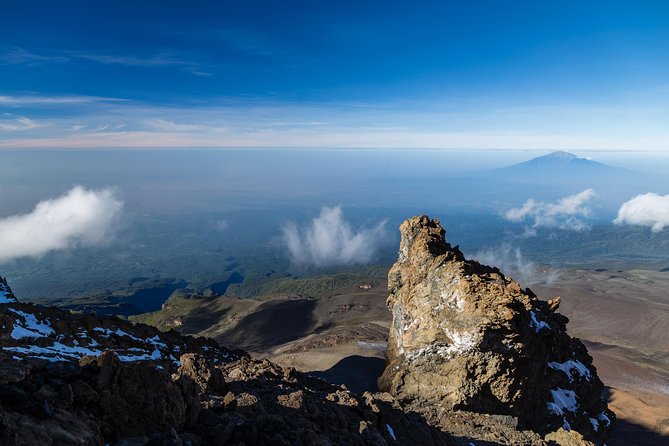
The route completes its circuit of the northern slope and reaches 3rd Cave Camp. This is where it meets the traditional Rongai route. The walking day is shorter than Day 5, and the schedule says your body should now be better adjusted to about 4,000 meters.
One unusual detail in the published schedule is a 14-hour day notation for this stop. The actual description calls the trekking shorter than the previous day, so treat that figure as the full scheduled activity window rather than 14 hours of continuous walking. Confirm the exact camp timing during your briefing.
This camp is a useful pause before the summit push. You have already crossed the quieter northern section, but the hardest work is still ahead. Eat well, drink, check your layers, and prepare for an early night.
Day 7: School Hut at 4,750 meters
The trail climbs to School Hut Summit Camp at 4,750 meters. The walking itself is not described as especially hard, but the altitude makes every task slower. The goal is to arrive with strength left for the night.
Your guides recommend sleeping, avoiding strenuous activity, and drinking plenty of fluids. This is not the afternoon to wander around camp or reorganize every item in your bag. Keep your clothing and summit gear ready before you lie down.
The summit attempt begins around midnight. That means you may get only a short period of sleep, and it is worth accepting that from the start. Eat the food offered, protect your water from freezing conditions as best you can, and keep your headlamp and warm layers close.
Day 8: Uhuru Peak, Barafu, and Millennium Camp
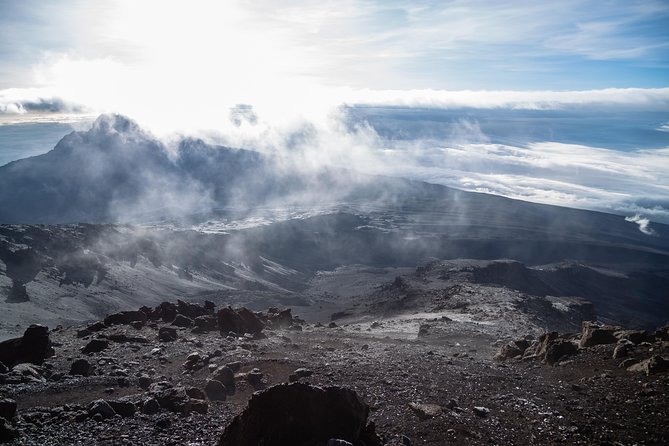
The summit climb from School Hut to Uhuru Peak is technically straightforward, but the altitude makes it hard. You climb from 4,750 meters to 5,895 meters in darkness, with a guide assigned for every two climbers. That ratio allows close attention to your condition and pace.
The guides’ main job is monitoring health on the way to the summit. This is where the included medical checks, oxygen tanks, and altimeters have real value. Oxygen is not a shortcut to the top, and you should never hide symptoms to continue. The guide team can make a safer decision if you speak plainly.
After reaching Uhuru Peak, a walk near the closest glacier may be possible. It depends on conditions, energy, timing, and the guide’s judgment. The summit is not the end of the day. You descend to Barafu Camp for a two-hour lunch and rest stop, then continue to Millennium Camp at 3,820 meters.
The descent deserves respect. The schedule specifically warns that most accidents happen while going downhill. Your legs are tired, your concentration may be low, and loose ground can cause falls or damaged toes. Short steps, careful footing, and properly tightened boots matter more here than speed.
Day 9: The rainforest and Mweka Gate
Millennium Camp sits in the tropical rainforest, and the lower elevation usually feels like a gift after summit day. A hot breakfast comes before the final descent to Mweka Gate at 1,650 meters.
The walk takes you from high alpine ground back into thicker vegetation. At the park exit, you can look back on the route and thank the support crew before transferring to the company offices for accomplishment certificates. Then you return to the hotel for a proper rest.
This is also when the team’s work becomes especially clear. A Kilimanjaro climb is not only a guide leading from the front. It depends on porters, cooks, camp staff, drivers, and managers handling everything from tents to meals and medical supplies.
Food, tents, and the support crew
The package includes three meals each day on the mountain. You can request vegetarian, vegan, lactose-free, gluten-free, halal, and other meal plans. Drinks include tea, coffee, juices, and soda.
Food is more than comfort at altitude. You need regular calories, and having meals prepared removes one practical burden from an already demanding day. The exact menu is not specified, so tell the operator about allergies or strict dietary needs before departure.
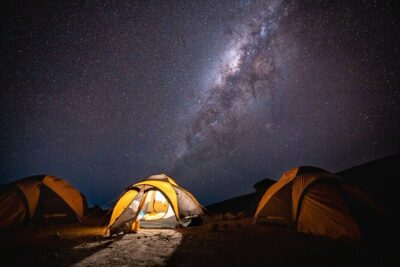
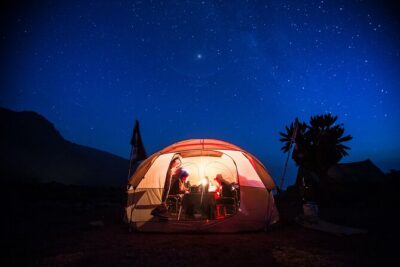
You sleep two people per North Face VE-25 tent, except on solo climbs. The group setup includes a dining tent, sleeping pads, tables, chairs, crockery, and cutlery. You do not need to bring camp furniture or cooking supplies, but you do need personal clothing, boots, a sleeping bag, and other hiking gear. Equipment rental is available for an additional cost.
The company uses professional porters, camp masters, and cooks. Tips are not included and are optional, based on your satisfaction. Set aside money for gratuities, and ask before the climb how the tipping process works for the full crew.
What $4,010 buys you
At $4,010 per person, this is not a budget Kilimanjaro trip. The value comes from the long route and the amount of support built into the price. Park fees, ground transport, airport pickup and drop-off, two hotel nights, guides, porters, cooks, tents, meals, medical kits, checks, oxygen, and altimeters are included.
The private format also matters. Only your group participates, so the guide team can adjust pace and route choices around the group’s condition. If one climber struggles at Lava Tower, the guide may choose the lower porter trail rather than forcing everyone through the higher section.
You still need to pay for international transport to Tanzania, a visa, climbing insurance, personal gear, and hotel meals before and after the trek. Insurance should cover trekking up to 6,000 meters, which is especially important on a climb reaching 5,895 meters.
A group discount may be available, but the amount is not stated. Ask for the final price in writing, including any equipment rental, late hotel checkout, and tipping guidance.
The human side of the operation
The strongest pattern in the experience is the attention from the crew. Specific guides praised in the available feedback include Albert, Khatib, Ally, Joseph, Bosco, Osman, Stanley, Osward, Justin, Honesti, Regan David Lyimo, and Frank Daudi Mbise. Your own team may be different, so do not book expecting a particular person unless the company confirms it.
The practical stories are more useful than generic praise. One climber needed help after developing a bad knee, and two crew members assisted with the final 13 kilometers. Another group had a member leave early because of illness, while the remaining climbers continued with the guide team. These details show both sides of the climb: the support can be excellent, but the mountain can still change your plan.
Several people describe strong organization from initial planning through hotel checkout. That is valuable on a trip involving airport transfers, permits, food, medical checks, porters, and several camps. It does not remove the need for preparation, but it reduces the number of small problems you must solve yourself.
Who should choose this route
I would choose the Northern Circuit if you value quiet trails, gradual acclimatization, and a full mountain experience more than a short schedule. It suits a reasonably fit person who can walk for several hours on consecutive days and accept basic camping at high altitude.
It is not the right choice if you want a relaxed sightseeing holiday with a mountain photo at the end. The route is long, the summit night is rough, and the descent after Uhuru Peak is still a major physical effort.
You should also be comfortable with uncertainty. A guide may alter the route around Lava Tower. A climber may need to stop. Weather and health can affect the glacier option and the summit timing. The safest success is not simply reaching the top. It is making sensible decisions all the way there.
Should you book this Kilimanjaro climb?
Book it if you want Kilimanjaro’s quieter side and are willing to pay for a long, well-supported route. The Northern Circuit gives you excellent acclimatization time, varied scenery, a private group format, and a large support system.
Think twice if price is your main concern or if you have limited time. Also remember that the advertised experience covers about 10 days, not only the eight mountain days: you need the arrival hotel night, the climb, the final hotel night, and airport transfer time.
The included safety systems and attentive crew make the $4,010 price easier to justify, but no operator can make altitude harmless. Arrive fit, carry suitable gear, buy insurance for trekking to 6,000 meters, and follow the guides’ medical advice. For the right climber, this is one of the more thoughtful ways to attempt Africa’s highest summit.
FAQ
How long does the full experience take?
The full program lasts approximately 10 days. Eight days are spent climbing the Northern Circuit, with hotel time before and after the mountain portion.
What is the highest point reached?
The climb reaches Uhuru Peak at 5,895 meters. School Hut Summit Camp is at about 4,750 meters before the midnight summit attempt.
Is airport transportation included?
Yes. Pickup and drop-off at Kilimanjaro International Airport are included, along with ground transportation during the program.
What meals are included?
The package includes nine breakfasts, seven lunches, and eight dinners. On the mountain, you receive three meals a day, with vegetarian, vegan, lactose-free, gluten-free, halal, and other meal plans available.
Do I need to bring my own climbing equipment?
You need to bring personal clothing, hiking boots, a sleeping bag, and other personal gear. Some equipment is available to hire. Group camping equipment, tents, sleeping pads, dining furniture, crockery, and cutlery are included.
Is climbing insurance included?
No. Mountaineering insurance is not included, and insurance covering trekking up to 6,000 meters is strongly recommended.
Just added in Moshi
- Kilimanjaro Airport Private Transfer from/to Moshi★ 5.0 · 14 reviews
- Kilimanjaro Climbing 5 days Marangu route★ 5.0 · 22 reviews
- 6 Days Machame route Kilimanjaro climbing★ 5.0 · 22 reviews
- 7 Days Highlight of Tanzania Mid-Range Standard★ 5.0 · 22 reviews
- 4 Day Mid-range Serengeti Safari★ 5.0 · 22 reviews
- Machame Route 6 days 5 Nights/Kilimanjaro Climb★ 5.0 · 23 reviews
- Private 4-Days Northern Circuit National Parks in Tanzania★ 4.5 · 26 reviews
- Tanzania Safari – The Great Migration in the North of the Serengeti and Lake Natron★ 5.0 · 25 reviews
Kilimanjaro Treks, compared.
8-Day Small-group Lemosho Kilimanjaro Summit Trekking
Read our review →
5 Days Best of Tanzania Luxury Safari Northern Circuit
Read our review →
Climbing Kilimanjaro through 7 days Machame Route
Read our review →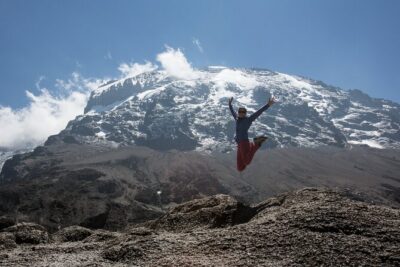
7-Day Machame Kilimanjaro Summit Tour from Arusha
Read our review →Browse the lists this tour appears in