
Reviewed · KILIMANJARO TREKS
Kilimanjaro Trek 6 Days Marangu Route
Kilimanjaro’s Marangu Route is the mountain’s hut-to-hut option, so you sleep in shared mountain huts instead of tents. That makes this a practical choice if you want the great climb without carrying camping equipment or sleeping on the ground. The route moves from forest to moorland, then across the high Saddle before the hard midnight push to Uhuru Peak.
I like the private format, which lets your group keep its own pace, and I like that the price covers park fees, hut fees, crew, meals, transfers, and hotel nights before and after the climb. The Maundi Crater detour is another fine touch, offering a broad view toward Kibo when the weather is clear.
The main caution is the schedule. The advertised climb is described as both five and six days, but the detailed plan covers five hiking days. The extra day for acclimatization is optional, so confirm exactly which version you are booking before paying.
Key points to know before you book
- Shared huts instead of tents: Marangu is the only Kilimanjaro route in this program with hut accommodation.
- A private climb from Moshi: Only your own group participates, with guides, porters, a cook, and assistant guides.
- Five hiking days are laid out: The optional extra acclimatization day is not included in the detailed five-day schedule.
- The summit day is demanding: Expect about 10 hours of hiking, a midnight start, steep scree, cold, and a long descent.
- Much of the main cost is covered: Park, forest, hut, rescue, and transfer fees are included, along with meals and hotel nights.
- Plan for extra costs: Gear rental, tips, flights, visas, insurance, hotel drinks, and some meals are separate.
Why the Marangu Route feels different
Marangu has a simple appeal: you can climb Kilimanjaro with a bed in a hut at the end of each stage. The huts are shared, not private hotel rooms, but they remove the need for a tent and sleeping mat. Mineral water, soft drinks, chocolates, and beer are available for purchase at the camps, according to the tour details.
That convenience does not make the mountain easy. Kilimanjaro rises to 5,895 meters, and the thin air becomes a serious factor above Horombo. The route is also a return route, meaning you go up and down along the same general path. It is efficient, but it offers less variety than a route that uses different trails for ascent and descent.
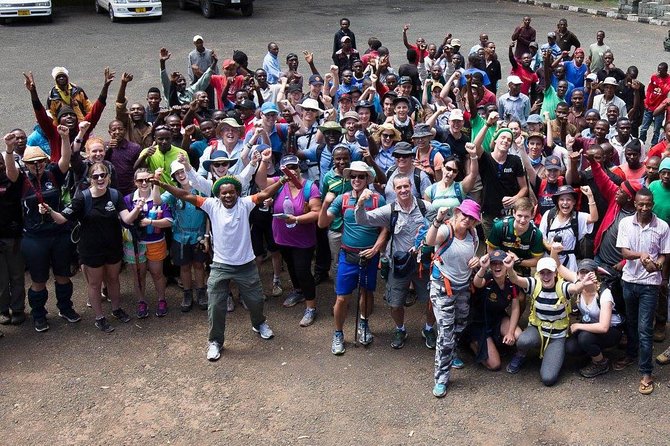
The climb is private, which is useful for pacing and comfort. You are not tied to a large public group, and the crew includes expert guides, assistant guides, a cook, and porters. The team carries equipment and supplies, allowing you to focus on walking, drinking enough water, and keeping warm.
The company has been associated with guides named Robert and Donovan, who led one reported climb with a daughter and parent team. Guide assignments can change, so treat those names as useful background rather than a guarantee that they will lead your departure.
Other routes up the mountain from Moshi:
- Kilimanjaro climb by Lemosho Route (7-day)
★ 5.0 · 651 reviews - Kilimanjaro climb, Machame Route (7-day)
★ 5.0 · 262 reviews - Kilimanjaro Climbing Lemosho Route 8 Days.
★ 5.0 · 186 reviews
Day 1: Marangu Gate and the forest climb
Your morning begins with a briefing after breakfast, followed by a transfer from Moshi to Marangu Gate. The drive takes about 45 minutes, and the stated meeting time is 8:30 a.m. Registration and park formalities take place at the gate before you begin walking.
The first stage covers about 12 kilometers and takes roughly five hours. You gain around 720 meters in elevation while walking through montane forest. This is a pleasant opening, but do not treat it as a casual stroll. It is your first chance to settle into a steady rhythm and learn how your body responds to uphill walking.
Carry a small daypack with the things you will need during the day: rain protection, an extra layer, skin care, and a camera if you want one. Your larger equipment is handled by the porters, but the details provided do not specify a porter weight limit, so ask about that before departure.
Water is supplied in bottled form on the first day and then boiled and filtered on the mountain. You should still ask how much personal drinking capacity to bring. Hydration matters more as you gain height, and the crew advises drinking regularly rather than waiting until you feel thirsty.
The first night is at Mandara Hut. This is the point where the Marangu format begins to show its value. You finish a forest walk and sleep in a hut rather than setting up camp, though shared accommodation means you should expect a basic communal setting.
Day 2: Maundi Crater and the moorland
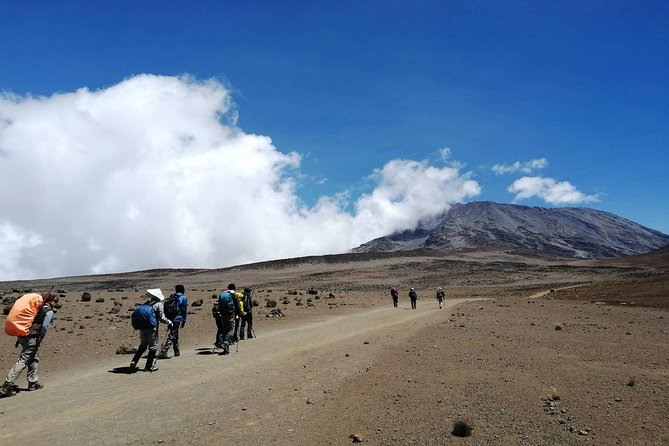
Day two takes you from Mandara Hut toward Horombo Hut. The walk is about 15 kilometers, lasts around six hours, and gains approximately 1,020 meters. You carry a picnic lunch, and the route soon leaves the forest behind.
A short forest section leads toward the base of Maundi Crater. From there, the setting changes to open moorland, with Kilimanjaro’s higher slopes beginning to feel more exposed. The suggested detour to the crater rim is one of the best small additions to this climb. From the rim, you may see Kibo Crater and, on a clear day, Kibo’s glaciers.
That view depends on weather, so keep expectations sensible. Clouds can erase the grand panorama, but the detour still gives you a break from the main trail and a chance to look back at the ground you have covered.
The elevation gain on this day is substantial. Walk slowly, even if you feel strong. A common mistake on Kilimanjaro is to spend too much energy early, then pay for it at higher altitude. Your guide controls the pace, but you should speak up if you develop a headache, nausea, unusual breathlessness, or other symptoms.
Horombo Hut sits at about 3,720 meters, though the provided plan does not state that figure. The important point is that this is the first night when altitude becomes a bigger concern. The optional acclimatization day matters here because an extra night at height can give your body more time before the summit attempt.
Day 3: The Saddle between Mawenzi and Kibo
The third stage covers about 15 kilometers and takes around six hours. You gain close to 980 meters while crossing into alpine desert. Vegetation becomes sparse, and the air feels noticeably thinner.
The path leads toward the Saddle, the broad high area between Mawenzi and Kibo. Two route choices are described, with the lower trail recommended because it is easier and passes the last watering point on the way up. Take that advice seriously. You need to collect all the water required until you return to Horombo during the descent.
This is a day for patience. The walk may not have the instant drama of the summit, but it prepares you for the next stage. Your job is to arrive at Kibo Hut with energy left, eat what you can, organize your warm clothing, and rest.
At this elevation, your appetite may be weaker, and food can seem less appealing. Three meals a day are included during the climb, prepared by the cook. The plan lists four dinners, four breakfasts, and five lunches, which fits a five-day schedule with meals arranged around the hiking stages. Confirm the exact meal plan if you add the extra acclimatization day.
The optional sixth day is worth serious thought for anyone worried about altitude. The shorter five-day schedule has a fast gain and a very demanding summit day. An added acclimatization day costs time and may change the price, but it gives you a more cautious plan than rushing directly from the Saddle to the summit.
Same base, a different kind of day out:
- Safari Serengeti And Ngorongoro
★ 5.0 · 288 reviews - Climbing Kilimanjaro – Machame Route
★ 5.0 · 170 reviews - Climbing Kilimanjaro through 7 days Machame Route
★ 5.0 · 151 reviews - Kilimanjaro climb, Lemosho Route (8-day)
★ 5.0 · 148 reviews
Day 4: The midnight push to Uhuru Peak
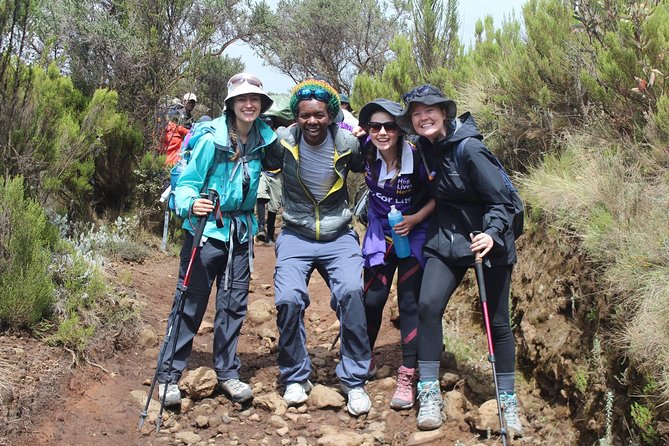
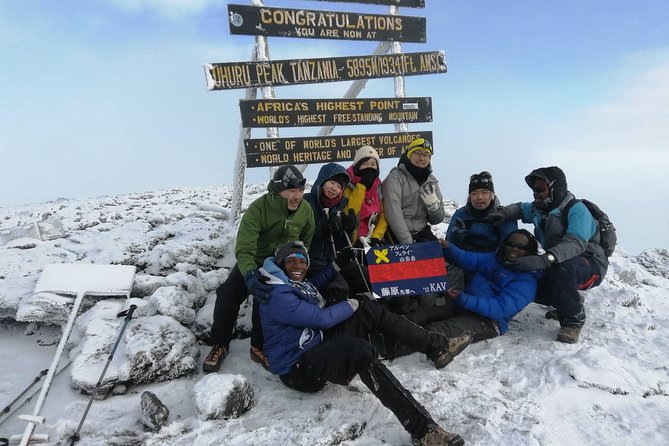
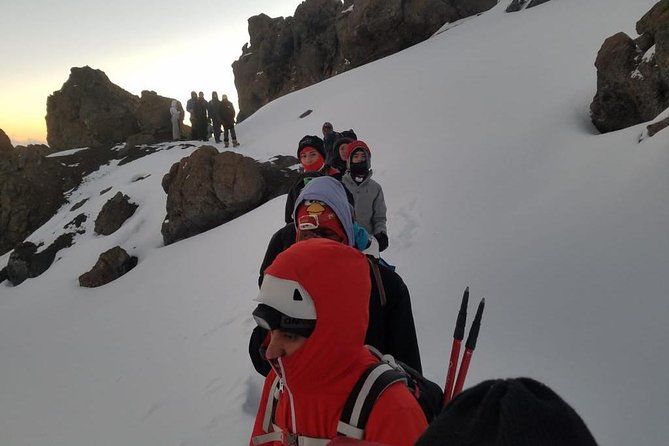
Day four is the hardest part of the climb. You wake shortly before midnight and begin walking in the dark toward Hans Meyer Cave, then Gillman’s Point, and finally Uhuru Peak.
The stated hiking time is about 10 hours, with roughly 27 kilometers covered in total. The elevation change is listed as about 1,195 meters up and 2,175 meters down. Those numbers explain why summit day feels so long: the climb begins before dawn, then continues with a major descent after the peak.
The route becomes steep and stony as you approach Gillman’s Point at about 5,680 meters. Move carefully and follow the guide’s pace. The surface can be loose, and the cold night makes basic tasks harder. Have your warm layers, gloves, head protection, and water ready before sleeping.
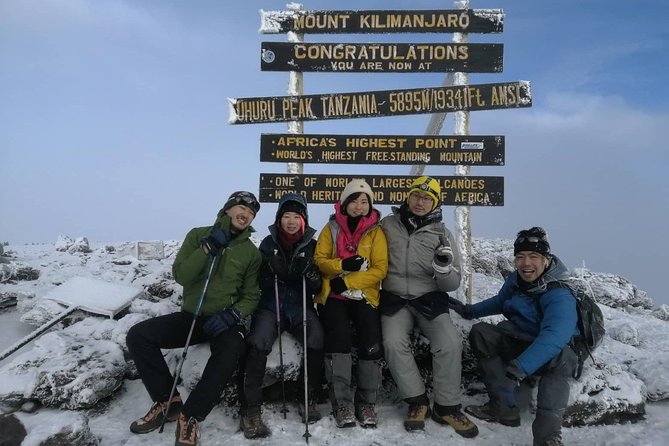
From Gillman’s Point, the final approach may involve snow for around two hours. Uhuru Peak is the highest point on Kilimanjaro, and reaching it is the main goal of the climb. The supplied plan does not promise a fixed time at the summit, so expect a brief stop for photographs and recovery before beginning the descent.
You may reach Gillman’s Point without continuing to Uhuru Peak. The climb awards a green certificate for Gillman’s Point and a gold certificate for Uhuru Peak. That distinction is useful because it recognizes progress without pretending that every summit attempt ends at the highest point.
The oxygen tank carried by the crew is for emergencies, not a way to make the summit easy. The trip is intended for people with moderate physical fitness, and you should discuss medical concerns with a qualified professional before booking. Travel insurance is not included.
Day 5: A long descent through changing zones
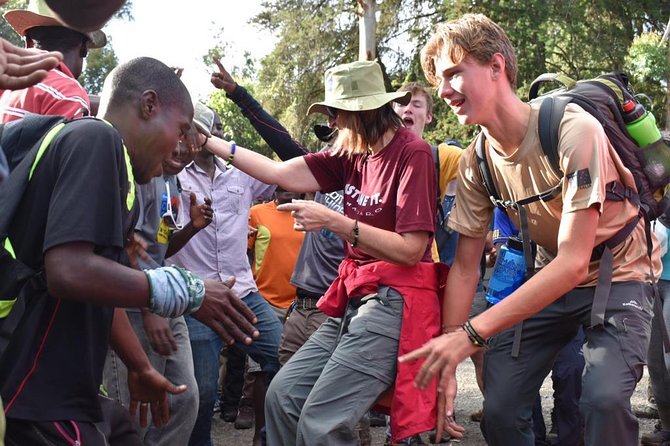
After the summit effort, you descend through the moorland and rainforest toward Marangu Gate. The stated distance is about 27 kilometers, with around six hours of hiking and 1,740 meters of descent.
Six hours after a midnight start and a summit attempt is still a serious workload. Your legs may feel worse going down than they did going up, especially on uneven ground. Trekking poles are not included, but they can be rented for a stated cost of $10 if you need them.
At the gate, you sign the register and receive your certificate. Then a road transfer returns you to your Moshi hotel, where the included post-climb night gives you a proper bed and a chance to shower, eat, and rest.
The return to the forest is a fitting final section because it shows how sharply Kilimanjaro changes with altitude. You began among trees, crossed moorland and alpine desert, reached snow and ice near the summit, then came back down through the same broad zones.
What the $1,846.16 price really covers
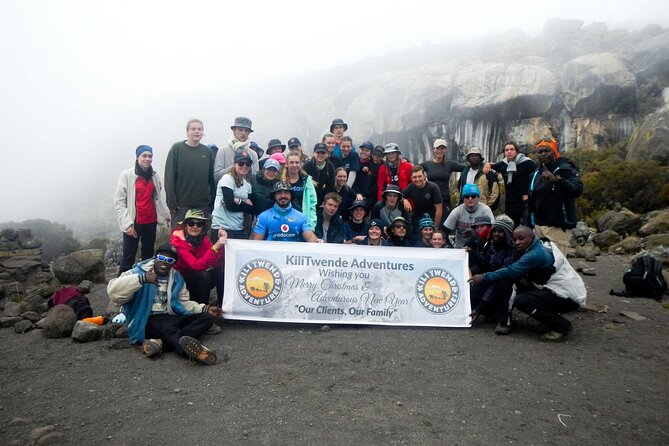
At $1,846.16 per person, this is not a low-cost day outing, but the number includes much more than guiding alone. The package includes one hotel night before and one after the trek, park entry fees, forest fees, Marangu hut fees, rescue fees, and 18 percent VAT on tour services.
It also includes transfers to and from the mountain gates, three meals a day during the climb, guides, assistant guides, a cook, and porters. Fair wages for the crew are included under the operator’s stated arrangements with the Kilimanjaro Park Authority and related associations.
That makes the price easier to assess. You are paying for a staffed mountain operation with huts, food, permits, transport, and safety support already arranged. You still need to budget for tips, flights, visa costs, insurance, hotel meals and drinks, laundry, and personal equipment.
Rental prices are supplied for several items: $40 for a sleeping bag, $35 for a duffle bag, $40 for hiking boots, and $10 for walking sticks. Those costs can add up, so compare the rental total with the cost of bringing reliable equipment from home.
One point needs clarification before booking: the title calls this a six-day trek, the summary calls it about five days, and the detailed route has five days. Ask if your price includes the extra acclimatization day, an additional hotel night, and the extra food and hut costs that may follow.
Who will like this climb most
I would recommend this option to you if you want a private climb with practical support and prefer huts to tents. The Marangu Route also suits you if carrying less camping equipment matters, or if you want a straightforward ascent and descent from the same side of the mountain.
You should be comfortable with long uphill walks and a very demanding summit day. A moderate fitness level is required, but fitness alone does not remove altitude risk. The five-day schedule is particularly brisk, so the optional extra day is worth considering if you have flexibility.
This may not suit you if you want a quiet wilderness camp, a slower high-altitude schedule, or a route that offers different scenery on the way down. Shared huts are basic, and drinks or snacks sold at camp cost extra.
The small number of published ratings means you should not treat the perfect score as a guarantee. Still, the detailed feedback connected with this operation emphasizes dependable equipment, dedicated staff, and supportive guiding. One account specifically names Robert and Donovan as motivating guides, while another praises service that was caring without being intrusive.
Booking details worth checking first
Pickup is offered, and the meeting time is 8:30 a.m. Confirmation is received when you book, and the activity is private, with only your group participating. The location is near public transportation, though the mountain transfer is arranged as part of the package.
Free cancellation applies if you cancel at least 24 hours before the experience start time. Changes or cancellations inside that period are not accepted for a refund, and cut-off times follow local time.
Before you commit, ask these practical questions:
- Is this the five-day climb or the optional six-day version?
- Are the extra acclimatization night and meals included?
- What is the porter equipment limit?
- Which guide will lead your group?
- What gear can be rented in Moshi?
- How are tips handled for guides, porters, cooks, and assistant guides?
Those answers will tell you more about the final cost and daily rhythm than the headline price alone.
Should you book the Kilimanjaro Marangu Route?
Book this climb if you value hut accommodation, private guiding, and a package that covers the main mountain costs. The Maundi Crater stop, full crew support, included transfers, and post-climb hotel night add real practical value.
I would lean toward the extra acclimatization day rather than forcing the five-day version, especially if you have never spent time at high altitude. Confirm the schedule and total price in writing, then budget for gear rental, tips, insurance, and personal documents.
If you want a supported and relatively simple way up Kilimanjaro, this is a sensible choice. If your priority is a slower ascent or a more varied route, ask about other options before settling on Marangu.
FAQ
How long is the Kilimanjaro Marangu Route climb?
The detailed hiking plan covers five days. An optional extra day for acclimatization is available, so the trip may be arranged as six days. Confirm the exact schedule when booking.
Where does the trek begin?
The climb begins at Marangu Gate, reached by road transfer from Moshi. The drive takes about 45 minutes.
What time does the experience start?
The stated meeting time is 8:30 a.m. on the first day.
Do I sleep in tents?
No. The Marangu Route uses shared mountain huts, so tents are not required.
Are meals included?
Three meals a day are included during the climb. Hotel meals in Moshi are limited to the included arrangements, and hotel lunch, dinner, and drinks are not included unless specifically stated.
Is drinking water provided?
Bottled water is provided on the first day. Water on the mountain is boiled and filtered.
Are park and hut fees included?
Yes. Park entry, Marangu hut, forest, and rescue fees are included, along with 18 percent VAT on tour fees and services.
Is equipment included?
Personal gear is not included. Some equipment may be rented in Moshi, including a sleeping bag, duffle bag, hiking boots, and walking sticks.
Is this a private tour?
Yes. Only your own group participates in the activity.
What happens if I cancel?
You can receive a full refund if you cancel at least 24 hours before the experience start time. Cancellations or changes made less than 24 hours before the start time are not accepted for a refund.
More Hiking & Trekking in Moshi
- Private Kilimanjaro Hike 7 Day Lemosho Route
★ 5.0 · 60 reviews - Best Kilimanjaro hiking day trip tour with Kilinge Adventures
★ 4.5 · 54 reviews - #1. Best Kilimanjaro Day hike Tour-Machame Route-ISMANI
★ 4.2 · 47 reviews - Best Kilimanjaro Adventure 7 days Machame route Trekking
★ 5.0 · 42 reviews
Just added in Moshi
- Wildlife Extravaganza: Manyara, Tarangire & Ngorongoro in 3 Days★ 5.0 · 3 reviews
- West Kilimanjaro cycling Adventures★ 4.5 · 8 reviews
- machame route★ 5.0 · 16 reviews
- Kilimanjaro Climb • Machame Route ~ 10 Day★ 5.0 · 6 reviews
- Kilimanjaro Climbing Umbwe Route★ 5.0 · 3 reviews
- Mt Kilimanjaro 6 days Marangu route hike★ 5.0 · 3 reviews
- Private Cycle to Kilimanjaro Bike Park Safari★ 5.0 · 6 reviews
- Kilimanjaro Climb • Marangu Route ~ 9 Day★ 5.0 · 4 reviews
Kilimanjaro Treks, compared.



8-Day Small-group Lemosho Kilimanjaro Summit Trekking
Read our review →

5 Days Best of Tanzania Luxury Safari Northern Circuit
Read our review →

Climbing Kilimanjaro through 7 days Machame Route
Read our review →
7-Day Machame Kilimanjaro Summit Tour from Arusha
Read our review →Browse the lists this tour appears in