
Reviewed · KILIMANJARO TREKS
Mount Kilimanjaro – Machame route
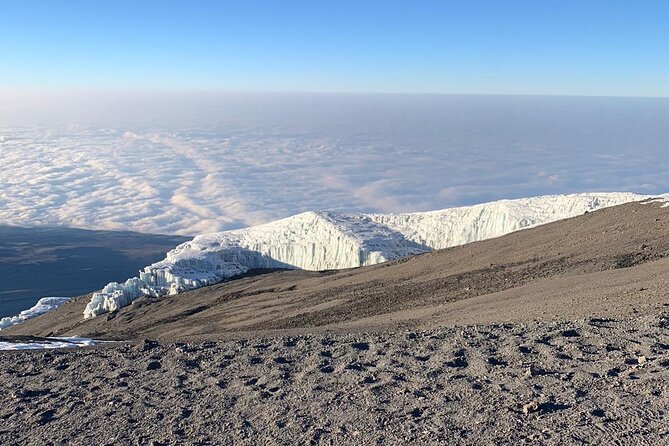
At 5,895 meters, Kilimanjaro gives you a full African mountain trek without technical climbing equipment. The seven-day Machame Route moves from rainforest to moorland, semi-desert, alpine desert, and the icy summit, with Uhuru Peak as the hard-earned prize.
I like the route’s steady high-altitude design, especially the overnight at Barranco after climbing toward Lava Tower, and I like the strong support package: guides, cook, porters, rescue fees, oxygen, first aid, water, hot washing water, and meals are covered. Guides such as Onesmo and Isack have helped groups reach the top.
The main caution is simple: this is a serious physical challenge, not a casual walk. The summit day begins at 4,700 meters and rises to 5,895 meters before a long descent, and the $2,700 price does not include Moshi hotels, flights, insurance, or personal gear.
Key points to know before you book
- Seven days on the Machame Route: You cross five major habitat zones before reaching Uhuru Peak.
- A proper acclimatization profile: The route gains height gradually, with nights at Machame, Shira, Barranco, Karanga, Barafu, and Mweka.
- Strong mountain support: Guides, porters, a cook, rescue fees, oxygen, first aid, water, hot washing water, and meals are included.
- A small maximum group: The operator accepts no more than 15 people, which should make communication easier on the trail.
- A demanding summit day: You climb from 4,700 meters to 5,895 meters, then descend to 3,100 meters in the same day.
- Good preparation matters: You need strong physical fitness, personal mountain gear, travel insurance, and accommodation in Moshi before and after the climb.
Why the Machame Route works well over seven days
The Machame Route is often chosen for its changing scenery and gradual height gain. Here, your first day begins around 1,800 meters and takes you to 3,000 meters through rainforest. By the final summit push, you are walking in an icy high-altitude zone.
That variety gives the trek a real sense of progress. You do not spend seven days looking at the same type of ground. The route shifts from forest to open moorland, then to dry volcanic terrain and alpine desert. The changing habitats also help break the climb into clear stages.
The seven-day length matters. A shorter Kilimanjaro trip can leave less time for your body to adjust to altitude. This route still demands stamina, but its overnight stops allow you to spend several days moving gradually higher before the summit attempt.
You should not confuse a gradual route with an easy one. The total distances are manageable on paper, but altitude changes the effort. A short walk at 4,000 meters can feel much harder than a longer walk near sea level. Your guide will control the pace, but your preparation and attitude will matter just as much.
Other routes up the mountain from Moshi:
- Kilimanjaro climb by Lemosho Route (7-day)
★ 5.0 · 651 reviews - Kilimanjaro climb, Machame Route (7-day)
★ 5.0 · 262 reviews - Kilimanjaro Climbing Lemosho Route 8 Days.
★ 5.0 · 186 reviews
Day 1: Machame village to Machame Camp
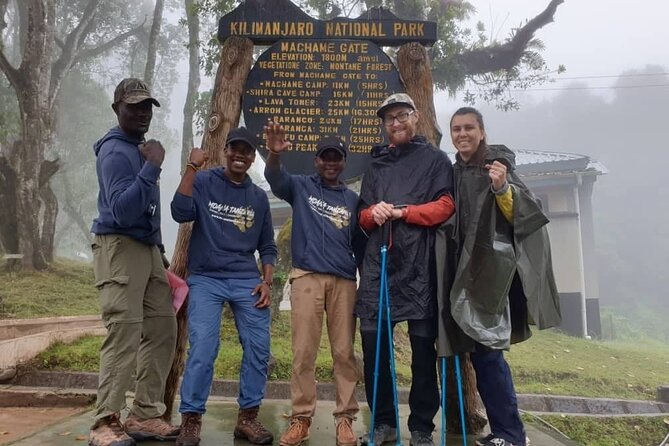
The trek begins near Machame village and the Machame Gate. You rise from about 1,800 meters to 3,000 meters, covering 11 kilometers in roughly five to seven hours.
This is the rainforest day. The forest gives you shade and a softer opening than the exposed upper mountain, but the trail is still long. You will want sturdy footwear and clothing that can handle changing conditions. The day’s goal is Machame Camp, where your first mountain night begins.
I like this opening because it gives you a clear physical test without sending you straight into barren high-altitude ground. You get time to settle into the walking rhythm, learn how the guides manage the group, and see how your body responds to the first major gain in height.
The distance is not extreme for a fit hiker, but five to seven hours on uneven ground can be tiring. Use the first day to find a comfortable pace. Going too fast early on is a poor bargain, especially when several harder days are still ahead.
Day 2: Machame Camp to Shira Camp
Day two leaves the rainforest behind. You climb from 3,000 meters to 3,850 meters, walking about nine kilometers in four to six hours through moorland.
The route crosses a valley along a steep rocky ridge and continues toward a river gorge. This is a more open, rougher section than day one, with less forest cover and a stronger sense that you are entering the high mountain.
Shira Camp is important for more than its overnight bed. At 3,850 meters, it places you firmly in the altitude zone, so you will need to pay attention to how you feel. The supplied medical equipment includes portable oxygen tanks, an oxygen meter, and a first-aid kit. Those tools add a useful layer of safety, but they do not replace honest communication with your guide if you feel unwell.
The four to six-hour walking time may look modest. The steep rocky sections are the key point here. Good balance, patience, and a slow pace will serve you better than trying to stay ahead of the group.
Day 3: Shira Plateau toward Lava Tower and Barranco
This is one of the most useful days for altitude adjustment. You leave Shira Plateau and continue toward Kibo Peak, walking about 10 kilometers in six to eight hours.
The route reaches Lava Tower, also called the Sharks Tooth, and continues toward the Arrow Glacier area before you spend the night at Barranco Camp. The elevation rises from 3,850 meters to about 3,950 meters for the overnight, but the route takes you considerably higher during the day.
That up-and-down pattern is valuable. You gain height during the day, then sleep lower than the highest point reached. It gives you a chance to experience higher altitude without making the highest point your sleeping level immediately.
This is also a long day. Six to eight hours in semi-desert terrain can feel stark after the greener lower slopes. You should expect little visual distraction from trees and a more exposed feel. Keep your water accessible and protect personal items from the dry, dusty conditions.
The overnight at Barranco is one of the route’s character-building moments. You have already crossed several habitat zones, and the next morning brings the Barranco Wall, one of the most memorable sections of the route.
Same base, a different kind of day out:
- Safari Serengeti And Ngorongoro
★ 5.0 · 288 reviews - Climbing Kilimanjaro – Machame Route
★ 5.0 · 170 reviews - Climbing Kilimanjaro through 7 days Machame Route
★ 5.0 · 151 reviews - Kilimanjaro climb, Lemosho Route (8-day)
★ 5.0 · 148 reviews
Day 4: Barranco Wall to Karanga Camp
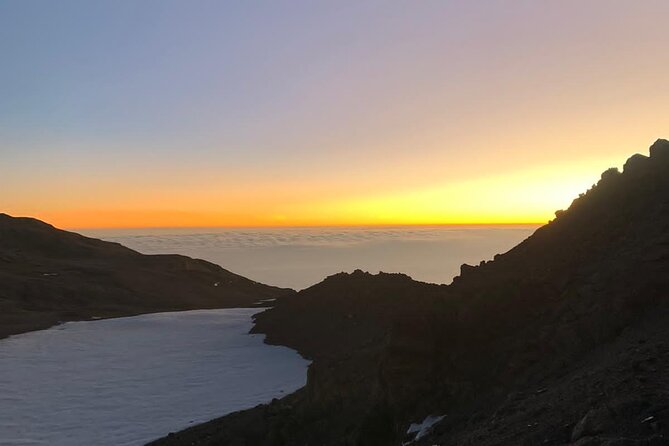
Day four covers only five kilometers, but do not read that as an easy morning. You pass the Barranco Wall and continue to Karanga Valley, rising from about 3,950 meters to 4,040 meters in four to five hours.
The short distance allows the route to focus on terrain rather than mileage. The Barranco Wall includes steeper climbing sections, so you will use your hands and feet carefully in places. It is not presented as technical mountaineering, but you should be comfortable with uneven, steep ground.
This day is a good example of why distance alone does not tell you how demanding a mountain stage will be. The route is short, yet the wall requires concentration. Your guide’s pacing and instructions matter here, particularly when a group includes people with different levels of confidence on rocky terrain.
Karanga Camp gives you another night at high altitude before the final preparation stage. The itinerary moves only about 90 meters higher from the previous overnight, which keeps the sleeping elevation increase modest while still moving you toward Barafu.
Day 5: Karanga Camp to Barafu Camp
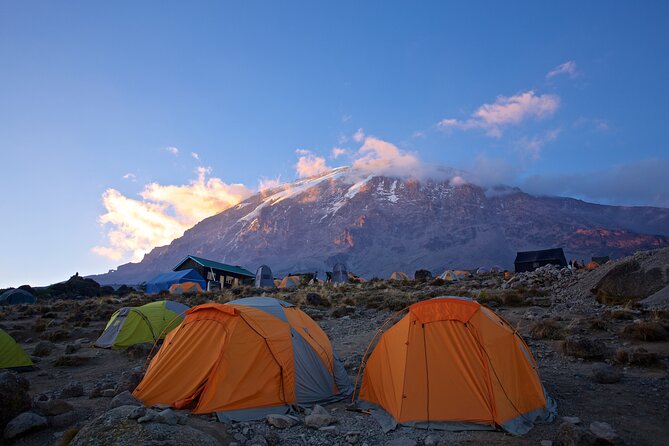
You leave Karanga and reach the junction connecting with the Mweka Trail. From there, the route continues to Barafu Hut and Barafu Camp, climbing from 4,040 meters to 4,700 meters over about four kilometers and four to five hours.
Barafu means you have completed the southern circuit described for this trek. The day is short in distance but serious in purpose. Barafu Camp is the staging point for the summit, so you rest, organize your equipment, eat, and prepare for a very early start.
At 4,700 meters, many people will notice the altitude even while resting. This is not the time to spend energy on unnecessary activity. You should check your clothing, headlamp or other personal equipment, water supply, and warm layers before trying to sleep.
The itinerary includes breakfast, lunch, and dinner for the trek, plus drinking water throughout the climb. Those details matter most here, when you need to conserve effort and keep your routine simple. Personal snacks and toiletries are not listed among the inclusions, so plan to bring the items you personally rely on.
Day 6: Barafu Camp to Uhuru Peak and Mweka Hut
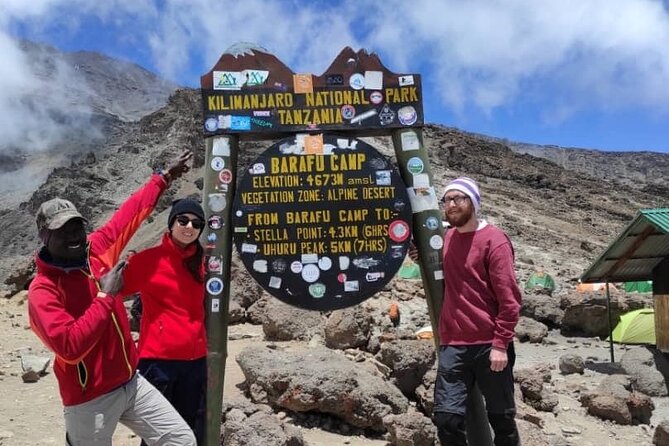
Summit day is the test. You start at 4,700 meters, climb to Uhuru Peak at 5,895 meters, then descend to Mweka Hut at about 3,100 meters.
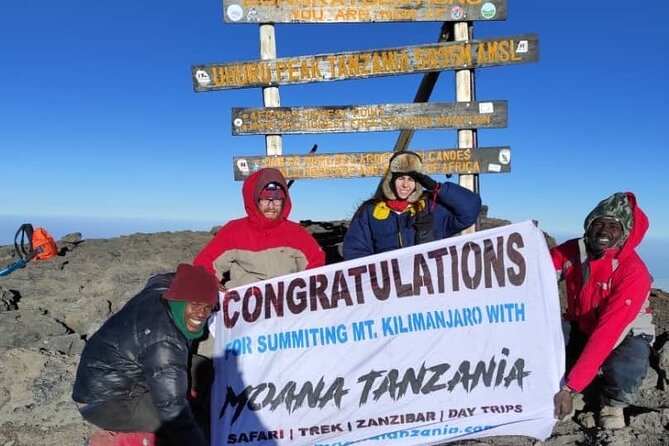
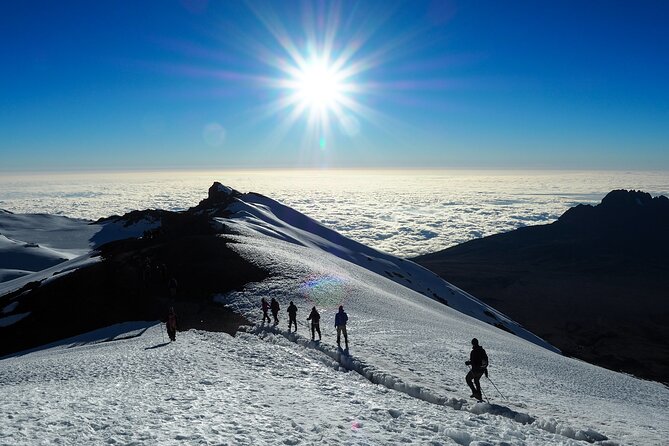
The route begins between the Rebmann and Ratzell glaciers and continues toward Stella Point. From Stella Point, you push on to Uhuru Peak, Kilimanjaro’s highest point. The stated walking time is five to seven hours up and another five to seven hours down.
That makes this a long day at altitude, even before you count stops and the effort needed to stay warm. The icy summit habitat is unlike the rainforest where you started. You should expect the summit section to be physically and mentally demanding, with cold conditions and thin air.
Reaching Stella Point is a major milestone, but Uhuru Peak is the final goal described by this trip. Once you arrive, there is time to celebrate and take pictures before beginning the descent. Keep that celebration sensible. You still have a long way down to Mweka Hut.
The descent is not an afterthought. Going down from 5,895 meters to 3,100 meters in the same day puts plenty of strain on tired legs. Trekking poles, strong footwear, and careful steps can make a meaningful difference, though personal mountain gear is your responsibility.
The support team is especially important on this day. The package includes guides, porters, a cook, rescue fees, oxygen tanks, an oxygen meter, first aid, water, and hot water for washing. Those provisions do not make the summit easy, but they reduce the number of practical problems you need to manage yourself.
Day 7: Mweka Hut to Mweka Gate
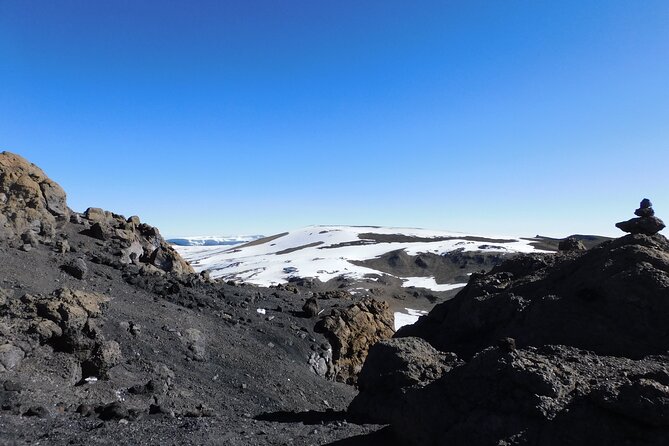
The last day takes you from about 3,100 meters down to 1,650 meters at Mweka Gate. The descent covers three to four hours through forest.
After the long summit day, this should feel like a release, though tired knees can make the downhill sections uncomfortable. The forest also gives the trek a satisfying return to the lower mountain environment.
At Mweka Gate, the walking portion ends. Private transportation is included, and pickup is offered, so confirm the exact transfer plan before you start the trek. Moshi accommodation after the climb is not included, so you will need to arrange your own hotel or other lodging.
What the $2,700 price really covers
At $2,700 per person, this is a major purchase. The value depends on how much support you want to have organized in advance.
The price includes private transportation, parking fees, accommodation fees on the mountain, rescue fees, drinking water, hot washing water, guides, a cook, porters, portable oxygen tanks, an oxygen meter, and a portable first-aid kit. It also includes six breakfasts, six dinners, and seven lunches.
That is a substantial support structure for a seven-day high-altitude trek. You are not simply paying for a route description and a guide at the gate. Food preparation, porter support, mountain accommodation, safety equipment, and transport all reduce the logistical work you would otherwise need to arrange.
Still, the price does not cover everything. You pay separately for:
- Accommodation in Moshi before and after the climb
- Flights and airport costs
- Travel insurance
- Personal toiletries
- Personal mountain-climbing equipment
- Laundry service
I would factor those extras into your real budget before booking. Travel insurance deserves special attention because the trek reaches 5,895 meters and includes rescue fees in the package, but the provided details do not say that your personal medical or trip cancellation costs are covered.
Group size, guides, and the human side of the climb
The maximum group size is 15 people. That is not a private climb for one or two people, but it is limited enough to keep the group from becoming unwieldy.
The guide team includes Onesmo and Isack, names connected with successful seven-day Machame climbs. The experience is built around a wider crew, too: guides, a cook, and porters all form part of the mountain operation.
The most praised part of the service is the friendly, attentive crew and the way the team helped climbers stay comfortable and reach Uhuru Peak. One group of seven made it to the summit, and another account describes two clients supported by two guides. That suggests the guide setup can be active and personal, though the exact guide-to-climber ratio may vary by group.
A good guide is not just someone who knows the route. You need someone who watches pace, notices changes in your condition, and gives clear instructions on steep sections. Ask Moana Tanzania how your specific group will be staffed before you travel, especially if you are joining a mixed party.
What to pack and prepare
The operator requires strong physical fitness and does not provide your personal mountain gear. You should plan your clothing and equipment carefully for a trek that moves from rainforest warmth to icy summit conditions.
Your own preparation should include suitable hiking clothing, warm summit layers, reliable footwear, personal toiletries, and any preferred snacks or small comfort items. The provided information does not give a full packing list, so ask for one before departure rather than assuming the included support covers your clothing and equipment.
You also need travel insurance. Flights and Moshi hotels are separate, so build those costs and extra nights into your schedule.
The best mental preparation is to respect the pace. The mountain is not won by rushing the first two days. A steady rhythm, honest communication with the guide team, and careful use of rest periods will help you get more from the experience.
Booking details and cancellation rules
Pickup is offered, and the experience uses a mobile ticket. Confirmation is normally provided at booking, unless you book within one day of departure. Last-minute confirmation then depends on availability.
The stated operating hours for meeting are Monday through Sunday from 7:00 AM to 11:00 AM, with the listed operating period running through June 18, 2026. Confirm your meeting time and pickup point directly before the trip.
You can receive a full refund if you cancel at least six full days before the start time. Cancellations made two to six full days before departure receive a 50 percent refund, while cancellations less than two full days before the start time are not refunded. Changes follow the same time limits. If poor weather cancels the climb, you are offered another date or a full refund.
Who should book this Kilimanjaro climb?
I would choose this trip if you want a structured Kilimanjaro climb with meals, mountain accommodation, transport, porters, safety equipment, and a full seven-day route already arranged.
It suits fit hikers who are ready for long days, steep rocky sections, high altitude, and a demanding summit push. It also suits people who prefer a small organized group rather than planning every mountain detail alone.
I would hesitate if you want a relaxed holiday with a little hiking added. The summit day alone can last up to 14 hours of walking, and the altitude makes the effort harder than the distances suggest. You should also compare the total cost after adding Moshi hotels, flights, insurance, gear, and personal expenses.
Should you book the Machame Route with Moana Tanzania?
Book it if your priority is a well-supported seven-day route with varied terrain and a strong chance to focus on walking rather than mountain logistics. The Barranco Wall, Lava Tower, Shira Plateau, Barafu Camp, and Uhuru Peak give the trip a clear progression, while the included crew and safety provisions add practical value to the $2,700 cost.
Before paying, confirm the packing list, guide-to-climber ratio, Moshi transfers, and exactly what mountain accommodation means for your group. If you are physically ready and accept that the summit is a serious test, this Machame itinerary offers a sound route to Africa’s highest point.
FAQ
How high is Mount Kilimanjaro?
Mount Kilimanjaro reaches 5,895 meters at Uhuru Peak, the summit included in this trek.
How long is the Machame Route experience?
The trek lasts approximately seven days, with seven days of scheduled walking from Machame village to Mweka Gate.
How many people can join the group?
The maximum group size is 15 people.
Is pickup available?
Yes, pickup is offered. Confirm the exact pickup details and meeting point before departure.
Are meals included?
Yes. The package includes six breakfasts, six dinners, and seven lunches.
Is drinking water provided?
Yes. Drinking water is provided throughout the trek, and hot water for washing is also included.
Is mountain equipment included?
No. Personal mountain-climbing gear, toiletries, and personal items are not included.
What happens if bad weather cancels the climb?
If poor weather causes cancellation, you are offered a different date or a full refund.
Just added in Moshi
- Wildlife Extravaganza: Manyara, Tarangire & Ngorongoro in 3 Days★ 5.0 · 3 reviews
- West Kilimanjaro cycling Adventures★ 4.5 · 8 reviews
- machame route★ 5.0 · 16 reviews
- Kilimanjaro Climb • Machame Route ~ 10 Day★ 5.0 · 6 reviews
- Kilimanjaro Climbing Umbwe Route★ 5.0 · 3 reviews
- Mt Kilimanjaro 6 days Marangu route hike★ 5.0 · 3 reviews
- 3 Days Private E-Bike Tour in West Kilimanjaro★ 5.0 · 3 reviews
- Private Cycle to Kilimanjaro Bike Park Safari★ 5.0 · 6 reviews
Kilimanjaro Treks, compared.



8-Day Small-group Lemosho Kilimanjaro Summit Trekking
Read our review →

5 Days Best of Tanzania Luxury Safari Northern Circuit
Read our review →

Climbing Kilimanjaro through 7 days Machame Route
Read our review →
7-Day Machame Kilimanjaro Summit Tour from Arusha
Read our review →Browse the lists this tour appears in