
Reviewed · KILIMANJARO TREKS
Mount Kilimanjaro Rongai Route
Kilimanjaro’s Rongai Route gives you a quieter approach to Africa’s highest mountain, beginning near the Kenyan border and finishing through the Marangu side. The route moves from farms and pine forest to giant senecios, stark volcanic ground, and a sunrise summit attempt at 5,895 meters.
I like the steady acclimatization plan, especially the extra night at Mawenzi Tarn. I also like the strong attention from the mountain team, with guides such as Mndeme, Stanley, Izadini, and Teodori, also called Tido, praised for careful pacing and close support.
The main drawback is the summit day. You may hike for 12 to 15 hours, including a midnight start, steep climbing to Gillman’s Point, and a long descent. This is not a casual walking holiday, even if the first days feel manageable.
Key points to know before booking
- Rongai begins quietly: You start through rural farmland and pine forest rather than crowded lower trails.
- Mawenzi Tarn is the scenic high point: The third and fourth days give you time to acclimatize beneath Mawenzi Peak.
- The summit day is very long: Expect a midnight departure, 22 kilometers of hiking, and up to 15 hours on your feet.
- The route crosses two sides of Kilimanjaro: You ascend by Rongai and descend through Marangu Gate.
- The private format offers flexibility: Your group can include up to 15 people, with pickup available.
- The price can work well for a full group: At $2,700 per group, the per-person cost drops sharply when shared by several climbers.
Why the Rongai Route is worth considering
Kilimanjaro has several routes, but Rongai offers a different feel from the start. Your drive to Rongai Gate takes about two to three hours from the Moshi area, passing farms and rural villages before you reach the park entrance.
The first hiking hours are gentle. That matters because your body has time to settle into the pace before the altitude becomes serious. You are not thrown straight into a steep climb, and the opening trail gives you a clear sense of how the mountain changes with height.
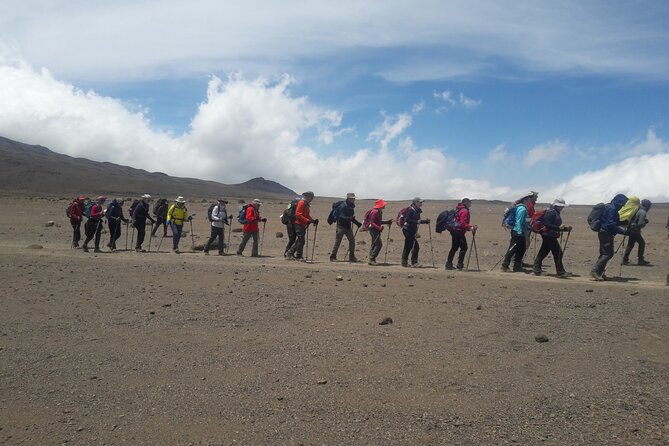
The route is also appealing if you value quiet surroundings. The first day runs through farmland and pine forest, and you might spot colobus monkeys. Later, the trail opens into moorland with views toward Mawenzi’s jagged peaks.
The private setup is useful here. Only your group takes part, with a maximum group size of 15. That gives the guide a better chance to watch each person’s pace and condition than a large mixed group would.
Zara Tanzania Adventures has operated in Tanzania for more than three decades. On a climb like this, that experience matters most in the practical details: timing, food, camp movement, guide support, and the long summit night.
Other routes up the mountain from Moshi:
- Kilimanjaro climb by Lemosho Route (7-day)
★ 5.0 · 651 reviews - Kilimanjaro climb, Machame Route (7-day)
★ 5.0 · 262 reviews - Kilimanjaro Climbing Lemosho Route 8 Days.
★ 5.0 · 186 reviews
Day 1: Rongai Gate to Simba Camp
After breakfast at your hotel, you drive toward Rongai Gate. The trip takes roughly two to three hours, so the morning includes a fair amount of road travel before your boots hit the trail.
At the gate, you complete registration and begin walking at about 1,950 meters. The route climbs to around 2,600 meters, covering 8 kilometers in three to four hours.
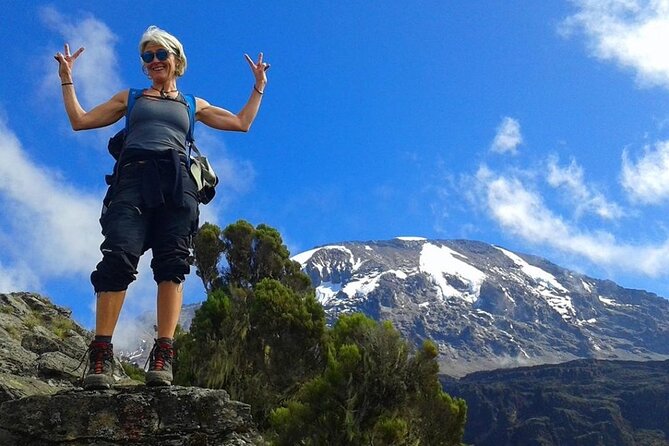
This is a friendly opening day. The trail passes through farmland and pine forest, with a gradual ascent rather than a punishing climb. You might see colobus monkeys, though wildlife sightings are never guaranteed.
Simba Camp gives you the first proper mountain routine: a hot meal, rest, and preparation for the next day. The short hiking time can make this day feel easy, but do not race ahead. Saving energy and keeping a slow rhythm will help later.
One practical point is worth checking before you arrive. The meeting information lists Kilimanjaro Airport at 7:00 a.m., while the daily plan begins with breakfast at the hotel. Pickup is offered, but confirm your exact pickup place and time with Zara before the climb.
Day 2: Second Cave and the route toward Kikelewa
The second day covers about 10 kilometers and takes five to six hours. You climb from 2,600 meters to roughly 3,600 meters, with lunch at Second Cave before continuing across the moorland.
This is where the route begins to feel more remote. The smaller trail toward Kikelewa leads toward Mawenzi, whose broken peaks create a dramatic backdrop. You are no longer walking through cultivated land. The surroundings become more open, drier, and more exposed.
Kikelewa Camp sits in a sheltered valley near Kikelewa Cave. Giant senecios add an unmistakable Kilimanjaro touch to the setting. The camp’s altitude makes this a meaningful acclimatization night, even though the distance itself is not extreme.
The best advice here is simple: walk slowly, drink regularly, and tell your guide about headaches, nausea, unusual tiredness, or poor sleep. The guiding team is described as attentive to signs of altitude trouble, but your honest communication is essential.
The route is physically moderate on paper, yet altitude changes the experience. A short break can feel long, and a normal uphill pace may suddenly seem too fast.
Day 3: The steep climb to Mawenzi Tarn
Day three is shorter at about 6 kilometers, but it is steeper. You climb from 3,600 meters to approximately 4,315 meters in three to four hours.
The trail rises through grassy slopes toward Mawenzi Tarn, a striking campsite beneath Mawenzi Peak’s cliffs. This is one of the most memorable settings on the route. The mountain walls give the camp a strong sense of place, and the views are broad in every direction.
You receive a hot lunch after arrival, followed by time to rest. If conditions and your energy allow, your guide may lead a short acclimatization walk. The purpose is not to chase distance. It is to spend controlled time higher up, then return to camp.
A guide briefing in the evening prepares you for the next stage. This is a good moment to ask practical questions about pace, clothing, water, and the summit schedule. The following days will bring colder air, thinner oxygen, and longer hours.
I like the way this itinerary gives you a shorter hiking day before the highest camps. The drawback is that the climb is steeper, and altitude can make even 6 kilometers feel substantial.
Same base, a different kind of day out:
- Safari Serengeti And Ngorongoro
★ 5.0 · 288 reviews - Climbing Kilimanjaro – Machame Route
★ 5.0 · 170 reviews - Climbing Kilimanjaro through 7 days Machame Route
★ 5.0 · 151 reviews - Kilimanjaro climb, Lemosho Route (8-day)
★ 5.0 · 148 reviews
Day 4: An extra acclimatization night at 4,330 meters
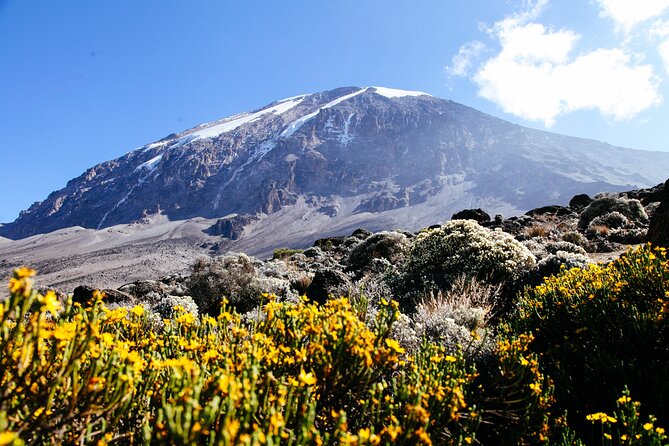
Many mountain itineraries try to move upward every day. This one gives you an extra day at Mawenzi Tarn, with the camp listed at about 4,330 meters.
You use the day for a hike toward Mawenzi Peak, then return to camp to rest. This is a smart part of the schedule. The extra time at altitude may help your body adjust before you cross the Saddle toward Kibo Hut.
The exact walking distance and duration are not specified, so expect the guide to shape the day around conditions and your group’s energy. The aim is steady adaptation, not a major summit of Mawenzi.
Keep your water intake up and do not treat this as a free sightseeing day. You are still sleeping high, and the next two days include the approach to Kibo and the summit attempt.
This night is one reason the seven-day plan has value. A faster itinerary may cost less time, but it gives your body fewer chances to adjust. No schedule can remove the risk of altitude problems, yet a planned rest and acclimatization day is a sensible advantage.
Day 5: Across the Saddle to Kibo Hut
After breakfast, you cross the Saddle, the broad volcanic zone between Mawenzi and Kibo. The hike covers about 8 kilometers and takes five to six hours, rising from 4,315 meters to around 4,720 meters.
The setting changes again. The trail crosses a bare, moonlike area with little shelter and a gentle incline. Mawenzi falls behind while Kibo and the summit route come into view.
This is not the most technically difficult section, but it can feel mentally demanding. The ground is stark, the air is thin, and the summit is close enough to occupy your thoughts without being close enough to reach yet.
At Kibo Hut, you have an early dinner and rest before the midnight start. Your guide gives a detailed briefing about the final ascent. Try to make the most of the rest period, even if excitement or nerves make sleep difficult.
The itinerary lists the Kibo elevation at about 4,700 meters in the summit-day description. At this height, simple tasks require patience. Organize your clothing and equipment before bed so you are not searching for items in the middle of the night.
Day 6: Gillman’s Point, Uhuru Peak, and Horombo Hut
This is the demanding day. You begin around midnight and climb from roughly 4,700 meters toward Uhuru Peak at 5,895 meters, then descend to about 3,720 meters at Horombo Hut.
The full day covers approximately 22 kilometers and takes 12 to 15 hours. The first major goal is Gillman’s Point at 5,685 meters, reached after about six hours of steep, steady climbing.
This section tests endurance more than speed. You will likely take small steps and follow the guide’s rhythm. The support of the mountain team is especially important here. Previous climbs led by Zara staff such as Mndeme, Stanley, Izadini, Tido, Kabilla, Amani, and Selemani have been praised for close attention and encouragement, though your assigned staff may differ.
From Gillman’s Point, you follow the crater rim toward Uhuru Peak. If the weather cooperates, sunrise can spread across the African horizon while you walk toward the continent’s highest point.
Do not underestimate the descent. After celebrating at the summit, you return to Kibo Hut for a short rest, then continue to Horombo Hut. Many people focus so hard on reaching Uhuru that they forget the lower section still demands energy and careful footing.
The climb is physically tough, and altitude affects people differently. Your guide may adjust the pace or turn someone around if continuing is unsafe. Reaching the summit is a goal, not a promise, so choose this tour with the right mindset.
Day 7: Descending through Marangu Gate
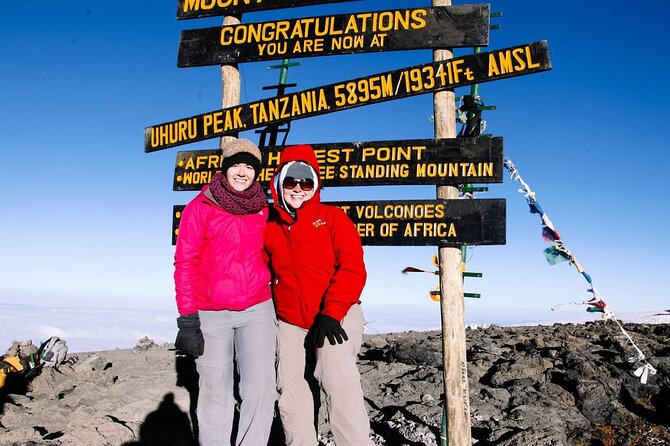
The final day covers about 20 kilometers and takes six to seven hours. You leave Horombo Hut at about 3,720 meters and descend to Marangu Gate at roughly 1,830 meters.
The trail passes through moorland and rainforest zones, giving you a quick reminder of how many climate areas Kilimanjaro contains. After the dry, exposed upper mountain, the return to thicker vegetation can feel almost dramatic.
At Marangu Gate, you receive a summit certificate. Then you are driven back to Springlands Hotel in Moshi for a hot meal, shower, and comfortable bed.
That return to town is more than a nice extra. After a 12 to 15 hour summit day and a long final descent, a proper wash and real bed can make the entire experience feel complete.
Zara can also help arrange a safari or a Zanzibar stay after the climb. Those extensions are not part of the listed seven-day trek, but they may suit you if you want to pair Kilimanjaro with wildlife or beach time.
Food, guides, and mountain support
The food receives especially strong praise. The itinerary promises hot meals, and the mountain cooking includes a two-course dinner at about 4,500 meters. That is a useful detail because appetite and morale can suffer at altitude.
You should also expect a substantial support system. One account describes a large crew of mountain guides, porters, cooks, and waiters supporting a group. The exact staffing for your private party is not stated, so ask Zara what porter numbers, meals, camp equipment, and staff arrangements are included in your price.
Guide quality is central to a Kilimanjaro climb. Specific guides praised by name include Mndeme, Stanley, also called Baba Massive, Izadini, Teodori or Tido, Kabilla, Amani, and Selemani. You cannot assume one of them will lead your group, but you can request the name and experience of your lead guide before departure.
The most useful quality in a guide is not dramatic talk. It is careful observation, clear English, sensible pacing, and the willingness to act when someone shows signs of altitude trouble. The available information points strongly toward attentive mountain management, but you should still ask direct questions during booking.
Is $2,700 good value for your group?
The listed price is $2,700 per group of up to 15 people, not $2,700 per climber. For a full group of 15, that works out to about $180 per person. For two people, it works out to $1,350 each.
That makes group size the key value question. A full private group could receive excellent value for a seven-day private climb, while a small group would pay much more per person. The price is most attractive if it includes the main mountain costs, meals, transport, accommodation, park charges, and support staff, so ask Zara to confirm those items in writing.
Pickup is offered, and the activity has mobile ticketing. The group format means you do not share the climb with unrelated participants. You should still confirm the airport and hotel transfer details because the stated meeting point and the hotel-based itinerary are not perfectly aligned.
Free cancellation is available if you cancel at least 24 hours before the local start time. Changes or cancellations inside that window are not accepted for a refund.
Who should book this climb?
I would recommend the Rongai Route to you if you want a quieter approach, enjoy changing scenery, and prefer a private group with guide attention. It also suits people who like a slower acclimatization plan and value the extra night near Mawenzi Tarn.
You need a moderate level of physical fitness, but that phrase should not hide the challenge. The summit day is long, the altitude is serious, and you must be comfortable hiking for many hours while tired.
This is a poor match if you want a relaxed holiday, dislike early starts, or need a predictable result at the summit. The route is beautiful and well organized, but Kilimanjaro remains a demanding high-altitude climb.
Should you book the Rongai Route with Zara?
Book it if the quieter Rongai approach, private format, and extra acclimatization day appeal to you. The route gives you pine forest, Mawenzi views, the Saddle, a midnight summit attempt, and a descent through Marangu, all in one well-paced week.
Before paying, confirm your exact guide, what the $2,700 includes, the pickup plan, and the staffing for your group. If those details are clear and you are ready for the long summit day, this is a strong choice for a carefully supported Kilimanjaro climb.
FAQ
How long is the Mount Kilimanjaro Rongai Route tour?
The climb takes approximately seven days, including the approach from Rongai Gate, an extra acclimatization day at Mawenzi Tarn, the summit attempt, and the descent through Marangu Gate.
What is the highest point reached on the tour?
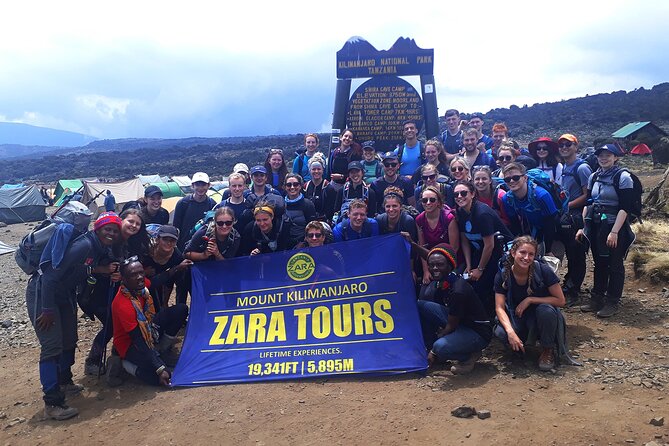
The highest point is Uhuru Peak at 5,895 meters, or 19,341 feet. The summit attempt passes through Gillman’s Point at 5,685 meters.
Where does the climb start and finish?
The trek starts at Rongai Gate after a drive through farms and villages. It finishes at Marangu Gate, followed by transport back to Springlands Hotel in Moshi.
How difficult is the climb?
A moderate level of physical fitness is required. The most demanding part is summit day, which includes a midnight start, about 22 kilometers of hiking, and 12 to 15 hours of climbing and descent.
How many people can join the private tour?
The private activity is offered for groups of up to 15 people. Only your own group participates.
What is the cancellation policy?
You can cancel up to 24 hours before the local start time for a full refund. Cancellations or changes made less than 24 hours before the start are not accepted for a refund.
Just added in Moshi
- Wildlife Extravaganza: Manyara, Tarangire & Ngorongoro in 3 Days★ 5.0 · 3 reviews
- West Kilimanjaro cycling Adventures★ 4.5 · 8 reviews
- machame route★ 5.0 · 16 reviews
- Kilimanjaro Climb • Machame Route ~ 10 Day★ 5.0 · 6 reviews
- Kilimanjaro Climbing Umbwe Route★ 5.0 · 3 reviews
- Mt Kilimanjaro 6 days Marangu route hike★ 5.0 · 3 reviews
- 3 Days Private E-Bike Tour in West Kilimanjaro★ 5.0 · 3 reviews
- Private Cycle to Kilimanjaro Bike Park Safari★ 5.0 · 6 reviews
Kilimanjaro Treks, compared.
8-Day Small-group Lemosho Kilimanjaro Summit Trekking
Read our review →
5 Days Best of Tanzania Luxury Safari Northern Circuit
Read our review →
Climbing Kilimanjaro through 7 days Machame Route
Read our review →
7-Day Machame Kilimanjaro Summit Tour from Arusha
Read our review →Browse the lists this tour appears in