
Reviewed · KILIMANJARO TREKS
Mountain Kilimanjaro Climbing 7 Days Rongai Route
The Rongai Route gives you a quieter way up Kilimanjaro, approaching from the Kenyan side instead of following the busier Marangu trail from the south. You spend several days in open wilderness before joining the Marangu route near Kibo, then finish with a hard midnight climb to Uhuru Peak.
I like the low-traffic feel and the route’s useful acclimatization pattern, with time to walk higher and sleep lower before summit day. I also like the seven-day pace, which gives you more breathing room than the six-day minimum. The drawback is that the scenery is less varied than on Kilimanjaro’s western routes, and summit day lasts about 15 hours.
This is a serious mountain climb, not a sightseeing stroll. You need moderate physical fitness, patience, and a willingness to walk slowly for many hours. The group can include up to 15 people, and past bookings also included help from Oscar with trip planning and communication.
Key points to know before booking
- The only northern approach: Rongai begins near NaleMuru, close to the Kenyan border, then crosses to the Marangu side for the descent.
- Seven days is the sensible choice: Six days is the minimum, but the extra day gives you more time for acclimatization.
- Quiet early stages: The first several days pass through pine forest, moorland, and open wilderness with views toward Kenya.
- A demanding summit night: You start around midnight, reach Gillman’s Point at 5,681 meters near sunrise, then continue to Uhuru Peak at 5,895 meters.
- A maximum of 15 people: The group size is small enough to feel manageable, though the exact number for your departure should be confirmed.
- Moshi pickup is offered: The experience begins and ends with transport connected to Moshi, with a warm shower and celebration waiting after the descent.
Why the Rongai Route feels different
Most people picture Kilimanjaro as one trail straight to the summit. In practice, the mountain has several approaches, and Rongai offers a noticeably quieter start. You begin at the village of NaleMuru on the northern side, close to Kenya, rather than at the more familiar southern gate.
That northern position matters in two ways. First, the route usually has less foot traffic than Marangu. Second, the northern side receives less precipitation, making Rongai a useful option during the rainy season. It is not a guarantee of dry weather, but the route’s position gives it a practical advantage.
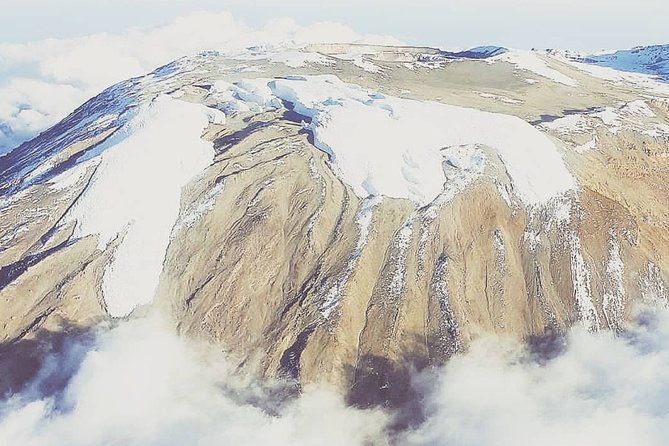
The scenery has a calm, gradual rhythm. You move from farmland and pine forest into moorland, then across the stark saddle between Mawenzi and Kibo. The western routes may offer more changes in scenery, but Rongai gives you several days of open space before joining another trail.
I also like the route’s sense of progression. You can look back toward the Kenyan plains, then ahead to Kibo’s ice fields, then across to the jagged volcanic shape of Mawenzi. Each day brings you closer to the summit without rushing the climb.
Other routes up the mountain from Moshi:
- Kilimanjaro climb by Lemosho Route (7-day)
★ 5.0 · 651 reviews - Kilimanjaro climb, Machame Route (7-day)
★ 5.0 · 262 reviews - Kilimanjaro Climbing Lemosho Route 8 Days.
★ 5.0 · 186 reviews
Day 1: NaleMuru to Simba Camp at 2,625 meters
Your first morning includes a drive from Moshi to NaleMuru, the starting point for the climb. The walking begins through farmland and pine forest, making this a gentler introduction than the high moorland and volcanic ground that come later.
The first day takes about four hours. You finish at Simba Camp, located at the edge of the moorland zone at 2,625 meters. From camp, you get broad views across the Kenyan plains, a fine reward after a relatively short opening walk.
Wildlife is possible along this section. You might see colobus monkeys, and the description also notes the chance of elephants or buffalo. These sightings are not promised, so treat them as a bonus rather than a reason to book the route.
The first day is useful because it lets you settle into the pace. You are not yet dealing with extreme altitude or a long walking day. Still, do not waste the easy start by walking too fast. A slow rhythm now is one of the simplest ways to save energy for the upper mountain.
Day 2: Second Cave and an acclimatization option
The morning climb continues steadily to Second Cave at about 3,450 meters. It takes roughly four hours and brings better views of Kibo, Kilimanjaro’s highest volcanic cone, along with the eastern ice fields on the crater rim.
After a hot lunch, you have time to rest at camp. You may also take an afternoon acclimatization walk toward Third Cave. That choice is important. The extra walking helps you spend more time at altitude without committing to a major gain in sleeping height.
I would use this day to pay attention to how your body responds. Headache, nausea, unusual tiredness, or poor balance should be reported to your guide. The schedule gives you room to rest, so there is no prize for turning the afternoon option into a race.
The open views toward Kibo are one of the strongest parts of the early route. You begin to see the summit area as a real destination rather than a distant outline. At the same time, the mountain remains far from finished, and the steady pace can feel deceptively easy.
Day 3: Moorland and Kikelewa Cave at 3,630 meters
By the third day, the pine forest is behind you. The route climbs through moorland, with repeated views toward Kibo’s eastern ice fields. The walk lasts around four hours, but the altitude makes the day more demanding than the distance alone suggests.
You leave the main trail and follow a smaller path toward Mawenzi, Kilimanjaro’s second volcanic peak. This change gives Rongai some of its best character. Instead of simply marching toward Kibo, you angle across the mountain toward the sharp, dramatic peaks of Mawenzi.
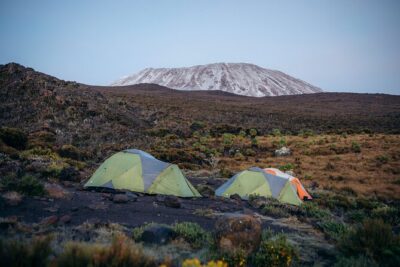
Camp is set in a sheltered valley near Kikelewa Caves at about 3,630 meters. The setting feels more remote than the opening stages, and the smaller path helps explain why this route appeals to people seeking a quieter climb.
The main limitation is that moorland can feel exposed and repetitive if you prefer dense forest or constant scenery changes. I see that as a matter of taste. The reward is space, clear sightlines, and the feeling that the mountain is opening up around you.
Same base, a different kind of day out:
- Safari Serengeti And Ngorongoro
★ 5.0 · 288 reviews - Climbing Kilimanjaro – Machame Route
★ 5.0 · 170 reviews - Climbing Kilimanjaro through 7 days Machame Route
★ 5.0 · 151 reviews - Kilimanjaro climb, Lemosho Route (8-day)
★ 5.0 · 148 reviews
Day 4: Mawenzi Tarn Hut below the cliffs
Day four starts with a short but steep climb up grassy slopes. The effort pays off with a strong view toward the Kenyan plains to the north. You then leave most vegetation behind before reaching Mawenzi Tarn Hut at about 4,330 meters, directly below Mawenzi’s towering cliffs.
The walking time is about four hours, but this is an important altitude day. You gain height quickly, so keep your pace controlled and follow the guide’s instructions. Once at camp, you can rest or explore nearby areas as an acclimatization walk.
Mawenzi Tarn is one of the most memorable places on this route because the setting changes from broad moorland to a more enclosed volcanic scene. Mawenzi’s cliffs give the camp a powerful backdrop, while the open northern views remind you how far you have climbed.
This is also a good point to be honest with yourself. If altitude symptoms are worsening, tell the guide early. The climb is challenging enough without trying to hide problems from the people responsible for managing the group.
Day 5: Crossing the saddle to Kibo Camp
You leave Mawenzi and cross the lunar-looking saddle between Mawenzi and Kibo. The walk takes about six hours, and the surroundings become stark and spacious, with little vegetation to soften the view.
After a couple of hours, the route reaches a broad area where the summit of Kilimanjaro appears ahead. You can see the trail toward high camp stretching across the saddle. This is a useful mental moment because the final objective is now plainly visible, but it also shows how much work remains.
The day ends at Kibo Camp. The rest of the afternoon is reserved for resting, followed by an early night before the summit attempt. This is not a normal evening at camp. You may eat, organize your clothing and water, then try to sleep before the midnight start.
The saddle can feel long and empty. There is little shade or visual variety, and altitude affects even simple movement. I would treat this day as preparation rather than an occasion for sightseeing. Eat what is provided, drink regularly, and keep your energy for the climb ahead.
Day 6: The 15-hour push to Uhuru Peak
Summit day begins around midnight. The climb is long and strenuous, first passing Hans Meyer Cave at about 5,220 meters, then continuing upward toward Gillman’s Point at 5,681 meters.
You aim to reach the crater rim around sunrise. The early hours are usually cold, dark, and slow. Every step takes concentration, and the steep upper slope can make the climb feel much longer than the distance suggests.
Gillman’s Point is not the summit. From there, you continue for another one to two hours toward Uhuru Peak, the highest point on Kilimanjaro, at 5,895 meters. Reaching the top is the high point of the experience, but you still have a demanding descent ahead.
After the summit, you return to Kibo Hut for a warm meal and a one to two-hour break. Then you continue down to Horombo Hut. The full day lasts about 15 hours, making this the part of the trip that requires the most preparation and mental stamina.
The schedule is tough because you climb high before sunrise, descend to eat, rest briefly, and then keep going. You should not judge the whole experience by the summit photograph alone. The descent after the summit is a major part of the day, and tired legs can make it feel surprisingly hard.
The official high point is Uhuru Peak, but Gillman’s Point is also a significant milestone. The route description treats the push beyond Gillman’s as another one to two hours, so you need to plan your effort in stages rather than thinking only about the final elevation.
Day 7: Through Mandara Hut to Moshi
The last day takes you down through the heath and moor zones to Mandara Hut at about 2,700 meters. A warm lunch is provided there, which should feel welcome after the summit day and overnight descent.
The trail then returns to tropical rainforest. After about seven hours of trekking, you reach the Kilimanjaro National Park Gate at 1,860 meters. This final change in vegetation gives the descent a satisfying sense of completion: high volcanic ground gives way to greener, lower terrain.
At the gate, you say goodbye to your mountain guides. A short transfer returns you to your hotel in Moshi, where you can finally take a hot shower and celebrate. The experience specifically reminds you to tip the guides, cooks, and porters before leaving the mountain.
That advice matters because the climb depends on a whole support team, not just the person walking beside you. Tipping is not included in the stated price, so plan for it separately and ask the operator about the expected amount before departure.
What the $2,628.72 price means
At $2,628.72 per person, this is a major travel expense. The value depends less on the number of walking days than on the mountain support built into the trip. The price covers a seven-day guided climb with admission tickets noted for each stage, meals specifically described at several camps, and transfers connected with Moshi.
The exact inclusions are not fully detailed in the information provided, so I would ask before paying about permits, accommodation before and after the climb, equipment, meals beyond those named, transport, and gratuities. Do not assume every extra is covered simply because the climb has one total price.
The seven-day format is the better choice for most people comparing it with a six-day Rongai climb. The extra day does not make the mountain easy, but it gives your body more time to adjust. That can make the price worthwhile, especially if you have limited high-altitude trekking experience.
A group limit of 15 keeps the trip from becoming a huge procession. Still, group dynamics can affect pace and rest times. Ask how many people are booked for your date, particularly if you are hoping for a very small private climb.
Planning help from the operator
Past trip arrangements involved Oscar, who helped organize route plans and answered questions through a WhatsApp group. That sort of direct communication is useful for a climb with many moving parts, especially when you are combining Kilimanjaro with a safari.
Mtei is also named in the service team connected with earlier climbs. Since the supplied details do not assign specific staff roles for this departure, confirm the names of your lead guide and mountain crew before you go.
Pickup is offered, and the climb finishes with a transfer back to your Moshi hotel. The meeting information gives a start time of 12:00 am, which appears to relate to the summit departure rather than the initial drive from Moshi. Confirm the exact pickup time and location with the operator so you are not waiting at the wrong hour.
The activity accepts mobile tickets, and confirmation is provided at booking. Cancellation is free if you cancel at least 24 hours before the local start time. Changes or cancellations inside that window are not accepted for a refund.
Who should choose this climb?
I would choose Rongai if you want a quieter approach, prefer a seven-day schedule, or plan to climb during the rainy season and value the drier northern side. It also suits you if you like open views and a route that spends several days away from the busier Marangu trail.
The route is described as moderately difficult and is recommended for people with less backpacking experience. That does not mean it is easy. The summit day is still a 15-hour effort at extreme altitude, and moderate fitness is the minimum stated requirement.
You should be comfortable walking four to six hours on most days, then handling a much longer summit day. If you dislike early starts, exposed moorland, or a slow high-altitude pace, this may not be your best mountain plan.
Should you book the Rongai Route?
Book it if quiet trails, northern views, and a seven-day acclimatization schedule matter more to you than having the most varied scenery. The route gives you a gradual approach, striking views of Mawenzi and Kibo, and a different perspective on Kilimanjaro from the start.
Think twice if you want a short or comfortable mountain holiday. The midnight summit attempt, 5,895-meter altitude, and long descent make this a demanding physical challenge.
For most first-time Kilimanjaro climbers who want a quieter route, I see good value in the seven-day version. Before booking, confirm the full price inclusions, group size, staff names, pickup details, and gratuity expectations. If those answers are clear and you are ready for the effort, Rongai offers a thoughtful alternative to the more crowded southern approach.
FAQ
Where does the Rongai Route begin?
The climb begins at the village of NaleMuru on Kilimanjaro’s northern side, close to the Kenyan border.
How long does the climb take?
The experience lasts approximately seven days. Six days is the minimum stated duration for Rongai, but seven days are recommended.
How high is Uhuru Peak?
Uhuru Peak is at 5,895 meters. You first reach Gillman’s Point at 5,681 meters before continuing for another one to two hours toward the summit.
How difficult is the route?
The route is described as moderately difficult and requires a moderate level of physical fitness. Summit day is the hardest section and lasts about 15 hours.
How many people can join the group?
The maximum group size is 15 people.
What happens after the summit?
After reaching Uhuru Peak, you return to Kibo Hut for a warm meal and a one to two-hour break, then continue to Horombo Hut. On the final day, you descend through Mandara Hut to the Kilimanjaro National Park Gate before transferring back to your Moshi hotel.
Just added in Moshi
- Wildlife Extravaganza: Manyara, Tarangire & Ngorongoro in 3 Days★ 5.0 · 3 reviews
- West Kilimanjaro cycling Adventures★ 4.5 · 8 reviews
- machame route★ 5.0 · 16 reviews
- Kilimanjaro Climb • Machame Route ~ 10 Day★ 5.0 · 6 reviews
- Kilimanjaro Climbing Umbwe Route★ 5.0 · 3 reviews
- Mt Kilimanjaro 6 days Marangu route hike★ 5.0 · 3 reviews
- Kilimanjaro Climb • Marangu Route ~ 9 Day★ 5.0 · 4 reviews
- 3 Days Private E-Bike Tour in West Kilimanjaro★ 5.0 · 3 reviews
Kilimanjaro Treks, compared.
8-Day Small-group Lemosho Kilimanjaro Summit Trekking
Read our review →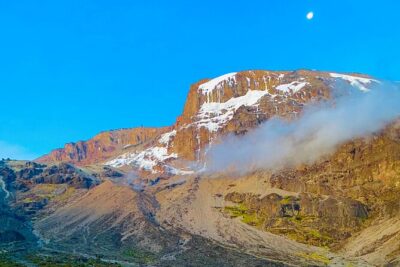
5 Days Best of Tanzania Luxury Safari Northern Circuit
Read our review →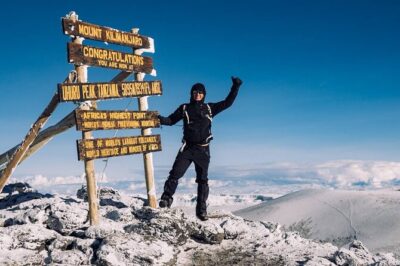
Climbing Kilimanjaro through 7 days Machame Route
Read our review →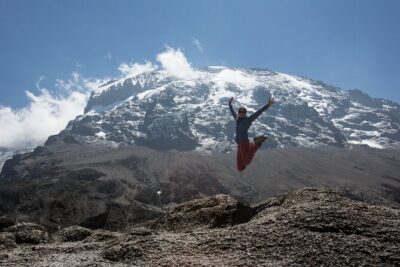
7-Day Machame Kilimanjaro Summit Tour from Arusha
Read our review →Browse the lists this tour appears in