
Reviewed · KILIMANJARO TREKS
Mt.kilimanjaro-machame Route
The best part of this six-day climb is the way the route changes every day, from wet rainforest to open volcanic slopes and finally the cold, dark push toward Uhuru Peak at 5,895 meters. You are not simply walking uphill for a week. You are moving through several distinct worlds on one mountain.
I like the acclimatization plan, especially the climb to Lava Tower followed by a descent to Barranco Camp. I also like the personal care built into summit night, when each pair of climbers receives a guide to watch physical and mental condition. The main drawback is the short schedule: six days gives you less time to adjust to altitude than a longer Kilimanjaro route.
Key points of the Machame Route climb
- A full six-day crossing: Start at Machame Gate and leave through Mweka Gate after reaching the summit.
- A strong altitude routine: Sleep at Shira Camp, spend time at Lava Tower, then descend to Barranco.
- The famous Barranco Wall: It looks severe from camp but uses a straightforward hiking trail.
- A night summit attempt: You leave Barafu Camp at night for Uhuru Peak, the hardest part of the trip.
- Personal summit support: Each pair of climbers is assigned a guide for the final ascent.
- Private group format: Only your own party takes part, with hotel pickup offered from Moshi.
What the $1,743.59 price means
The listed price is $1,743.59 per person for roughly six days. That is not a casual day walk, and the value depends heavily on what you want from a Kilimanjaro trip.
You are paying for a private climbing experience with a guide and mountain support crew, hotel pickup, park access arrangements, camps along the route, and a planned summit attempt. The team also handles the park entrance formalities, climbing permits, and registration with the search and rescue service. Those tasks matter because they remove a lot of the practical work from your first morning.
The price also reflects the route itself. Machame is one of Kilimanjaro’s most varied approaches, with rainforest, high volcanic terrain, steep sections, and a descent through another forest zone. You get more scenery than a simple up-and-down climb, though you also get repeated climbs and descents that can be tiring.
The important caution is that the supplied details do not spell out every inclusion. Before paying, ask the operator exactly what is covered for meals, equipment, park fees, transfers, crew tips, and any overnight arrangements. The food receives particularly warm praise, including attention to personal food preferences and a chef whose meals were a highlight for the group. That is useful reassurance on a six-day climb, but it is still wise to confirm the details in writing.
Other routes up the mountain from Moshi:
- Kilimanjaro climb by Lemosho Route (7-day)
★ 5.0 · 651 reviews - Kilimanjaro climb, Machame Route (7-day)
★ 5.0 · 262 reviews - Kilimanjaro Climbing Lemosho Route 8 Days.
★ 5.0 · 186 reviews
Day 1: Machame Gate to Machame Camp
Your day begins around 7:00 a.m., when the guide and mountain support crew meet you at your hotel in Moshi. You receive a short briefing, then drive to Machame Gate, at about 1,800 meters.
The gate is where the official work begins. The team obtains climbing permits and registers with the search and rescue service before you start walking. This can feel like a slow start when you are eager to reach the trail, but it is part of a properly organized climb.
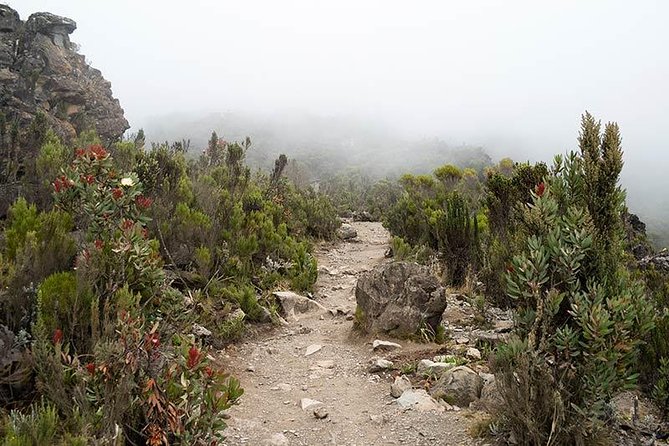
The first section leads through rainforest toward Machame Camp at 3,010 meters. This is a fine introduction to Kilimanjaro because the setting feels lush and enclosed before the mountain opens up higher on the route. It is also the day when rain is most likely to cause trouble.
Bring spare clothes and a proper raincoat. Tropical showers are highly probable, and wet clothing can make an otherwise manageable walk feel miserable. The day is listed as taking about 12 hours, which includes the transfer, gate procedures, and trekking. You should expect a long first day rather than a gentle warm-up.
Day 2: Shira Plateau and the first altitude lesson
After breakfast, you climb from Machame Camp to Shira Camp at 3,845 meters. You leave the rainforest behind and begin to see the Shira Plateau spread out ahead.
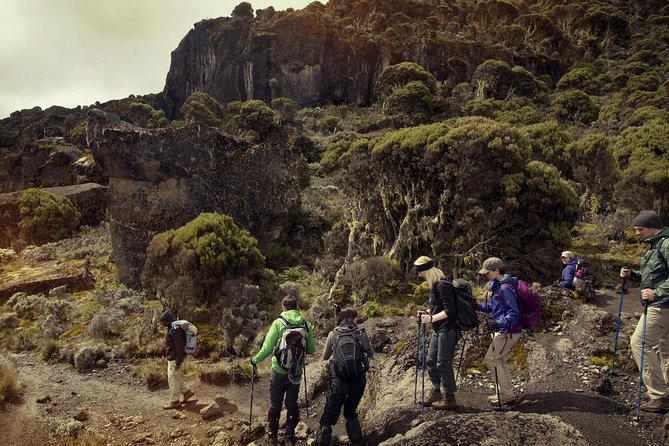
The walking itself is described as moderate, but the altitude may be noticeable. This is where your pace starts to matter. A fast hiker can create problems by pushing too hard early in the week, so listen to your guide and keep your steps steady.
After reaching Shira Camp, you have lunch and time to rest. The day then includes an acclimatization hike toward Lava Tower, gaining another 300 meters before returning to camp. I like this feature because it gives your body extra time at height without forcing you to sleep at the highest point reached that day.
You finish with a hot dinner at Shira Camp. That simple detail matters. A warm meal and a chance to rest can make the difference between facing the next morning well and starting it already worn down.
Day 3: Lava Tower, altitude, and Barranco Camp
Day three is the route’s key altitude lesson. You leave Shira Camp at 3,845 meters and climb toward Lava Tower at 4,630 meters, moving through a series of ascents and descents.
The trail may feel difficult here, and discomfort is possible. The plan calls for spending at least one to two hours at Lava Tower, with lunch at that height, before descending to Barranco Camp at 3,960 meters. This follows the useful mountain rule of climbing high and sleeping lower.
You may not enjoy the temporary headache, breathlessness, or tired legs that can come with the height, but the schedule is designed to give your body an acclimatization chance. This is also the point where a calm guide matters. You need someone who notices when you are struggling, not someone who treats speed as a virtue.
The reward comes at Barranco Camp, where the huge Barranco Wall rises above the route. It looks intimidating from below. The next morning, you will climb it, but the trail is described as straightforward rather than technical.
Same base, a different kind of day out:
- Safari Serengeti And Ngorongoro
★ 5.0 · 288 reviews - Climbing Kilimanjaro – Machame Route
★ 5.0 · 170 reviews - Climbing Kilimanjaro through 7 days Machame Route
★ 5.0 · 151 reviews - Kilimanjaro climb, Lemosho Route (8-day)
★ 5.0 · 148 reviews
Day 4: Barranco Wall to Barafu Camp
An early start is recommended for Barranco Wall. Leaving early helps you avoid crowds from other groups, an especially useful tip on a route where a narrow section can slow everyone down.
The wall takes about an hour to climb. It is steep in appearance, but the trail is not described as technically difficult. Once over the top, you have time to rest and take photographs with Kibo volcano behind you.
The walk then continues to Karanga Camp. This section has repeated ascents and descents, which can be more tiring than one steady climb. Guides set the pace for the group, and the company places strong emphasis on choosing a manageable rhythm.
After reaching Karanga, you receive a warm lunch before continuing to Barafu Camp at 4,640 meters. Barafu is the launch point for the summit attempt, so the rest of the afternoon should be quiet. You eat dinner, organize what you need, and try to sleep before leaving at night.
This is a demanding day because you gain height while also covering several ups and downs. Do not judge the entire climb by how you feel here. The summit push is still ahead, and conserving energy is more useful than proving a point.
Day 5: The night climb to Uhuru Peak
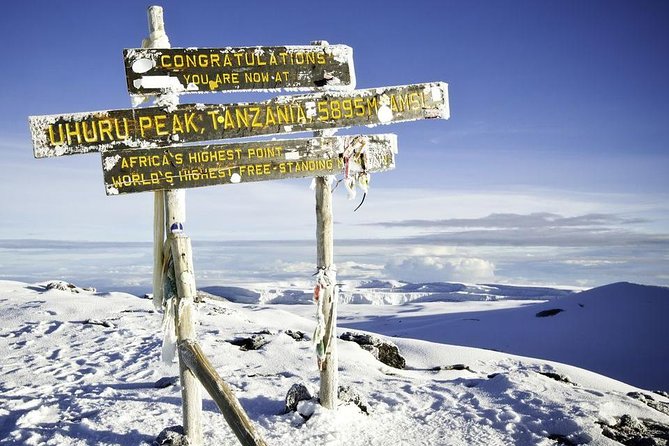
You leave Barafu Camp at night for the climb to Uhuru Peak, the summit of Kilimanjaro at 5,895 meters. The technical difficulty is described as relatively simple, but the altitude makes this the hardest part of the trip.
The dark start has a practical purpose. It allows the summit attempt to reach Uhuru Peak around sunrise, though the exact timing can vary. You will be walking in cold, thin air after several strenuous days, and progress is likely to feel slow.
Each pair of climbers receives a personal guide for the full ascent. This is one of the strongest features of the experience. The guide can monitor how you are coping and help you make sensible decisions if the altitude becomes a serious problem. The summit is the goal, but safe judgment matters more than forcing the final meters.
After reaching Uhuru Peak, you may descend to a nearby glacier if you wish. The itinerary does not promise a glacier visit as a fixed part of the day, so treat it as an optional addition subject to conditions and your energy.
You then return to Barafu Camp. After about two hours of rest, you continue down to Millennium Camp at 3,820 meters. This makes day five exceptionally long, with both the summit ascent and a major descent. Reaching a lower camp should bring some relief, but do not underestimate the strain on your legs.
Day 6: Millennium Camp to Mweka Gate
Millennium Camp sits in the tropical rainforest at 3,820 meters. After the previous day, you should feel the benefit of being lower, even if your body is tired.
You have a warm breakfast, then descend toward Mweka Gate at 1,650 meters. The return through forest gives the trip a satisfying change of mood. You are no longer climbing toward an uncertain goal. You have reached the summit and are walking out.
At the gate, the group gathers to congratulate one another. You can also write in the guestbook and receive commemorative certificates at the company office. A transfer back to your hotel is provided afterward.
The final day is not only a transfer out. It gives you time to register what you have done. The change from high volcanic terrain back to rainforest is a fitting end to a route that depends on constant changes in altitude and scenery.
The guides are the main reason to consider this trip
The company puts its guides at the center of the experience, and the practical details support that claim. The guide controls pace, monitors your condition, leads the route, and helps you manage the hardest altitude sections.
Specific team members named in the available information include Qamrish and Ayoub, who helped one climber reach the summit. Fred and Nancy are also praised in connection with a Kilimanjaro climb and a safari. The information does not assign exact roles to every named person, so you should ask who will lead your group before departure.
The most useful sign is the attention given to support rather than speed. On day two, the guide sets an appropriate pace. On day five, a personal summit guide is assigned to each pair. Those choices are more important than a polished speech at the hotel because altitude affects people in unpredictable ways.
Food is another strong point. Personal preferences are said to be handled, and the chef receives special praise. You should still communicate dietary needs before the climb, but the available information suggests that meals are treated as part of the service rather than an afterthought.
Who should choose this six-day climb
This route suits you if you want a private Kilimanjaro attempt with a clear day-by-day plan and a varied trail. You should have moderate physical fitness and be ready for long days, steep sections, repeated climbs, and a night ascent.
It is a good fit if your main goal is to reach Uhuru Peak within a shorter schedule. It also suits people who value direct guide support, including personal supervision during the summit attempt.
The six-day length is the key compromise. It is more compact than a longer climb, but you have less time to adjust to altitude. If you know you respond poorly to rapid height gain, ask about slower options before booking. This tour is not suited to someone looking for a relaxed mountain holiday or a light walking program.
The private format may appeal to couples, friends, or families who want only their own group on the activity. At the same time, a private trip does not make the mountain easy. You still face the same altitude, weather, and physical demands.
Practical details before you book
Pickup is offered, and the meeting time is around 7:00 a.m. The activity is based in Moshi and is near public transportation, though the first part of the day is arranged around a vehicle transfer to Machame Gate.
A mobile ticket is available, and confirmation is provided at booking. The activity requires moderate physical fitness. It also depends on good weather. If poor weather forces cancellation, you are offered another date or a full refund.
Cancellation is free if you cancel at least 24 hours before the scheduled start time. Changes or cancellations inside that window are not accepted for a refund, and the cut-off follows local time.
Should you book the Machame Route?
I would choose this trip if you want a well-supported private climb and accept that the six-day schedule is physically serious. The Lava Tower acclimatization stop, Barranco Wall, varied camps, personal summit guide, and forest-to-volcano route give you a strong Kilimanjaro experience for the price.
I would pause before booking if your main concern is maximizing acclimatization time. The short schedule leaves less room for your body to adjust, and day five is especially demanding. Ask for a full list of inclusions and confirm the guide team, food arrangements, equipment, and crew payments before you commit.
For a fit, determined climber who values attentive guides and a direct route to the summit, this is a compelling choice. Go in prepared for rain, cold, fatigue, and altitude, and you will understand why the support crew matters as much as the mountain itself.
FAQ
Where does the Kilimanjaro climb begin?
The climb begins at Machame Gate in Kilimanjaro National Park, at about 1,800 meters. Hotel pickup is offered from Moshi.
Where does the climb finish?
The descent finishes at Mweka Gate, at about 1,650 meters. A transfer back to your hotel is provided afterward.
How long is the Machame Route experience?
The experience lasts approximately six days, with each itinerary day listed at about 12 hours.
What time does the activity start?
The stated start time is 7:00 a.m. on the first day.
Is this a private tour?
Yes. Only your own group participates in the activity.
What level of fitness is needed?
You should have a moderate level of physical fitness. The route includes long walking days, altitude gain, repeated ascents and descents, and a night climb to Uhuru Peak.
What happens if bad weather cancels the climb?
If poor weather causes cancellation, you are offered a different date or a full refund. You can also cancel for a full refund if you do so at least 24 hours before the experience start time.
Just added in Moshi
- Wildlife Extravaganza: Manyara, Tarangire & Ngorongoro in 3 Days★ 5.0 · 3 reviews
- West Kilimanjaro cycling Adventures★ 4.5 · 8 reviews
- machame route★ 5.0 · 16 reviews
- Kilimanjaro Climbing Umbwe Route★ 5.0 · 3 reviews
- Mt Kilimanjaro 6 days Marangu route hike★ 5.0 · 3 reviews
- Kilimanjaro Climb • Machame Route ~ 10 Day★ 5.0 · 6 reviews
- 3 Days Private E-Bike Tour in West Kilimanjaro★ 5.0 · 3 reviews
- Private Cycle to Kilimanjaro Bike Park Safari★ 5.0 · 6 reviews
Kilimanjaro Treks, compared.



8-Day Small-group Lemosho Kilimanjaro Summit Trekking
Read our review →

5 Days Best of Tanzania Luxury Safari Northern Circuit
Read our review →

Climbing Kilimanjaro through 7 days Machame Route
Read our review →
7-Day Machame Kilimanjaro Summit Tour from Arusha
Read our review →Browse the lists this tour appears in