Reviewed · SAFARI TOURS
Unforgettable 6 Days Tanzania Private Big-5 Mid-range Safari
The great strength of this safari is its range. In six days, you move from baobab-studded Tarangire to the open Serengeti, then into Ngorongoro Crater and the forest and lake country of Manyara. That gives you four very different settings for wildlife, not four versions of the same game drive.
I like the private format, which keeps the trip to your own group and gives your guide room to adjust the day. I also like the two full days planned in the Serengeti, where early starts and long game drives give you a better shot at lions, cheetahs, leopards, elephants, and buffalo. The main drawback is the mileage: several days involve long drives and roughly eight hours of activity, so this is not a slow, restful holiday.
Key points at a glance
- Tarangire begins the safari with elephant herds and giant baobabs, often a strong first taste of northern Tanzania.
- Two nights in the Serengeti allow time for sunrise drives, the Sogore River Circuit, the Kopjes Circuit, and a proper search for predators.
- Ngorongoro Crater offers one of the best concentrated wildlife days, including a chance to see endangered black rhino.
- Lake Manyara adds forest, hippos, birds, baboons, and possible tree-climbing lions to the park mix.
- A private vehicle and guide make the schedule more personal than a shared safari.
- The $5,271 price includes lodging, meals, park fees, and guiding, but not flights, visas, insurance, tips, or pre-and post-safari hotels.
Four major parks in six demanding days
This trip is built for people who want the classic northern Tanzania circuit without spending a week in one park. You get a broad sample of the region: dry savannah and baobabs, endless grassland, a volcanic crater, and a groundwater forest beside a lake.
That variety is the real value. Tarangire can be excellent for elephants, Serengeti is the main stage for large predators, Ngorongoro packs many species into a compact area, and Manyara changes the mood entirely. You may not see every famous animal at every stop, but each park brings a different reason to keep looking.
The private setup matters here. You are not tied to strangers’ food breaks or camera stops, and your guide can shape the day around your interests. If you want more time near a pride of lions, a closer look at birds, or a quieter picnic, you can ask. The guide remains the key to the experience, so it is sensible to discuss your priorities at the start.
Other park itineraries that start in Arusha:
- Serengeti Balloon Safari and authentic bush breakfast
★ 5.0 · 2,480 reviews - Balloon Safari & Bush Breakfast in Serengeti – Miracle Experience
★ 5.0 · 1,646 reviews - 4 Days Group Camping Safari
★ 5.0 · 1,101 reviews
Day 1: Tarangire’s elephants and baobab country
The first morning begins in Arusha at 7:30 a.m. The drive toward Tarangire takes about two hours along the Arusha-Dodoma highway, passing across the Masai Steppe. There is also an option to stop at a supermarket for last-minute personal supplies, a small detail that can save you from wishing you had bought snacks, toiletries, or drinks before leaving town.
Tarangire is a fine opening act. It is known for large elephant herds and its broad baobab trees, which give the park a look unlike the Serengeti. Herds can sometimes number more than 300 animals, and the park offers wildlife viewing throughout the year.
You will spend the day on a game drive and stop for a picnic lunch. Keep your eyes open beyond elephants. The park can also bring sightings of other large mammals, though the exact mix depends on the season and the animals’ movements.
By late afternoon, you head to a camp or lodge in Manyara, Mto wa Mbu, or Karatu. Reaching your accommodation before sunset is helpful after a full first day, although the move from Tarangire toward the next day’s route means you are already covering substantial ground.
Day 2: Across the Rift Valley to the Serengeti
After breakfast, the road climbs from the floor of the Great Rift Valley and crosses the Ngorongoro Conservation Area on the way to Serengeti National Park. This is one of the longer transfer days, but the views make the drive part of the experience rather than dead time.
You can add a stop at the Olduvai Gorge Museum. The site is known for some of the oldest fossil evidence connected with human habitation and is often called the Cradle of Mankind. It is an optional addition, so ask how it affects your arrival time and game-drive hours before committing.
The Serengeti begins in the afternoon, followed by a game drive until evening. That first entry can feel especially exciting because the setting changes from crater highlands and settled areas to wide open grassland. You then check into a camp or lodge for dinner and the night.
The practical point is simple: this day is not just a park visit. It is also a long transfer. If you prefer maximum time with wildlife over cultural or archaeological stops, skip Olduvai and preserve your energy for the afternoon drive.
Days 3 and 4: Give the Serengeti the time it deserves
The two Serengeti days are the heart of the safari. Central Serengeti is known for lion, leopard, elephant, buffalo, cheetah, gazelle, and giraffe, with predators often dictating the pace of the morning.
Day 3 starts after breakfast with a full game drive and a sunrise over the savannah. The Sogore River Circuit is named as a key route for spotting lions, gazelles, and cheetahs. The day also includes a stop at the Visitor Centre, where wildlife displays add context to what you are seeing outside.
A picnic lunch keeps you in the park instead of sending you back to the lodge midday. In the afternoon, the Kopjes Circuit brings a different kind of scenery. Granite outcrops provide shade and water, and lions are often associated with these rocky formations. These stops are useful reminders that wildlife viewing is not only about driving across open plains. Small changes in rock, water, and shelter can shape where animals gather.
Day 4 uses morning and afternoon game drives, with lunch at the lodge. The Serengeti is home to huge numbers of large mammals and supports lion, leopard, hyena, cheetah, and many bird species. The annual wildebeest movement from the Kenyan Mara passes through the wider ecosystem, with northward movement often associated with May or early June.
That timing note deserves care. Migration is not a guaranteed event on a fixed calendar, and this six-day route does not promise a particular river crossing or herd location. You are booking the Serengeti for its wildlife year-round, with migration as an important seasonal possibility.
After the afternoon drive, you travel to a camp or lodge on the rim of Ngorongoro Crater. The rim setting positions you well for the next morning, but it also means another transfer after a long day in the vehicle. This is a busy schedule, not a luxury retreat.
Other safaris people book out of Arusha:
- 5 Days Group Camping Safari
★ 5.0 · 730 reviews - 3 Days Serengeti & Ngorongoro Group Camping Safari
★ 5.0 · 574 reviews - 7-Day Premium Luxury Tanzania Safari All-Inclusive
★ 5.0 · 426 reviews - 3-Day Classic Serengeti Safari
★ 5.0 · 263 reviews
Day 5: A full day inside Ngorongoro Crater
After breakfast, you descend into Ngorongoro Crater for an extensive game drive of about seven hours, carrying a packed lunch. The crater formed after a massive volcanic eruption millions of years ago, leaving a natural bowl with water, grass, and shelter for a dense population of wildlife.
Around 30,000 animals live in the crater, according to the supplied description, including the endangered black rhino. The natural walls limit how far many animals need to travel, which is why the crater can offer such concentrated viewing.
You may see wildebeest, elephants, lions, cheetahs, leopards, and other species in a relatively compact area. The crater is one of the strongest places on this route for a broad species count in a single day, but the famous animals still move on their own schedule. A big-cat sighting is never automatic.
After the crater drive and lunch, you travel to Manyara or Karatu for the night. This is another long day, and you should expect dust, heat, and plenty of time seated in the safari vehicle. The reward is a remarkable change in setting, from the open Serengeti to a volcanic basin full of water and grazing animals.
Day 6: Forest, lake, and birdlife at Manyara
The final day takes you to Lake Manyara National Park for a full day of game drives. It is smaller than the Serengeti and Ngorongoro, but size is not the point here. Manyara gives you a different environment, with groundwater forest fed by underground springs and a lake shore that attracts large numbers of birds.
Elephants, hippos, giraffes, buffaloes, and antelopes are among the animals you may see. Large baboon groups are another feature of the park, and the forest can make sightings feel more varied than a plain-based drive.
Lake Manyara is also associated with tree-climbing lions. These elusive cats may be seen resting in the branches, though the phrase itself should be treated as a possibility, not a promise. The same applies to the park’s birdlife: the lake shore is a strong place to look, but conditions and animal movements always matter.
The supplied day description ends with the Manyara game drive and a return to the meeting point. Confirm the exact final timing with the operator if you have an evening flight or another hotel booking. The advertised end point is back at the starting meeting point in Arusha, but the driving time after the park is not specified.
What the $5,271 price really covers
At $5,271 per person, this is a significant purchase. Its value depends on how much you want a private, planned safari with the main northern Tanzania parks included in one trip.
The price covers an experienced professional guide, park and activity fees, hotel or camp accommodation during the safari, five breakfasts, five dinners, and six lunches. It also includes the safari’s transportation from the Arusha meeting point and the return to that point, based on the stated pickup arrangement.
That package reduces the number of separate costs you must manage. You are not paying park fees one by one, arranging each night’s lodging, or finding food during long game-drive days. A private vehicle and guide also carry real value for couples, families, or a small group that wants its own pace.
The exclusions matter. You must budget separately for tips, medical insurance, visas, international and local flights, and hotel accommodation before or after the safari. The accommodation is described as mid-range, but individual camp and lodge names are not provided, so ask for the exact properties before paying.
I would also ask what type of safari vehicle is used, how many people can fit in your private group, and whether the daily route can change for wildlife conditions. Those details have a direct effect on comfort and value.
The guide makes the difference
No guide names are provided for this safari, so you should request the assigned guide’s name and experience before departure. A strong guide can help you read animal behavior, choose sensible routes, manage long days, and explain what you are seeing without rushing from one sighting to the next.
The supplied feedback about the same company includes warm praise for guides named Amini and Mr Norka, but those comments concern Kilimanjaro climbs and combined mountain and safari trips, not this exact six-day safari. I would not assume they will lead your group. Ask directly.
The same company feedback also points to careful organization, friendly staff, helpful support, and good food on mountain trips. That may give you useful background, but the safari itself should be judged by the guide assigned to your dates, the vehicle, and the confirmed accommodation.
Who should book this safari
I would recommend this route to someone visiting northern Tanzania for the first time who wants the major parks in a single private trip. It suits couples, families, and friends who value privacy and do not want to share every decision with a larger group.
It is also a good fit if you want a broad wildlife sample rather than a single-park specialist trip. Tarangire’s elephants, Serengeti’s predators, Ngorongoro’s concentrated wildlife, and Manyara’s forest and birds give you four distinct chapters.
I would hesitate if you dislike long road transfers, early starts, or full days in a safari vehicle. The schedule is active from beginning to end, with several days listed at about eight hours. For a slower trip, you would need fewer parks or more nights.
Most travelers can participate, and the activity is private, but the practical demands remain. You should be comfortable with extended driving, uneven roads, changing outdoor conditions, and long periods of watching and waiting.
Booking details worth checking
Confirmation is provided at booking, and pickup is offered from Arusha. The stated start time is 7:30 a.m., and the activity ends back at the meeting point.
The experience is non-refundable and cannot be changed for personal reasons after booking. If poor weather forces cancellation, you are offered another date or a full refund. That makes travel insurance worth considering, especially because medical coverage and flights are not included.
Ask for the accommodation names, guide details, vehicle arrangements, and expected drive times before you commit. Those are not minor details on a six-day safari. They shape your sleep, comfort, and the amount of time you spend watching wildlife rather than sitting on the road.
Should you book it?
Book this safari if you want a private, high-coverage northern Tanzania route and accept a busy schedule. The combination of four parks, two Serengeti days, meals, accommodation, park fees, and a private guide gives the $5,271 price a reasonable basis, provided the mid-range lodges and vehicle meet your expectations.
Think twice if you want a relaxed holiday, named luxury camps, or guaranteed migration sightings. Before paying, confirm the guide, lodging, vehicle, final-day timing, and what the operator means by private transport. If those answers are clear, this is a strong choice for a first Big Five safari with plenty of variety.
FAQ
Where does the safari start?
The safari starts in Arusha, Tanzania, with pickup offered. The stated start time is 7:30 a.m.
Where does the safari end?
The activity ends back at the meeting point in Arusha.
How long is the safari?
The safari lasts six days, with each listed day planned at approximately eight hours of activity.
Which parks are included?
The route includes Tarangire National Park, Serengeti National Park, Ngorongoro Conservation Area and Crater, and Lake Manyara National Park.
Is this a private tour?
Yes. Only your group participates in the activity.
What meals are included?
The price includes five breakfasts, five dinners, and six lunches.
Are accommodation and park fees included?
Hotel or camp accommodation during the safari is included, along with all listed fees and taxes. The exact properties are not specified.
Are flights, visas, insurance, and tips included?
No. Tips, medical insurance, visas, local and international flights, and accommodation before and after the safari are excluded.
Just added in Arusha
- 4 Days Private Midrange Lodge Safari to Serengeti & Ngorongoro★ 5.0 · 4 reviews
- Extraordinary Hot air Bolloon ride in Serengeti | BURIGI CHATO SAFARIS CO L.T.D★ 5.0 · 6 reviews
- 3 days leopard safaris★ 5.0 · 4 reviews
- 8 Days Serengeti Migration safari★ 5.0 · 11 reviews
- tarangire, ngorongoro & lake manyara park 3 days private tour★ 5.0 · 11 reviews
- Mt. Kilimanjaro: Shira plateau to Cathedral point 3872m Day hike★ 5.0 · 7 reviews
- serengeti, ngorongoro & tarangire 4 days private tour★ 5.0 · 18 reviews
- tarangire & ngorongoro 2 days tour★ 5.0 · 14 reviews
Safari Tours, compared.
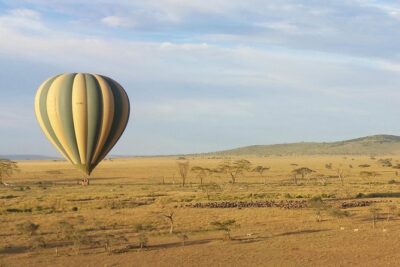
Serengeti Balloon Safari and authentic bush breakfast
Read our review →
Mikumi Safari Day Trip with Flights and Meal
Read our review →
3 Days Serengeti & Ngorongoro Group Camping Safari
Read our review →
7-Day Premium Luxury Tanzania Safari All-Inclusive
Read our review →
Safari Blue Lagoon Trip with Snorkeling and Lunch
Read our review →