
Reviewed · CAMPING & LODGE SAFARIS
5 Days Lodge Safari.
The most memorable part of this five-day safari is the variety packed into a short route. You move from flamingo-filled Lake Manyara to the wide Serengeti plains, then into Ngorongoro Crater, where more than 20,000 animals live inside an immense volcanic caldera.
I like the small maximum group size of two, which gives you a better chance to ask questions and adjust the pace. I also like the mix of wildlife and scenery: tree-climbing lions, elephants, migrating herds, crater views, and more than 500 bird species all have a place here. The main drawback is the long driving. Reaching the Serengeti and returning to Moshi or Arusha takes time, so this is an active safari, not a slow lodge holiday.
- Three famous Northern Circuit parks give you very different settings in five days.
- Open-roof vehicles provide a clear platform for watching animals and taking photos.
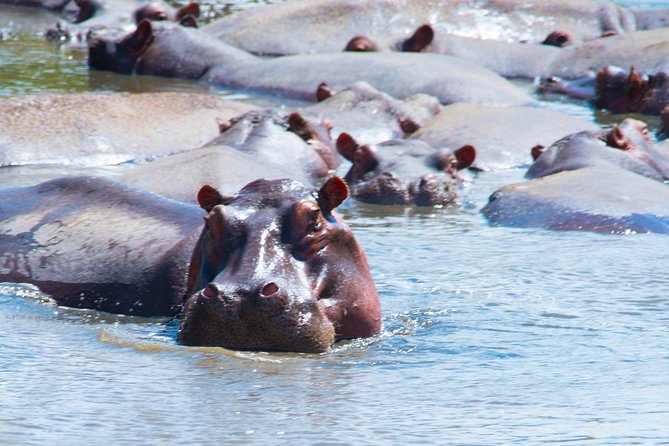
- Lake Manyara brings flamingos, hippos, baboons, elephants, and possible tree-climbing lions.
- Serengeti days offer the best chance to see large herds and predators in open country.
- Ngorongoro Crater combines dramatic scenery with strong odds of seeing many large mammals.
- Meals and four lodge nights are included, while drinks, tips, visas, flights, and personal costs are extra.
Three parks, three very different safari moods
This Bujo Tours trip follows Tanzania’s classic northern route from Moshi or Arusha. In five days, you visit Lake Manyara National Park, Serengeti National Park, and the Ngorongoro Conservation Area.
That combination works well because each place gives you something different. Lake Manyara is compact and varied, the Serengeti is vast and centered on open plains, and Ngorongoro offers concentrated wildlife inside a remarkable crater.
The price is $2,309.54 per person. That is a serious cost, but it covers five days of safari travel, four lodge nights, five lunches, four dinners, four breakfasts, park visits, and game drives. Flights, visa fees, alcoholic and soft drinks, tips, and personal expenses are not included, so you should budget for those separately.
The group limit is two people. That matters. A private or near-private safari can feel far more personal than a crowded vehicle, especially when you want to stop for a bird, wait for a predator, or ask your guide about animal behavior.
Day 1: Lake Manyara’s forest, lake, and flamingos
Your morning pickup begins the route to Lake Manyara National Park. The drive and park visit take about seven hours, so this is a full first day rather than a light introduction.
Lake Manyara is smaller than the Serengeti, but it packs several types of scenery into a tight area. You can pass through forest, grassy plains, the escarpment, and the shallow alkaline lake. That variety makes the park a good first stop because you are not limited to one kind of animal habitat.
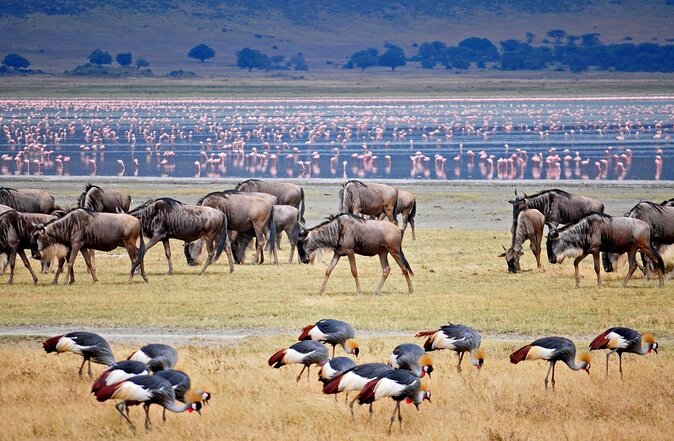
The lake draws hundreds of bird species. Pink flamingos are the headline sight, though the exact number and location of birds can change. Water fowl gather here, and the setting gives you a strong sense of how water shapes animal life in a dry region.
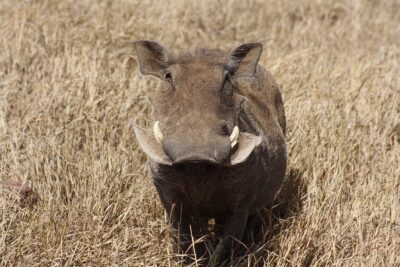
Keep watch for elephants, giraffes, buffaloes, hippos, wildebeests, and warthogs. Large troops of baboons and monkeys are also part of the park’s character. Tree-climbing lions are one of the most unusual possibilities, though no safari can promise that you will see them in the branches.
The open roof of the safari vehicle is useful here. It gives you a clear upward view in the forest and a broad angle across the plains. You should still follow your guide’s instructions, especially near large animals.
Lake Manyara may be the easiest day physically, but it is not necessarily short. After pickup, driving, game viewing, and transfers, you may be ready for a quiet evening at your lodge.
Other ways to sleep out on safari from Moshi:
- 5 Days Camping Tarangire, Serengeti & Ngorongoro crater & Visiting Maasai
★ 5.0 · 58 reviews - 4 Days Group Joining Camping Safari to Tarangire Serengeti Ngorongoro Crater
★ 5.0 · 50 reviews - Tanzania Luxury Safari
★ 5.0 · 48 reviews
Day 2: Leaving the farms for the Serengeti plains
After breakfast, you head toward the fertile crater highlands and then onward to Serengeti National Park. The day is listed at about eight hours, with the Serengeti reached around midday.
One pleasure of this transfer is watching the countryside change. Crop fields growing wheat, corn, and coffee give way to the open country associated with the Serengeti. The trip is not just dead time between parks. It shows you how quickly Tanzania shifts from cultivated highlands to protected wildlife country.
The Serengeti is Tanzania’s largest national park. Its name comes from a Maasai word meaning plains, and the name makes sense once the vehicle reaches the open grasslands. The park also includes bush, swamps, lakes, and other habitats, so the scenery does not stay the same all day.
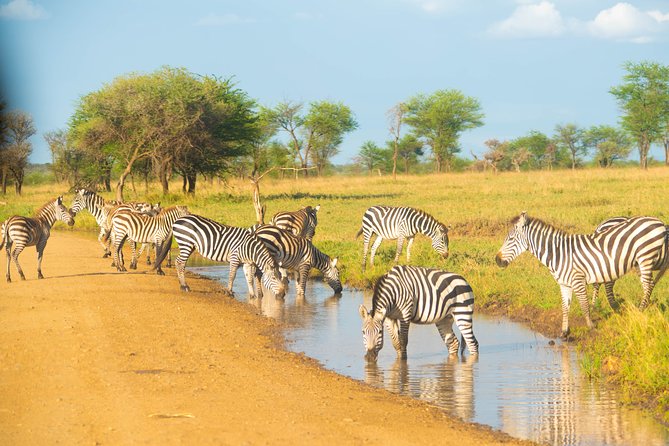
The annual migration is the park’s great natural event. Huge numbers of wildebeest and zebras move in search of water and fresh grass. The route changes with rainfall, and the herds are not fixed in one place. Your guide’s local knowledge matters here, but you should think of the migration as a moving pattern, not a scheduled performance.
An early evening arrival at the lodge gives you a chance to rest after the long transfer. You spend the night in the Serengeti, which puts you in a better position for the next full game-drive day.
One practical point: the itinerary calls for an early departure and a late lodge arrival. If you want leisurely mornings, this route may feel rushed. If your priority is seeing the parks, the long drive is part of the trade-off.
Day 3: A full Serengeti game drive
Day three is the trip’s main Serengeti day, with about eight hours set aside for game viewing. This is where the safari format pays off: you have time to search, wait, and follow animal activity instead of simply crossing the park on the way to another destination.
The Serengeti can offer a wide selection of animals, including large grazing herds and predators. During the dry season, animals gather around available water, which can improve the chance of seeing hunting behavior in the Seronera Valley. Sightings always depend on the season, rainfall, and animal movements.
The migration timing described for this route follows the rains. During the shorter rainy season in November and December, herds move from the northern hills toward the southern plains. During the longer rains from April to June, they move back north. These dates are useful planning clues, but they do not guarantee that a particular herd will be beside your vehicle.
I like that this day leaves room for more than a quick animal checklist. You might spend time watching movement, learning how the herds interact, or comparing the open plains with thicker bush and wet areas elsewhere in the park.
A visit to the Serengeti Visitor Centre is also possible. It can add context about the park’s past and the research supported by the Frankfurter Zoological Society. Ask your guide how much time is available if you want to include it, since a visitor center stop means less time driving in search of wildlife.
You return to the lodge for another night in the Serengeti. The lodge arrangement is practical: you do not need to pack and move every few hours, and you remain close to the park’s main viewing areas.
Day 4: From Seronera to the Ngorongoro rim
After breakfast, the route continues through the Serengeti before turning toward the Ngorongoro Conservation Area. The day again takes about eight hours, but it changes character as you leave the broad plains and approach the crater highlands.
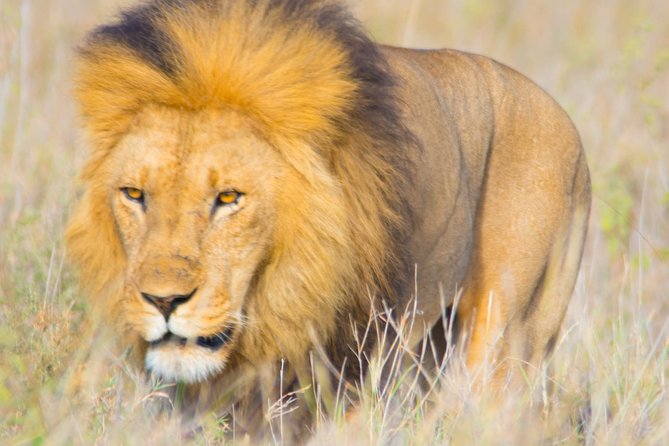
The Seronera Valley is a useful area for predator sightings, especially in the dry season when animals gather near water. You may see lions or other predators on the move, but hunting scenes are never guaranteed. The right approach is patience. A guide may stop when animal behavior looks promising, then wait to see what happens.
Lunch is taken at a picnic spot before the drive toward Ngorongoro. This is a good place to remember that safari days have a simple rhythm: early starts, long hours in the vehicle, outdoor meals, and changing scenery.
The first sight of the crater is a major scenic moment. Ngorongoro is roughly 20 kilometers wide, and the elevated view shows the scale of the caldera before you enter it the next morning. The area is part of a UNESCO World Heritage Site, so this is not just a wildlife stop. It is also one of Tanzania’s most striking geological settings.
Your lodge may be on or near the crater rim. If so, sunset views can be a highlight, though the exact view depends on the accommodation used. The rim setting also makes the final game-drive day efficient, since you are already near the crater entrance.
This night can feel cooler than the lower parks, but the supplied details do not specify particular lodge facilities or temperatures. Confirm the exact accommodation and room arrangements before booking if those details matter to you.
Other park itineraries that start in Moshi:
- Safari Serengeti And Ngorongoro
★ 5.0 · 288 reviews - Big Five Safari In Tanzania
★ 5.0 · 99 reviews - Unforgettable Tanzania Safari And Zanzibar Beach
★ 5.0 · 97 reviews - 8-Day Essence of Tanzania Safari – Luxury
★ 5.0 · 72 reviews
Day 5: Down into Ngorongoro Crater
The final morning starts early. After breakfast, you drive down the steep track into Ngorongoro Crater for about five hours of game viewing and the return journey to Moshi or Arusha.
Ngorongoro is the largest unbroken, unflooded caldera in the world. Its steep sides create a contained setting where many animals live close together. That makes the crater one of the strongest places on this route for seeing a broad range of wildlife in one morning.
Possible sightings include zebras, lions, elephants, buffaloes, hyenas, waterbucks, bushbucks, and eland. The crater is also home to the rare black rhino and more than 500 bird species. The Big Five, lion, elephant, buffalo, rhino, and leopard, are all possible, but you should not treat the name of the safari as a promise that you will see every one.
One past participant who used Bujo Tours with guide Michael accepted that reality after not seeing all five. That is sensible safari thinking. Guides can read animal movements and position the vehicle well, but wildlife remains wild and sightings cannot be guaranteed.
You stop for a picnic lunch after the game drive, then leave the caldera in the early afternoon. Arrival back in Moshi or Arusha is expected in the early evening, though road conditions and the pace of the day can affect timing.
The crater is especially valuable if you have limited time in Tanzania. It gives you dramatic scenery and a concentrated chance to see animals without adding another park to the route. The trade-off is that the crater can feel busier than a remote stretch of the Serengeti, and the steep access road may not suit anyone who dislikes rough or winding drives.
Guides, vehicles, and the feel of a small safari
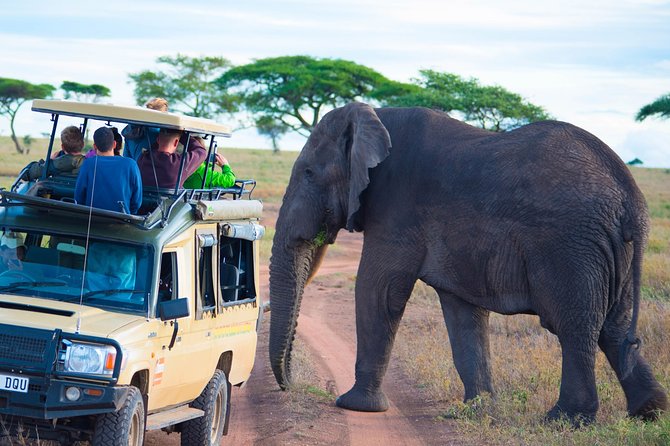
The supplied information names Antony and Michael in connection with Bujo Tours. Antony is described as having 15 years of game-drive experience, with a strong ability to anticipate animal movements. Michael is described as punctual, friendly, and able to answer questions clearly.
You are not promised a specific guide at booking, so treat those names as examples rather than a guarantee. The most important thing is to ask who will lead your departure and how the two-person group arrangement works.
The vehicle has an open roof, which is the right design for wildlife viewing. You can look across the grasslands, watch birds above the trees, and photograph animals without a window frame in the way.
A maximum of two people also makes the trip more adaptable. The pace can be adjusted to your interests, and the experience may feel more comfortable for couples, close friends, or a solo participant willing to pay the per-person rate.
Still, small does not mean effortless. Five days include several long drives, early starts, outdoor stops, and repeated time in a safari vehicle. You should choose this route for access to wildlife and scenery, not for a relaxed resort schedule.
What the price includes, and what it does not
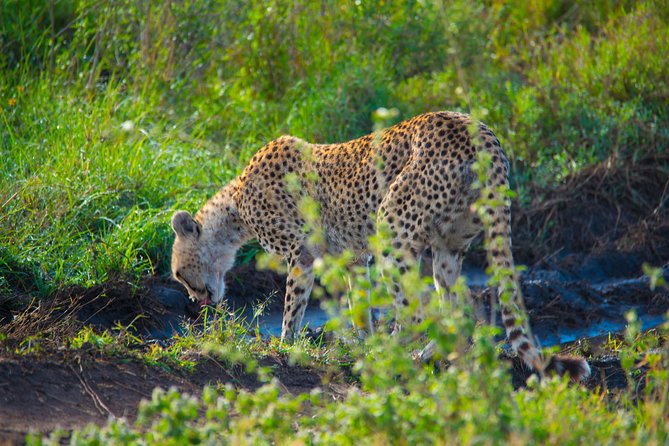
At $2,309.54 per person, the cost has value if you want a packaged safari with transport, park access, lodge nights, and meals arranged together. The two-person limit is a meaningful part of that value, since private-style travel usually costs more than joining a large vehicle.
Included meals are five lunches, four dinners, and four breakfasts. That covers the main food schedule across the five days, but alcoholic drinks and soft drinks are extra. Personal expenses and tips are also separate.
International flights and visa fees are not included. Immunization documents are also your responsibility, with yellow fever recommended for visa processing on arrival. Check the current entry and health requirements before you travel, since these rules can change.
Pickup is offered, with a listed start time of 9:00 a.m. Confirm the exact pickup location in Moshi or Arusha before the trip. The information provided does not specify the lodge names, vehicle model, or exact daily distances, so ask for those details if they affect your decision.
Free cancellation is available when you cancel at least 24 hours before the start time. Inside that 24-hour window, the payment is not refunded, and changes are not accepted.
Who should book this five-day route?
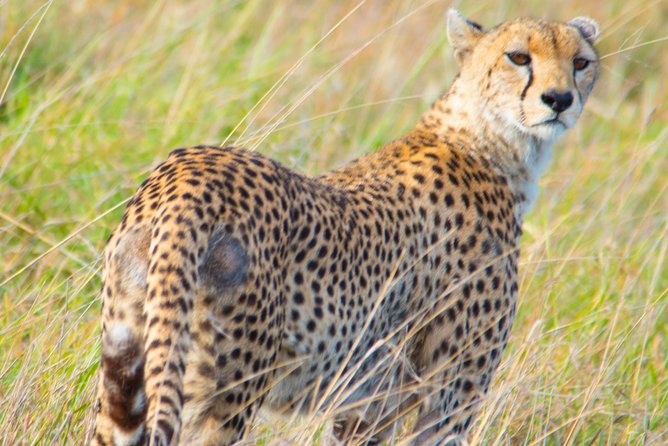
I would choose this safari if you want Tanzania’s three headline northern parks but have only five days. It gives you a strong sample of the region, from a bird-filled lake to a full Serengeti day and a crater game drive.
It suits people who value a small group, clear wildlife viewing, and a guide-led schedule. It is also a good fit if you want lodge accommodation rather than camping, while still spending most days outside on game drives.
I would hesitate if you dislike long road transfers. Day two and day four are each about eight hours, and day five combines a crater drive with the return to Moshi or Arusha. The pace is efficient, but it is not gentle.
Should you book it?
Book this safari if your main goal is to see Tanzania’s classic northern circuit in a short, organized trip. The best reasons are the two-person limit, open-roof vehicle, lodge nights, included meals, and the chance to see very different wildlife settings in one route.
Before paying, confirm the exact guide, lodges, pickup point, vehicle, and what park fees are covered in the final price. If you can accept long driving days and understand that the Big Five are never guaranteed, this is a focused and worthwhile introduction to Lake Manyara, Serengeti, and Ngorongoro.
FAQ
Where does the safari start?
Pickup is offered in Moshi, Tanzania, and the listed start time is 9:00 a.m. The itinerary also refers to returning to Moshi or Arusha.
How long is the safari?
The safari lasts approximately five days.
Which parks and protected areas does it visit?
The route includes Lake Manyara National Park, Serengeti National Park, the Ngorongoro Conservation Area, and Ngorongoro Crater.
How many people can join the tour?
The maximum group size is two people.
Are meals included?
Yes. The package includes five lunches, four dinners, and four breakfasts.
Are drinks included?
Alcoholic drinks and soft drinks are not included.
Is the Big Five guaranteed?
No. The route visits places where lion, elephant, buffalo, rhino, and leopard may be seen, but wildlife sightings are not guaranteed.
What is the cancellation policy?
You can receive a full refund if you cancel at least 24 hours before the experience begins. Cancellations or changes made less than 24 hours before the start time are not accepted for a refund.
More camping and lodge safaris from Moshi
- 4 days adventure camping safari
★ 5.0 · 44 reviews - 6 Days Tanzania Budget Camping Safari with Migration
★ 5.0 · 31 reviews - 5 days Tanzania Camping Safari
★ 5.0 · 29 reviews - 6 Days: Classic Camping( Tarangire, Manyara, Serengeti And Ngorongoro).
★ 5.0 · 26 reviews
More safaris from Moshi
- Great Migration Safari In Tanzania
★ 5.0 · 71 reviews - 6 Days 5 Night Safari
★ 5.0 · 57 reviews - 4-day Tanzania Safari
★ 5.0 · 53 reviews - 7-Day Magical Tanzania Safari -Premium High End Package
★ 5.0 · 53 reviews
Just added in Moshi
- Wildlife Extravaganza: Manyara, Tarangire & Ngorongoro in 3 Days★ 5.0 · 3 reviews
- West Kilimanjaro cycling Adventures★ 4.5 · 8 reviews
- machame route★ 5.0 · 16 reviews
- Mt Kilimanjaro 6 days Marangu route hike★ 5.0 · 3 reviews
- Kilimanjaro Climb • Machame Route ~ 10 Day★ 5.0 · 6 reviews
- Kilimanjaro Climbing Umbwe Route★ 5.0 · 3 reviews
- 3 Days Private E-Bike Tour in West Kilimanjaro★ 5.0 · 3 reviews
- Private Cycle to Kilimanjaro Bike Park Safari★ 5.0 · 6 reviews
Camping & Lodge Safaris, compared.
3 Days Serengeti & Ngorongoro Group Camping Safari
Read our review →
5 Days Best of Tanzania Luxury Safari Northern Circuit
Read our review →
2 Days Tarangire and Ngorongoro Group Camping Safari
Read our review →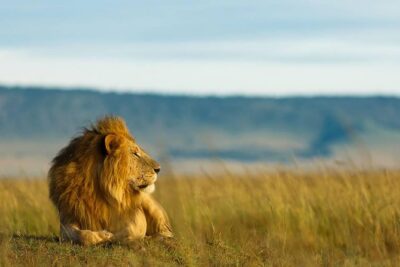
5-Day private Camping Safari Tour in Tanzania
Read our review →
5 Days Tanzania Group Joining Safari, Tarangire/Serengeti/Ngorongoro Crater
Read our review →Browse the lists this tour appears in