
Reviewed · CAMPING & LODGE SAFARIS
6 Days in the Wild – A Budget Safari Across Tanzania’s Icons
The biggest draw is the range. In six days, you move from Tarangire’s elephant country to the Serengeti, Ngorongoro Crater, Lake Manyara, Maasai culture, and the foothills of Kilimanjaro. That is a lot of Tanzania for $1,300 per person, especially with meals, park fees, transport, and guiding included.
I like the small group limit of seven, which should make wildlife stops easier and keep the vehicle from feeling crowded. I also like the contrast between game drives and the final cultural outings: a Chagga lunch at Materuni, a waterfall walk, and a swim at Chemka Hot Springs. The main caution is the pace. Long drives, early starts, camping, and several major parks in one week will suit an active visitor more than someone seeking a slow lodge holiday.
Key reasons to consider this safari
- Tarangire’s elephant herds: The park offers a strong opening day, with wildlife gathering near the Tarangire River and seasonal swamps.
- Two days in the Serengeti: You get both an arrival game drive and a full day searching for the Big Five, birds, kopjes, and predator activity.
- A visit to a Maasai boma: This adds contact with local traditions, including singing, dancing, herding, fire making, and handicrafts.
- Ngorongoro and Lake Manyara: One gives you a compact crater wildlife setting, while the other brings lake views, birds, and a chance of tree-climbing lions.
- Materuni and Chemka: The safari ends with a waterfall walk, Chagga food and coffee-country culture, plus a swim in warm spring water.
- Small-group value: With a maximum of seven people, the trip offers a more personal setup than a large safari vehicle.
A six-day route with a lot packed in
This is a budget safari, but it is not a bare-bones wildlife trip. The route covers four major parks and adds two very different cultural and outdoor stops. You also receive private transportation, an English-speaking guide, breakfast on five mornings, six lunches, and five dinners.
The tradeoff is time on the road. Tanzania’s parks are spread out, and the schedule asks you to change settings often. I would choose this trip if you want variety and a strong first visit to northern Tanzania. If your top goal is to sit quietly in one park for many days, the route may feel rushed.
The advertised start is 6:00 a.m. at Meru House Inn in Arusha. Pickup is offered, and the activity finishes back at the meeting point. Confirm your exact pickup details before departure, since an early start matters on the first day.
Other park itineraries that start in Arusha:
- Serengeti Balloon Safari and authentic bush breakfast
★ 5.0 · 2,480 reviews - Balloon Safari & Bush Breakfast in Serengeti – Miracle Experience
★ 5.0 · 1,646 reviews - 4 Days Group Camping Safari
★ 5.0 · 1,101 reviews
Day one: elephants and baobabs in Tarangire
After breakfast, you drive about two hours from Arusha to Tarangire National Park. The first game drive lasts around six hours, giving you much of the day to look for elephants, zebra, wildebeest, buffalo, and giraffe.
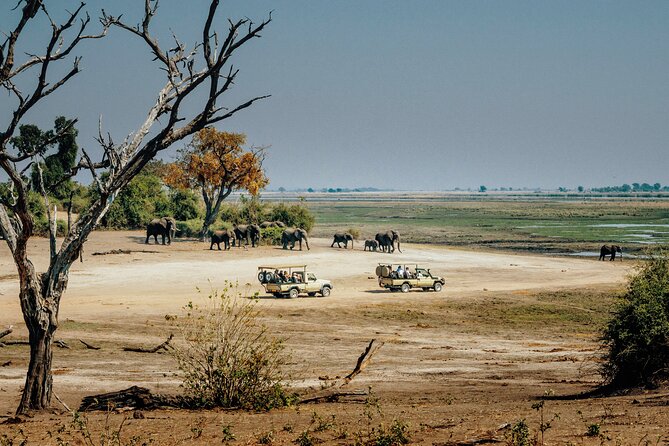
Tarangire is a good first park because its character differs from the open grasslands farther west. The Tarangire River and seasonal swamps attract wildlife during dry periods, while the park’s trees and broad savanna give the drive a distinct look. Elephants are the headline sight, and the chance to watch large herds is one of the strongest reasons to include this park.
You ride in a vehicle with an open roof, a useful feature for viewing animals and taking photographs. Your guide’s skill will matter here. Ask for help identifying smaller animals and birds, not just the large mammals. A safari becomes more rewarding when you pause for the details around the road.
After the game drive, you continue to Fig Tree Lodge for dinner and the night. The day is long, but it gives you a proper first taste of Tanzania rather than using day one only for transport.
Days two and three: two different Serengeti rhythms
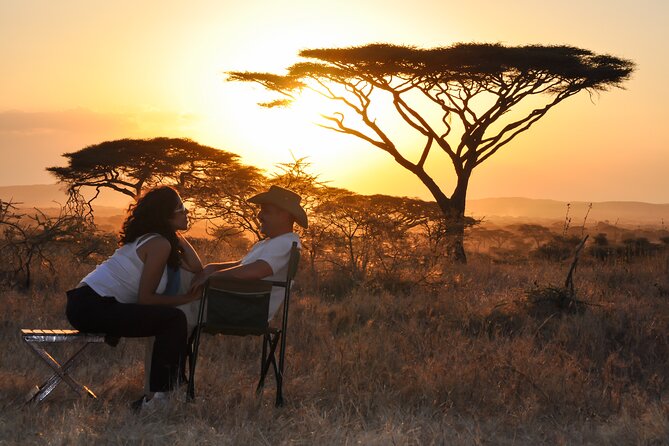
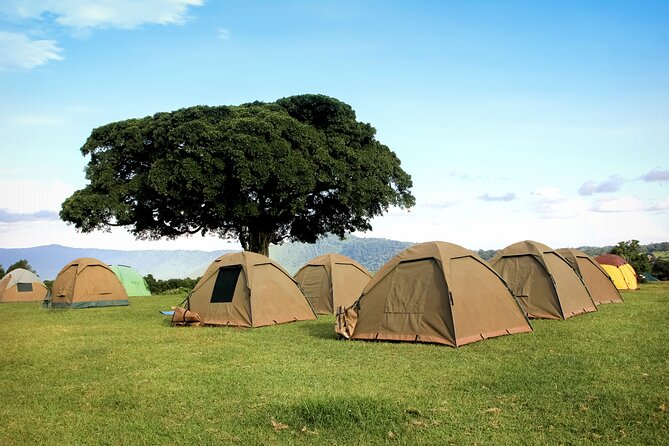
Day two takes you toward Serengeti National Park with picnic lunches. The drive and game viewing together make this a substantial day, with about seven hours listed for the park portion. You spend the night at Seronera Campsite.
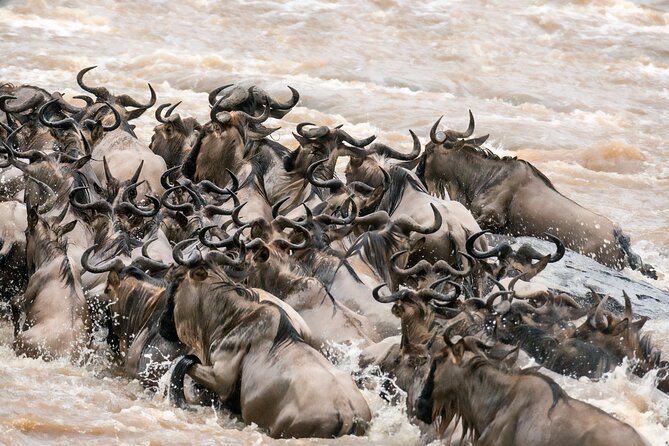
The central appeal of the Serengeti is its scale. The open grassland lets you scan a wide area for wildebeest, zebra, giraffe, lions, cheetahs, and other wildlife. The Great Migration is seasonal, so you should not treat a sighting of a river crossing or a particular herd location as guaranteed. The park remains rewarding outside the migration period because of its resident animals, birds, and changing scenery.
Your first Serengeti game drive is partly about getting into the park and reaching the Seronera area. On day three, you start at sunrise, return to camp for lunch, then head out again in the afternoon. That split gives you two useful viewing periods and a break from the vehicle in the middle of the day.
I like the full day here. Too many short safari itineraries give the Serengeti only a drive-through visit. This plan lets you spend a night at Seronera and devote the next day to searching for the Big Five. The campsite also fits the budget focus, though you should be ready for a simpler night than the lodge stay at Fig Tree.
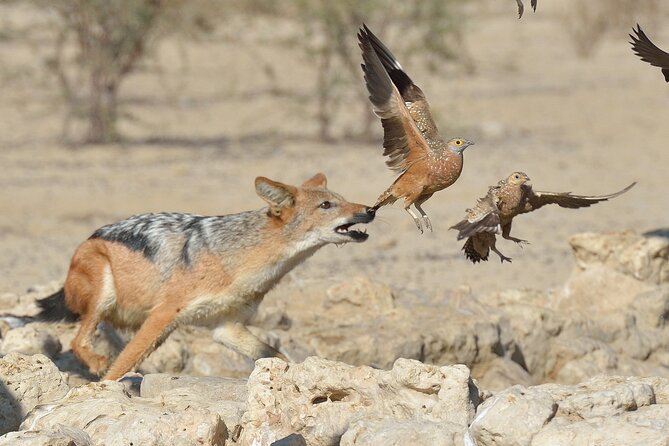
Do not overlook the smaller life. Agama lizards and rock hyraxes appear around the granite kopjes, and the park has an impressive range of birds. Ostriches, secretary birds, black eagles, and many other species add interest when the lions are resting out of sight.
The two Serengeti days are likely to be the trip’s wildlife highlight, but they are also physically demanding. Sunrise departures, long vehicle hours, picnic meals, and camping require flexibility. Pack layers and keep your camera ready, since the temperature and light can change quickly during a full day outside.
Day four: Maasai culture and the Ngorongoro setting
The fourth day combines a Maasai boma visit with the Ngorongoro area. The Maasai have maintained a pastoral way of life, and the visit is intended to show elements of daily culture through singing, dancing, cattle and goat herding, milling, fire making, and handicrafts.
This is a valuable change of pace after several game drives. You can ask questions, take photographs, and buy handmade items. Approach the visit with respect and curiosity. It is not a museum display, and the best moments will come from listening rather than rushing through a checklist of activities.
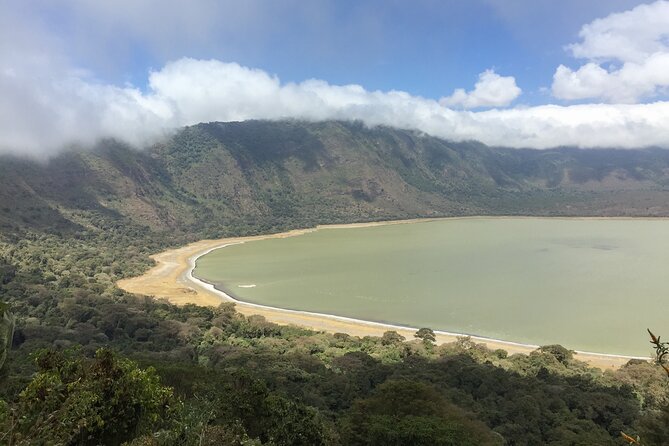
The Ngorongoro Crater is one of northern Tanzania’s most memorable settings. Its broad volcanic caldera creates a concentrated wildlife area surrounded by steep walls. A descent to the crater floor can bring close views of large mammals, including the Big Five, with dramatic scenery in every direction.
The route description places dinner and the night at a hotel after the Maasai visit, with the guide returning you toward Arusha. Since the following day begins at Lake Manyara, confirm the precise overnight location and driving plan before departure. The schedule covers a great deal of ground, and knowing where you will sleep helps you prepare for the next early start.
Other safaris people book out of Arusha:
- 5 Days Group Camping Safari
★ 5.0 · 730 reviews - 3 Days Serengeti & Ngorongoro Group Camping Safari
★ 5.0 · 574 reviews - 7-Day Premium Luxury Tanzania Safari All-Inclusive
★ 5.0 · 426 reviews - 3-Day Classic Serengeti Safari
★ 5.0 · 263 reviews
Day five: Lake Manyara’s birds, lake, and tree-climbing lions
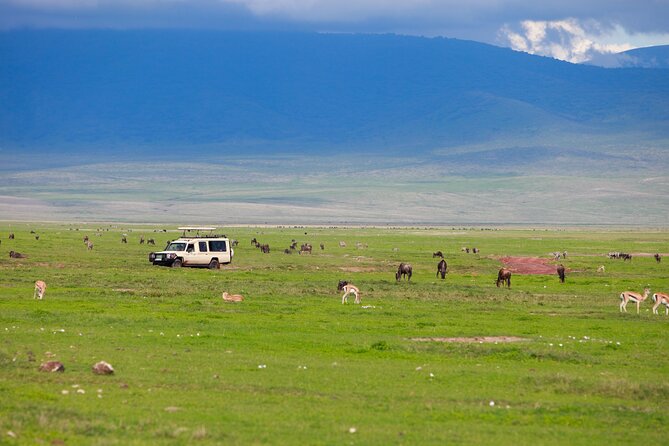
Lake Manyara National Park is about a 30-minute drive from the accommodation listed for the morning pickup. Its appeal comes from variety rather than sheer size. You move through different habitats with the Great Rift Valley as a backdrop, then look toward the lake for water birds and flamingos.
Tree-climbing lions are the park’s famous possibility. They are not guaranteed, but the chance to see lions resting in acacia trees gives this stop a different feel from the Serengeti. You may also see elephants, giraffes, zebra, and many kinds of birds.
Birdwatchers should pay close attention here. Large flamingo groups, circling birds of prey, and lilac-breasted rollers are among the sights described for the park. Even if you are new to birding, your guide can turn an apparently quiet stretch of water or woodland into an active search.
Lunch is served in the park at about 1:00 p.m., followed by a return to Arusha in the afternoon. This is a shorter safari day than the Serengeti sessions, which makes it a useful bridge between the major parks and the final day of swimming and walking.
Day six: Materuni Waterfalls and a Chagga lunch
The final day shifts from wildlife to village life in the Kilimanjaro area. At Materuni, you walk for roughly 40 minutes to a waterfall with a guide. Along the route, the guide explains local culture, village life, plants, and animals.
The waterfall pool is described as suitable for a refreshing swim, so bring swimwear. On a clear day, you might see Mount Kilimanjaro from the area, but the view depends on conditions. The walk is short enough for many people, yet you should still wear practical shoes because this is an outdoor path rather than a simple roadside stop.
After the waterfall, you return slowly to Materuni village for a traditional Chagga lunch. Coffee is also part of the Materuni appeal described for this journey, making the stop more than a quick waterfall photo. It gives you a look at the farming and food culture around the mountain.
This is one of the trip’s best design choices. After several days focused on animals, you spend time with local food, village life, and the natural setting around Kilimanjaro. It also gives you room to talk with your guide and fellow group members before the final stop.
Chemka Hot Springs for a warm finish
Chemka Hot Springs, also called Kikuletwa Hot Springs, provides the last major stop. The clear, warm water sits among vegetation and offers a chance to swim and relax after the safari portion.
I would save energy for this outing rather than treating it as an afterthought. The hot spring works because it is simple: get into the water, cool off or warm up, and enjoy a slower setting after long drives and game viewing. Bring a swimsuit, towel, sun protection, and a change of clothes. The tour information confirms the swim stop, but it does not specify changing facilities, so pack in a way that keeps the practical side easy.
The listed duration is about five hours for the hot spring portion. Together with Materuni, this makes the final day active but less vehicle-focused than the earlier days.
What $1,300 buys you
At $1,300 per person, the price is strong for a six-day northern Tanzania route that includes major park access, private transport, an English-speaking guide, meals, and several nights of accommodation or camping. You are paying for access to Tarangire, Serengeti, Ngorongoro, and Lake Manyara, not just a single park excursion.
The value improves if you want a broad introduction to Tanzania. Park fees alone can make safari travel costly, and this plan also includes the Materuni and Chemka outings. Six lunches, five dinners, and five breakfasts reduce the daily spending you need to manage.
Still, budget has a practical meaning here. You should expect camping at Seronera and a schedule built around efficient movement. The price does not include tips, international flights, or personal items. Keep extra money available for gratuities and anything you choose to buy at the Maasai boma.
The group limit of seven is another important part of the value. A smaller vehicle group can make it easier to hear the guide, ask questions, and share wildlife sightings. It does not mean the safari is private for one booking, so ask how your party will be grouped if that matters to you.
Guides, food, and day-to-day comfort
The guide can shape the whole trip. Names associated with the operation include Simba, Amiri, Shebbie, and Salim, with Salim identified as a chef. Specific feedback describes Simba as helping with Big Five sightings, Amiri as a driver, and Shebbie as a strong contact for trip communication.
That gives you useful names to request, but assignments can change. The important point is to expect a guide who handles wildlife interpretation, driving, timing, and safety across a demanding route. Ask questions often. A good safari guide can help you notice birds, tracks, smaller animals, and behavior rather than simply pointing out the biggest creature nearby.
Food is included throughout the main itinerary, and the meals received strong praise, including the cooking associated with Salim. You will have picnic lunches on game-drive days and a traditional Chagga lunch at Materuni. If you have dietary needs, tell the operator before departure. The supplied details do not specify special-diet arrangements.
Who should book this trip?
I would choose this safari if you want:
- Your first broad taste of northern Tanzania
- Strong chances to see major African wildlife
- Two days focused on the Serengeti
- A small group rather than a large coach
- Camping mixed with lodge or hotel nights
- Cultural stops as well as game drives
- Swimming and walking added to the safari route
I would think twice if you dislike early starts, long drives, shared group travel, or basic camping. The trip covers a lot, and the schedule leaves little room for a lazy morning. It is also not the right choice if your only goal is to follow the Great Migration at a precise location, since migration movements change and are not guaranteed.
The tour is open to most people, but the itinerary includes a waterfall walk, game drives, and an outdoor spring stop. If you have mobility concerns, ask the operator for a clear description of the walking route before booking.
Should you book this six-day Tanzania safari?
Book it if you want maximum variety for your money. The combination of Tarangire elephants, two Serengeti days, Ngorongoro, Lake Manyara, Maasai culture, Materuni, and Chemka is hard to match in a six-day plan at this price.
Choose a slower or more specialized safari if comfort matters more than coverage. For everyone else, this is a practical first route into Tanzania, with the strongest value coming from the small group, included meals and transport, and the mix of wildlife and local culture. Confirm the exact lodging and day-four driving plan, pack for camping and swimming, and arrive ready for long but rewarding days.
FAQ
Where does the tour start?
The activity starts at 6:00 a.m. from Meru House Inn on Sokoine Road in Arusha, Tanzania. Pickup is offered, and the tour ends back at the meeting point.
How many people can join the tour?
The maximum group size is seven people.
Are meals included?
Yes. The tour includes five breakfasts, six lunches, and five dinners.
Which national parks are included?
The route includes Tarangire National Park, Serengeti National Park, Ngorongoro Crater, and Lake Manyara National Park.
Are Materuni Waterfalls and Chemka Hot Springs included?
Yes. The final day includes a walk to Materuni Waterfalls, a traditional Chagga lunch, and a visit to Chemka Hot Springs, where you can swim.
What is the cancellation policy?
You can cancel up to 24 hours before the experience start time for a full refund. Changes or cancellations made less than 24 hours before departure are not accepted or refunded.
More camping and lodge safaris from Arusha
- 5 Days Camping Tarangire, Serengeti & Ngorongoro crater & Visiting Maasai
★ 5.0 · 229 reviews - 5 Days Best of Tanzania Luxury Safari Northern Circuit
★ 5.0 · 174 reviews - 6 Days Private Budget Safari
★ 5.0 · 163 reviews - 2 Days Tarangire and Ngorongoro Group Camping Safari
★ 5.0 · 146 reviews
Just added in Arusha
- 4 Days Private Midrange Lodge Safari to Serengeti & Ngorongoro★ 5.0 · 4 reviews
- Extraordinary Hot air Bolloon ride in Serengeti | BURIGI CHATO SAFARIS CO L.T.D★ 5.0 · 6 reviews
- 3 days leopard safaris★ 5.0 · 4 reviews
- 8 Days Serengeti Migration safari★ 5.0 · 11 reviews
- tarangire, ngorongoro & lake manyara park 3 days private tour★ 5.0 · 11 reviews
- Mt. Kilimanjaro: Shira plateau to Cathedral point 3872m Day hike★ 5.0 · 7 reviews
- serengeti, ngorongoro & tarangire 4 days private tour★ 5.0 · 18 reviews
- tarangire & ngorongoro 2 days tour★ 5.0 · 14 reviews
Camping & Lodge Safaris, compared.
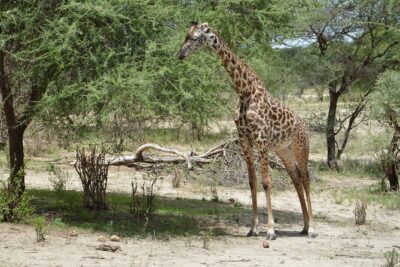
3 Days Serengeti & Ngorongoro Group Camping Safari
Read our review →
5 Days Best of Tanzania Luxury Safari Northern Circuit
Read our review →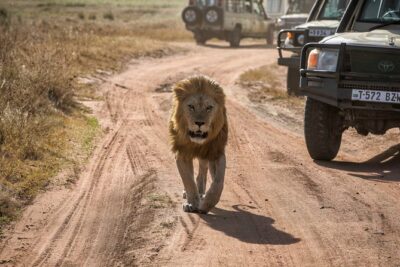
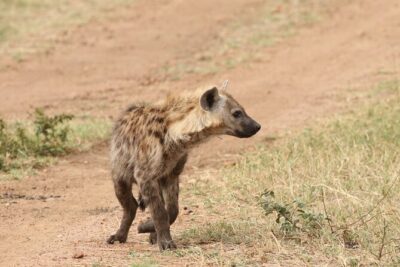
2 Days Tarangire and Ngorongoro Group Camping Safari
Read our review →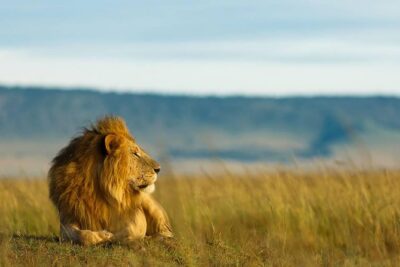
5-Day private Camping Safari Tour in Tanzania
Read our review →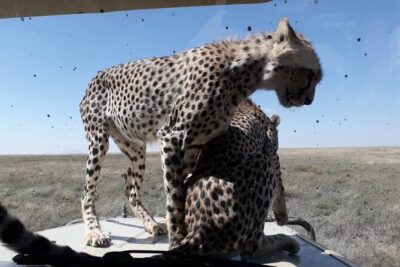
5 Days Tanzania Group Joining Safari, Tarangire/Serengeti/Ngorongoro Crater
Read our review →Browse the lists this tour appears in