
Reviewed · TOURS IN MOSHI
7 Days Highlight of Tanzania Mid-Range Standard
The great appeal here is the route: in seven days, you move from elephant country in Tarangire to the big-cat plains of the Serengeti, then down into Ngorongoro Crater. You also get time near the Mara River, where seasonal wildebeest crossings can create some of Africa’s most dramatic wildlife scenes.
I like the private format, since your group can set the pace and spend more time with an interesting sighting. I also like the mix of parks: Tarangire and Lake Manyara bring woodland and birdlife, while the Serengeti and Ngorongoro focus on large mammals. The drawback is the amount of time in the vehicle, with several 7 to 10-hour days and long drives between parks.
Key points to know
- Tarangire begins the safari with elephants, baobabs, and riverbank wildlife.
- Two full Serengeti days plus additional game drives give you a real chance at big-cat sightings.
- The Mara River is seasonal, so a crossing is possible but never guaranteed.
- Ngorongoro Crater offers compact, rewarding game viewing on the final day.
- The private tour lets only your group participate, with pickup available.
- The $4,465 price includes parks, transport, meals, and six nights of breakfast and dinner, but not visas, insurance, tips, or personal costs.
A seven-day route through Tanzania’s best-known parks
This is a classic northern Tanzania safari with a sensible wildlife progression. You start in Arusha, travel west toward Tarangire and Lake Manyara, continue to the Serengeti, then return through Ngorongoro.
The itinerary is active rather than leisurely. Most days begin early, include picnic meals, and combine driving with game viewing. That pace makes sense in Tanzania, where the parks are spread far apart, but you should be ready for rough roads, long transfers, and several hours in a safari vehicle.
The tour is private, so your group will not be joined by other participants. That matters when you want to stop for a particular animal, pause for photographs, or adjust the rhythm of the day. Pickup is offered, and confirmation is provided when you book.
A few more things to do in Moshi worth a look
- Kilimanjaro climb by Lemosho Route (7-day)
★ 5.0 · 651 reviews - Kilimanjaro climb, Machame Route (7-day)
★ 5.0 · 262 reviews - Climbing Kilimanjaro through 7 days Machame Route
★ 5.0 · 151 reviews
Day 1: Tarangire’s elephant country
After breakfast in Arusha, you set out with a picnic lunch for Tarangire National Park. The drive passes through Rift Valley scenery before you enter a park known for having Tanzania’s largest elephant population.
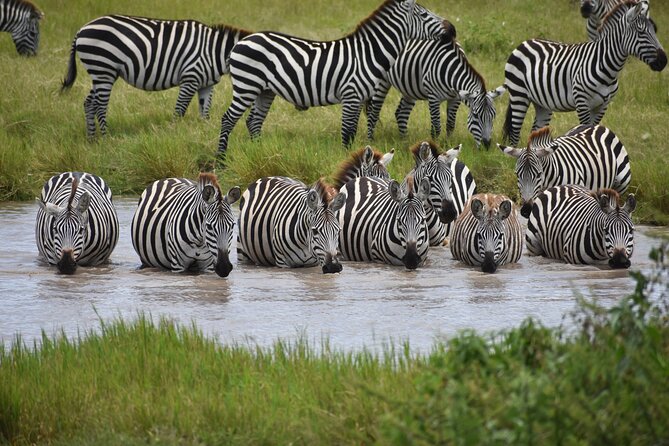
Tarangire is often quieter than the better-known parks on this route, which can make the first day feel less crowded. You may see elephants, buffalo, giraffes, zebras, and several kinds of antelope. During the dry season, animals gather near the Tarangire River, making that period especially strong for game viewing.
The park is also useful as a change of visual mood. Instead of endless open grassland, you get woodland, river country, and large trees. The accommodation, Tortilis Tented Camp, is described as being near a corridor used by elephants moving out of the park. That location adds a wildlife connection, though tented accommodation may feel more basic than a conventional lodge.
Plan on roughly 10 hours for the day. That includes the drive from Arusha, lunch, park entry, and game viewing. You will want comfortable clothes, sun protection, and patience. The first day is not a gentle orientation. It is a full safari day from breakfast until late afternoon.
Day 2: Lake Manyara’s forests, birds, and tree-climbing lions
The morning continues with game viewing in Tarangire until around midday. After lunch, you drive to Lake Manyara National Park.
Manyara is smaller than the Serengeti, but its habitats change quickly. Underground-water forests give way to acacia woodland, grassland, swamps, marshes, and hot springs. That variety is why the park appeals to people who care about birds and plant life as much as large mammals.
More than 400 bird species have been recorded here. Flamingos and migratory water birds may gather around the lake, while monkeys and forest birds make the wooded areas active with sound. You may also look for Manyara’s famous tree-climbing lions, although no wildlife sighting is guaranteed.
This is another 10-hour day, with a picnic lunch and a transfer after the Tarangire morning drive. The tradeoff is clear: you cover two parks in two days, but you do not get an unhurried stay in either one. If birding is a major goal, tell your guide early. If your priority is large cats, the Serengeti days offer better odds.
Days 3 and 4: The central and northern Serengeti
After breakfast on Day 3, you travel to the Serengeti. You have lunch on arrival, then continue with an afternoon game drive across the famous open plains.
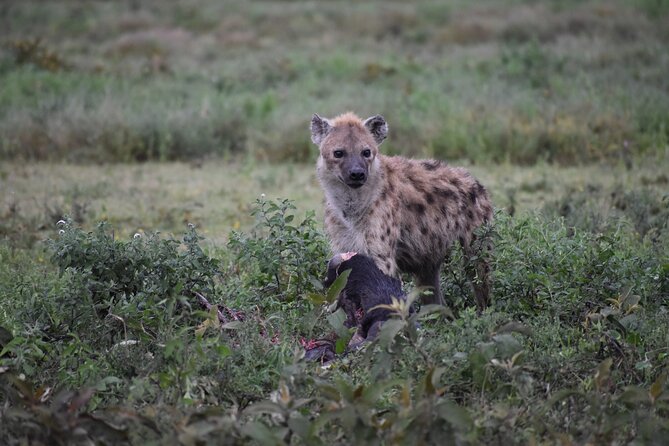
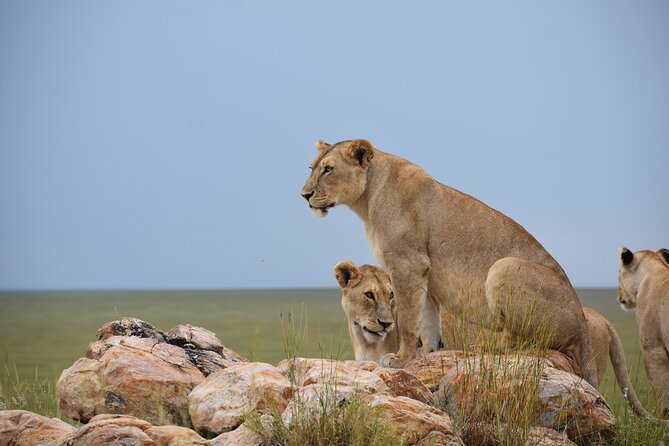
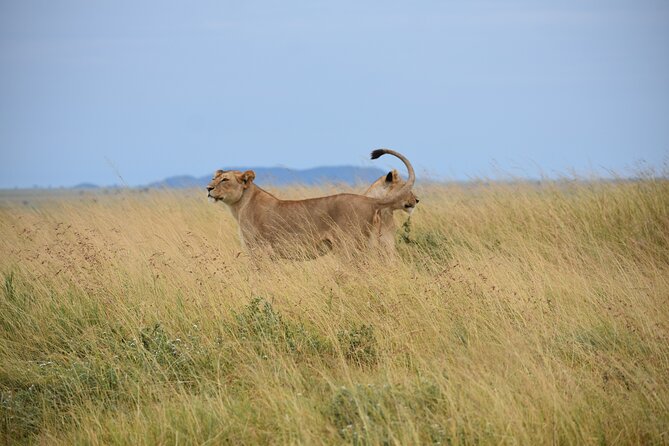
Central Serengeti is known for lions, leopards, and cheetahs, and game viewing can be strong throughout the year. You may also see hyenas, jackals, elephants, giraffes, hippos, buffalo, and other animals. The open setting makes it easier to scan the distance, but the animals still decide what you see and when.
You spend the night at Serengeti Heritage Tented Camp. The tented-camp style suits the safari setting, but you should confirm the exact room setup and facilities before booking if comfort is a high priority. The tour is labeled mid-range, not luxury.
Day 4 shifts toward the northern Serengeti and the Mara River. The drive itself becomes part of the experience, with sightings possible along the way. The river is associated with the great migration, when wildebeest and zebras move through dangerous crossings.
Timing is the key issue. Crossings may begin as early as June or as late as August, depending on rainfall. Even during the right months, animals may gather at the river, wait, turn back, or cross at a different point. Do not book this trip on the promise of a crossing. Book it for the broader Serengeti experience, then treat a crossing as a bonus.
Day 4 also includes the Retima Hippo Pool, with about an hour set aside for the stop and a meal nearby. Hippos are a reliable reason to pause, though the phrase within walking distance should not be read as a promise of close, unrestricted access. Your guide will manage the stop with safety in mind.
Same base, a different kind of day out:
- Safari Serengeti And Ngorongoro
★ 5.0 · 288 reviews - Kilimanjaro Climbing Lemosho Route 8 Days.
★ 5.0 · 186 reviews - Climbing Kilimanjaro – Machame Route
★ 5.0 · 170 reviews - Kilimanjaro climb, Lemosho Route (8-day)
★ 5.0 · 148 reviews
Day 5: An early start beside the Mara River
Day 5 begins with an early morning game drive along the Mara River. Early starts are worthwhile because animals may be active before the heat of the day, and predators can sometimes be found near herds.
The route may produce sightings of hippos, lions, cheetahs, leopards, elephants, giraffes, warthogs, and possibly the endangered black rhino. Again, these are possibilities rather than guarantees. The value of the day is the time spent in prime Serengeti country, not a checklist of animals.
The day lasts about eight hours, followed by dinner and another night at your accommodation. By this point, the pace may begin to catch up with you. You have already completed several long drives and game drives, so use the evenings to rest rather than plan extra activities.
This is also where the quality of the guide matters most. Past guests have singled out guides named Baraka, Hoza, George, Nestor, Linus, and Mollel for good wildlife knowledge, patience, communication, and safe driving. Guides are not necessarily assigned by request, but if the operator allows you to ask for one, it is worth raising the question.
Day 6: Leaving the Serengeti for Ngorongoro
After an early breakfast, you take another game drive in the Serengeti before traveling toward Ngorongoro Crater. There is still a chance to see the Big Five: lion, elephant, buffalo, rhino, and leopard.
The drive to Ngorongoro changes the mood of the trip. The Serengeti offers wide horizons and roaming herds. Near the crater rim, the view becomes more contained and dramatic, with streams, grassland, and animals visible far below.
You spend the night at a selected mid-range partner lodge near the crater. The available description points to comfortable rooms and restaurants, but it does not name the property. If the lodge standard matters to you, ask for its name before paying.
Day 6 is listed at about 10 hours. It is a transfer day with game viewing attached, not a short hop between parks. Pack your camera and water where you can reach them, rather than burying them in luggage.
Day 7: Down into Ngorongoro Crater
The final morning starts early. You travel through the Ngorongoro Conservation Area, then descend about 610 meters to the crater floor.
Ngorongoro Crater covers roughly 265 square kilometers and is described as a year-round home for about 25,000 large mammals. Its open grassland makes animals easier to spot than in thick woodland, and the enclosed setting gives you a strong chance of seeing several large species during one day.
You may look for wildebeest, zebra, buffalo, lions, elephants, hippos, and black rhinos. The crater is also one of the better places on this route for a concentrated Big Five search. Still, wildlife is free to move, so no guide can promise a specific animal.
Lunch comes at the Ngoitokitok Picnic Area, where hippos may be nearby. This is a memorable setting for a meal, but it is not a private picnic in an empty wilderness. Stay close to the guide and follow instructions around the animals.
The day lasts about seven hours, making it shorter than several earlier days. That helps, but the early departure and crater roads can still leave you tired. The trip ends after the crater visit, and the supplied details do not specify the final drop-off point. Confirm whether you return to Arusha, an airport, or another location.
What the $4,465 price covers
At $4,465 per person, this is a substantial safari purchase. The value depends heavily on group size, guide quality, vehicle standard, and the exact accommodation supplied.
The price includes national park fees, private transportation, taxes, six dinners, seven lunches, and six breakfasts. Those inclusions remove several large costs that can surprise first-time safari visitors. You are paying for access to four major wildlife areas, a private vehicle, meals during a demanding route, and mid-range overnight stays.
The listed details do not specify the number of people in your private group. That is important. A private tour for two has a different value from a private tour for six, even if the per-person price is the same. Ask about the maximum group size, the vehicle, and whether there is a window seat for each person.
You must budget separately for visa fees, travel insurance, tips, and personal items. The listing also presents Lake Eyasi and a visit connected with the Hadzabe, also called Bushmen in the description, as part of the wider tour overview. However, the seven-day schedule provided here ends with Ngorongoro Crater and does not show a Lake Eyasi stop. Confirm this before booking if the cultural visit is one of your main reasons for choosing the trip.
The guide can make or break the safari
A safari guide does more than drive. The guide reads animal behavior, spots movement in thick brush, explains habitats, handles timing, and keeps the vehicle safe near wildlife.
The strongest feedback connected with this operator centers on guides. Baraka is praised for enthusiasm and care. Hoza is associated with sharp wildlife spotting, humor, and flexibility. George is linked with smooth planning and strong guiding, while Nestor is described as professional, patient, friendly, and a safe driver. Linus is associated with punctual airport pickup, and Mollel is repeatedly praised for his love of Tanzania and wildlife.
That does not mean you will receive one of these guides. Ask whether guide selection is possible, and request the name of your guide before departure if you can. Also ask who handles airport or hotel pickup, since the route begins in Arusha and the final transfer is not specified.
Comfort, timing, and practical limits
This is a private safari, but it is not a relaxed resort holiday. The itinerary includes four days of around 10 hours, plus 7 and 8-hour days. Roads inside parks can be rough, and long transfers are part of reaching the Serengeti and returning toward Ngorongoro.
Picnic lunches keep the route moving. They also mean you will not always stop at a lodge or restaurant at midday. Bring a refillable water bottle, sun protection, a light layer for cool mornings, and a small day bag for binoculars, camera equipment, medication, and documents.
The mid-range label suggests a practical balance between price and comfort. You get tented camps and selected lodges, but the exact properties vary. Ask about bathrooms, electricity, charging, hot water, and Wi-Fi if those details affect your decision.
Most people can participate, and the tour is near public transportation. The supplied information does not give detailed accessibility guidance, so anyone with mobility concerns should ask about vehicle access, crater roads, and walking distances before booking.
Who should book this safari?
I would choose this trip if you want the classic northern Tanzania circuit in one week and care more about wildlife coverage than slow mornings. It suits first-time safari visitors who want Tarangire, Manyara, Serengeti, and Ngorongoro in one organized route.
It is also a good fit for couples, families, or friends who want a private vehicle and a guide focused on their group. The mix of elephants, birds, big cats, hippos, and crater wildlife gives you varied game viewing rather than the same scenery every day.
I would hesitate if you dislike long drives, need a fixed luxury standard, or are booking mainly for a guaranteed Mara River crossing. I would also ask for a revised itinerary if Lake Eyasi and a meeting with local people are essential to you, since that stop is not included in the day-by-day schedule provided.
Should you book the 7 Days Highlight of Tanzania?
Book it if you want a full, ambitious safari with strong coverage of Tanzania’s most famous parks, private transportation, included park fees, and guide support. The standout value is the combination of Tarangire’s elephants, Serengeti’s big cats and river country, and Ngorongoro’s concentrated wildlife.
Before paying, confirm the group size, vehicle, exact camps, final drop-off, guide assignment, and whether Lake Eyasi can be added. The cancellation policy allows a full refund when you cancel at least 24 hours before the start time, but changes or cancellations inside that window are not refunded. With those details settled, this is a strong choice for an active seven-day safari rather than a gentle holiday.
FAQ
How long is the Tanzania safari?
The experience lasts approximately seven days.
Where does the safari begin?
The tour starts in Arusha, Tanzania, with pickup offered.
Is this a private tour?
Yes. Only your group participates in the private activity.
Which parks are included in the schedule?
The day-by-day plan includes Tarangire National Park, Lake Manyara National Park, Serengeti National Park, and Ngorongoro Crater.
Is Lake Eyasi included?
Lake Eyasi is mentioned in the wider tour description, but it does not appear in the seven-day schedule provided. Confirm this with the operator before booking.
Can I see the Big Five?
The itinerary visits areas where you may see lion, elephant, buffalo, rhino, and leopard. Sightings are possible, but no specific animal can be guaranteed.
Will I see a wildebeest crossing at the Mara River?
A crossing may occur as early as June or as late as August, depending on rainfall. The schedule does not guarantee a crossing.
What meals are included?
The price includes six dinners, seven lunches, and six breakfasts.
What is not included in the price?
Visa fees, tips, travel insurance, and personal items are not included.
What is the cancellation policy?
You can receive a full refund if you cancel at least 24 hours before the experience begins. Cancellations or changes made less than 24 hours before the start time are not accepted or refunded.
Just added in Moshi
- Kilimanjaro Airport Private Transfer from/to Moshi★ 5.0 · 14 reviews
- 6 Days Machame route Kilimanjaro climbing★ 5.0 · 22 reviews
- 4 Day Mid-range Serengeti Safari★ 5.0 · 22 reviews
- Kilimanjaro Climbing 5 days Marangu route★ 5.0 · 22 reviews
- Kilimanjaro Trekking 7Days 6Night Lemosho Route★ 5.0 · 23 reviews
- 6 Days: Classic Camping( Tarangire, Manyara, Serengeti And Ngorongoro).★ 5.0 · 26 reviews
- Mt Kilimanjaro Climb – 7 days Machame★ 5.0 · 26 reviews
- 10-Day Predators Tanzania Safari Luxury Package★ 5.0 · 24 reviews
Tours in Moshi, compared.
Climbing Kilimanjaro through 7 days Machame Route
Read our review →
Materuni Waterfall, Coffee Tour and Picnic Hot Lunch
Read our review →
7 Days Kilimanjaro via Machame route affordable price
Read our review →Browse the lists this tour appears in