
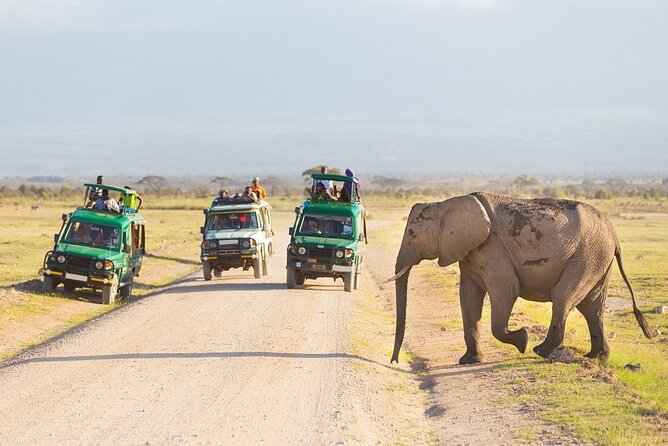
Reviewed · SERENGETI SAFARIS
5 Days Serengeti Camping Safari
The best part of this five-day Tanzania safari is the steady change of scenery: Tarangire’s baobabs and elephants, the wide Serengeti plains, Ngorongoro Crater’s crowded wildlife floor, and Lake Manyara’s birds and hippos. I like the route because it packs four famous parks and protected areas into one trip, with camping keeping the price at $1,100 per person.
I also like that transport, park fees, and all listed meals are included, so you are not constantly reaching for your wallet. Guides including Emmanuel, David, Kelvin, and Brison have been praised for their care, while coordinators such as Linah, Safina, Lucas, and Viola have helped with planning. The tradeoff is simple: this is a busy budget safari with several long drives, shared camping, and a group that may reach 50 people.
Key points to know before booking
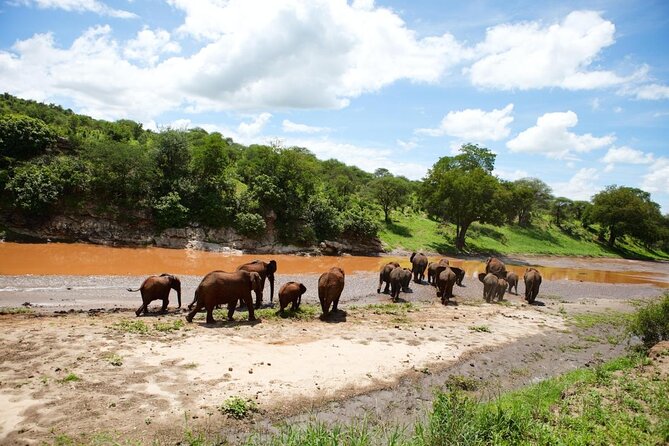
- Four major wildlife areas in five days: Tarangire, Serengeti, Ngorongoro, and Lake Manyara each offer a different setting and animal mix.
- Two Serengeti days: You get a full game-drive day plus a second day that combines travel, wildlife viewing, and an exit drive.
- Camping keeps the price down: The package includes transport, park fees, breakfast, lunch, and dinner, but not tips or visas.
- The crater descent starts early: The Ngorongoro drive begins at about 6:15 am, giving you the best part of the day on the crater floor.
- A social group experience: Solo visitors and couples can join an international group, with a maximum listed size of 50 people.
- Food is a major strength: Chefs have prepared generous meals, vegetarian dishes, gluten-free adjustments, birthday cakes, and even proper plates and cutlery on some departures.
A fast route through Tanzania’s best-known parks
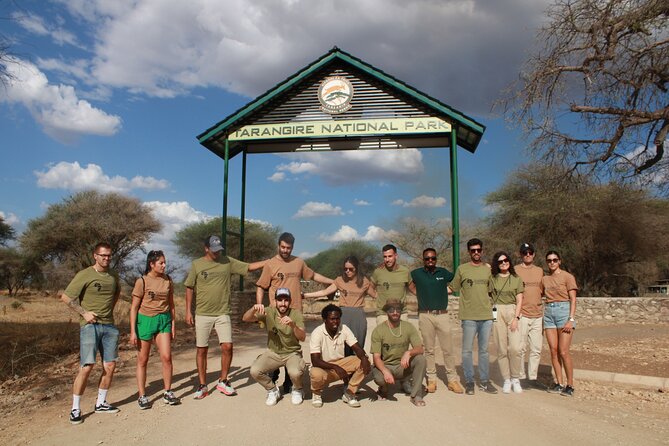
This safari is designed for people who want a lot of Tanzania in a short time. Starting in Arusha, you travel west and north through Tarangire, the Ngorongoro Conservation Area, the Serengeti, and Lake Manyara.
That variety matters. Tarangire is especially good for elephants and baobabs. The Serengeti gives you the broadest chance of seeing classic predators and grazing herds. Ngorongoro concentrates wildlife in a dramatic crater, while Manyara adds birds, hippos, monkeys, and the possibility of tree-climbing lions.
You should think of this as a practical camping circuit, not a slow luxury safari. The days run to roughly six hours of activity, and some road transfers are long. In return, you get more park time for your money and a chance to see several very different parts of northern Tanzania.
Other park itineraries that start in Arusha:
- Serengeti Balloon Safari and authentic bush breakfast
★ 5.0 · 2,480 reviews - Balloon Safari & Bush Breakfast in Serengeti – Miracle Experience
★ 5.0 · 1,646 reviews - 4 Days Group Camping Safari
★ 5.0 · 1,101 reviews
Day 1: Tarangire’s elephants and ancient baobabs
Pickup is scheduled from your Arusha hotel at 7:30 am. You meet the guide, chef, and fellow group members before the roughly two-hour drive to Tarangire National Park.
Tarangire is a strong opening act. Its most memorable feature is the huge number of old baobab trees, with their thick trunks and strange, branch-like crowns. The park is also known for having one of Tanzania’s largest concentrations of elephants.
The game drive follows recent animal sightings. Your guide may focus on elephant families, then switch to giraffes, wildebeest, zebras, and other herbivores. Lions, cheetahs, and leopards are possible, but predators are harder to find than the more numerous grazing animals.
I like starting here because you are not waiting until the Serengeti to see wildlife. Tarangire gives you an immediate safari experience, and the baobabs make it visually different from the rest of the route.
The practical catch is that the day begins early and includes a drive from Arusha. You will spend much of the day in the vehicle, so bring water, sun protection, and something warm for changing temperatures. The itinerary describes about six hours in the park and surrounding activity.
Day 2: The long road to the Serengeti
After breakfast, the drive toward Serengeti National Park takes about six hours, including stops. The road passes through the Ngorongoro Conservation Area, so this is both a transfer day and a chance to see one of Tanzania’s most famous regions.
A short stop at the Ngorongoro gate and viewpoint gives you about 20 minutes to look over the crater. This is a useful preview before your full crater visit later in the trip. The view is broad and striking, but the stop is brief, so do not expect a long walk or detailed visit at this point.
There is also an optional Maasai village visit lasting about 20 to 45 minutes. It offers an introduction to Maasai culture and traditions. You should treat this as an add-on rather than a central part of the safari, since the itinerary makes clear that participation is optional.
The rest of the day is devoted to reaching the Serengeti. That drive is the price of getting deep into one of Africa’s great wildlife parks. You may find the road tiring, but the reward is that the following day is devoted mainly to game viewing rather than another full transfer.
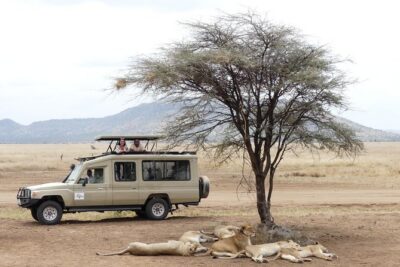
The Serengeti is famous for open grasslands and large animal populations. The exact sightings depend on location, season, and recent reports, so no responsible operator can promise a particular animal. Guides use their communication and experience to look for predators, elephants, giraffes, zebras, wildebeest, and other species.
Day 3: Early wildlife viewing in the Serengeti
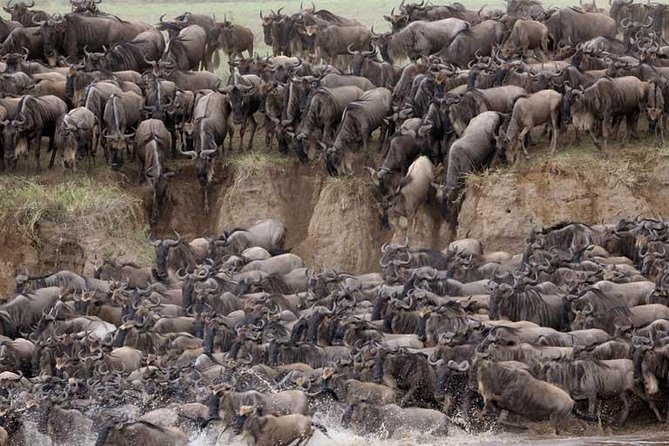
Day 3 begins with an early breakfast and an early game drive in the Seronera area. This is the safari’s main wildlife day, and the early start gives you several useful hours before returning to camp for lunch.
The itinerary describes game viewing through the morning and into the afternoon. After lunch, you pack up and continue with a game drive while exiting the Serengeti toward Simba Campsite near the Ngorongoro Crater rim. The drive to camp takes about two hours.
This combination is smart for a five-day trip. Instead of using the entire afternoon only for a road transfer, you continue looking for animals as you leave the park. The itinerary also notes that animals can sometimes be seen around campsites, so keep your eyes open even after the main drive is over.
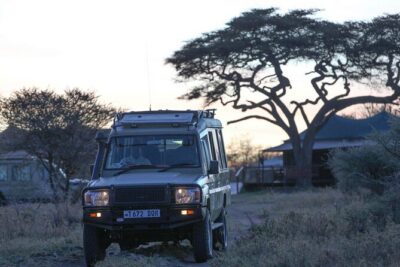
Camping here is basic by design. You are paying for access to major parks, transport, meals, and park fees rather than a private lodge room. The camping style will suit you best if you care more about time in the parks than polished accommodation.
Food can make a big difference on a trip like this. The cooking team has received especially strong praise, with names including Richard and Tito appearing in particularly warm feedback. Dishes have included vegetarian meals, gluten-free adjustments, and generous portions. One especially nice touch reported on some departures was the use of real plates and cutlery instead of disposable camping ware.
Other safaris people book out of Arusha:
- 5 Days Group Camping Safari
★ 5.0 · 730 reviews - 3 Days Serengeti & Ngorongoro Group Camping Safari
★ 5.0 · 574 reviews - 7-Day Premium Luxury Tanzania Safari All-Inclusive
★ 5.0 · 426 reviews - 3-Day Classic Serengeti Safari
★ 5.0 · 263 reviews
Day 4: The Ngorongoro Crater at 6:15 am
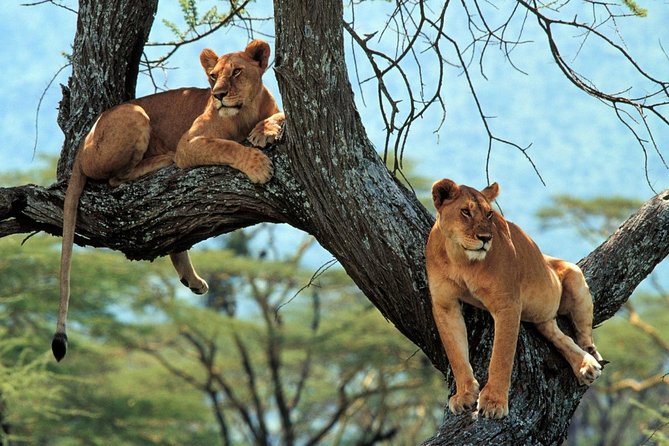
The crater day starts early, with the descent scheduled for about 6:15 am. That early departure is worthwhile because Ngorongoro packs a remarkable number of animals into a relatively contained area.
The crater floor makes wildlife easier to find than in a huge open park. You may see buffaloes, wildebeest, zebras, lions, and other animals during the game drive. The main prize is the black rhino, which is among the hardest animals to spot in the crater.
A sighting is never guaranteed. That is important to remember before you book. The crater gives you a good chance, but even a strong guide cannot order a rhino into view.
After lunch and more game viewing, you ascend to camp, pack, and travel toward Fig Lodge and Campsite near Lake Manyara National Park. This is another full day, combining an early start, wildlife viewing, packing, and a transfer.
The Ngorongoro Conservation Area is not simply a wildlife stop. It also brings you into a region where Maasai communities live alongside protected areas. The optional village visit on Day 2 provides a short cultural introduction, while the crater itself supplies the most concentrated wildlife experience of the trip.
Day 5: Flamingos, hippos, and Lake Manyara
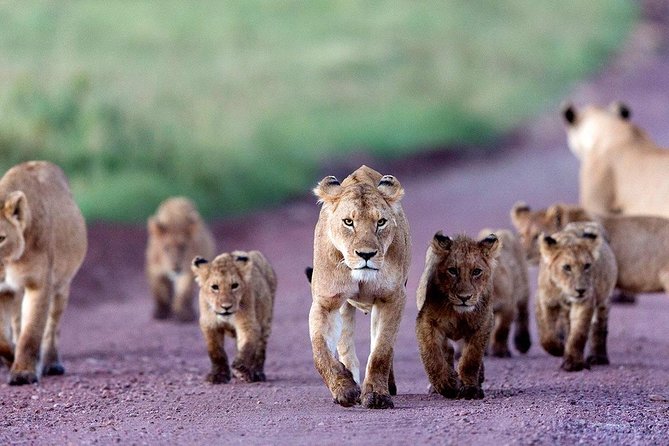
After breakfast, you enter Lake Manyara National Park for the final game drive. The park is known for its lake, water birds, flamingos, and hippo pool.
Birdlife is one of Manyara’s main attractions. Flamingos may gather on the lake, and you can also watch for vultures, eagles, and other water fowl. The itinerary lists monkeys, buffaloes, wildebeest, and warthogs among the animals you may see.
The park is also linked with tree-climbing lions. They are famous, but rarely seen, so consider them a bonus rather than a promise. The same applies to the hot spring visit, which is included as part of the game-drive route.
I like ending at Manyara because it changes the rhythm of the safari. After the wide plains and crater floor, you finish with water, birds, hippos, and forest animals. It gives the final day its own character instead of feeling like a repeat of the Serengeti.
The itinerary includes breakfast and lunch on this final day. Since the provided schedule does not state the exact return time or final drop-off arrangement, confirm those details before booking if you have an evening flight or another fixed commitment.
What the $1,100 price really covers
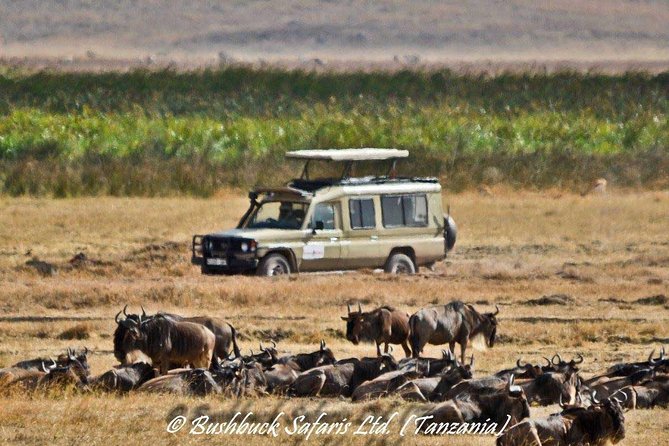
At $1,100 per person, this is positioned as a budget camping safari rather than a lodge-based trip. The value is strongest if you want maximum park access and are comfortable sharing transport and camping facilities.
The listed price includes:
- Transport
- All park fees
- Breakfast on four days
- Lunch on five days
- Dinner on four days
- Camping accommodation as specified in the itinerary
That is a useful bundle. Park fees alone can make northern Tanzania expensive, and the route covers several major destinations. Including a chef and daily meals also removes a common source of extra cost.
You still need to budget for tips and visas. The price does not include either. Group discounts are offered, but the amount is not stated, so ask for the current rate before you rely on one.
The maximum group size is listed as 50 people. That does not mean every departure will have 50 people, but you should ask about the expected group size if quiet vehicle time matters to you. A larger group can make the social side more lively, while a smaller group usually feels easier during long drives and camp routines.
Guides, chefs, and the human side of the trip
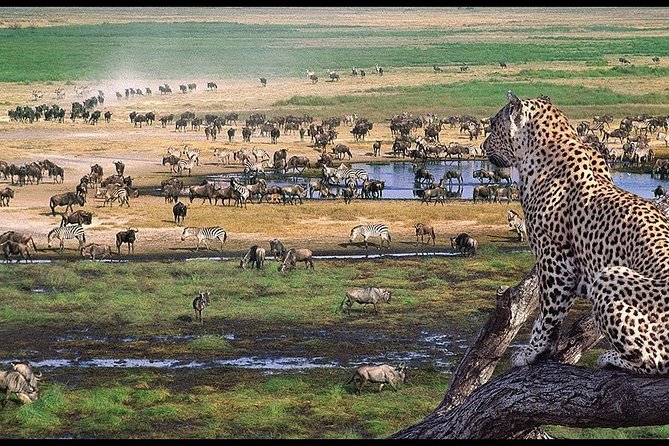
A safari vehicle is only as good as the people running it. The strongest feedback focuses on staff who explain the plan, watch out for personal needs, and keep searching when wildlife is difficult to find.
Guides named in the supplied comments include David, Emmanuel, Kelvin, and Brison. Their roles are described in practical terms: helping with daily plans, looking after the group, and working hard to find animals. You should not assume a particular guide will be assigned, but you can ask the company about your guide before departure.
The office team also matters. Linah, Safina, Lucas, and Viola have been praised for answering questions, organizing details, and helping with special occasions. Birthday cakes and small celebrations have been arranged on some trips.
The food receives unusually strong attention. Vegetarian meals are available, and one departure accommodated gluten intolerance. Still, dietary needs should be stated clearly when you book and repeated before departure.
What could go wrong
The most important caution is organization. Most of the supplied feedback is very positive, but one account describes poor coordination despite good food, attractive campsites, and strong wildlife viewing.
That warning is useful because budget safaris involve many moving parts. Ask who your driver and guide will be, how many people are expected in the vehicle, what type of camping accommodation is provided, and where the safari ends. Get the final schedule in writing.
The route also includes long drives. Day 2 is about six hours to the Serengeti, and the journey includes stops. Day 3 and Day 4 combine game drives with packing and transfers. You need to be comfortable spending substantial time on the road.
The listing gives a start time of 12:00 am while the day-by-day plan says hotel pickup at 7:30 am. That is a clear detail to verify before you pay. The 7:30 am pickup is the practical time described for Day 1, but the conflicting entry should not be ignored.
Who should book this camping safari?
I would recommend it to you if you want to see several famous northern Tanzania parks in one trip and care more about wildlife than hotel comfort. It suits solo visitors, couples, and small groups willing to join a shared international departure.
It is also a good choice if you want the major costs bundled together. Transport, park fees, and meals are included, and the chef-led meals can be a real advantage during long days.
I would think twice if you need a slow schedule, private rooms, or tightly controlled arrival times. The itinerary is active, the drives are long, and a group may be large. If you have limited mobility, contact the operator before booking, since the tour notes that most people can participate but gives no detailed accessibility information.
Free cancellation is available if you cancel at least 24 hours before the local start time. Within 24 hours, refunds and changes are not accepted.
Should you book it?
Book this safari if your priority is wildlife variety at a controlled price. Tarangire’s elephants, the Serengeti’s long game-drive day, Ngorongoro’s concentrated wildlife, and Manyara’s flamingos make a strong five-day route.
Before booking, confirm the pickup time, expected group size, camping arrangements, guide assignment, dietary needs, and final drop-off. If those details suit you, the package offers a lot: four major wildlife areas, park fees, meals, transport, and a real camping safari for $1,100 per person.
FAQ
Where does the safari start?
The safari starts in Arusha, Tanzania, with pickup offered from your hotel. The Day 1 schedule states a 7:30 am pickup.
How much does the five-day safari cost?
The listed price is $1,100 per person. Group discounts are available, though the discount amount is not specified.
Which parks and protected areas are included?
The route includes Tarangire National Park, Serengeti National Park, the Ngorongoro Conservation Area and Crater, and Lake Manyara National Park.
Are park fees included?
Yes. All park fees are included in the listed package.
Are meals included?
Yes. The package includes breakfast on four days, lunch on five days, and dinner on four days.
Is camping accommodation included?
Yes. The itinerary includes overnight camping, including Simba Campsite near the Ngorongoro Crater and Fig Lodge and Campsite near Lake Manyara National Park.
How large can the group be?
The maximum group size is listed as 50 people. The actual number on your departure is not specified.
Is the Maasai village visit required?
No. The Maasai village visit on Day 2 is optional and lasts about 20 to 45 minutes.
What is not included in the price?
Tips and visas are not included. You should also confirm any personal expenses and the final pickup or drop-off arrangements with the operator.
More camping and lodge safaris from Arusha
- 5 Days Best of Tanzania Luxury Safari Northern Circuit
★ 5.0 · 174 reviews - 6 Days Private Budget Safari
★ 5.0 · 163 reviews - 2 Days Tarangire and Ngorongoro Group Camping Safari
★ 5.0 · 146 reviews - 6 Days Tanzania Budget Camping Safari
★ 5.0 · 145 reviews
More Serengeti safaris from Arusha
- 5-Day Highlights mid-Range Crater, Serengeti, Tarangire
★ 5.0 · 296 reviews - Private 6-Day Tarangire Manyara Crater and Serengeti with Mid-Range Lodges
★ 5.0 · 238 reviews - 5 Days Camping Tarangire, Serengeti & Ngorongoro crater & Visiting Maasai
★ 5.0 · 229 reviews - 4 Days Join Group tour Tarangire Serengeti and Ngorongoro crater
★ 5.0 · 219 reviews
Just added in Arusha
- 2-Day Private Luxury Safari from Zanzibar with Flights★ 3.2 · 5 reviews
- 7-Day Private Tanzania Safari with Sunset Walking on the Crater Rim and Maasai★ 5.0 · 40 reviews
- Saadani Day Trip★ 5.0 · 13 reviews
- Nyssa Luxury Balloon in Safaris and Serengeti★ 5.0 · 69 reviews
- Arusha National Park Day Trip★ 4.5 · 18 reviews
- Arusha National Park Private Safari★ 5.0 · 59 reviews
- 8 Days Mountain Kilimanjaro Lemosho Route★ 5.0 · 22 reviews
- 7 Days Tanzania Mid-range lodge safari★ 5.0 · 22 reviews
Serengeti Safaris, compared.
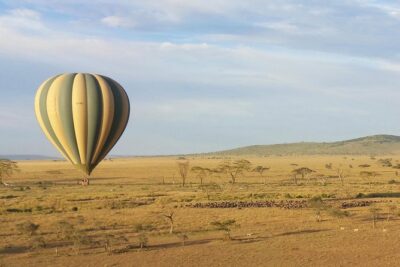
Serengeti Balloon Safari and authentic bush breakfast
Read our review →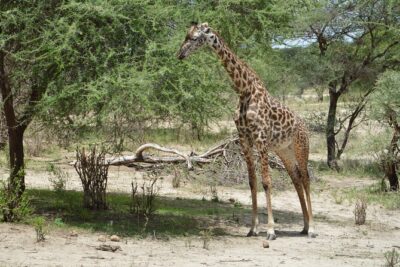
3 Days Serengeti & Ngorongoro Group Camping Safari
Read our review →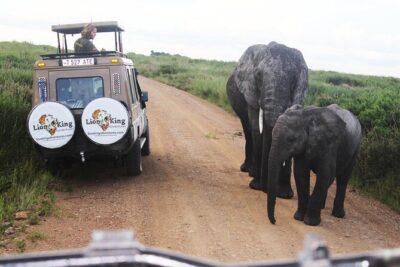
5-Day Highlights mid-Range Crater, Serengeti, Tarangire
Read our review →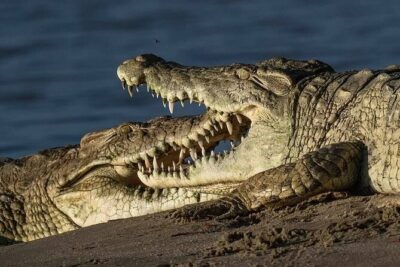
Private 6-Day Tarangire Manyara Crater and Serengeti with Mid-Range Lodges
Read our review →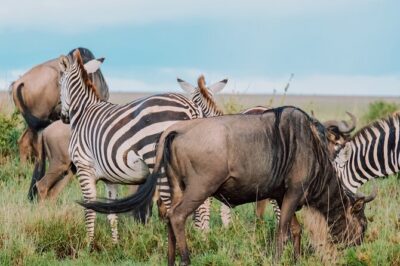
10-Day Serengeti Wildebeest Migration Safari from Arusha
Read our review →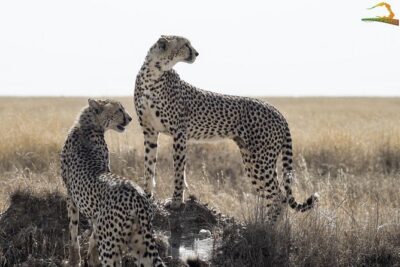
2 Day Serengeti Safari Experience from Mwanza
Read our review →Browse the lists this tour appears in