
Reviewed · CAMPING & LODGE SAFARIS
6-Day Tanzania Adventures Safaris – Group Joining Camping Safaris
The best part of this six-day Tanzania safari is the steady build from Tarangire’s elephant country to the open Serengeti, then down into Ngorongoro Crater. You get four major parks without rushing through each one, including two full days in the Serengeti, where patience can pay off with lions, leopards, cheetahs, migrating wildebeest, and zebras.
I like the small group limit of seven, which gives you a better chance of seeing from the vehicle without a crowd around you. I also like the practical value: park fees, camping equipment, all lunches, five breakfasts, five dinners, fuel, and an English-speaking guide are covered. The tradeoff is the long driving days, basic camping, and early starts. This suits you best if wildlife matters more than comfort.
At a glance
- Four major parks in six days: Tarangire, Serengeti, Ngorongoro Crater, and Lake Manyara.
- Two full Serengeti days: More time for wildlife sightings than a quick pass through the park.
- Small group size: The departure is limited to a maximum of seven people.
- Camping with equipment supplied: Tents, sleeping mats, tables, and chairs are included.
- Strong safari team: Guides such as Giovanni and Elias have been associated with past departures, with cooks including Joaquin and Prospe.
- Useful all-in pricing: Park fees, fuel, meals, and the custom 4×4 are included, but flights, visas, tips, and personal spending are not.
Why this route works so well
Northern Tanzania gives you a fine mix of habitats in a compact six-day plan. Tarangire is known for elephants and baobabs. The Serengeti offers broad grasslands and major predator sightings. Ngorongoro brings dense animal viewing in a dramatic volcanic setting. Lake Manyara adds woodland, primates, birds, hippos, and the possibility of tree-climbing lions.
The order also makes sense. You begin with Tarangire, continue through the highlands toward the Serengeti, spend two nights in the Serengeti area, then return through Ngorongoro and Lake Manyara. You are not simply ticking off parks. Each stop changes the scenery and the type of wildlife you are likely to see.
The safari begins in Arusha at about 7:30 in the morning and ends back at the same meeting point on Day 6. The supplied 4×4 is described as a custom-built safari vehicle with a driver-guide and fuel included. Since the group can include up to seven people, you should expect shared vehicle time rather than a private trip for just your own party.
Other park itineraries that start in Arusha:
- Serengeti Balloon Safari and authentic bush breakfast
★ 5.0 · 2,480 reviews - Balloon Safari & Bush Breakfast in Serengeti – Miracle Experience
★ 5.0 · 1,646 reviews - 4 Days Group Camping Safari
★ 5.0 · 1,101 reviews
Day 1: Tarangire’s elephants and baobab country
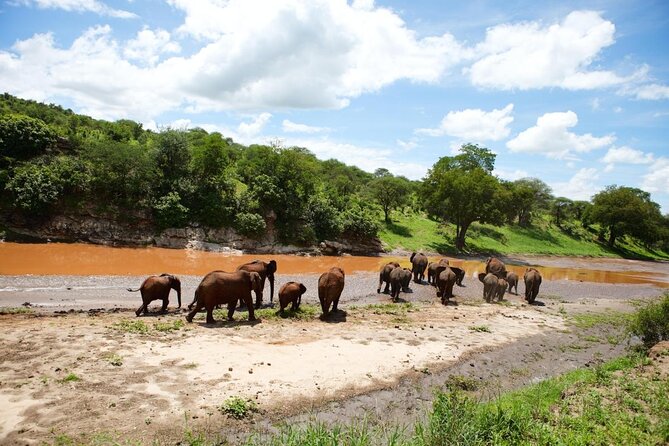
Your first park is Tarangire, a large area of savannah, baobabs, and seasonal swamps. Its water sources draw animals during dry periods, and the park is especially noted for large elephant herds. You may also see buffalo, zebra, giraffe, hartebeest, antelope, and a long list of birds.
This is a good opening day because Tarangire can produce rewarding sightings without requiring you to wait for the Serengeti migration. Elephants are the main attraction, and the animals are accustomed to safari vehicles, allowing close observation from the vehicle while keeping a proper distance.
The day lasts about seven hours, including the drive and game viewing, with lunch and dinner provided. You sleep at a campsite outside the park. That location is practical, though it means the first and final parts of the day include road time rather than game drives.
Tarangire is not just a warm-up. Its baobabs give it a distinct look, and the mix of open grass, trees, and wet areas supports more than 550 bird species. If you enjoy watching animal behavior rather than collecting only big-cat sightings, this park can be one of the most satisfying parts of the route.
Day 2: From the highlands to the Serengeti
Day 2 takes you through Tanzania’s northern highlands, an agricultural region where corn, coffee, and wheat are grown, before reaching Serengeti National Park. The change is gradual. Cultivated hills give way to open grassland, and the sense of space becomes the main event.
The name Serengeti refers to endless plains, and the description fits. Kopjes, or exposed rock formations, break up the grassland. These rocks can provide lookout points for lions and other predators, so your guide may pay close attention to them.
The drive and game viewing take about eight hours, with lunch included. This is a substantial road day, and you should be ready for a fair amount of time in the vehicle. The reward is arrival in one of Africa’s best-known wildlife areas, with the chance to begin seeing wildebeest, zebra, antelope, and predators before reaching camp.
The great migration changes location through the year. From November and December, herds move toward the southern plains, while during the longer rains from April to June they return north. The route does not promise a particular migration sighting, because rainfall controls the animals and timing varies. You should think of the Serengeti as a strong wildlife destination in every season, with migration as a bonus rather than a guarantee.
Day 3: A full day in the Serengeti
Day 3 is the itinerary’s most important gift: a full day of game drives in the Serengeti. Instead of spending the whole day entering or leaving the park, you have time to search different areas and wait when a sighting develops.
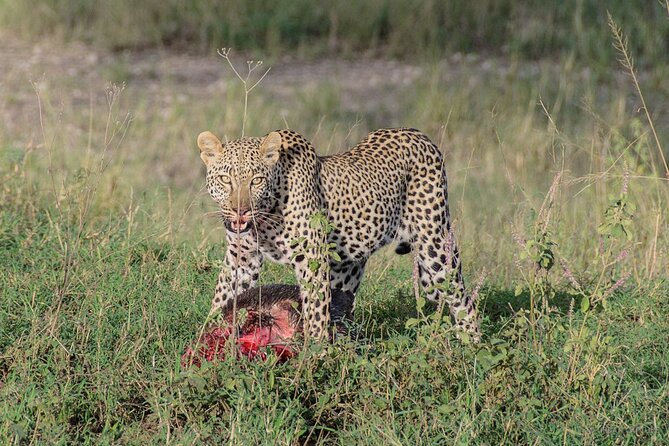
The Serengeti supports impala, buffalo, crocodiles, hippos, zebra, wildebeest, and many other animals. Lions, leopards, and cheetahs may be found near prey, while kopjes and water areas can be useful places to watch. The sheer scale means you may cover a lot of ground, but the open views often make distant animals visible.
The day lasts about nine hours, with breakfast, lunch, and dinner included. You spend the night at a campsite in the Seronera area, a central part of the park. A central overnight location helps keep you within the main game-viewing zone for the next morning.
This is also where guide quality matters most. Past teams have included guides named Giovanni and Elias. Giovanni was praised for continuing to search for animal sightings until the final moments of the day, while Elias was described as an experienced guide who answered detailed questions well. Your assigned guide may differ, but you should expect the guide to be a major part of the experience.
Other safaris people book out of Arusha:
- 5 Days Group Camping Safari
★ 5.0 · 730 reviews - 3 Days Serengeti & Ngorongoro Group Camping Safari
★ 5.0 · 574 reviews - 7-Day Premium Luxury Tanzania Safari All-Inclusive
★ 5.0 · 426 reviews - 3-Day Classic Serengeti Safari
★ 5.0 · 263 reviews
Day 4: One more Serengeti drive, then Ngorongoro
You begin with another early Serengeti game drive before traveling toward Ngorongoro Crater. This gives you a final chance to look for the Big Five: lion, elephant, buffalo, rhino, and leopard.
The phrase can raise expectations too high. Seeing all five is never assured, especially rhino and leopard, but the Serengeti gives you a genuine chance to see several of them. The animals move through unfenced reserves, so sightings feel less controlled and more dependent on timing, weather, and the guide’s choices.
The day takes about eight hours and includes all three meals. By evening, you reach a campsite on the crater edge. This is one of the trip’s most memorable settings. You can see the crater from above, with open grassland and streams below, then wake early for a sunrise view before descending.
The crater-edge camp may be basic, and temperatures can feel cooler than in the lowlands. Still, sleeping near the rim is valuable because it puts you close to the next morning’s drive and gives you a dramatic setting that a standard hotel cannot match.
Day 5: Down into Ngorongoro Crater
Wake early if you want the best chance of catching sunrise over the crater. After breakfast, your vehicle takes the steep track down into Ngorongoro Crater, a UNESCO World Heritage site formed millions of years ago.
The crater is about 610 meters deep and covers roughly 260 square kilometers. Its enclosed volcanic setting supports a dense animal population, estimated at about 25,000 animals. In a relatively short period, you may see wildebeest, zebra, gazelle, elephants, and many bird species.
The crater is particularly good for people who want concentrated wildlife viewing. The open grassland makes animals easier to spot than in thick woodland, and streams and other water areas attract wildlife. There is also a chance of seeing the endangered black rhino, though this is never promised.
The game drive lasts about six hours, with lunch and dinner included. The route can be bumpy and the descent is adventurous, so this is not a polished theme-park ride. That is part of the appeal, but you should be comfortable with rough roads and an early start.
Ngorongoro can feel busier than more open parts of the Serengeti because the crater is compact and popular. You gain density and variety, but not the same feeling of limitless space. The best way to view it is as a different kind of safari day, one based on concentration rather than distance.
Day 6: Lake Manyara’s birds, primates, and tree-climbing lions
The final park is small Lake Manyara National Park, named for its shallow alkaline lake, which covers roughly 200 square kilometers of the park. Its scenery shifts between open plains, woodland, baobab-dotted cliffs, and wet areas filled with birdlife.
The park is home to more than 400 bird species, as well as hippos, elephants, baboons, wildebeest, and other animals. Flamingos may be seen around the lake, and the park is known for the unusual possibility of tree-climbing lions.
That last sighting is not guaranteed, but it gives Lake Manyara its own identity. This is not simply a smaller version of the Serengeti. The woodland and primates create a different type of game drive, and the birdlife gives keen birdwatchers a good reason to pay attention even when large mammals are out of view.
After about seven hours, including the game drive and return journey, you arrive back in Arusha in the early evening. Breakfast and lunch are included. The final day is full, so do not plan an important evening flight unless you have allowed plenty of extra time.
What camping really means here
Camping equipment is included: tents, sleeping mats, chairs, and tables. You also receive five breakfasts, five dinners, and six lunches, which takes care of the main food arrangements during the safari.
This is organized camping rather than carrying your own gear. A cook is part of the wider safari team, and past departures have included cooks named Joaquin and Prospe. Joaquin was particularly associated with generous camp meals, while Prospe was also part of a highly regarded support team.
Still, camping requires flexibility. You should not book this expecting hotel bathrooms, silent nights, or a soft bed every evening. The appeal is being close to the parks and keeping the price lower than a lodge-based safari. Some past arrangements have even included nights in private rooms in the Serengeti and Manyara areas, but you should confirm your own departure details rather than count on that upgrade.
What the $1,904.77 price covers
At $1,904.77 per person, the price has real value for a six-day northern Tanzania route. Park entry fees alone are a major part of any safari budget. Here, the package also includes the 4×4, fuel, driver-guide, camping gear, meals, and the camping plan.
The price does not include international flights, a Tanzanian visa, tips, laundry, communication, souvenirs, or other personal spending. You should also keep money aside for anything not covered by the meal and camping arrangements.
The small group limit helps the value feel stronger. You are sharing the cost of the vehicle and guide, but the group is capped at seven rather than being an open-ended bus tour. If you are traveling alone, the group format can also be useful. A solo woman can join without paying the full cost of a private vehicle, while still having a defined group around her.
Who should book this safari
I would choose this trip if you want a first northern Tanzania safari that covers the major parks in a sensible order. It is especially good for you if elephants, big cats, migration scenery, crater wildlife, and birds all matter more than luxury lodging.
It also suits solo visitors who want a social setting, couples watching their budget, and people who prefer a fuller route over a slow stay in one park. The group size is small enough to feel manageable, and the included meals reduce the need to plan food each day.
You should think twice if you dislike long drives, basic camps, early breakfasts, or changing conditions. The itinerary includes days of seven to nine hours, and some of that time is spent on rough roads. It is an active safari, not a relaxed resort holiday.
Communication before departure is important. Amani has handled arrangements through WhatsApp and has been quick to respond, which is useful when you need to confirm pickup details, camping arrangements, or the exact guide and cook assigned to your date.
Booking and cancellation details
Pickup is offered from Arusha, with the activity beginning at about 7:30 in the morning and ending back at the meeting point. Confirmation is provided at booking, and the activity is described as suitable for most people. It is also near public transportation.
You can cancel for a full refund up to 24 hours before the local start time. Changes made within 24 hours are not accepted, and a minimum group size applies. If the operator cancels because that minimum is not reached, you are offered another date or experience, or a full refund.
Should you book it?
Book this safari if you want maximum wildlife variety in six days, a small shared group, and camping that keeps the cost under control. The strongest parts are the two full Serengeti days, the elephant focus in Tarangire, the crater descent, and the practical inclusion of park fees, meals, gear, fuel, and a safari vehicle.
Skip it if you want guaranteed migration timing, lodge comfort, or short transfer days. For an active first safari, though, this is a well-shaped route with enough time in the Serengeti to make the long drives worthwhile.
FAQ
Where does the safari start?
The safari starts in Arusha, Tanzania, at about 7:30 in the morning.
Where does the safari end?
The activity ends back at the meeting point in Arusha on Day 6.
How long is the safari?
The safari lasts approximately six days.
Which national parks are included?
The route includes Tarangire National Park, Serengeti National Park, Ngorongoro Crater, and Lake Manyara National Park.
How many people can join the group?
The activity has a maximum of seven travelers.
Is camping equipment provided?
Yes. Tents, sleeping mats, chairs, tables, and other camping equipment are included.
Are meals included?
Yes. The package includes five breakfasts, five dinners, and six lunches.
Is a guide included?
Yes. An English-speaking professional guide and a driver-guide for the custom 4×4 safari vehicle are included.
Are national park fees included?
Yes. National park fees are included in the tour price.
Are flights and visas included?
No. International flights and the Tanzanian visa are not included. Tips, laundry, communication, souvenirs, and personal spending are also excluded.
More camping and lodge safaris from Arusha
- 5 Days Camping Tarangire, Serengeti & Ngorongoro crater & Visiting Maasai
★ 5.0 · 229 reviews - 5 Days Best of Tanzania Luxury Safari Northern Circuit
★ 5.0 · 174 reviews - 6 Days Private Budget Safari
★ 5.0 · 163 reviews - 2 Days Tarangire and Ngorongoro Group Camping Safari
★ 5.0 · 146 reviews
Just added in Arusha
- 4 Days Private Midrange Lodge Safari to Serengeti & Ngorongoro★ 5.0 · 4 reviews
- Extraordinary Hot air Bolloon ride in Serengeti | BURIGI CHATO SAFARIS CO L.T.D★ 5.0 · 6 reviews
- 3 days leopard safaris★ 5.0 · 4 reviews
- 8 Days Serengeti Migration safari★ 5.0 · 11 reviews
- tarangire, ngorongoro & lake manyara park 3 days private tour★ 5.0 · 11 reviews
- Mt. Kilimanjaro: Shira plateau to Cathedral point 3872m Day hike★ 5.0 · 7 reviews
- serengeti, ngorongoro & tarangire 4 days private tour★ 5.0 · 18 reviews
- tarangire & ngorongoro 2 days tour★ 5.0 · 14 reviews
Camping & Lodge Safaris, compared.
3 Days Serengeti & Ngorongoro Group Camping Safari
Read our review →
5 Days Best of Tanzania Luxury Safari Northern Circuit
Read our review →
2 Days Tarangire and Ngorongoro Group Camping Safari
Read our review →
5-Day private Camping Safari Tour in Tanzania
Read our review →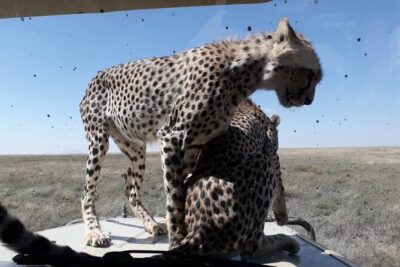
5 Days Tanzania Group Joining Safari, Tarangire/Serengeti/Ngorongoro Crater
Read our review →Browse the lists this tour appears in