
Reviewed · CAMPING & LODGE SAFARIS
5 Days Best of Northern Circuit Budget Safari in Tanzania
Tanzania packs a remarkable amount into these five days: giant elephant herds in Tarangire, wide-open Serengeti game country, the wildlife-packed Ngorongoro Crater, and Lake Manyara’s tree-climbing lions. You also get a village visit in Mto wa Mbu and a Maasai boma stop, so the trip is not only about ticking off animals.
I like the all-inclusive meals and water, which simplify a budget safari, and I like the early starts that put you in the parks when wildlife is active. Guides including Jacob, Mudy, and Noro have earned strong praise for spotting animals and keeping the trip moving. The main drawback is the pace: five days covering four major areas means long drives, basic camping, and some very early mornings.
Key points at a glance
- Four major wildlife areas: Tarangire, Serengeti, Ngorongoro Crater, and Lake Manyara are all included.
- Big Five potential: The Crater offers one of the best chances on this route to look for lion, leopard, elephant, buffalo, and black rhino.
- Budget camping: You sleep at campsites, including Seronera and Ngorongoro Simba, rather than in permanent luxury lodges.
- Fresh meals included: Breakfast, lunch, dinner, and unlimited drinking water are part of the package.
- Cultural stops add variety: Mto wa Mbu includes local food, banana plantations, walking, and village life.
- Good value at $1,254: Park fees, transport, food, and safari activities are bundled together, though you should confirm the exact group arrangement before paying.
What $1,254 buys you in northern Tanzania
At $1,254, this is priced as a budget safari, not a private luxury circuit. The value comes from combining four famous destinations with park entry fees, transport, camping equipment, a guide, meals, and water in one price.
That matters in Tanzania. Park fees alone can make a multi-park trip expensive, and arranging separate transport between Arusha, Serengeti, Ngorongoro, and Manyara would be awkward and costly. Here, you pay once for the main practical pieces and spend your time looking out of the vehicle instead of managing transfers.
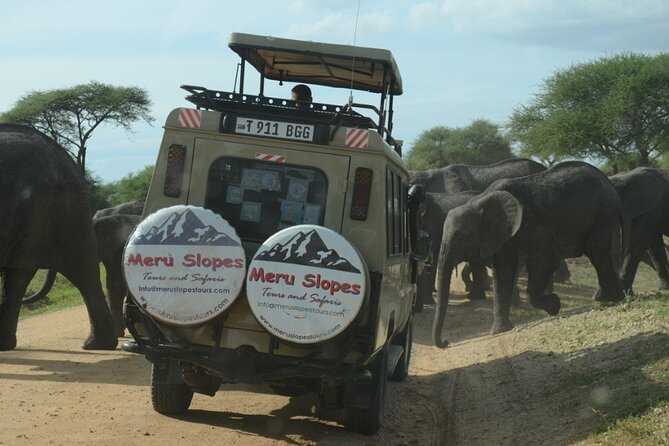
The tradeoff is comfort. Camping is basic, and the vehicle also carries safari equipment. One account of the experience specifically noted that six people may share a vehicle, with each person receiving a window seat. That is a fair setup for a budget safari, but it leaves less room than a high-end private vehicle.
The booking information describes the activity as private, while the tour summary describes joining-group camping and the operating details refer to filling vehicle capacity. I would ask for written confirmation about whether your departure is private or shared, the maximum number of passengers, and whether airport transfers or extra nights in Arusha are included in your particular booking.
Other routes up the mountain from Arusha:
- 8-Day Small-group Lemosho Kilimanjaro Summit Trekking
★ 5.0 · 186 reviews - 5 Days Best of Tanzania Luxury Safari Northern Circuit
★ 5.0 · 174 reviews - 7-Day Machame Kilimanjaro Summit Tour from Arusha
★ 5.0 · 125 reviews
Day 1: Elephants and baobabs in Tarangire
Pickup from an Arusha hotel is scheduled in the morning, with the drive to Tarangire taking about three hours. The park lies roughly 115 kilometers from Arusha and covers about 2,800 square kilometers, so this is not a quick roadside wildlife stop.
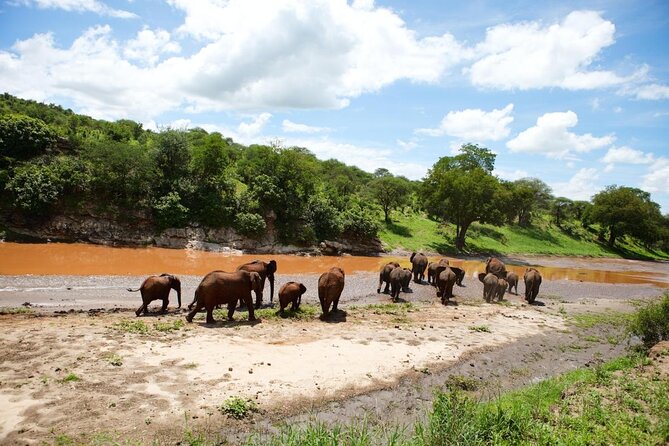
Tarangire is especially appealing for its elephants and baobab trees. The Tarangire River gives animals a reason to gather, and the park is also known for lions, leopards, pythons, and other wildlife. The mention of tree-climbing pythons is worth noting: they are a distinctive sight, though wildlife never follows a guaranteed script.
You get a full-day game drive before heading to Jambo Lodge for dinner and the night. That first day gives you an immediate wildlife start, but it is also a long one. Add the road from Arusha to the game drive and then the evening transfer, and you should expect a full day on the move.
Tarangire is a strong opening act because it gives you large animals, unusual trees, and a different setting from the Serengeti. I would bring a hat, sunscreen, and a camera battery pack. The vehicle time is part of the safari, so comfort matters.
Day 2: The long road to the Serengeti
After breakfast, you pack into the safari vehicle and travel toward Serengeti with lunch eaten on the way. The route includes views toward the Rift Valley and Ngorongoro Crater before reaching the Serengeti around midafternoon.
This is one of the most scenic transfer days, but it is not a full Serengeti game-drive day. You spend several hours getting there, then have an evening drive in central Serengeti. The reward is the chance to watch the light change near sunset, with dinner and camping at Seronera campsite inside the park.
Central Serengeti is a useful base because the itinerary returns to the area early the next morning. The arrangement avoids spending the entire day driving through the park without time for wildlife, though you still need to accept a long road day.
Camping inside Serengeti changes the feel of the trip. You are not simply visiting a park and leaving before dark. You sleep in the park environment, then rise early for the next game drive. Conditions are basic, so pack with practical comfort in mind: a warm layer for early mornings, a small torch, and a soft bag for items you need overnight.
Day 3: Sunrise in central Serengeti
The day starts around 5:45 a.m. with an early breakfast and a morning game drive lasting until about 11:30. Early light is valuable for photography and for catching animals at the start of the day, though the schedule may feel tough if you have not slept well.
After returning to camp for a hot lunch, you pack the vehicle and continue through the Serengeti toward Ngorongoro Simba campsite. This is another mixed game-drive and transfer day rather than a single uninterrupted safari outing.
The strength of this schedule is coverage. You get a second look at central Serengeti, then position yourself near the Ngorongoro Crater for the following morning. The weakness is that packing and moving camp takes time, and you spend part of the afternoon on the road.
A good guide makes a real difference here. Jacob has been singled out for animal spotting and explaining what you are seeing, while Mudy has been praised as a skilled driver with a strong eye for wildlife. You cannot assume which guide you will receive, but it is reasonable to ask who is assigned before departure.
Other park itineraries that start in Arusha:
- Serengeti Balloon Safari and authentic bush breakfast
★ 5.0 · 2,480 reviews - Balloon Safari & Bush Breakfast in Serengeti – Miracle Experience
★ 5.0 · 1,646 reviews - 4 Days Group Camping Safari
★ 5.0 · 1,101 reviews - 5 Days Group Camping Safari
★ 5.0 · 730 reviews
Day 4: Ngorongoro Crater and Mto wa Mbu
The Ngorongoro morning begins around 5:30 a.m. After breakfast, you descend to the crater floor for six to seven hours of game viewing. This is the trip’s most concentrated wildlife day.
The crater is known for its high animal density, and the planned sightings include the Big Five, birds, black rhino, and flamingos. None of these sightings can be promised, but the compact setting gives you a strong chance to see a wide range of wildlife in one drive.
You eat lunch inside the crater while continuing to watch the natural surroundings. The long drive on the floor is the price of the opportunity. If you prefer slow mornings and long breaks, this day may feel demanding. If your priority is wildlife, it is likely to be the highlight.
After ascending, the itinerary adds a cultural visit in Mto wa Mbu. You can walk through the village, see banana plantations, taste local food, and learn about community projects and daily life. This is an important change of pace after several days focused on animals.
The schedule here needs clarification. The day description mentions dinner and an overnight at Marera View Lodge, then also refers to Jambo Lodge. Ask which accommodation applies to your departure. The same advice applies to the cultural stop: confirm how much time is reserved for Mto wa Mbu, since the crater drive already takes most of the day.
Day 5: Lake Manyara and the return to Arusha
After breakfast, you head to Lake Manyara National Park for a full-day game drive. The park is associated with tree-climbing lions and flamingos drawn to the lake’s algae. You will also visit a hot spring and a Maasai boma, where the program presents local traditions and daily life.
Lake Manyara is smaller than Serengeti and Tarangire, but its appeal is variety. Forest, lake, birds, large mammals, and unusual lion behavior make it a worthwhile final park. Again, tree-climbing lions are a possibility, not a promise. Wildlife moves where it wants.
The Maasai boma adds a human element, though you should treat it as a structured cultural visit rather than an unfiltered look at every part of community life. The Mto wa Mbu walk offers a different kind of interaction, with food, plantations, and village activity.
The stated plan has you return to Arusha after the park, with dinner and an overnight mentioned. Confirm whether that final night is included in your booking and whether the return is to an Arusha hotel or another drop-off point.
Food, camping, and the daily rhythm
The package includes five breakfasts, five lunches, five dinners, and unlimited drinking water. That is a real saving on safari, where meals in remote parks can otherwise add up quickly.
The food is prepared by a safari chef, and Dula has been praised for cooking and companionship on the road. I would still ask about dietary requirements before departure, since the supplied details do not explain how special diets are handled.
Expect a simple camping routine: early breakfast, long drives, game viewing, packing, and an evening meal. The camping is described as basic but functional. This is not the trip for someone who wants polished rooms, private bathrooms, or a slow resort schedule.
The practical advantage is that you spend more nights close to the parks and less time returning to Arusha. The practical cost is that you need to be comfortable with dust, early alarms, and limited personal space.
Guides, vehicles, and the group question
The operator is Meru Slopes Tours and Safaris. Names connected with successful departures include Jacob, Mudy, Noro, Jacobo, and Johani, with Dula mentioned as a chef. Jacob is noted for explaining animals and finding wildlife, while Mudy is praised for driving and animal knowledge.
Guide quality matters more than fancy extras on a safari. A good driver reads tracks, listens to park communication, positions the vehicle carefully, and explains behavior without turning every sighting into a rushed photo stop.
The passenger arrangement deserves attention. One account describes a shared safari vehicle carrying six people, with window seats for everyone. That is a sensible number for viewing, but the vehicle must also carry camping gear, luggage, food, and water.
Because the supplied details use both private-tour and joining-group language, get the answer in writing. Ask about maximum occupancy, whether people from other bookings may share the vehicle, and whether the same guide stays with you for all five days.
What to pack and how to prepare
The tour includes water, but you should still bring a reusable bottle if you use one. A warm layer is useful for the early drives, while sun protection matters during long hours in an open-sided or raised-roof safari vehicle.
I would pack light. Soft luggage is easier to store than a hard suitcase when camping equipment and supplies share the vehicle. Bring binoculars if you have them, spare camera batteries, comfortable walking shoes for Mto wa Mbu, and clothes that can handle dust.
Bring patience, too. The route covers substantial distances, particularly between Tarangire, Serengeti, and Ngorongoro. The reward is breadth, but the itinerary is busy. You are seeing four major destinations, not settling into one park for five unhurried days.
Who should book this safari?
I would recommend it to a first-time visitor who wants the classic northern Tanzania circuit at a controlled price. It suits couples, families with older children, and people who would rather spend money on park access than upscale rooms.
The experience also suits anyone who wants more than a checklist of animals. Mto wa Mbu, the hot spring, the Maasai boma, and the village food stop give the trip some cultural and local context.
I would hesitate if you need a private vehicle, a relaxed pace, or reliable luxury accommodation. I would also think twice if long road transfers and basic camping sound unpleasant. Rain can create real problems on safari roads, including mud, flooding, washed-out bridges, and delays, so flexibility is important.
Free cancellation is available when you cancel at least 24 hours before the local start time. Poor weather may lead to a new date or a full refund, while cancellations or changes inside 24 hours are not refunded.
Should you book the five-day circuit?
Book it if you want the biggest northern Tanzania highlights in five days and accept that budget means basic camping and a busy schedule. The combination of Serengeti, Ngorongoro Crater, Tarangire, and Lake Manyara is hard to match at this price, especially with food, water, transport, and park fees included.
Before paying, confirm the group size, accommodation names, final-night arrangements, and whether airport pickup is part of your booking. If those details suit you, this is a strong value safari with the right mix of major wildlife areas, early drives, local encounters, and practical support.
FAQ
Where does the safari start?
The safari starts in Arusha, with pickup from an Arusha hotel described in the itinerary. The listed meeting time is 7:00 a.m., while the first-day schedule says pickup is at 8:00 a.m., so confirm the exact time before departure.
Which national parks are included?
The route includes Tarangire National Park, Serengeti National Park, Ngorongoro Crater, and Lake Manyara National Park.
Is camping included?
Yes. The itinerary includes camping at Seronera campsite in Serengeti and Ngorongoro Simba campsite. Other nights mention Jambo Lodge and Marera View Lodge, so confirm the exact accommodation plan for your booking.
Are meals included?
Yes. The package includes five breakfasts, five lunches, and five dinners, along with unlimited drinking water.
Is the tour private or shared?
The additional information describes it as a private activity, while the tour summary describes joining-group camping and operating details refer to vehicles carrying up to six people. Ask the operator to confirm the exact arrangement for your departure.
What animals might I see?
The route offers chances to see elephants, lions, leopards, buffalo, black rhino, pythons, flamingos, and other wildlife. The Ngorongoro Crater is the main location listed for looking for the Big Five.
What is not included in the price?
Tanzania visa costs, tips, and travel insurance are not included.
More Kilimanjaro treks from Arusha
- Mountain Kilimanjaro Day Hike
★ 5.0 · 102 reviews - Private Full Day Hiking Experience to Marangu Route
★ 5.0 · 61 reviews - 4 days Best experience Kilimanjaro Hike, Serengeti &Ngorongoro
★ 5.0 · 54 reviews - From Arusha/Moshi: Kilimanjaro Hike Marangu Route Day Trip
★ 4.5 · 54 reviews
More safaris from Arusha
- 3 Days Serengeti & Ngorongoro Group Camping Safari
★ 5.0 · 574 reviews - 7-Day Premium Luxury Tanzania Safari All-Inclusive
★ 5.0 · 426 reviews - 3-Day Classic Serengeti Safari
★ 5.0 · 263 reviews - 8 Days Great Wildebeest Calving Migration Safari from Arusha
★ 5.0 · 254 reviews
Just added in Arusha
- 4 Days Private Midrange Lodge Safari to Serengeti & Ngorongoro★ 5.0 · 4 reviews
- Extraordinary Hot air Bolloon ride in Serengeti | BURIGI CHATO SAFARIS CO L.T.D★ 5.0 · 6 reviews
- 3 days leopard safaris★ 5.0 · 4 reviews
- 8 Days Serengeti Migration safari★ 5.0 · 11 reviews
- tarangire, ngorongoro & lake manyara park 3 days private tour★ 5.0 · 11 reviews
- serengeti, ngorongoro & tarangire 4 days private tour★ 5.0 · 18 reviews
- tarangire & ngorongoro 2 days tour★ 5.0 · 14 reviews
- Mt. Kilimanjaro: Shira plateau to Cathedral point 3872m Day hike★ 5.0 · 7 reviews
Camping & Lodge Safaris, compared.
3 Days Serengeti & Ngorongoro Group Camping Safari
Read our review →
5 Days Best of Tanzania Luxury Safari Northern Circuit
Read our review →
2 Days Tarangire and Ngorongoro Group Camping Safari
Read our review →
5-Day private Camping Safari Tour in Tanzania
Read our review →
5 Days Tanzania Group Joining Safari, Tarangire/Serengeti/Ngorongoro Crater
Read our review →Browse the lists this tour appears in