
Reviewed · KILIMANJARO TREKS
7 Days Kilimanjaro via Machame route affordable price
Kilimanjaro’s Machame Route gives you the mountain in changing chapters: wet rainforest, open high country, volcanic rock, glaciers, and a sunrise summit. The pace is slow enough to help your body adjust, though the final night remains a serious physical test.
I like the private group setup, which lets your guide set a sensible pace for your own party. I also like the practical package: hotel transfers, tents, meals, camping gear, and a Moshi lodge night are included. The main concern is the schedule itself: it is sold as a seven-day climb, but the supplied mountain plan covers six trekking days, so confirm exactly where the extra day falls.
Key things to know before booking
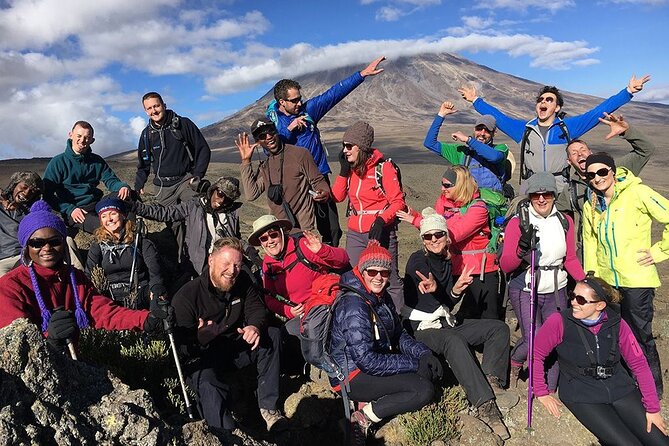
- The summit push starts around midnight to 2 a.m. You climb through the cold and darkness to reach Stella Point and Uhuru Peak near sunrise.
- Day three is built for acclimatization. You climb to Lava Tower at 4,650 meters, then descend to Barranco Camp.
- Barranco Wall is the route’s most adventurous section. It calls for steady footing, but it is not described as technical climbing.
- The price includes the main trip infrastructure. At $2,400 per person, you get private transport, park fees, camping equipment, guides, meals, and transfers.
- The lower trail can be muddy and slippery. Gaiters and trekking poles are strongly recommended on the first and final days.
- The company has named guides with extensive summit experience. Washington and Nicholas are among the guides associated with its Kilimanjaro trips.
Machame Route scenery, pace, and value
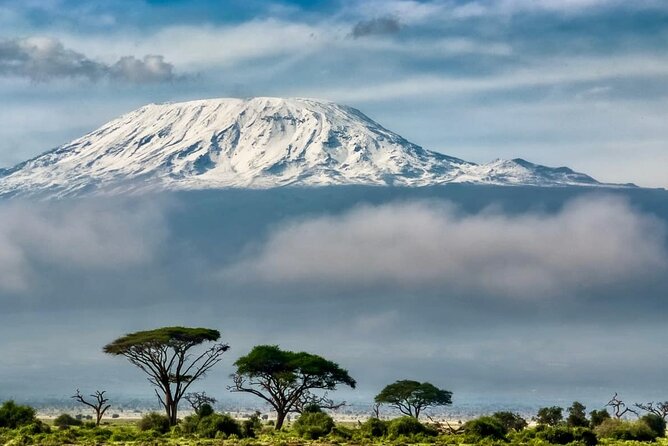
This climb is best for you if you want a scenic route and can handle long days at altitude without rushing. It is not a casual walk, despite the friendly idea that taking more time makes Kilimanjaro manageable.
The route gains height gradually at first, then asks a lot of you on summit night. You will sleep in camps, walk for several hours most days, and spend much of the time above 3,000 meters. The strongest part of the plan is the climb-high, sleep-lower pattern on day three. Reaching Lava Tower, then dropping to Barranco, gives your body useful altitude practice before the summit attempt.
At $2,400 per person, the package looks aimed at the budget end of private Kilimanjaro trips while still covering the costly basics. Park fees, crew wages, camping equipment, food, vehicle transfers, and airport transfers are included. That matters because these extras can quickly turn a low advertised fare into a larger final bill.
You still need to budget for visa costs, international travel insurance, personal spending, tips, and any climbing gear you rent. The price includes a complimentary oxygen cylinder, but that should not make you treat the climb lightly or assume medical support is a substitute for proper acclimatization.
The private format is another useful value point. You are not locked into a large public group, and only your party takes part. That can make it easier to discuss pace, rest, clothing, and altitude symptoms with your guide. It does not remove the mountain’s demands, but it can make the experience more personal.
Other routes up the mountain from Moshi:
- Kilimanjaro climb by Lemosho Route (7-day)
★ 5.0 · 651 reviews - Kilimanjaro climb, Machame Route (7-day)
★ 5.0 · 262 reviews - Kilimanjaro Climbing Lemosho Route 8 Days.
★ 5.0 · 186 reviews
Day 1: Machame Gate and the wet rainforest
Your day begins with a roughly 45-minute drive from Moshi through the village of Machame to Kilimanjaro National Park. At the gate, permit processing can take time. This is not wasted time, though. You see porters and other crews preparing loads, and the busy gate gives you a first look at how much work supports a Kilimanjaro climb.
The trail rises from 1,811 meters to 3,021 meters, with about 1,210 meters of gain. You should expect about six hours of walking through rainforest. The trees, plant life, and possible wildlife sightings give this first section a strong sense of place, while your guide explains the natural surroundings.
The practical warning is simple: this section can be muddy and slippery. Bring gaiters and trekking poles, not just for comfort but for balance. Waterproof footwear and a rain layer are sensible choices, although the supplied information does not specify the exact equipment list.
This is a full first day, especially if you are adjusting to travel, heat, and a new walking rhythm. Keep your pace modest from the start. Trying to prove your fitness on day one is a poor bargain.
Day 2: Leaving the forest for Shira Camp
After breakfast, you climb from 3,021 meters to 3,839 meters, gaining about 818 meters over roughly four hours. The forest gives way to more open ground, and the path crosses a valley before following a steep, rocky ridge.
The route then turns west toward a river gorge and continues to Shira Camp. This change in scenery is one of the reasons to choose Machame. In a relatively short time, you move from thick, damp forest into a colder, more exposed mountain zone.
Temperatures begin to drop here, so keep warm layers accessible rather than buried in your main bag. The walk is shorter than day one, which gives you time to eat, rest, and watch how your body responds to the altitude.
Shira Camp sits high enough that you may notice the thinner air. Headaches, unusual tiredness, and poor sleep are possible at altitude. The itinerary does not promise a medical schedule or a specific acclimatization program, so speak plainly with your guide if you feel unwell.
Day 3: Lava Tower and the important descent to Barranco
Day three is the clever part of the route. You begin at 3,839 meters, climb to about 3,986 meters for camp, but first go much higher to Lava Tower at 4,650 meters. The walking time is about six hours.
From the Shira Plateau, the trail heads east along a ridge. You pass a junction toward Kibo Peak, then continue southeast toward Lava Tower, also called Shark’s Tooth. A second junction leads toward Arrow Glacier before the route drops to Barranco Camp.
The high point of the day gives you exposure to serious altitude without forcing you to sleep at the same height. You climb high, then sleep lower. That pattern does not guarantee a successful summit, but it makes this day more than a scenic walk.
Expect colder air, rocky ground, and a slower pace. This is a good day to drink regularly, eat even if your appetite is low, and avoid burning energy on fast climbs. The descent to Barranco should feel welcome, though it can be tiring after the high point.
Same base, a different kind of day out:
- Safari Serengeti And Ngorongoro
★ 5.0 · 288 reviews - Climbing Kilimanjaro – Machame Route
★ 5.0 · 170 reviews - Climbing Kilimanjaro through 7 days Machame Route
★ 5.0 · 151 reviews - Kilimanjaro climb, Lemosho Route (8-day)
★ 5.0 · 148 reviews
Day 4: Barranco Wall and the approach to Barafu
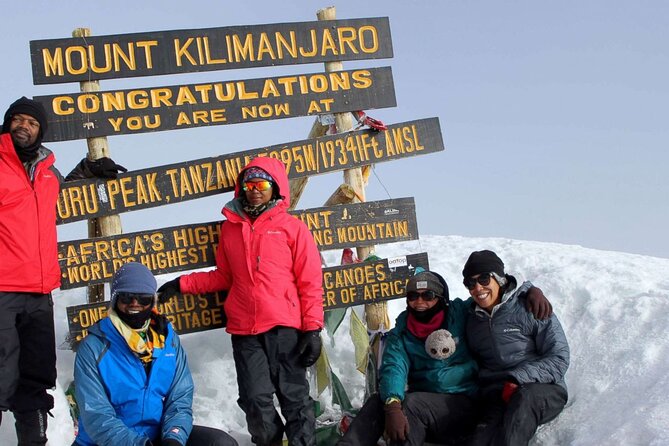
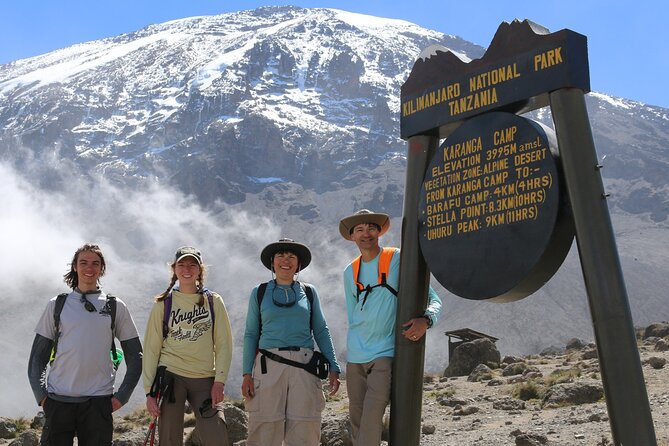
Day four begins around 3,986 meters and takes you toward Barafu Camp at about 4,662 meters. The itinerary gives approximately six hours for the day, with several changes in height along the way.
The highlight is Barranco Wall, a steep ridge that adds a hands-on, adventurous feel to the climb. The description presents it as a demanding trail feature rather than a technical rock-climbing pitch. You should still use care, keep three points of contact when useful, and follow your guide’s instructions.
After the wall, the trail continues through Karanga Valley and joins the Mweka Trail. From there, you climb toward Barafu. Reaching Barafu means you have completed the South Circuit and seen the summit from several angles.
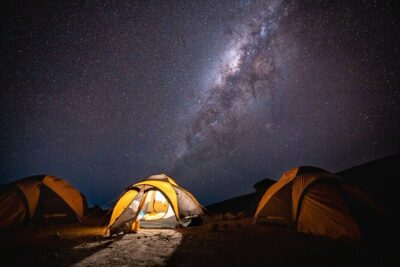
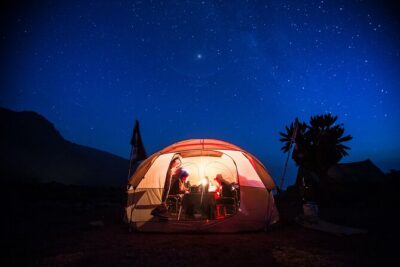
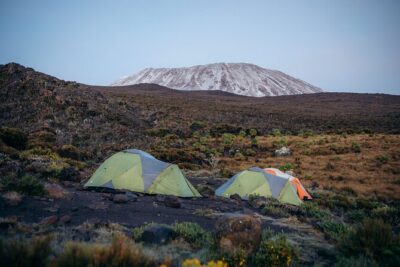
Barafu is the staging point for summit night, so the mood changes here. Dinner is early, and the main job is rest. You may not sleep much before the midnight start, but lying down still saves energy. Prepare your summit clothes, headlamp, water, snacks, and gloves before trying to rest.
Day 5: The midnight climb to Uhuru Peak
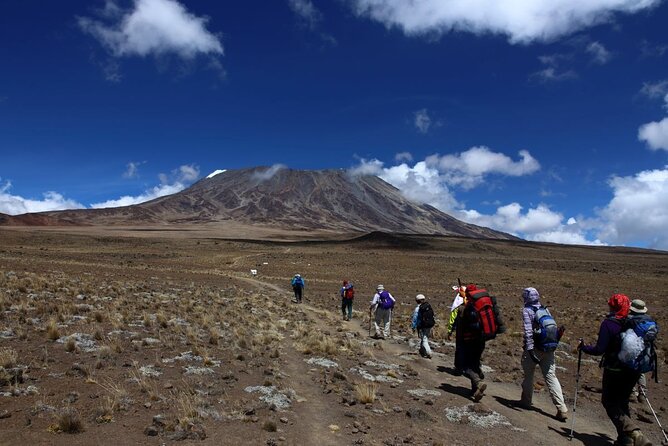
This is the hardest day by far. The start comes between midnight and 2 a.m., and the itinerary lists about five hours for the initial summit section. You leave Barafu at 4,662 meters and climb to Uhuru Peak at 5,895 meters, or 19,341 feet.
The trail heads between the Rebmann and Ratzel glaciers, then works upward in switchbacks through heavy scree toward Stella Point on the crater rim. The surface can feel loose, and the cold plus darkness makes the effort feel longer than the clock suggests.
At Stella Point, you may be rewarded with sunrise. The itinerary describes this as a magnificent moment, and the timing is one of the strongest features of the plan. You then continue around the crater rim toward Uhuru Peak, the summit.
The summit itself is only part of the day. After reaching 5,895 meters, you descend to about 3,106 meters at Mweka Camp, losing roughly 2,789 meters in total. That means tired legs face a long downhill after the emotional high point.
Do not judge your fitness by how you feel during the first hour. Move slowly, follow the guide’s pace, and keep your attention on the next small section of trail. This is where a private group and an attentive guide can be useful, especially when people in the same party are moving at different speeds.
The supplied plan gives a partial description of the summit day, so ask for the exact camp sequence and timing before departure. The broad pattern is clear: midnight start, Stella Point, Uhuru Peak, then a major descent.
Day 6: Mweka descent, certificates, and a hot shower
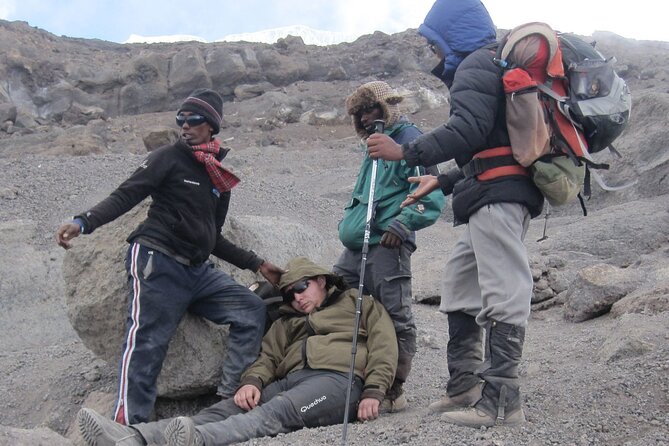
After breakfast, you have a team appreciation and farewell ceremony before continuing downhill. The route drops from about 3,106 meters to 1,633 meters, with around three hours of walking listed.
The lower trail is often wet, muddy, and steep according to the itinerary. Gaiters and trekking poles are useful again. Your legs may be more tired on this day than expected, and downhill walking can be hard on knees and toes.
At Mweka Park Gate, you receive your summit certificates. A vehicle then meets you at Mweka village for the roughly 30-minute drive back to your Moshi hotel.
The return to town is part of the reward. You can expect a hot shower, dinner, and time to celebrate before continuing to an onward journey, safari, or Zanzibar stay. An overnight at Kilele Lodge with breakfast is listed before your onward transfer.
Guides, crew, and the human side of the climb
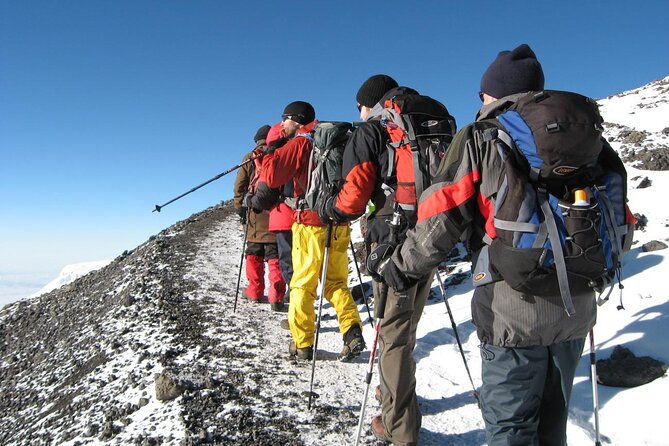
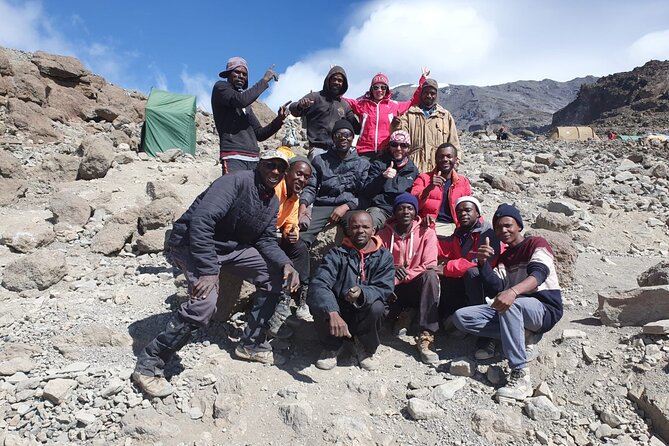
The company presents its service around local guides and a crew whose wages are included in the trip price. That is worth checking closely before you pay, since crew treatment and clear tipping expectations matter on Kilimanjaro.
Washington and Nicholas are named among the company’s guides, and Washington is described as having reached the summit nearly 200 times. You should still confirm who will lead your particular departure rather than assume a named guide is guaranteed.
The most useful practical strength here is the company’s communication and preparation. The provided experiences describe quick replies from owner Adidas, equipment checks before departure, help fitting out people who arrived without all their gear, and airport transfers at unusual hours. Those details matter more than polished sales language when you are preparing for a high-altitude climb.
One solo climber also used the company as a budget option, while other groups combined Kilimanjaro with safari arrangements. That suggests the service can work for solo clients and small private parties, though the final group makeup should be confirmed.
What is included, and what you still need to arrange
The package includes:
- Private transportation
- Park fees, taxes, and gate transfers
- A professional guide
- Camping equipment
- Airport transfers
- Crew wages described as fair and sustainable
- A complimentary oxygen cylinder
- Six lunches
- Five breakfasts
- Six dinners
You pay separately for personal expenses, tips, visa fees, international travel insurance, and rented climbing gear. The meal counts are useful to check because the overall product is described as seven days while the mountain schedule lists six days.
You should also ask what personal equipment is supplied, what can be rented, and what condition rental items are in. The company has helped people hire or borrow needed equipment, but the package does not say that every item is included at no extra cost.
Who should book this climb?
I would point this trip toward a reasonably fit person who wants Machame’s scenery, prefers a private group, and is willing to accept basic mountain camping. You need to be comfortable walking for four to six hours on most days, then handling a midnight summit attempt followed by a long descent.
It may suit a budget-conscious climber who values included meals, transport, park fees, and crew support. It is less suitable if you want a hotel-based mountain trip, a short summit effort, or a schedule with plenty of spare days.
The six-day mountain plan is the main detail I would clarify before booking. A longer schedule can help with altitude, so find out if the seventh day is an extra acclimatization day, a pre-climb lodge night, or simply a product-label difference.
Cancellation is free if you cancel at least 24 hours before the local start time. Changes or cancellations made within 24 hours are not accepted for a refund.
Should you book the Chief’s Tours Machame climb?
Book it if you want a scenic, private Kilimanjaro climb with a clear budget price and most major costs bundled in. The rainforest, Lava Tower, Barranco Wall, glacier views, and sunrise summit make this a varied route rather than a simple uphill march.
Before paying, get the exact seven-day schedule in writing, confirm your lead guide, ask what personal gear can be rented, and check the expected tipping arrangement. If those points are clear, the $2,400 price offers a practical way to tackle Machame without assembling every transport, meal, and camp service yourself.
FAQ
How long is the Kilimanjaro experience?
The product is described as a seven-day Kilimanjaro trip, while the supplied mountain itinerary covers six trekking days from Machame Gate to Mweka Gate. Confirm how the extra day is arranged before booking.
What route does the climb use?
The climb uses the Machame Route, known for rainforest, Shira Plateau, Lava Tower, Barranco, Barafu, and the southern approach to Uhuru Peak.
How high is Uhuru Peak?
Uhuru Peak is listed at 5,895 meters, or 19,341 feet.
Is this a private tour?
Yes. Only your own group participates in the activity.
Does the tour include hotel transfers?
Yes. Private transportation, gate transfers, airport transfers, and pickup from a Moshi hotel are included.
Are meals included?
Yes. The package lists six lunches, five breakfasts, and six dinners.
Is camping equipment provided?
Yes. Kilimanjaro camping equipment is included. Personal climbing gear rental is not included.
What fitness level do I need?
You should have a moderate level of physical fitness. The itinerary includes walking days of roughly four to six hours and a demanding midnight summit climb.
Do I need gaiters and trekking poles?
They are strongly recommended for the muddy, slippery rainforest trail and the wet, steep descent from Mweka.
What does the $2,400 price exclude?
Personal expenses, tips, visa fees, international travel insurance, and rented climbing gear are excluded.
Can I cancel for a full refund?
You can cancel at least 24 hours before the local start time for a full refund. Cancellations or changes made less than 24 hours before the start are not accepted for a refund.
Just added in Moshi
- Kilimanjaro Airport Private Transfer from/to Moshi★ 5.0 · 14 reviews
- Kilimanjaro Climbing 5 days Marangu route★ 5.0 · 22 reviews
- 6 Days Machame route Kilimanjaro climbing★ 5.0 · 22 reviews
- 7 Days Highlight of Tanzania Mid-Range Standard★ 5.0 · 22 reviews
- 4 Day Mid-range Serengeti Safari★ 5.0 · 22 reviews
- Machame Route 6 days 5 Nights/Kilimanjaro Climb★ 5.0 · 23 reviews
- Private 4-Days Northern Circuit National Parks in Tanzania★ 4.5 · 26 reviews
- Tanzania Safari – The Great Migration in the North of the Serengeti and Lake Natron★ 5.0 · 25 reviews
Kilimanjaro Treks, compared.
8-Day Small-group Lemosho Kilimanjaro Summit Trekking
Read our review →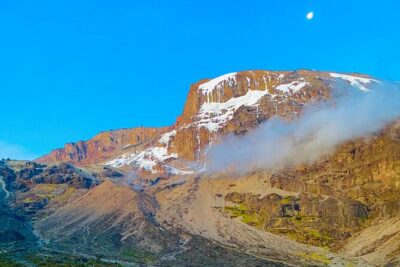
5 Days Best of Tanzania Luxury Safari Northern Circuit
Read our review →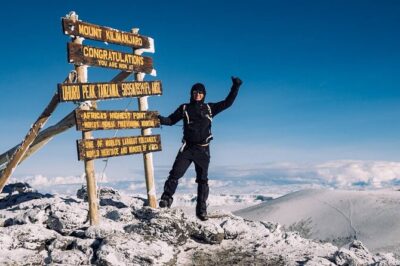
Climbing Kilimanjaro through 7 days Machame Route
Read our review →
7-Day Machame Kilimanjaro Summit Tour from Arusha
Read our review →Browse the lists this tour appears in