
Reviewed · KILIMANJARO TREKS
Mount Kilimanjaro 7 Days – Machame Route
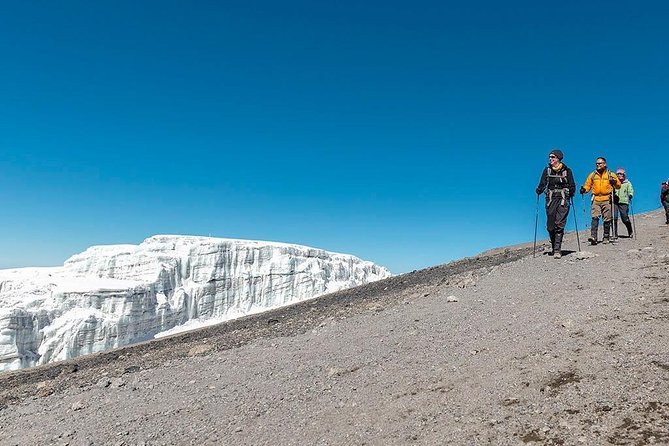
The Machame Route gives you Kilimanjaro in its most varied form: wet rainforest, open ridges, the Shira Plateau, volcanic rock, glacier views, and a sunrise summit attempt. It is often called the Whiskey route, not because the climb is easy, but because the trail is tougher than the gentler Marangu Route.
I like the seven-day schedule because it gives you a useful acclimatization day at Lava Tower and Barranco, and I like that the price includes airport transfers, two Moshi hotel nights, meals, tents, porters, and a full mountain crew. The main drawback is the crowds. Machame is now the busiest route, and its steep trails and long summit day are better suited to hikers with some trekking experience.
Key points to know before booking
- A seven-day route is the sensible choice: The six-day version is possible, but the extra day gives your body more time to adjust to altitude.
- The summit day is extremely demanding: You start around midnight to 2 a.m., climb to 5,895 meters, then descend for many hours.
- The scenery changes every day: You move from rainforest to high moorland, volcanic ridges, scree, and the southern ice fields.
- A strong local crew is part of the experience: Guides, assistant guides, porters, and a cook travel with you, with names such as Alan, Shefii, and J4 associated with the guiding team.
- The price covers more than the climb: Hotel nights, meals, airport transfers, camping gear, fresh drinking water, and crew salaries are included.
- Pack for mud, cold, and steep ground: Gaiters and trekking poles are especially useful on the first and last days.
Why the Machame Route earns its reputation
Machame begins on Kilimanjaro’s southern side and crosses beneath the mountain’s southern ice fields before reaching the summit. That route design gives you changing views and a useful climb-high, sleep-lower pattern on the third day.
The route is also physically serious. Several days involve steep ascents, and the trail can become muddy or slippery in the forest. You do not need to be an elite mountaineer, but you should be comfortable walking for several hours on uneven ground and handling a long day at altitude.
The seven-day schedule matters. Kilimanjaro’s main challenge is not technical climbing. It is altitude, fatigue, cold, and the need to keep moving when your body would prefer a bed. The day from Shira to Lava Tower and down to Barranco is especially useful because you reach about 4,650 meters before sleeping lower, at roughly 4,000 meters.
Other routes up the mountain from Kilimanjaro:
- 7 Days Kilimanjaro via Machame route affordable price
★ 5.0 · 110 reviews - Kilimanjaro Airport taxi to/from Moshi town/Arusha town
★ 5.0 · 60 reviews - 6 Days Climbing Mount Kilimanjaro Machame Route
★ 5.0 · 40 reviews
Day 1: Machame Gate to Machame Camp
Your climb begins with a roughly 45-minute drive from Moshi to the Mount Kilimanjaro National Park gate, passing through Machame village on the lower slopes. The gate is the practical starting point, where the crew handles entry arrangements and the walking begins.
The trail climbs through rainforest from about 1,830 meters to 3,050 meters. The distance is around 11 kilometers, with five to six hours of walking. This first day is not the longest, but the damp ground can make it tiring.
Expect a winding path on a ridge. Lower sections may be muddy and slippery, especially after rain. Pack gaiters where you can reach them, rather than burying them at the bottom of your bag. Trekking poles also help with balance.
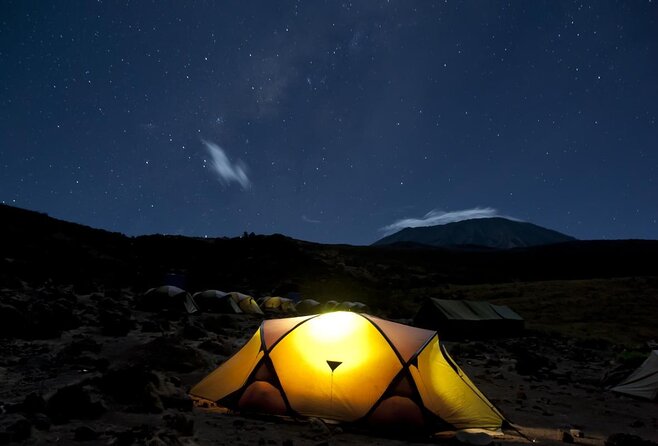
Machame Camp is your first night on the mountain. The included camping setup provides tents, sleeping mattresses, camp chairs, and tables. Hot water for washing is also provided each day, a small comfort that matters after a wet walk.
Day 2: Machame Camp to Shira Camp
Day two leaves the forest behind. You climb from about 3,050 meters to 3,850 meters over roughly five kilometers, with four to five hours of walking.
The path crosses a valley and follows a steep, rocky ridge before turning west toward a river gorge. Compared with day one, the scenery feels more open, but the trail becomes rockier and the altitude begins to make itself known.
This shorter day is useful because it lets you gain height without spending the entire day on the trail. Eat breakfast before leaving and keep water accessible. The tour includes fresh drinking water, but snacks and water-purifying tablets are not included, so you need to bring personal snacks and any preferred treatment supplies.
Shira Camp places you on the Shira Plateau. You have left the dense forest, and the mountain begins to feel larger and more exposed. The camp is also a reminder that Kilimanjaro is not a simple uphill walk. The route gives you time to adjust before the higher camps arrive.
Day 3: Shira Plateau, Lava Tower, and Barranco
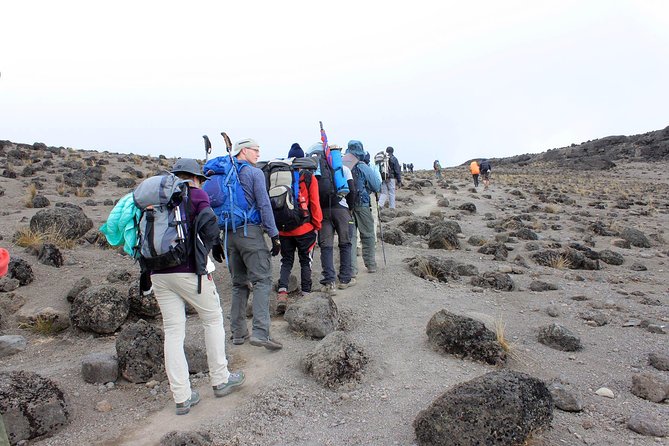
This is one of the most important days of the climb. You walk about 10 kilometers in five to six hours, rising from roughly 3,850 meters to the Lava Tower area at about 4,650 meters, then descending to Barranco Camp at around 4,000 meters.
The trail first climbs east along a ridge. It passes the junction toward Kibo, the volcanic cone containing the summit, then turns southeast toward Lava Tower, also known as the Shark’s Tooth. The route later passes a junction for the Arrow Glacier before dropping toward Barranco.
The numbers can look strange. You finish the day at nearly the same elevation where you began, but that is the point. Your body experiences a higher altitude during the day while you sleep lower. This is the kind of pacing that makes the seven-day plan more sensible than rushing the route in six.
Barranco Camp is also one of the more memorable stops because the next morning begins with the Barranco Wall. You can look ahead to a steep section rather than discovering it by surprise.
Same base, a different kind of day out:
- Great Migration Safari In Tanzania
★ 5.0 · 71 reviews - 6 Days Tanzania Classic Safari
★ 5.0 · 52 reviews - 8 Days Kilimanjaro Hike via Lemosho Route
★ 5.0 · 39 reviews - 8 Days Great Wildebeest Migration – Mara River Crossing
★ 5.0 · 28 reviews
Day 4: The Barranco Wall to Karanga Valley
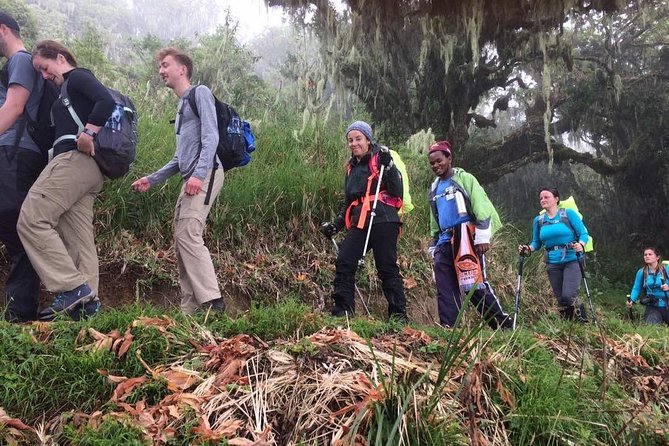
Day four covers only about five kilometers and takes three to four hours, but do not mistake the short distance for an easy stroll. You leave Barranco at approximately 4,000 meters and climb the Barranco Wall toward the Karanga Valley.
The wall is steep and rocky. The trail requires steady footing and patience, especially when other groups are using the same narrow sections. This is one reason trekking poles are useful, although you may need to put them away briefly when using your hands for balance.
The route then reaches the junction connecting with the Mweka Trail. You camp near 4,050 meters. The short walking time gives you a chance to rest, eat, and prepare for the next rise toward Barafu Camp.
This day can feel like a turning point. The forest is far below, the air is thinner, and the climb becomes more focused on reaching the summit zone. Keep your pace slow. There is little value in racing ahead here.
Day 5: Karanga Valley to Barafu Camp
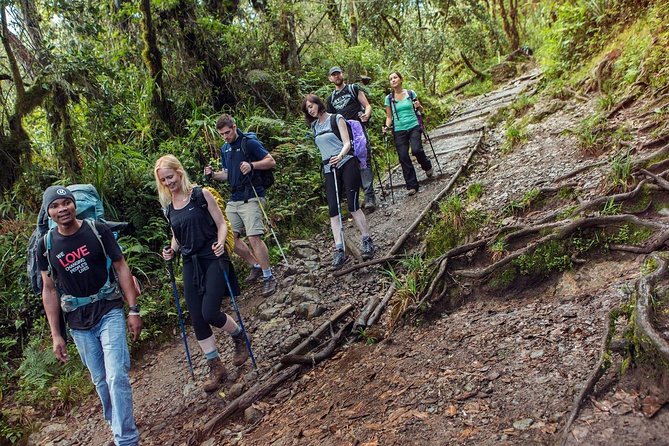
The route to Barafu Camp is about four kilometers and takes three to four hours. You climb from approximately 4,050 meters to 4,700 meters across increasingly rocky ground.
Barafu means ice, and the camp is the launch point for the summit attempt. By this stage, you have completed the South Circuit, which gives you views of the summit from several directions. The mountain does not look close simply because you are high. The final climb remains a serious effort.
The schedule calls for camp, dinner, rest, and preparation for summit day. That preparation is not just a matter of checking equipment. You need to eat enough, organize warm layers, arrange your daypack, and try to sleep before the midnight start. Sleep may be difficult at this altitude, so use the afternoon quietly rather than treating it as free sightseeing time.
The included cook is an important part of the setup. J4 is associated with the team and is praised for producing substantial meals despite difficult mountain weather. Food is included throughout the climb, with six breakfasts, six dinners, and seven lunches listed in the package.
Day 6: Barafu Camp to Uhuru Peak and Mweka Camp
Summit day is the test. You start between midnight and 2 a.m., climb from about 4,700 meters to Uhuru Peak at 5,895 meters, then descend all the way to around 3,090 meters. The listed walking distance is about five kilometers uphill and 13 kilometers down, with roughly 13 hours of total walking.
The first ascent heads northwest between the Rebmann and Ratzel glaciers. The ground becomes heavy scree, loose volcanic material that can make every step slide backward. This is the most mentally and physically demanding section of the route.
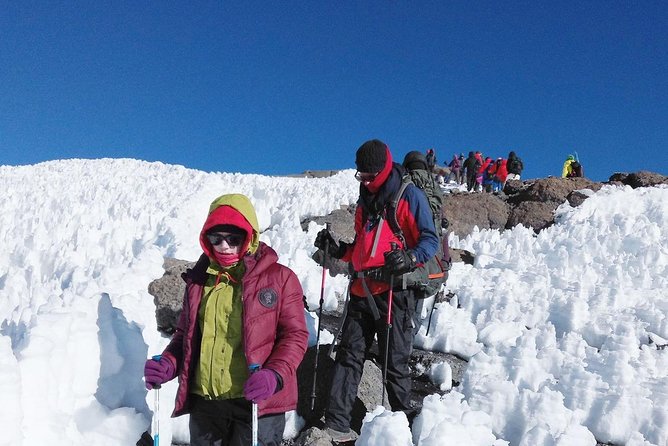
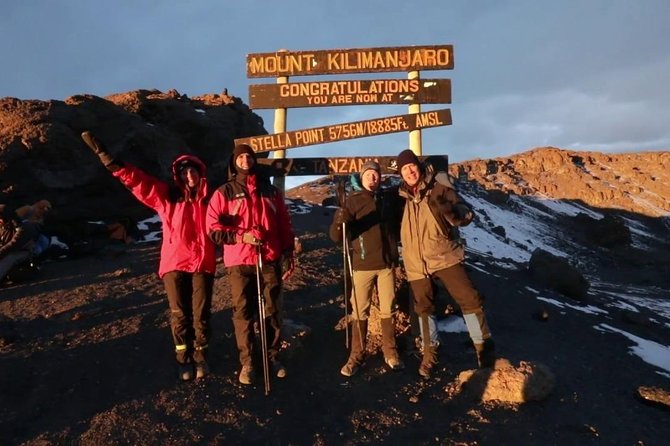
You aim for Stella Point on the crater rim. The reward is often a sunrise over the high mountain, although faster hikers may see the sunrise from the summit itself. From Stella Point, you may encounter snow during the final hour to Uhuru Peak.
At the summit, you are at the highest point in Africa. The time at the top may be brief because cold, altitude, and fatigue are real concerns. Take your photographs, take in the view, and follow your guide’s instructions rather than trying to linger too long.
The descent is not an afterthought. Going down from the summit to Mweka Camp takes many hours and can be hard on tired knees. Trekking poles are valuable here. Keep warm clothing and rain protection available because conditions can change, and do not assume the lower camp will feel close just because the elevation is falling.
The tour supplies emergency oxygen and a basic first aid kit, but the oxygen is for emergencies only, not as assistance for reaching the summit. You should also have medical and travel insurance, which are not included.
Day 7: Mweka Camp to Moshi
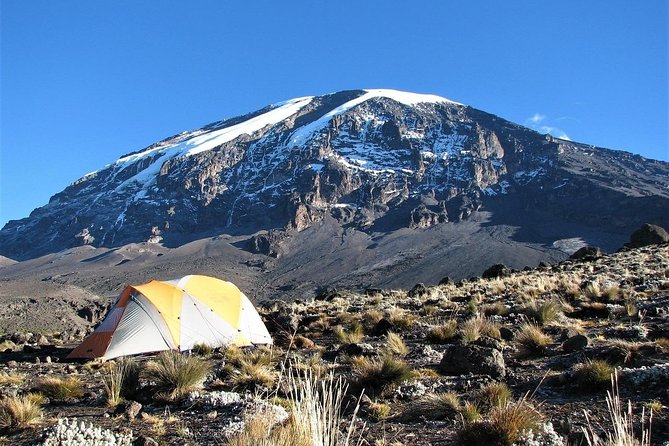
The final walking day descends from about 3,090 meters to the Mweka Park Gate, with roughly 10 kilometers of walking and three to four hours on the trail. You receive your summit certificates at the gate.
The lower trail can be wet and muddy, so keep your gaiters and poles handy until the walk is truly over. The air becomes warmer, and shorts and a T-shirt may be comfortable, but keep rain gear and a warmer layer accessible until you finish.
From the gate, you continue for about another hour to Mweka Village. A vehicle meets you there for the roughly 30-minute drive back to your Moshi hotel. This arrangement saves you from walking farther on a road after seven hard days.
You then have the included hotel night after the climb, with dinner and breakfast. That extra night is valuable. It gives you a proper bed, a chance to clean up, and time to recover before flying or continuing through Tanzania.
What the $2,530 price really covers
At $2,530 per person, this is not a budget day hike, but it covers the expensive working parts of a Kilimanjaro climb. You receive return transfers between Kilimanjaro Airport and Moshi, a hotel night before and after the climb, meals, camping equipment, a guide team, porters, a cook, fresh drinking water, and hot water for washing.
The price also includes crew salaries according to Kilimanjaro National Park guidelines. That matters because a climb depends on a large support team, not only the person leading you up the trail.
You still need to budget for flights, visas, medical and travel insurance, personal trekking equipment, snacks, personal medicine, and water-purifying tablets. A portable toilet is optional but strongly recommended, and it costs extra. You can rent some hiking equipment from the operator’s store in Tanzania, but confirm what is available before relying on rental gear.
The private format is another value point. Only your group participates, so you are not assigned to a large mixed party. The actual size of your group is not specified, but the private arrangement should give your guide more room to manage your pace and daily needs.
The guiding team and mountain support
The team includes a qualified mountain guide, assistant guides, porters, and a cook. Names associated with the guiding operation include Alan and Shefii, while J4 is connected with the cooking team. Wenceslaus Tarimo is the company owner and has been available by phone and message to help with planning.
That direct contact can be useful before departure, especially for questions about equipment, airport transfers, and the level of preparation needed. The strongest praise for the operation focuses on friendly staff, safe organization, good equipment, and food that holds up in difficult weather.
Still, you should ask practical questions before booking. Confirm the exact guide team, porter arrangements, equipment available for rent, hotel names, and the policy for handling an unsuccessful summit attempt. Those details are not specified here, and they can matter as much as the headline price.
Who should choose this climb
I would choose this route if you want the most varied seven-day Kilimanjaro experience and you are comfortable with long, steep walks. It suits people with some hiking or backpacking experience, especially those who understand that slow pacing and altitude management matter more than speed.
It is not the best match if you want easy trails, private solitude, or a relaxed holiday with a little mountain scenery added. Machame is popular, so crowded trail sections can reduce the sense of wilderness. The route is also harder than Marangu, with longer days and steeper ground.
You should have a moderate level of physical fitness, as the operator requires. That does not guarantee a summit, since altitude affects people differently, but it gives you a better base for the long summit night and the descent afterward.
Should you book the seven-day Machame Route?
Book it if you want Kilimanjaro’s changing scenery, a private crew, and a schedule that gives you a real acclimatization day. The included airport transfers, hotel nights, meals, camping setup, porters, and guides make the $2,530 price easier to justify, especially for a first climb.
Think twice if steep trails, mud, crowded routes, or a 13-hour summit day sound miserable. In that case, compare longer Kilimanjaro itineraries before committing. For an adventurous hiker who accepts the physical challenge, the seven-day Machame Route offers a well-supported and varied way to reach Uhuru Peak.
Cancellation is flexible up to 24 hours before the local start time for a full refund. Changes or cancellations made within 24 hours are not accepted for a refund.
FAQ
How long is the Machame Route climb?
The experience lasts approximately seven days, including the final descent to Mweka Village and the return drive to your Moshi hotel.
What is the highest point reached?
The summit is Uhuru Peak at 5,895 meters. The route also reaches about 4,650 meters near Lava Tower and 4,700 meters at Barafu Camp.
Are airport transfers included?
Yes. Return transfers between Kilimanjaro Airport and Moshi are included.
Are hotel nights included?
Yes. You receive a hotel night before the climb and another night after the climb, with dinner and breakfast included.
Is food included during the climb?
Yes. The package includes six breakfasts, six dinners, and seven lunches. Snacks, personal medicine, and water-purifying tablets are not included.
Is emergency oxygen available?
Yes. Emergency oxygen and a basic first aid kit are provided for emergencies only. Emergency oxygen is not intended as summit assistance.
Just added in Kilimanjaro
- 5 days Serengeti Wildebeest Migration Safari★ 5.0 · 3 reviews
- 6 Days Machame Route Kilimanjaro Trekking★ 5.0 · 13 reviews
- Mount Kilimanjaro 6 days – Machame route★ 4.0 · 5 reviews
- Lemosho Route★ 5.0 · 21 reviews
- Tanzania Safari and Kilimanjaro Climb Multi-Day Experience★ 5.0 · 3 reviews
- Amazing 4 Days Safari 3 Nights: Tarangire, Ngorongoro, Serengeti★ 5.0 · 6 reviews
- 9 Days – Best of Tanzania Safari★ 5.0 · 4 reviews
- 7 Day Safari in Tanzania National Parks★ 5.0 · 5 reviews
Kilimanjaro Treks, compared.



8-Day Small-group Lemosho Kilimanjaro Summit Trekking
Read our review →

5 Days Best of Tanzania Luxury Safari Northern Circuit
Read our review →

Climbing Kilimanjaro through 7 days Machame Route
Read our review →
7-Day Machame Kilimanjaro Summit Tour from Arusha
Read our review →Browse the lists this tour appears in