
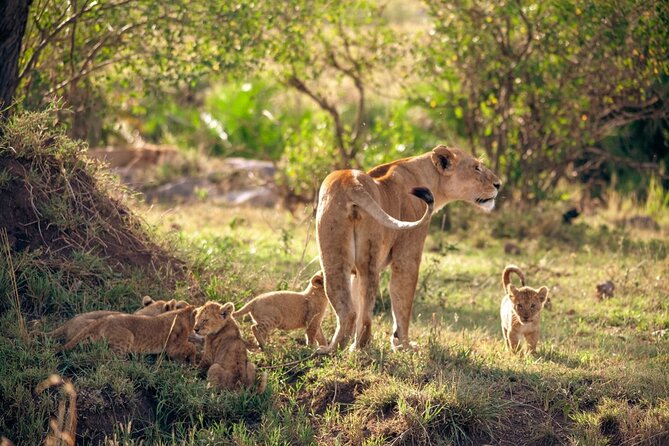
Reviewed · CAMPING & LODGE SAFARIS
4 Days Tanzania Budget Safari
Tarangire’s elephant country is the star here, but the real appeal is the compact route: three famous wildlife areas in four days, with meals, transport, and camping handled for you. I like the small maximum group of seven, and I like that a safari cook prepares all three breakfasts, lunches, and dinners rather than leaving you to sort out food each evening. The possible catch is that this is a busy schedule, with long drives and public campsites rather than lodge comfort.
I also like the human side of the operation. Guides and staff named in past trips include Charles, Oredi, Noël, Frank, Emmanuel, and Emmanuelle, with especially strong praise for guide communication and wildlife spotting. Just confirm your pickup point carefully: the meeting information names Kilimanjaro Airport, while the final drop-off is in Arusha city center or at the airport.
Key points to know before booking
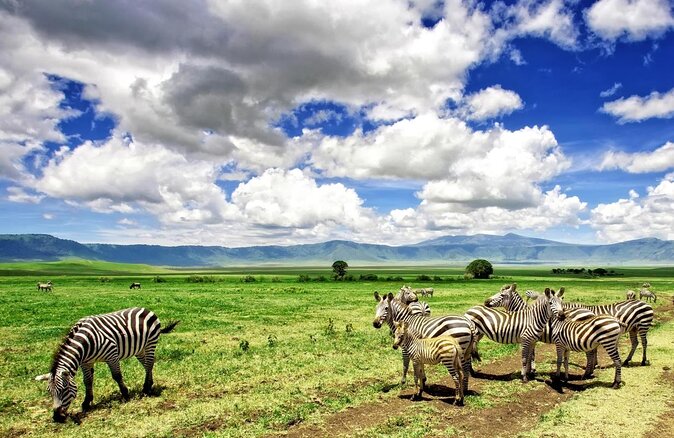
- Tarangire begins the safari with elephant herds, river wildlife, and broad open views.
- Lake Manyara adds birds, baboons, hippos, buffaloes, and a chance at tree-climbing lions.
- Ngorongoro Crater offers the strongest Big Five opportunity of the four days.
- A maximum of seven people keeps the vehicle smaller and the experience more personal.
- Public campsites and tent sleeping keep the price down, but comfort is basic.
- The $1,320 price includes transport, park costs, a cook, and 10 included meals.
What this $1,320 safari really gives you
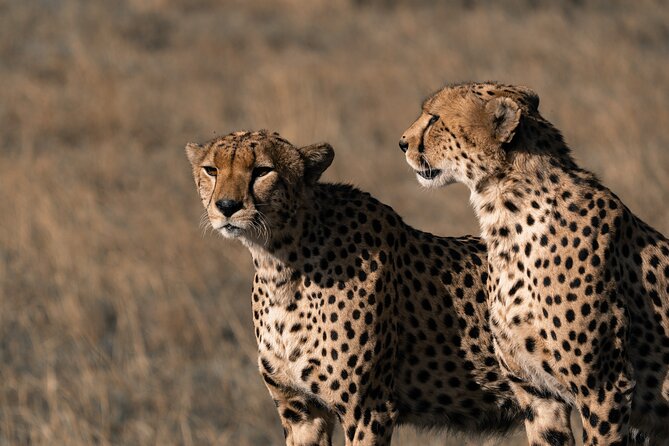
At $1,320 per person, this is not a bare-bones ride through the parks. Your price covers a 4×4 safari vehicle, park and tax fees, camping as described, an English-speaking safari cook, WiFi on board, three breakfasts, four lunches, and three dinners.
That package matters in Tanzania. Park fees and transport can quickly make a self-planned safari expensive, and you would still need to arrange cooking equipment, food, camping, and a driver. Here, those chores are bundled into one four-day plan.
The value depends on your idea of comfort. You sleep in tents at public campsites, not private lodges. You also spend much of the day on the road or out on game drives. I would choose this trip for access to major parks and practical organization, not for polished accommodation or slow mornings every day.
The small group limit of seven is a real plus. You are less likely to feel packed into a large vehicle, and it should be easier to ask the guide questions or get help adjusting a meal. Past trips have included solo travelers, couples, and groups of friends, but the exact makeup of your group can vary.
Other ways to sleep out on safari from Moshi:
- 5 Days Camping Tarangire, Serengeti & Ngorongoro crater & Visiting Maasai
★ 5.0 · 58 reviews - 4 Days Group Joining Camping Safari to Tarangire Serengeti Ngorongoro Crater
★ 5.0 · 50 reviews - Tanzania Luxury Safari
★ 5.0 · 48 reviews
Day 1: Tarangire and the first elephant sightings
Your safari starts with a short briefing before you head southwest toward Tarangire National Park. The drive introduces you to northern Tanzania, then the scenery changes as you enter a park known for grassland, acacia woodland, and forest.
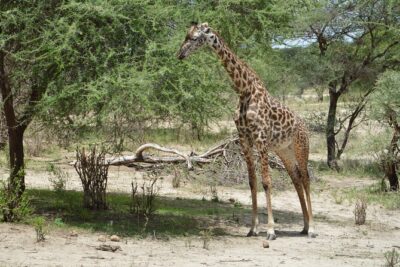
Tarangire is a strong opening park because it can deliver the classic safari feeling quickly. Huge elephant herds gather near the river and swamps, and you might also see buffaloes, giraffes, kudus, and a long list of smaller animals and birds. Yellow-breasted lovebirds are among the birdlife noted here, while lions, leopards, and hyenas are possible predators.
The full stop is listed at about eight hours. That does not mean eight hours of nonstop animal viewing. Your day includes the approach, the game drive, pauses, and the move to the campsite in the late afternoon. Still, it gives you a substantial first look at the park.
I would keep your expectations sensible. Tarangire is especially good for elephants, but no safari can promise a specific animal or sighting. Leopards and wild dogs are less certain, and wild dogs are described as rare in this area. Your guide’s ability to read animal behavior and communicate with other vehicles will matter.
You spend the night in a tent at a campsite inside the park. This is one of the more memorable parts of a budget safari, since you remain close to the sounds of the bush rather than returning to a town hotel. It is also the point where you discover whether camping suits you. Bring patience, a warm layer, and a willingness to accept simple facilities.
Day 2: Lake Manyara beneath the Rift Valley Escarpment
After breakfast, you leave Tarangire and pass through Mto wa Mbu on the way to Lake Manyara National Park. The park stretches along the base of the Rift Valley Escarpment, so the drive offers a change in scenery as well as a new wildlife setting.
Lake Manyara is smaller than some of Tanzania’s better-known parks, but it packs several different habitats into a short visit. The shallow alkaline lake draws large numbers of birds, including flamingos when conditions are right. Around the water and forest you might find buffaloes, elephants, hippos, giraffes, baboons, and monkeys.
The park became famous for lions that climb trees. Seeing one lounging above the ground is never guaranteed, but it is one of the most distinctive possibilities on this day. Your guide may also point out birds and smaller animals that are easy to miss if you focus only on the Big Five.
The game drive is listed at about six hours. Compared with the longer first day, this gives the route a useful change of pace, though the transfer from Tarangire still takes time. You should not think of Lake Manyara as a quick roadside stop. It is a proper park visit, with different vegetation and animal behavior from Tarangire.
This is also a day when the vehicle matters. Dusty roads and long periods of sitting can be tiring, so the included 4×4 is more important than a luxury extra. WiFi on board is listed as included, but I would treat it as a convenience rather than a reason to expect a strong signal everywhere.
Day 3: The Ngorongoro Crater game drive
Day three starts early. After breakfast at the campsite, you head down the steep trail into Ngorongoro Crater for the most concentrated wildlife viewing of the trip.
The crater is a huge natural enclosure of grass plains, acacia forests, and water sources. Its setting gives you a good chance to see many East African savannah species in a limited area. In a few hours, you might encounter lion, elephant, buffalo, rhino, and leopard, along with eland, mountain reedbucks, and hyenas.
This is the day with the best chance of seeing the Big Five, but might is the important word. Wildlife remains wild, and leopards in particular are never a sure thing. A guide who knows the crater and takes time to explain what you are seeing can make the difference between simply collecting sightings and understanding the scene in front of you.
The itinerary allows about nine hours for the Ngorongoro Conservation Area, including the descent, game drive, picnic lunch, and exit. It is a long day, and the early start may be tough if you have not slept well in a tent. The reward is a full wildlife day in one of Tanzania’s most remarkable settings.
You eat lunch inside the crater, then travel to Mto wa Mbu for the night. The campsite there gives you a change from the previous night inside Tarangire, but it remains basic tent accommodation. After a demanding game drive, do not expect a leisurely lodge evening with a long list of facilities.
Other park itineraries that start in Moshi:
- Safari Serengeti And Ngorongoro
★ 5.0 · 288 reviews - Big Five Safari In Tanzania
★ 5.0 · 99 reviews - Unforgettable Tanzania Safari And Zanzibar Beach
★ 5.0 · 97 reviews - 8-Day Essence of Tanzania Safari – Luxury
★ 5.0 · 72 reviews
Day 4: Mto wa Mbu to Arusha
The final morning is deliberately easier. After breakfast, you begin the journey back to Arusha, arriving around midday. You can be dropped in the city center or at the airport.
The listed duration is about four hours, so this is mainly a return transfer rather than another wildlife stop. That makes the tour easier to fit around onward plans, though you should avoid booking a tight flight connection without confirming the exact timing with the operator.
The end point also deserves attention. The meeting information lists Kilimanjaro Airport, while the return options include Arusha city center or the airport. Since airport names and road distances can cause confusion in this region, confirm where you will be collected and where you will finish before paying for additional transport.
Camping, meals, and daily comfort
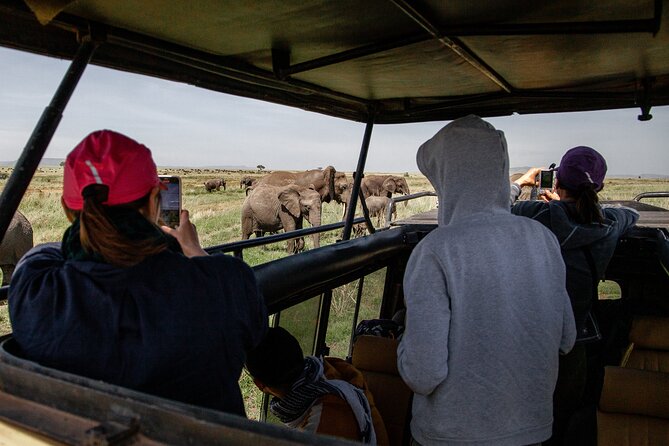
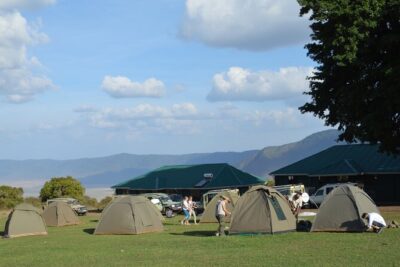
Camping is central to the value of this safari. You sleep in tents at public campsites, often under a wide night sky and close to the natural sounds of the parks. For me, that is a genuine part of the experience, not just a cheaper substitute for a lodge.
The tradeoff is clear. Public campsites can be less private and less comfortable than tented camps or lodges. The supplied information does not promise private bathrooms, hot showers, or upgraded bedding, so you should not assume those features.
Meals are handled by an English-speaking safari cook. Breakfast, lunch, and dinner are included according to the schedule, with four lunches covering the final return day as well. This is useful because you are not buying food at every stop, and it keeps the group moving during game-drive days.
One useful lesson from earlier trips is to speak up quickly if a meal does not suit you. The operator has adjusted lunch arrangements when needed. That does not mean every dietary request is automatically covered, so tell the company about food needs before departure.
Drinks are not included. Alcoholic drinks, soft drinks, souvenirs, personal spending, insurance, visas, flights, and optional activities are all extra. Carry money for those items, but remember that park costs and core meals are already built into the price.
The guides make a bigger difference than the brochure
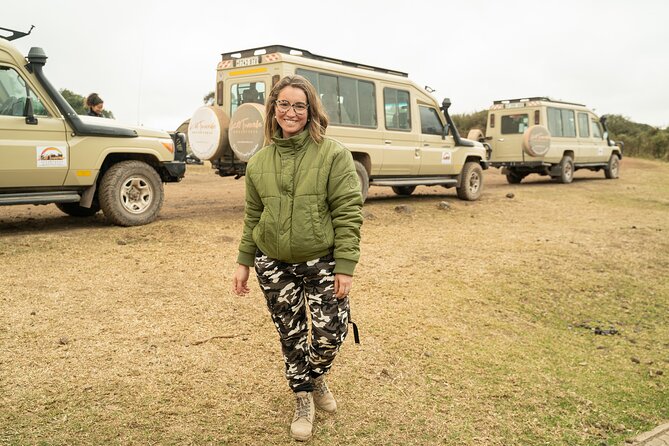
On a safari, the driver-guide is not just a person behind the wheel. Your guide decides how long to watch an animal, explains tracks and behavior, positions the vehicle, and helps you make sense of a crowded sighting.
The names connected with this operator include Charles, Oredi, Noël, Frank, Emmanuel, and Emmanuelle. Charles is also described as the director and as someone who handles planning and communication. Emmanuel and Emmanuelle received particularly warm praise for competence and wildlife interpretation, while Frank and Oredi were singled out for making four-day trips enjoyable.
You cannot assume any one of these people will lead your departure unless the company confirms it. Still, the repeated attention to guide professionalism is encouraging. I would ask for the guide’s name before the trip and make sure the language arrangement suits you. English is included, and the company has also indicated that other languages, including French, may be possible by request.
Who should book this safari
I would recommend this trip if you want the main northern Tanzania parks in a short window and prefer one organized package. It suits first-time safari visitors, couples watching their budget, and small groups that want camping rather than a lodge-heavy itinerary.
It is also a good fit if you care more about time in the parks than about hotel amenities. The route gives you elephants at Tarangire, wetland and forest wildlife at Manyara, and the strongest Big Five opportunity at Ngorongoro.
I would hesitate if you need a slow schedule, private accommodation, or guaranteed animal sightings. The four days are full, and the move between parks means some time in the vehicle. Families and older visitors should think honestly about early starts, long drives, and tent camping before booking.
The price includes a lot, but it does not include flights, visas, insurance, drinks, tips, or personal purchases. Add those costs to your budget, and set aside money for tipping the guide and cook if their service is good.
Practical details before you go
Pickup is offered, and the tour has a mobile ticket. Confirmation is provided at booking, and the experience operates daily from 7:00 AM to 11:30 PM according to the supplied operating information.
Most people can participate, but this is an active safari with uneven conditions, long vehicle days, and camping. The maximum group size is seven, which should make the vehicle more manageable than a large coach-style tour.
Free cancellation is available if you cancel at least 24 hours before the start time. Changes or cancellations inside that 24-hour window are not accepted for a refund, and the cut-off follows local time.
Should you book it?
Book this four-day Tanzania safari if you want a well-organized budget route through three major wildlife areas, and if sleeping in public campsites sounds like part of the adventure rather than a hardship. The combination of Tarangire, Lake Manyara, and Ngorongoro gives you varied scenery and strong wildlife potential without requiring a longer itinerary.
I would skip it if you want lodge luxury or a relaxed pace. Before booking, confirm your pickup location, final drop-off, language needs, dietary requirements, and the exact guide assigned. With those points clear, the $1,320 package offers a practical way to experience northern Tanzania with transport, food, park fees, and a small group already arranged.
FAQ
How long is the Tanzania budget safari?
The experience lasts approximately four days. The listed daily durations are about eight hours on day one, six hours on day two, nine hours on day three, and four hours on the final return day.
Which parks and areas does the safari visit?
The route includes Tarangire National Park, Lake Manyara National Park, the Ngorongoro Conservation Area and Crater, and Mto wa Mbu on the return route.
What accommodation is included?
The safari includes camping according to the itinerary, with nights in tents at public campsites. The provided information does not specify private bathrooms or lodge accommodation.
Are meals included?
Yes. The package includes three breakfasts, four lunches, and three dinners. An English-speaking safari cook prepares the included meals.
What is not included in the price?
Flights, optional activities, alcoholic and soft drinks, visa fees, tips, personal spending, souvenirs, and travel insurance are not included.
Where does the safari start and finish?
The meeting information lists Kilimanjaro Airport as the starting point. On day four, drop-off is available in Arusha city center or at the airport.
More camping and lodge safaris from Moshi
- 4 days adventure camping safari
★ 5.0 · 44 reviews - 6 Days Tanzania Budget Camping Safari with Migration
★ 5.0 · 31 reviews - 5 days Tanzania Camping Safari
★ 5.0 · 29 reviews - 6 Days: Classic Camping( Tarangire, Manyara, Serengeti And Ngorongoro).
★ 5.0 · 26 reviews
More safaris from Moshi
- Great Migration Safari In Tanzania
★ 5.0 · 71 reviews - 6 Days 5 Night Safari
★ 5.0 · 57 reviews - 7-Day Magical Tanzania Safari -Premium High End Package
★ 5.0 · 53 reviews - 4-day Tanzania Safari
★ 5.0 · 53 reviews
Just added in Moshi
- Kilimanjaro Airport Private Transfer from/to Moshi★ 5.0 · 14 reviews
- 6 Days Machame route Kilimanjaro climbing★ 5.0 · 22 reviews
- 7 Days Highlight of Tanzania Mid-Range Standard★ 5.0 · 22 reviews
- 4 Day Mid-range Serengeti Safari★ 5.0 · 22 reviews
- Kilimanjaro Climbing 5 days Marangu route★ 5.0 · 22 reviews
- 6-Day Kilimanjaro Climbing Via Machame Route★ 5.0 · 23 reviews
- 9-Day Enchanting Tanzania Safari -High End All Inclusive★ 5.0 · 27 reviews
- Kilimanjaro Trekking 7Days 6Night Lemosho Route★ 5.0 · 23 reviews
Camping & Lodge Safaris, compared.
3 Days Serengeti & Ngorongoro Group Camping Safari
Read our review →
5 Days Best of Tanzania Luxury Safari Northern Circuit
Read our review →
2 Days Tarangire and Ngorongoro Group Camping Safari
Read our review →
5-Day private Camping Safari Tour in Tanzania
Read our review →
5 Days Tanzania Group Joining Safari, Tarangire/Serengeti/Ngorongoro Crater
Read our review →Browse the lists this tour appears in