
Reviewed · NGORONGORO CRATER TOURS
Cycling from Kilimanjaro to Ngorongoro Crater
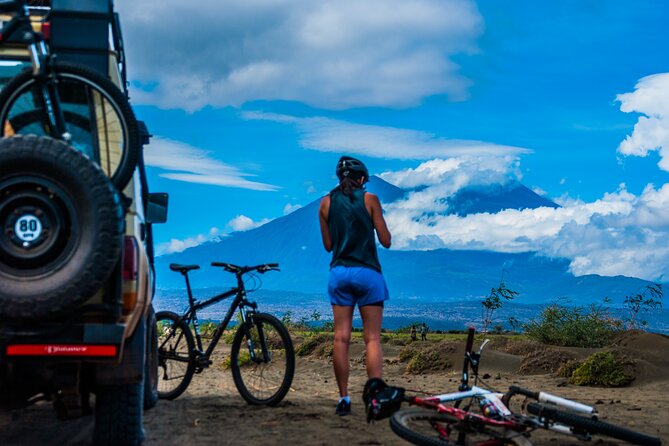
From the slopes of Kilimanjaro to the rim of Ngorongoro Crater, this is one of Tanzania’s most unusual overland journeys. You pedal through Chagga villages, coffee and banana country, Maasai plains, wildlife routes and the Great Rift Valley instead of watching the scenery slide past a vehicle window.
I like the changing scenery and the close contact with everyday life along the road. I also like the practical setup: a support vehicle, meals, lodging and guides including Hilary, Goodluck and Joseph. The main catch is the physical demand, especially on the longest day and the climb toward the Ngorongoro area. The listing also gives mixed information about insurance, so confirm exactly what is covered.
Key points before you book
- Six days from Kilimanjaro to Ngorongoro: The route links several of northern Tanzania’s best-known areas in one cycling trip.
- A real mix of roads: Expect tarmac, dusty gravel, small climbs, rolling sections and the steep ascent from Lake Manyara toward the Rift Valley escarpment.
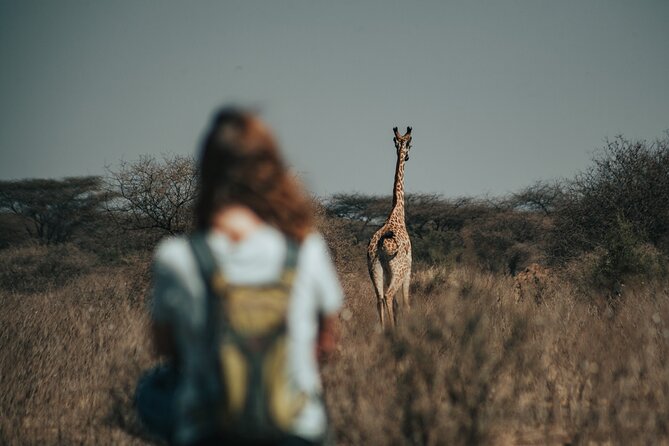
- Wildlife country: You pass near Tarangire, Lake Manyara and Ngorongoro, with possible animal sightings along the route and an optional game drive on day six.
- Strong cultural contact: Chagga villages, Maasai settlements and ordinary Tanzanian communities are part of the journey, not just scenery viewed from a safari vehicle.
- Support matters: A support vehicle follows the ride, while guides can adjust the pace and daily effort for the group.
- Good value for a full package: At $2,820.52 per person, the price includes transport, lodging and meals, but you should clarify insurance and the final transfer details.
Why this route is different from a standard northern Tanzania safari
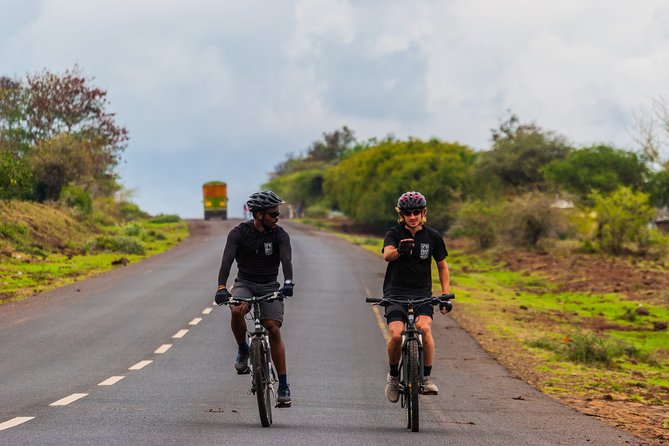
Most visitors see the northern circuit from a safari vehicle. This trip asks you to earn the views by bicycle. That changes the pace and the way you experience the country.
You have time to notice banana gardens, roadside shops, changing soil, village life and the shift from wet mountain country to open Maasai plains. You also have more contact with people along the road. That does not mean the ride is easy. It means the distance between you and the place is smaller.
The route begins at One Bike Shop on Moshi Mailimoja Road at 7:00 a.m. From there, the journey heads west around Kilimanjaro before turning toward Arusha, Tarangire, Lake Manyara and Ngorongoro. It is a private activity, so only your group participates. That is useful if you want the pace adapted to your ability.
The experience has earned a five-star rating from 10 published ratings, with every rating recommending it. The strongest praise centers on safety, planning, friendly staff, wildlife viewing and the way the team adjusts the ride. One first-time cycling tourist described each day as difficult but achievable. That is a fair way to think about the trip.
Other routes up the mountain from Moshi:
- Kilimanjaro climb by Lemosho Route (7-day)
★ 5.0 · 651 reviews - Kilimanjaro climb, Machame Route (7-day)
★ 5.0 · 262 reviews - Kilimanjaro Climbing Lemosho Route 8 Days.
★ 5.0 · 186 reviews
Day 1: From Kilimanjaro foothills to Ngabobo
The opening ride gives you the clearest change in scenery. You leave the bike shop and pass through Chagga villages, banana plantations, coffee-growing areas and green forest on the western side of Kilimanjaro.
The road surface changes under your wheels. Some sections are paved, while others use rough or dusty gravel. You should expect small uphill and downhill sections rather than one long mountain climb. The early part feels more settled and cultivated, then the land opens up as you move west.
That change brings you into Maasai country. The vegetation becomes thinner, the views widen and the sense of place shifts quickly. You may also cross routes used by wildlife, so your guide’s local knowledge and the support vehicle are important here.
The day ends in Ngabobo village. This is a good first night because you have moved from mountain agriculture into a much drier setting without trying to cover the hardest distance at the start.
The drawback is simple: gravel riding can be tiring, especially if you are new to cycling tours. Ask before departure what bike setup is provided and how the support vehicle handles any section you cannot comfortably ride.
Day 2: Dusty plains and the road toward Arusha
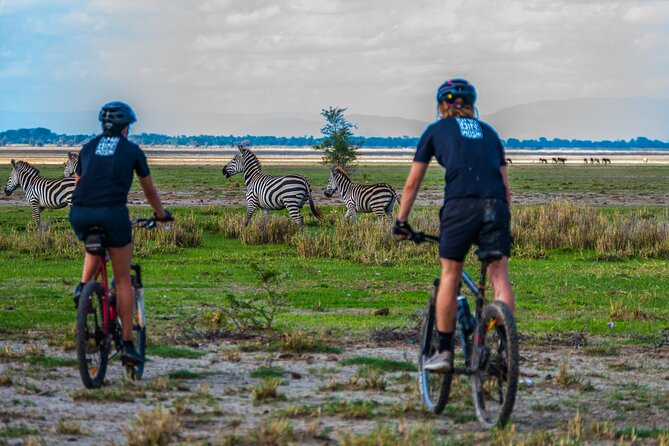
Day two runs through the Ngasurai open plains, an area used by migrating wildlife. The route is associated with elephants moving from Amboseli National Park in Kenya, so this is one of the days when the bicycle route itself becomes part of the wildlife story.
The road is long and mostly dusty or gravel-covered, but there are no major climbs. That makes the day less steep than day five, though the surface and distance can still wear you down. Bring patience. A steady pace matters more than speed here.
As you reach the main paved road toward Arusha, cycling becomes easier. You pass through several villages with Mount Meru visible in the distance. The mountain provides a strong visual marker as you approach the city.
You spend the night at a lodge in Arusha. That location breaks up the route well. It gives you a proper stop after the rougher plains and places you for the longer ride on day three.
If you are concerned about your fitness, this is a useful day to discuss pace with the guides. Previous groups have included people over 55 who were reasonably fit, and the guides adjusted each day around ability and requests. That flexibility is one of the trip’s practical strengths.
Day 3: The longest ride, mostly on tarmac
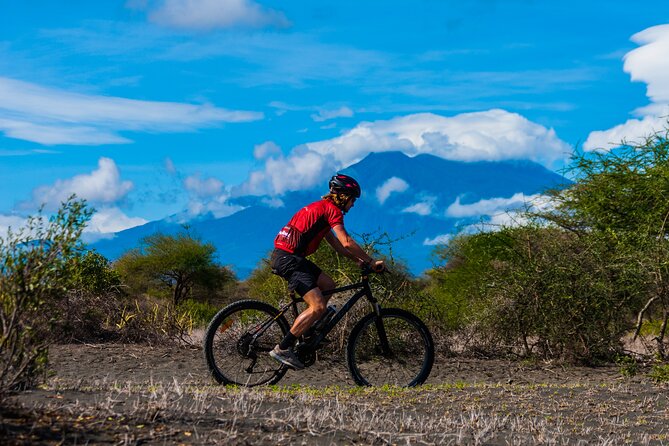
Day three is the longest cycling day, but the road surface makes it more manageable. Most of the route uses paved, rolling road, with Tanzanian villages providing the visual interest along the way.
You pass colorful communities and see daily life at close range. This is not a sightseeing stop with a fixed schedule. The road itself is the experience. You may find the repeated small rises easier than the loose gravel of the earlier days, but the length still calls for good pacing.
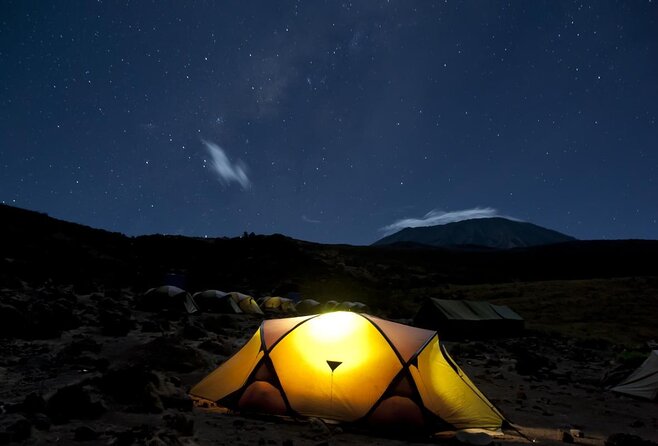
The day finishes near Tarangire National Park, known for its large elephant population. You overnight at Roika Tented Lodge, where the plan allows time to rest.
This is also the point when the trip begins to feel more clearly like a safari journey. You are still cycling, but you are now near one of the region’s major wildlife areas. If you want a full game drive, ask how it fits into the six-day schedule, since the stated plan places the optional drive on day six rather than here.
The main consideration is fatigue. A long paved ride can look easy on paper, yet several hours in the saddle may be more demanding than a shorter rough-road day. The support vehicle gives you an important safety net, but you should still arrive with regular cycling practice.
Same base, a different kind of day out:
- Safari Serengeti And Ngorongoro
★ 5.0 · 288 reviews - Climbing Kilimanjaro – Machame Route
★ 5.0 · 170 reviews - Climbing Kilimanjaro through 7 days Machame Route
★ 5.0 · 151 reviews - Kilimanjaro climb, Lemosho Route (8-day)
★ 5.0 · 148 reviews
Day 4: Tarangire corridors, Maasai settlements and the Rift Valley
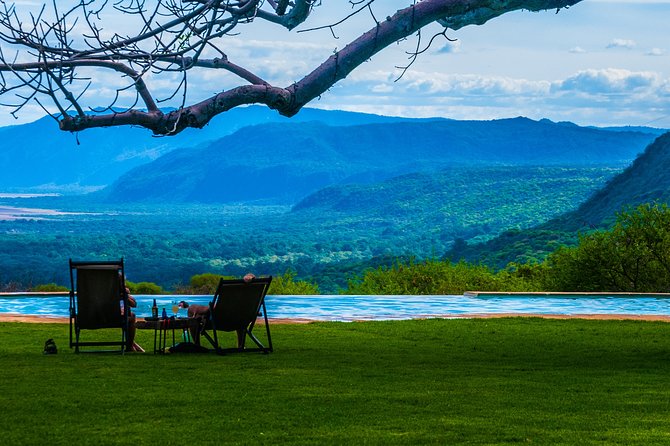
Day four offers some of the most varied scenery on the route. You ride through wildlife corridors between Tarangire and Lake Manyara, pass Maasai settlements and follow the edge of the Great Rift Valley.
Most of the ride uses tarmac. Only the final few kilometers are on dirt roads as you approach Migombani Camp. This makes the day a welcome change after the longer ride, though the last rough section may feel more tiring if your legs are already heavy.
The Rift Valley views are the prize. From the bicycle, you get a slower approach to the escarpment and more time to watch the country change around you. Maasai settlements add a cultural element that a standard transfer can easily reduce to a quick roadside glimpse.
You spend the night at Migombani Camp. The camp setting helps mark the shift toward Lake Manyara and the final push to Ngorongoro.
This day is also a reminder that the trip is not only about reaching the crater. The route connects communities and protected areas that are often treated as separate stops. You see how wildlife routes, farming areas and roads sit close together.
Day 5: Lake Manyara, the escarpment and Ngorongoro
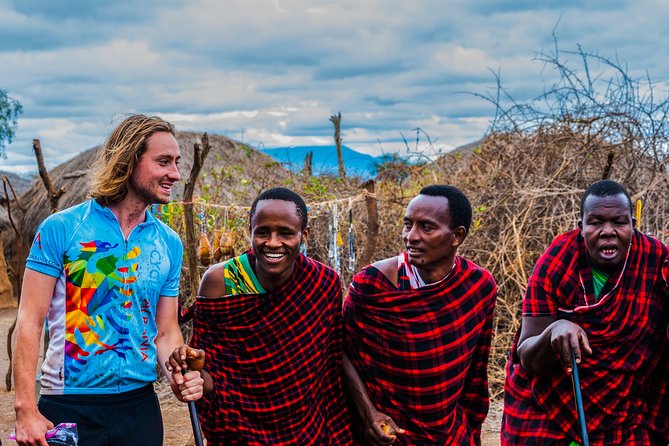
Day five is the toughest and most rewarding ride. The first major stop is the entrance to Lake Manyara National Park. From there, you climb toward the steep Great Rift Valley escarpment.
This is the section to take seriously. The route gains height, and the climb can be demanding even for a regular cyclist. The reward is a broad view over Lake Manyara and the surrounding country. Stop, drink water and enjoy it. You do not need to treat the climb as a race.
From the top, the route continues through Karatu, a colorful town, before finishing at the Ngorongoro Conservation Area gate. You are then transferred to a lodge for rest and a celebration of completing the challenge.
The day combines physical effort with a clear sense of progress. You begin near the lake, climb above it, cross through Karatu and finish at one of Tanzania’s best-known protected areas. The support vehicle is especially valuable here, since it gives the guides a way to manage the group if the climb proves too much.
The itinerary says Ngorongoro Conservation Area gate rather than the crater floor itself. That distinction matters. This cycling route brings you to the conservation area, while a game drive can be arranged separately on day six. Confirm the exact vehicle transfer, lodge location and safari plan before paying, since those details affect both time and cost.
Day 6: Rest, departure and an optional crater safari
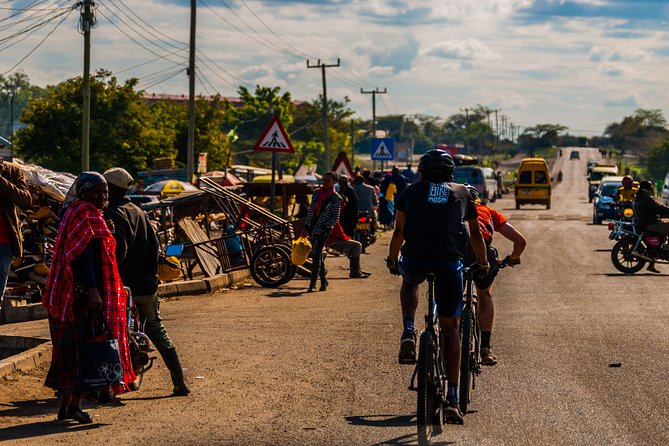
The final day is designed as a recovery and departure day. You relax at the lodge while waiting for transport to Kilimanjaro Airport or another departure point.
You can also arrange a game drive on this day. That option may be the best way to complete the trip if you want to see Ngorongoro Crater after cycling there. A game drive adds a different kind of experience, but it is not something you should assume is included in the listed price.
The provided details say the activity ends back at the meeting point, while the day six plan describes a transfer to the airport or another departure point. Those statements do not fully match. Ask the operator to confirm where the cycling portion ends and whether the return transfer is included.
What the $2,820.52 price covers
At $2,820.52 per person, this is not a cheap cycling holiday. It is also more than a basic bike rental or point-to-point ride. The value comes from the number of moving parts handled for you.
The package includes:
- Supporting vehicle
- Six lunches
- Six dinners
- Five breakfasts
- Accommodation during the route
- Transportation connected with the tour
- Cycling insurance, according to the tour highlights
There is an important inconsistency: the included section says insurance is not included, while the tour highlights say travel insurance is provided for the cycling journey. Get this in writing before booking. Also ask what the policy covers, since cycling accident cover and full medical or trip cancellation cover are not always the same thing.
Tips are not included. A possible game drive on the final day is also not clearly included. Budget for both if you want the full experience.
Compared with arranging lodging, meals, a support vehicle, local guides and transfers yourself, the price may be reasonable for a private six-day route. You are paying for logistics as well as pedaling. The value is strongest if you want a carefully linked journey and do not want to organize each overnight stop independently.
Guides, group size and the support vehicle
The named guides connected with this experience include Hilary, Goodluck and Joseph. The most useful quality to look for is not just cycling ability. You need guides who can explain local culture and wildlife, manage road conditions and adjust the day when the group is tired.
The tour is private, so your group controls the pace more than it would on a large departure. That is a major advantage for couples, families or friends with different cycling speeds.
The support vehicle also changes the risk level. You are not left to solve every mechanical, physical or weather problem alone. Still, support does not remove the need for reasonable fitness. The published guidance calls for a moderate fitness level, and the route includes long days, rough roads and a steep climb.
You should ask whether helmets, water, spare parts and luggage transport are provided. Those details are not stated, so do not assume they are part of the package.
Who should book this ride?
I would recommend it to cyclists who want more than a safari circuit and who enjoy seeing a country at road speed. It suits people who can manage several consecutive days of riding and accept that some days will be dusty, long or uncomfortable.
It also works well for a private group that wants flexibility. The guide team has adjusted the schedule for different abilities, and the route can offer a satisfying first cycling tour if you are fit and prepared.
I would not choose it if your main goal is a relaxed holiday with only short rides. The longest day, the gravel sections and the Rift Valley climb are genuine physical tests. If you want the wildlife without the effort, a vehicle-based safari is the better match.
For first-time cycling tourists, build up with regular rides before arriving. Focus on several hours in the saddle, not only short fast rides. You will enjoy the villages, views and wildlife much more if your legs are ready for day four and day five.
Booking details worth confirming
Confirmation is provided at booking, and free cancellation is available if you cancel at least 24 hours before the 7:00 a.m. start time. Changes made inside that 24-hour window are not accepted, and poor weather or failure to reach the minimum number of participants can lead to a new date or a full refund.
Before booking, I would confirm four points: the exact insurance terms, the final transfer arrangements, the cost and timing of a day six game drive, and what cycling equipment is supplied. These questions are especially important because the package information is not fully consistent on insurance and the end point.
Should you book Cycling from Kilimanjaro to Ngorongoro?
Book it if you want Tanzania to unfold through effort, not just through a vehicle window. The route gives you Kilimanjaro foothills, Maasai country, Arusha, Tarangire, Lake Manyara and Ngorongoro in one connected trip, with a support vehicle and private guiding to make the challenge manageable.
The strongest reasons to go are the changing roads, the contact with villages and the chance to combine cycling with wildlife country. The main reasons to hesitate are the price, the long riding days and the steep final climb.
My advice is to treat this as a serious active holiday with a safari finish, not as a gentle sightseeing ride. Confirm the insurance and transfer details first. If the physical level suits you, this is a memorable way to connect northern Tanzania’s major sights.
FAQ
Where does the cycling tour start?
The tour starts at One Bike Shop on Moshi Mailimoja Road in Tanzania. The stated start time is 7:00 a.m.
How long does the experience last?
The cycling journey lasts approximately six days. Day six is mainly for rest, departure transfer and an optional game drive.
Is the tour private?
Yes. Only your group participates in this private activity.
What meals are included?
The package lists six lunches, six dinners and five breakfasts.
Is a support vehicle provided?
Yes. A supporting vehicle is included in the tour details.
Can I arrange a game drive?
Yes. A game drive can be arranged on the final day, although the available information does not state that it is included in the listed price.
More bike and quad tours around Moshi
- 1-Day Moshi Villages bike tour
★ 5.0 · 59 reviews - Chagga Villages in Mount Kilimanjaro Cycling Day Trip
★ 5.0 · 42 reviews - Rau Forest Bike tour
★ 5.0 · 12 reviews - Cycling through the TPC plantations
★ 5.0 · 10 reviews
More Ngorongoro trips from Moshi
- 5 Days Camping Tarangire, Serengeti & Ngorongoro crater & Visiting Maasai
★ 5.0 · 58 reviews - 4 Days Group Joining Camping Safari to Tarangire Serengeti Ngorongoro Crater
★ 5.0 · 50 reviews - 3-Day Ngorongoro Crater Manyara and Tarangire Safari from Arusha
★ 5.0 · 49 reviews - 4 Day Private Tour Throughout Tarangire, Serengeti and Ngorongoro
★ 5.0 · 42 reviews
Just added in Moshi
- Wildlife Extravaganza: Manyara, Tarangire & Ngorongoro in 3 Days★ 5.0 · 3 reviews
- West Kilimanjaro cycling Adventures★ 4.5 · 8 reviews
- machame route★ 5.0 · 16 reviews
- Mt Kilimanjaro 6 days Marangu route hike★ 5.0 · 3 reviews
- Kilimanjaro Climb • Machame Route ~ 10 Day★ 5.0 · 6 reviews
- Kilimanjaro Climbing Umbwe Route★ 5.0 · 3 reviews
- 3 Days Private E-Bike Tour in West Kilimanjaro★ 5.0 · 3 reviews
- Private Cycle to Kilimanjaro Bike Park Safari★ 5.0 · 6 reviews
Ngorongoro Crater Tours, compared.
3 Days Serengeti & Ngorongoro Group Camping Safari
Read our review →
4-Day Safari from Arusha: Tarangire, Serengeti and Ngorongoro
Read our review →
2 Days Tarangire and Ngorongoro Group Camping Safari
Read our review →
3 Days Private Safari – manyara, Ngorongoro & Tarangire
Read our review →
5 Days Tanzania Group Joining Safari, Tarangire/Serengeti/Ngorongoro Crater
Read our review →
4 Days Tarangire, Serengeti and Ngorongoro Mid-Range Group Safari
Read our review →Browse the lists this tour appears in