
Reviewed · TOURS IN ARUSHA
Mama Aziz Food Court
Arusha’s Mama Aziz Food Court turns a cooking lesson into a look at everyday Tanzanian food. You begin with a city market visit, choose groceries and fruit, then return to prepare dishes with the family. I like that the food is not presented as a restaurant performance. You work with the ingredients, learn the methods, and eat what you helped make.
I also like the broad menu, from spiced tea and chapati to pilau, biriyani, ugali, grilled meat, vegetables, and coconut iftaar. The family welcome is another strong point, with time spent learning about Tanzanian culture as well as recipes. The main consideration is accessibility: the activity is not suitable for wheelchair users or people with visual impairments, and the exact cooking menu can vary.
Key points at a glance
- The market visit comes first: You help buy the groceries, spices, fruit, and other ingredients used in the lesson.
- You cook real Swahili dishes: Possible recipes include pilau, biriyani, chapati, ugali, grilled meat, coconut dishes, and chai masala.
- The meal is part of the lesson: After preparing the food, you sit down to taste the finished dishes.
- Small groups keep it personal: The maximum group size is 10 people, with instruction in English.
- Family hospitality is central: The experience includes time with Mama Aziz Homestay and a visit to the garden.
- Good value for a food-focused outing: The $25 price includes the market shopping, ingredients, fruit, cooking lesson, and meal.
Starting with a market walk in Arusha
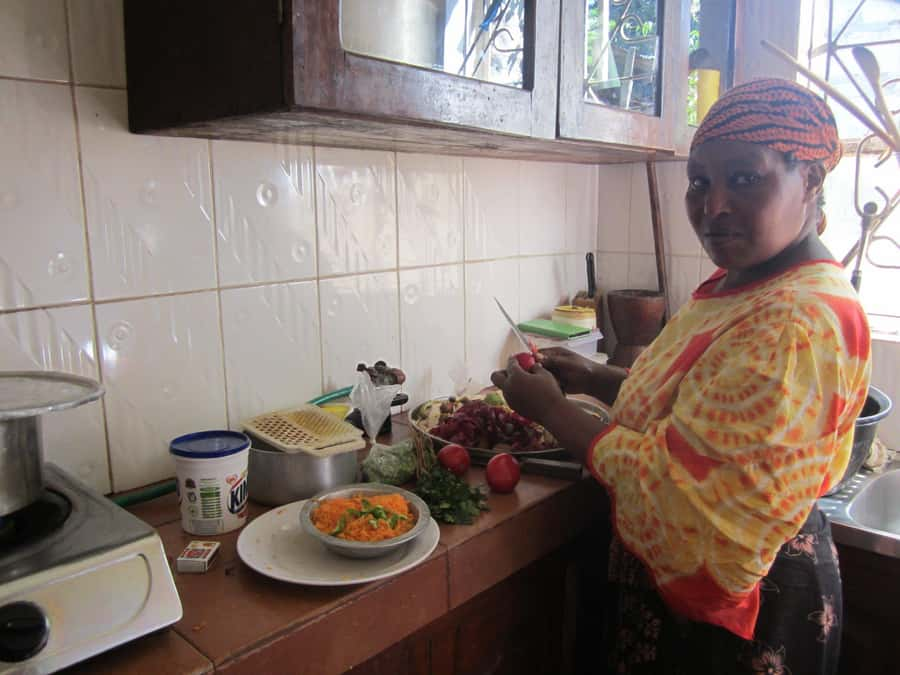
The outing begins with a city market tour, which gives the cooking lesson a useful sense of place. Instead of meeting a prepared tray of ingredients, you see what goes into the meal and help make the buying decisions. That matters in Swahili cooking, where spices, produce, and fresh staples shape the final taste.
You can expect to help buy groceries and fruit for the recipes. The ingredients listed include aromatic spices, tropical fruits, and fragrant herbs. This is a practical way to learn because you see the raw materials before they are measured, chopped, cooked, or blended into a dish.
The market portion also helps explain why food differs from one culture to another. The lesson is built around taste, but it also touches on the history and cultural influences behind Swahili food. African, Arab, Indian, and European traditions all have a part in the cuisine, and the menu reflects that mix.
Do not expect a long formal tour of Arusha’s markets. The market visit is one part of a three-hour food experience, not a dedicated market excursion. Its purpose is to connect the ingredients with the dishes you will prepare later.
A few more things to do in Arusha worth a look
- Arusha: Traditional Tanzania Cooking Class & Food Market Tour
★ 5.0 · 34 reviews - Organic Coffee Tour and Local Food Experience in Arusha
★ 5.0 · 29 reviews - Street Food and Community Walking Tour
★ 5.0 · 12 reviews
Preparing pilau, biriyani, and kachumbari
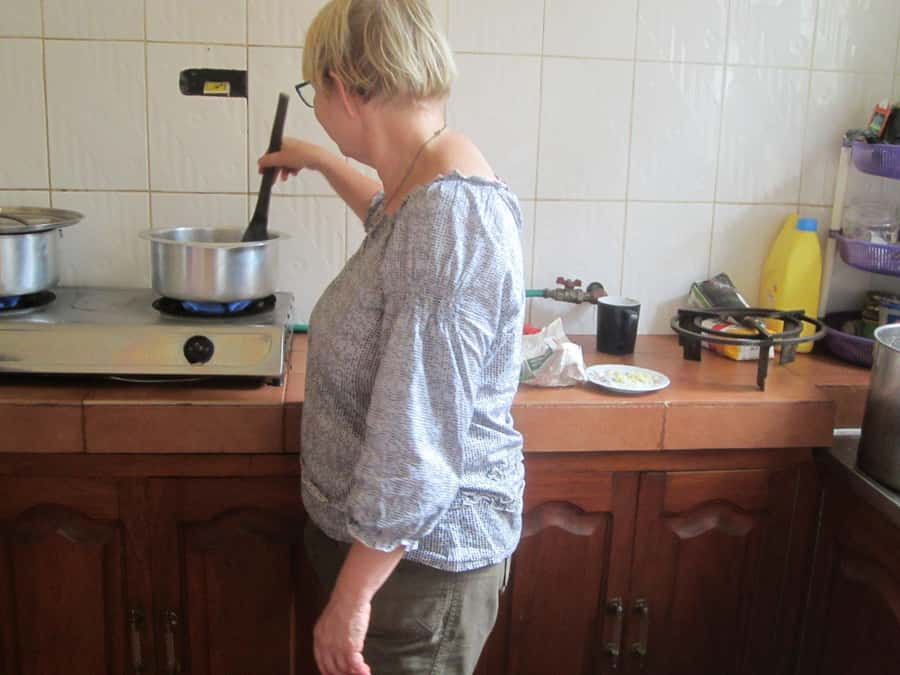
The central cooking session focuses on familiar Swahili favorites. Depending on the menu selected, you may prepare aromatic pilau or biriyani, served with kachumbari. These dishes are useful introductions to the way spices build flavor in East African cooking.
Pilau and biriyani can look similar on a menu, but the lesson gives you a chance to notice how seasoning and preparation affect the finished rice. You learn about spice combinations and cooking techniques rather than simply being handed a recipe card. That hands-on approach is the main reason to choose this activity over a standard restaurant meal.
Kachumbari adds a fresh contrast to the spiced rice. It also shows how a meal is often built from several textures and flavors rather than one main dish alone. The food list includes vegetables, herbs, and fresh fruit, so the final meal should offer more than heavy, spice-filled dishes.
You should be ready to participate. This is not a demonstration where you sit back and watch an instructor do everything. You roll up your sleeves, help prepare the food, and learn by doing. The activity is a good fit if you want cooking practice you can repeat at home, though the available information does not specify the exact recipes or amount of individual instruction.
Chapati, ugali, grilled meat, and vegetables
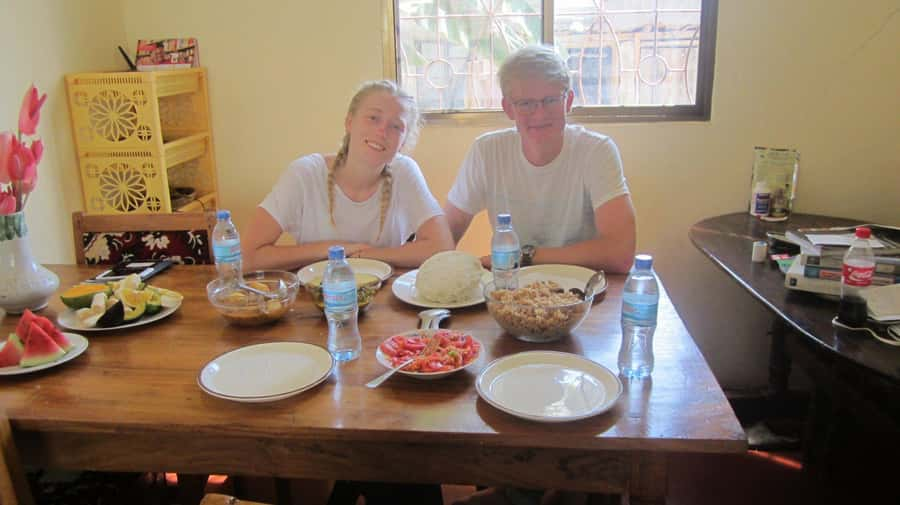
The menu reaches beyond rice. You may also work with chapati and gravy, ugali with grilled meat, and vegetables. These dishes introduce different methods and textures, making the class feel like a broad sample of Tanzanian home cooking rather than a single-recipe workshop.
Chapati requires a different kind of attention from pilau. It is a flatbread, so you are likely to focus more on dough and cooking technique than on seasoning. Served with gravy, it becomes a filling meal and a practical example of how simple ingredients can carry a dish.
Ugali offers another useful lesson. This firm staple is often eaten with meat, vegetables, or sauce, and the pairing listed here is grilled meat with vegetables. The combination gives you a chance to compare a mild staple with stronger flavors from the grill and accompanying dishes.
The description does not promise every dish at every session. The food selection is likely to depend on the chosen menu and available seasonal ingredients. If one recipe matters most to you, ask about it when booking rather than assuming the full list will appear on your table.
Learning the place of chai masala and coconut iftaar
Food here is not limited to lunch or dinner dishes. Chai masala, or spiced tea, is included among the possible preparations. It is a small but worthwhile part of the experience because it shows how spices can shape a drink as well as a meal.
The coconut iftaar selection is especially broad. It can include plantains, sweet plantains, sweet potatoes, Irish potatoes, and arrow roots. This gives you a look at how coconut and root vegetables are used together in a filling dish.
Seasonal fruit is also part of the experience. The exact selection depends on what is available, so the fruit course may change. That variation is a plus if you want food tied to the local market, but it means you should not expect a fixed menu.
The menu’s range is one of the strongest parts of the outing. In three hours, you can encounter rice, flatbread, maize-based ugali, grilled food, vegetables, tea, coconut dishes, and fruit. You will not master every part of Swahili cuisine in one lesson, but you will get a useful first taste of its range.
Same base, a different kind of day out:
- Serengeti Balloon Safari and authentic bush breakfast
★ 5.0 · 2,480 reviews - Balloon Safari & Bush Breakfast in Serengeti – Miracle Experience
★ 5.0 · 1,646 reviews - Tanzania Classic – 7 Days
★ 5.0 · 1,151 reviews - 4 Days Group Camping Safari
★ 5.0 · 1,101 reviews
Cooking with Mama Aziz Homestay
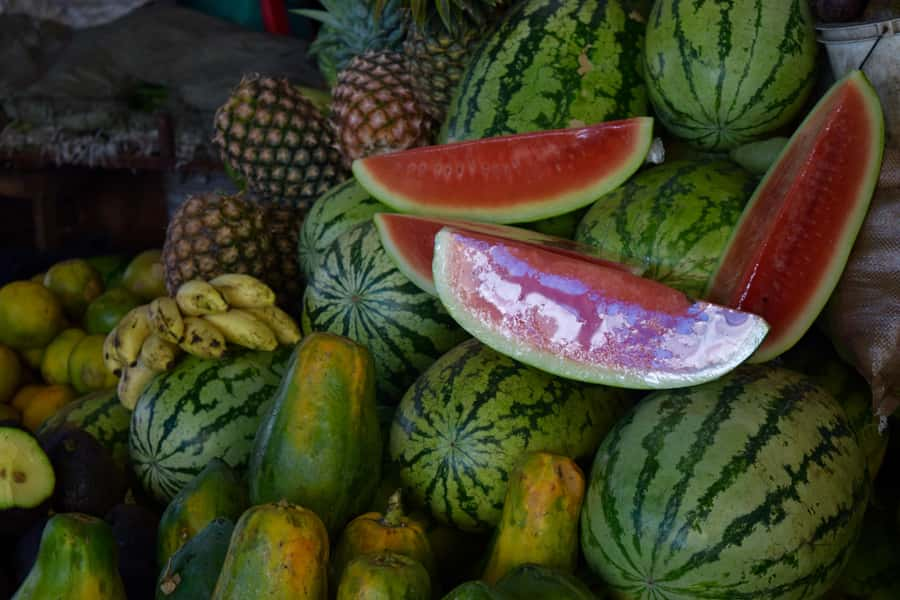
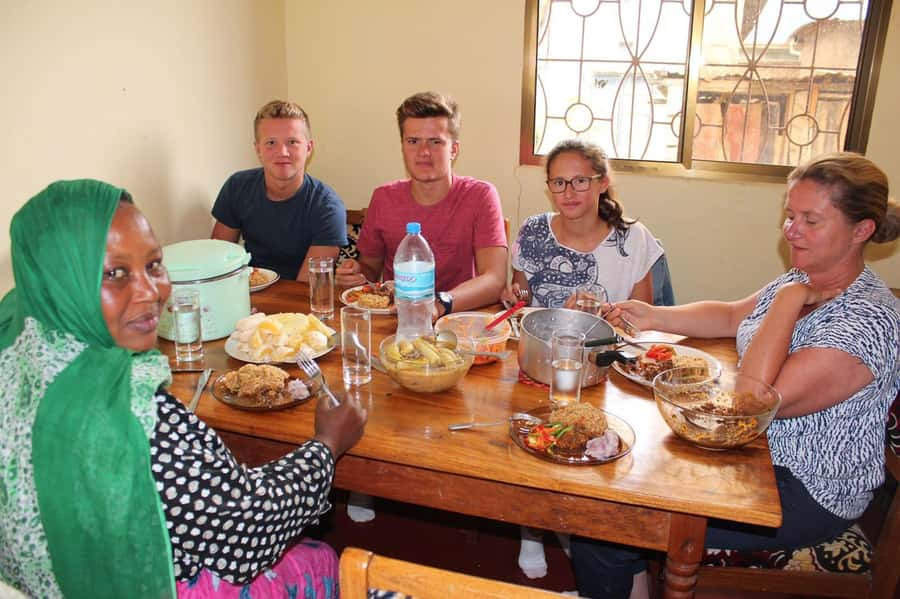
The experience is hosted by Mama Aziz Homestay, and the social side matters as much as the food. The setting is designed to connect you with the family, not just with an instructor in a commercial kitchen. You have time to ask questions, practice techniques, and learn how food fits into Tanzanian culture.
The welcome is a major strength. The family is described as warm and attentive, and the experience includes a visit to the garden. That garden stop adds another layer to the market visit. You begin by seeing ingredients for sale, then get a sense of how food connects with a home setting.
You should think of this as a cultural meal with cooking instruction, rather than a polished culinary school class. The tone is likely to be relaxed and social. That suits people who enjoy conversation and shared food, but it may not suit someone seeking precise professional training, advanced knife skills, or a formal lesson plan.
Instruction is offered in English. The group is limited to 10 participants, which is small enough to make hands-on work possible. A smaller group can also make it easier to ask about unfamiliar spices, cooking steps, and the cultural meaning of particular dishes.
What the $25 price covers
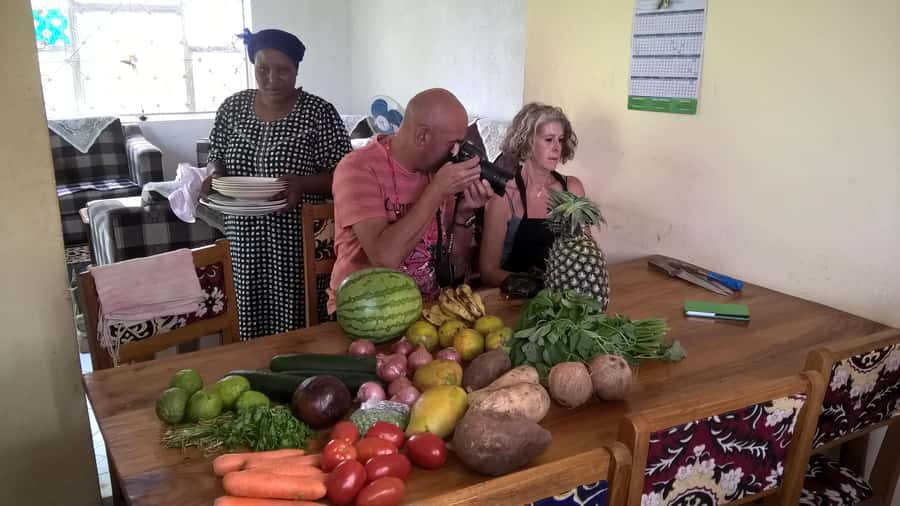
At $25 per person, this is a strong value for a three-hour activity. The fee includes the groceries and fruit, all necessary recipe ingredients, the city market tour, the cooking lesson, and the food you prepare. You are not paying only for a class. You are also covering the shopping and a hosted cultural meal.
That bundled price is useful in Arusha, where separate costs can add up quickly. You do not need to arrange a market visit, buy ingredients yourself, or find a restaurant afterward. The activity brings those pieces together in one compact outing.
The value depends on what you want from a cooking class. If you mainly want a long restaurant meal, you may find the experience too active. If you want a personal introduction to local food and a chance to take part in preparation, the price is easier to justify.
Special discounts are available for group bookings and recurring participants. The stated base price is $25 per person, but you should check the current amount for your dates and group size.
Timing, meeting point, and what to bring
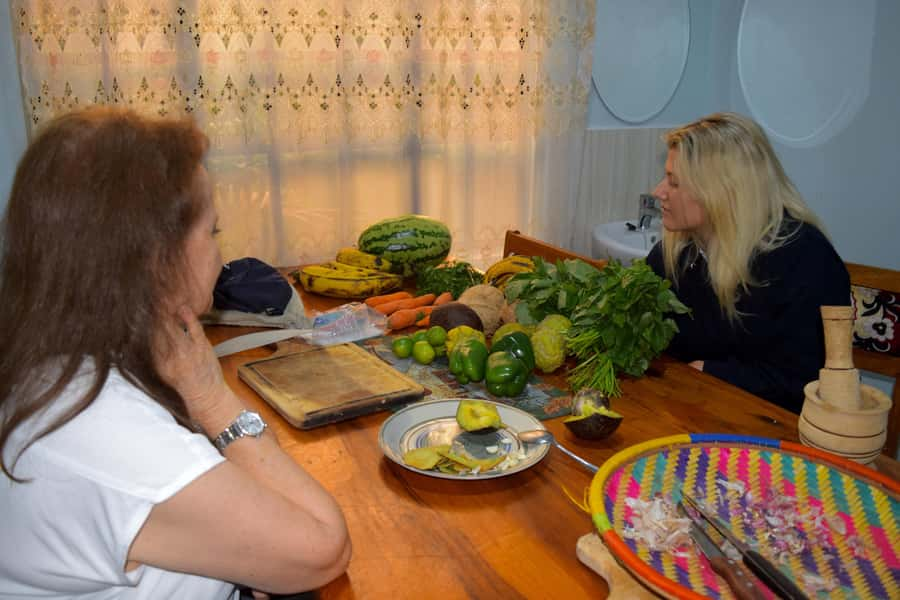
The activity lasts three hours, with starting times subject to availability. Pickup is included from a nearby restaurant at the Clock Tower roundabout, or from the museum along the monument. This arrangement is practical if you are already in central Arusha, but it is not described as hotel pickup throughout the city.
Confirm the meeting point carefully before setting out. The wording gives two central reference points rather than a full hotel transfer service. If you are staying farther away, you may need to reach the Clock Tower area or the museum yourself.
Bring a camera if you want to record the market, ingredients, garden, and finished dishes. Cash and a credit card are also listed as useful items. Wear something comfortable for kitchen work, although no specific dress code is provided.
Pets, alcohol, and drugs are not allowed. The activity is not suitable for wheelchair users or people with visual impairments. Those limits are important to consider before booking, since the market and cooking portions may require movement through spaces that are not adapted for every need.
Free cancellation is available up to 24 hours before the activity for a full refund. You can also reserve now and pay later, which helps if your Arusha schedule is still changing.
Who will enjoy this cooking lesson most
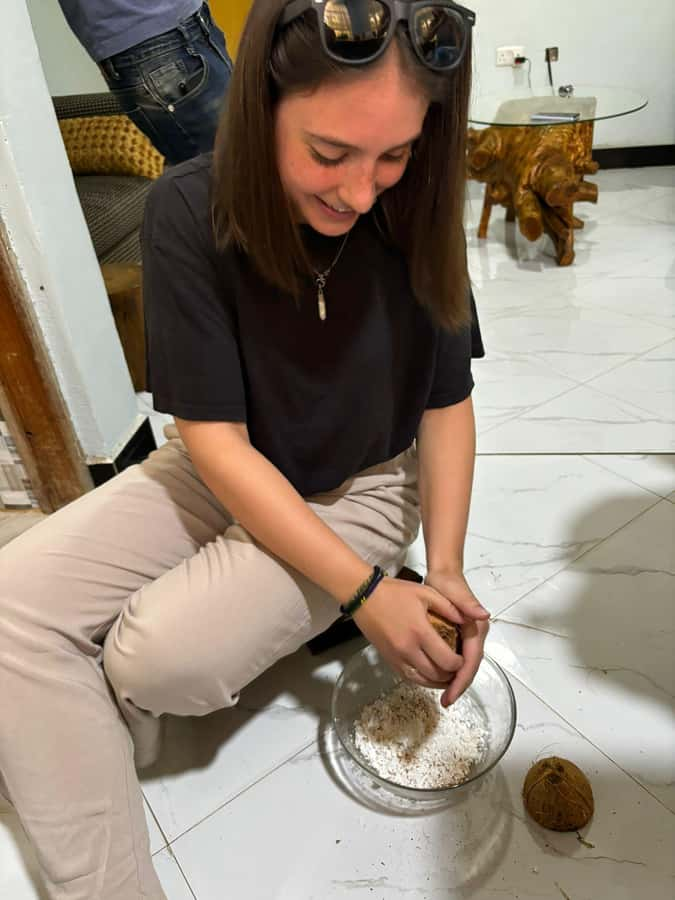
I would choose Mama Aziz Food Court if you want food to be your route into local culture. It works especially well for people who like to ask questions, handle ingredients, and share a meal with a family rather than simply watch a chef.
It is also a good choice for couples, friends, and small groups. The limit of 10 people keeps the outing from feeling like a large class, while the group setting gives the meal a social quality. Group discounts may make it even better value for a private party or family booking.
Families should consider the hands-on nature and accessibility limits before signing up. The available information does not state a minimum age, child price, or special arrangements for children, so ask before booking if you are bringing young participants.
Food lovers who already know Swahili cooking may find the class introductory rather than advanced. The strength is not technical specialization. It is the combination of market shopping, cultural context, family contact, cooking, and eating in one short session.
Should you book Mama Aziz Food Court?
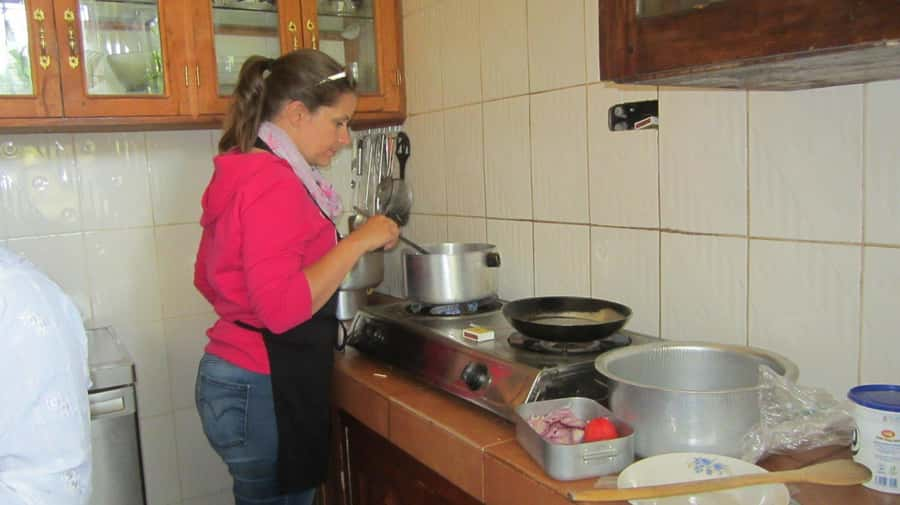
Book it if you want an affordable, personal introduction to Tanzanian food in Arusha. The best parts are the market shopping, the wide range of possible dishes, the family welcome, and the fact that you eat what you prepare. The visit to the garden adds a pleasant home-based touch.
Skip it if you need a fully fixed menu, advanced culinary instruction, wheelchair access, or a formal professional kitchen. The menu can vary, and the experience is built around participation and social contact.
For most food-focused visitors, the $25 price makes sense because it includes ingredients, fruit, market time, instruction, and a meal. Ask about the day’s menu when booking, arrive at the confirmed central pickup point, and come ready to cook rather than simply watch.
FAQ
How long does the Mama Aziz Food Court experience last?
The cooking and food experience lasts three hours. Starting times depend on availability.
How much does the activity cost?
The listed price is $25 per person. Discounts are available for group bookings and recurring participants.
What is included in the price?
The price includes the groceries and fruit, all ingredients needed for the recipes, the city market tour, and the cooking lesson.
What dishes might be prepared?
Possible dishes include biriyani, pilau with kachumbari, chai masala, ugali with grilled meat and vegetables, chapati with gravy, coconut iftaar, and seasonal fruit. The exact menu may vary.
Is the activity taught in English?
Yes. The listed instruction language is English.
Where is pickup available?
Pickup is included from a nearby restaurant at the Clock Tower roundabout or from the museum along the monument.
Can I cancel or pay later?
You can cancel up to 24 hours in advance for a full refund. Reserve now and pay later is also available.
Just added in Arusha
- 4 Days Private Midrange Lodge Safari to Serengeti & Ngorongoro★ 5.0 · 4 reviews
- Extraordinary Hot air Bolloon ride in Serengeti | BURIGI CHATO SAFARIS CO L.T.D★ 5.0 · 6 reviews
- 3 days leopard safaris★ 5.0 · 4 reviews
- 8 Days Serengeti Migration safari★ 5.0 · 11 reviews
- tarangire, ngorongoro & lake manyara park 3 days private tour★ 5.0 · 11 reviews
- Mt. Kilimanjaro: Shira plateau to Cathedral point 3872m Day hike★ 5.0 · 7 reviews
- serengeti, ngorongoro & tarangire 4 days private tour★ 5.0 · 18 reviews
- tarangire & ngorongoro 2 days tour★ 5.0 · 14 reviews
Tours in Arusha, compared.

Serengeti Balloon Safari and authentic bush breakfast
Read our review →


Materuni Waterfalls, coffee tour & Kikuletwa Hot Springs
Read our review →
3 Days Serengeti & Ngorongoro Group Camping Safari
Read our review →
7-Day Premium Luxury Tanzania Safari All-Inclusive
Read our review →
5-Day Highlights mid-Range Crater, Serengeti, Tarangire
Read our review →
Browse the lists this tour appears in