
Reviewed · MARKET & STREET FOOD TOURS
Arusha: Traditional Tanzania Cooking Class & Food Market Tour
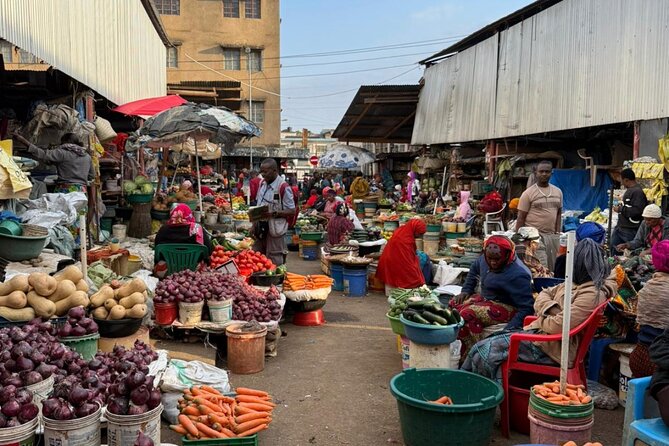
Arusha’s best food lesson may begin before you touch a cooking pot. You first walk through the central food market, learn how local ingredients are used, choose two dishes, and then ride ordinary public transport to Sanawari for a hands-on meal. I like the market-to-plate format and the chance to eat what you prepare in a real local kitchen. You are not watching a polished demonstration from a distance.
I also like the human scale of the outing. Guides such as Israel, James, Jack, Lameck, Magret, and Bariki have led sessions, and the market visit gives you time to ask questions about Tanzanian food and daily life. The main consideration is comfort: the cooking room is basic, with charcoal burners, a gas burner, low tables, tubs, and simple tools rather than a modern Western kitchen.
Key points at a glance
- Fresh shopping comes first: Begin at Arusha’s central food market, where your guide explains local produce, meats, and common ingredients.
- You choose two dishes: After learning about the available foods, you select the two Tanzanian dishes prepared during your lesson.
- Sanawari adds local flavor: The class takes place in Sanawari, reached by the kind of public transport local people commonly use.
- A real working kitchen: Expect low tables, charcoal burners, a gas burner, tubs, and basic cooking equipment.
- Lunch or dinner is included: You eat the food prepared during the class, with takeaway food sometimes available afterward.
- Pickup makes it easy: Hotel pickup and drop-off are offered near Arusha city center, and the full outing lasts about four hours.
Why this Arusha food tour feels different
Many food classes keep you in one room and hand you pre-measured ingredients. This one begins with shopping. That small change matters because food becomes connected to the people, prices, smells, and produce you see in Arusha.
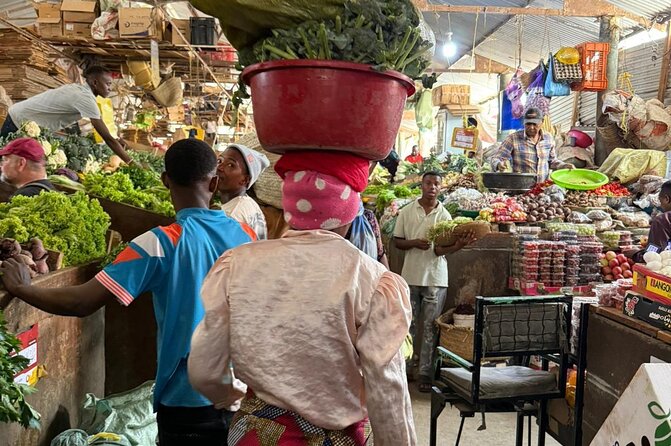
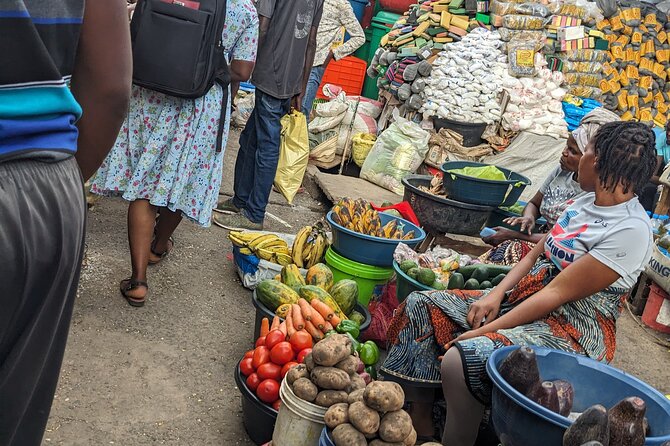
At the central market, you spend roughly 30 to 45 minutes with a guide. The guide points out local foods, explains how they are used, and helps you understand which ingredients are common in Tanzanian cooking. The market is described as mainly supplied by food from Tanzania, though some goods come from outside the country.
I like this opening because it gives you a useful frame for the cooking lesson. You are not simply told that a dish contains a certain vegetable or spice. You see the ingredient in its ordinary setting, then help buy it for your meal.
The market is also a chance to watch local life without turning the visit into a formal museum stop. Vendors and shoppers are part of the setting, and the guide helps you move through it respectfully. Bring curiosity, not a checklist. The point is to notice how food is sold and used.
Other classes where you cook in Arusha:
- NGO Lifted Strong – Traditional Tanzanian Cooking Class
★ 5.0 · 39 reviews - Zanzibar Cooking Class & Spice Tour
★ 4.5 · 77 reviews - Zanzibar: Spice Farm Tour with Traditional Cooking Lesson
★ 4.8 · 77 reviews
Walking through Arusha’s central food market
The market portion is short, but it is one of the most worthwhile parts of the day. You may see fresh produce, meat, and other local goods, with the guide explaining traditional uses and common dishes. The exact selection depends on what is available that day.
The guide plays an important role here. Israel is named as a guide on several sessions, while James, Jack, Lameck, Magret, and Bariki have also led groups. Names can change with the schedule, but the format remains the same: meet your guide at your hotel, head to the market, and receive an explanation of the food before shopping.
Do not expect a quiet specialty-food market arranged for photographs. This is a working market. That means the surroundings may feel crowded, noisy, or less tidy than a market designed for tourists. For me, that is part of the value, but it may not suit you if you want a polished food hall.
The guide then explains your cooking choices. You select two dishes from the available options. Some sessions have included ugali and ndizi, but the precise choices are made on the day. This is a useful detail: you are not locked into a fixed menu printed months in advance.
Choosing ingredients for two Tanzanian dishes
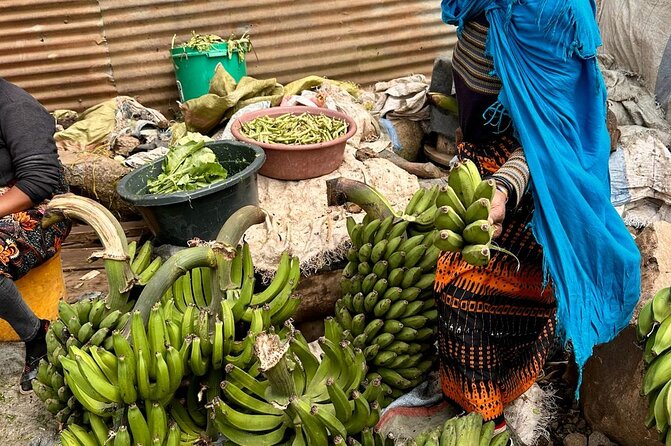
After the market visit, you shop for the ingredients needed for the lesson. The cost of this shopping is included in the $42 price, which helps keep the outing simple. You do not need to bargain over a separate food budget or wonder which items you are expected to purchase.
The selection process also gives you a say in the meal. If you already know that you want to learn ugali, ndizi, or another local dish, you can ask whether it is available. If you are less familiar with Tanzanian food, let the guide explain the options before deciding.
This is where the tour works especially well for curious eaters. You can connect a whole ingredient to the finished dish, then learn how it is prepared in an everyday setting. That is more useful than receiving a recipe without any sense of how the food fits into local life.
Spices are not included, so keep that small extra cost in mind. Drinks are also separate. You can buy water, soda, or beer along the way, but none is covered in the tour price.
Taking local transport to Sanawari
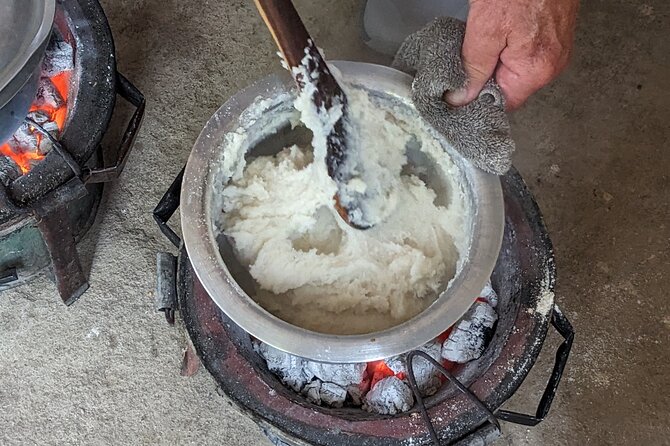
Once the market stop and shopping are finished, you head to Sanawari. The journey uses normal public transport commonly used by local people. This is not just a transfer between tourist sites. It adds another look at how people move around Arusha.
The route is described as taking you from the central market to the Sanawari area, which is farther from the market. The exact journey time is not given, so allow some flexibility inside the four-hour estimate. Traffic, shopping time, and the size of your group can affect the pace.
I like this part because it keeps the outing grounded in ordinary routines. You are not sealed inside a private vehicle for every minute. Still, public transport can be less comfortable and less predictable than a dedicated car. If that sounds tiring, ask about the arrangement when you book.
Pickup and drop-off are offered at hotels near the city center. If your accommodation is outside that area, confirm the meeting point before the day of the activity. Confirmation is sent after booking by WhatsApp or email, so watch for those details.
More eating your way around Arusha:
- Stonetown: Food Markets and Street Food Walking Tour
★ 4.7 · 151 reviews - Authentic Street Food Tours in Stone Town, Zanzibar
★ 5.0 · 46 reviews - Stone Town Guided Tour: Culture, Slave Market & Spice Market
★ 4.8 · 44 reviews - Moshi: Town tour and Local Markets tour
★ 4.9 · 36 reviews
Cooking in a simple Sanawari kitchen
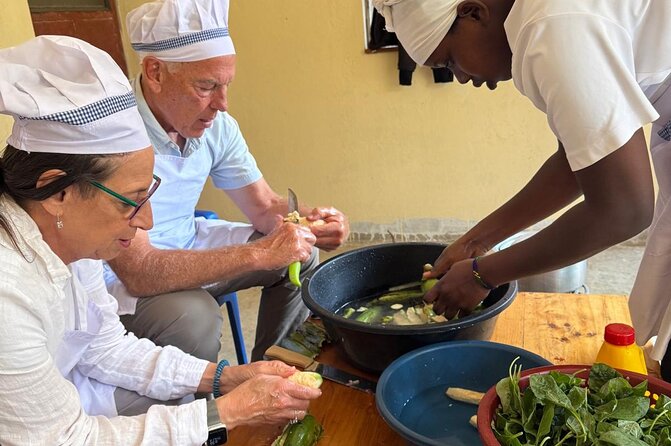
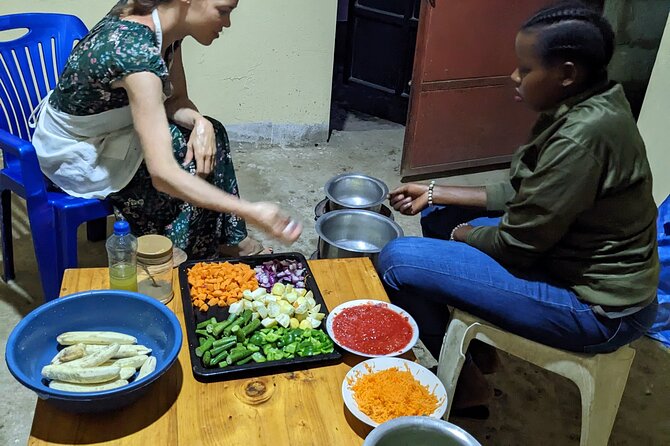
The lesson takes place in Sanawari with a local chef. The setting is intentionally basic. Expect a low table, two charcoal burners, a gas burner, tubs, and simple cooking tools rather than counters, a sink, or a Western-style stove.
That detail is important. The kitchen is part of the lesson, not an inconvenience to hide. You get a better sense of how food is prepared in many local homes and small-scale settings. You also need to adjust your expectations. This is not a professional cooking studio with matching equipment and a prepared workstation for every person.
The cooking portion is scheduled for about 1 hour and 30 minutes. You take part in making the two selected dishes, with the chef and guide explaining the process. The class is described as interactive, so you should expect to help rather than simply watch.
The exact tasks depend on the dishes and kitchen setup. Do not assume you will receive a printed recipe or use every modern convenience. If your main goal is to recreate the food at home, take notes and photos when appropriate, and ask the chef to repeat measurements or methods.
The plain setting can also make the lesson more social. You are working around a low table, using the same kind of equipment that gives the class its local character. For me, this is the heart of the experience. You are learning a method, not just copying a restaurant recipe.
Sitting down to eat what you made
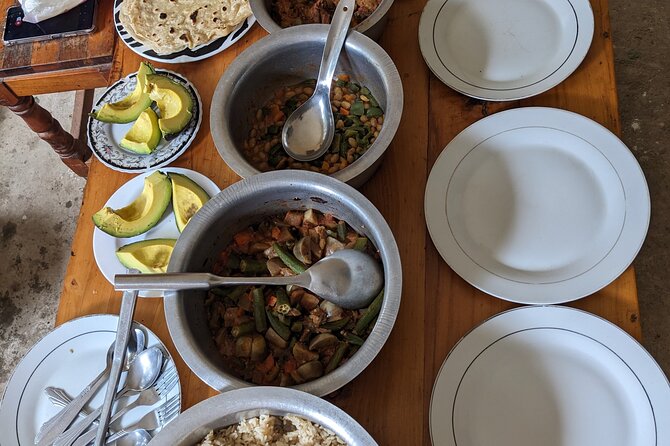
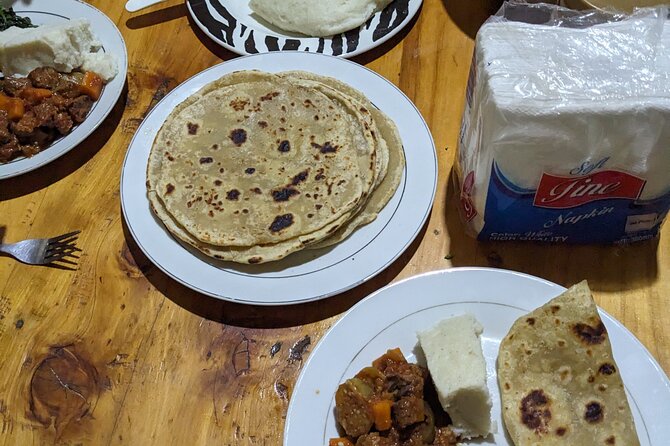
After cooking, you eat the meal you prepared. The food is included for participants and can serve as lunch or dinner, depending on the start time. That makes the class more than a demonstration. You see the full path from market ingredient to shared plate.
The meal is also a practical test of what you learned. You can notice the texture of ugali, the way ndizi is prepared, or how the selected ingredients work together. You may not leave with a perfect recipe, but you should leave with a clearer sense of Tanzanian home cooking.
Takeaway food may be available after the meal. This is an option, not something to count on as a standard inclusion. Drinks are not included, so bring money for water, soda, or beer.
I would plan to arrive with a moderate appetite. The food is intended to be eaten after the class, and the market walk comes first. The activity is not described as a series of market tastings, so do not expect snacks at every stop.
What $42 gets you in Arusha
At $42 per person, the value comes from combining several services in one half-day outing. You receive hotel pickup and drop-off near the city center, a guided food market visit, ingredient shopping, public transport connected to the activity, a cooking lesson, and the finished meal.
The price is strongest if you want a cultural activity rather than a stand-alone cooking demonstration. A market visit alone would give you context but no practical lesson. A cooking class alone might teach technique but leave out the shopping and neighborhood travel. Here, the parts are tied together.
There are limits. Drinks and spices cost extra, and the simple kitchen may not suit someone looking for polished facilities. The experience also has a maximum capacity listed at 200 people, which is a high possible limit. Ask about the expected group size at booking if personal attention matters to you.
The tour is usually booked about 23 days ahead. That suggests you should not leave it until the last moment if it is important to your plans, especially if you want a particular date or guide.
Who will enjoy this cooking class most
I would recommend this activity to you if you want direct contact with local food and ordinary routines in Arusha. It suits people who enjoy asking questions, trying unfamiliar dishes, and accepting a little roughness in exchange for a more local setting.
It is also a good fit for first-time visitors who want an easy introduction to Tanzanian cuisine. The guide explains the market, helps with the ingredient choices, and takes care of the transport plan. Pickup near the city center removes some of the usual half-day logistics.
Families and most adult participants can take part, according to the available information. The activity is near public transport and most people can participate. If you have mobility, dietary, or medical needs, ask for details before booking because the kitchen and transport arrangements are not described in depth.
You may want to skip it if your priority is a modern kitchen, a fixed gourmet menu, or a highly formal class. The cooking room is deliberately local and may involve sitting or working at a low level. That is a feature for some people and a drawback for others.
Timing, booking, and practical details
The total duration is about four hours. The central market stop takes about 30 minutes, and the cooking lesson is listed at about 1 hour and 30 minutes. The remaining time covers shopping, the trip to Sanawari, eating, and returning to your hotel.
Pickup and drop-off apply to hotels near the city center. After booking, you receive confirmation by WhatsApp or email. Keep your phone available on the day so you can see the meeting details.
Free cancellation is available if you cancel at least 24 hours before the local start time. Cancellations or changes made within 24 hours are not refunded or accepted. The activity requires good weather, and poor weather can lead to a new date or a full refund.
Wear clothing suitable for a working kitchen and market visit. The provided details do not specify a dress code or equipment list, so confirm any special needs in advance. Bring extra cash for drinks, spices, and tips if you wish to give one. Tips are optional.
Should you book the Arusha food market and cooking class?
Book it if you want your Arusha food lesson to include real shopping, local transport, a simple kitchen, and a meal made with your own hands. The strongest parts are the market explanation, the freedom to choose two dishes, and the chance to eat the result in the same local setting where you cooked it.
Think twice if you need modern facilities or a carefully controlled class. The basic kitchen and public transport are central to the activity, not minor details. For the right person, that is exactly why the $42 price feels fair: you get food, instruction, transport, and a closer look at daily life in one compact outing.
FAQ
How long does the Arusha cooking class and market tour last?
The activity lasts approximately four hours.
What does the tour include?
It includes a guided visit to Arusha’s central food market, a cooking lesson, hotel pickup and drop-off near the city center, shopping for ingredients, local transport connected with the activity, and the meal you prepare.
Where does the cooking class take place?
The cooking class takes place in Sanawari, after the visit to the central food market.
How many dishes do I cook?
You select two dishes from the available Tanzanian food options on the day of the activity.
Is the food market visit included?
Yes. The guided central food market visit is included, with about 30 minutes allocated to the market portion.
Are drinks included?
No. Water, soda, and beer are not included, but you can buy them along the way.
Are spices included in the price?
No. Spices from the market are listed as an additional cost.
Is hotel pickup available?
Yes. Pickup and drop-off are offered for hotels near Arusha city center.
What is the cancellation policy?
You can receive a full refund by canceling at least 24 hours before the local start time. Cancellations or changes made less than 24 hours before the start are not accepted or refunded. Poor weather may result in a different date or a full refund.
Just added in Arusha
- 7-Day Private Tanzania Safari with Sunset Walking on the Crater Rim and Maasai★ 5.0 · 40 reviews
- Saadani Day Trip★ 5.0 · 13 reviews
- Nyssa Luxury Balloon in Safaris and Serengeti★ 5.0 · 69 reviews
- Arusha National Park Day Trip★ 4.5 · 18 reviews
- Arusha National Park Private Safari★ 5.0 · 59 reviews
- 3 Days Serengeti & Ngorongoro Tour★ 5.0 · 22 reviews
- 8 Days Mountain Kilimanjaro Lemosho Route★ 5.0 · 22 reviews
- 7 Days Tanzania Mid-range lodge safari★ 5.0 · 22 reviews
Market & Street Food Tours, compared.
Authentic Street Food Tours in Stone Town, Zanzibar
Read our review →
Stone Town Guided Tour: Culture, Slave Market & Spice Market
Read our review →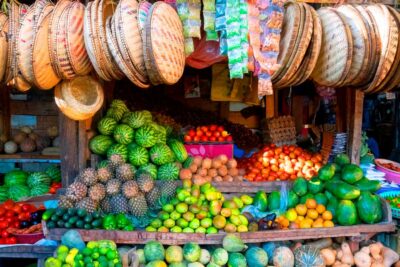
Stone Town Evening Walk Tour With Visit Food Markets
Read our review →Browse the lists this tour appears in