
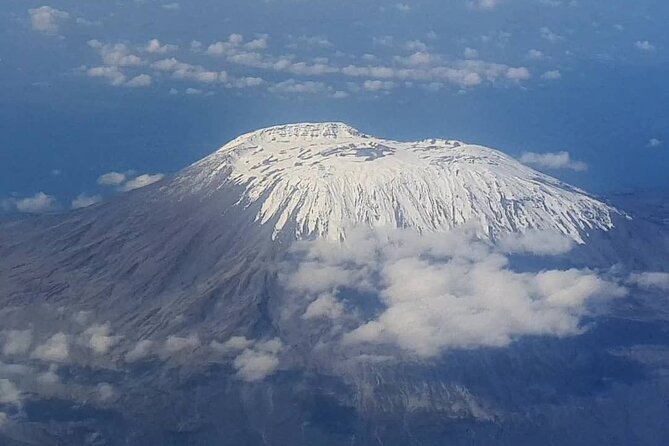
Reviewed · KILIMANJARO TREKS
Mountain Kilimanjaro Climbing 8 Days Lemosho Route
The most memorable part of this eight-day Lemosho climb is the changing mountain scenery. You begin in thick forest, cross the open Shira Plateau, pass volcanic rock and glaciers, then make the hard push toward Uhuru Peak. The route gives you time to adjust to altitude instead of racing uphill.
I like the high point at Lava Tower, followed by a descent to Barranco Camp, and I like that the package includes sleeping gear, meals, and equipment. The main caution is altitude: this is a serious climb, not a long sightseeing walk, and the summit schedule includes a demanding night and day on the mountain.
Key things to know before booking
- Lemosho gives you several acclimatization days: The route crosses Shira 1 and Shira 2 before reaching higher camps.
- Lava Tower reaches 4,640 meters: You climb high during the day, then descend to Barranco Camp to help your body adjust.
- Barranco Wall is steep but non-technical: Expect a long climb over rock that can be tiring even without ropes or climbing equipment.
- The summit plan includes Crater Camp: After reaching Uhuru Peak, you descend to an overnight camp inside Kilimanjaro’s crater.
- The package is built for a supported trek: Guides, porters, cooking, sleeping equipment, and included meals reduce the amount you must carry.
- The group can include up to 15 people: That is small enough for a shared trek, but not the same as a private climb.
Why the Lemosho Route earns its reputation
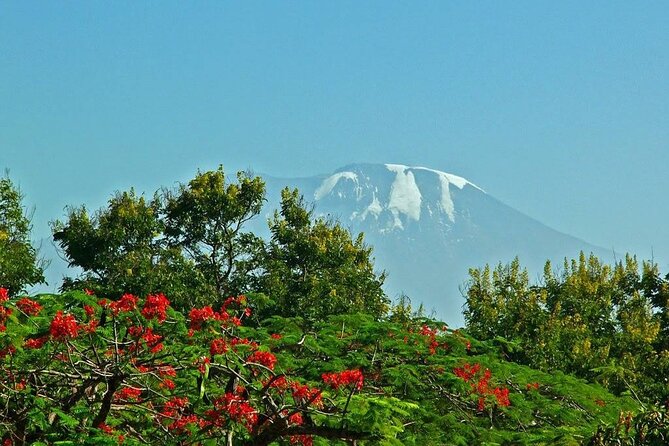
I like the Lemosho Route because it does not throw you straight into the hardest part of Kilimanjaro. The first days move through forest and high moorland, then use steady climbs and shorter acclimatization walks before you reach the stark upper slopes.
The route is described as having one of the mountain’s higher success rates. That does not mean reaching the top is guaranteed. Weather, altitude, fitness, sleep, hydration, and your guide’s decisions all matter. Still, the eight-day timing gives you more room than a rushed itinerary.
You will cover roughly 40 kilometers to the summit, with additional walking on acclimatization sections and descents. That figure helps explain why preparation matters. You need to be comfortable walking for several hours on uneven ground and managing steep sections at high altitude.
The package costs $2,756.93 per person. I see the value in the fact that this is not simply a guided walk. Equipment, sleeping gear, meals, guides, porters, and transport back to Moshi are included. You should still check the exact equipment list before departure, along with what is not covered, since the supplied information does not itemize every possible extra cost.
Other routes up the mountain from Kilimanjaro:
- 7 Days Kilimanjaro via Machame route affordable price
★ 5.0 · 110 reviews - Kilimanjaro Airport taxi to/from Moshi town/Arusha town
★ 5.0 · 60 reviews - 6 Days Climbing Mount Kilimanjaro Machame Route
★ 5.0 · 40 reviews
Day 1: Forest trails to Mti Mkubwa at 2,650 meters
The first walking day begins at about 2,100 meters. You enter the lush forest zone and climb toward the lower northern slopes, heading in the direction of the Shira Plateau.
The listed walking time is around three hours, with an overnight stay at Mti Mkubwa Camp at 2,650 meters. This is a sensible opening day. You get your first feel for the trail without starting with a punishing distance.
The forest is more than a gentle introduction. The path climbs, and the change in altitude begins at once. I would use this day to settle into a slow pace, learn how your guide wants you to walk, and check that your boots, layers, and pack feel right.
Day 2: Open moorland and Shira 1 Camp
Day two changes the mood completely. The route crosses grassy moorland and heather, with volcanic rock formations scattered across the plateau. You are no longer surrounded by forest, and Kibo may appear above the clouds.
This is a longer day of about seven hours. Parts of the trail are fairly steep, and you gain a reasonable amount of altitude as you work toward Shira 1 Camp.
The open views can make the walking feel easier psychologically, but the terrain still demands steady effort. Do not let the scenery tempt you into walking too fast. A controlled pace is one of the practical advantages of this itinerary.
Day 3: Shira Plateau and the first real acclimatization work
The third day stays on the Shira Plateau and continues across moorland. From the western side of the mountain, you may see the northern ice fields and unusual views of Kibo.
The walk takes about seven hours and ends at Shira 2 Camp. The route is useful for acclimatization because you keep climbing gradually rather than making one sudden jump to extreme altitude.
An afternoon acclimatization walk is also planned. You go higher, then return to camp for dinner and sleep. I like this pattern because it gives you a chance to notice how your body reacts before summit week. Headache, nausea, unusual tiredness, or trouble sleeping should be reported to the guide rather than brushed aside.
Same base, a different kind of day out:
- Great Migration Safari In Tanzania
★ 5.0 · 71 reviews - 6 Days Tanzania Classic Safari
★ 5.0 · 52 reviews - 8 Days Kilimanjaro Hike via Lemosho Route
★ 5.0 · 39 reviews - 8 Days Great Wildebeest Migration – Mara River Crossing
★ 5.0 · 28 reviews
Day 4: Lava Tower at 4,640 meters, then Barranco Camp
Day four is one of the most important days on the route. You climb into the upland desert zone and walk along lava ridges below the glaciers of the Western Breach.
The high point is Lava Tower at 4,640 meters, where you stop for lunch. The walk to this point takes about four hours, but the altitude makes the effort feel greater than the clock suggests.
The route then drops steeply to Barranco Camp at about 3,960 meters. This is the classic climb high, sleep lower pattern, and it is one reason the route allows useful acclimatization. Barranco Camp sits below towering cliffs and offers broad views toward the plains.
You should expect the descent to challenge your knees and legs after the uphill work. Keep your walking poles ready if you use them, and take care on loose ground. This is also a good place to judge how you are coping with altitude before the trail becomes more exposed and barren.
Day 5: Barranco Wall and Karanga Valley
Day five begins by descending into the start of the Great Barranco, a large ravine. Then comes the Barranco Wall.
The wall is steep and involves climbing over rock, but it is described as non-technical. You do not need rock-climbing skills for the route, yet it is still long and tiring. The pace here may be slow, and that is normal. Use your hands where appropriate, follow the guide’s instructions, and focus on secure footing rather than speed.
Beyond the wall, the trail passes beneath the Heim and Kersten glaciers before heading toward Karanga Valley. A steep climb from the valley brings you to Karanga Camp at about 3,963 meters.
If you feel strong, the itinerary includes an afternoon acclimatization walk to around 4,200 meters, followed by a return to camp. I would treat this as an option to discuss with the guide, not a test of pride. At this stage, rest and hydration are more useful than proving you can walk every extra meter.
Day 6: Barafu Camp and the long summit preparation
Day six takes you to Barafu Camp at about 4,640 meters. The route crosses steep, empty scree slopes with no vegetation. The description gives the day a total duration of about 12 hours, reflecting the demanding schedule and the preparation for the summit attempt.
Barafu is not a place for a relaxed afternoon. You eat, rest, keep warm, and drink water while preparing for the night ahead. Dinner is early, and the planned wake-up time is between 11 p.m. and midnight.
This is where the climb becomes most demanding for many people. The altitude is high, the ground is rough, and sleep may be short. Pack the clothing and headlamp items you need before lying down. Keep your summit layers easy to reach, since getting organized in the dark and cold is harder than it sounds.
Day 7: Uhuru Peak and the unusual Crater Camp night
The summit approach begins before dawn. You climb toward Uhuru Peak, Kilimanjaro’s highest point, and the itinerary expects you to reach the summit in the early afternoon, when fewer groups may be present.
The summit itself is the goal, but the timing makes this a very long effort. You have already spent days at altitude, and the climb from Barafu requires patience. Slow steps, regular breaks, warm layers, and close communication with the guide matter more than any target pace.
After Uhuru Peak, you make a short descent to Crater Camp. The camp is set on soft sand inside the crater near the Furtwangler Glacier. This is an unusual addition because Crater Camp is not a separate route in itself. It is a demanding extension that can, in principle, be added to different Kilimanjaro routes.
Only a small number of climbers choose to sleep inside the crater, so this part gives the trip a distinctive character. It also adds difficulty at the exact point when you are already tired. I would confirm the planned sleeping arrangements and weather decision with the operator before departure, since conditions at this altitude can affect the plan.
Day 8: Forest descent and return to Moshi
The final day covers the remaining descent. You continue down through the forest to the gate, where a vehicle waits to take you back to Moshi.
The listed walking time is about five hours. After the summit and crater night, even a downhill route can feel demanding. Your knees and feet have done a lot of work, so do not treat the final section as an afterthought.
At the mountain gate, you leave the guides, cooks, and porters. Tipping is expected, and you should plan for it in advance. The vehicle then returns you to your Moshi hotel, where a proper shower and a celebration will feel well earned.
Guides, porters, meals, and equipment
The support team is central to the value of this climb. The package includes expert guides, porters, sleeping gear, and meals across all eight days. You are not expected to carry every piece of camping equipment yourself, which makes a major difference on steep, high-altitude sections.
The company has used guides including Timothy, who led an eight-day Lemosho climb for one group. Oscar Swai appears as a company contact in the trip correspondence and is also associated with airport pickup and guest support. That does not mean either person will lead every departure, so ask for the name of your assigned lead guide before you travel.
Meals can be adjusted to dietary requirements. Tell the operator clearly about allergies, religious restrictions, or other needs at booking time, then repeat the information during the pre-climb briefing.
The group limit is 15 people. That keeps the climb from becoming a huge procession, though a full group can still move at different speeds. Ask how the group handles different walking abilities and whether the guide team changes with group size.
Airport pickup and practical planning
The meeting point is Kilimanjaro International Airport, with a stated start time of 7 a.m. Pickup is offered, which is useful after a long flight and removes some early transport stress.
One group had an arrival shortly after midnight and found the operator’s airport support useful. Another booking involved delayed luggage, and the company helped work through the problem. I would still pack essential medication, one change of clothes, and basic hiking items in your carry-on. Do not rely on delayed baggage being solved quickly, even if the operator provides assistance.
The booking confirmation is issued at the time of reservation. The activity requires moderate physical fitness, and the operator may cancel if the minimum number of participants is not reached or if weather makes the climb unsafe.
Cancellation is free up to 24 hours before the local start time for a full refund. Changes or cancellations inside that window are not accepted for a refund. If poor weather or an insufficient group causes cancellation, you are offered another date, another experience, or a full refund.
Who should choose this climb?
I would choose this route if you want a supported Kilimanjaro climb with a gradual approach, several acclimatization sections, and a distinctive crater overnight. It suits people who are willing to walk for hours, sleep at altitude, and accept that the summit day may be uncomfortable.
It is less suitable if you want a short, easy mountain excursion or if you dislike camping, steep rock sections, cold nights, and uncertain weather. The phrase moderate fitness should not be read as casual fitness. You need stamina, patience, and the sense to tell your guide when something is wrong.
The route can work well for couples, small groups, and solo climbers willing to join a group of up to 15. The strongest part of the operation appears to be the full support structure, including guides, porters, food, airport help, and attention to the group’s welfare.
Should you book the 8-day Lemosho Route?
I would book this experience if the $2,756.93 price fits your budget and you want more than the quickest possible route up Kilimanjaro. The gradual route, Shira Plateau, Lava Tower acclimatization, Barranco Wall, and Crater Camp give the climb a varied plan rather than a simple uphill march.
Before paying, confirm the exact equipment supplied, the guide assigned to your departure, the tipping expectations, dietary arrangements, and the detailed summit and Crater Camp schedule. If you prepare for altitude and accept the physical demands, this is a strong choice for a serious first Kilimanjaro climb.
FAQ
How long is the Kilimanjaro Lemosho climb?
The experience lasts approximately eight days, including the summit attempt, the Crater Camp overnight, and the final descent to the mountain gate.
Where does the experience start?
The stated meeting point is Kilimanjaro International Airport on Kilimanjaro Airport Road in Tanzania. The listed start time is 7 a.m.
How high does the route go?
You reach Uhuru Peak during the summit attempt. The itinerary also lists Lava Tower and Barafu Camp at about 4,640 meters.
Is equipment included?
Yes. The package includes equipment and sleeping gear. The supplied information does not provide a complete item-by-item equipment list, so you should confirm the details before departure.
Are meals included?
Yes. Meals are included throughout the eight-day climb, and dietary requirements can be catered for.
How large can the group be?
The maximum group size is 15 people.
What is the cancellation policy?
You can cancel at least 24 hours before the local start time for a full refund. Cancellations or changes made less than 24 hours before the start are not accepted for a refund. Weather or minimum-participant cancellations may result in another date, another experience, or a full refund.
Just added in Kilimanjaro
- 5 days Serengeti Wildebeest Migration Safari★ 5.0 · 3 reviews
- Mount Kilimanjaro 7 Days – Machame Route★ 5.0 · 5 reviews
- 6 Days Machame Route Kilimanjaro Trekking★ 5.0 · 13 reviews
- Mount Kilimanjaro 6 days – Machame route★ 4.0 · 5 reviews
- Lemosho Route★ 5.0 · 21 reviews
- Tanzania Safari and Kilimanjaro Climb Multi-Day Experience★ 5.0 · 3 reviews
- Amazing 4 Days Safari 3 Nights: Tarangire, Ngorongoro, Serengeti★ 5.0 · 6 reviews
- 9 Days – Best of Tanzania Safari★ 5.0 · 4 reviews
Kilimanjaro Treks, compared.



8-Day Small-group Lemosho Kilimanjaro Summit Trekking
Read our review →

5 Days Best of Tanzania Luxury Safari Northern Circuit
Read our review →

Climbing Kilimanjaro through 7 days Machame Route
Read our review →
7-Day Machame Kilimanjaro Summit Tour from Arusha
Read our review →Browse the lists this tour appears in