
Reviewed · CAMPING & LODGE SAFARIS
Private 7-Day Tanzania Camping Safari
The heart of this safari is simple: seven days of game drives across four major wildlife areas, with the Serengeti getting the most time. You move from Tarangire’s elephant country to Lake Manyara, then spend several days among the open plains and river valleys of central Serengeti before ending at Ngorongoro Crater.
I like the private format, since your group can ask questions, pause for animals, and settle into your own pace. I also like the camping setup with a cook, included breakfast, lunch, and dinner, and guides praised for patient explanations and sharp animal spotting. The main drawback is the amount of driving, plus a schedule that needs clarification: the supplied day headings and descriptions do not match perfectly, especially around Tarangire, Serengeti, and Lake Manyara.
Key points to know before booking
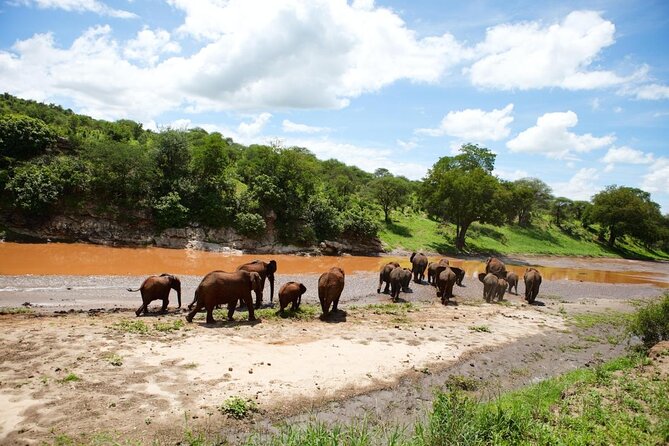
- Four famous wildlife areas: Tarangire, Lake Manyara, Serengeti, and Ngorongoro Crater all appear in the seven-day plan.
- Three nights in central Serengeti: The Seronera area gives you repeated chances to search for lions, cheetahs, gazelles, ostriches, and other plains wildlife.
- A genuinely private trip: Only your own group takes part, rather than sharing the vehicle with strangers.
- Camping with meals included: Seven breakfasts, seven lunches, and six dinners are included, with a separate chef often handling fresh food.
- Strong guide reports: Max, James, Freddy, Josen, Ezequiel, and others are praised for patience, wildlife knowledge, safe driving, and good humor.
- Confirm the route before paying: The published schedule contains some day-to-day inconsistencies, so ask for the final order of parks and overnight camps.
A seven-day route built around Tanzania’s big names
At $2,600 per person, this safari is priced as a full service private expedition rather than a quick park visit. The price includes the core meals and private touring, and the route covers places that would be expensive and awkward to arrange independently.
You will begin at Jevas Hotel EncoreTZ in Arusha, then head into northern Tanzania’s circuit of parks and conservation areas. The trip is not designed for slow mornings or long stays at one camp. Most days involve several hours in the vehicle, with early starts, picnic lunches, and game drives shaped by animal sightings.
That pace is part of the value. One quiet afternoon in a park can produce very little, while the next bend may reveal a pride of lions or a rhinoceros. Spending several days in the Serengeti gives your guide more chances to read the area and find wildlife.
It also means you should be comfortable with long road journeys. The published program lists roughly six hours for each stop, but actual days can feel longer once transfers, park roads, and repeated game viewing are counted.
Other park itineraries that start in Arusha:
- Serengeti Balloon Safari and authentic bush breakfast
★ 5.0 · 2,480 reviews - Balloon Safari & Bush Breakfast in Serengeti – Miracle Experience
★ 5.0 · 1,646 reviews - 4 Days Group Camping Safari
★ 5.0 · 1,101 reviews
Tarangire and the route toward the Serengeti
The schedule begins with a drive through the high farmland around Karatu and the Ngorongoro Conservation Area before continuing toward the Serengeti. Tarangire is named as the first park in the tour summary, but the detailed description for Day 1 focuses on the drive into Serengeti and the Seronera area.
That mismatch matters. If Tarangire is important to you, confirm exactly when it is visited and where you sleep that night. A park listed in the overall route is not quite the same as a full game-drive day there.
Tarangire is usually valued for its elephants and broad open country, while the route toward Serengeti gives you a striking change in scenery. You leave the cultivated highlands behind and enter a much wider, quieter world. The long drive is not merely dead time, but you should bring water, sun protection, and a willingness to watch the view change gradually.
The itinerary places you near Seronera, central Serengeti’s main wildlife area, in time for lunch followed by game viewing. The Seronera River is important because it draws animals to a dependable water source. That makes this a sensible base for repeated drives.
Lake Manyara, a compact park with changing scenery
The itinerary also includes Lake Manyara National Park, a smaller and more varied park than the Serengeti. The route runs along the base of the Rift Valley escarpment, with the lake stretching for about 50 kilometers below the rusty-gold cliff line.
Your game drive passes through groundwater forest near the entrance, then into more open areas. This change in vegetation makes Manyara useful early in the safari, since it introduces you to a different type of northern Tanzanian wildlife country.
The plan calls for a full-day game drive with a picnic lunch before continuing to Twiga campsite for dinner and the night. That is an appealing arrangement if you want a full day in the park rather than a short stop on the way elsewhere.
The tradeoff is logistical. According to the day descriptions, Lake Manyara appears in a place that does not follow the listed park headings in a clear order. Ask the operator to confirm whether Manyara comes before Serengeti, after it, or as part of a revised route. The park itself is easy to recommend, but the written schedule needs tidying.
Three nights around Seronera
The Serengeti is the main event here, and the program gives you several days in the central Seronera area. That is a real strength. Instead of arriving, taking one drive, and moving on, you have time for early morning outings, full-day loops, and late afternoon viewing.
One day begins with a four-hour drive back toward the open plains, followed by a full game drive and a late evening outing. Other days use picnic lunches so you can stay in the park rather than return to camp at midday.
The scenery changes with the season. After rain, the grass can turn green and carry wildflowers. In drier periods, the plains take on a golden color, broken by wooded hills, termite mounds, fig-lined rivers, and acacia trees marked by dust.
Your guide’s skill matters most here. Animals may be far away, partly hidden, or visible only for a few seconds. The guide names associated with similar departures include Max, James, Freddy, Josen, Ezequiel, Damien, and Frederick. You should not assume one of them will lead your trip, but the repeated praise for patient guiding and careful driving tells you what to request.
Max is singled out for answering questions, keeping a steady hand, and finding all of the Big Five for his group. Ezequiel is praised for explaining wildlife and culture without rushing people. Josen is noted for approaching animals without making them uneasy and for driving at a useful speed for spotting wildlife. These details are more helpful than a generic promise of an expert guide.
Other safaris people book out of Arusha:
- 5 Days Group Camping Safari
★ 5.0 · 730 reviews - 3 Days Serengeti & Ngorongoro Group Camping Safari
★ 5.0 · 574 reviews - 7-Day Premium Luxury Tanzania Safari All-Inclusive
★ 5.0 · 426 reviews - 3-Day Classic Serengeti Safari
★ 5.0 · 263 reviews
The Sogore River and Maasai Kopjes circuits
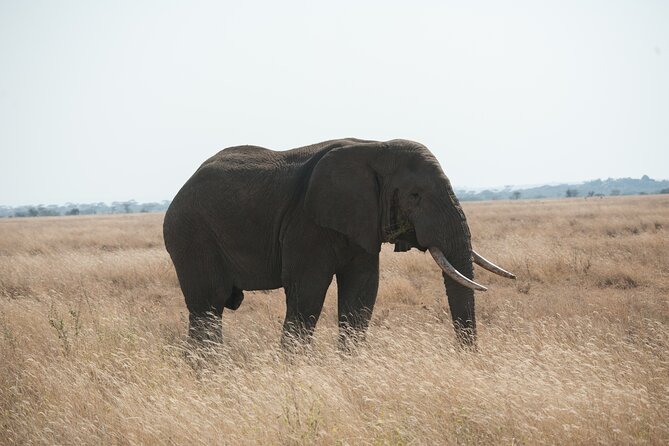
One of the most specific Serengeti days uses the Sogore River circuit south of the Seronera River. This is a good area to look for lions, gazelles, topi, ostriches, and cheetahs.
The early morning timing is important. Cooler hours often make wildlife activity more rewarding, and the light can be better for photographs. You then have the option to visit the Serengeti Visitor Center, near the lodge and public campsites. The center has wildlife displays, maps, information leaflets, and a gift shop.
In the afternoon, the route follows the Kopjes circuit around the Maasai Kopjes. These rocky outcrops give animals higher ground and shade, and they add texture to an otherwise broad view of grassland. The schedule specifically notes more lion sightings in this area, along with the possibility of seeing large cobras.
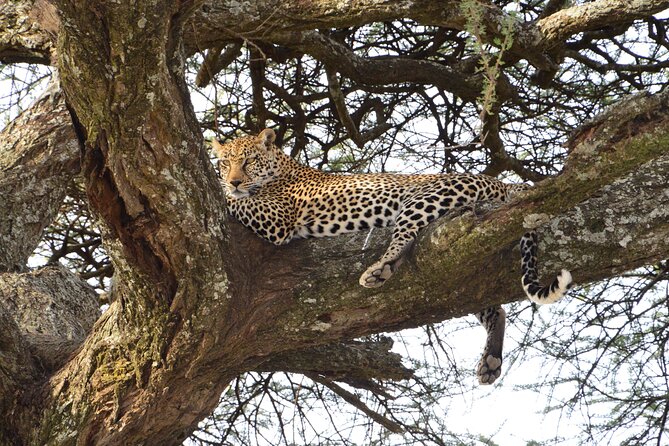
Do not treat any animal as guaranteed. The Big Five are a goal, not a promise, and leopard sightings can be especially uncertain. The strength of this itinerary is that you get many searches across several habitats rather than one hurried attempt.
Olduvai Gorge and Ngorongoro Conservation Area
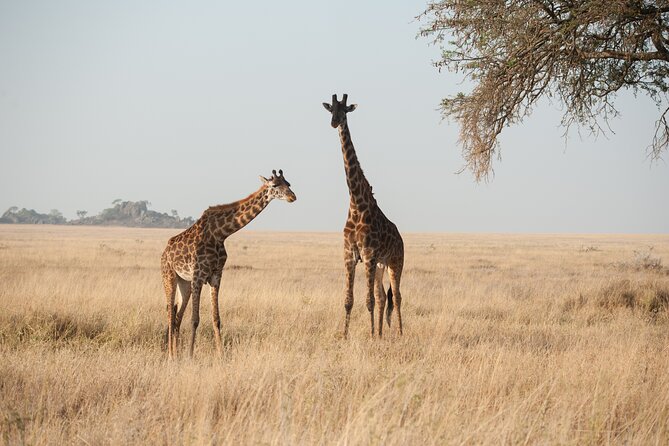
After the Serengeti, you travel toward the Ngorongoro Conservation Area and stop at Olduvai Gorge. The site is tied to the work of Louis and Mary Leakey, whose discoveries included fossils known as Nutcracker Man and Handy Man.
This stop adds a human story to a trip otherwise focused on wildlife. It helps explain why northern Tanzania matters beyond the animals. The itinerary describes arrival in time for lunch, followed by a descent of more than 600 meters into Ngorongoro Crater for a half-day safari.
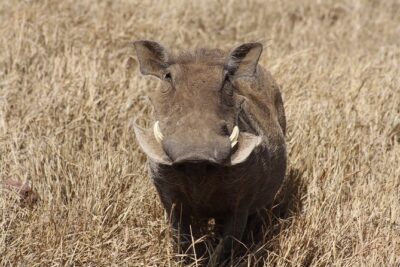
The crater is a dramatic final park setting. Its enclosed floor concentrates many species in one broad area, and the program specifically aims for lions, leopards, elephants, buffalo, and possibly black rhinoceros. You may also see hippopotamuses, giraffes, warthogs, baboons, and many birds.
The overnight is at Ngorongoro Simba Campsite. Camping at this point may feel cooler and less comfortable than a lodge, but it keeps the trip within its camping style and helps hold down the overall price.
Six hours on the crater floor
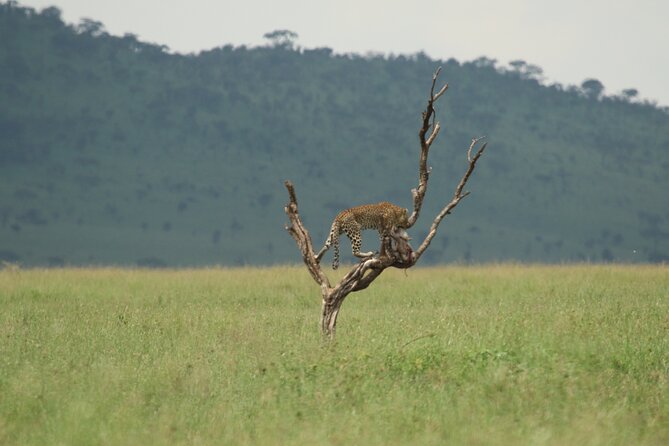
The final day starts with an early breakfast and a direct descent to the crater floor. You spend about six hours on game viewing and eat a picnic lunch at Ngoitoktok Spring.
That long block of time is useful. You are not simply stopping at a viewpoint, taking a few photographs, and leaving. You have room to look for several species and to wait when something interesting appears.
After the crater drive, you ascend the rim and head back toward Arusha, with an en-route game drive through Mto wa Mbu village. The program says you reach your Arusha hotel in the evening and are then dropped at the airport.
That airport detail needs checking if you have a firm flight. The published plan gives no exact arrival time, so do not schedule a tight same-day connection without confirming the road timing with Suricata Safaris.
What camping is likely to feel like
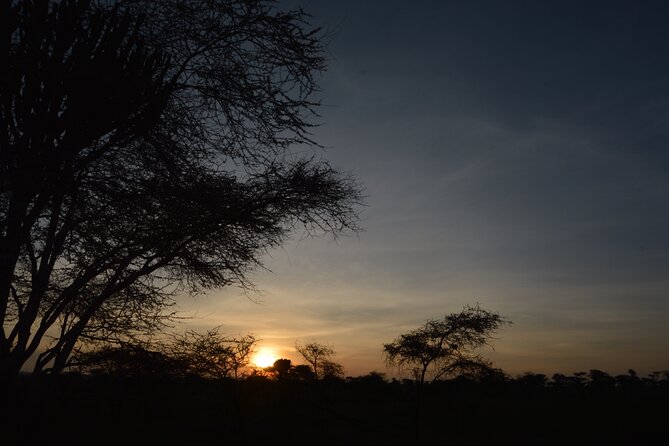
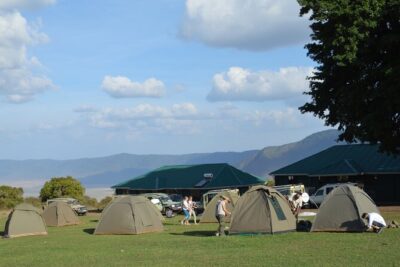
This is a camping safari, not a luxury lodge circuit. The available information describes tents and campsites, but it does not specify tent size, private bathrooms, mattresses, showers, or electrical access. Ask those questions before booking if comfort is a major concern.
The food side receives especially strong praise. Cooks named Salim, Tito, Ben, and James are credited with preparing fresh, plentiful meals, and several departures describe the cooking as one of the best parts of the experience. Your assigned cook may be different, but the arrangement appears to include a dedicated food team on at least some departures.
Seven breakfasts and seven lunches are included, along with six dinners. The extra lunch compared with dinner fits the final return day, when you are on the road after the crater visit.
The private format also helps. You do not have to match the habits of a busload of strangers, and your guide can answer questions from your own group. Still, private does not mean short driving days or hotel-level comfort. Choose it for access, time in the parks, and the camp experience.
Price, service, and practical value
The $2,600 price deserves to be judged against the whole package. You receive seven days of transport and game drives, private participation, the main national parks and conservation areas, and all listed breakfasts, lunches, and dinners.
The route also includes several nights in or near major wildlife areas, which saves the time and expense of commuting from Arusha each day. Three days around Seronera are particularly valuable because the Serengeti is too large for a single quick look.
The strongest service points are the guide and cook. Specific names appear repeatedly in the available feedback, with Max, James, Freddy, Josen, and Ezequiel drawing praise for patience, teaching, humor, and wildlife spotting. Salim, Tito, and Ben receive similar attention for fresh and generous meals.
Before committing, get the final written itinerary. Confirm Tarangire’s place in the route, the order of Lake Manyara and Serengeti, the actual campsites, and the airport drop-off timing. These are not minor points when you are paying for a seven-day trip.
Free cancellation is available up to 24 hours before the experience start time. Changes or cancellations inside that window are not accepted for a refund.
Who should book this safari
I would choose this trip if you want the classic northern Tanzania circuit and prefer a private vehicle over a shared group. It suits photographers, first-time safari visitors, couples, families, and small groups who want time to ask questions and adjust the pace of viewing.
It is also a good fit if you value a cook and camp routine over a lodge-based holiday. You will spend long hours outside, travel between parks, and sleep at campsites rather than settling into one polished property.
I would look elsewhere if you need a precise luxury standard, dislike rough roads, or have only a narrow window before an international flight. I would also delay booking until the route is corrected in writing, since the day labels and descriptions currently conflict.
Should you book it?
Book this safari if your priority is seeing a lot of northern Tanzania in one private seven-day trip, with several chances to search for the Big Five and a strong emphasis on central Serengeti. The combination of private guiding, included meals, and multiple Seronera days gives the price real value.
Before you pay, ask who your guide and cook will be, what camping equipment is supplied, and how Tarangire and Lake Manyara fit into the final schedule. If those answers are clear, this is a practical, wildlife-heavy choice for an adventurous first safari.
FAQ
Where does the safari start?
The meeting point is Jevas Hotel EncoreTZ in Makao Mapya, Arusha, Tanzania.
Where does the safari end?
The activity ends back at the meeting point, with the final day also describing a return to Arusha and an airport drop-off.
Is this a private safari?
Yes. Only your group participates in the private tour or activity.
Which parks and wildlife areas are included?
The tour information includes Tarangire National Park, Lake Manyara National Park, Serengeti National Park, Ngorongoro Conservation Area, and Ngorongoro Crater.
How long is the safari?
The experience lasts approximately seven days.
Are meals included?
Yes. The package includes seven breakfasts, seven lunches, and six dinners.
Can I cancel for a full refund?
Yes, if you cancel at least 24 hours before the experience start time. Cancellations made less than 24 hours before the start are not refunded.
Will I see the Big Five?
The itinerary is designed to look for lions, leopards, elephants, buffalo, and possibly black rhinoceros, but wildlife sightings cannot be guaranteed.
More camping and lodge safaris from Arusha
- 5 Days Camping Tarangire, Serengeti & Ngorongoro crater & Visiting Maasai
★ 5.0 · 229 reviews - 5 Days Best of Tanzania Luxury Safari Northern Circuit
★ 5.0 · 174 reviews - 6 Days Private Budget Safari
★ 5.0 · 163 reviews - 2 Days Tarangire and Ngorongoro Group Camping Safari
★ 5.0 · 146 reviews
Just added in Arusha
- 2-Day Private Luxury Safari from Zanzibar with Flights★ 3.2 · 5 reviews
- 7-Day Private Tanzania Safari with Sunset Walking on the Crater Rim and Maasai★ 5.0 · 40 reviews
- Saadani Day Trip★ 5.0 · 13 reviews
- Nyssa Luxury Balloon in Safaris and Serengeti★ 5.0 · 69 reviews
- Arusha National Park Day Trip★ 4.5 · 18 reviews
- Arusha National Park Private Safari★ 5.0 · 59 reviews
- Arusha: Maasai Village Tour★ 4.8 · 22 reviews
- 3 Days Serengeti & Ngorongoro Tour★ 5.0 · 22 reviews
Camping & Lodge Safaris, compared.
3 Days Serengeti & Ngorongoro Group Camping Safari
Read our review →
5 Days Best of Tanzania Luxury Safari Northern Circuit
Read our review →
2 Days Tarangire and Ngorongoro Group Camping Safari
Read our review →
5-Day private Camping Safari Tour in Tanzania
Read our review →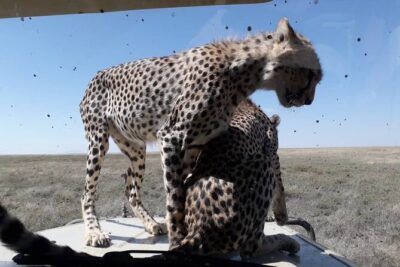
5 Days Tanzania Group Joining Safari, Tarangire/Serengeti/Ngorongoro Crater
Read our review →Browse the lists this tour appears in