
Reviewed · SPICE FARM TOURS
Spice Farm Tour -Half Day
Zanzibar’s spices make the island smell like a kitchen left open to the sea. On this half-day outing, you walk through a working shamba, or farm, touching and tasting crops such as clove, cinnamon, vanilla, turmeric, and lemongrass. You also visit the ornate Kidichi Persian Baths, built for a sultan’s Persian wife.
I like the way this tour connects food with daily life rather than treating spices as items on a shop shelf. I also like the mix of farm walking, tropical fruit tasting, and cultural history, with hotel pickup and air-conditioned transport included. The main consideration is pace: you need a moderate level of fitness, and a three-hour tour can feel brief if you want a long farm visit or a full cooking lesson.
Key points at a glance
- Kidichi Persian Baths: See domed bathhouses built in 1850 for Princess Sheherezade, granddaughter of the Shah of Persia.
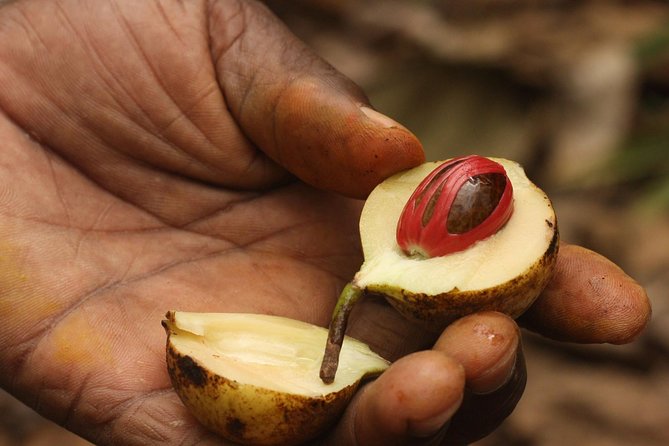
- Spices growing in the soil: Learn how cloves, nutmeg, black pepper, cardamom, vanilla, turmeric, and other crops are cultivated and used.
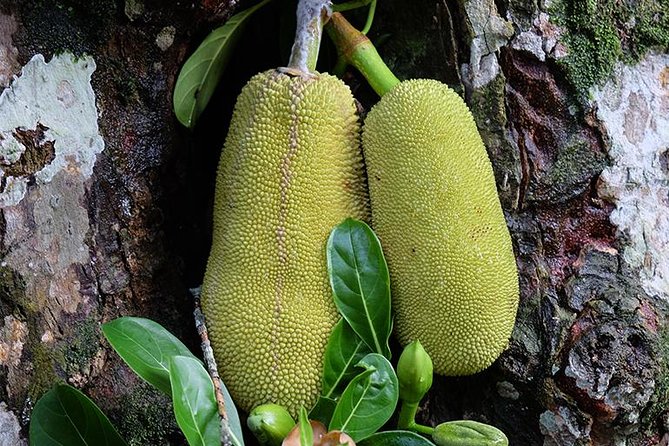
- Tropical fruit tasting: Expect chances to smell and taste items such as coconut, papaya, jackfruit, pineapple, banana, oranges, and seasonal fruit.
- Hotel pickup included: Private air-conditioned transport makes this easier than arranging your own way into the countryside.
- Cooking class by request: Ask in advance if you want the farm visit to include a hands-on food session.
- Small enough to stay manageable: The maximum group size is 20, with group discounts available.
Why a Zanzibar spice farm is worth your morning
The best part of this experience is the change in scale. In a shop, cinnamon is a curled brown stick and vanilla is a small packet. On the farm, you see the plants behind those familiar flavors and learn how people use them in cooking, drinks, and daily life.
Your guide leads you along paths through the plantation, pointing out the crops as they grow. You may smell lemongrass, taste fruit straight from the farm, and handle spices including cardamom, nutmeg, chili, black pepper, and turmeric.
That direct contact is what gives the outing its value. You are not simply being shown a list of exports. You are learning how Zanzibar’s agricultural life connects with its food and culture.
The route also includes fruit that may be less familiar, such as jackfruit, durian, love apple, lychee, soursop, and coconut. Availability can vary by season, so do not treat every fruit as guaranteed. The experience specifically includes tasting tropical fruit and spices, but the exact selection depends on what is growing at the time.
Other spice farm visits from Zanzibar:
- Zanzibar: Stone Town, Spice Tour, Prison Island with Lunch
★ 4.4 · 1,219 reviews - Zanzibar: Prison Island, Stone Town, & Spice Farm Tour
★ 4.5 · 579 reviews - Zanzibar: Stone Town, Spice tour & Prison Island with Lunch
★ 4.6 · 453 reviews
Kidichi Persian Baths and the sultan’s family story
The first listed stop is Kidichi Persian Baths, built in 1850 by Sultan Seyyid Said for his Persian wife, Princess Sheherezade. She was the granddaughter of Fatah Ali Shah, the Shah of Persia.
The baths sit at one of the highest points on Zanzibar Island. Their decorative Persian stucco work makes them different from ordinary village bathhouses. Inside, you see a series of domed rooms, deep stone baths, and large built-in seats.
This stop adds useful context before the farm walk. Zanzibar’s spice trade did not develop in isolation. The island’s rulers, foreign connections, plantations, and trade routes all shaped the society you see today.
The baths are also a compact sight. You should not expect a large museum or a long guided tour through a palace complex. Their appeal comes from the preserved design and the story behind their construction.
The nearby baths at Kizimbani offer a contrast. They were built within Sultan Seyyid Said’s clove and coconut plantation and are described as much plainer. That comparison helps you see how a royal building could be both practical and decorative.
The itinerary allows about two hours for the main visit and farm experience, while the overall outing lasts approximately three hours. The extra time includes driving between Zanzibar City and the countryside, as well as the pickup and return.
Walking through cloves, vanilla, and turmeric
The farm portion is a walking tour, so wear practical footwear. You will be moving through a plantation rather than strolling along a paved museum path. The stated fitness level is moderate, and that matters if you have difficulty walking on uneven ground or standing outdoors.
The guide explains how the crops are grown and how they can be used. You can expect the emphasis to be on direct observation: smell a leaf, look closely at a plant, and connect the crop with the spice in your kitchen.
Cloves are especially important to Zanzibar’s identity. You may also see coconut palms, cinnamon, vanilla, nutmeg, black pepper, turmeric, chili, lemongrass, and cardamom. Cassava is included as well, giving you a look at a useful food crop rather than only the seasonings associated with tourism.
I like this range because it prevents the tour from becoming a single-spice presentation. Some plants are familiar, while others show how much work sits behind ordinary ingredients.
The farm walk is also a good chance to ask questions. You can ask how a spice is used, which part of the plant is harvested, or how it appears before drying and processing. The guide is there to explain the link between cultivation and cooking.
The tour is not presented as a formal agricultural course, so you should expect an accessible introduction rather than technical instruction. Its strength is the combination of sight, smell, taste, and conversation.
Fruit tasting gives the tour its local flavor
The fruit selection is one of the more enjoyable parts of the outing. Depending on what is in season, you might taste green coconut juice, pineapple, banana, papaya, oranges, jackfruit, durian, love apple, lychee, or soursop.
Some of these are easy to recognize. Others have strong smells, unusual textures, or flavors you may not have encountered before. Durian and jackfruit, in particular, can make the tasting memorable for reasons beyond sweetness.
You should keep an open mind and remember that tropical fruit changes with the season. A fruit named in the tour description may not be available on every date. The broader promise is a selection of seasonal produce, not a fixed tasting menu.
Coconut is especially useful as a teaching point. You can see the tree, taste fresh coconut water, and understand how one crop can provide both food and practical materials. That kind of connection gives the farm visit more substance than a quick sample at a market stall.
The guide also explains how herbs and spices are used. You may leave with a better sense of why Zanzibar’s food has such distinctive aromas, even if you do not cook much yourself.
A few more things to do in Zanzibar worth a look
- Full-Day Private Stone Town +Spice Farm and Prison Island Tour
★ 4.5 · 216 reviews - Zanzibar: Stone Town & Spice Farm Tour with Lunch
★ 4.5 · 97 reviews - Zanzibar:Stone Town & Spice Farm Private Tour Lunch Included
★ 4.2 · 94 reviews - Zanzibar full day Jozani forest + Spice farm and stone town
★ 4.7 · 90 reviews
A cooking class is available if you ask
A cooking class can be arranged on request. This is worth considering if food is your main reason for booking. The regular experience focuses on walking, tasting, and explanation, so do not assume a cooking session is automatically part of the three-hour program.
Ask before booking if you want the cooking option. Since the available information does not specify the dishes, length, or added cost, confirm those details directly with Zanzibar Treasure Tour & Safaris.
For many people, the basic farm visit will be enough. You already get the chance to connect spices with the plants they come from. A cooking class makes more sense if you want a hands-on activity or are building a day around Zanzibar’s food traditions.
What the $50 price includes
The cost is $50 per person. That is a fair price if you value a guided countryside visit and convenient transport, rather than only paying for entry to a farm.
Included are an experienced professional guide, hotel pickup and drop-off, private comfortable air-conditioned transport, and a bottle of water. The mobile ticket and pickup option make the booking easy to fit into a Zanzibar City stay.
The price does not include lunch, coffee, tea, or an onboard restroom. That last point is worth noting because the outing involves driving and walking in the countryside. Plan accordingly before departure.
Spice shopping is part of the appeal. The farm visit is a natural time to buy spices for home, but you should decide what you want before purchasing. Compare prices, ask what is locally produced, and remember that a colorful packet does not automatically mean better quality.
Group discounts are available. The maximum group size is 20, so the atmosphere could vary depending on the day. A smaller group may make it easier to ask questions and stay close to the guide, while a fuller group may feel less personal.
Pickup, timing, and physical demands
Hotel pickup and drop-off remove one of the practical hassles of visiting farms outside Zanzibar City. You receive private air-conditioned transport, which is helpful in a warm climate and after a walk outdoors.
The full experience lasts approximately three hours. That makes it easy to place alongside other plans, but you should leave enough space around the stated start time for pickup. The tour is not designed as a full-day countryside excursion.
You need moderate physical fitness. The walking itself is the main concern, along with standing and moving around a farm. The supplied information does not promise wheelchair access or describe the paths, so ask the operator directly if you have mobility needs.
Good weather is required. If poor weather causes cancellation, you will be offered another date or a full refund. You can cancel for a full refund up to 24 hours before the start time, but changes or cancellations made inside that window are not accepted.
Who will get the most from this tour
I would choose this experience if you want more than Zanzibar’s beaches and Stone Town streets. It gives you a look at the island’s countryside, food crops, royal connections, and working farms in one compact outing.
It suits families because children can smell, touch, and taste rather than listen to a long lecture. Parents should still consider the walking and outdoor conditions. The farm setting offers plenty to notice, but it is not a polished indoor attraction.
It also works well for food-minded visitors, first-time visitors to Zanzibar, and anyone who wants to buy spices with a better understanding of where they come from. The cooking class option makes it more appealing if arranged ahead of time.
You may want a different activity if you dislike tasting unfamiliar foods, have difficulty walking on uneven ground, or want a long, detailed history tour. Kidichi Persian Baths are interesting, but the main focus is the farm and its crops.
Should you book the Spice Farm Tour?
Book it if you want a practical introduction to Zanzibar’s spices, a taste of rural life, and a short cultural stop at Kidichi Persian Baths. The combination of hotel transport, a guide, tastings, and a three-hour schedule gives you solid value at $50 per person.
The clearest reason to go is the hands-on format. You learn by seeing plants in the soil, smelling leaves, and tasting fruit and spices. One particularly strong element is the guide’s relaxed, clear approach, which helped one visitor gain a better appreciation for everyday spices and flavors.
Skip it if you want a full cooking course without arranging one first, a long plantation stay, or a major historical site. For most visitors with a free half-day in Zanzibar City, though, this is an easy and worthwhile way to connect the island’s famous spices with the land and people behind them.
FAQ
How long does the Spice Farm Tour last?
The experience lasts approximately three hours.
What is the price?
The price is $50 per person. Group discounts are available.
Is hotel pickup included?
Yes. Hotel pickup and drop-off are included.
Is transport provided during the experience?
Yes. You will have private, comfortable, air-conditioned transport.
What spices and crops can I see?
The tour includes crops such as cloves, lemongrass, nutmeg, cinnamon, turmeric, vanilla, chili, black pepper, cardamom, cassava, and coconut.
What fruit might I taste?
Possible fruits include papaya, oranges, jackfruit, pineapple, banana, green coconut, durian, love apple, lychee, and soursop. The selection can depend on the season.
Is a cooking class included?
A cooking class is available on request, but it is not listed as part of the standard included experience.
Can I cancel for a full refund?
Yes. You can cancel at least 24 hours before the experience start time for a full refund. If poor weather causes the tour to be canceled, you will be offered another date or a full refund.
Just added in Zanzibar
- ZANZIBAR: Jozani Forest, butterfly center & Reptile park★ 4.7 · 3 reviews
- Zanzibar: Jozani Chwaka Bay National Park and Spice Farm …★ 4.6 · 5 reviews
- Zanzibar: Horse Riding and Kayaking with Video and Photos★ 4.9 · 10 reviews
- Zanzibar hidden: Starfish, Blue Lagoon, &The Rock Restaurant★ 5.0 · 3 reviews
- Zanzibar: Half-Day Spice Farm Tour,the flavours of Zanzibar★ 4.7 · 3 reviews
- Zanzibar Half Day Trip in Mnemba Island★ 4.4 · 16 reviews
- Zanzibar: Full-Day Conservation Safari with BBQ Lunch★ 3.9 · 9 reviews
- Zanzibar: Half-Day Prison Island, Tortoises and Spices Tour★ 3.7 · 7 reviews
Spice Farm Tours, compared.

Stone Town, Spice Tour, Prison Island with Lunch
Read our review →
Full-Day Private Stone Town +Spice Farm and Prison Island Tour
Read our review →

The Swahili Spice Experience – Spice Tour + Culinary Journey
Read our review →
Zanzibar full day Jozani forest + Spice farm and stone town
Read our review →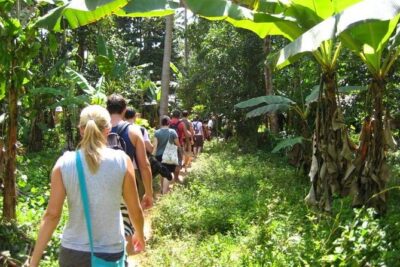

Browse the lists this tour appears in