
Reviewed · KILIMANJARO TREKS
5 Days Classic Kilimanjaro Climb via Marangu route
Kilimanjaro’s Marangu Route gives you a clear, classic path to Africa’s highest summit, with hut accommodation instead of tents and a steady approach through rainforest, moorland, and the high saddle below Kibo. The summit push is the hard part: a midnight start, 15 hours on foot, and an ascent to 5,895 metres.
I like two things right away. First, the price includes many costly pieces, from airport transfers and park fees to rescue cover, crew wages, meals, and one night in Arusha. Second, the small private-group format and the support of guides such as Dickson and Bob make this feel more personal than a large shared departure.
The main drawback is the schedule. Five days is a tight plan for such a high mountain, and Day 4 is punishingly long. You need to be comfortable with long walking days and should discuss altitude and fitness with the operator before booking.
Key points to know before you book
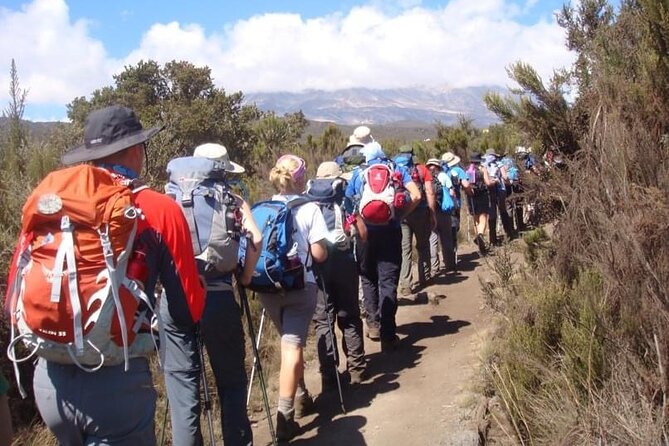
- Hut-based Marangu route: You sleep in Mandara, Horombo, and Kibo huts rather than camping.
- A serious summit day: The final stage lasts about 15 hours and covers 22 kilometres.
- Useful inclusions: Park charges, rescue fees, VAT, crew, meals, water, hot washing water, and airport transfers are covered.
- Private group format: Only your group takes part, with group discounts available.
- Big scenery changes: The route moves from tropical rainforest to heath, moorland, the barren saddle, and Kibo’s crater rim.
- A tight five-day plan: The itinerary reaches the summit quickly, with little spare time built in.
Why the Marangu Route remains popular
The Marangu Route is often called the Coca-Cola Route, a nickname that reflects its popularity and relatively direct trail. That does not mean it is easy. Kilimanjaro still rises to 5,895 metres, and the summit day asks a lot from your legs and your patience.
The route’s big advantage is comfort. You sleep in huts at Mandara, Horombo, and Kibo, rather than carrying a tent or spending each night under canvas. For many people, that makes the trip feel more manageable. You still need warm clothing, personal gear, and stamina, but the sleeping arrangements are simpler.
The five-day plan is also easy to understand. You start in the rainforest, climb through the heath and moor zone, cross the broad saddle beneath Kibo, reach the crater rim at Gillman’s Point, and continue to Uhuru Peak. Then you retrace the route to the park gate.
I would not choose this trip because it promises an easy mountain. I would choose it if you want the classic route, hut accommodation, a private group, and a package that includes most of the large practical costs.
Other routes up the mountain from Arusha:
- 8-Day Small-group Lemosho Kilimanjaro Summit Trekking
★ 5.0 · 186 reviews - 5 Days Best of Tanzania Luxury Safari Northern Circuit
★ 5.0 · 174 reviews - 7-Day Machame Kilimanjaro Summit Tour from Arusha
★ 5.0 · 125 reviews
Day 1: From Arusha to Mandara Hut
Your morning begins with breakfast and collection from your lodge in Arusha. Private transport takes you to Marangu Gate, where the required paperwork is completed before you begin walking.
The first section leads through dense rainforest. This is one of the most pleasant parts of the climb, since the vegetation changes quickly and the trail feels sheltered compared with the exposed upper slopes. You may also catch sight of primates in the trees, although wildlife sightings are never something to count on.
Mandara Hut is the first overnight stop. After resting, your guide can take you to Maundi Crater. This short outing adds a worthwhile viewpoint, with views toward the Kenyan interior. It is a good first afternoon because it gives you something to see beyond the hut while keeping the day focused on getting settled.
The day is listed at about 12 hours, including the transfer, gate formalities, walking, and the Maundi Crater outing. That makes it a full opening day, even though the trail itself is the gentler beginning of the route.
You receive lunch and dinner, along with treated and filtered drinking water. Hot water for washing is also included, a small comfort that matters after a long day outside.
Day 2: Heath, moorland, and Horombo views
After an early breakfast, you leave the rainforest behind. The trail reaches the timberline and enters the heath and moor zone, where the trees thin out and the views begin to open.
The walk to Horombo Hut covers 12.5 kilometres and usually takes four to six hours. Horombo sits at about 3,700 metres, so the height begins to feel like a real part of the trip rather than a number on a sign.
From the hut, you can look toward Mawenzi, Kibo, and the broad plain of the Maasai Steppe. The setting changes again here. The thick forest is gone, replaced by open ground and a much wider view.
Horombo is an important night in the schedule because it breaks the climb into manageable stages. Still, this five-day version does not include an extra acclimatisation day. If you are comparing itineraries, pay close attention to that difference. A longer Kilimanjaro plan may cost more, but it can also give you more time on the mountain before the summit attempt.
Your day includes breakfast, lunch, and dinner. The crew also provides water and hot washing water, while your personal toiletries and other small items remain your responsibility.
Day 3: Across the saddle to Kibo Hut
Day 3 is shorter in distance than Day 2, at 9.5 kilometres, but it can feel harder because of the altitude and the exposed setting. The route passes the Last Water point before reaching the saddle.
The saddle is a nearly vegetation-free plateau between Kibo and Mawenzi. It is a striking part of the route because the mountain’s two major volcanic cones become clear in relation to each other. You are walking across open high ground, with little shelter and a growing sense that the summit is close.
Kibo Hut usually comes after five to six hours of walking. At this point, the schedule becomes very deliberate. You eat an early evening meal and go to bed early because your wake-up will come around midnight.
This is the night when the practical value of good crew support becomes clear. You need to organize your summit clothes, headlamp, water, and personal items before trying to sleep. The exact equipment list is not provided here, so ask Golden Trips Tanzania what you must bring yourself.
The package includes dinner and water on this stage. It does not include personal toiletries, laundry, or drinks purchased at your Arusha hotel.
Same base, a different kind of day out:
- Serengeti Balloon Safari and authentic bush breakfast
★ 5.0 · 2,480 reviews - Balloon Safari & Bush Breakfast in Serengeti – Miracle Experience
★ 5.0 · 1,646 reviews - Tanzania Classic – 7 Days
★ 5.0 · 1,151 reviews - 4 Days Group Camping Safari
★ 5.0 · 1,101 reviews
Day 4: The midnight climb to Uhuru Peak
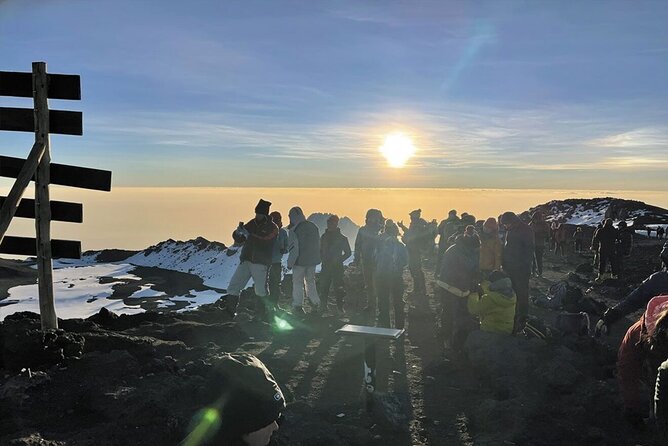
Day 4 is the heart of the trip and its biggest test. You begin the final ascent around midnight, climbing slowly toward Hans Meyer Cave at about 5,220 metres.
The trail continues upward toward Gillman’s Point, which sits at 5,681 metres on Kilimanjaro’s crater rim. If your timing goes to plan, you arrive around sunrise. The morning light warms the ground after a cold night, and the crater rim gives you a major sense of progress even before you reach the highest point.
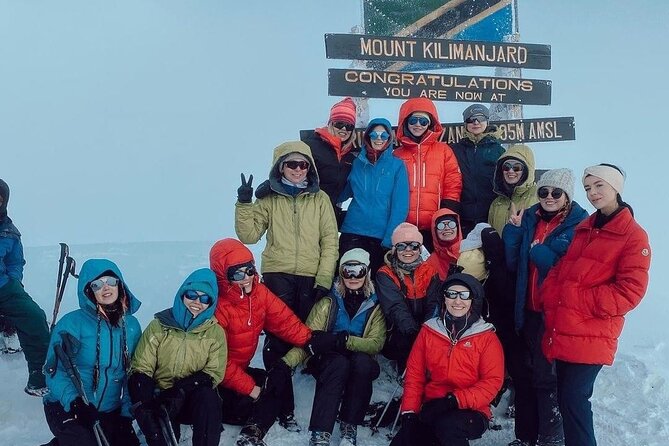
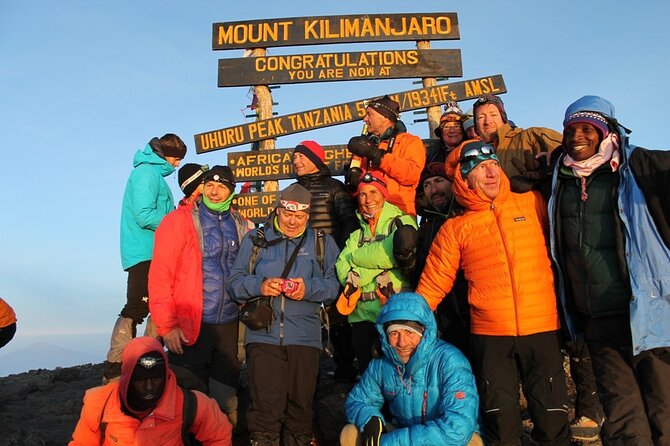
From Gillman’s Point, you continue for another one to two hours to Uhuru Peak at 5,895 metres. This final section may be slow. The day is not about speed. It is about steady movement, careful pacing, and following your guide’s instructions.
After the summit, you return to Kibo Hut for a warm meal and a one to two-hour rest. Then you continue down to Horombo Hut. The total distance is about 22 kilometres, and the day can last 15 hours.
That figure deserves attention. This is not a casual scenic walk with a short summit visit added on. You will climb through the night, reach the summit, descend to Kibo, rest briefly, and walk farther to Horombo. I would treat Day 4 as the deciding factor when booking. If a 15-hour mountain day sounds beyond your comfort level, ask about a longer itinerary or a different schedule.
The tour includes lunch, dinner, drinking water, crew support, rescue fees, and an emergency first-aid kit. Rescue coverage is a useful inclusion, but it does not replace travel insurance. Travel insurance is not included, so arrange your own policy before departure.
Day 5: Descending through the rainforest
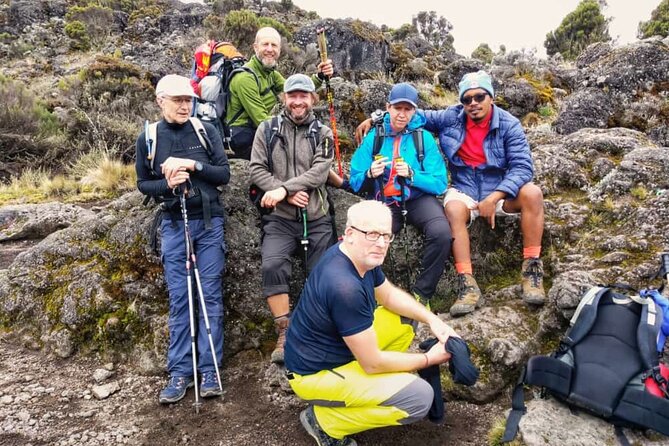
The final walking day takes you from Horombo back toward Mandara Hut and then down through the rainforest to the Kilimanjaro National Park Gate.
The route covers about 20.8 kilometres and takes around 10 hours. Your first stop is Mandara Hut at 2,700 metres, where a warm lunch is provided. From there, the trail returns to the forest, bringing cooler air, thicker vegetation, and a more familiar walking environment after the bare upper mountain.
At the park gate, at about 1,860 metres, you say goodbye to the guides, porters, and cook. A short transfer then returns you to your hotel in Arusha.
One night of Arusha accommodation is included on the last day. That gives you a place to shower and rest after the descent, which is a far better ending than heading straight to an airport or another long transfer. The package includes breakfast, lunch, and dinner for the listed climbing schedule, but meals and drinks at your hotel before and after the climb are not covered.
What the $2,178 price really covers
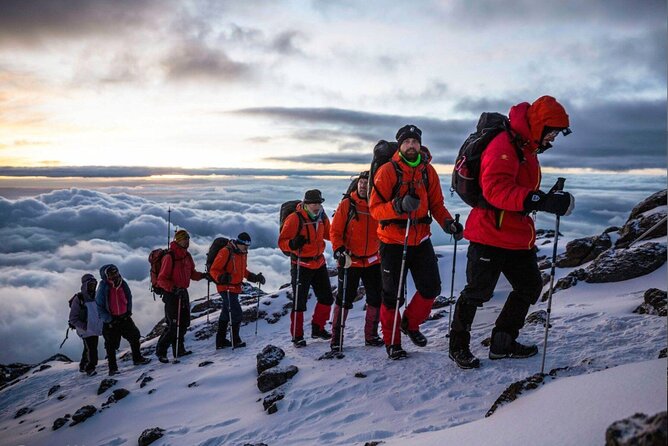
At $2,178 per person, the cost is not just payment for a guide to lead you uphill. The package includes a substantial set of fixed expenses:
- Private airport transfers to and from your Arusha accommodation
- One night of Arusha accommodation on the final day
- Transport to and from Kilimanjaro National Park
- All fees and taxes, including 18 percent VAT
- Kilimanjaro rescue fees
- Park and government charges
- Guides, porters, and a cook
- Fair wages for the mountain crew
- Treated and filtered drinking water
- Hot water for washing
- Four breakfasts, four dinners, and five lunches
- An emergency first-aid kit
That list gives the price reasonable value, especially if you would otherwise have to arrange airport transport, park entry, crew payments, meals, rescue cover, and a hotel separately. The inclusion of fair wages is also important. A mountain trip depends on a large support team, and the cost should reflect proper treatment of that crew.
You still need to budget for international and domestic flights, travel insurance, hotel meals and drinks before and after the climb, laundry, toiletries, personal items, and tips for guides, porters, and the cook. Tips are not included, so ask the company for current guidance before you go.
The guide and crew setup
This is a private activity, so only your group participates. That gives you more control than a large shared departure, although the precise group size is not stated.
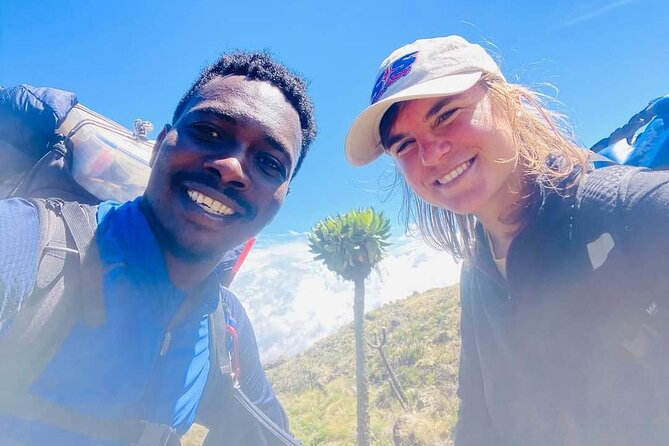
The mountain team includes professional guides, a cook, and porters. The names Dickson and Bob are associated with the company’s Kilimanjaro guiding team, and the supplied trip information identifies them as guides on previous Marangu climbs. Ask at booking whether they will lead your particular departure, since guide assignments can vary.
The personal support is one of the strongest reasons to consider this package. You are not simply buying a route map and a hut bed. The crew handles food, water, transport of supplies, and mountain guidance while you focus on walking.
A small celebration at the base has also been arranged on at least one past climb, including sparkling wine after the summit. That is not listed as a guaranteed inclusion, so treat it as a possible extra rather than part of the contract. Still, it gives you an idea of the celebratory tone the company may bring to the end of the climb.
Who should choose this five-day climb?
I would recommend this trip to someone who wants:
- The traditional Marangu Route
- Hut accommodation rather than camping
- A private group instead of a shared departure
- A package with transport, meals, crew, water, and major fees included
- A direct five-day schedule
- A clear summit goal at Uhuru Peak
I would be more cautious if you want a slow pace, extra time for acclimatisation, or shorter daily stages. The itinerary contains several long days, and the summit day is especially demanding.
The route is listed as suitable for most participants, but that should not be confused with effortless. You need to be ready for repeated walking days, steep uphill sections, cold conditions near the summit, and a long descent after reaching Uhuru Peak.
Booking details and cancellation
Confirmation is received at the time of booking. Pickup is offered, group discounts are available, and you receive a mobile ticket.
You can cancel for a full refund if you do so at least 24 hours before the experience begins. Cancellations made within 24 hours are not refunded, and changes within that period are not accepted. Cut-off times use local Tanzanian time.
Should you book the Golden Trips Tanzania Marangu climb?
Book it if you want a well-packaged, private Kilimanjaro climb with hut sleeping, strong logistical coverage, and a direct five-day route. The included airport transfers, Arusha night, rescue fees, meals, water, crew, and taxes make the $2,178 price easier to justify.
Think twice if you are choosing between five and six days mainly on price. The shorter plan saves time, but it gives you less room before the summit push. I would ask Golden Trips Tanzania about the exact guide assignment, required personal gear, current tipping advice, and options for adding an acclimatisation day.
For a fit and prepared climber who values a classic route and personal crew support, this is a practical way to attempt Uhuru Peak. Just go in with clear eyes: the rainforest and huts are inviting, but the midnight climb and 15-hour summit day are the real price of reaching the top.
FAQ
How long does the Kilimanjaro climb last?
The scheduled climb lasts five days, with the first day beginning from Arusha and the final day ending with a transfer back to your Arusha hotel.
Where does the climb start?
You are collected from your lodge in Arusha and taken to Marangu Gate in Kilimanjaro National Park.
Where do you sleep during the climb?
The route uses Mandara Hut, Horombo Hut, and Kibo Hut. The package also includes one night of accommodation in Arusha on the final day.
Is transport included?
Yes. Private transport to and from Kilimanjaro International Airport to your Arusha accommodation is included, along with transport to and from the Kilimanjaro gate.
Are meals and drinking water included?
Yes. The package includes four breakfasts, four dinners, five lunches, and treated and filtered drinking water throughout the trek. Hotel meals and drinks before and after the climb are not included.
What is the cancellation policy?
You receive a full refund if you cancel at least 24 hours before the experience begins. Cancellations or changes made within 24 hours are not accepted or refunded.
Just added in Arusha
- 4 Days Private Midrange Lodge Safari to Serengeti & Ngorongoro★ 5.0 · 4 reviews
- Extraordinary Hot air Bolloon ride in Serengeti | BURIGI CHATO SAFARIS CO L.T.D★ 5.0 · 6 reviews
- 3 days leopard safaris★ 5.0 · 4 reviews
- 8 Days Serengeti Migration safari★ 5.0 · 11 reviews
- tarangire, ngorongoro & lake manyara park 3 days private tour★ 5.0 · 11 reviews
- tarangire & ngorongoro 2 days tour★ 5.0 · 14 reviews
- Mt. Kilimanjaro: Shira plateau to Cathedral point 3872m Day hike★ 5.0 · 7 reviews
- serengeti, ngorongoro & tarangire 4 days private tour★ 5.0 · 18 reviews
Kilimanjaro Treks, compared.



8-Day Small-group Lemosho Kilimanjaro Summit Trekking
Read our review →

5 Days Best of Tanzania Luxury Safari Northern Circuit
Read our review →

Climbing Kilimanjaro through 7 days Machame Route
Read our review →
7-Day Machame Kilimanjaro Summit Tour from Arusha
Read our review →Browse the lists this tour appears in