
Reviewed · KILIMANJARO TREKS
6 Day Machame Route – Climb Mount Kilimanjaro
Mount Kilimanjaro’s Machame Route gives you a striking change of scenery almost every day, from wet rainforest to open moorland, black volcanic scree, glaciers, and the sunrise at Uhuru Peak, 5,895 meters. The summit day is the test: up to 15 hours on foot, beginning around midnight.
I like the careful start in Moshi, where your guide briefs you and checks your equipment before you head up. I also like the walk high, sleep low rhythm on the fourth day, plus the generous food and personal attention reported from the crew, especially from guide Emmanuel. The main caution is the short six-day climb, which leaves less time for your body to adjust to altitude than a longer route.
Key points before you book
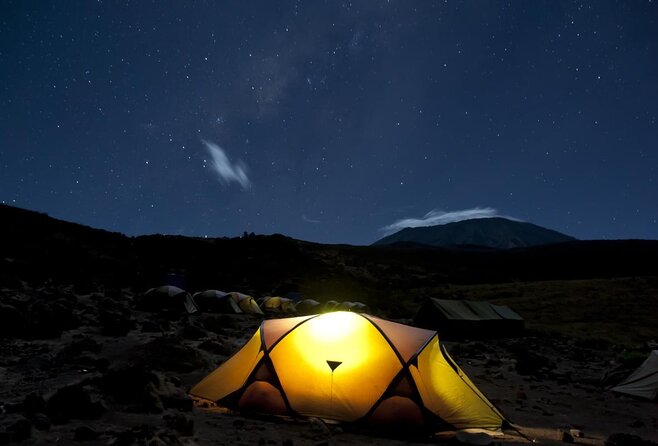
- A full summit day: Expect 13.4 kilometers and 12 to 15 hours of walking on the climb to Uhuru Peak and back toward camp.
- Five distinct mountain zones: The route moves from dense rainforest to the Shira Plateau, high moorland, volcanic rock, glaciers, and dry scree.
- Moshi preparation night: Airport pickup, a hotel stay, a guide briefing, and an equipment check happen before the trek begins.
- A small group size: The maximum is 15 people, giving the guide team a reasonable chance to monitor the group.
- Strong food reports: The meals are described as plentiful and good, a useful benefit on a demanding climb.
- An eight-day travel plan: The mountain portion lasts six days, with arrival and departure days bringing the total trip to about eight days.
Why the Machame Route feels like a real mountain journey
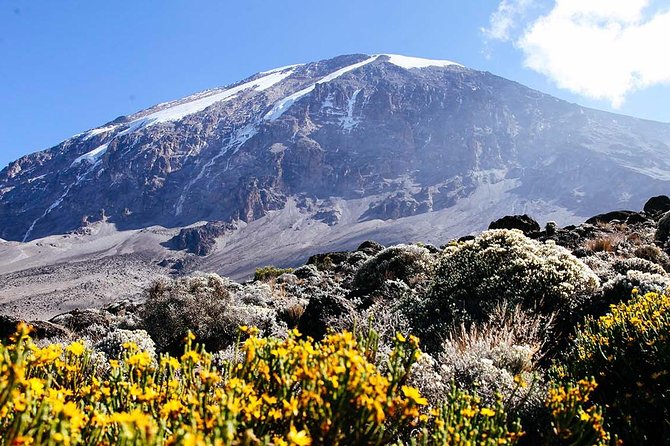
The Machame Route is not a quick walk to a viewpoint. It is a gradual passage through several climate zones, with each day bringing a different surface, temperature, and view. You begin under trees and finish among ice cliffs and volcanic rock.
The route is sometimes called the Whiskey Route, a name that reflects its tougher character compared with easier approaches. The provided plan confirms that this is a demanding option: the first day on the mountain takes about six hours, and the summit day may last 12 to 15 hours.
Rupia Adventure prices the trip at $2,000 per person. That is a substantial sum, but the value depends on what you need from an organized climb. Airport pickup, hotel nights, mountain transport, a guide, porters, meals, park formalities, and equipment checks are built into the plan. For a first Kilimanjaro climb, having the logistics handled can be worth a great deal.
You should still ask for a final written list of what is covered. The meal details show five dinners, seven breakfasts, and six lunches, while the trip lasts about eight days. The information also lists bicycle use as an extra, which appears unrelated to the climb. I would clarify both points before paying.
Other routes up the mountain from Arusha:
- 8-Day Small-group Lemosho Kilimanjaro Summit Trekking
★ 5.0 · 186 reviews - 5 Days Best of Tanzania Luxury Safari Northern Circuit
★ 5.0 · 174 reviews - 7-Day Machame Kilimanjaro Summit Tour from Arusha
★ 5.0 · 125 reviews
Day 1: Airport pickup and a useful equipment check
Your trip begins with pickup at Kilimanjaro International Airport and transfer to a hotel in Moshi. The plan names Mvuli Hotel, or an alternative, as the overnight base.
This first day matters more than it might seem. You meet your guide, receive a briefing, and check your mountain gear before the climb. Missing items can be rented that day, which is much better than discovering at altitude that you lack suitable clothing or equipment.
The meeting time is listed as 8:30 am, though your airport arrival and transfer details should be confirmed when you book. Use this day to ask direct questions about the pace, the summit schedule, meals, water arrangements, and what happens if you need to stop early.
The hotel night also gives you a chance to settle in before the early mountain start. Moshi is the practical base for Kilimanjaro trips, and the final day later gives you a little time to see more of town if your flight allows.
Day 2: Six hours through Machame’s wet rainforest
After roughly a two-hour drive from Arusha, you reach the gate for the Machame Route. Park formalities are completed there, and you meet the porters before starting the climb.
The first section rises through dense rainforest. This is a beautiful beginning, but it is not necessarily an easy one. The trail climbs steadily, and the route can be overgrown in places. Wet and muddy ground is common, so good footwear and patience matter more than speed.
The day covers about 10.8 kilometers in six hours. That pace allows you to settle into the mountain routine: walk slowly, drink regularly, listen to your guide, and keep your clothing ready for changing conditions.
The forest blocks many long views, but that is part of the appeal. You are not simply marching toward a summit. You are moving through a living mountain environment that feels far removed from the airport and hotel below.
Day 3: The Shira Plateau and the first wide views
The trail continues through the upper forest before climbing more sharply toward the Shira Plateau. This is a shorter day, about 5.4 kilometers and five hours, but the steeper ascent can make it feel serious.
At the plateau, the character of the trip changes. Trees give way to open high ground and broad views of Kilimanjaro. Looking back, you may see Mount Meru rising above the Arusha area, a memorable reminder of how quickly you have gained height.
This is the point when altitude begins to matter for some people. The walk may not be especially long, but you are now sleeping much higher than you began. Keep your pace slow, and tell the guide promptly if you feel unwell. The plan allows a maximum group of 15, and that size should help the crew keep an eye on individual needs.
Same base, a different kind of day out:
- Serengeti Balloon Safari and authentic bush breakfast
★ 5.0 · 2,480 reviews - Balloon Safari & Bush Breakfast in Serengeti – Miracle Experience
★ 5.0 · 1,646 reviews - Tanzania Classic – 7 Days
★ 5.0 · 1,151 reviews - 4 Days Group Camping Safari
★ 5.0 · 1,101 reviews
Day 4: Lava Tower and the value of sleeping lower
Day four is one of the most important for acclimatization. You cross high moorland on the southwest side of Kilimanjaro, pass below Lava Tower, and reach an altitude of about 4,600 meters before heading to camp.
The walking distance is about 10.8 kilometers, with roughly eight hours on the move. You spend much of the day high, then follow the useful mountaineering pattern of walk high, sleep low. That means your body gets exposure to altitude without spending the night at the highest point reached that day.
The views become more severe and open here. The forest is gone, replaced by volcanic ground and high-altitude plants. You also pass beneath the final section of the Western Breach, adding a sense of scale to the route.
This day can be tiring even though it does not reach the summit. The altitude, long hours, and thinner air make it a good test of how your body is responding. Do not treat the camp arrival as a reason to rush. Eat, drink, rest, and save energy for the next two days.
Day 5: Barranco Wall, Karanga Valley, and Barafu Camp
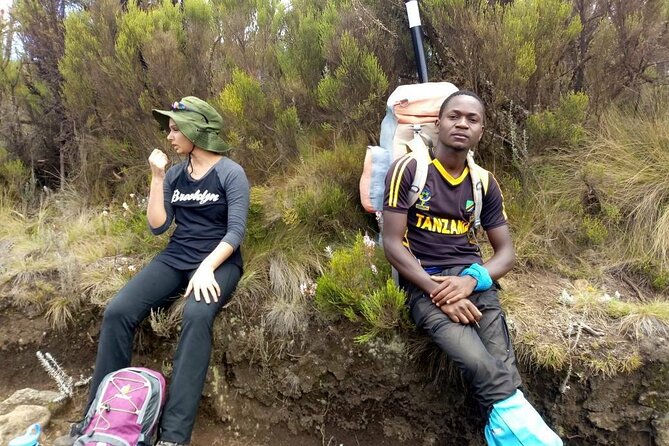
The morning begins with a descent into the Great Barranco, a large ravine. Then comes the Barranco Wall, a steep rock section that divides the ravine from Kilimanjaro’s southeastern slopes.
The wall is not technical climbing, but it is long and tiring. You will use your hands in places and move carefully over rock. The route passes beneath the Heim and Kersten glaciers before reaching the Karanga Valley.
Karanga is the last point for fresh water on this route, according to the plan. From there, the trail becomes drier and more barren as it climbs toward Barafu Camp. Scree underfoot makes the final approach less comfortable and can slow your pace.
The day covers about 8.5 kilometers in eight hours. It is a compact distance, but the steep rock, altitude, and rough surface make it a demanding day. Barafu is the launch point for the summit attempt, so your priority is recovery. Organize your warm clothing and headlamp before resting, since the midnight start leaves little time for preparation.
Day 6: A midnight start and the long push to Uhuru Peak
Summit day begins around midnight. You climb steeply over scree toward the glaciers for four to five hours, gaining a great deal of height in a short distance.
The goal is Stella Point on the crater rim, at about 5,739 meters, around the time the first light appears. From there, you can see ice cliffs inside the crater, as well as Mawenzi Peak and the wider mountain country beyond.
The final hour to Uhuru Peak brings you to the top of Kilimanjaro at 5,895 meters. This is the high point of the trip, but it is only the midpoint of the day. You return to Stella Point, descend the scree to Barafu Camp for breakfast, then continue to Millennium Camp for a longer rest.
In total, the day covers about 13.4 kilometers and 12 to 15 hours. That figure deserves respect. Even strong walkers may find the descent surprisingly hard after the summit effort. Take photos at the top, but do not linger longer than your guide recommends. The safest approach is to follow the group’s timing and protect your energy for the walk down.
Day 7: Forest descent, certificates, and a real shower
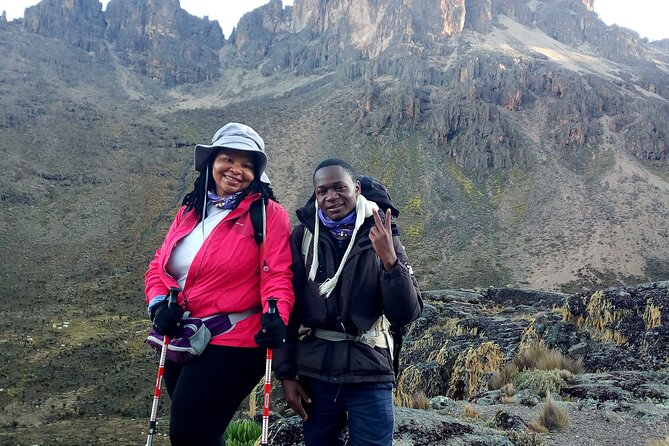
The final mountain day leads downhill through rainforest to Mweka Gate. The distance is about 12.1 kilometers, taking roughly six hours.
After reaching the gate, you complete park formalities and receive summit certificates. Vehicles then return you to the hotel in Moshi, where a shower and a cold drink can feel like proper rewards after the mountain.
This is also the day for a celebration with the crew. The food receives especially strong praise, with reports of meals being both good and plentiful. That matters on a climb where you burn energy for many hours and may have little appetite at altitude.
You spend the night at Mvuli Hotel or an alternative. The return to town gives you a clear change of pace, from basic mountain conditions to a hotel room and ordinary comforts.
Day 8: A spare day before flying home
The final day is left open for recovery and departure. Depending on your flight time, you can explore Moshi and buy souvenirs before going to the airport.
This flexible day is useful because summit trips do not always end with your body ready for a busy sightseeing schedule. You can keep it quiet, or use it as a chance to see more of the town.
Rupia Adventure can also arrange safari or Zanzibar add-ons. Those extensions may suit you if you have extra time in Tanzania, but they are not part of the $2,000 climb and should be priced separately.
Guides, food, group size, and support
The crew is central to the quality of any Kilimanjaro climb. The information provided names guide Emmanuel, who is praised for listening closely and adjusting the hiking pace. That kind of personal attention is valuable on a route where one person may feel fine while another needs more time.
The full group can have up to 15 people. That is not a private climb, but it is small enough to avoid the feel of a very large procession. Ask how many guides and porters will be assigned to your departure, since the overall group limit does not tell you the exact staff-to-climber ratio.
Meals are another strong point. Food is provided as five dinners, seven breakfasts, and six lunches. The available feedback describes portions as generous and the cooking as good. Still, bring any personal snacks you rely on, since familiar food can help during the long summit day.
The equipment check on arrival is a practical service. If you need to rent missing gear, doing so in Moshi gives you time to correct a problem before the rainforest begins.
Who should choose this climb?
This trip suits you if you want a guided Kilimanjaro climb with airport pickup, a hotel start and finish, meals, porters, and a clear daily plan. It is especially useful for first-time visitors who do not want to arrange mountain transport and park procedures alone.
You should be comfortable with long walking days, steep ascents, muddy forest trails, loose scree, and a midnight summit start. The route is not technical climbing, but the altitude and endurance demands are serious.
The six-day mountain schedule is the main point to weigh. It is efficient and keeps the price lower than a longer expedition, but it gives you less time to adjust than a slower route. If you have struggled with altitude before, ask Rupia Adventure if another schedule is available before booking.
Booking details and cancellation risk
Confirmation is provided when you book, and the activity accepts most participants. The experience is non-refundable and cannot be changed for any reason, so check your flights, health, equipment, and dates carefully before paying.
The climb depends on suitable weather and a minimum number of people. If the operator cancels because of poor weather or too few bookings, you are offered another date or experience, or a full refund. That protection does not apply to a cancellation you make yourself.
Should you book the Machame Route with Rupia Adventure?
I would consider this trip if you value hands-on support, strong meals, airport pickup, and a guide who pays attention to your pace. Emmanuel’s reported approach is exactly what you want on a demanding mountain day, and the maximum group size of 15 keeps the trip from becoming too unwieldy.
I would hesitate if you want the most gradual possible acclimatization schedule, or if your travel dates may change. The six-day climb is hard, the summit day is very long, and the no-refund rule is strict.
For a prepared hiker who accepts those limits, the $2,000 price offers a practical package and a varied route through Kilimanjaro’s major mountain zones. Confirm the exact inclusions, group staffing, equipment rental costs, and meal plan first. Then decide if the shorter schedule matches your fitness and altitude comfort.
FAQ
How long does the full Mount Kilimanjaro trip take?
The complete plan lasts about eight days. Six days are spent on the Machame Route, with an arrival day before the climb and a departure day afterward.
Where does the trip begin?
Airport pickup is offered from Kilimanjaro International Airport. You are transferred to a hotel in Moshi, where you meet the guide and complete the briefing and equipment check.
What is the highest point reached?
The summit is Uhuru Peak at 5,895 meters. The route also reaches Stella Point on the crater rim at about 5,739 meters.
How long is the summit day?
The summit day covers about 13.4 kilometers and takes approximately 12 to 15 hours. It starts around midnight and includes the return from the summit area to Millennium Camp.
Is the Machame Route technical climbing?
The Barranco Wall involves a steep climb over rock, but it is described as non-technical. The route also includes scree, muddy trail, steep sections, and long walking days.
What happens if the operator cancels the trip?
If poor weather or an insufficient minimum group causes the cancellation, you are offered a different date or experience, or a full refund. Your own cancellation is non-refundable and cannot be changed.
Just added in Arusha
- Extraordinary Hot air Bolloon ride in Serengeti | BURIGI CHATO SAFARIS CO L.T.D★ 5.0 · 6 reviews
- 4 Days Private Midrange Lodge Safari to Serengeti & Ngorongoro★ 5.0 · 4 reviews
- 3 days leopard safaris★ 5.0 · 4 reviews
- 8 Days Serengeti Migration safari★ 5.0 · 11 reviews
- tarangire, ngorongoro & lake manyara park 3 days private tour★ 5.0 · 11 reviews
- Mt. Kilimanjaro: Shira plateau to Cathedral point 3872m Day hike★ 5.0 · 7 reviews
- serengeti, ngorongoro & tarangire 4 days private tour★ 5.0 · 18 reviews
- tarangire & ngorongoro 2 days tour★ 5.0 · 14 reviews
Kilimanjaro Treks, compared.



8-Day Small-group Lemosho Kilimanjaro Summit Trekking
Read our review →

5 Days Best of Tanzania Luxury Safari Northern Circuit
Read our review →

Climbing Kilimanjaro through 7 days Machame Route
Read our review →
7-Day Machame Kilimanjaro Summit Tour from Arusha
Read our review →Browse the lists this tour appears in