
Reviewed · KILIMANJARO TREKS
7-Day Mountain Climbing in Machame Route
Mount Kilimanjaro gives you a rare mountain challenge without requiring technical climbing experience. This seven-day Machame Route moves from monkey-filled rainforest to open moorland, volcanic rock, and high alpine desert before your midnight push toward the summit.
I like the route’s changing scenery, and I like the steady pace that gives you several days to gain height before summit night. The private format is another plus: your group climbs together, with guides, porters, and a cook supporting the effort. The main drawback is the final ascent, which means hiking in darkness for five to six hours after very little sleep.
Key points to know before booking
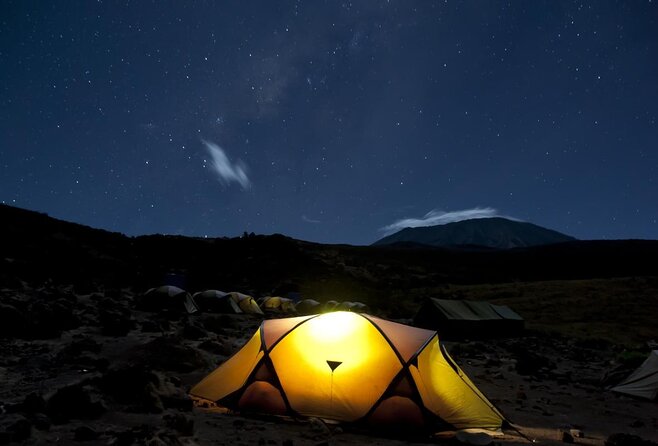
- The route crosses four distinct habitats: rainforest, moorland, semi-desert, and alpine desert.
- Summit night begins around midnight: expect a long, cold climb to Stella Point and then the peak.
- A private group climbs together: only your own party takes part in the activity.
- Meals are included throughout the mountain stay: seven breakfasts, seven lunches, and six dinners are covered.
- The Barranco Wall adds a hands-on challenge: you will use your arms and feet on a rocky section, though the experience does not require expert climbing skills.
- Tips are not included: set aside extra money for the guides, porters, and cook.
Why the Machame Route works well over seven days
The Machame Route is often called the Whiskey Route, and it is one of the better-known ways to reach Kilimanjaro’s summit. You do not need previous technical climbing experience, but you do need determination and a reasonable level of fitness.
That distinction matters. This is not a technical mountaineering trip, yet it is still a serious high-altitude walk. You will gain more than 4,000 meters from the starting point to the summit, sleep at high camps, and face a final day that combines ascent and descent.
The seven-day schedule gives you more time than a very short Kilimanjaro itinerary. That helps you adjust gradually, although no schedule can remove the effects of altitude. Your guide’s judgment, your pace, and your willingness to report how you feel all matter.
The tour is private, so your experience is shaped around your own group rather than a large mixed party. That can make meal times, walking speed, and rest stops easier to manage. It also means the quality of communication with your guides is especially important.
Other routes up the mountain from Arusha:
- 8-Day Small-group Lemosho Kilimanjaro Summit Trekking
★ 5.0 · 186 reviews - 5 Days Best of Tanzania Luxury Safari Northern Circuit
★ 5.0 · 174 reviews - 7-Day Machame Kilimanjaro Summit Tour from Arusha
★ 5.0 · 125 reviews
Day 1: Arusha to Machame Camp through rainforest
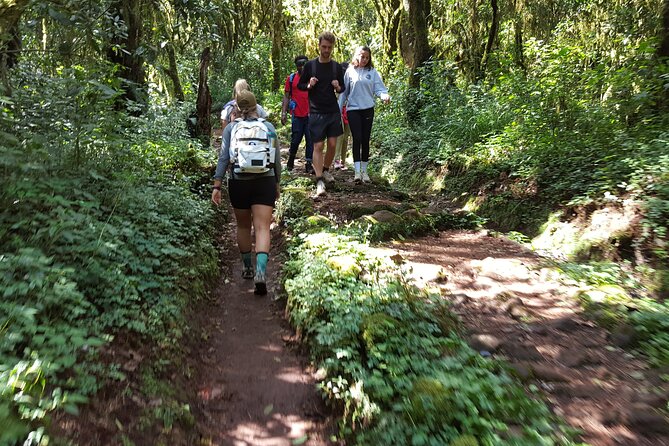
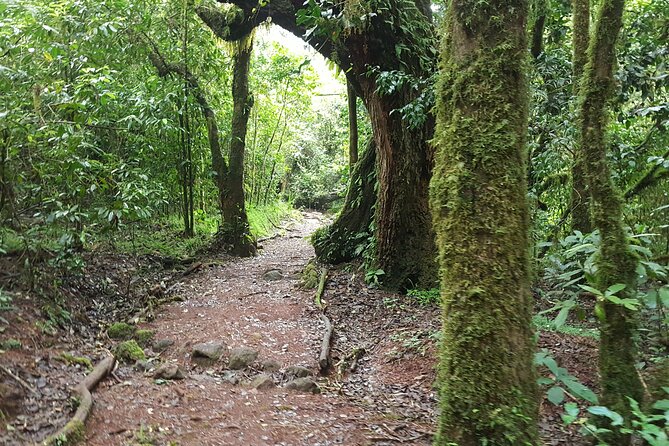
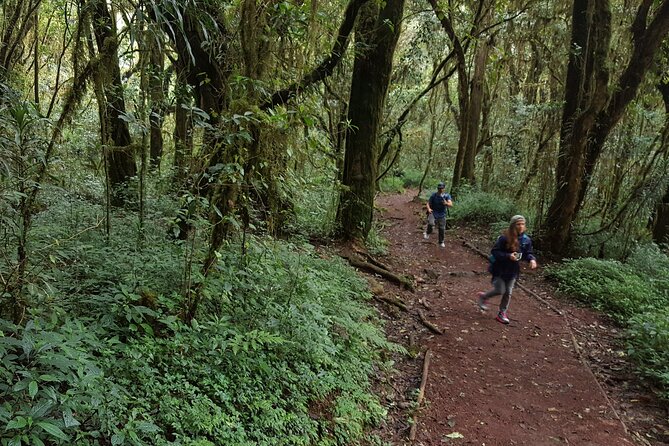
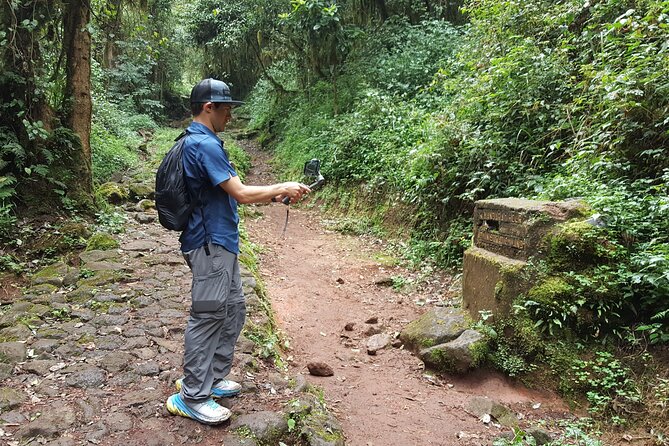
The day begins with pickup from Arusha and the drive toward Kilimanjaro National Park. After the required park formalities, you start walking through thick rainforest.
The stated hiking time is five to six hours, with an elevation gain from 1,811 meters to 3,021 meters. This is a proper first day, not just a gentle introduction, but the forest makes the walk interesting. You might spot blue colobus monkeys and several bird species as the trail climbs.
Machame Camp is your first overnight stop. A cook and porters are part of the support team, and meals are provided at camp. The plan includes breakfast, lunch, and dinner, although your exact breakfast arrangement depends on where you stay before the climb.
I like this opening because the rainforest gives Kilimanjaro a sense of place right away. You are not simply walking up a bare slope. You begin among tall trees, birds, and changing plant life, then slowly leave that world behind.
Day 2: Moorland and the views from Shira Camp
Day two takes four to five hours and climbs from 3,021 meters to 3,839 meters. The rainforest gives way to moorland, so the feel of the walk changes quickly.
Shira Camp offers time to rest in the afternoon and take in views toward Kibo Glacier. The shorter walking day is useful because you are already sleeping above 3,000 meters. Even if your legs feel good, the height can affect your appetite, sleep, and energy.
The changing scenery is one of the best reasons to choose this route. In two days, you move from humid forest to a more open, exposed setting. Bring layers that you can add or remove easily, since conditions can feel very different between walking and resting.
Day 3: Volcanic rock, high ground, and Barranco
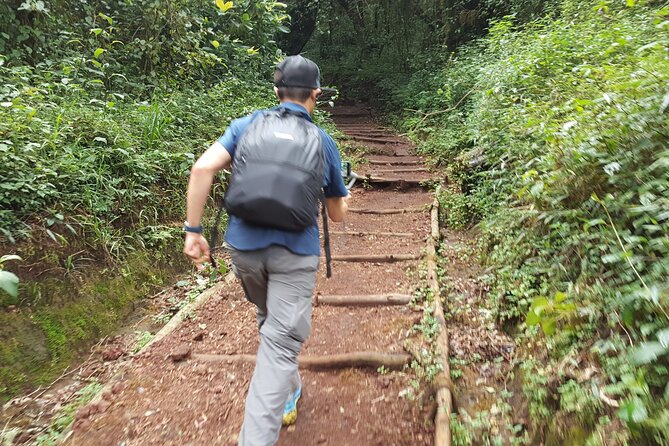
The third day includes a volcanic rock formation described as roughly 300 feet high. After breakfast, you tackle this first major obstacle before continuing toward the Barranco area.
The stated elevation changes from 3,839 meters to 3,986 meters, with five to six hours of hiking. The route is described as passing through semi-desert and then descending toward Barranco Camp, which sits at about 4,500 meters in the itinerary description.
There is an important detail to confirm before you pay your balance: the accommodation field for this day also names Shira Camp, while the written plan says Barranco Camp. Those two details do not match. Ask Serengeti Wildlife Safaris to confirm the exact camp and elevation profile for your departure.
Barranco is widely valued for its setting, and it prepares you for the next morning’s rocky section. This is also a day when you may feel the altitude more clearly. Keep your pace slow and tell your guide if you develop a headache, unusual weakness, or other symptoms.
Same base, a different kind of day out:
- Serengeti Balloon Safari and authentic bush breakfast
★ 5.0 · 2,480 reviews - Balloon Safari & Bush Breakfast in Serengeti – Miracle Experience
★ 5.0 · 1,646 reviews - Tanzania Classic – 7 Days
★ 5.0 · 1,151 reviews - 4 Days Group Camping Safari
★ 5.0 · 1,101 reviews
Day 4: The Barranco Wall and Karanga Valley
Day four brings the most hands-on section of the route. You climb the Barranco Wall using a mixture of walking, careful foot placement, and some old-fashioned rock work.
The day covers about five hours, with a small net elevation gain from 3,986 meters to 4,034 meters. That modest figure can be misleading. The route rises and falls, and the Barranco Wall takes concentration even if it is not technical climbing.
After the wall, you continue toward Karanga Valley. The camp sits in alpine desert, a much barer setting than the forest below. Lunch, dinner, and overnight accommodation are included.
I would not describe this day as easy just because the net gain is small. The wall is a psychological hurdle, and the thin air can make every effort feel larger. Your guide should set a patient pace and explain where to place your feet. Take your time and do not let a faster person in your group dictate your speed.
Day 5: Barafu Camp and preparation for summit night
The walk to Barafu Camp takes about three to four hours and climbs from 4,034 meters to 4,662 meters. You finish the South Circuit here, with views of the summit from different angles.
Barafu is a practical staging point rather than a place for a long afternoon of sightseeing. You eat, drink, organize your clothing, and rest. The schedule calls for an early meal before the summit attempt.
This is where packing discipline pays off. Your warm layers, water, headlamp if you bring one, gloves, and other essentials should be easy to reach. The supplied details do not confirm which personal equipment is included, so ask about sleeping bags, sleeping pads, trekking poles, and warm clothing before departure. A past booking associated with the company mentioned access to those items, but availability and terms may differ by trip.
You should also expect a broken night. The summit attempt starts around midnight, so your afternoon at Barafu is less about sightseeing and more about saving energy.
Day 6: A midnight start and the summit attempt
Summit day is the test. Around midnight, your guides wake you with tea and a light meal. You then begin hiking in darkness for five to six hours toward Stella Point.
The pace should be slow and deliberate. You are climbing at high altitude, often in cold conditions, and the darkness removes much of the visual sense of progress. Reaching Stella Point before sunrise is a major milestone, but the climb is not finished.
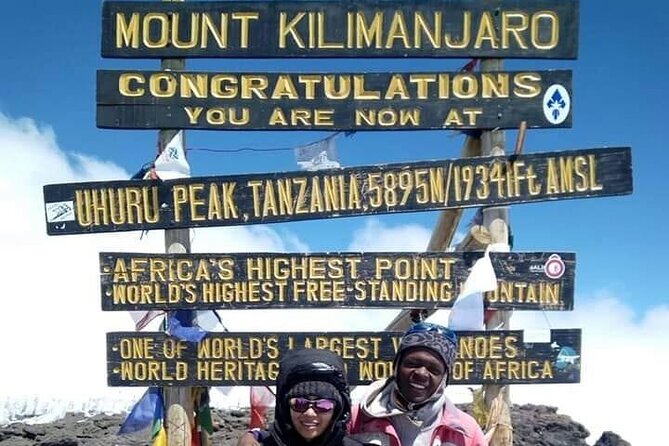
From Stella Point, the plan calls for roughly another hour of hard walking to reach the peak. The itinerary gives the summit elevation as 5,985 meters. At the top, you have time for photographs, sunrise, and wide views across Africa before beginning the descent.
The descent to Barafu Camp includes lunch and a celebration. After resting there, you continue down the mountain. This is an exceptionally long day, listed at about nine hours, and the total effort can feel greater because it follows the overnight start.
Do not treat the summit as the only goal. Getting down safely matters just as much. Cold, fatigue, low energy, and altitude can make the return difficult. Follow your guide’s instructions, eat when offered, and keep drinking even if you do not feel thirsty.
Day 7: Forest descent, Mweka Gate, and the return drive
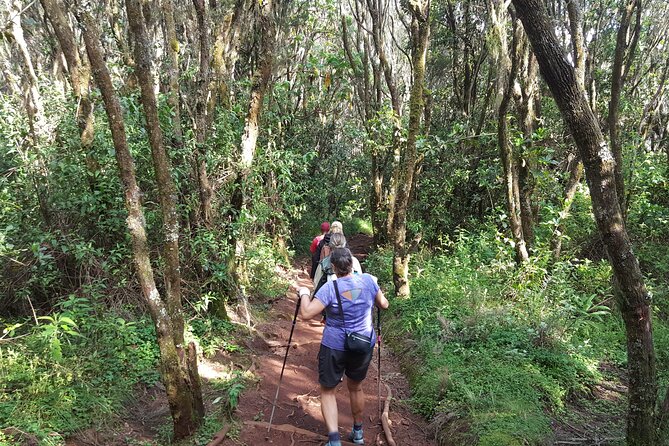
The final day brings a three to four-hour descent from about 3,106 meters to 1,633 meters. The route returns to rainforest before reaching Mweka Gate.
This part is easier on your breathing than the summit climb, but tired knees and feet can make the descent uncomfortable. Trekking poles may be useful if they are available to you. The itinerary includes breakfast and lunch, followed by a drive to accommodation in Moshi or Arusha.
The day ends with a celebration involving the guides, porters, and cook. Tips are recommended and are not included in the tour cost. Carry suitable cash and ask your booking contact about the preferred way to distribute tips among the support team.
The listed accommodation is Forest Hill Carnival Hotel. Because the description also says the driver will take you to accommodation in Moshi or Arusha, confirm where you will sleep after leaving the mountain.
What the $2,700 price covers
At $2,700 per person, this is a major purchase, but the price includes the core costs of a guided Kilimanjaro climb. Park fees are included, which is important because national park charges form a large part of the cost of a legitimate mountain itinerary.
The package also includes seven breakfasts, seven lunches, and six dinners. That reduces the number of practical details you must arrange yourself while on the mountain. A cook is part of the mountain team, so you should expect prepared meals rather than carrying all your food independently.
The private format adds value if you want your own group and a more personal pace. It may be less appealing if you prefer to share costs with a larger party or meet more people on the trail.
The price does not include tips. It also does not clearly list equipment rental, airport transfers, drinks, travel insurance, or personal clothing. Do not assume those items are covered. Ask for a written packing and inclusions list before booking.
Guides, porters, and the human side of the climb
The support crew is central to this experience. Your porters carry equipment, the cook prepares meals, and the guides manage the route and the pace. The company’s past climbing teams have included guides named John and Ellie, so you can ask if either is available for your dates. Guide assignments are not guaranteed.
The practical question is not just who leads the walk. You should also ask how the company handles porter welfare, group tipping, emergency decisions, and altitude concerns. The details supplied here confirm that tips are recommended, but they do not give a tipping scale or distribution system.
A good crew can make a hard week feel organized. Several past climbers praised the food, humor, teamwork, and sense of encouragement, along with the birds, waterfalls, and changing scenery. Those are the small details that turn a high-altitude challenge into a meaningful trip.
Who should book this Kilimanjaro climb?
This trip suits you if you have moderate physical fitness, enjoy long days outdoors, and want a private climb with meals and park fees arranged. You do not need to be an expert mountain climber, but you should be comfortable walking for several hours on uneven ground and coping with a demanding summit day.
It is a good fit for someone who values variety. You will not see the same setting all week. The route moves through rainforest, moorland, semi-desert, and alpine desert, with the Barranco Wall and summit attempt providing the biggest challenges.
It is less suitable if you want a relaxed holiday, guaranteed summit success, or a schedule with plenty of sleep. The midnight start, high camps, and long descent require real effort. The description says people from seven to 89 have completed the mountain, but age alone does not determine suitability. Your fitness, health, and preparation matter more.
The activity is private, and confirmation is provided at booking. The stated start time is 7:30 a.m. for the first day. Free cancellation is available up to 24 hours before the local start time. If poor weather cancels the climb, you are offered another date or a full refund.
Should you book the Machame Route?
I would book this climb if you want a well-supported, seven-day Kilimanjaro attempt with changing scenery, included meals, park fees, and a private group. The strongest features are the gradual route profile, the human support team, and the chance to experience the mountain from rainforest to summit.
Before paying, I would confirm three things in writing: the day three camp, the equipment available for loan or rental, and the exact plan after Mweka Gate. I would also ask about guide assignment, porter tipping, and what happens if altitude symptoms force you to stop.
Book it if you accept that Kilimanjaro is a serious physical challenge, not simply a scenic walk. Skip it if the midnight summit, high-altitude camps, or long descent sound unreasonable. For a prepared person with realistic expectations, this route offers a strong mix of adventure, scenery, and support at a substantial but understandable price.
FAQ
How long is the Machame Route experience?
The climb lasts approximately seven days, beginning with pickup from Arusha and ending with a drive to accommodation in Moshi or Arusha after reaching Mweka Gate.
What time does the first day start?
The stated start time is 7:30 a.m.
Is this a private tour?
Yes. Only your own group takes part in the activity.
Do I need previous technical climbing experience?
No expert mountain climbing experience is required. You should have a moderate level of physical fitness and be prepared for long hikes, the Barranco Wall, and a demanding summit attempt.
What meals are included?
The package includes seven breakfasts, seven lunches, and six dinners.
Are park fees included?
Yes. Park fees are included in the price.
Are tips included in the price?
No. Tips are not included, and they are recommended for the guides, porters, and cook.
Just added in Arusha
- 4 Days Private Midrange Lodge Safari to Serengeti & Ngorongoro★ 5.0 · 4 reviews
- Extraordinary Hot air Bolloon ride in Serengeti | BURIGI CHATO SAFARIS CO L.T.D★ 5.0 · 6 reviews
- 3 days leopard safaris★ 5.0 · 4 reviews
- 8 Days Serengeti Migration safari★ 5.0 · 11 reviews
- tarangire, ngorongoro & lake manyara park 3 days private tour★ 5.0 · 11 reviews
- Mt. Kilimanjaro: Shira plateau to Cathedral point 3872m Day hike★ 5.0 · 7 reviews
- serengeti, ngorongoro & tarangire 4 days private tour★ 5.0 · 18 reviews
- tarangire & ngorongoro 2 days tour★ 5.0 · 14 reviews
Kilimanjaro Treks, compared.



8-Day Small-group Lemosho Kilimanjaro Summit Trekking
Read our review →

5 Days Best of Tanzania Luxury Safari Northern Circuit
Read our review →

Climbing Kilimanjaro through 7 days Machame Route
Read our review →
7-Day Machame Kilimanjaro Summit Tour from Arusha
Read our review →Browse the lists this tour appears in